Artwork
Page from Tales of a Parrot (Tuti-nama): text page
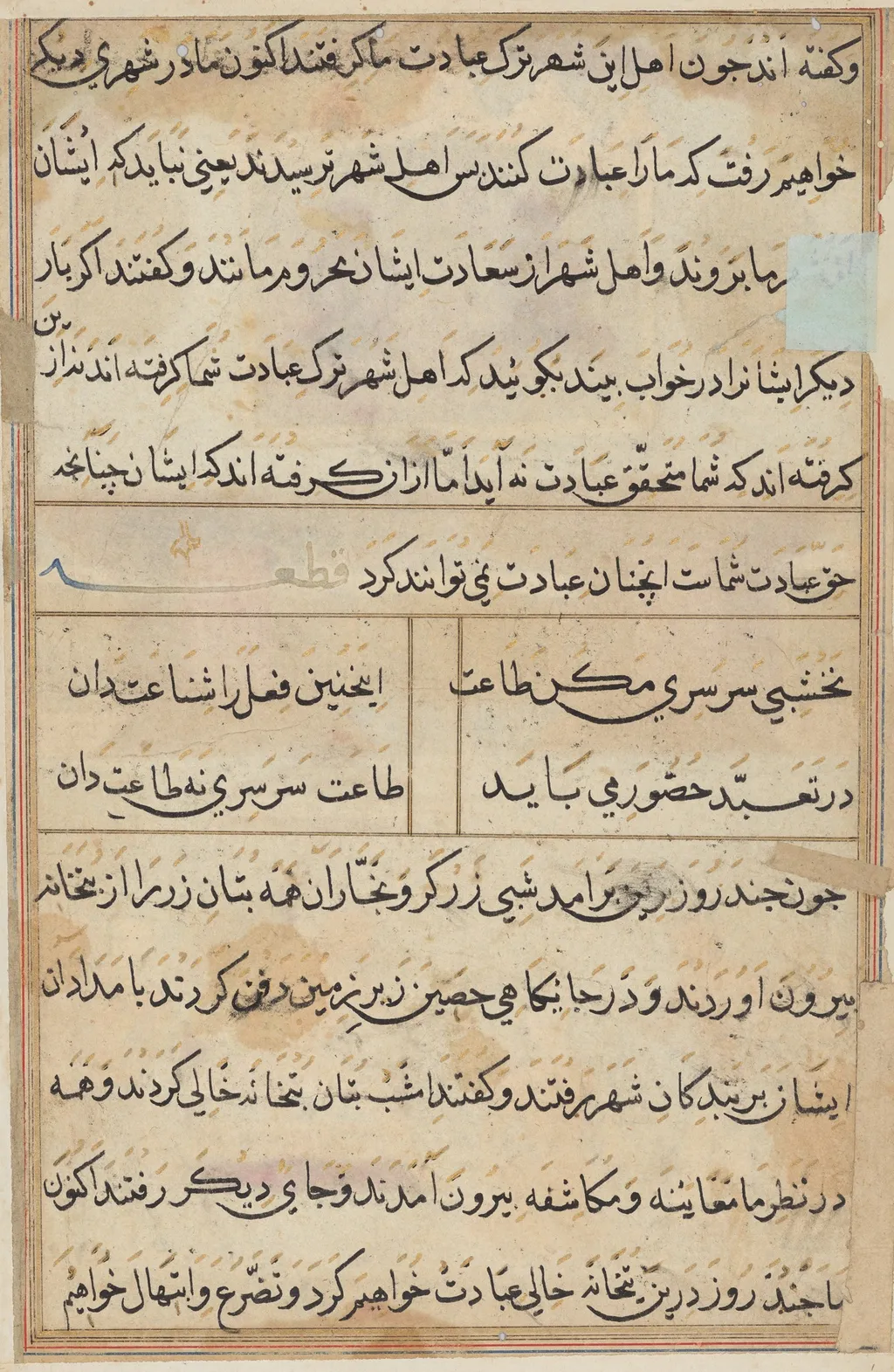
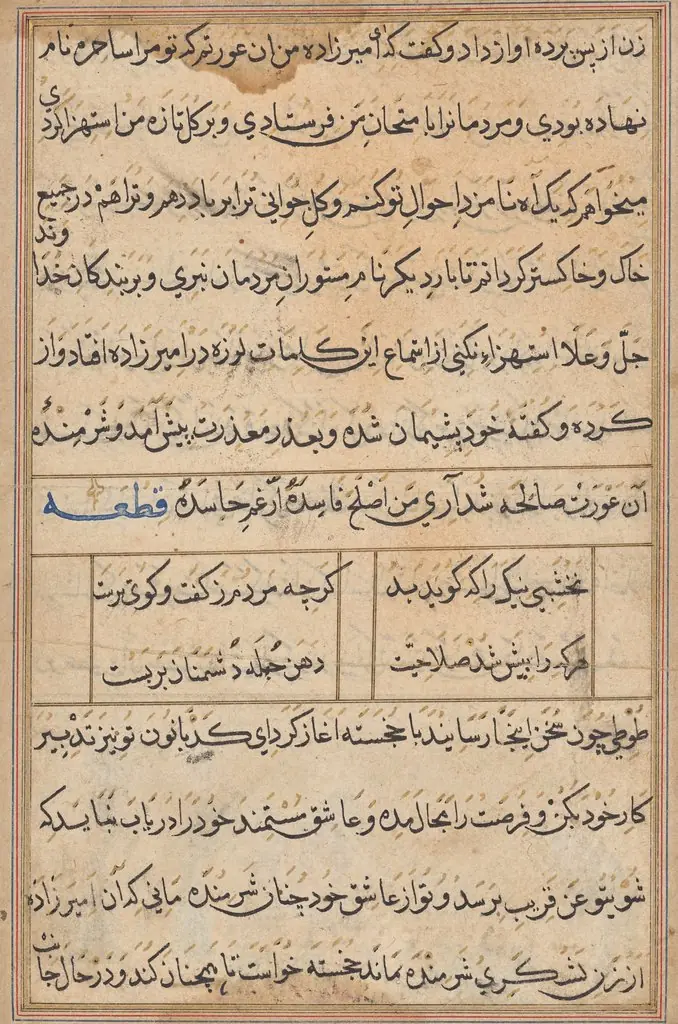
Page from Tales of a Parrot (Tuti-nama): text page is an unspecified painting. It dates from 1560 and is held in the collection of the Cleveland Museum of Art. This object is a painted page from the Mughal manuscript Tuti‑nama (Tales of a Parrot).
About this work
Technique & Style
The work originates from the Mughal imperial atelier and was produced in a workshop environment where artists collaborated on manuscript production.
The page is a painted text sheet created with ink and pigments on paper, typical of Mughal manuscript illumination. The composition features delicate outlines and restrained color, reflecting the stylized narrative tradition of the Tuti-nama. The handling of figures and decorative motifs demonstrates a refined balance between textual content and ornamental design, characteristic of 16th-century Persianate book arts.
The work originates from the Mughal imperial atelier and was produced in a workshop environment where artists collaborated on manuscript production. Its condition is stable, with only minor surface abrasions consistent with age, and the support remains intact without structural deformation. The formal qualities emphasize flat spatial depth and intricate patterning, prioritizing symbolic clarity over naturalistic representation.
History & Provenance
The painting is part of the Cleveland Museum of Art's collection and is accessioned under the identifier 1962.279.20.b. It has been on view in the museum's South Asian Art galleries as part of rotating displays of Indian miniature paintings. The work was created in 1560 in the Mughal Empire.
Overview
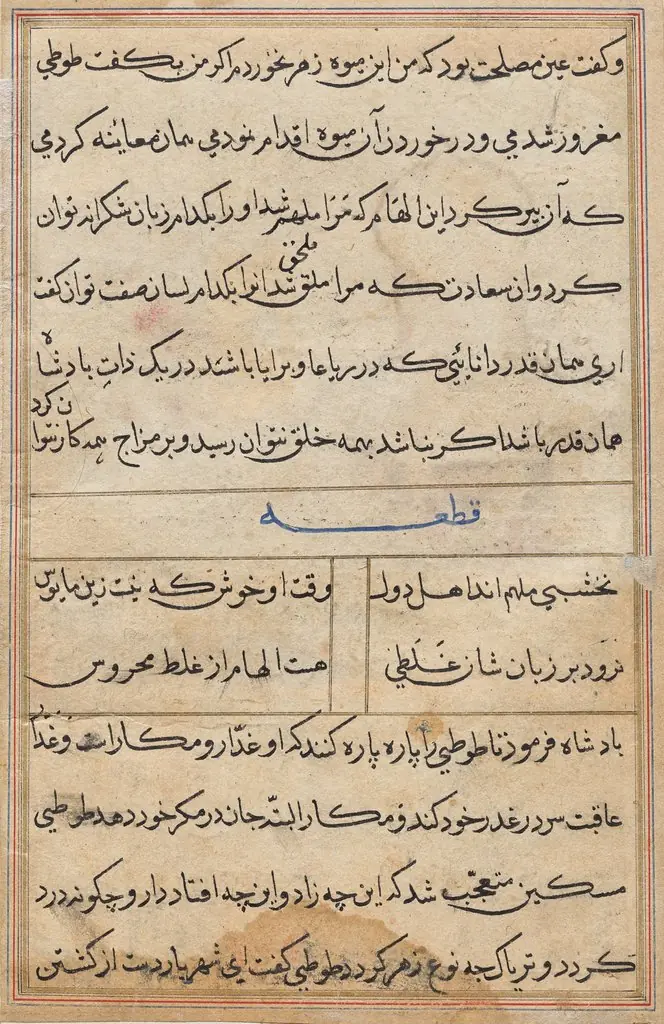
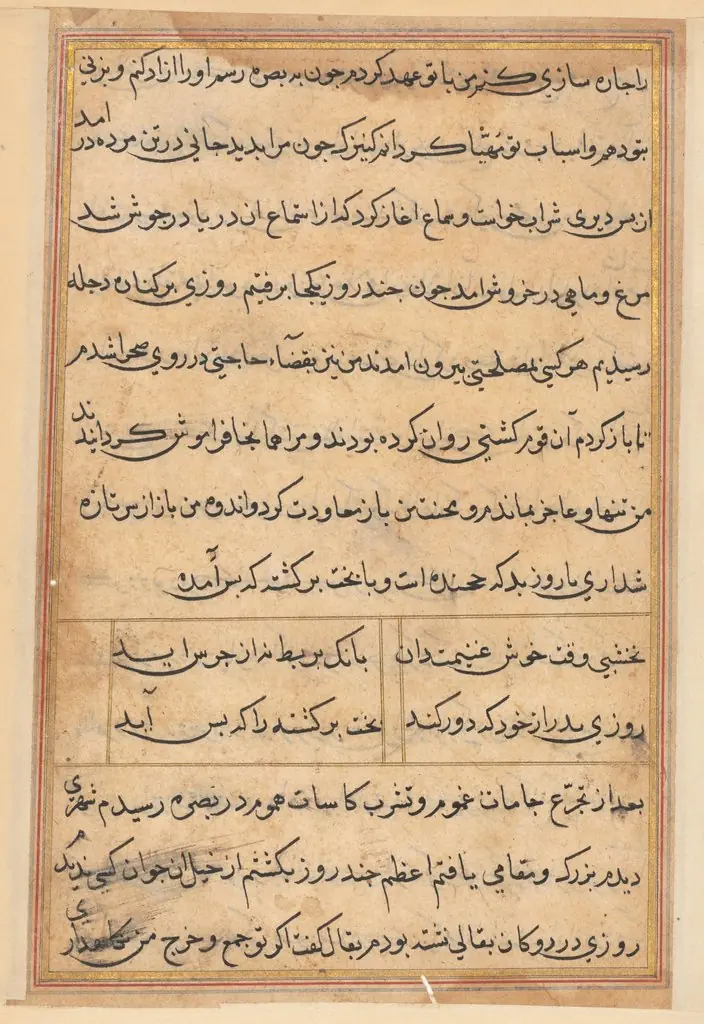
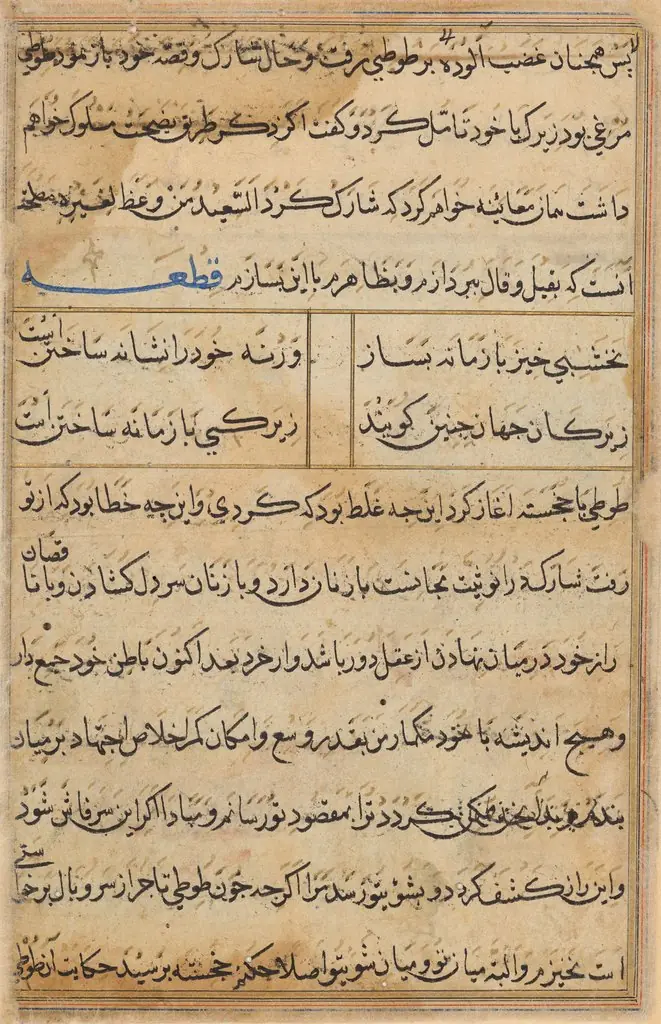
This object is a painted page from the Mughal manuscript Tuti‑nama (Tales of a Parrot). The surface is a light‑toned, textured paper on which dense black calligraphy fills the field in orderly rows, punctuated by occasional faint red dots and a narrow decorative border.
Subject & Meaning
The inscribed text recounts episodes from the Tuti‑nama, a collection of moral stories featuring a parrot narrator. The work was commissioned for Prince Salim, later Emperor Jahangir, reflecting the courtly practice of presenting illustrated literary works to royal patrons as both entertainment and ethical instruction.
Context
Mughal manuscripts combined Persian literary traditions with Indian artistic sensibilities, employing court painters to produce richly illustrated texts. The Tuti‑nama was one of several moralistic compilations that circulated among the elite, serving both didactic and decorative purposes within the royal household.
Legacy
Pages such as this illustrate the synthesis of literary and visual culture in Mughal Iran‑Indian courts, informing contemporary scholarship on cross‑cultural exchange, patronage, and the development of South Asian book arts.
Artist & collection

 Page from Tales of a Parrot (Tuti-nama): text page
 Page from Tales of a Parrot (Tuti-nama): text page
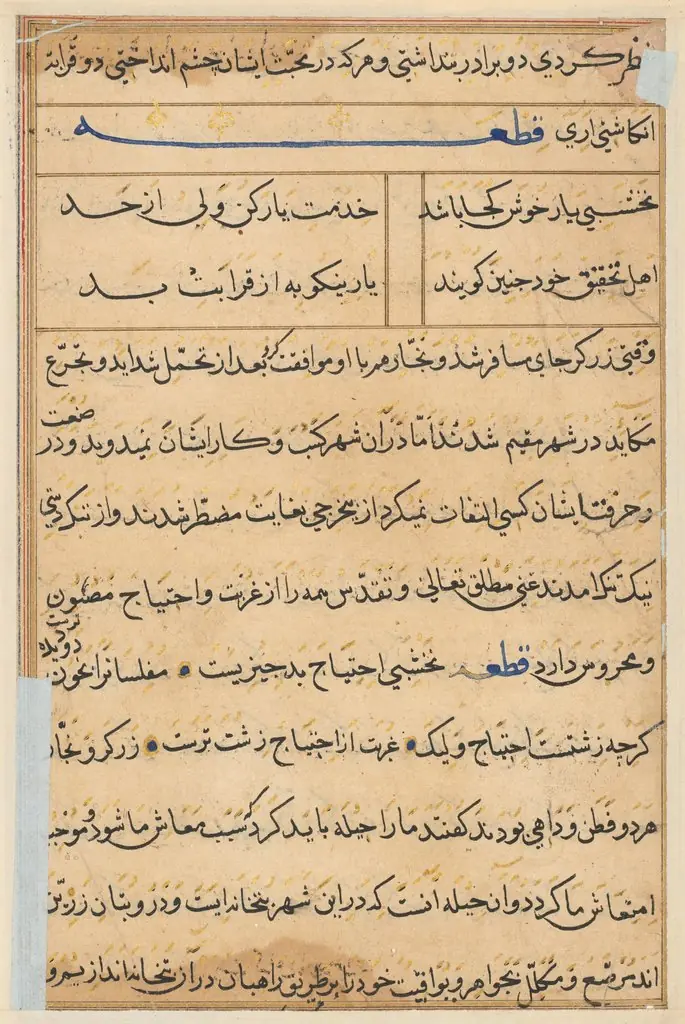 Page from Tales of a Parrot (Tuti-nama): text page
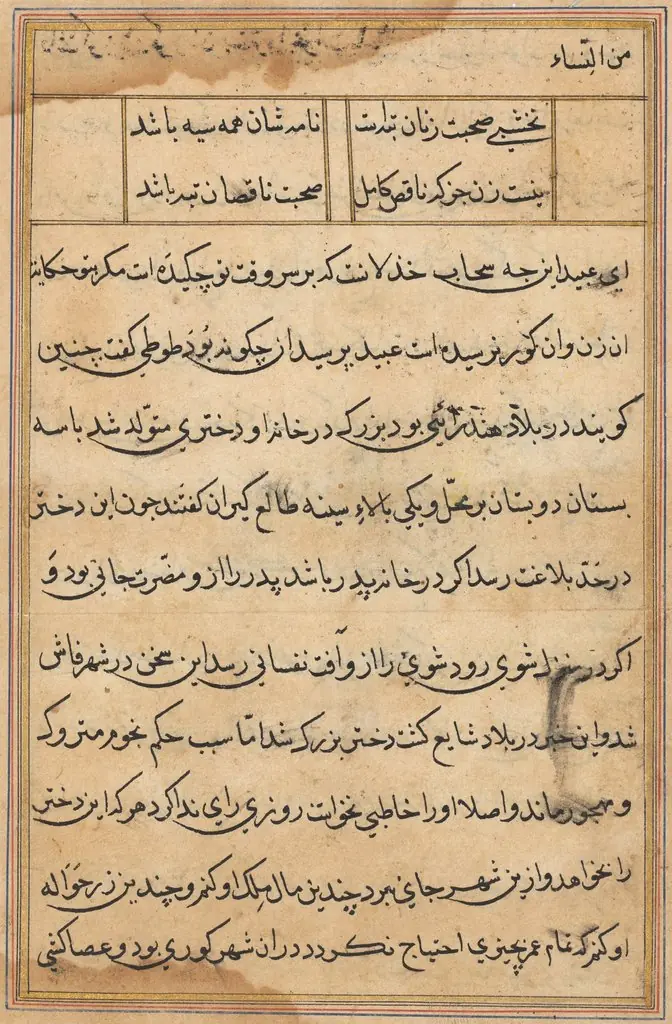 Page from Tales of a Parrot (Tuti-nama): text page
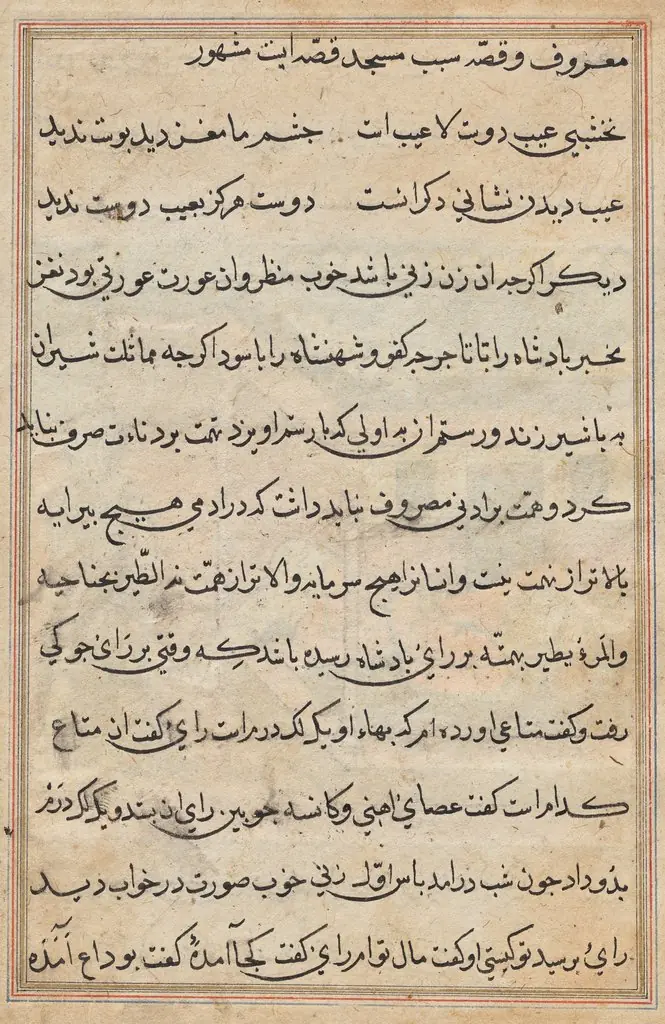 Page from Tales of a Parrot (Tuti-nama): text page
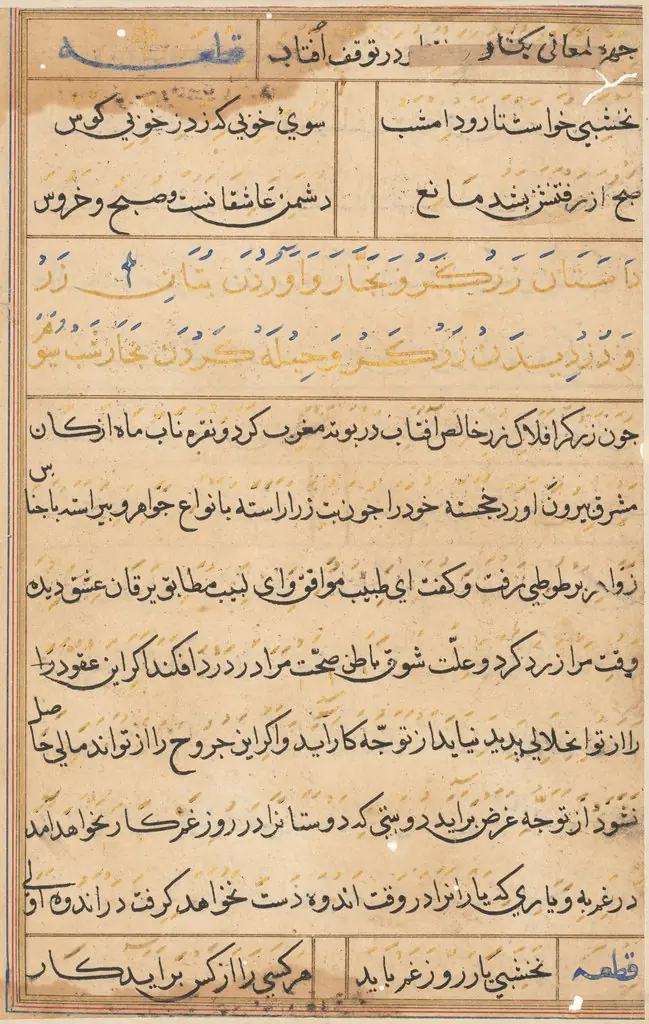 Page from Tales of a Parrot (Tuti-nama): text page
- Page from Tales of a Parrot (Tuti-nama): text page
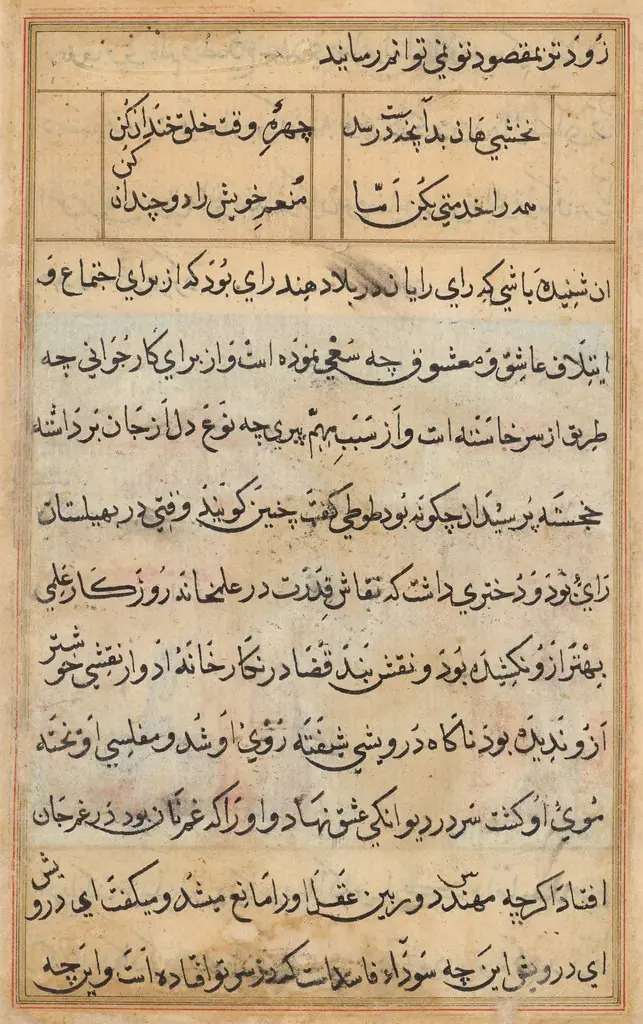 Page from Tales of a Parrot (Tuti-nama): text page
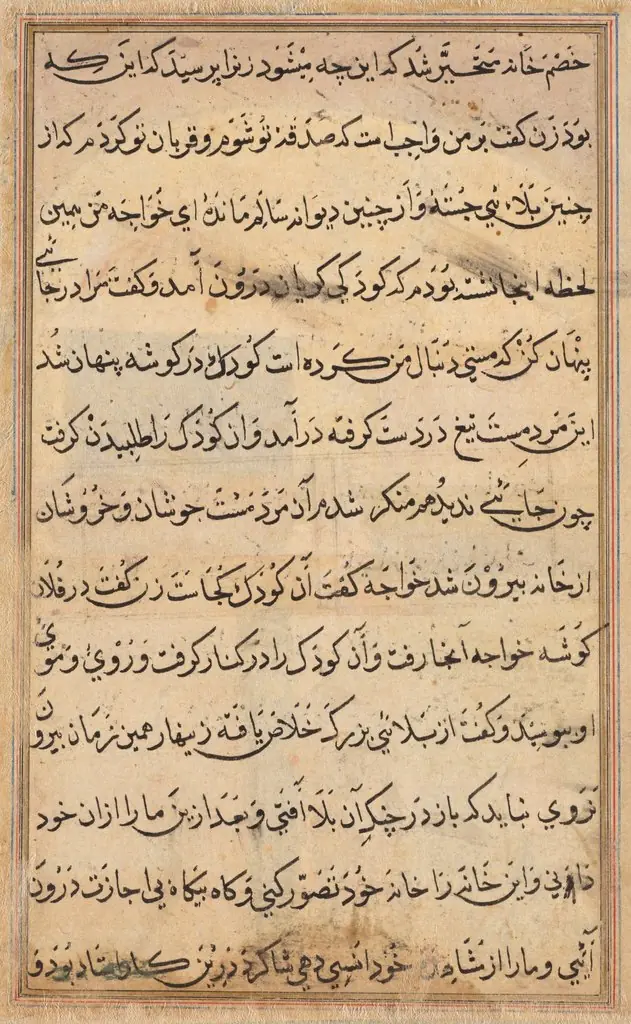 Page from Tales of a Parrot (Tuti-nama): text page
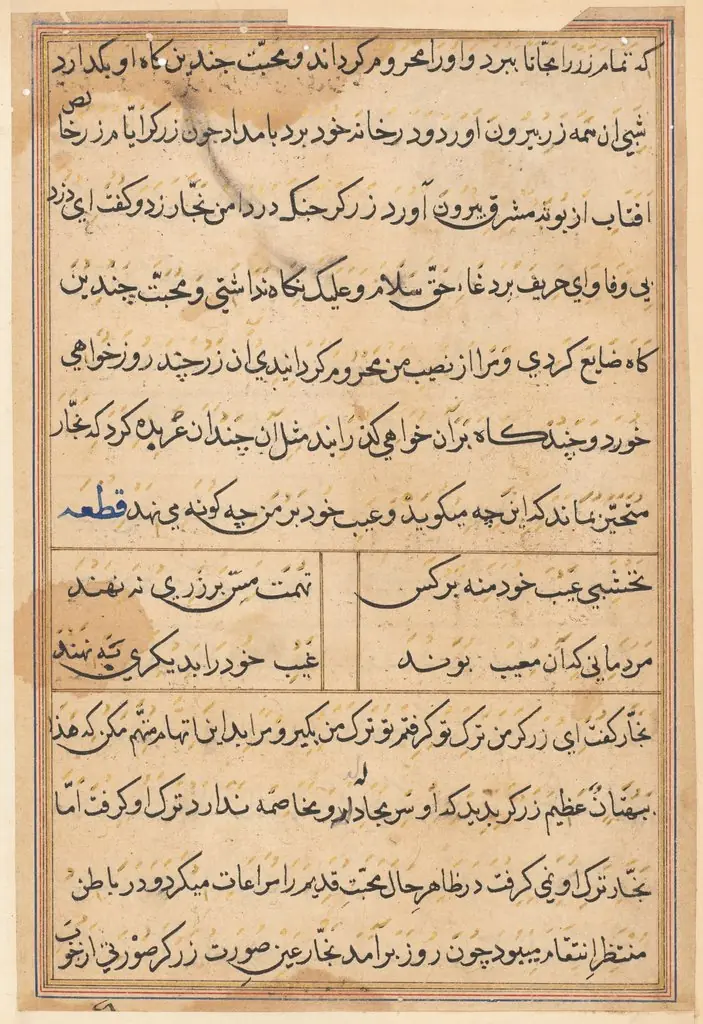 Page from Tales of a Parrot (Tuti-nama): text page
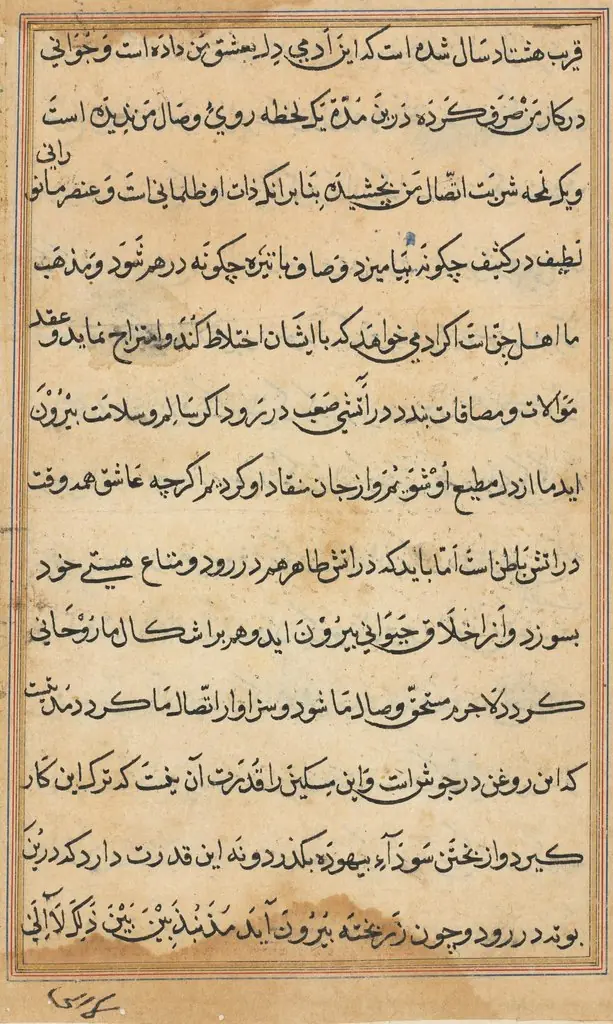 Page from Tales of a Parrot (Tuti-nama): text page
 Page from Tales of a Parrot (Tuti-nama): text page