Artwork
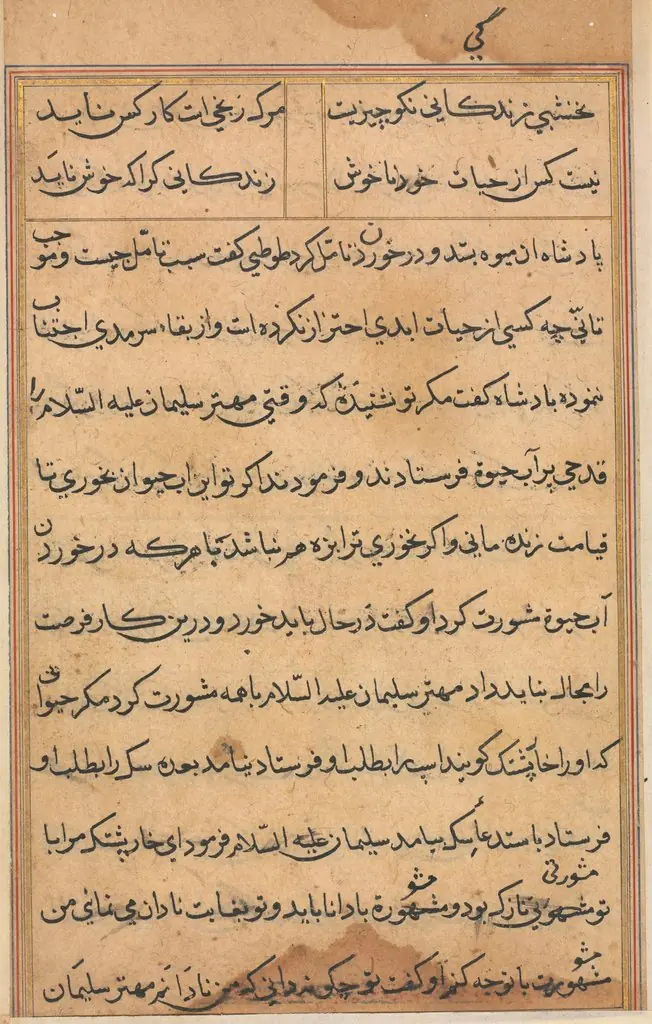
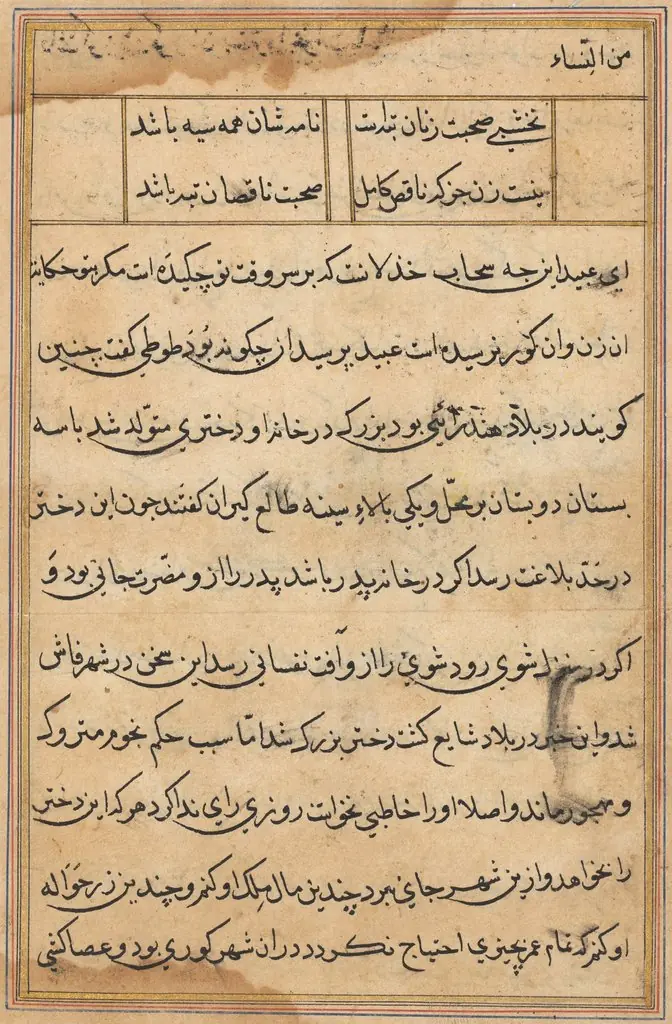
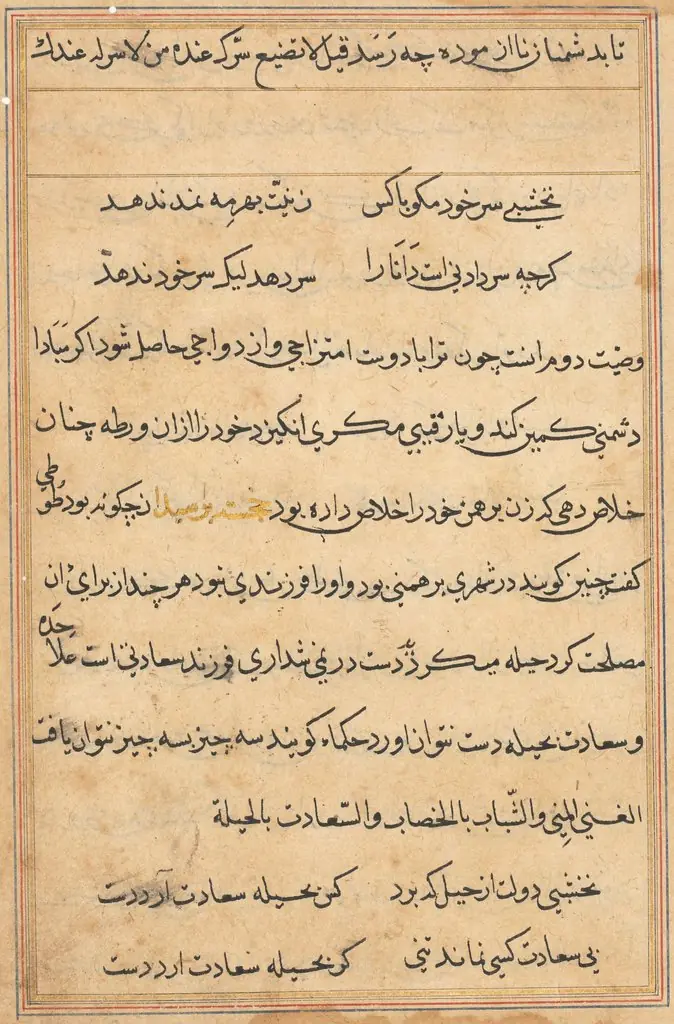
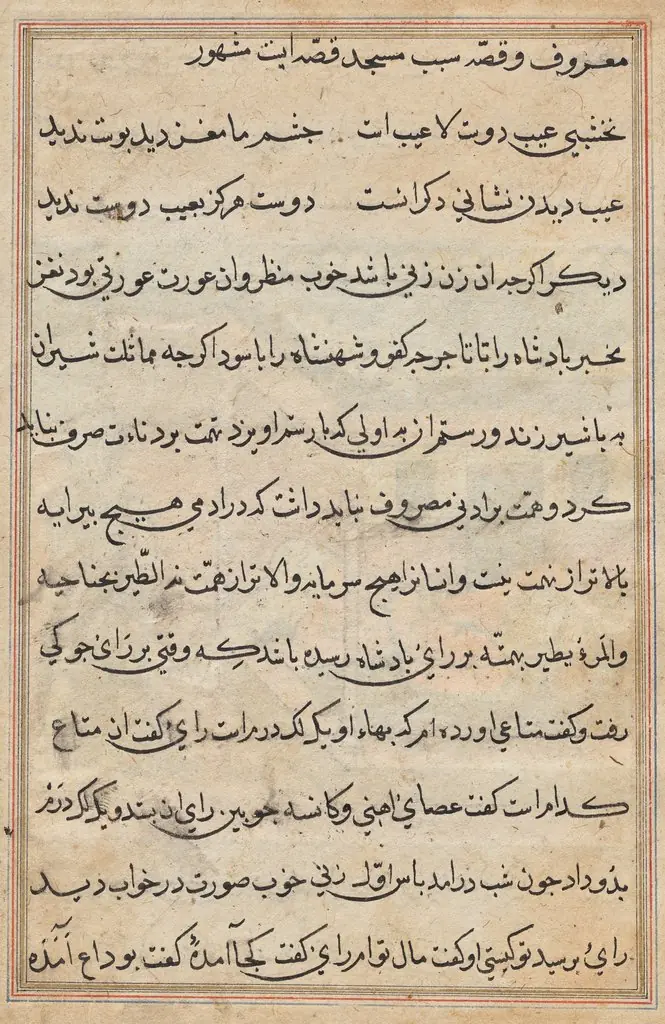
Page from Tales of a Parrot (Tuti-nama): text page
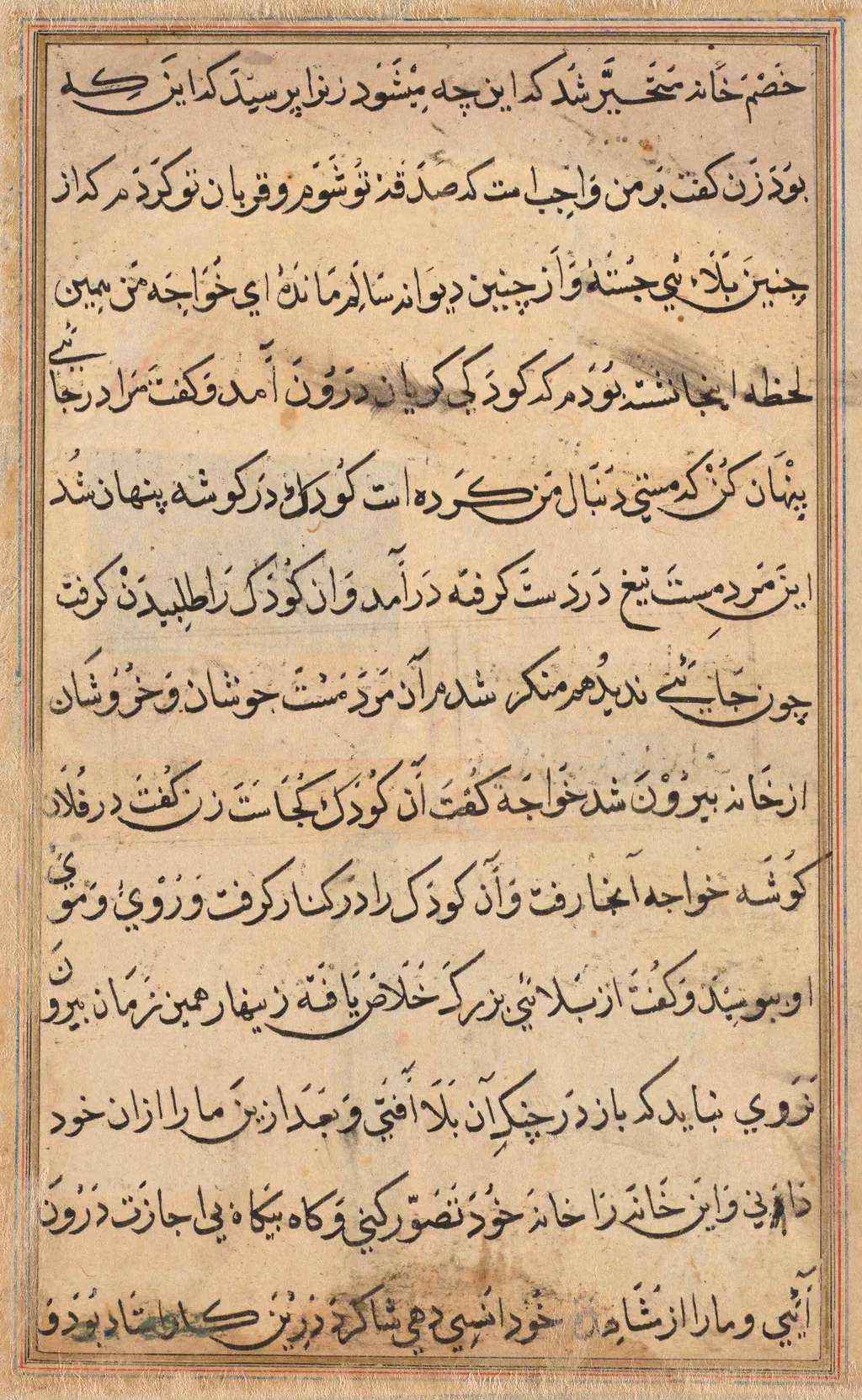
Page from Tales of a Parrot (Tuti-nama): text page is an unspecified painting. It dates from 1560 and is held in the collection of the Cleveland Museum of Art. This object is a single illustrated page from the Persian manuscript known as Tales of a Parrot (Tuti‑nama).
About this work
History & Provenance
The provided records confirm its location and inventory details but do not list specific past exhibitions or loan history for this particular folio.
Created in 1560 within the Mughal Empire, this text page originates from the illuminated manuscript known as the Tuti-nama (Tales of a Parrot). While the specific artist remains unidentified, the work was produced during the mid-sixteenth century. The page eventually entered the collection of the Cleveland Museum of Art, where it is cataloged under the accession number 1962.279.58.b. Its inclusion in the museum's holdings in 1962 marks the most recent documented point in its ownership history available in current records.
The text page from the Tales of a Parrot (Tuti-nama) is held in the collection of the Cleveland Museum of Art. The institution identifies the work with the accession number 1962.279.58.b. Created in 1560 within the Mughal Empire, this painting is attributed to an unknown artist. The provided records confirm its location and inventory details but do not list specific past exhibitions or loan history for this particular folio.
Overview
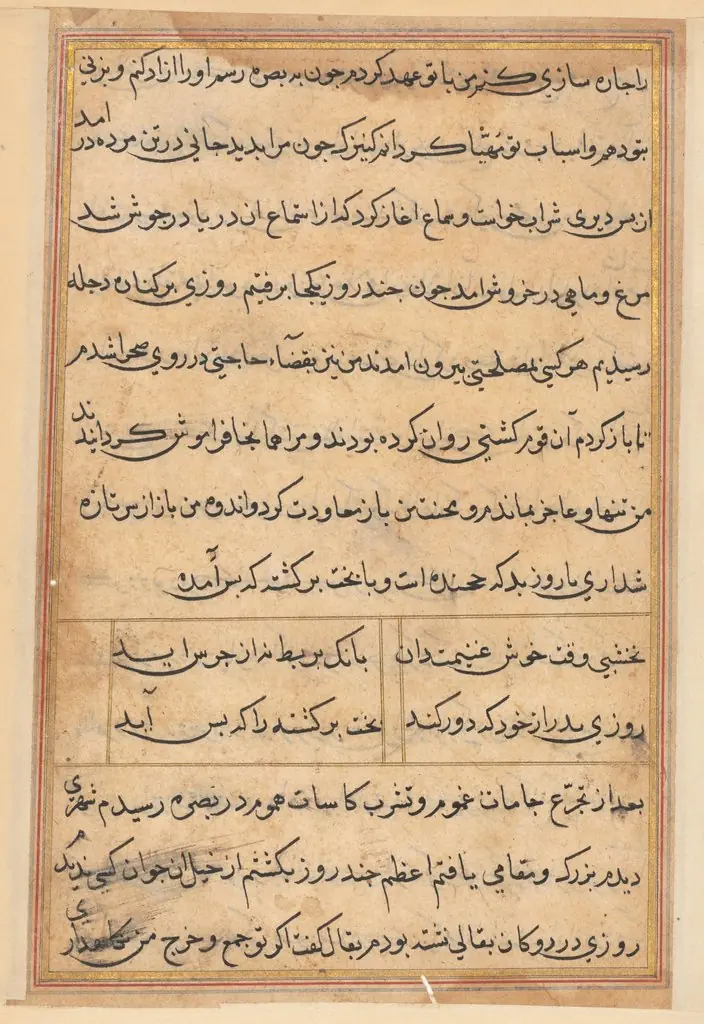
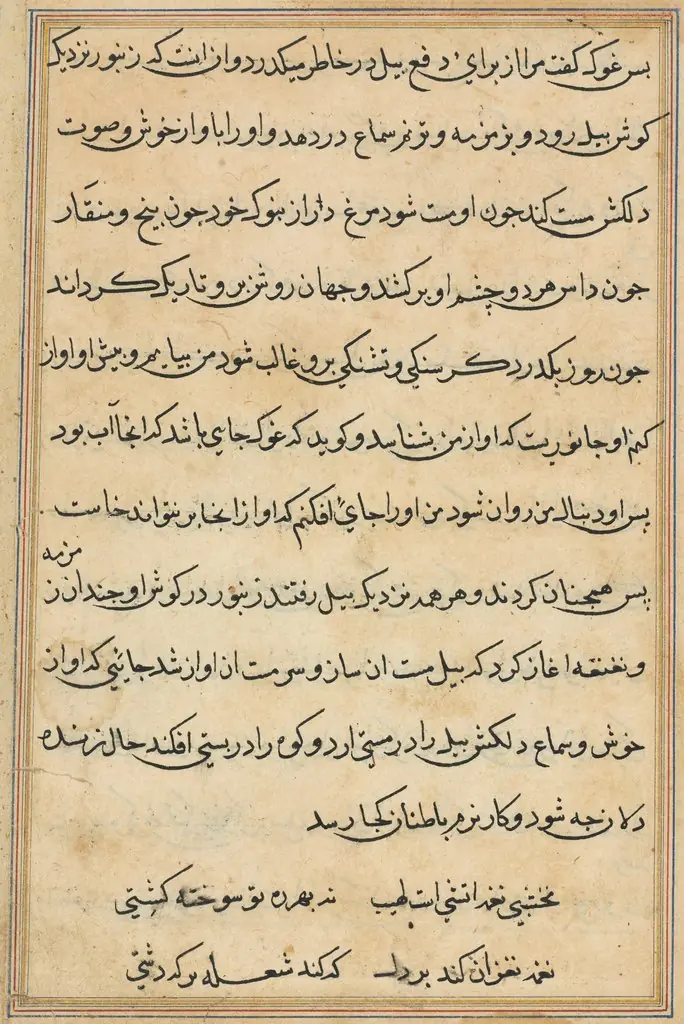
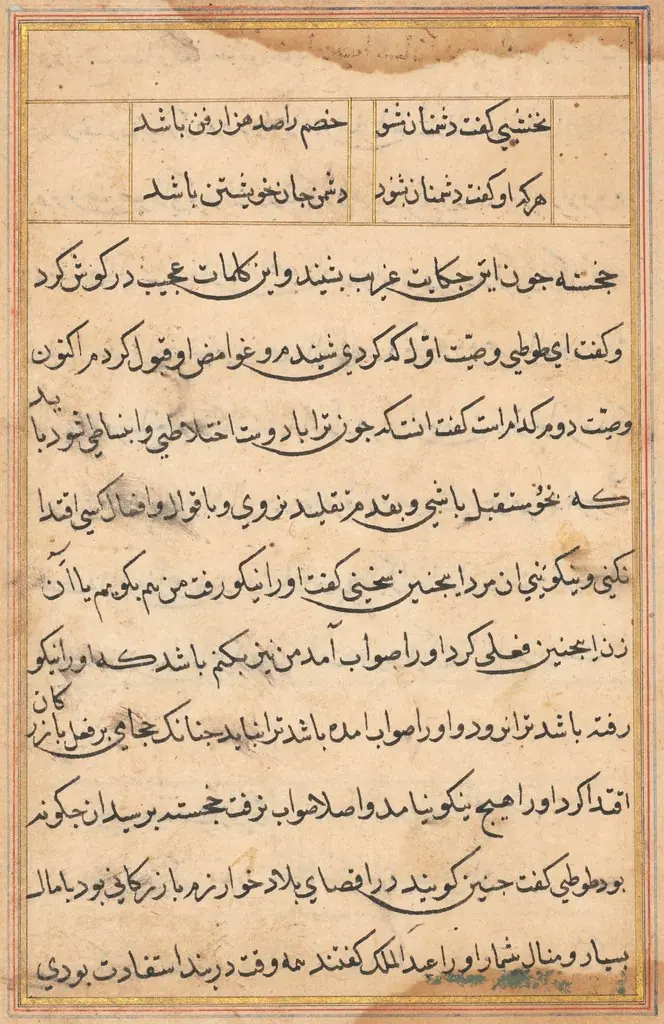
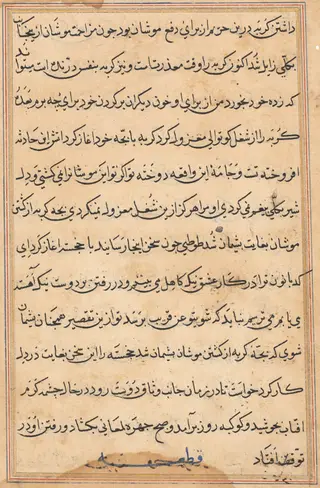
This object is a single illustrated page from the Persian manuscript known as Tales of a Parrot (Tuti‑nama). Rendered on a light‑beige sheet of paper, the surface bears dense, flowing black calligraphy arranged in tight horizontal lines and framed by a thin dark border. The paper shows signs of age, including faint spots and wear, indicating its historic origin.
Subject & Meaning
The text on the page forms part of the moral and allegorical narrative of the Tuti‑nama, a collection of fables featuring a talking parrot that delivers ethical lessons. The Persian verses, written in a lyrical hand, convey the story’s didactic purpose, reflecting the literary tradition of using animal protagonists to explore human virtues and vices.
Technique & Style
The calligraphic execution demonstrates a refined, decorative script that balances rhythmic flow with spatial economy. The black ink is applied with a fine brush, producing uniform strokes that contrast sharply with the aged, beige substrate. A subtle dark border encloses the text, providing visual containment while enhancing the page’s compositional harmony.
Artist & collection

 Page from Tales of a Parrot (Tuti-nama): text page
 Page from Tales of a Parrot (Tuti-nama): text page
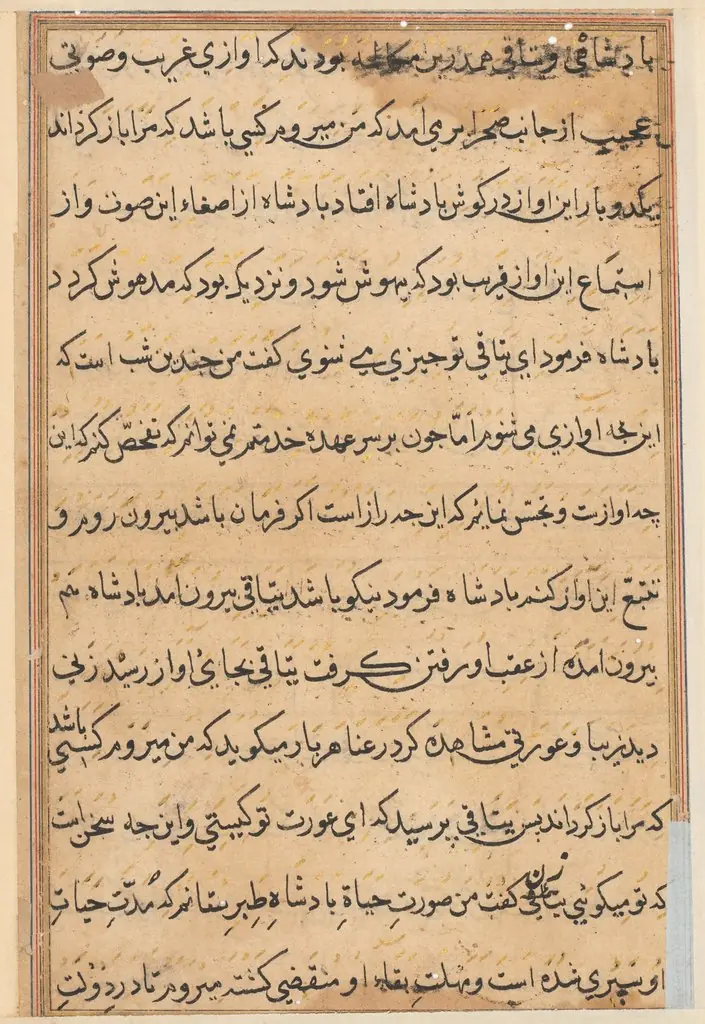 Page from Tales of a Parrot (Tuti-nama): text page
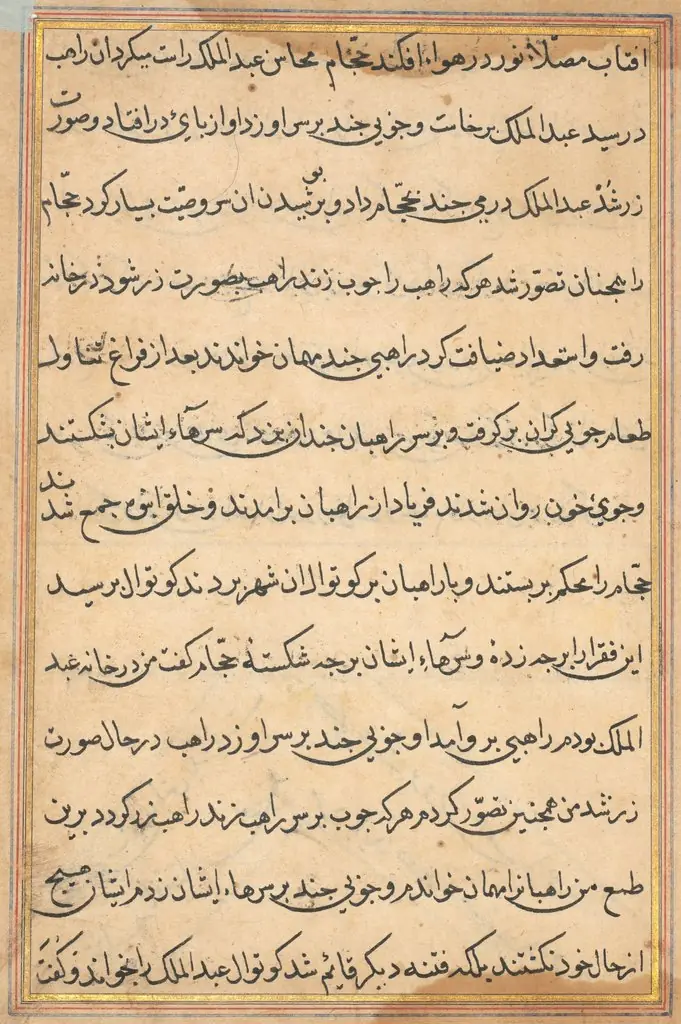 Page from Tales of a Parrot (Tuti-nama): text page
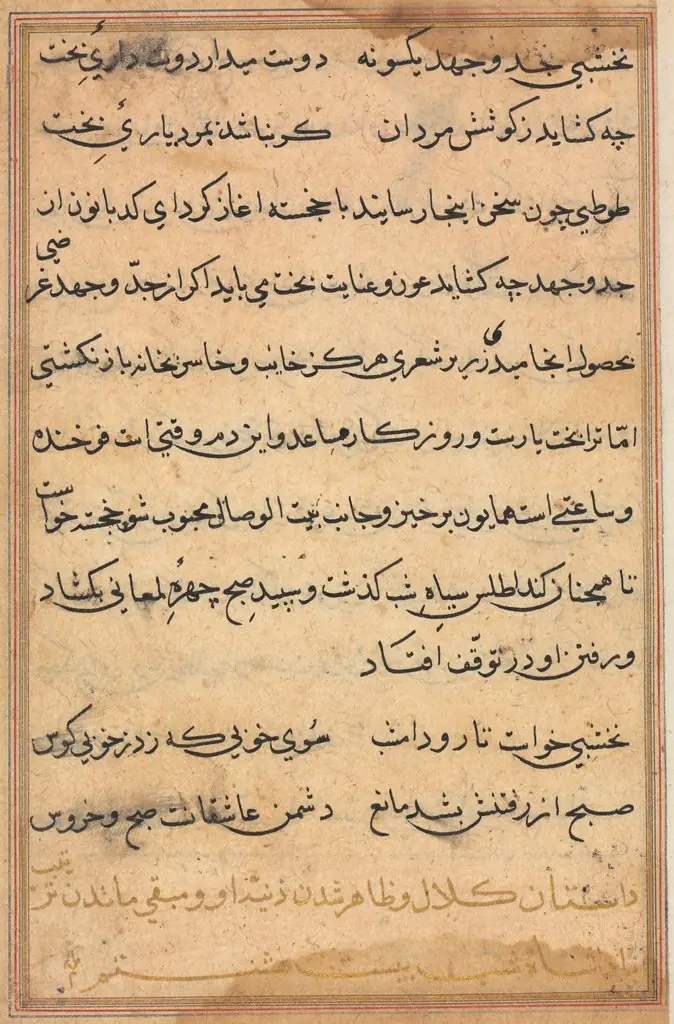 Page from Tales of a Parrot (Tuti-nama): text page
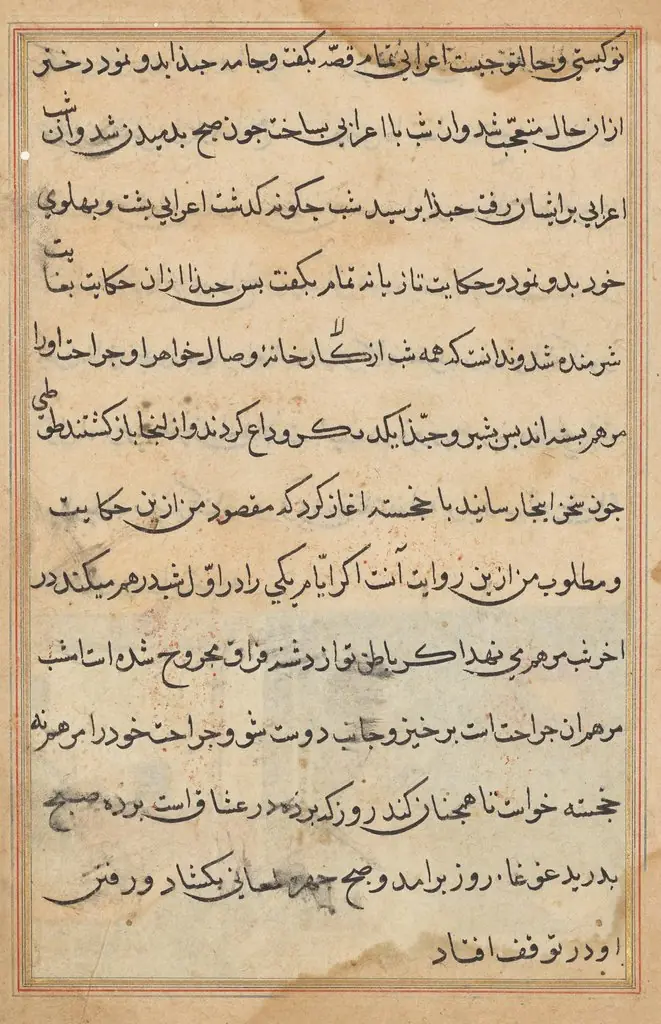 Page from Tales of a Parrot (Tuti-nama): text page
 Page from Tales of a Parrot (Tuti-nama): text page