Artwork
Page from Tales of a Parrot (Tuti-nama): text page
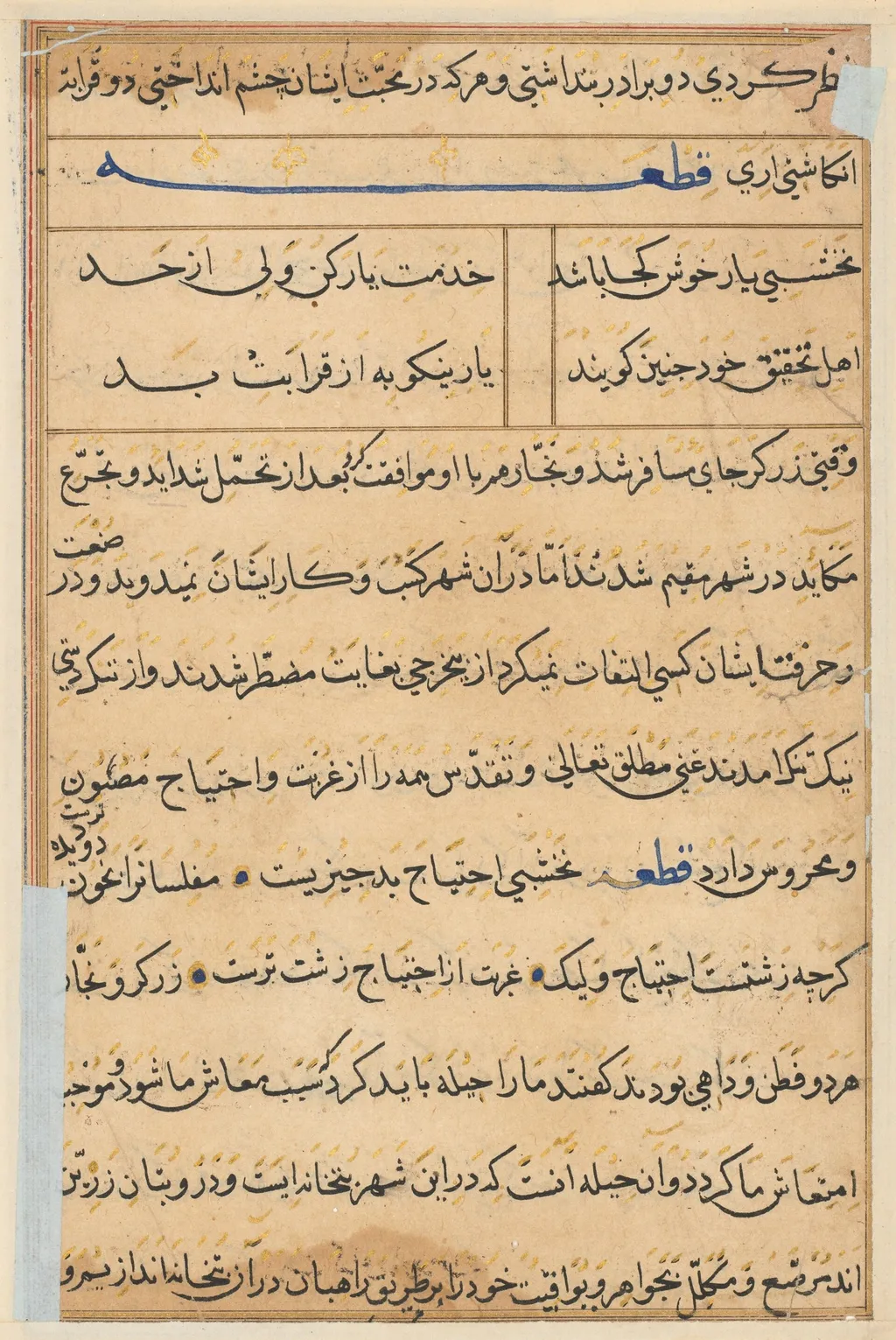
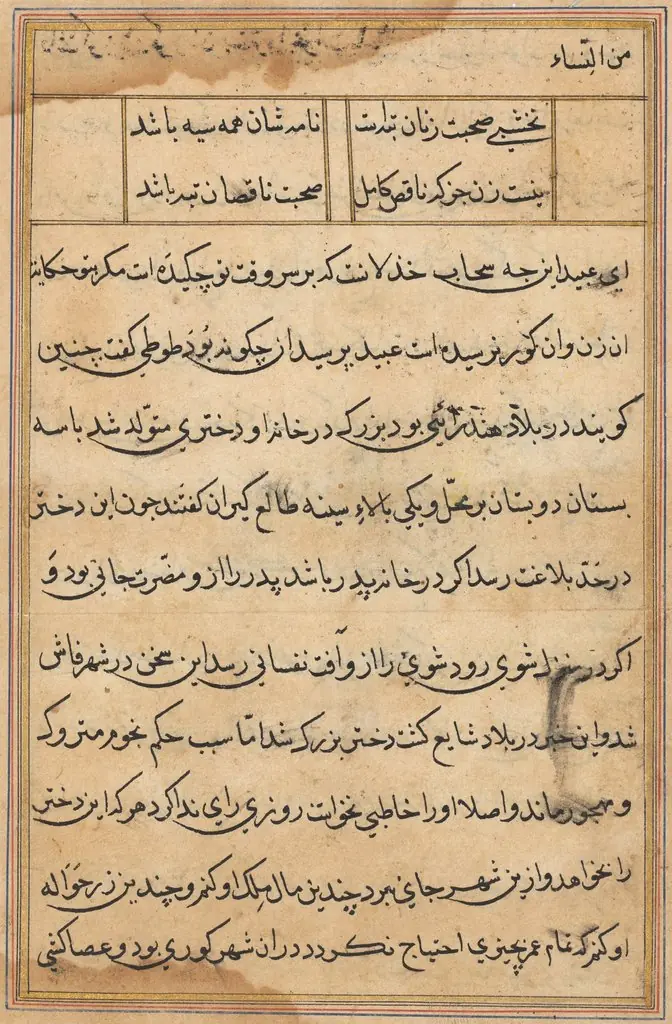
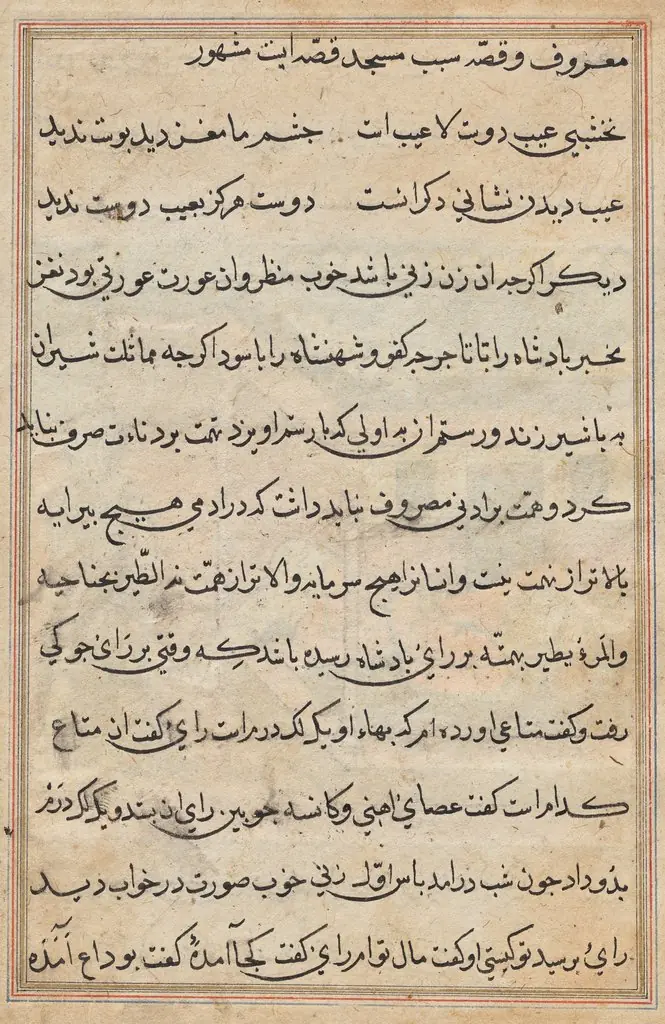
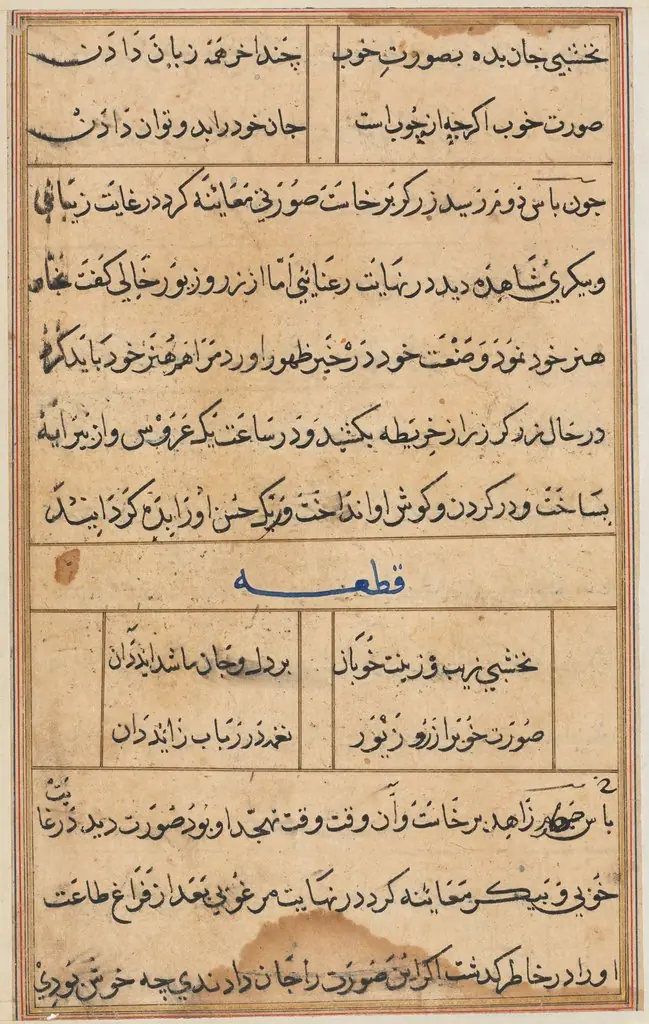
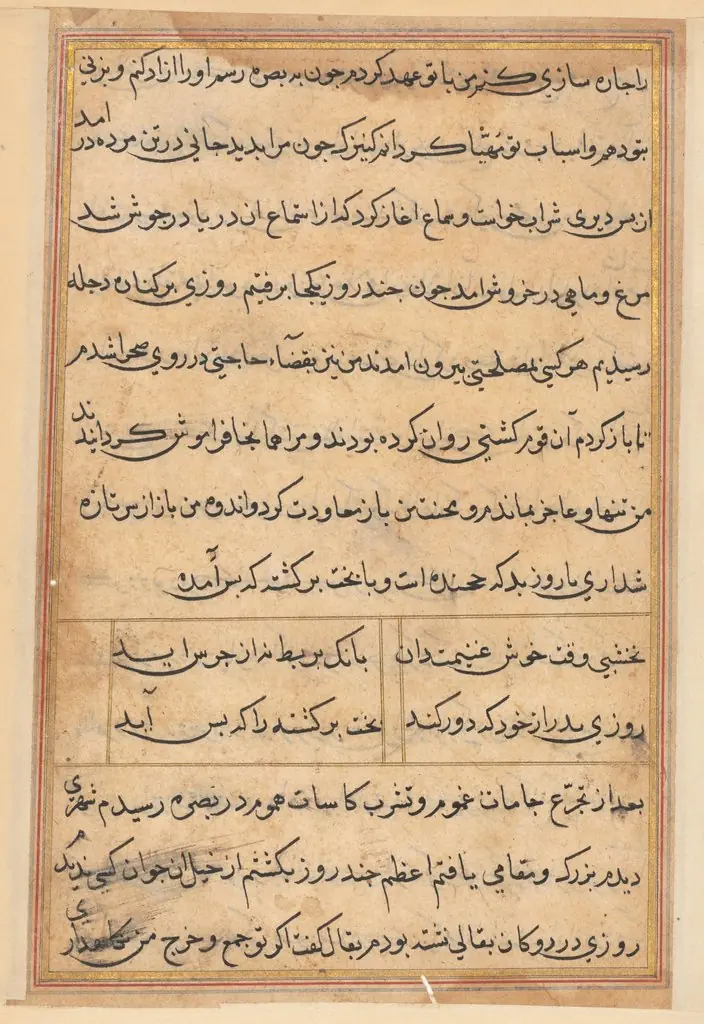
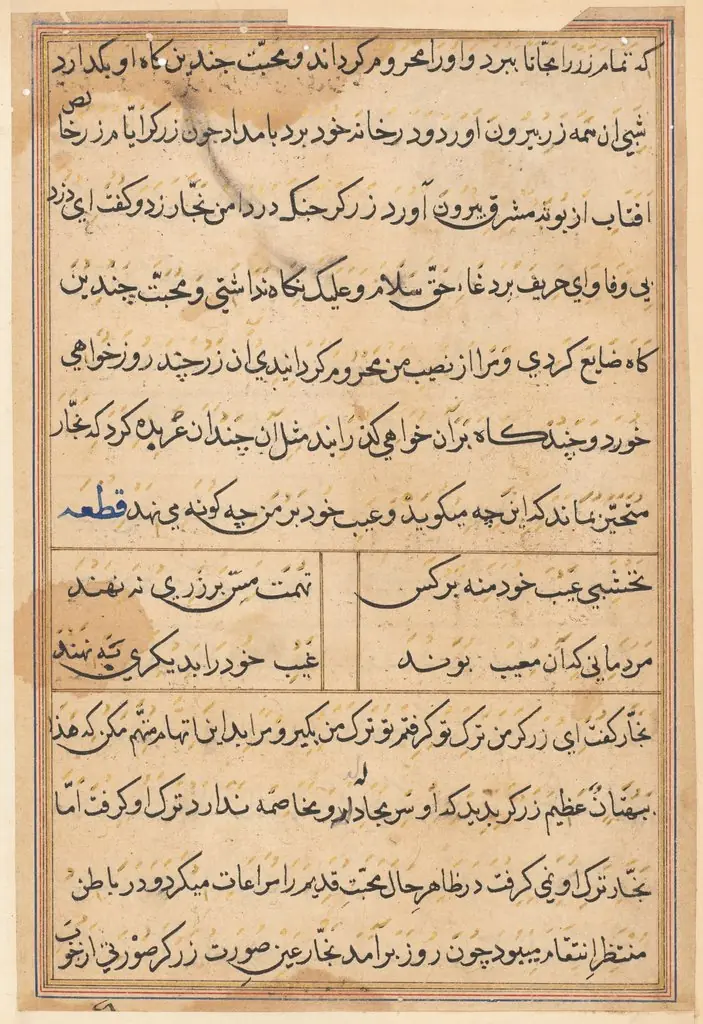
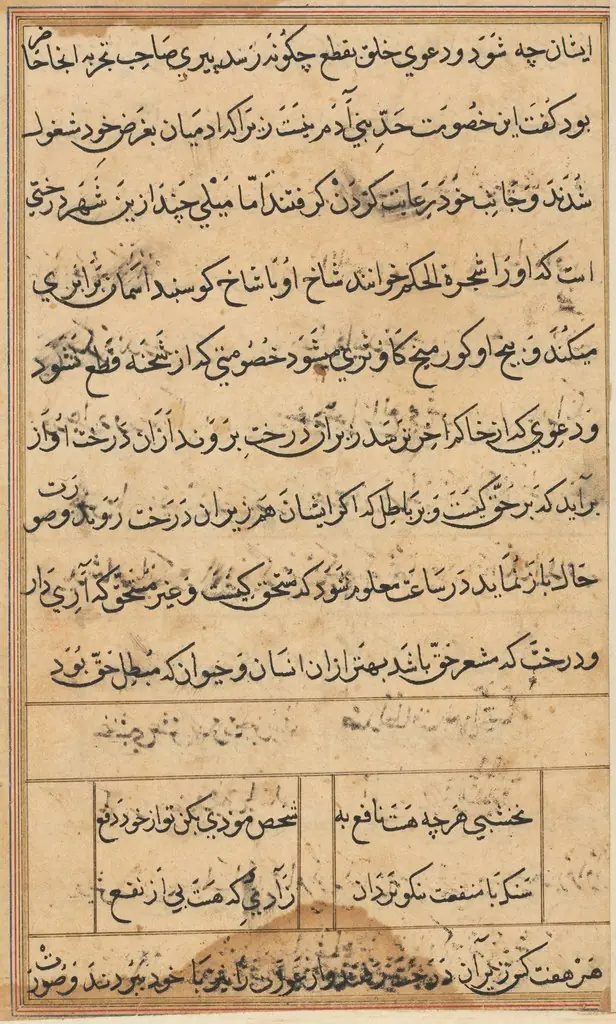
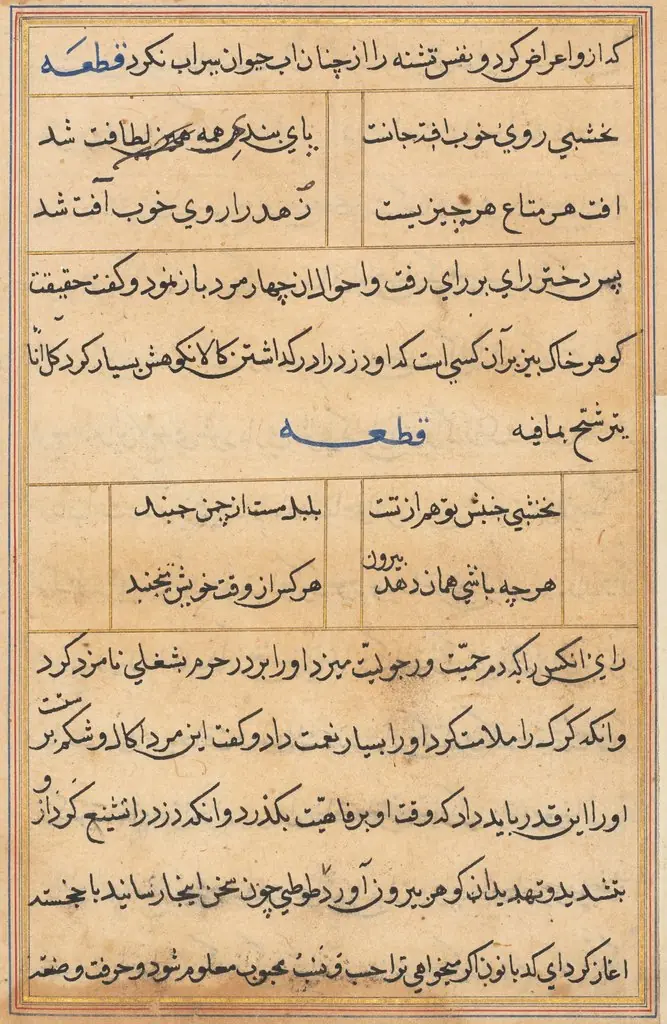
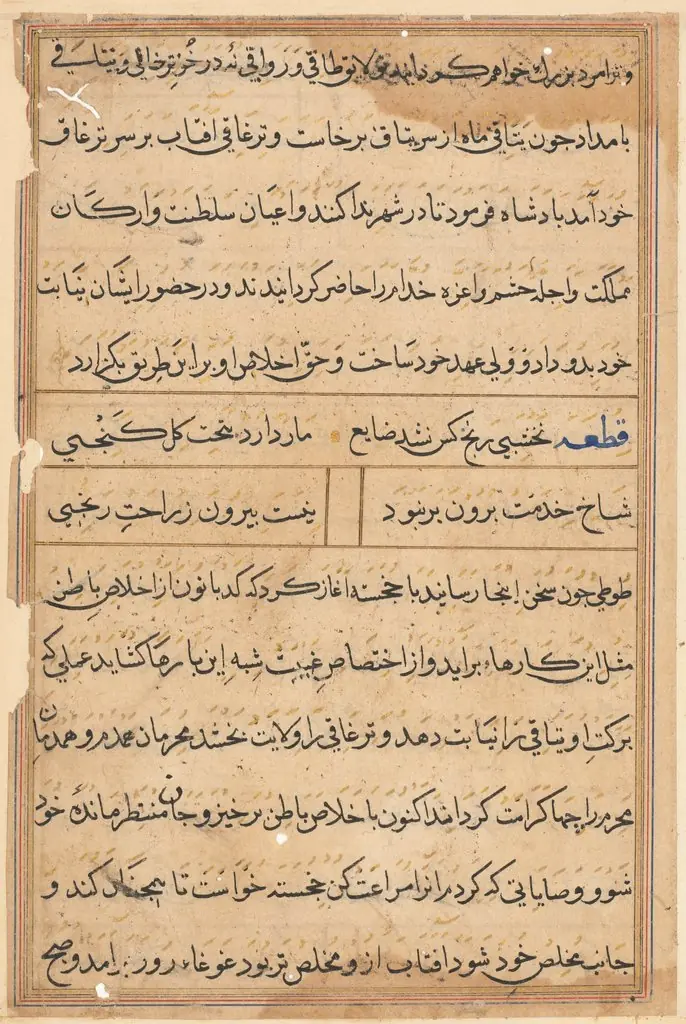
Page from Tales of a Parrot (Tuti-nama): text page is an unspecified painting. It dates from 1560 and is held in the collection of the Cleveland Museum of Art. The object is a single page from the manuscript known as Tales of a Parrot (Tuti‑nama).
About this work
Subject & Meaning
The page depicts a scene from the Tuti-nama, a Persian narrative about a parrot recounting its adventures, reflecting moral lessons and courtly storytelling traditions. Iconographically, the text illustrates a literary episode within a Mughal manuscript, symbolizing wisdom and the didactic use of animal fables in Persian miniature painting. The work represents the intercultural exchange between Persian literary motifs and Mughal artistic practice, emphasizing narrative continuity and visual storytelling in 16th‑century Indian manuscript culture.
History & Provenance
The Cleveland Museum of Art holds this text page from the Tales of a Parrot (Tuti-nama), a manuscript dating to 1560 and attributed to the Mughal Empire.
The Cleveland Museum of Art holds this text page from the Tales of a Parrot (Tuti-nama), a manuscript dating to 1560 and attributed to the Mughal Empire. The work entered the museum’s collection in 1962 as accession number 1962.279.18.b, where it remains housed. The page’s creation aligns with the manuscript’s broader production period during the mid-16th century under Mughal patronage, reflecting the imperial cultural and artistic milieu of the time.
The text page from the Tales of a Parrot (Tuti-nama), created in 1560 within the Mughal Empire, is held in the collection of the Cleveland Museum of Art. The work is cataloged under the accession number 1962.279.18.b. While the source identifies the object as a painting by an unknown artist, it does not provide specific details regarding a history of exhibitions or prior ownership before entering the museum's collection.
Overview
The object is a single page from the manuscript known as Tales of a Parrot (Tuti‑nama). It consists solely of handwritten text set against a yellowed paper surface, framed by a narrow border. The layout presents lines of script in black ink, with occasional words emphasized in blue, creating a restrained visual hierarchy.
Technique & Style
The scribe employed a fine black ink pen to render the main body of the text, applying a consistent, legible hand across the page. Selective blue pigment was added to accentuate particular terms, indicating a deliberate use of color for emphasis. The paper’s aged, yellowed tone and the thin surrounding border reflect common manuscript production practices of the region.
Context
Manuscript pages such as this were typically compiled for educational or devotional purposes, serving as portable carriers of moral instruction. The minimalist presentation, text without illustration, aligns with a tradition that prioritized the written word’s authority over visual embellishment.
Artist & collection

 Page from Tales of a Parrot (Tuti-nama): text page
 Page from Tales of a Parrot (Tuti-nama): text page
 Page from Tales of a Parrot (Tuti-nama): text page
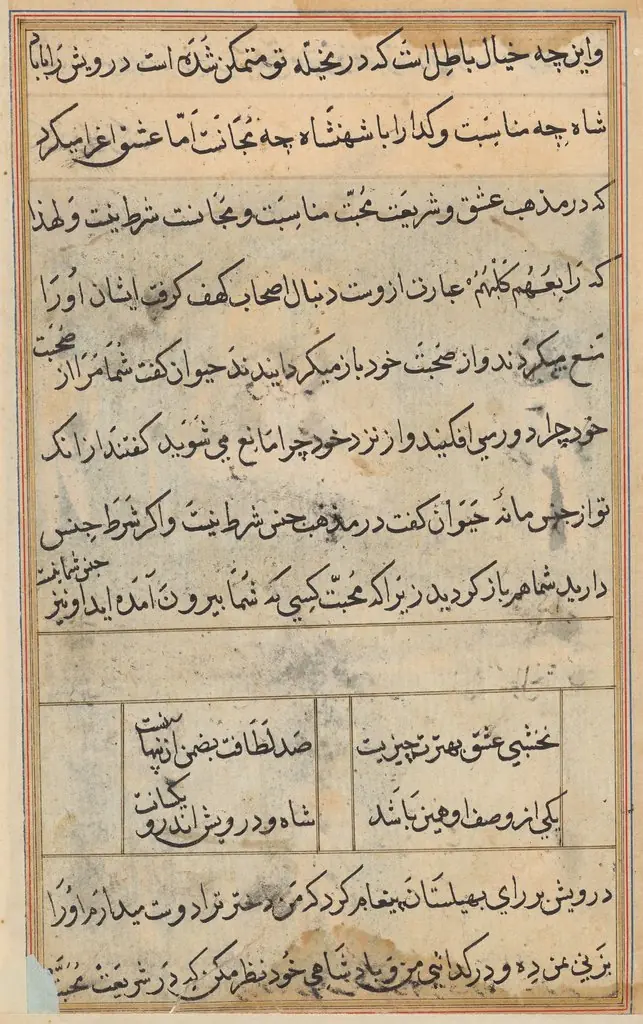 Page from Tales of a Parrot (Tuti-nama): text page
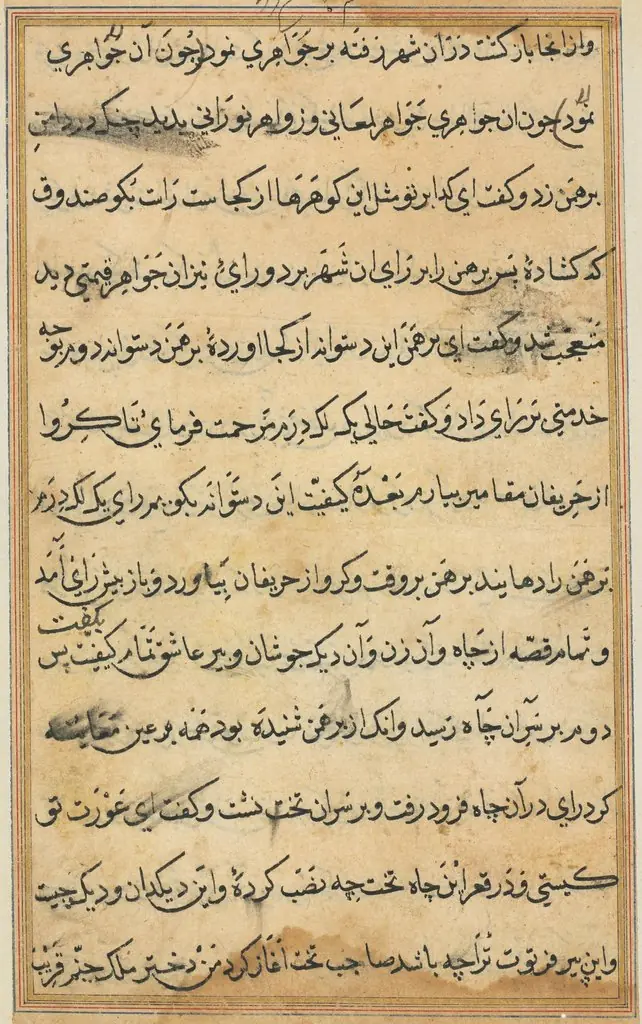 Page from Tales of a Parrot (Tuti-nama): text page
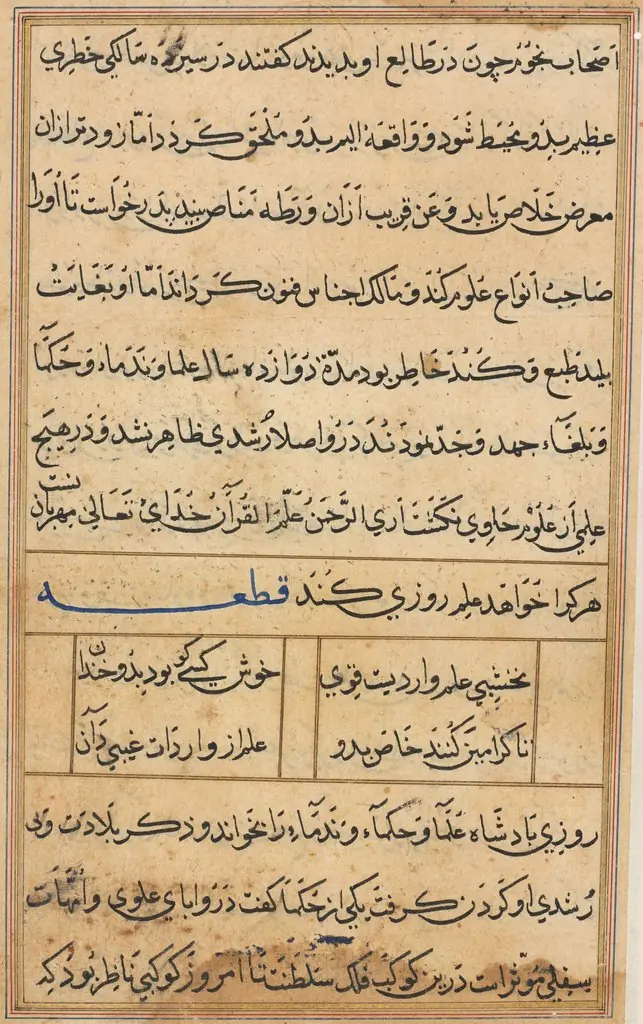 Page from Tales of a Parrot (Tuti-nama): text page
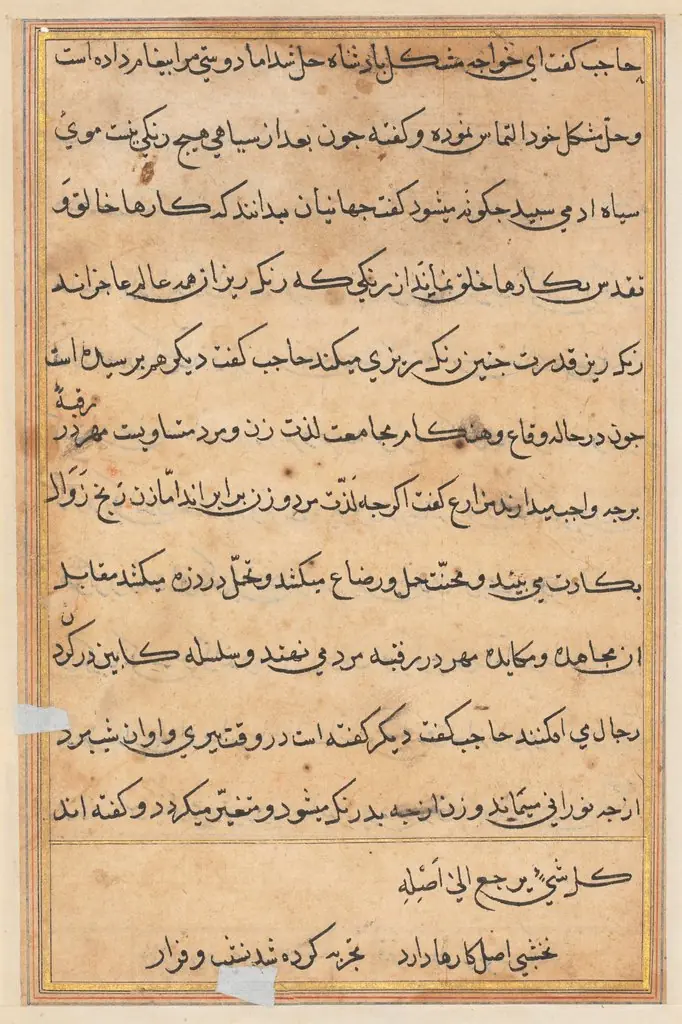 Page from Tales of a Parrot (Tuti-nama): text page
 Page from Tales of a Parrot (Tuti-nama): text page