Artwork
Page from Tales of a Parrot (Tuti-nama): text page
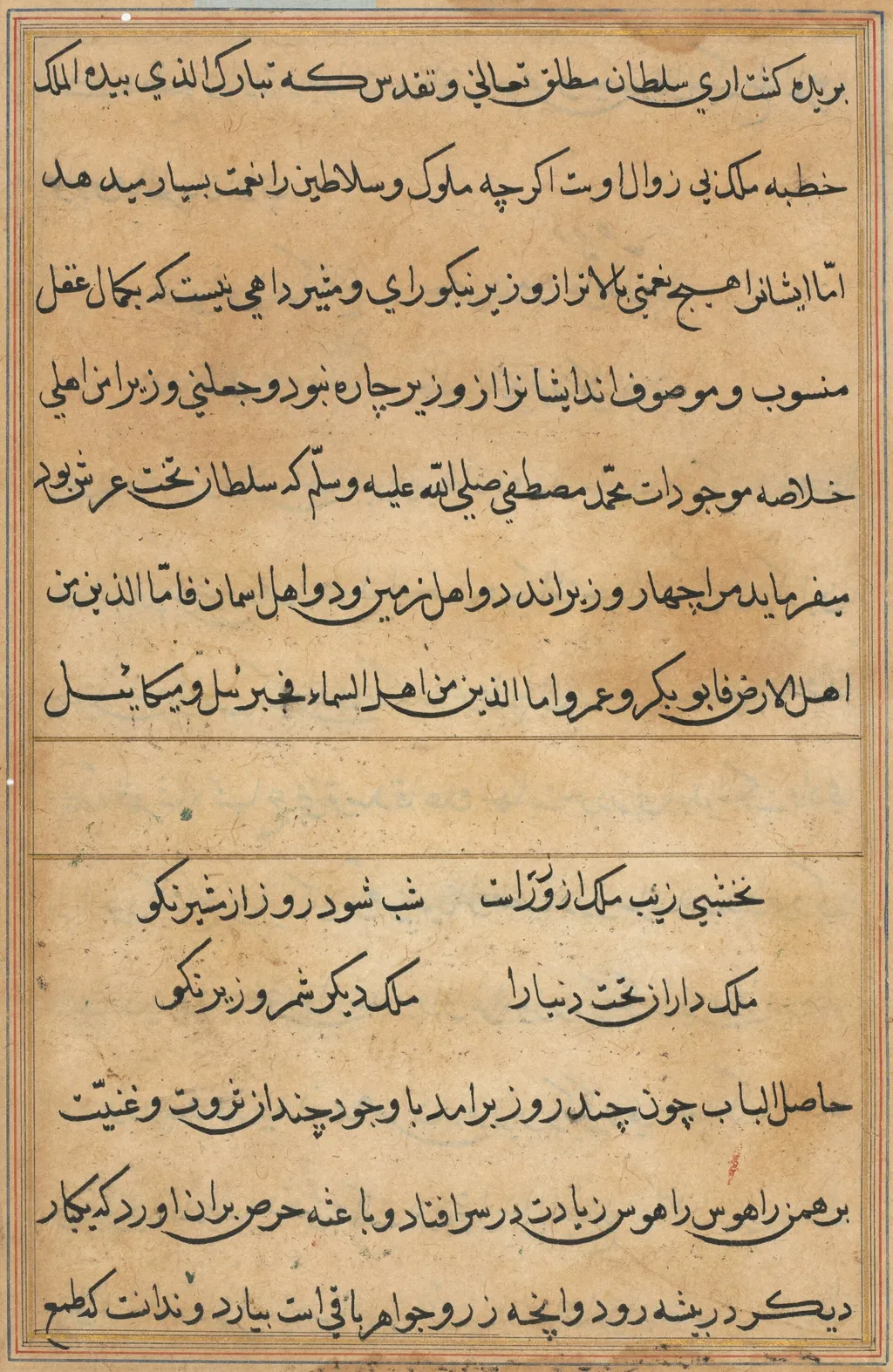
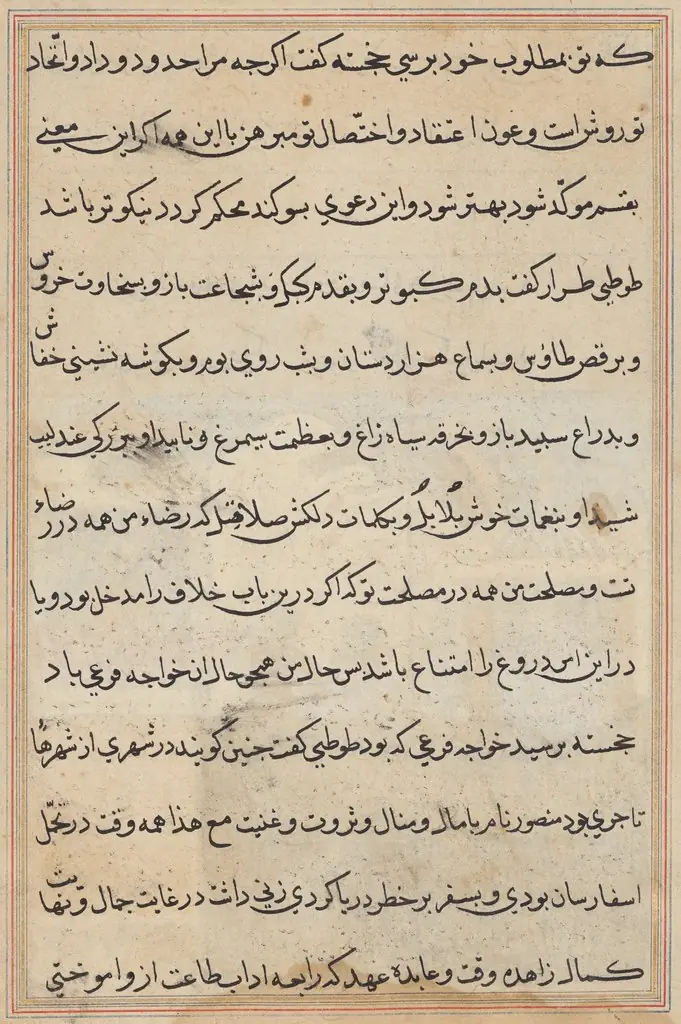
Page from Tales of a Parrot (Tuti-nama): text page is an unspecified painting. It dates from 1560 and is held in the collection of the Cleveland Museum of Art. The object is a single leaf from the illustrated manuscript known as Tuti‑nama (Tales of a Parrot).
About this work
History & Provenance
Created in 1560 within the Mughal Empire, this text page from the Tales of a Parrot (Tuti-nama) is attributed to an unknown artist.
Created in 1560 within the Mughal Empire, this text page from the Tales of a Parrot (Tuti-nama) is attributed to an unknown artist. The work was produced as part of the larger manuscript tradition commissioned during the Mughal period, though specific details regarding the original patron or the immediate circumstances of its commission are not detailed in the available records. The page later entered the collection of the Cleveland Museum of Art, where it is currently held as accession number 1962.279.151.a. Its history reflects the broader trajectory of Mughal manuscripts that eventually dispersed into Western museum collections.
Context
The miniature from the Tuti-nama dates to 1560 and exemplifies Mughal book arts, where text and image intertwine to illustrate didactic narratives. The work belongs to the CMA collection and reflects the practice of anonymous workshop production in 16th-century Persianate courts, linking it to broader manuscript traditions across the Islamic world.
Scholarship emphasizes its role in understanding cross-cultural transmission of literary motifs through illustrated Persian manuscripts, situating it within the evolution of narrative painting in early modern South and Central Asia.
Overview
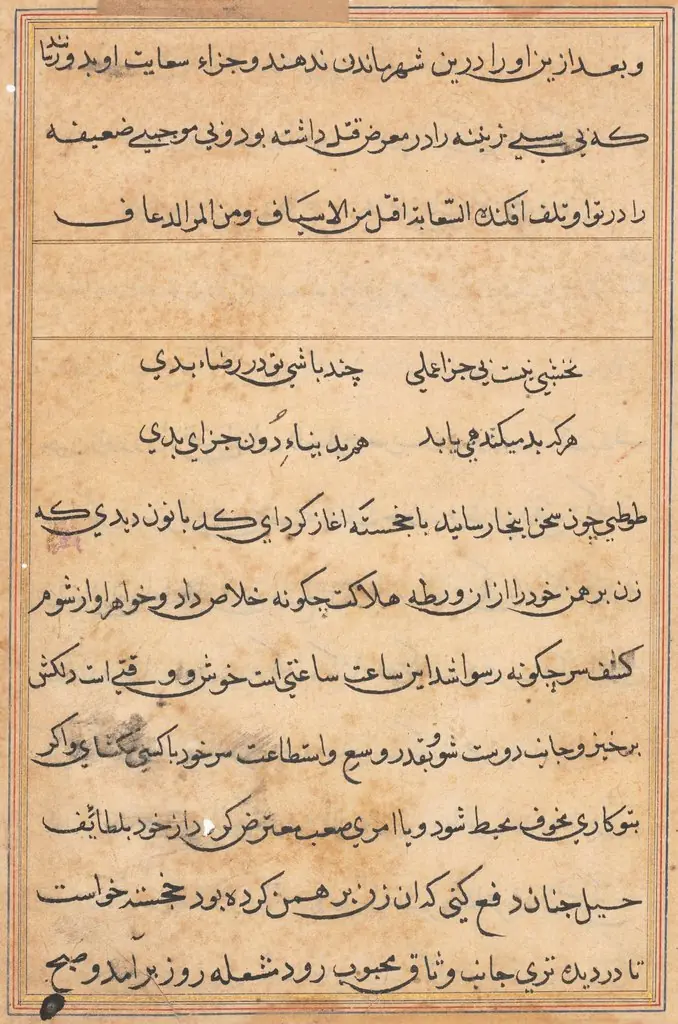
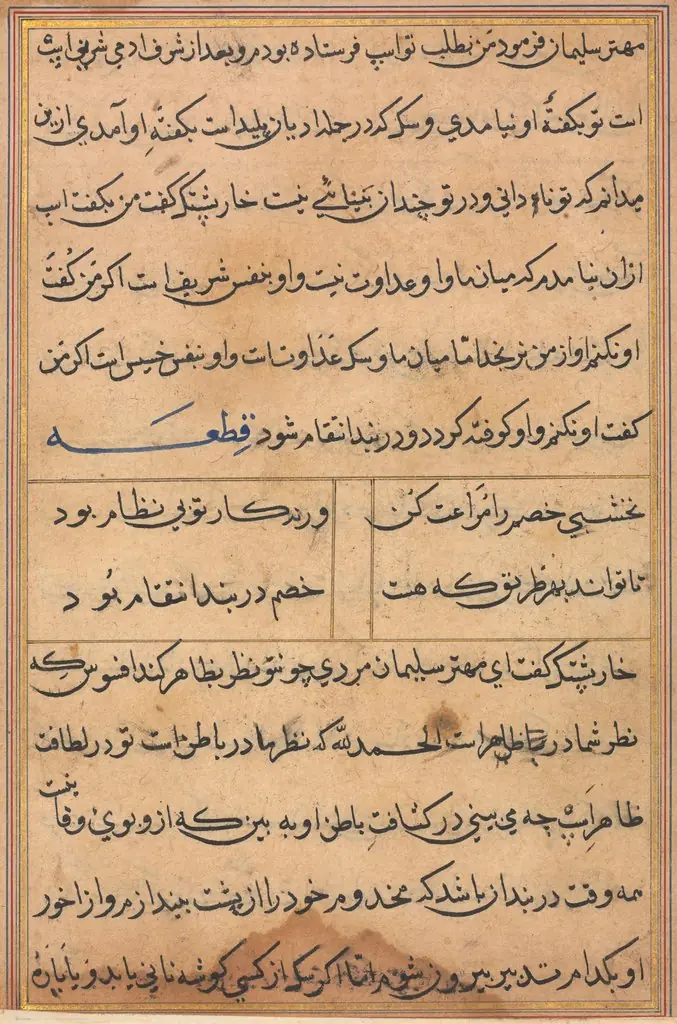
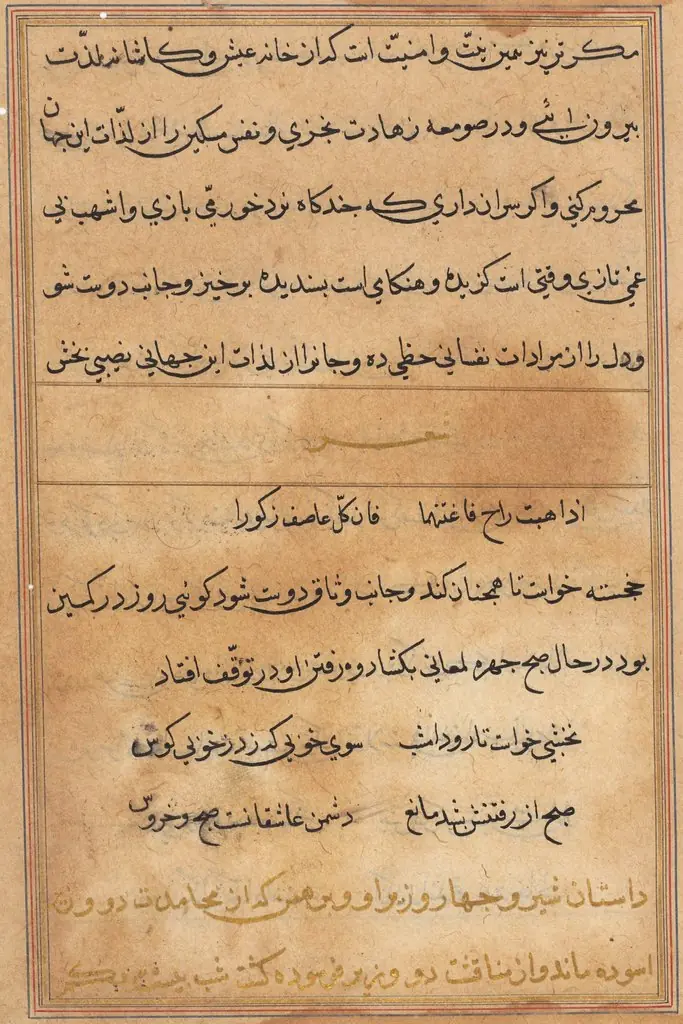
The object is a single leaf from the illustrated manuscript known as Tuti‑nama (Tales of a Parrot). It consists of a page of text rendered in black ink on a light‑tan vellum, framed by a narrow decorative border. The script flows in a cursive hand, with occasional words enlarged for emphasis, suggesting a poetic or narrative composition.
Subject & Meaning
The page appears to belong to a literary work that recounts stories involving a parrot, a common motif in Persian and Central Asian folklore. The highlighted passages likely mark key verses or moral points, indicating the text’s function as both entertainment and didactic instruction within its cultural context.
Technique & Style
The calligraphy employs a fluid, semi‑cursive script characteristic of Persian manuscript traditions of the late medieval period. Ink is applied in a uniform black, while the surrounding border is executed with fine linear ornamentation, creating a balanced visual rhythm that integrates text and decorative framing.
Legacy
Pages such as this illustrate the enduring influence of Persian calligraphic standards on later Islamic book arts. Their study informs contemporary understandings of textual transmission, artistic conventions, and the cross‑cultural appeal of animal‑centric storytelling.
Artist & collection

- Page from Tales of a Parrot (Tuti-nama): text page
 Page from Tales of a Parrot (Tuti-nama): text page
 Page from Tales of a Parrot (Tuti-nama): text page
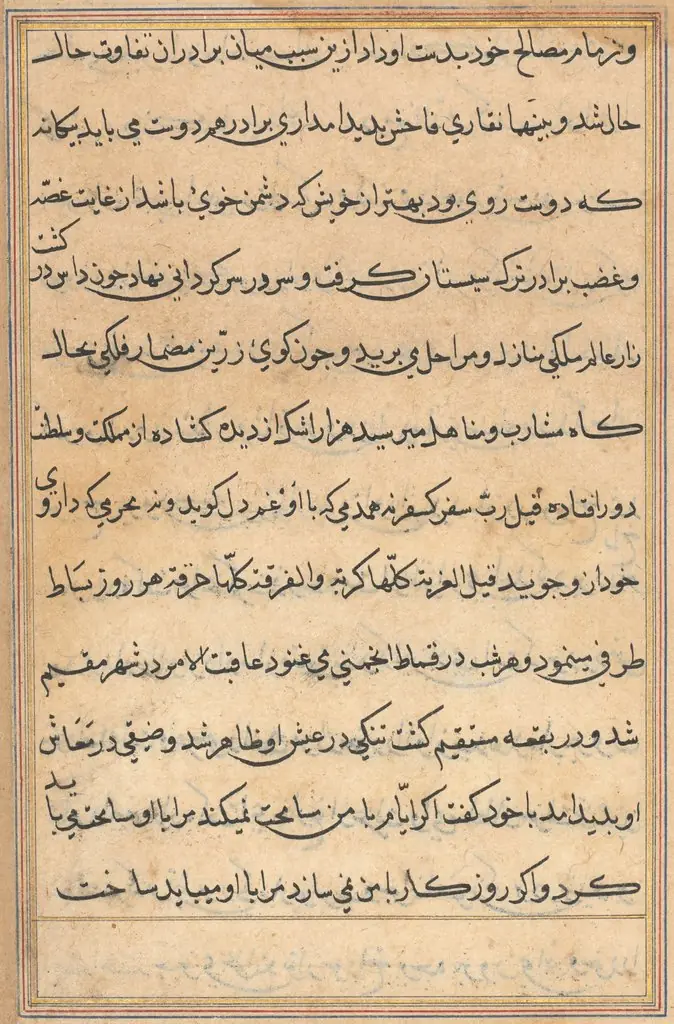 Page from Tales of a Parrot (Tuti-nama): text page
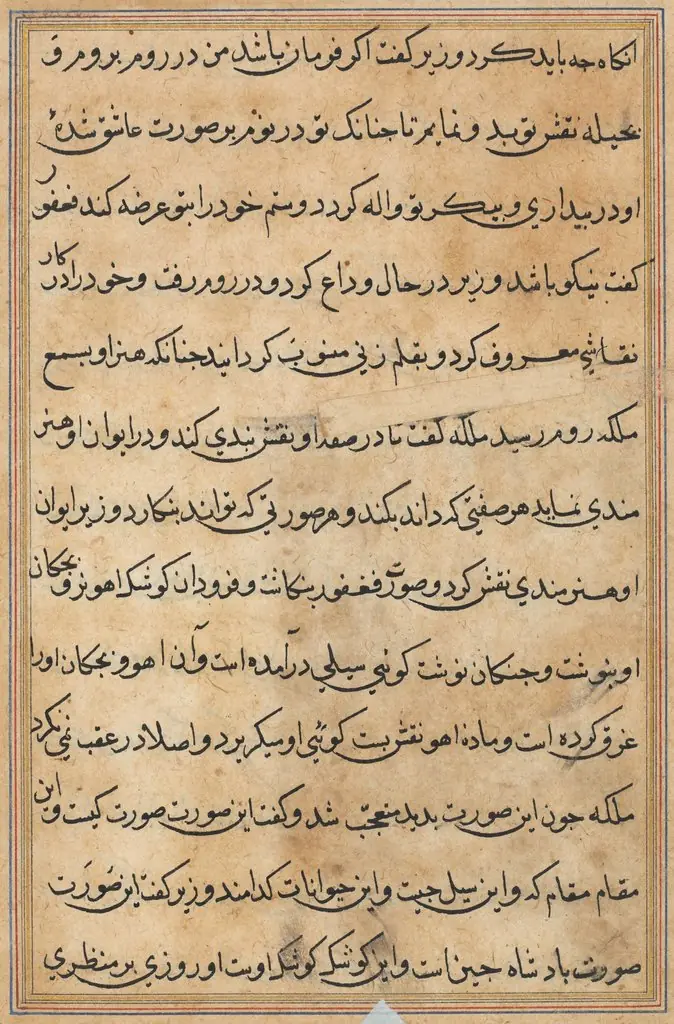 Page from Tales of a Parrot (Tuti-nama): text page
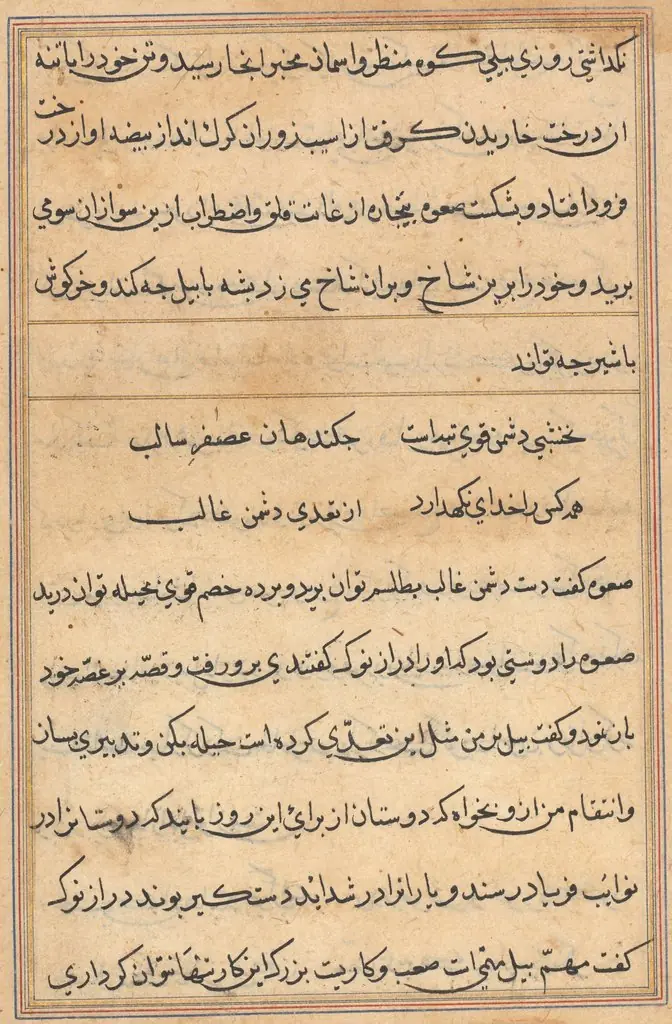 Page from Tales of a Parrot (Tuti-nama): text page
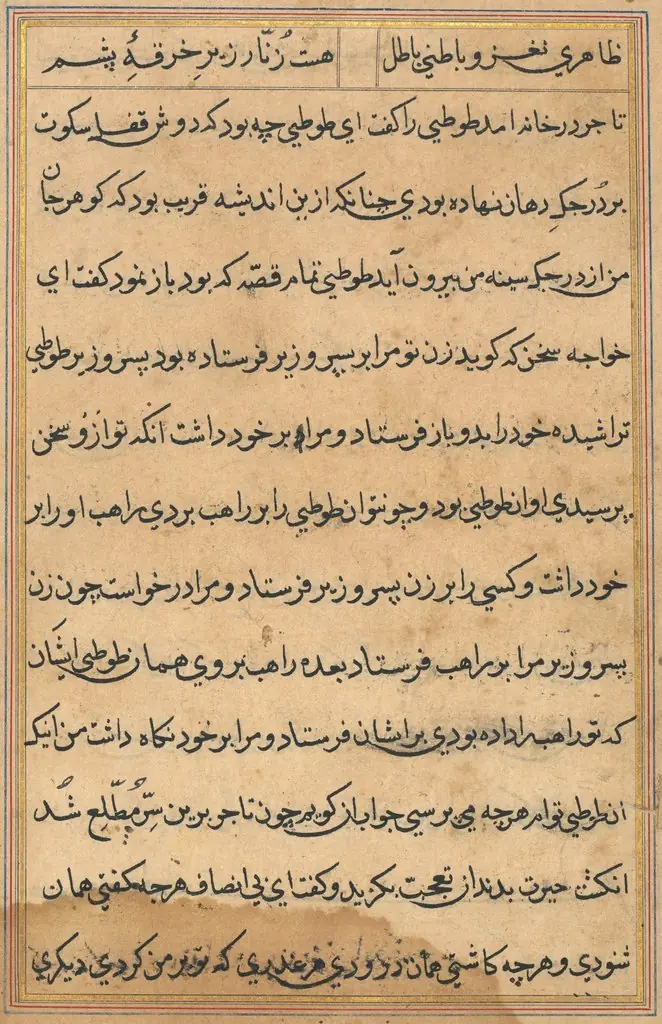 Page from Tales of a Parrot (Tuti-nama): text page
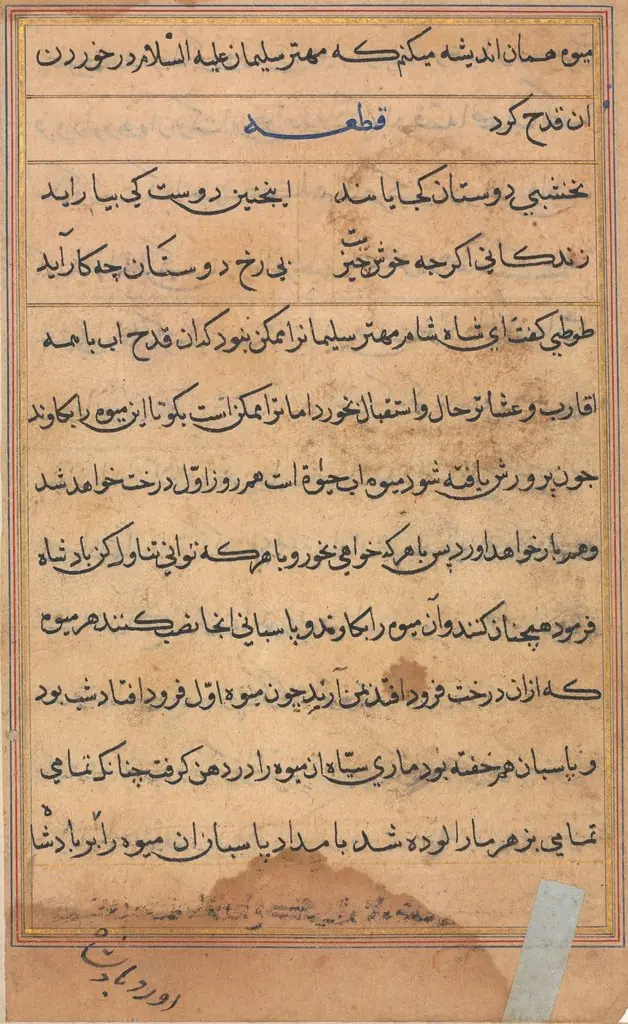 Page from Tales of a Parrot (Tuti-nama): text page
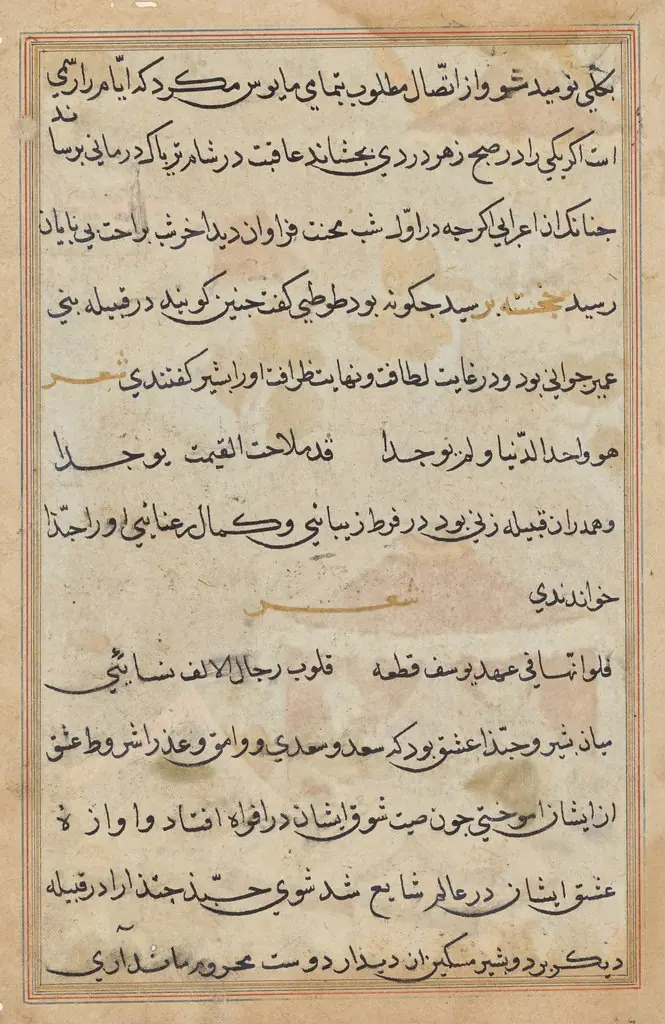 Page from Tales of a Parrot (Tuti-nama): text page
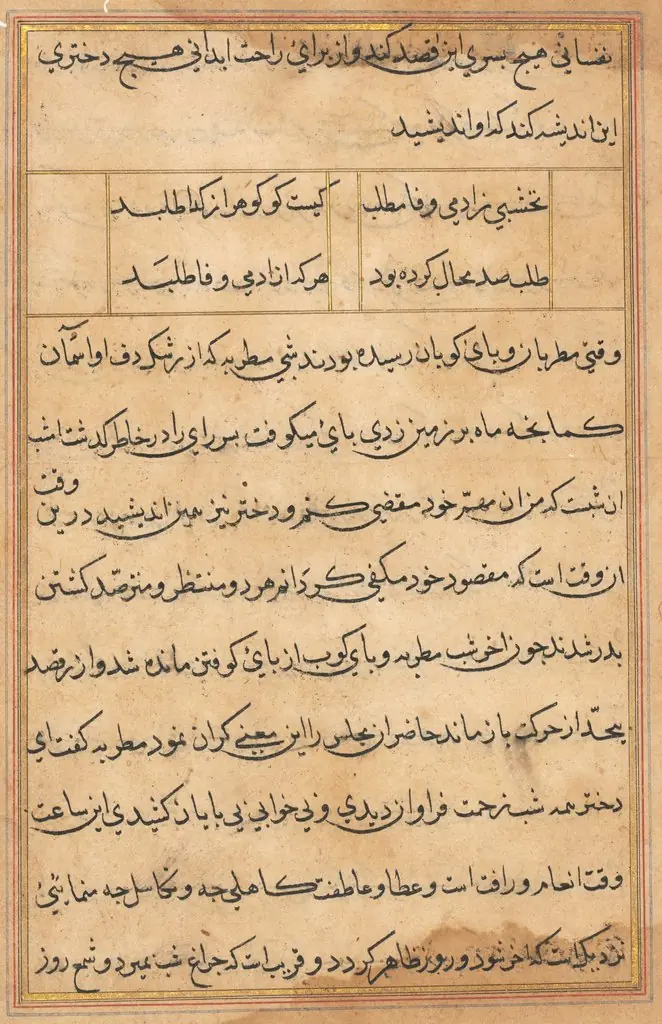 Page from Tales of a Parrot (Tuti-nama): text page
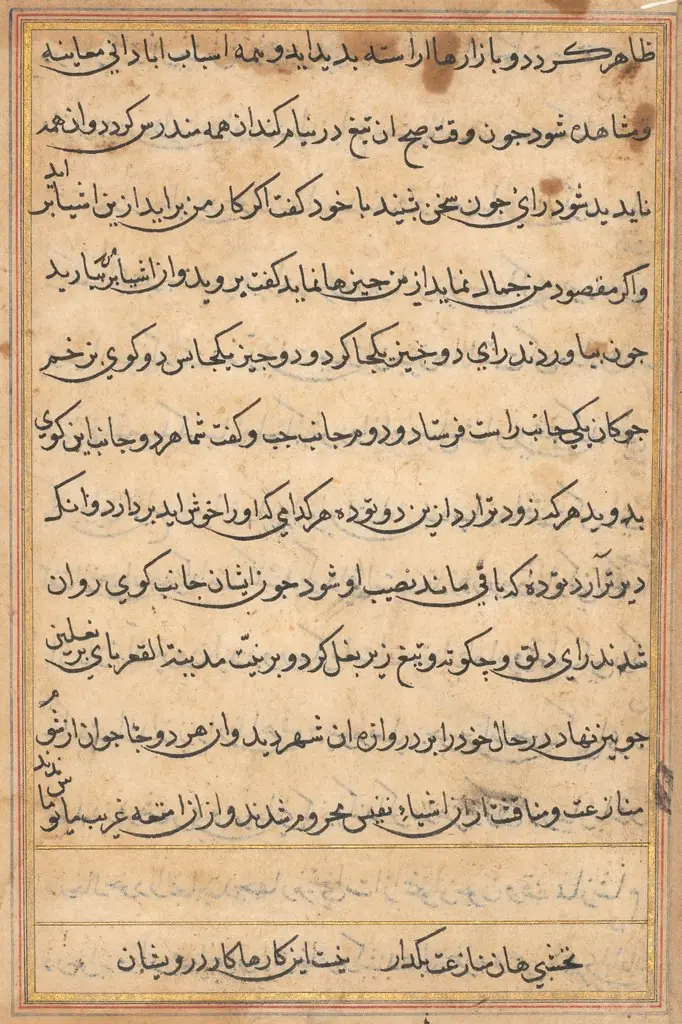 Page from Tales of a Parrot (Tuti-nama): text page
 Page from Tales of a Parrot (Tuti-nama): text page