Artwork
Page from Tales of a Parrot (Tuti-nama): text page
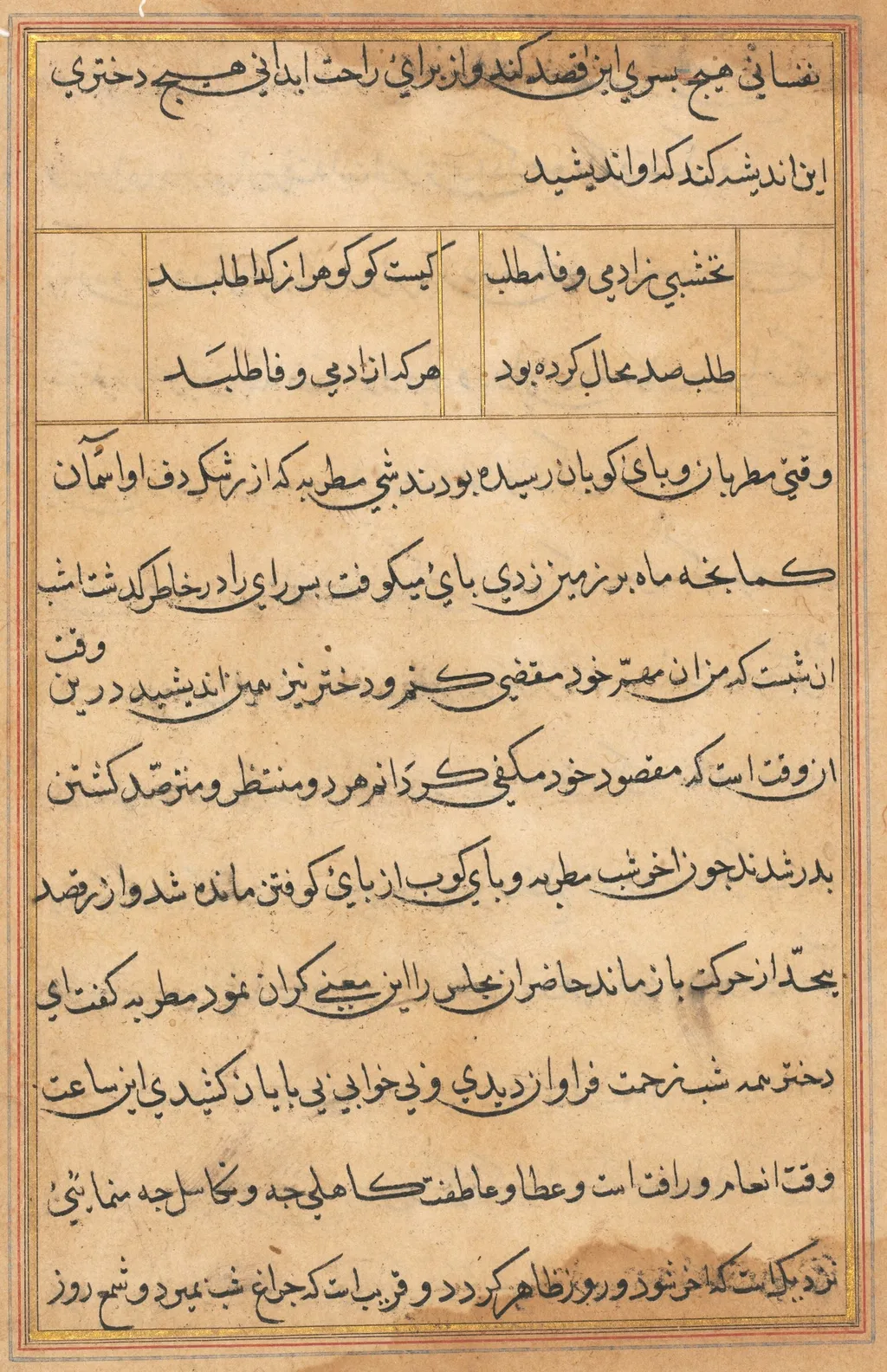
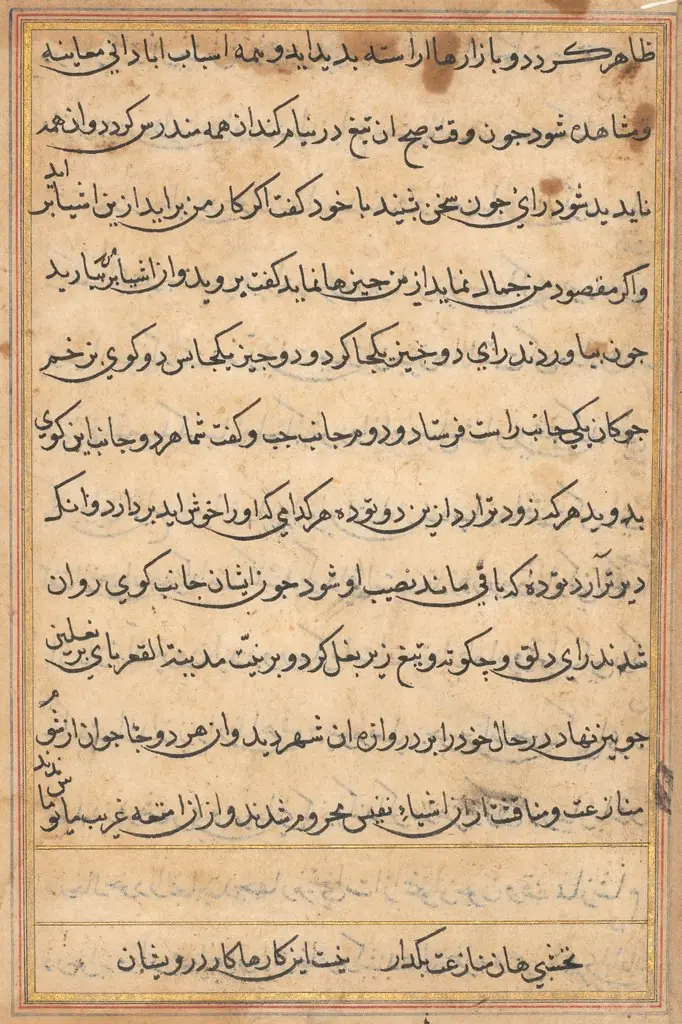
Page from Tales of a Parrot (Tuti-nama): text page is an unspecified painting. It dates from 1560 and is held in the collection of the Cleveland Museum of Art. This object is a painted page taken from the Persian manuscript Tales of a Parrot (Tuti‑nama).
About this work
History & Provenance
The text page from the Tales of a Parrot (Tuti-nama), created in 1560, is held by the Cleveland Museum of Art in Cleveland.
The text page from the Tales of a Parrot (Tuti-nama) is dated to circa 1560 and attributed to the Mughal Empire, aligning with the manuscript’s production period under Mughal patronage. The work entered the Cleveland Museum of Art in 1962 as part of an acquisition (1962.279.284.a), where it remains in the museum’s collection. Its creation coincides with the broader corpus of Tuti-nama illustrations, which were likely commissioned by Mughal emperors or elite patrons to reflect Persian literary traditions within a newly established imperial atelier.
The text page from the Tales of a Parrot (Tuti-nama), created in 1560, is held by the Cleveland Museum of Art in Cleveland. The museum acquired this work in 1962, assigning it the accession number 1962.279.284.a. While the piece originated in the Mughal Empire, its current institutional home is the Cleveland Museum of Art, where it remains part of their collection as a painting by an unknown artist.
Overview
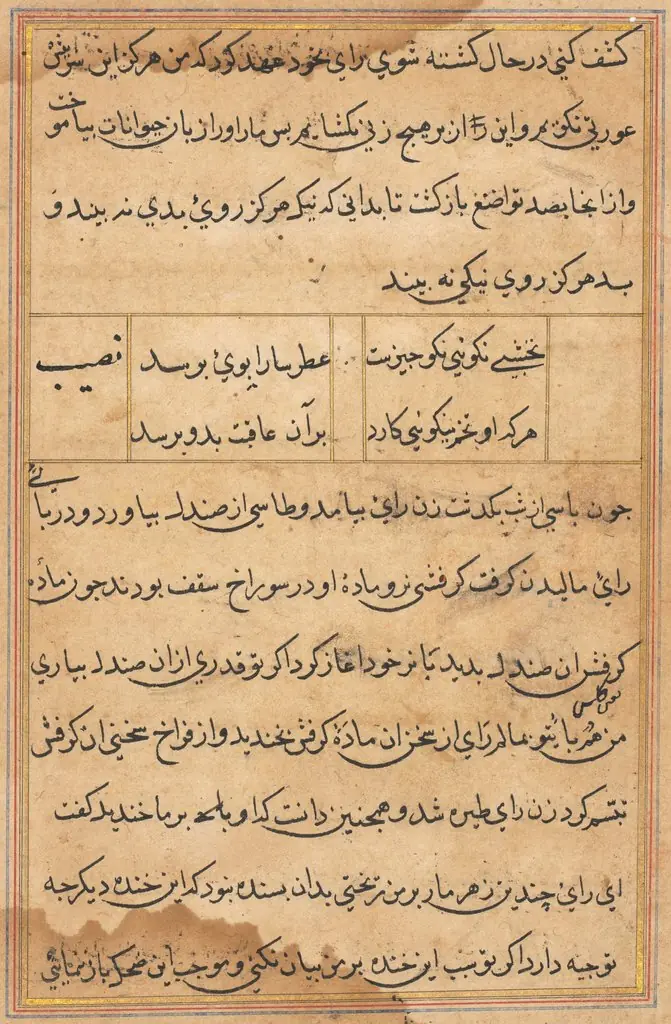
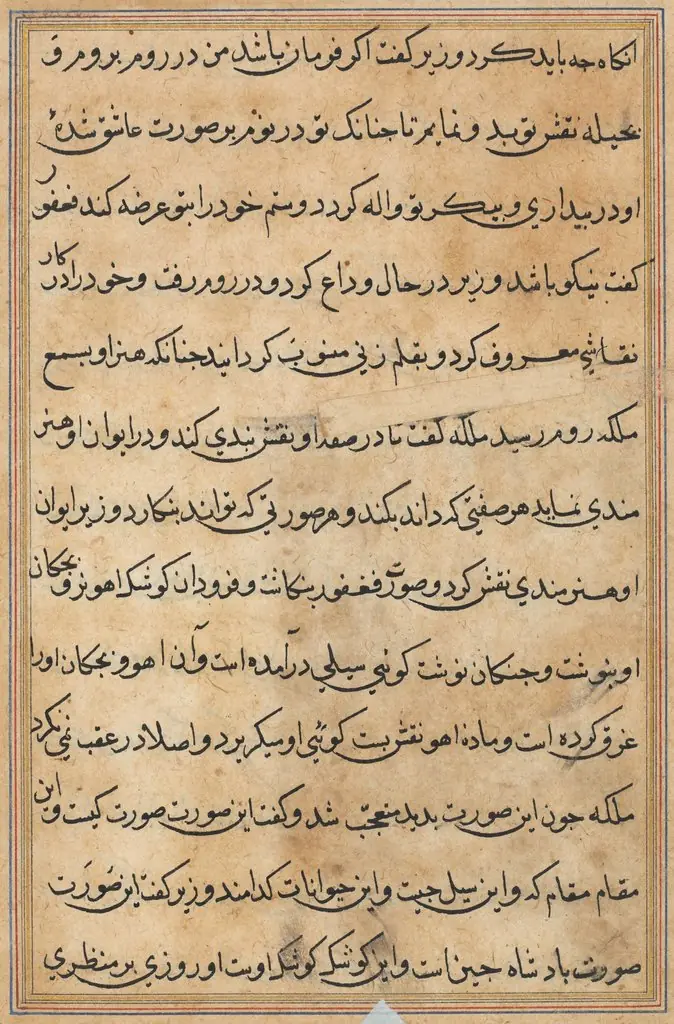
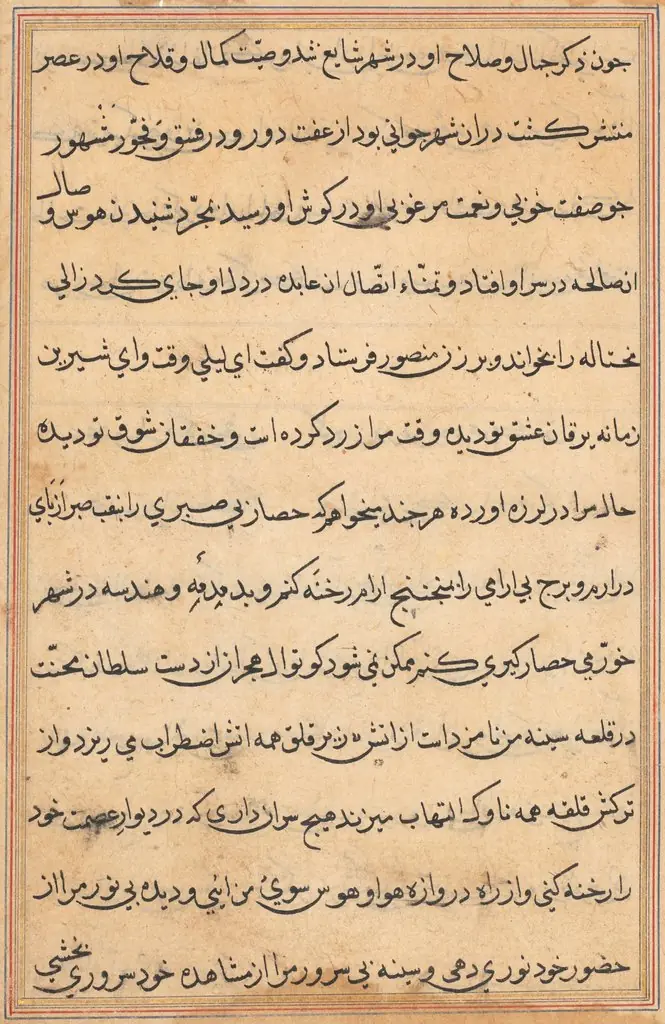
This object is a painted page taken from the Persian manuscript Tales of a Parrot (Tuti‑nama). Executed as a miniature illustration, the surface is filled with dense black Arabic calligraphy arranged in compact rows, framed by a narrow red line and a subtle gold edging along the margins.
Subject & Meaning
The script records a narrative episode from the Tuti‑nama, a collection of moral and romantic tales traditionally recited to entertain and instruct. Though the visual design is purely textual, the story’s content reflects courtly themes of love, loyalty, and wit that were popular in Safavid literary culture.
Technique & Style
The calligraphic hand appears to be a careful, hand‑drawn execution, with occasional enlarged letters that emphasize key words or names. The red border and faint gold line were applied with fine brushes, typical of manuscript illumination that combines text with modest decorative framing rather than elaborate figural scenes.
Context
During the period of its creation, Persian manuscripts often blended literary content with subtle ornamental elements, reflecting a cultural emphasis on the visual presentation of poetry and prose. The Tuti‑nama itself was a widely circulated text, adapted for various patrons and illustrated in diverse styles across the region.
Artist & collection

- Page from Tales of a Parrot (Tuti-nama): text page
 Page from Tales of a Parrot (Tuti-nama): text page
 Page from Tales of a Parrot (Tuti-nama): text page
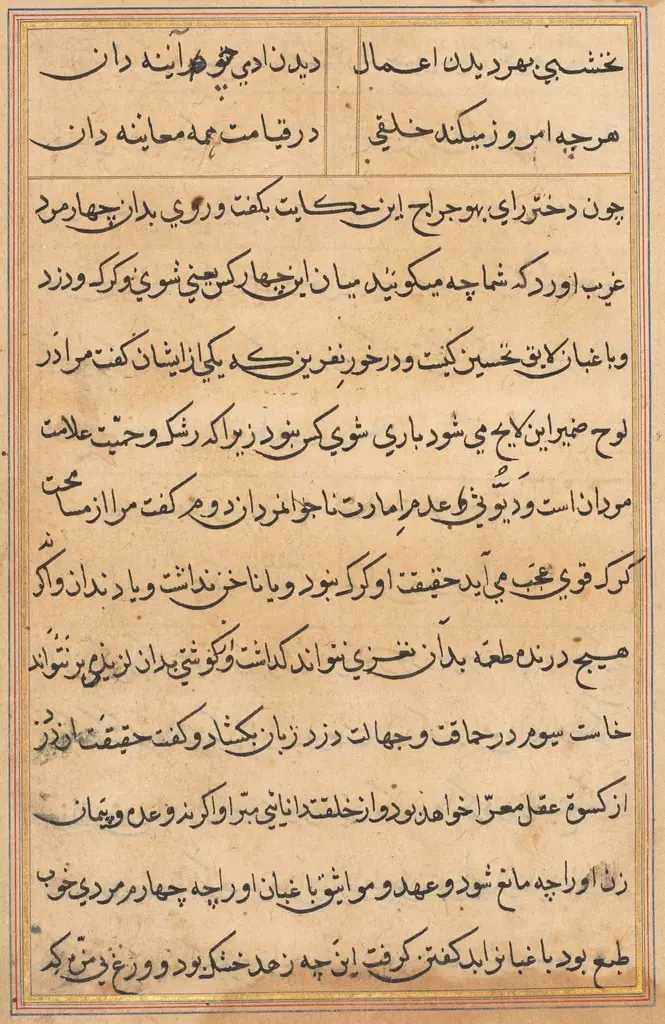 Page from Tales of a Parrot (Tuti-nama): text page
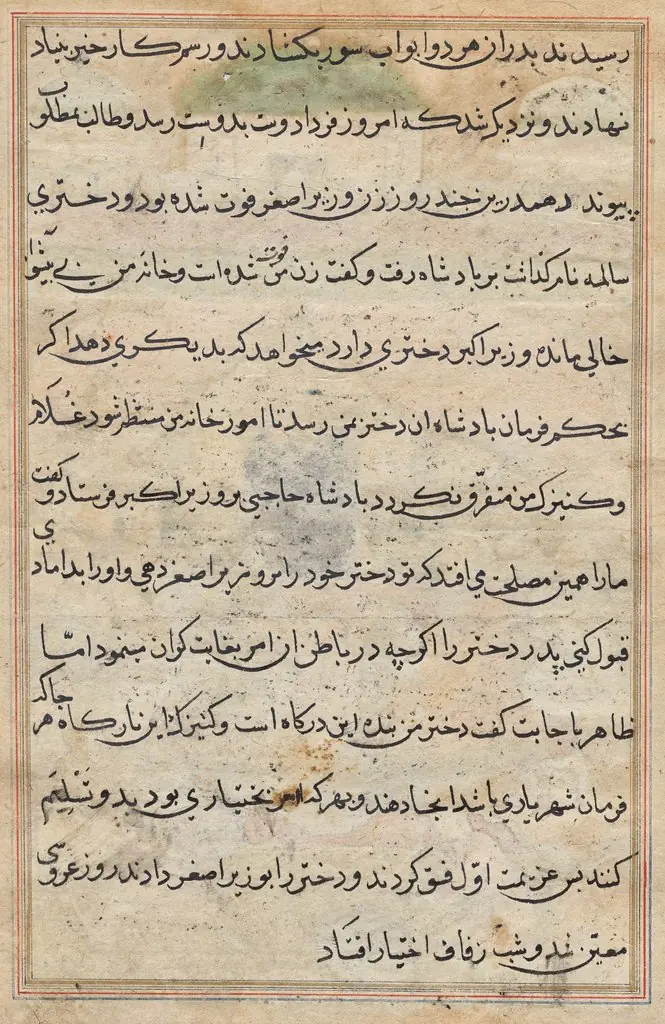 Page from Tales of a Parrot (Tuti-nama): text page
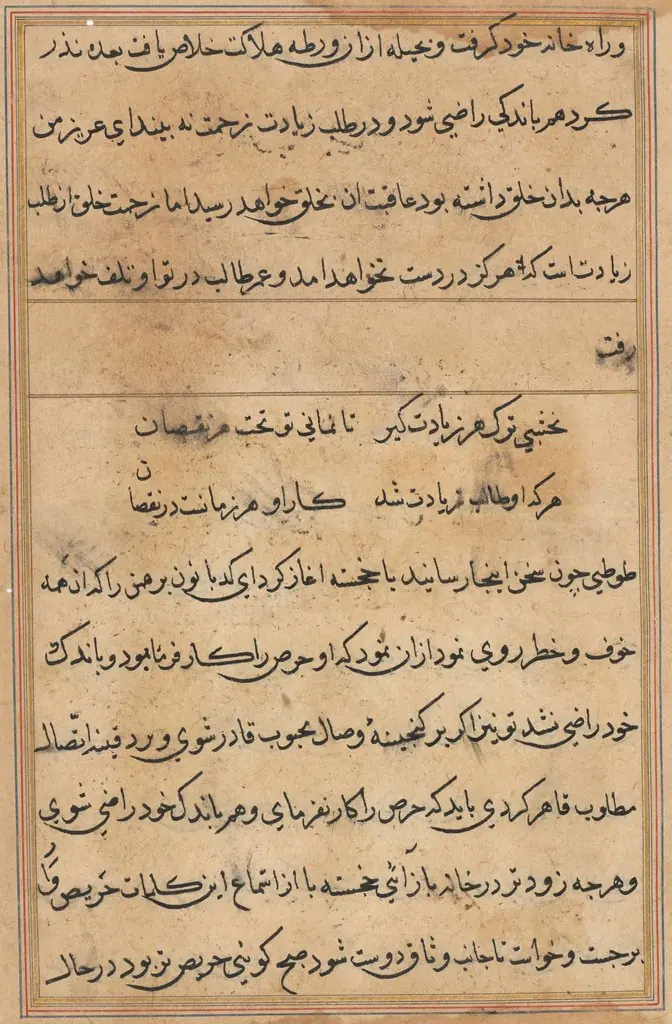 Page from Tales of a Parrot (Tuti-nama): text page
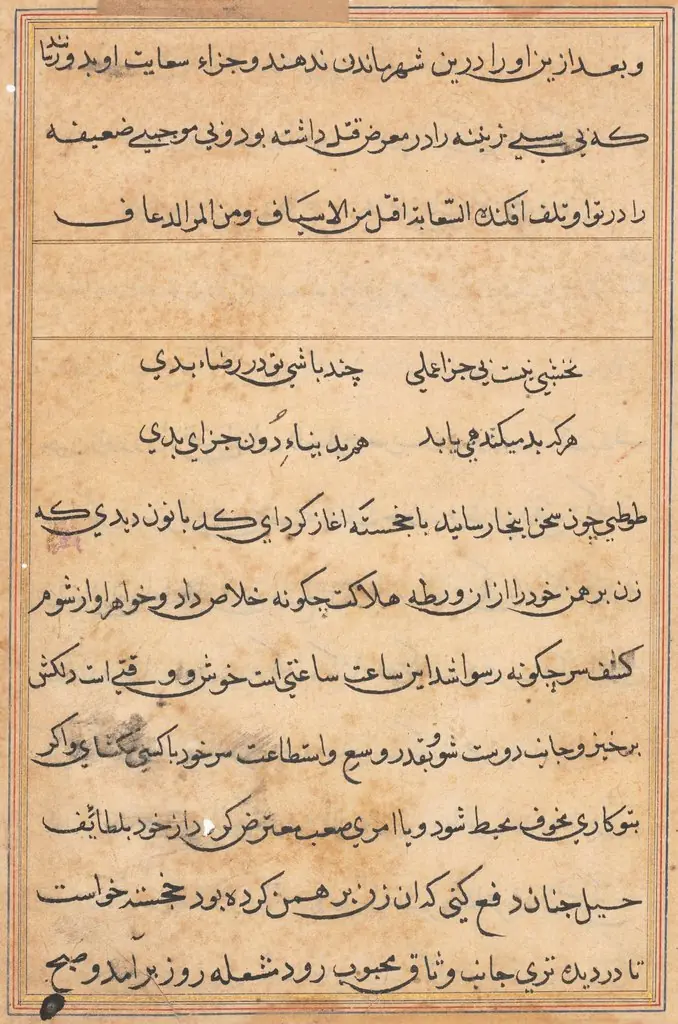 Page from Tales of a Parrot (Tuti-nama): text page
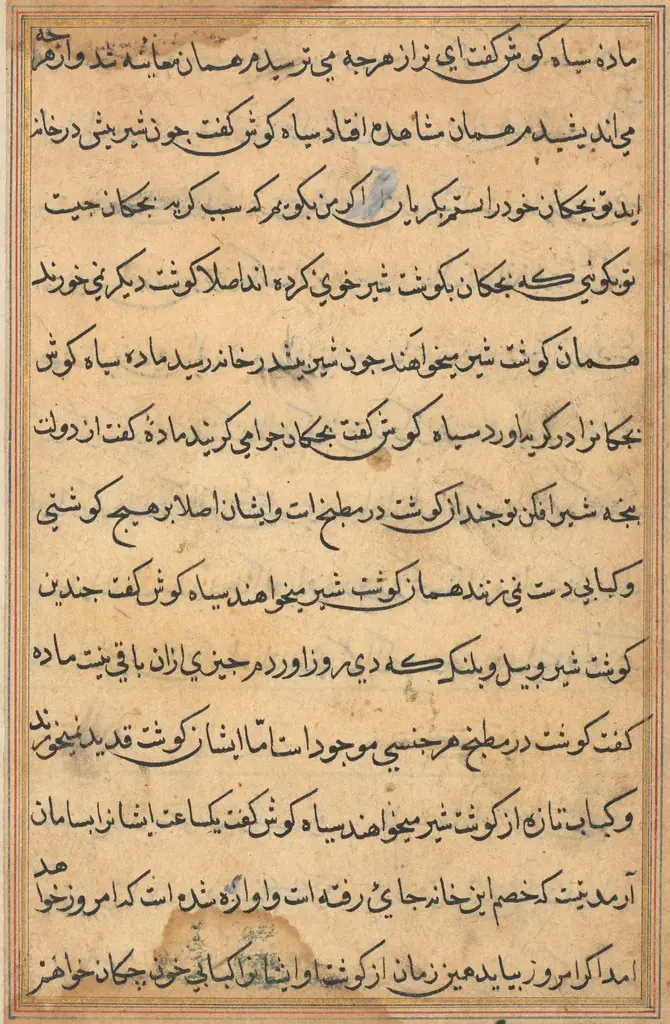 Page from Tales of a Parrot (Tuti-nama): text page
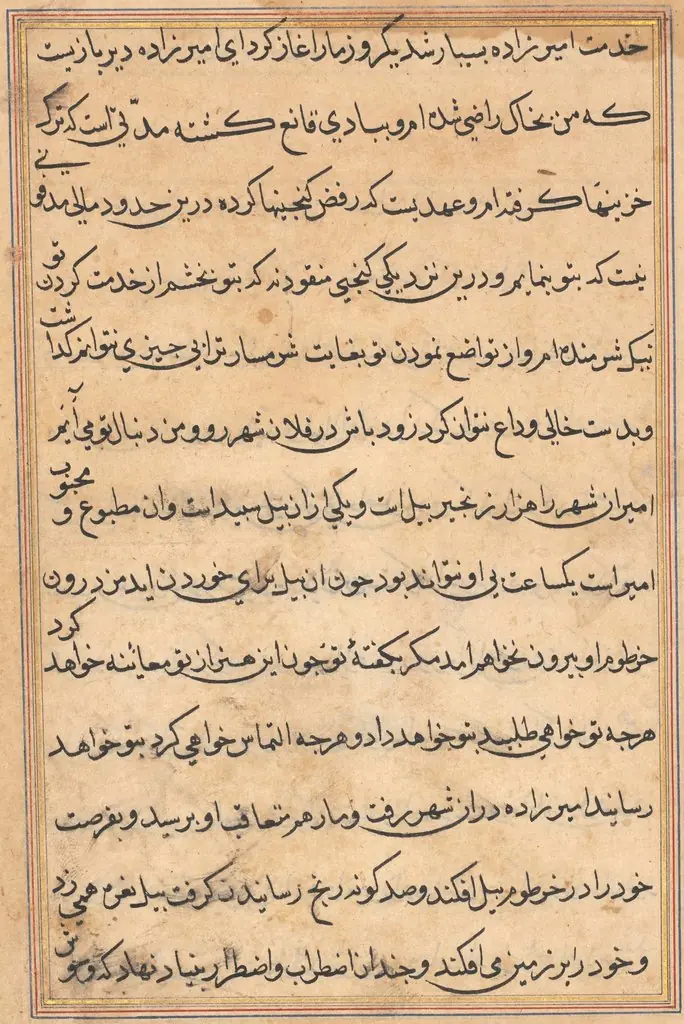 Page from Tales of a Parrot (Tuti-nama): text page
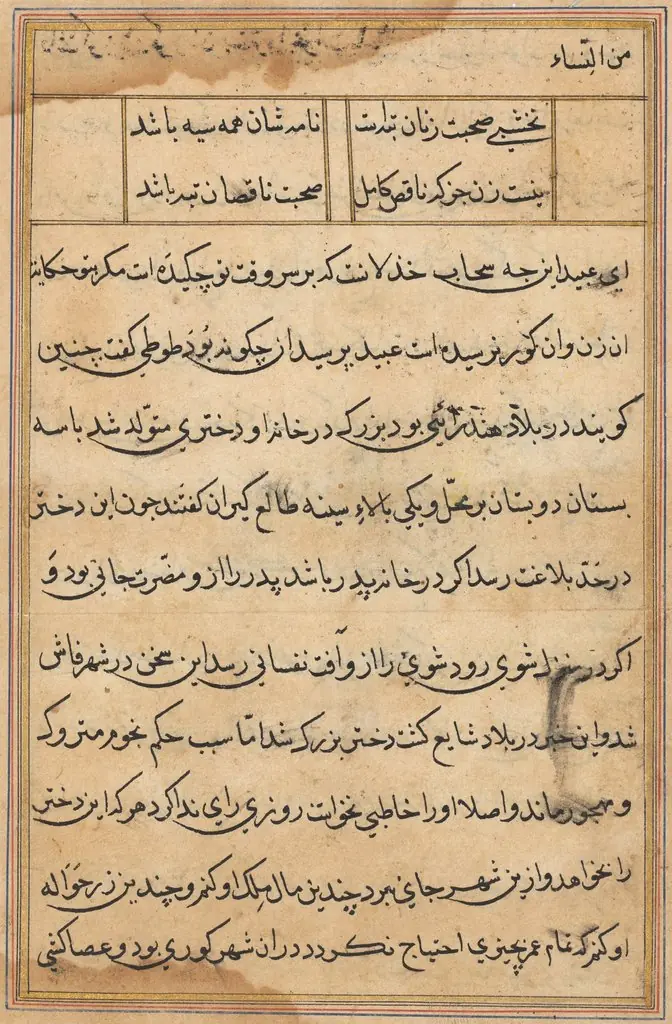 Page from Tales of a Parrot (Tuti-nama): text page
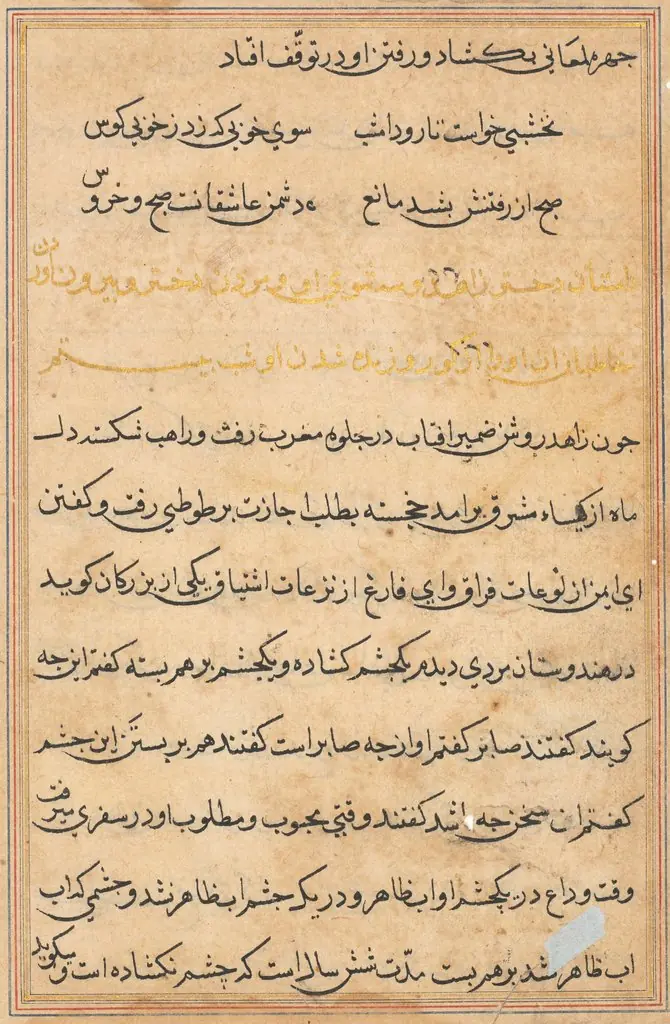 Page from Tales of a Parrot (Tuti-nama): text page
 Page from Tales of a Parrot (Tuti-nama): text page