Artwork
Page from Tales of a Parrot (Tuti-nama): text page
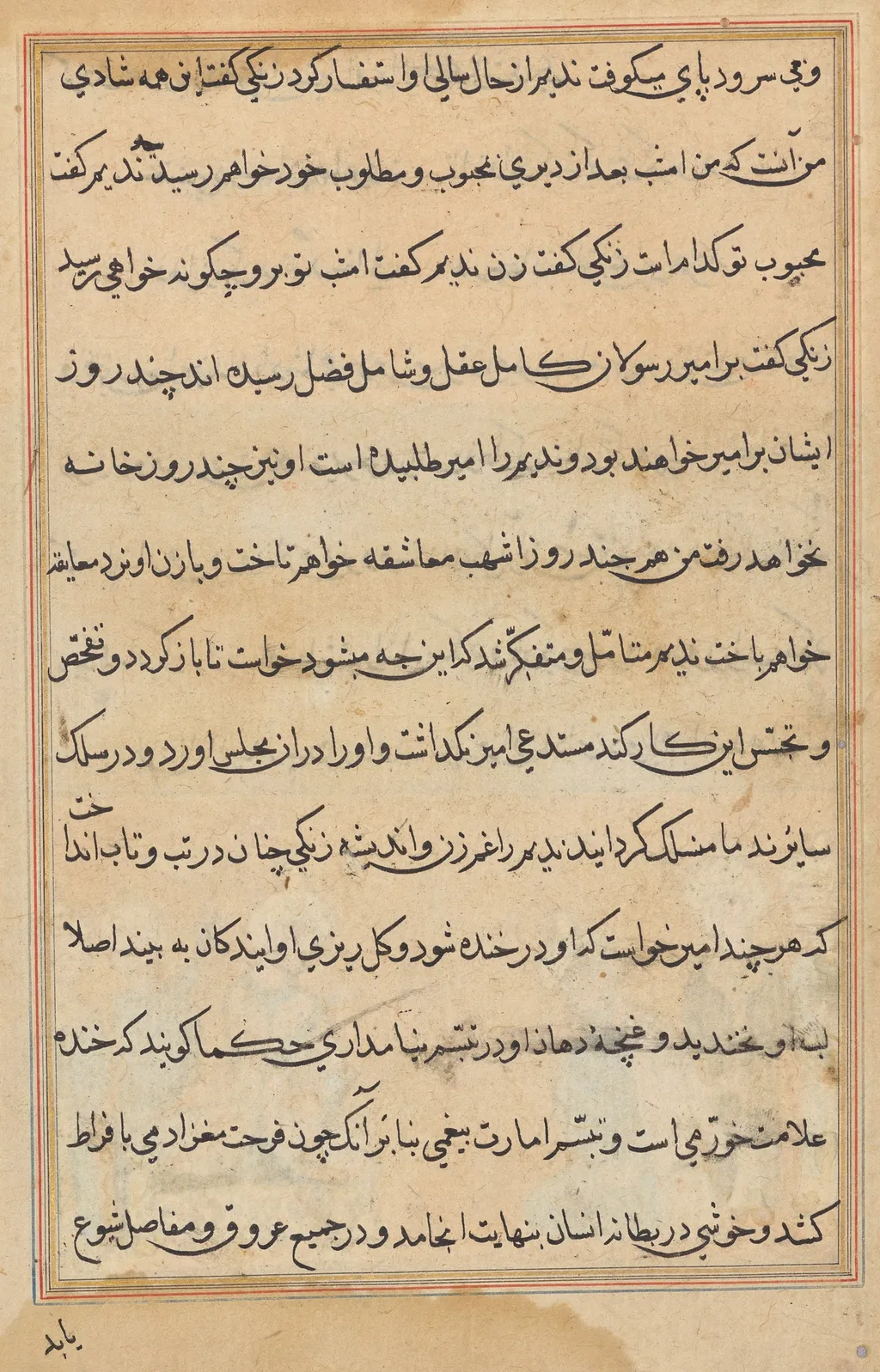
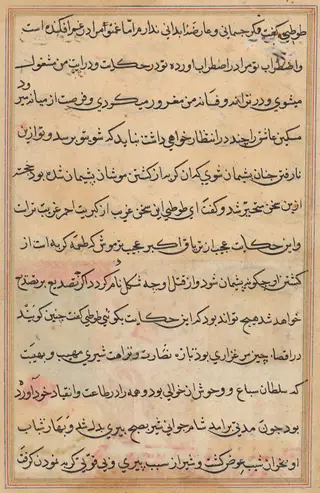
Page from Tales of a Parrot (Tuti-nama): text page is an unspecified painting. It dates from 1560 and is held in the collection of the Cleveland Museum of Art. This object is a single leaf from the illustrated manuscript known as Tales of a Parrot (Tuti‑nama).
About this work
Subject & Meaning
The miniature depicts a scene from the Tuti-nama, a 14th-century Persian collection of moral tales rendered in Persian miniature tradition.
The miniature depicts a scene from the Tuti-nama, a 14th-century Persian collection of moral tales rendered in Persian miniature tradition. The text page illustrates a parrot recounting a story, embodying didactic instruction through avian allegory. Symbolically, the bird conveys moral counsel, reflecting Sufi themes of wisdom and divine guidance prevalent in Mughal manuscript culture.
Executed circa 1560 in the Mughal imperial atelier, the work functions as both narrative device and didactic emblem within the manuscript’s pedagogical framework.
History & Provenance
Created in 1560 within the Mughal Empire, this text page originates from the manuscript known as the Tuti-nama (Tales of a Parrot). The specific artist responsible for the work remains unidentified. The object eventually entered the collection of the Cleveland Museum of Art, where it is cataloged under the accession number 1962.279.155.b. No further details regarding its original commission or intermediate ownership history prior to its acquisition by the museum are provided in the available records.
The text page from Tales of a Parrot (Tuti-nama) is held in the collection of the Cleveland Museum of Art, where it is cataloged under accession or inventory number 1962.279.155.b. The work was created in 1560 within the Mughal Empire and entered the museum's collection at an unspecified later date. It has been part of exhibitions focusing on Indian miniature painting and Persianate manuscript traditions, though specific exhibition titles and dates are not detailed in the available records.
Context
Created in 1560 within the Mughal Empire, this text page from the Tuti-nama represents a significant artifact of early Mughal manuscript illumination. The work is attributed to an unknown artist, reflecting the collaborative nature of imperial workshops where individual attribution was often secondary to the collective output of the court. As part of the Cleveland Museum of Art's collection, the page serves as a primary example of the transition in Persianate painting styles under early Mughal patronage.
Its survival provides critical evidence for scholars studying the textual and visual interplay in sixteenth-century Indian manuscripts, illustrating the era's synthesis of literary tradition and artistic innovation.
Overview
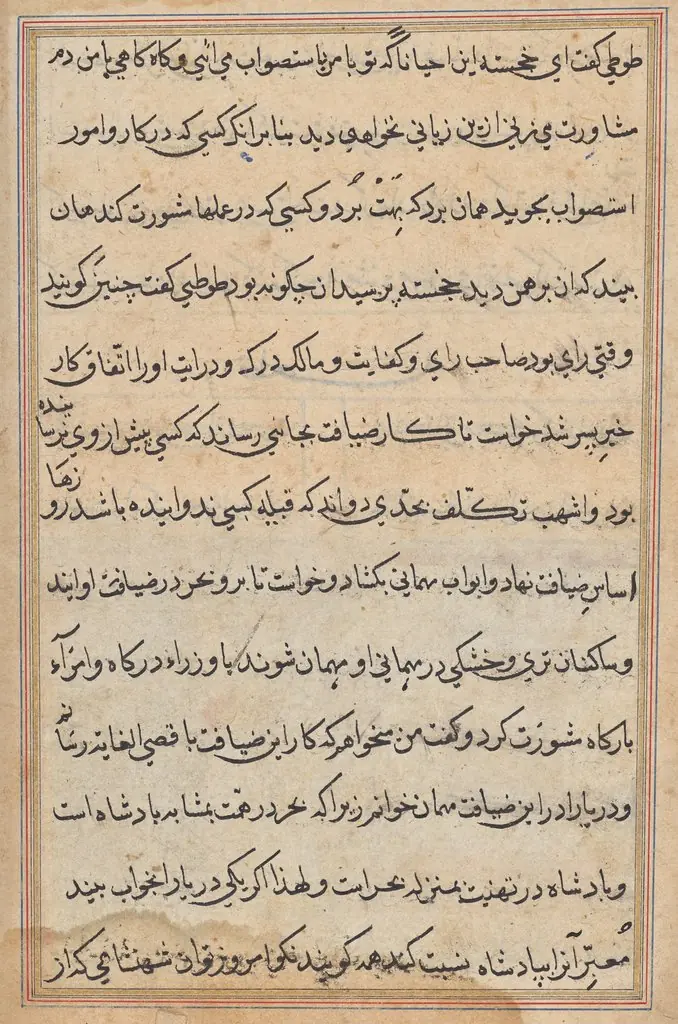
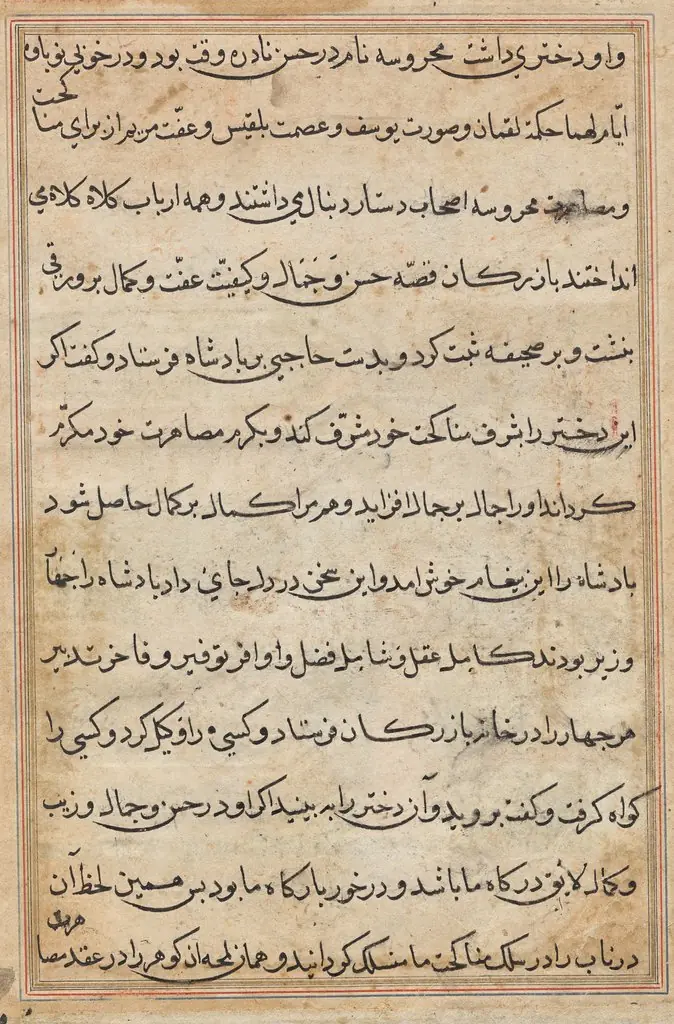
This object is a single leaf from the illustrated manuscript known as Tales of a Parrot (Tuti‑nama). The page consists of dense black calligraphy arranged in orderly rows, bordered by a thin red strip and an inner blue line. The support is aged paper, yellowed with time and bearing faint stains, indicating its historic use as a textual rather than pictorial surface.
Technique & Style
The calligraphy is executed in a uniform black ink, each character rendered with meticulous attention to proportion and spacing. The decorative borders, red outer edge and a narrower blue inner line, frame the text and reflect a modest ornamental practice common in Persian and South Asian manuscript traditions.
Artist & collection

- Page from Tales of a Parrot (Tuti-nama): text page
 Page from Tales of a Parrot (Tuti-nama): text page
 Page from Tales of a Parrot (Tuti-nama): text page
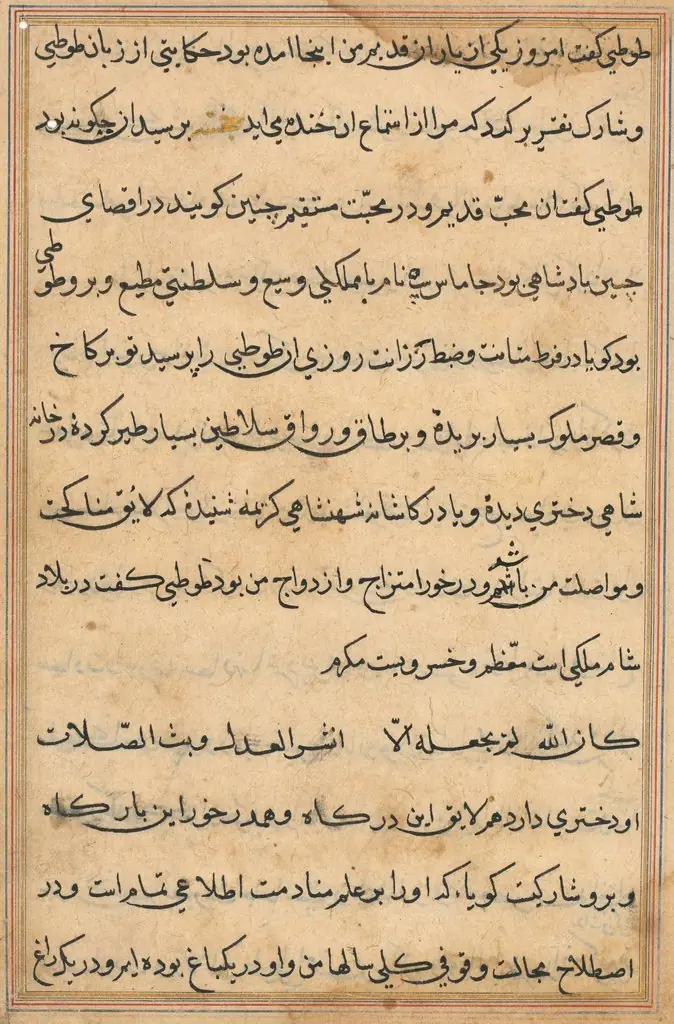 Page from Tales of a Parrot (Tuti-nama): text page
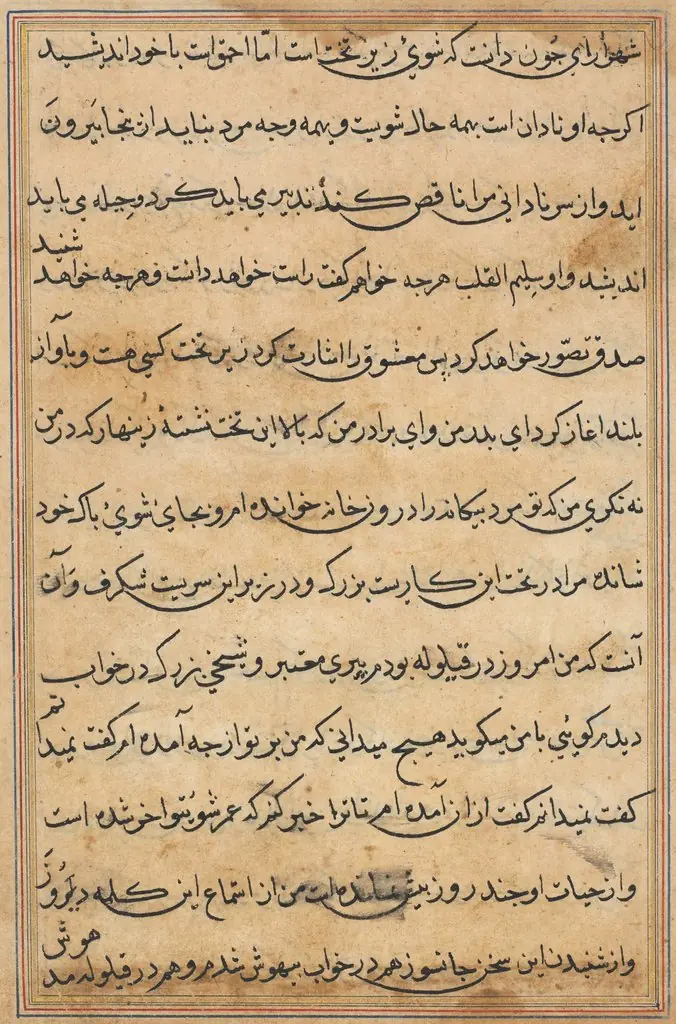 Page from Tales of a Parrot (Tuti-nama): text page
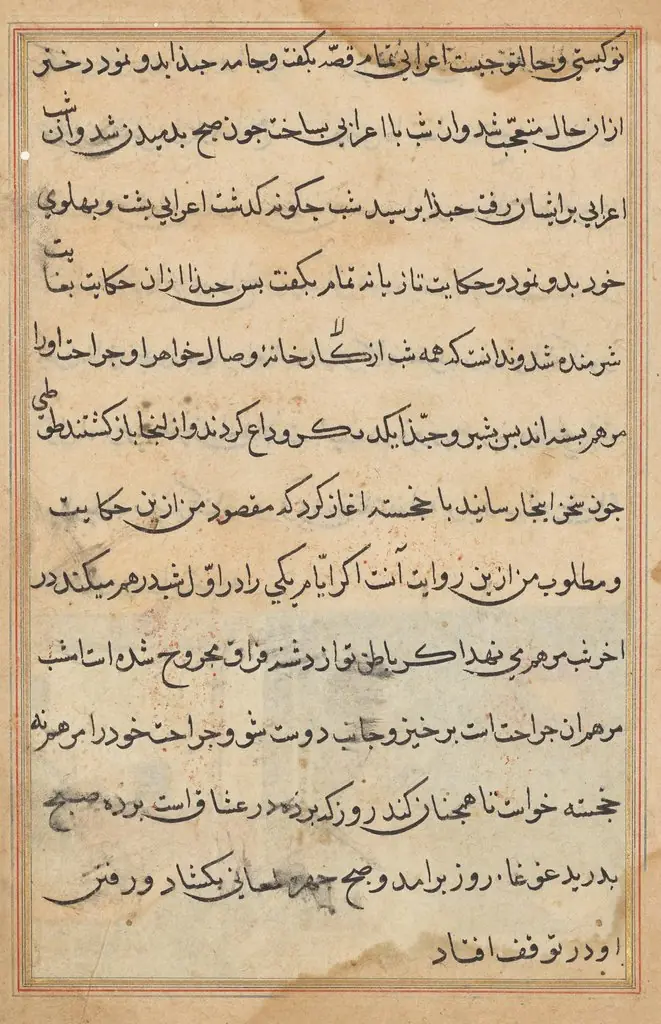 Page from Tales of a Parrot (Tuti-nama): text page
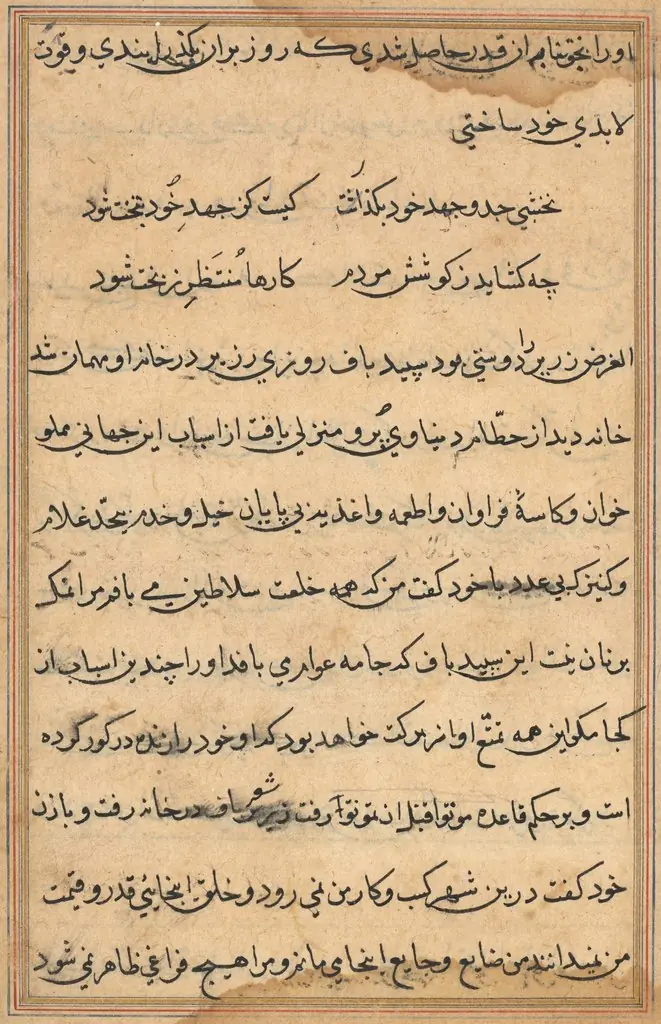 Page from Tales of a Parrot (Tuti-nama): text page
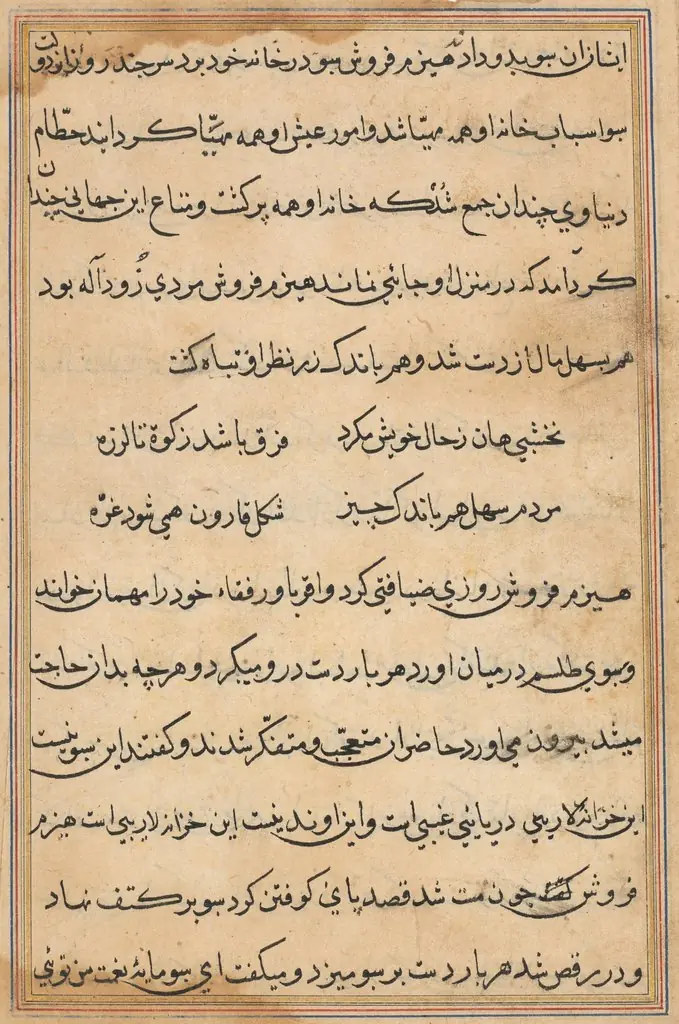 Page from Tales of a Parrot (Tuti-nama): text page
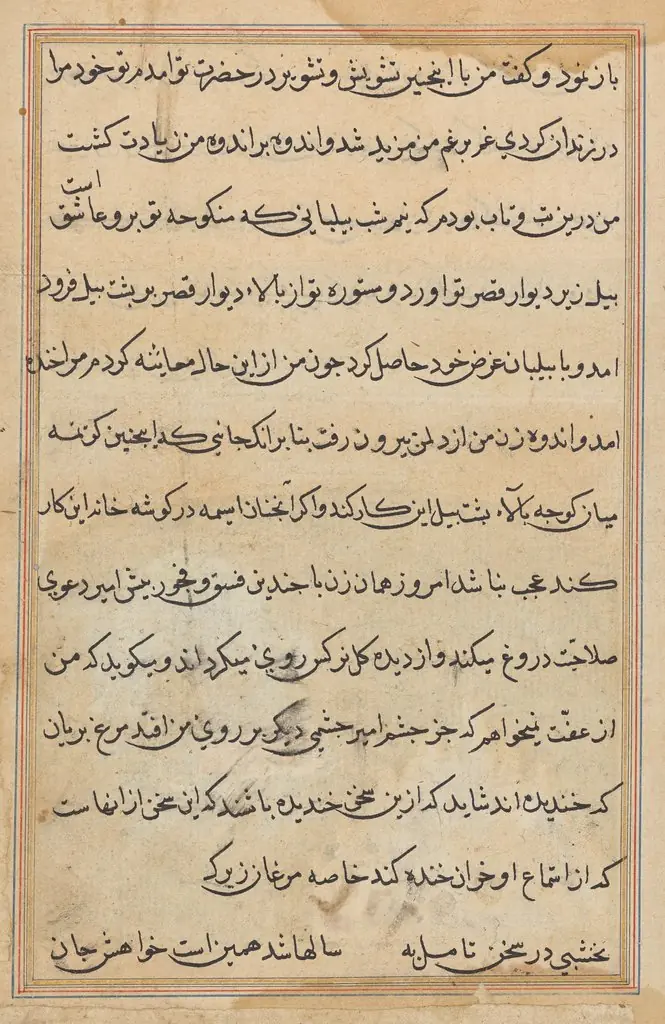 Page from Tales of a Parrot (Tuti-nama): text page
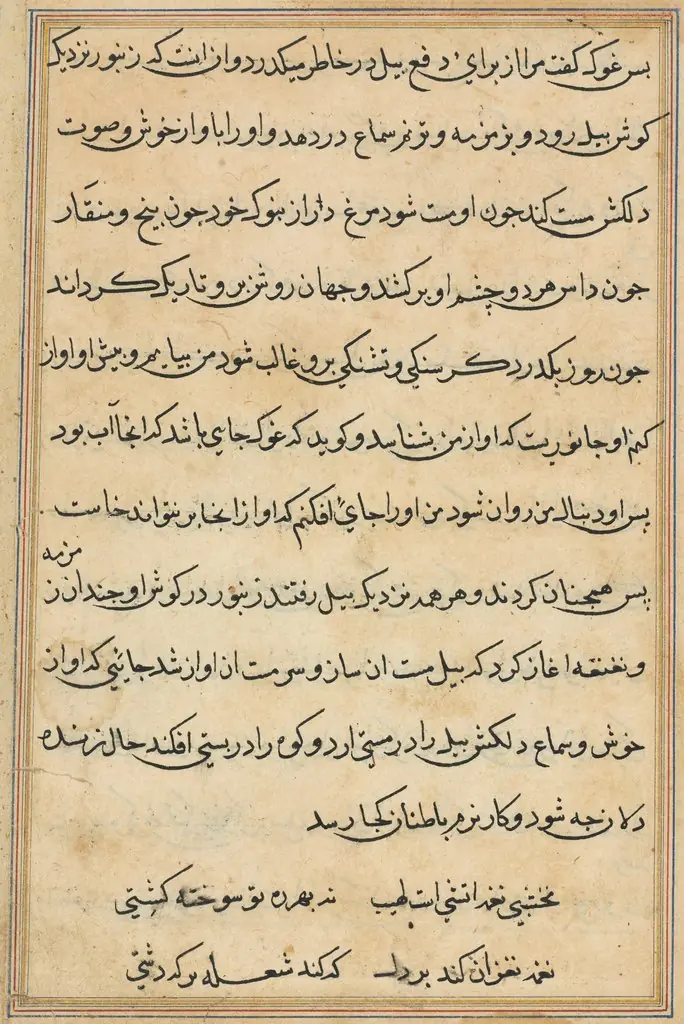 Page from Tales of a Parrot (Tuti-nama): text page
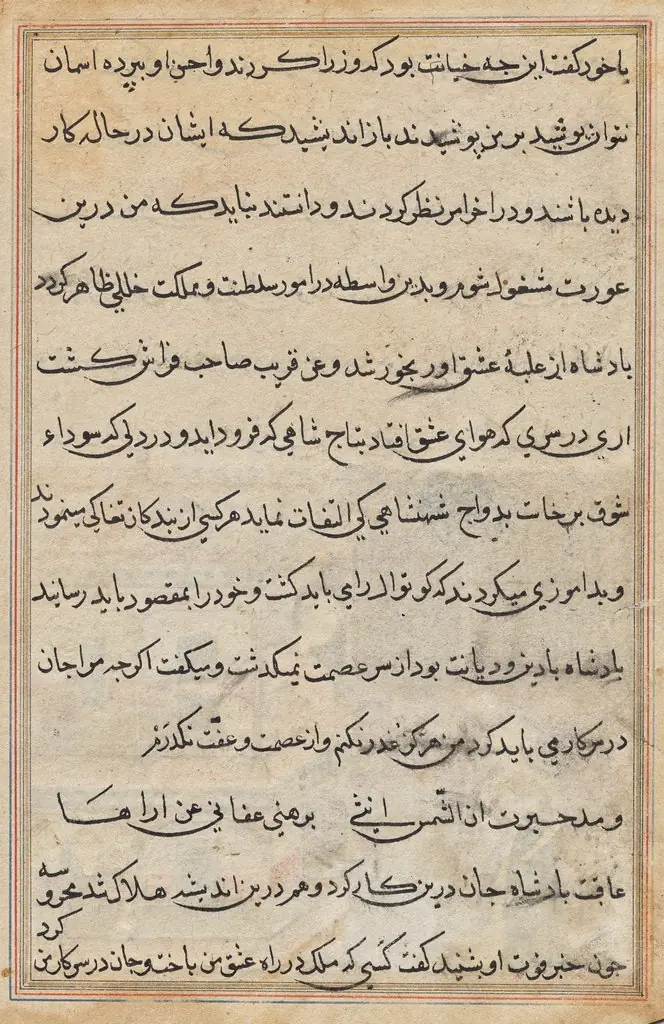 Page from Tales of a Parrot (Tuti-nama): text page
 Page from Tales of a Parrot (Tuti-nama): text page