Artwork
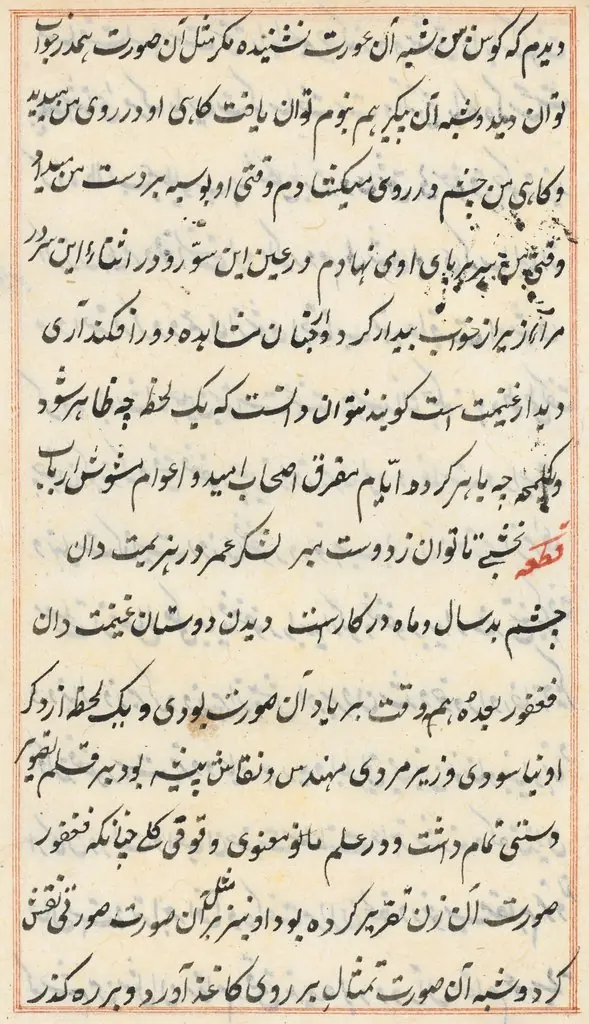
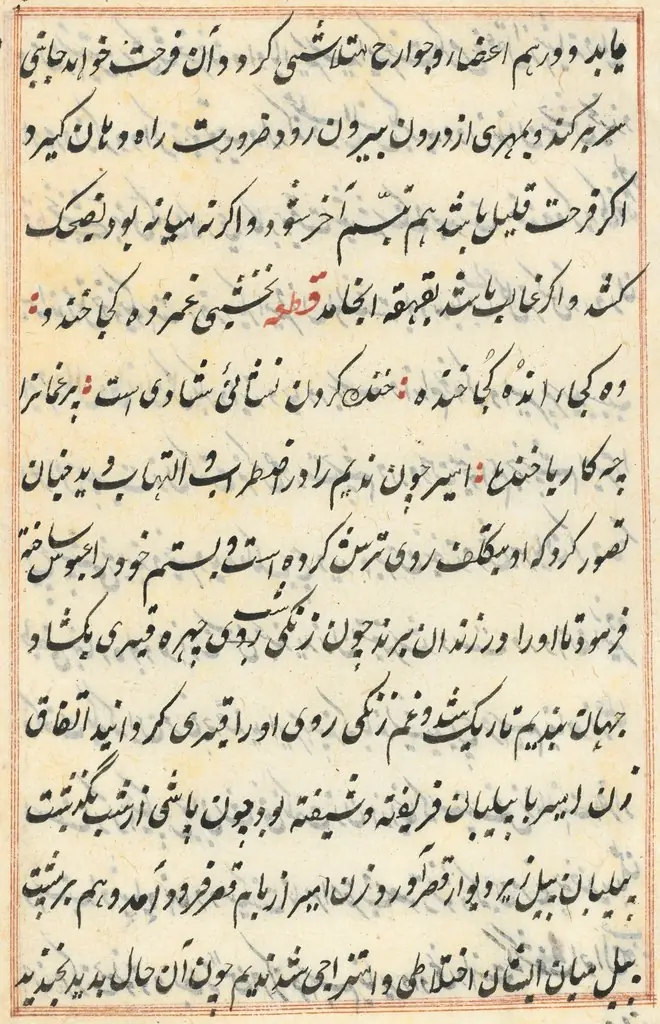
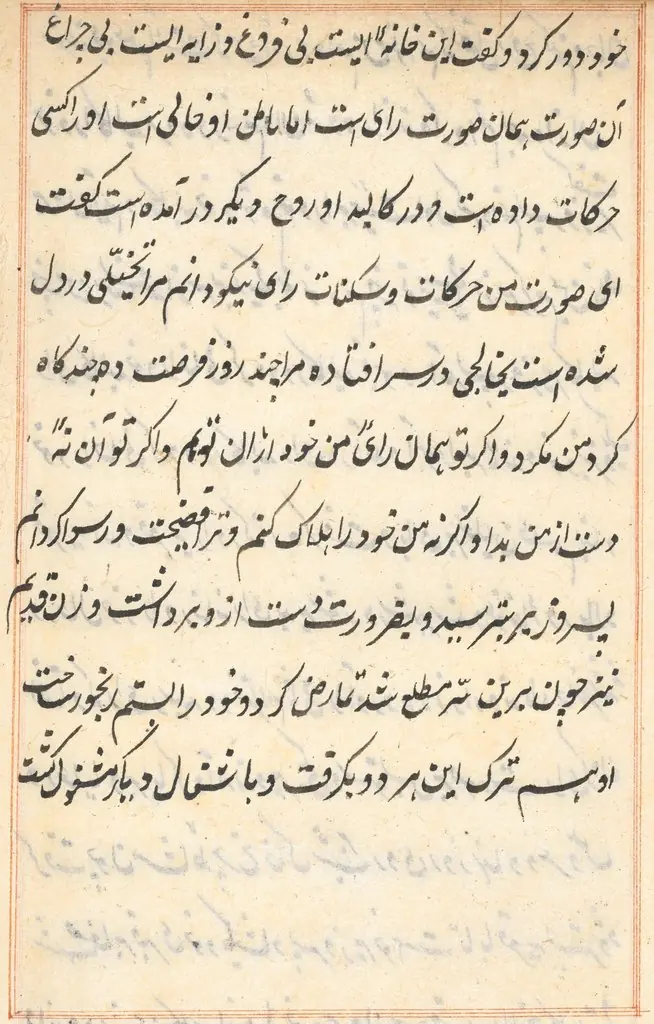
Page from Tales of a Parrot (Tuti-nama): text page
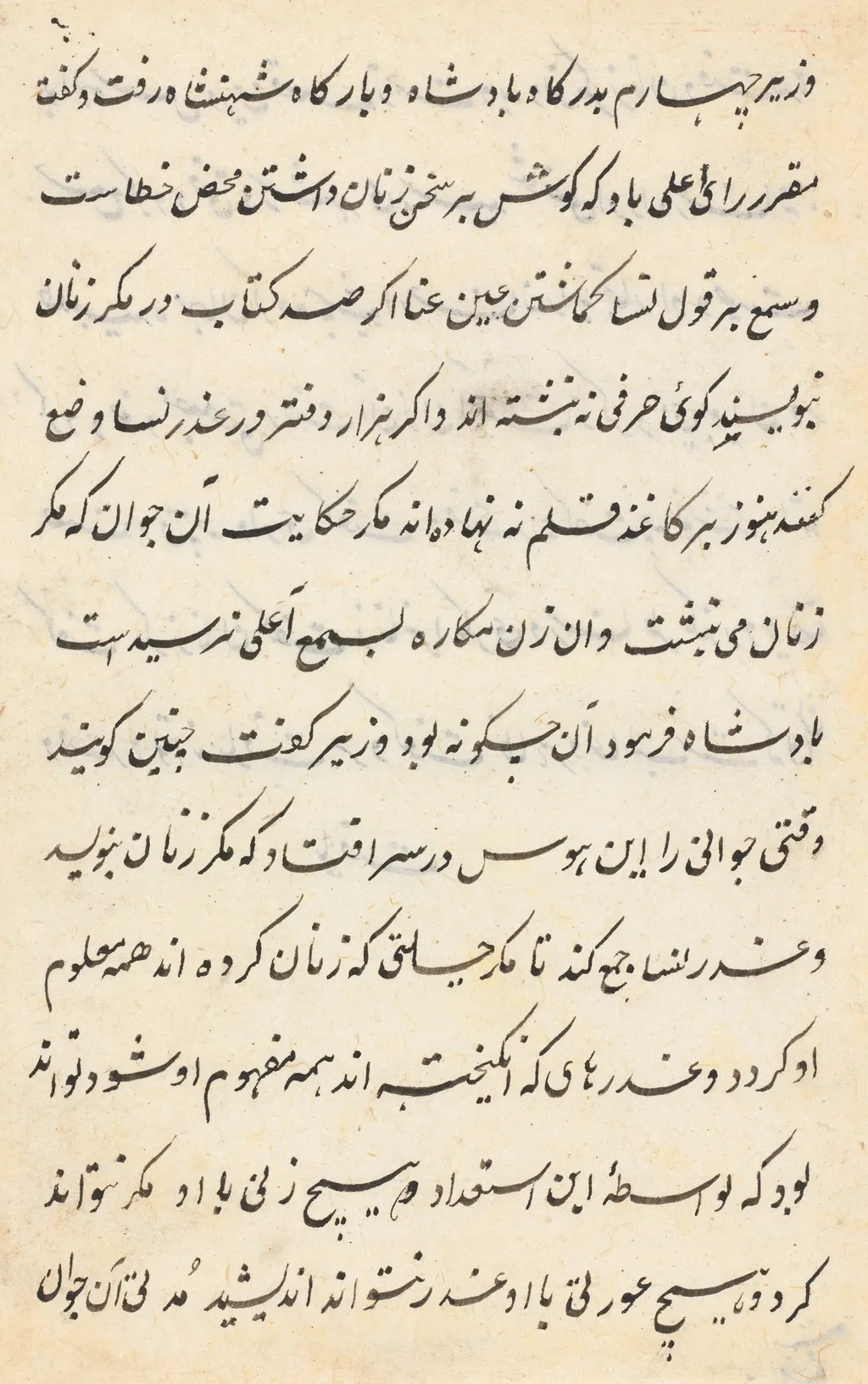
Page from Tales of a Parrot (Tuti-nama): text page is an unspecified painting. It dates from 1560 and is held in the collection of the Cleveland Museum of Art. This object is a single folio from the Persian manuscript known as Tales of a Parrot (Tuti‑nama).
About this work
Technique & Style
The support is paper, handled as a codex leaf within a dispersed manuscript, and the condition is described as stable for a paper-based work of this age.
The work is an ink and opaque watercolor painting on paper, typical of Mughal manuscript illumination from the mid-16th century. Executed in the Mughal Empire, it reflects the stylistic conventions of courtly book arts, with fine line work and flat areas of color characteristic of manuscript miniatures. The support is paper, handled as a codex leaf within a dispersed manuscript, and the condition is described as stable for a paper-based work of this age.
Formal qualities include balanced composition, restrained palette, and decorative borders framing the text, aligning with the aesthetic of Safavid-influenced Persianate book painting of the period.
History & Provenance
This illuminated manuscript page originates from the Tuti-nama, a Persian illustrated narrative produced in the Mughal imperial workshop circa 1560. It was likely commissioned within the Mughal court’s atelier, reflecting the period’s synthesis of Persian literary themes and Indian artistic sensibilities. The work entered the collection of the Cleveland Museum of Art, where it is catalogued under accession number 1962.279.64.a and described in Wikidata as a painting by an unknown artist.
Its creation is dated to 1560, aligning with known production timelines for Tuti-nama folios in the mid-sixteenth century.
Overview
This object is a single folio from the Persian manuscript known as Tales of a Parrot (Tuti‑nama). Rendered in black ink on a lightly textured paper, the page presents densely packed calligraphic text arranged in graceful, curved strokes. The composition balances tall ascenders and deep descenders, producing a visual rhythm that guides the eye across the surface.
Subject & Meaning
The manuscript narrates a series of moral and didactic stories conveyed through the voice of a parrot, a common literary device in Persian tradition for imparting ethical lessons. Each tale employs allegory and wit to explore themes such as justice, humility, and the consequences of hubris, reflecting the cultural values of its original audience.
Artist & collection

 Page from Tales of a Parrot (Tuti-nama): text page
 Page from Tales of a Parrot (Tuti-nama): text page
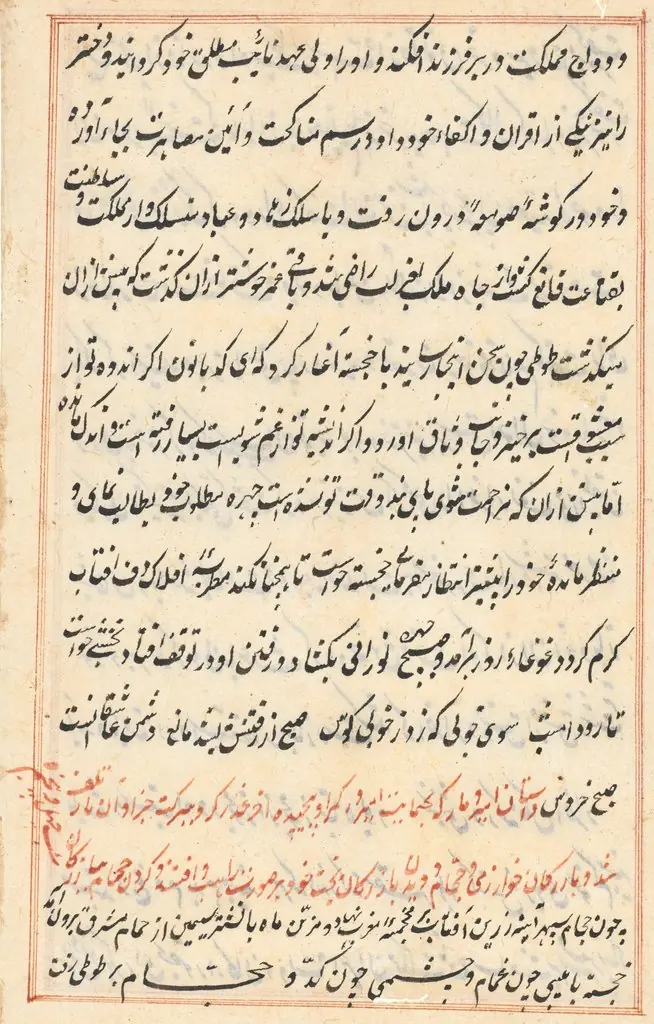 Page from Tales of a Parrot (Tuti-nama): text page
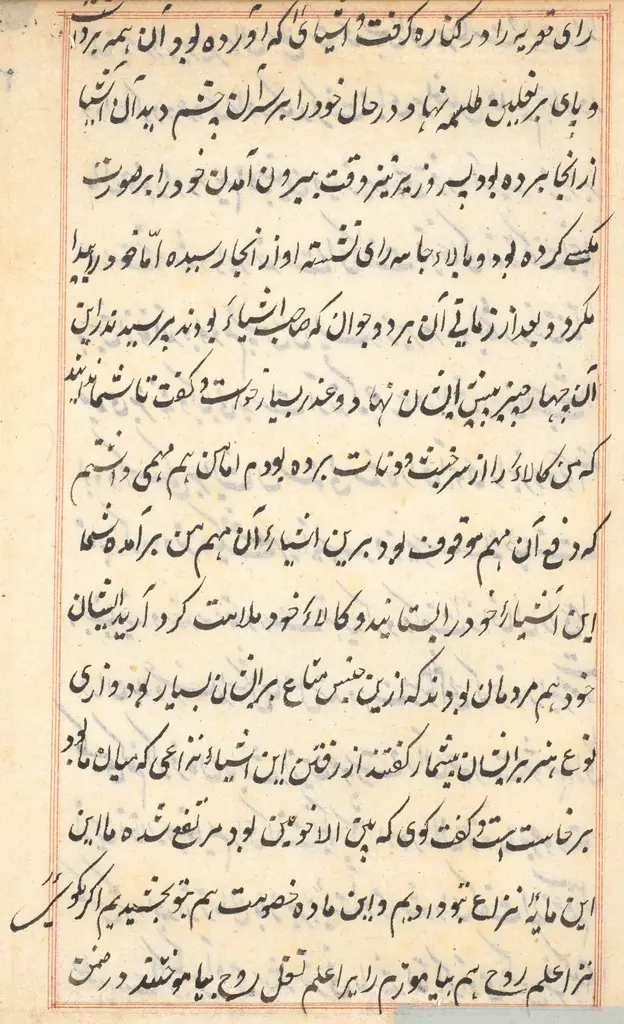 Page from Tales of a Parrot (Tuti-nama): text page
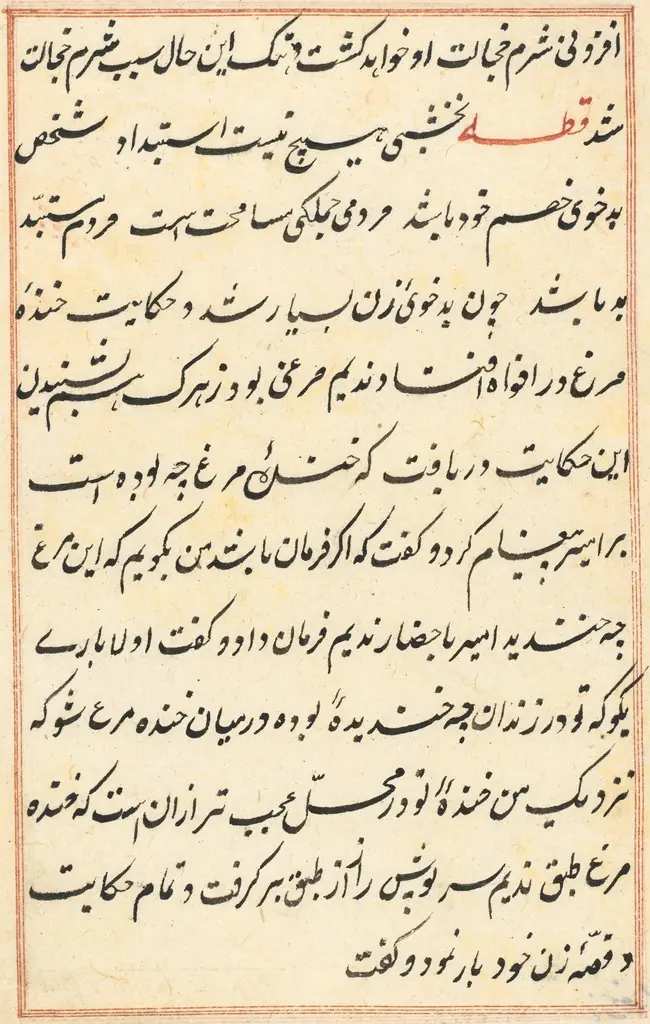 Page from Tales of a Parrot (Tuti-nama): text page
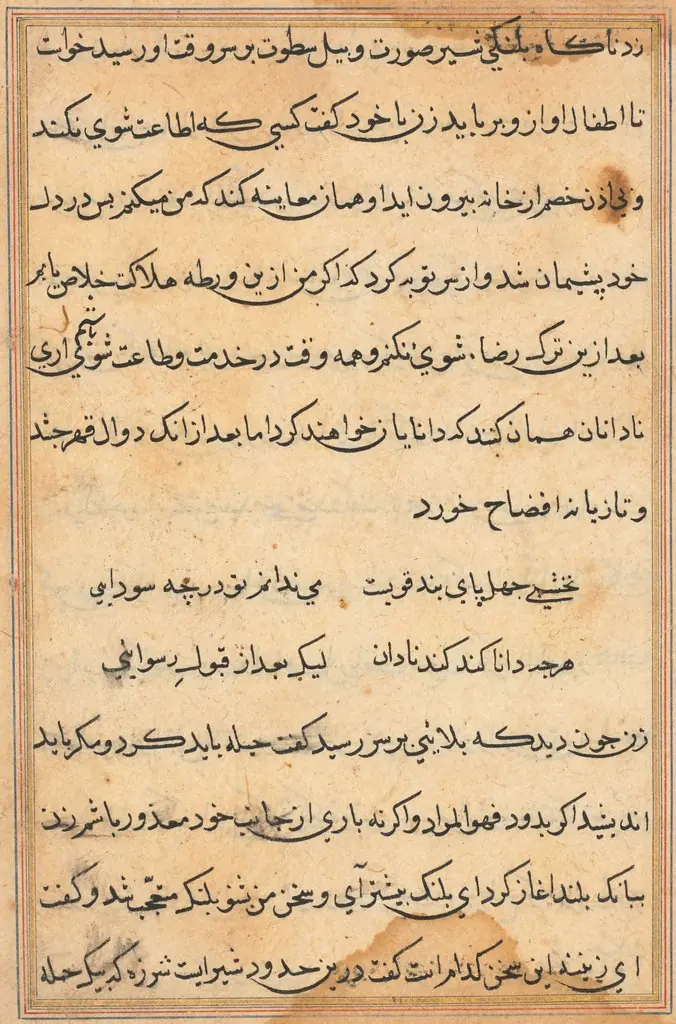 Page from Tales of a Parrot (Tuti-nama): text page
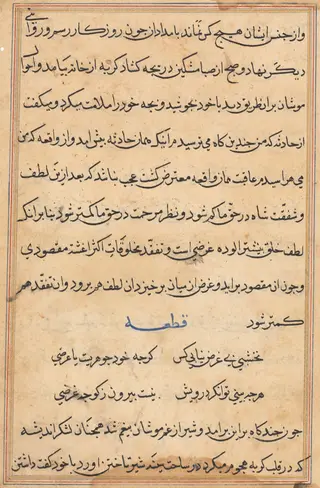 Page from Tales of a Parrot (Tuti-nama): text page
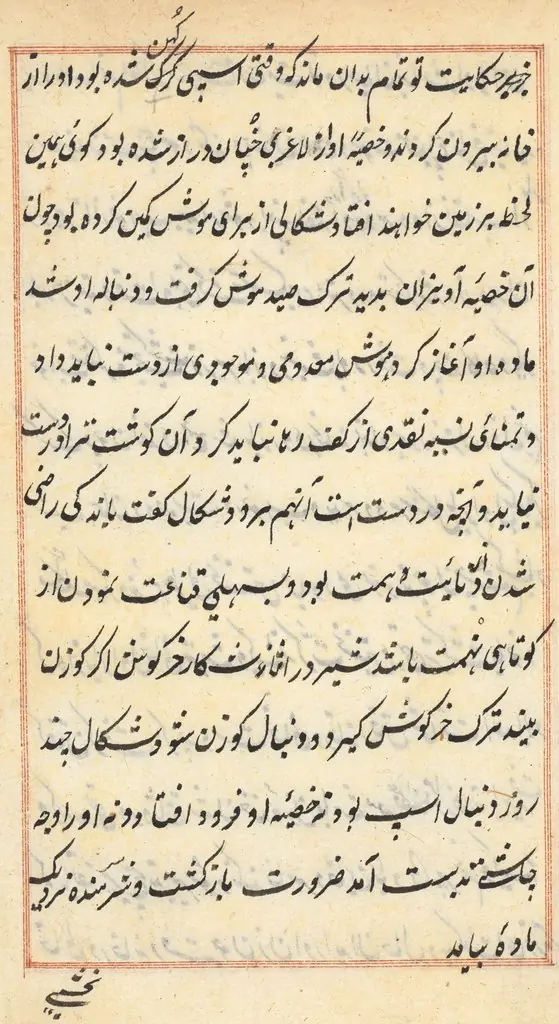 Page from Tales of a Parrot (Tuti-nama): text page
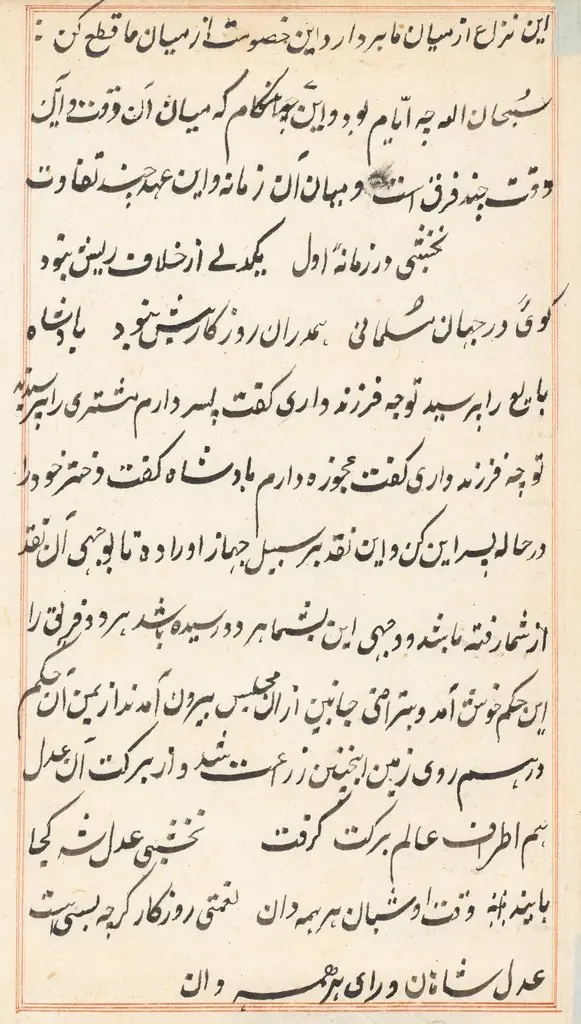 Page from Tales of a Parrot (Tuti-nama): text page
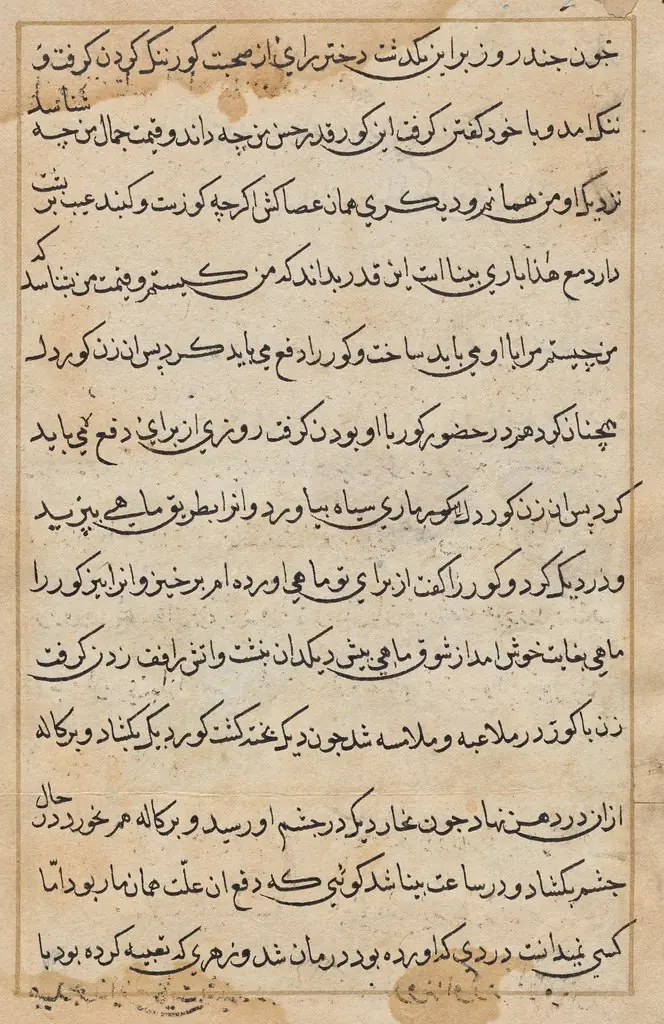 Page from Tales of a Parrot (Tuti-nama): text page