Artwork
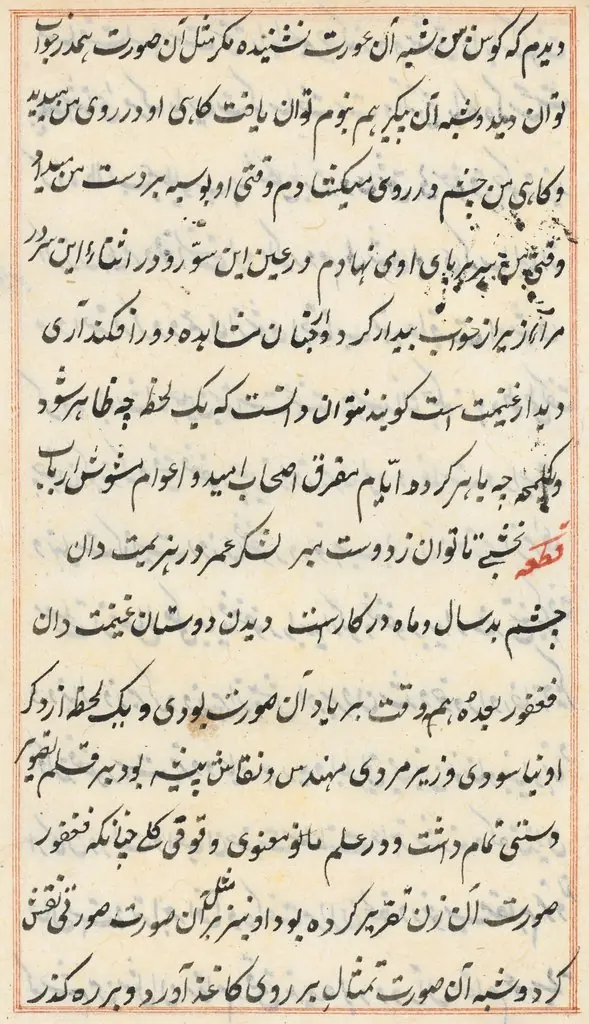
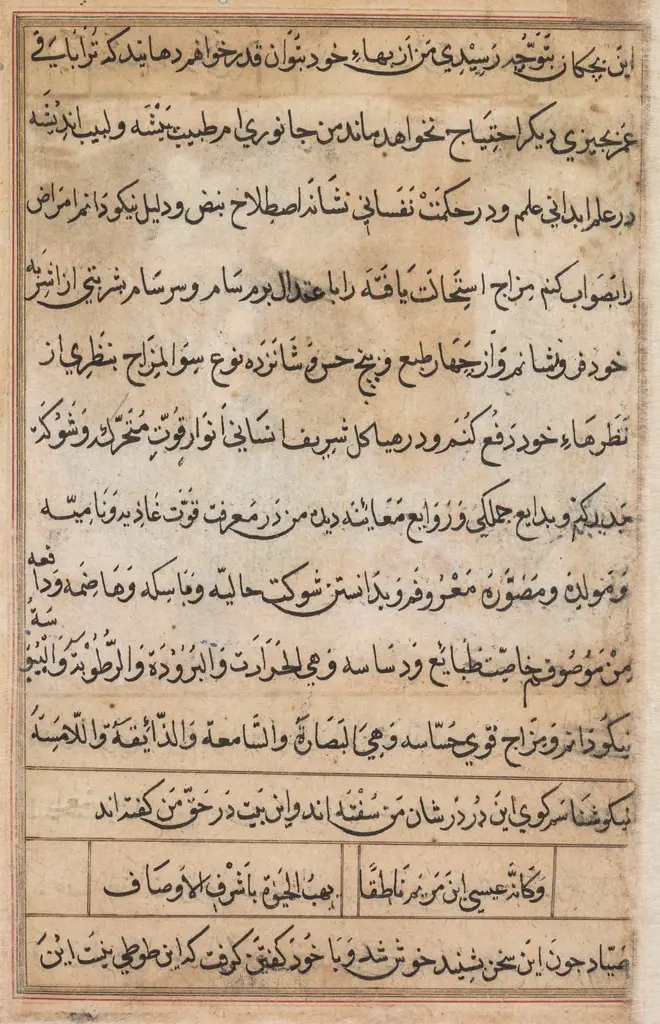
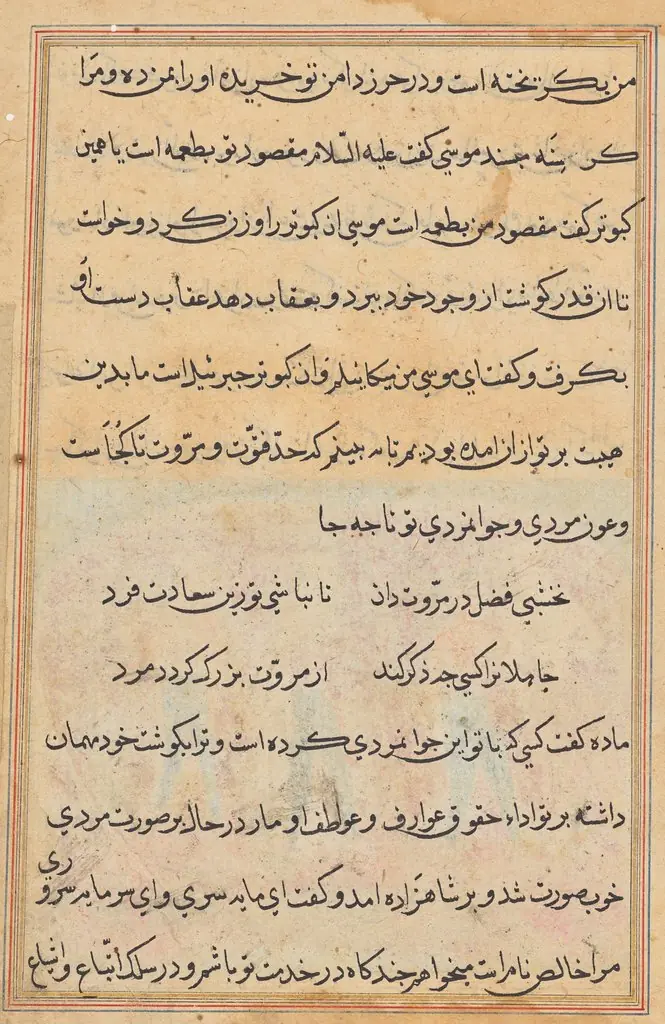
Page from Tales of a Parrot (Tuti-nama): text page
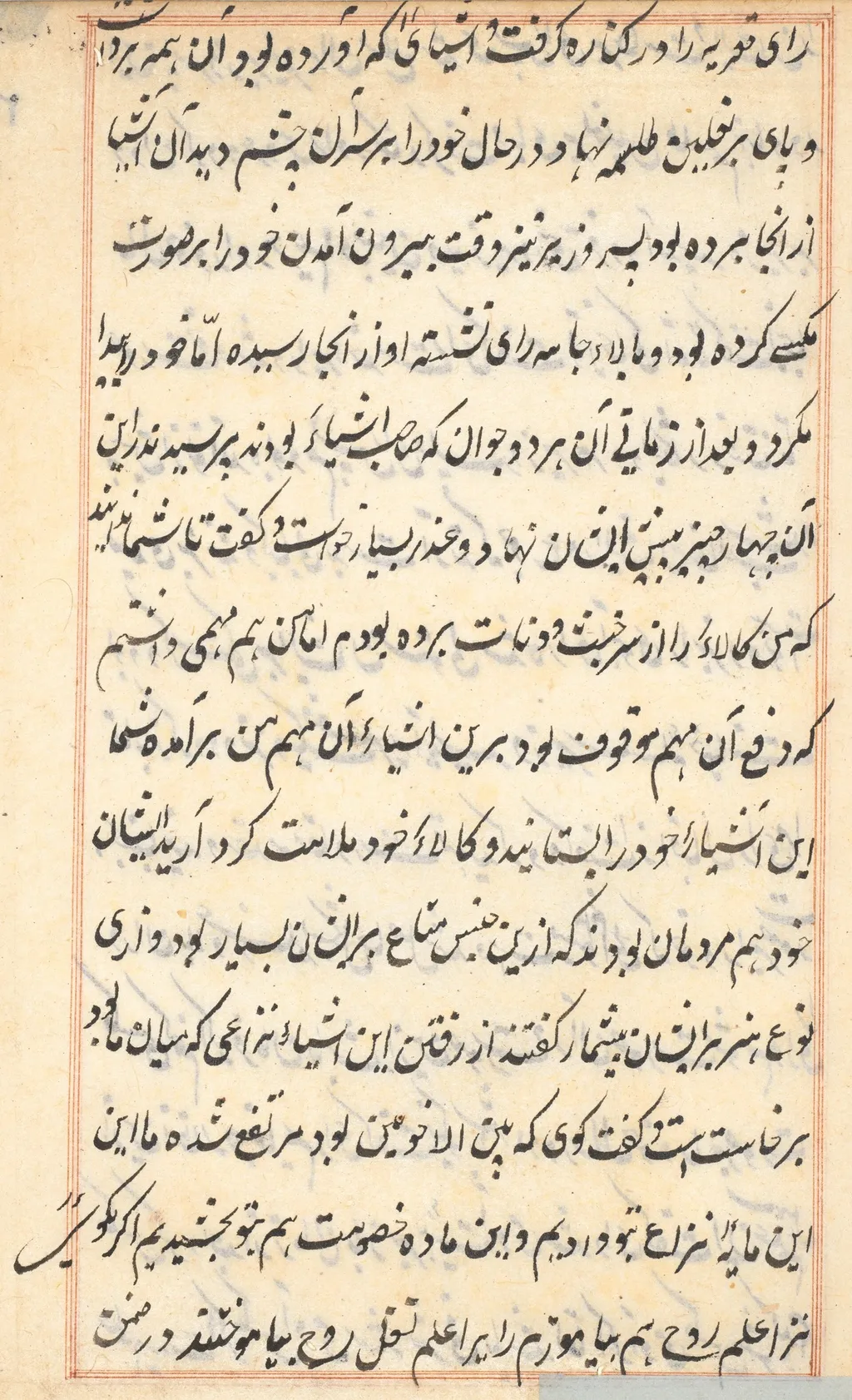
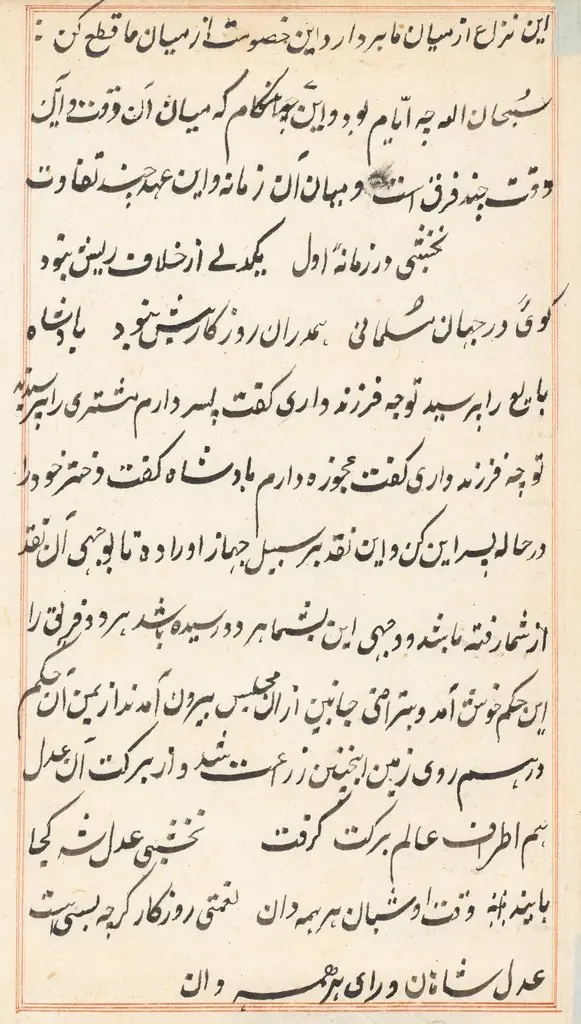
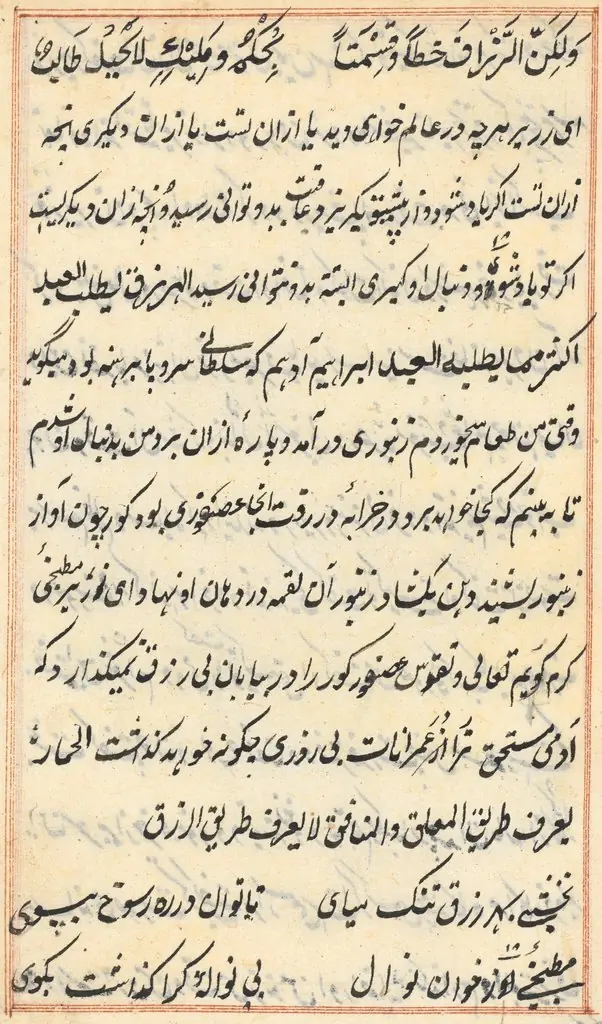
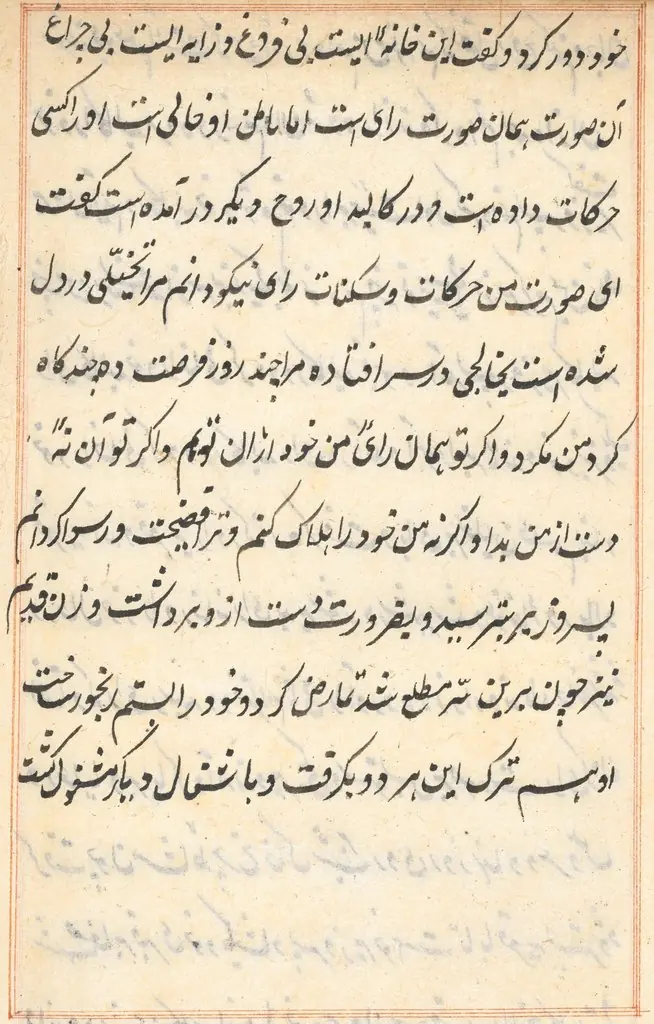
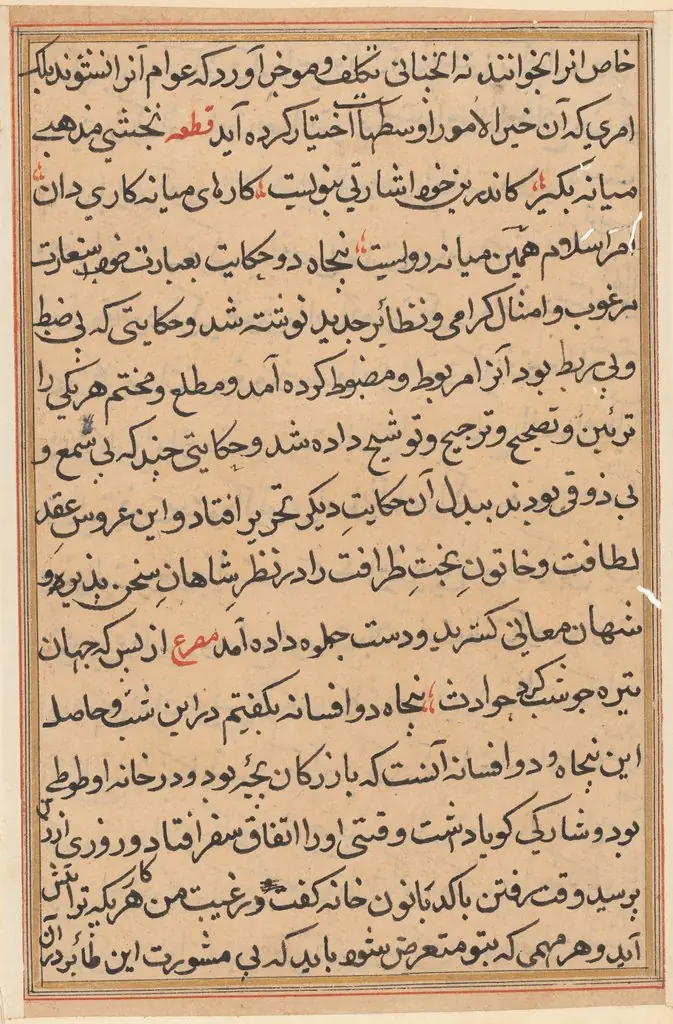
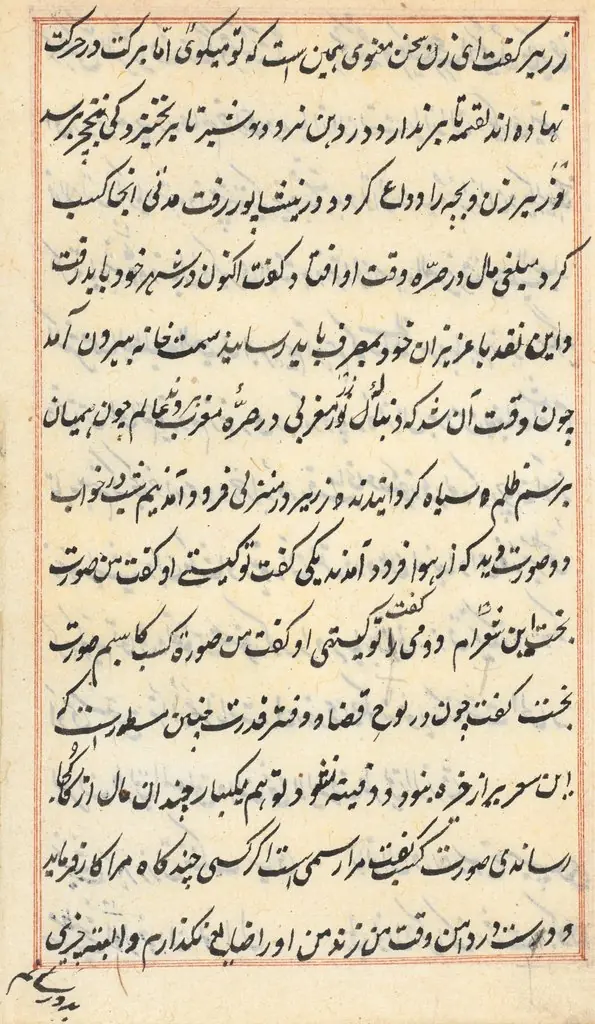
Page from Tales of a Parrot (Tuti-nama): text page is an unspecified painting. It dates from 1560 and is held in the collection of the Cleveland Museum of Art. The object is a single folio from the illustrated manuscript known as Tuti‑nama (The Parrot’s Tale).
About this work
The style of the text and the use of red ink suggest that this page may be from a religious or literary text.
This painting is a page from a book, featuring text in a language that may be Persian or Arabic. The text is written in black ink on a beige background, with a red border around the edges of the page. The text is written in a flowing script, with some words and phrases underlined or highlighted in red.
The page appears to be from a manuscript or illuminated book, possibly from the 16th century. The style of the text and the use of red ink suggest that this page may be from a religious or literary text.
Subject & Meaning
This folio is a text page from a manuscript of the Tuti-nama (Tales of a Parrot), a collection of moral tales framed by a parrot that detains its mistress each night with a story. The cycle, of Persian and Indian origin, conveys lessons on wisdom, fidelity, and human folly through animal allegory. The Cleveland manuscript was produced in the Mughal milieu of the 1560s, when Persian literary works were being adapted and illustrated for the imperial court. As a text page, this leaf carries the written narrative rather than a painted illustration.
History & Provenance
The page originates from the Mughal Empire, where it was produced around 1560 as part of the Tales of a Parrot (Tuti-nama) manuscript. The work is now held in the collection of the Cleveland Museum of Art, where it is catalogued under accession number 1962.279.297.a. The artist responsible for the page is not identified, and the circumstances of its commission and intermediate ownership prior to its acquisition by the museum are not documented in the available sources.
The creation date of about 1560 places it within the early Mughal period, among the earliest illustrated manuscripts produced under imperial patronage.
Context
The Cleveland Tuti-nama, dated to about 1560, was produced during the reign of the Mughal emperor Akbar and reflects the court's early patronage of illustrated Persianate literature. This folio (Cleveland Museum of Art, accession 1962.279.297.a) is a text page from that manuscript. The manuscript as a whole is an important document for the study of early Mughal book production and the transmission of Indo-Persian narrative traditions into Western collections.
Overview
The object is a single folio from the illustrated manuscript known as Tuti‑nama (The Parrot’s Tale). It consists of a rectangular page with a beige parchment background, framed by a thin red border. Black ink forms a continuous line of text in a flowing script, while selected words are emphasized with red underlining or highlighting.
Technique & Style
Ink was applied with a reed or quill pen, producing the elegant, cursive script characteristic of 16th‑century Persianate calligraphy. The red accents were added with a separate pigment, possibly vermilion, applied after the main text. The red border frames the page, providing visual balance and reinforcing the manuscript’s decorative scheme without extensive illumination.
Artist & collection

- Page from Tales of a Parrot (Tuti-nama): text page
 Page from Tales of a Parrot (Tuti-nama): text page
 Page from Tales of a Parrot (Tuti-nama): text page
 Page from Tales of a Parrot (Tuti-nama): text page
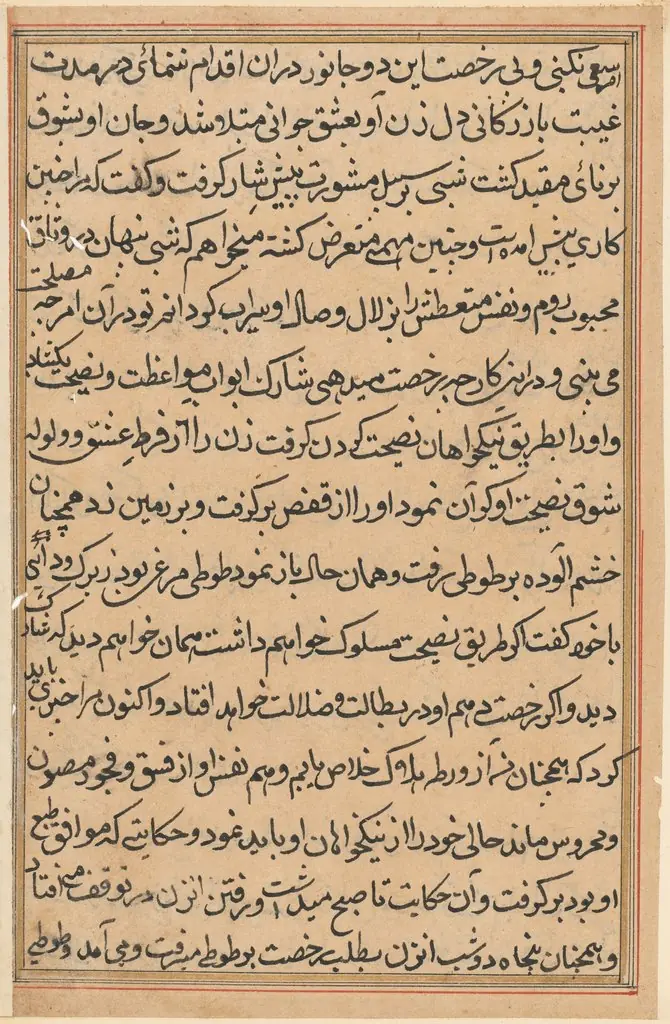 Page from Tales of a Parrot (Tuti-nama): text page
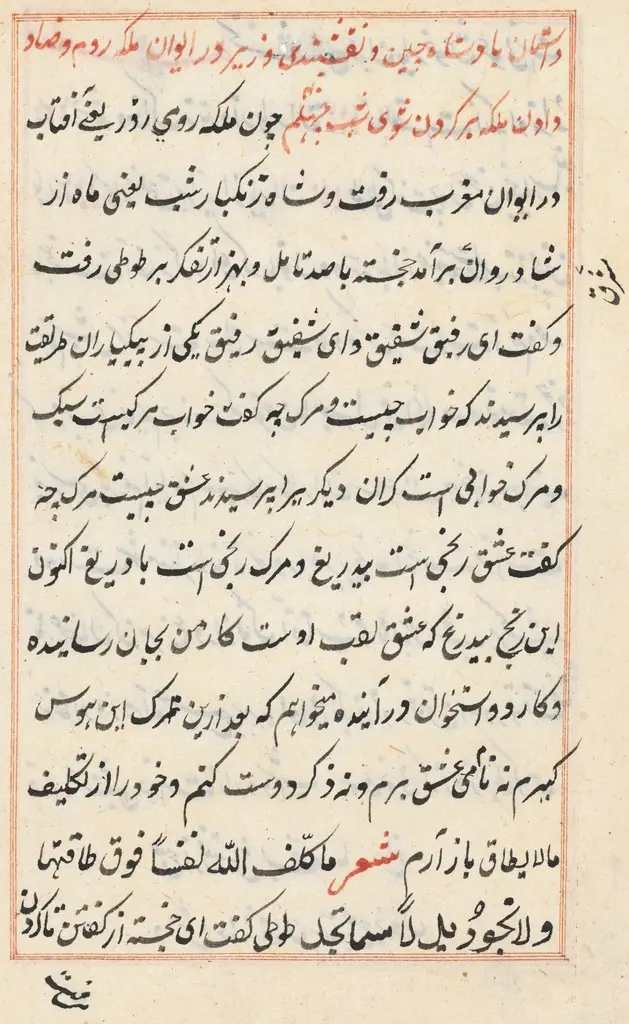 Page from Tales of a Parrot (Tuti-nama): text page
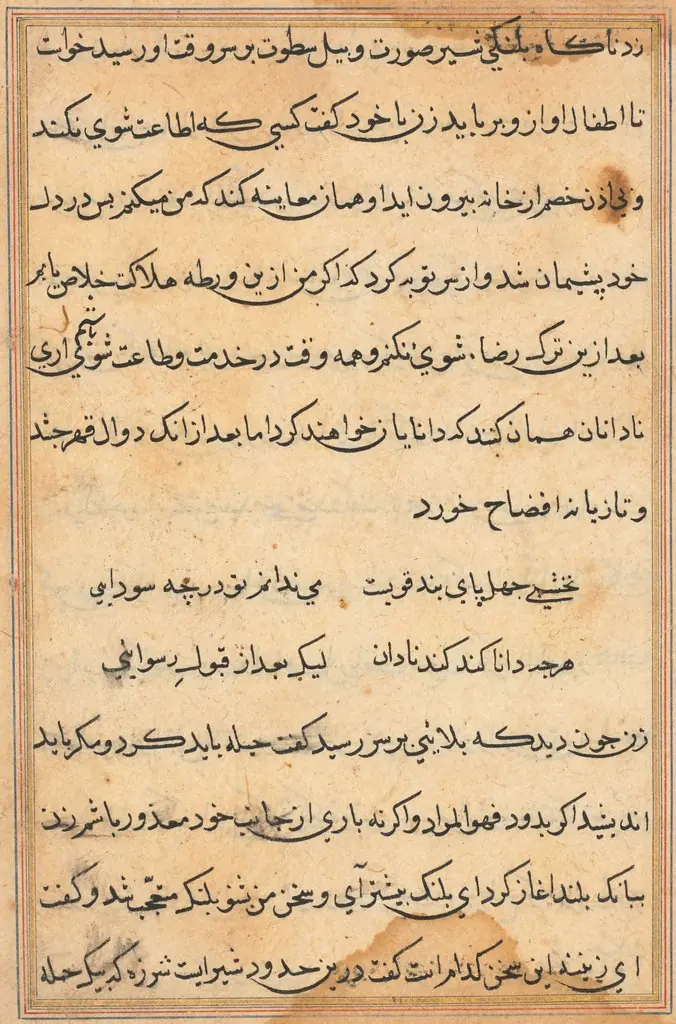 Page from Tales of a Parrot (Tuti-nama): text page
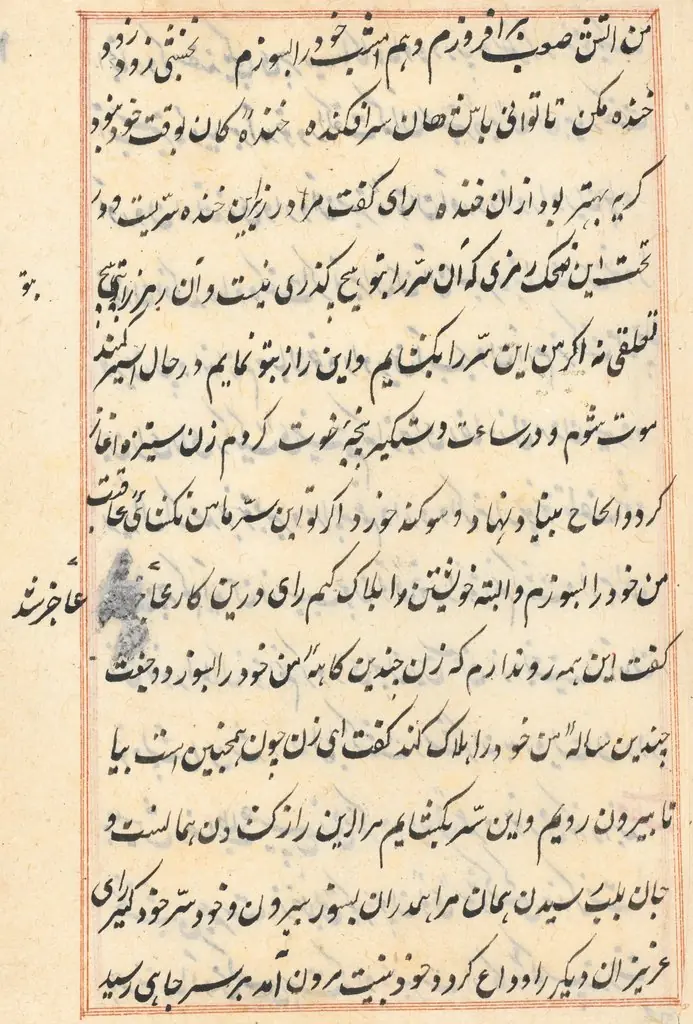 Page from Tales of a Parrot (Tuti-nama): text page
 Page from Tales of a Parrot (Tuti-nama): text page