Artwork
Page from Tales of a Parrot (Tuti-nama): text page
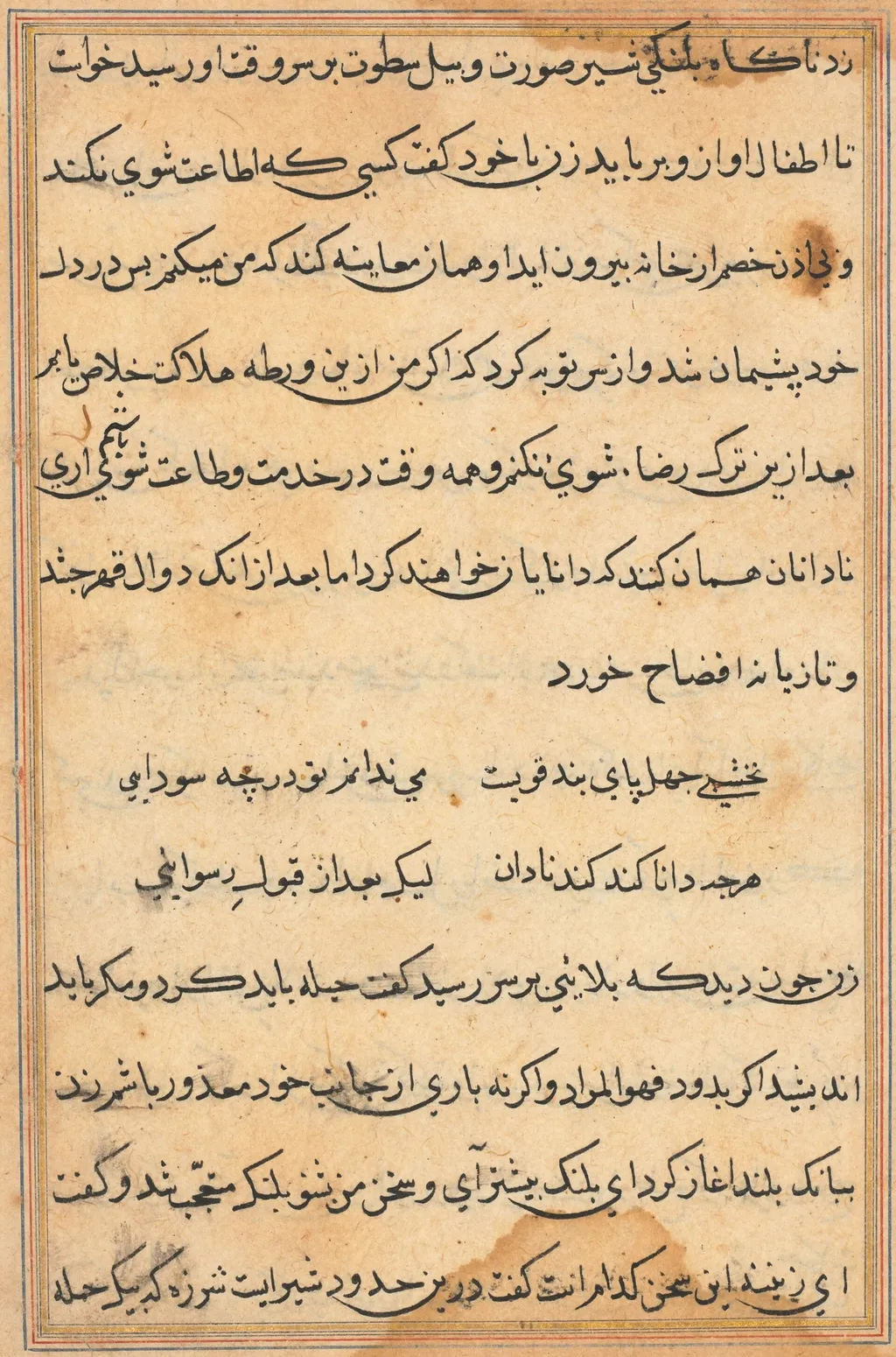
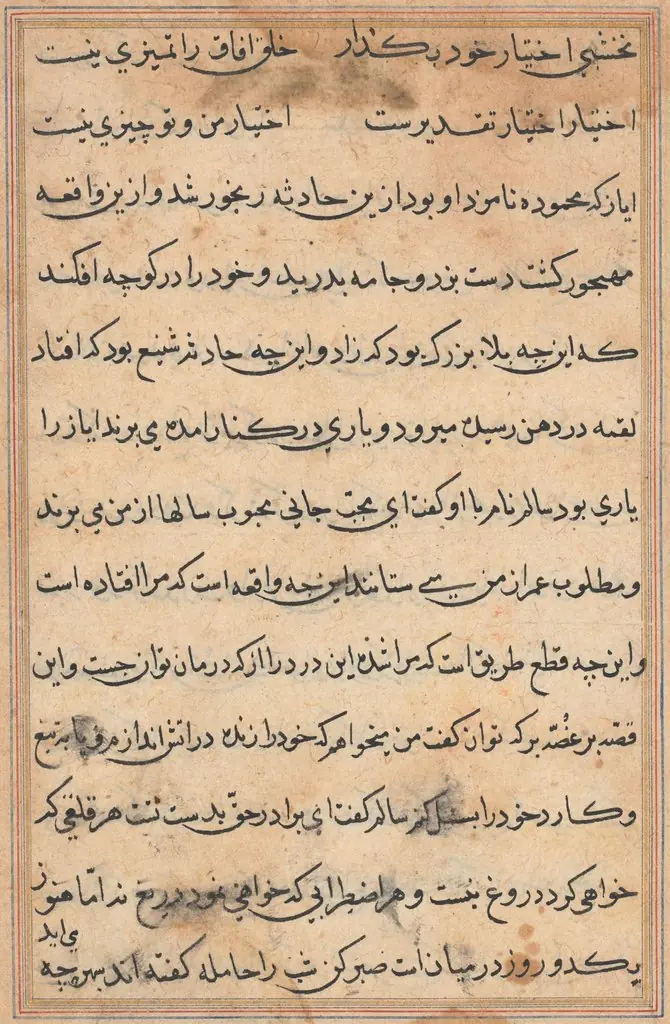
Page from Tales of a Parrot (Tuti-nama): text page is an unspecified painting. It dates from 1560 and is held in the collection of the Cleveland Museum of Art. The object is a single folio from an illustrated manuscript titled Tales of a Parrot (Tuti‑nama).
About this work
Technique & Style
The composition features flattened perspective, intricate arabesque borders, and stylized figures rendered in saturated mineral pigments.
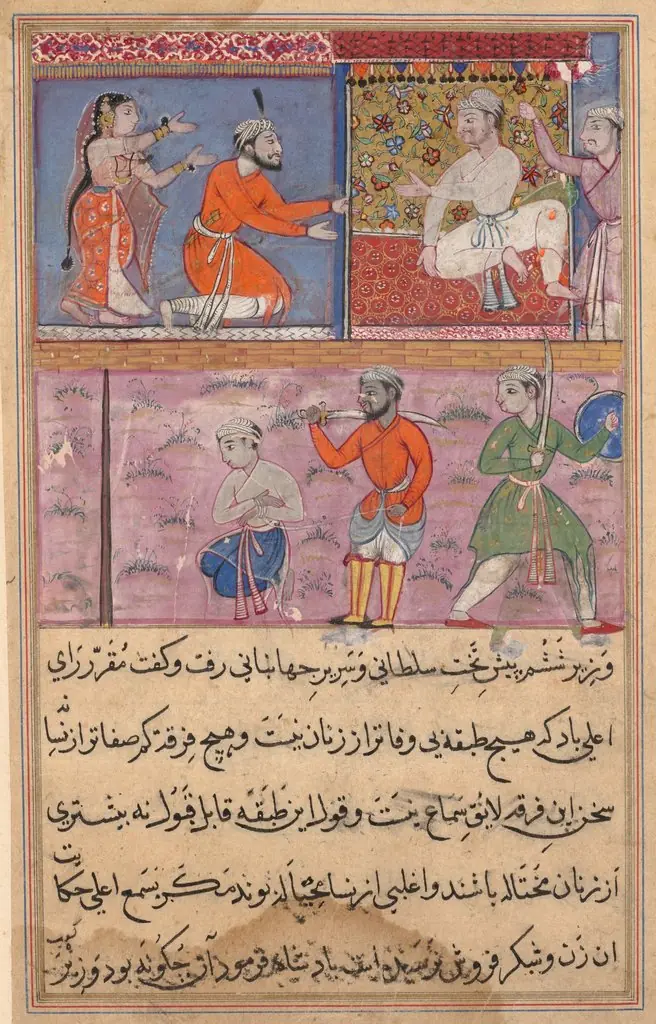
The page is a painted text sheet from the Tuti-nama series, created in 1560 within the Mughal imperial context. Executed in opaque watercolor and gold leaf on paper, it functions as a miniature illustration accompanying narrative text. The composition features flattened perspective, intricate arabesque borders, and stylized figures rendered in saturated mineral pigments.
Brushwork demonstrates fine linear precision with delicate gradations of tone, characteristic of Mughal manuscript illumination. The support remains stable with only minor surface wear to the paper fibers, and the paint layer exhibits expected craquelure from age but no significant flaking or loss. Formal elements include a restricted palette of indigo, vermilion, and ochre, balanced symmetrical framing, and an emphasis on decorative pattern over naturalistic representation, reflecting the manuscript's didactic and luxurious function.
The work belongs to the Cleveland Museum of Art collection and was produced in India during the late 16th century, exemplifying Persianate artistic traditions adapted under Mughal patronage.
History & Provenance
This text page from the Tuti-nama (Tales of a Parrot) was created in 1560 within the Mughal Empire. The work was produced by an artist whose specific identity remains unrecorded in available documentation. It currently forms part of the collection held by the Cleveland Museum of Art, where it is cataloged under the accession number 1962.279.199.a.
No further details regarding its original commission, intermediate ownership history, or the specific circumstances of its creation are provided in the current records.
The text page from the Tales of a Parrot (Tuti-nama), created in 1560, is held by the Cleveland Museum of Art in Cleveland. The work is cataloged under the accession number 1962.279.199.a. The source material identifies the piece as a painting originating from the Mughal Empire but does not document any specific exhibition history for this folio.
The museum acquired the manuscript page in 1962, where it remains part of the permanent collection as a representative example of mid-sixteenth-century Mughal illumination.
Context
The miniature page originates from a 1560 manuscript produced in the Mughal imperial atelier, exemplifying the synthesis of Persian narrative traditions with indigenous Indian aesthetics that defined court painting during Akbar's reign. Its text page format preserves the manuscript's didactic function while showcasing the intricate brushwork and saturated mineral pigments characteristic of the period's ateliers. The work's attribution to an anonymous workshop reflects the anonymity of many imperial artists, whose contributions shaped a visual language that later influenced Rajput and Deccan painting schools.
Current scholarship emphasizes its significance as a material witness to cross-cultural exchange across the Silk Road, with comparative analysis revealing stylistic parallels in Safavid and Ottoman manuscript traditions.
Overview
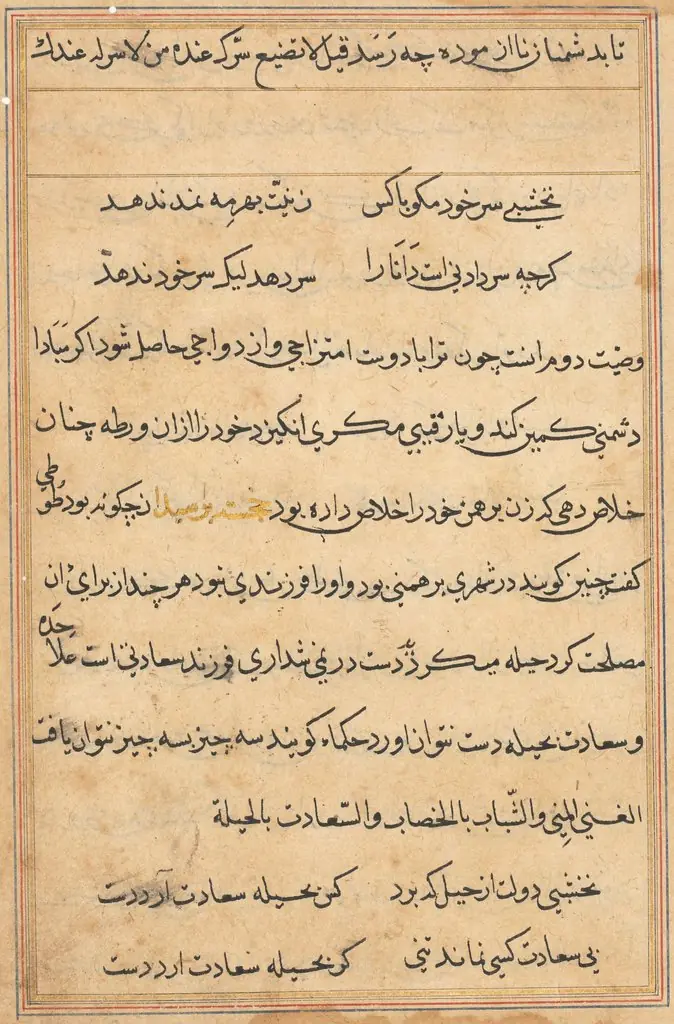
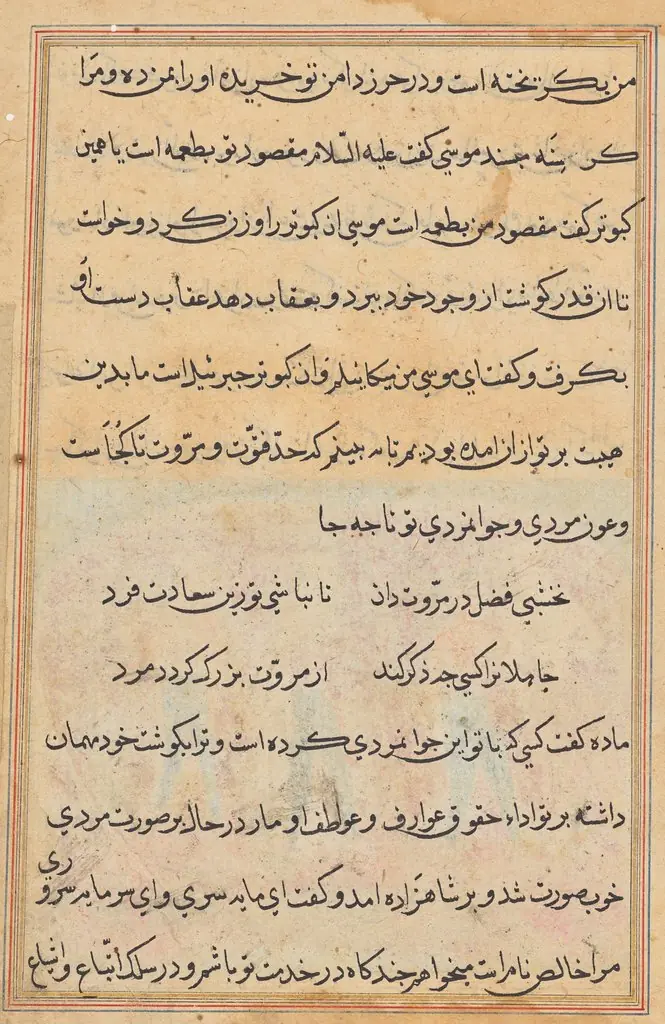
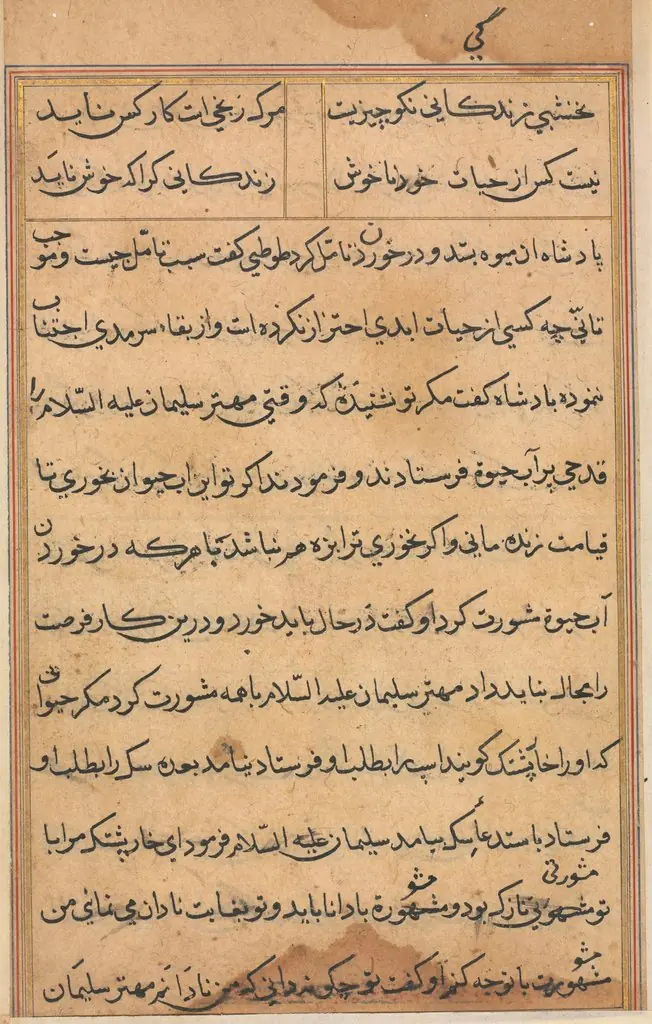
The object is a single folio from an illustrated manuscript titled Tales of a Parrot (Tuti‑nama). It consists of a light‑brown paper leaf bearing densely set black script in a cursive Arabic‑Persian style. The page is framed by a thin border and shows signs of extensive handling, including minor tears and faint stains, indicating frequent use.
Subject & Meaning
The text appears to be a narrative passage from the Tuti‑nama, a collection of moral and romantic stories traditionally conveyed through the voice of a parrot. Although the script is too small to decipher without specialist assistance, the work likely conveys didactic themes common to the genre, such as virtue, love, and the consequences of folly.
Artist & collection

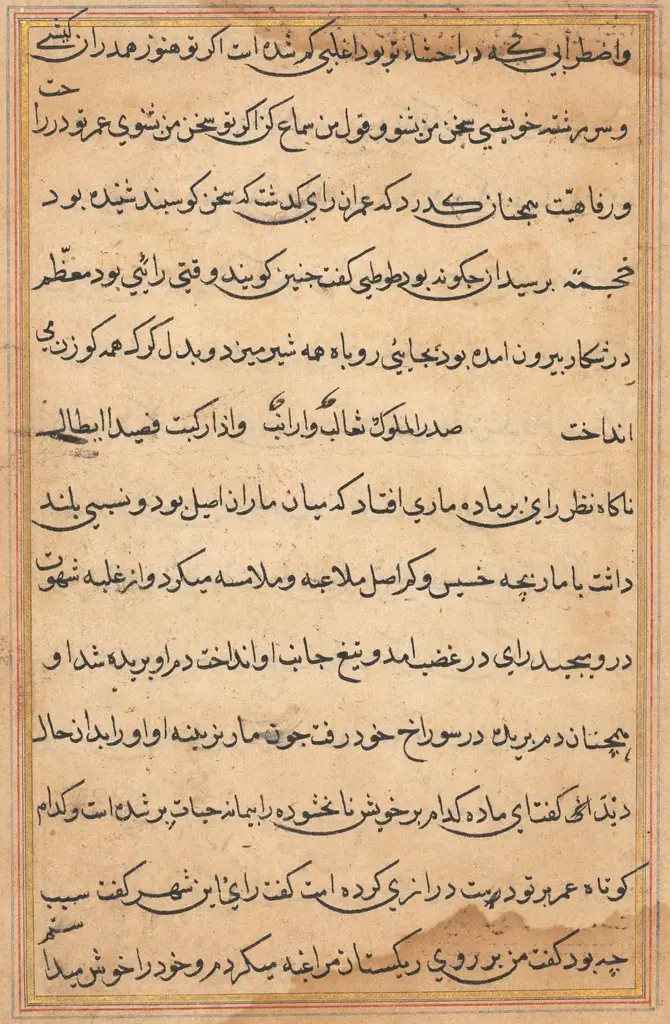 Page from Tales of a Parrot (Tuti-nama): text page
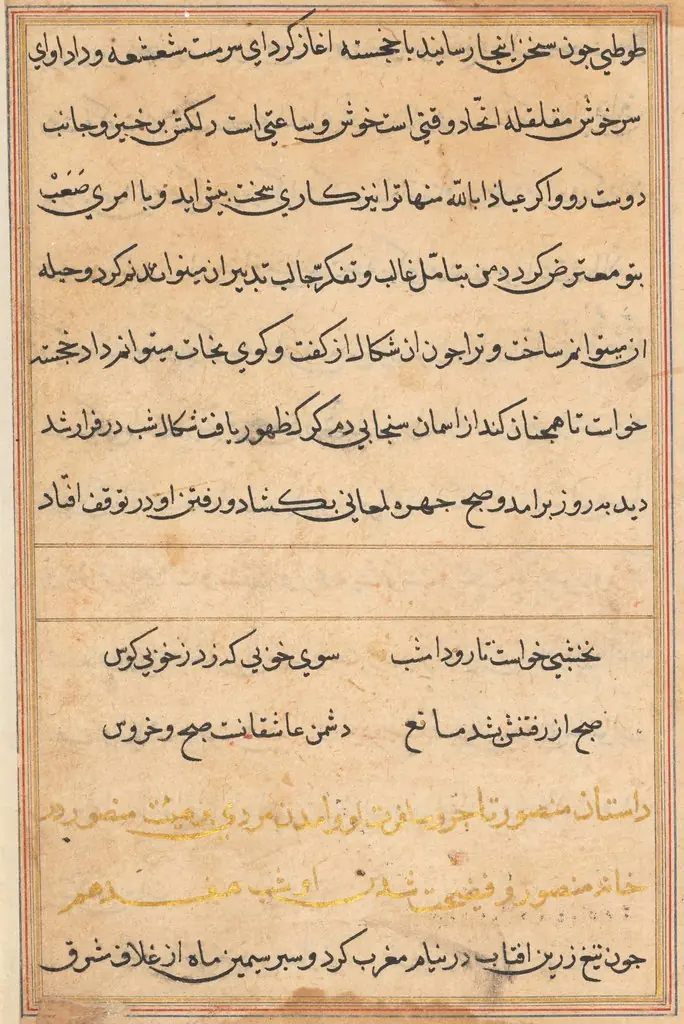 Page from Tales of a Parrot (Tuti-nama): text page
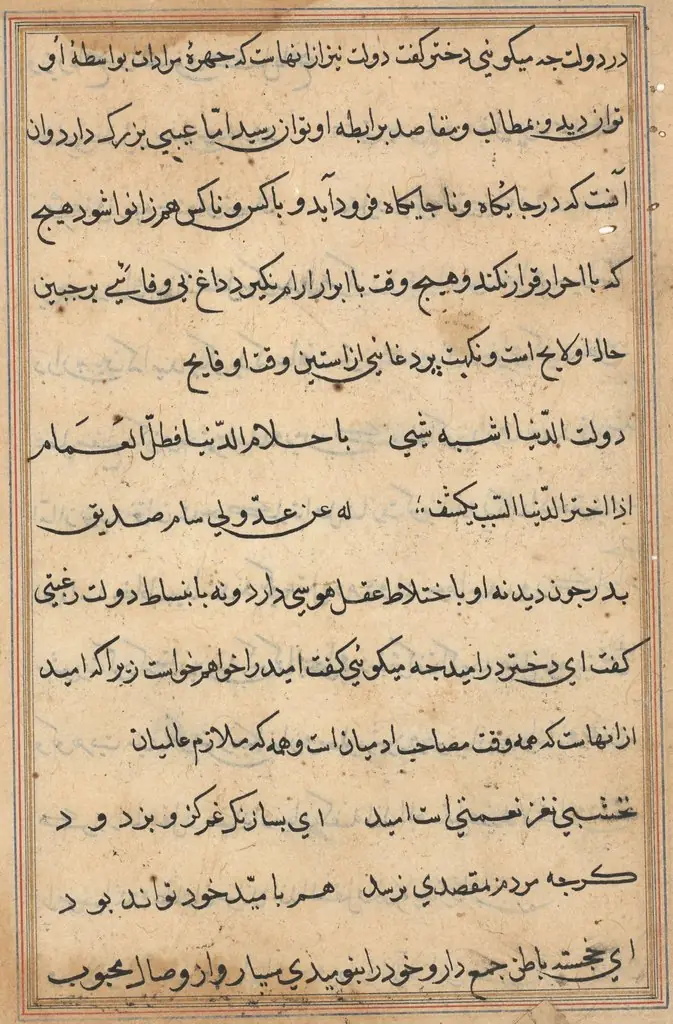 Page from Tales of a Parrot (Tuti-nama): text page
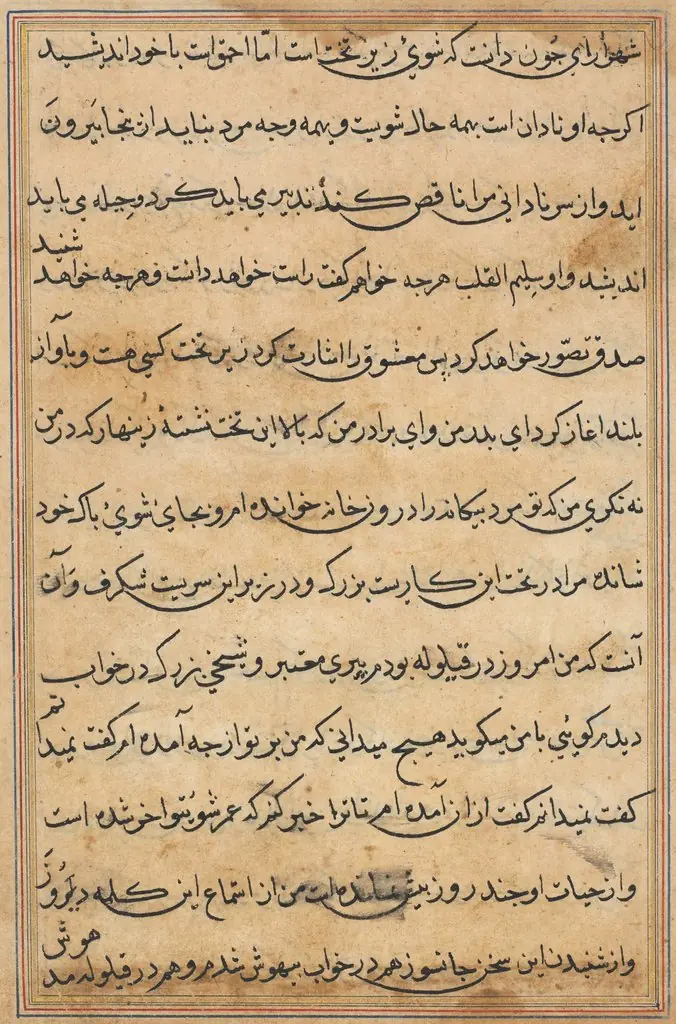 Page from Tales of a Parrot (Tuti-nama): text page
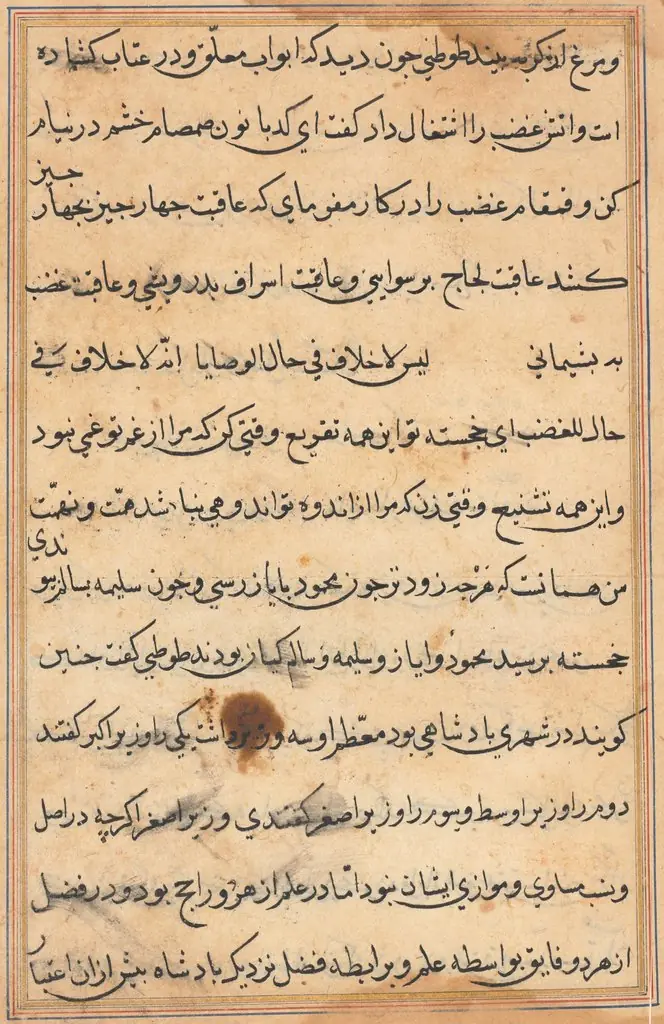 Page from Tales of a Parrot (Tuti-nama): text page
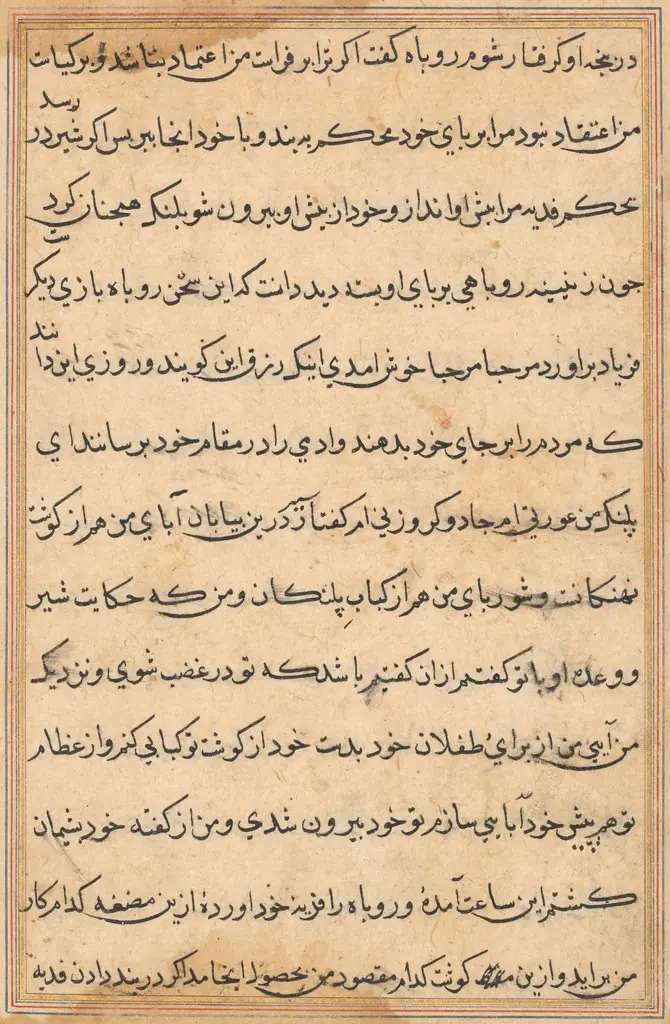 Page from Tales of a Parrot (Tuti-nama): text page
 Page from Tales of a Parrot (Tuti-nama): text page