Artwork
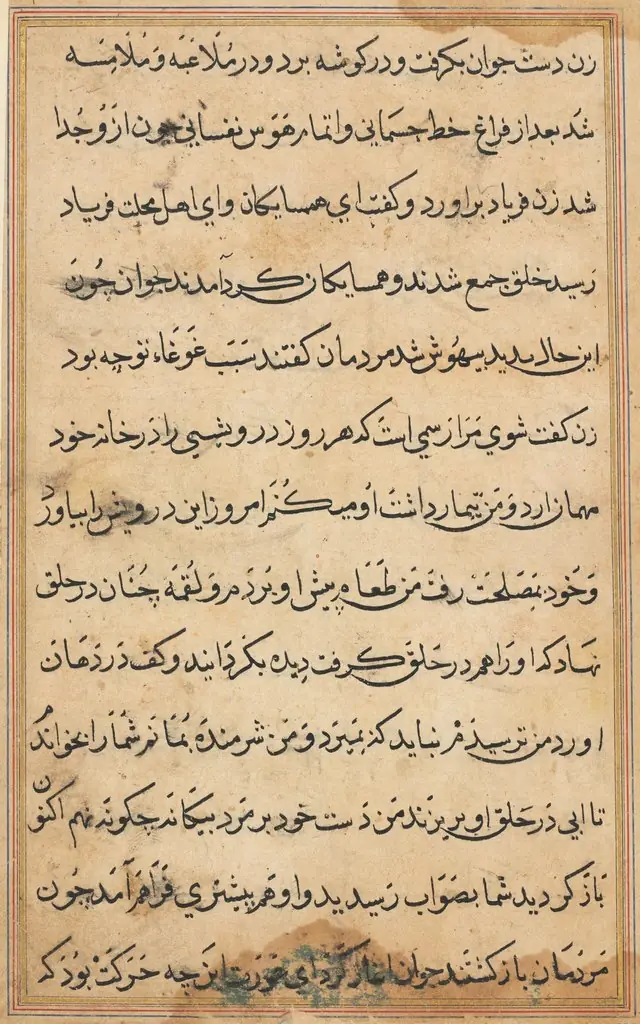
Page from Tales of a Parrot (Tuti-nama): text page
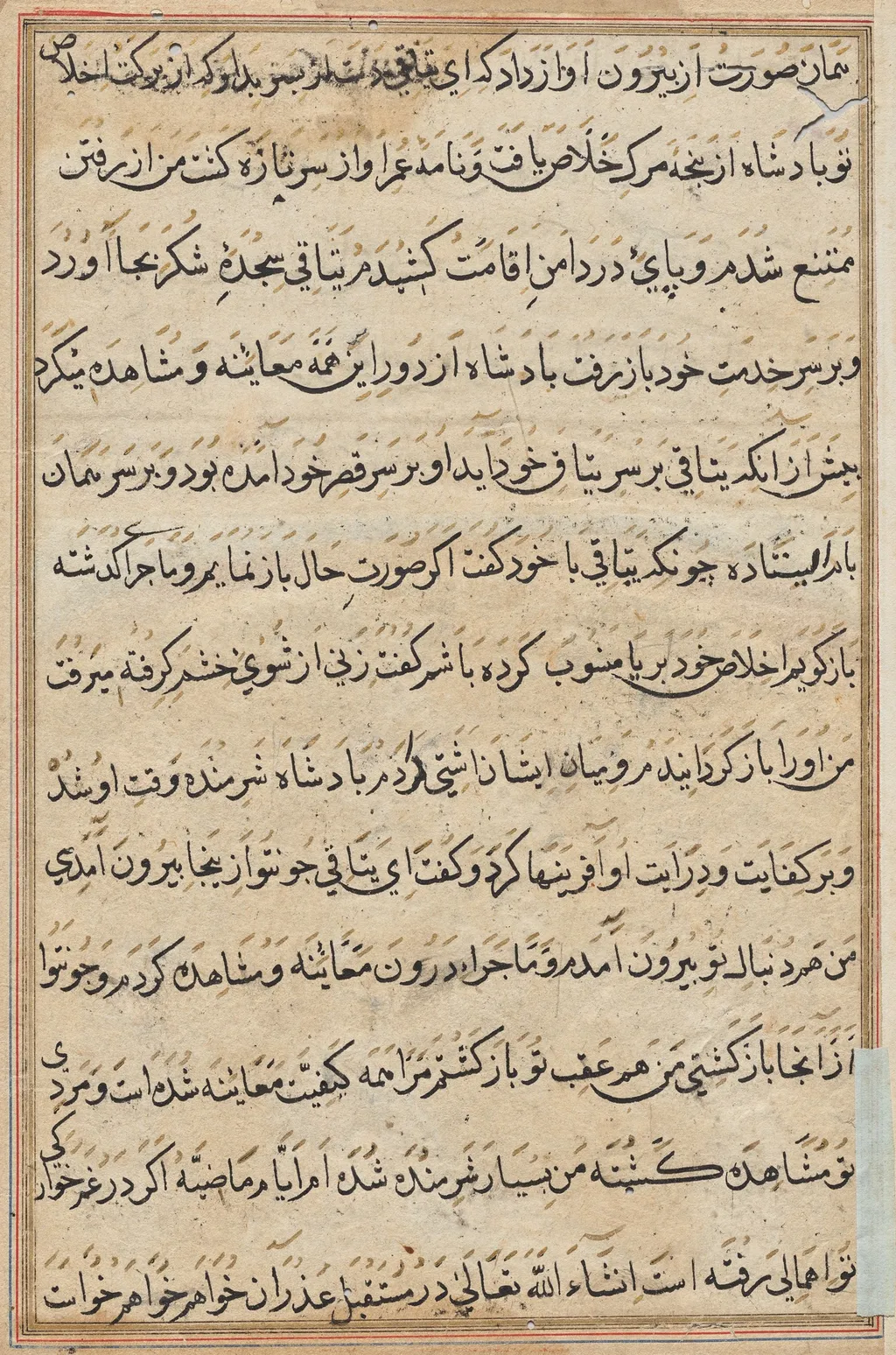
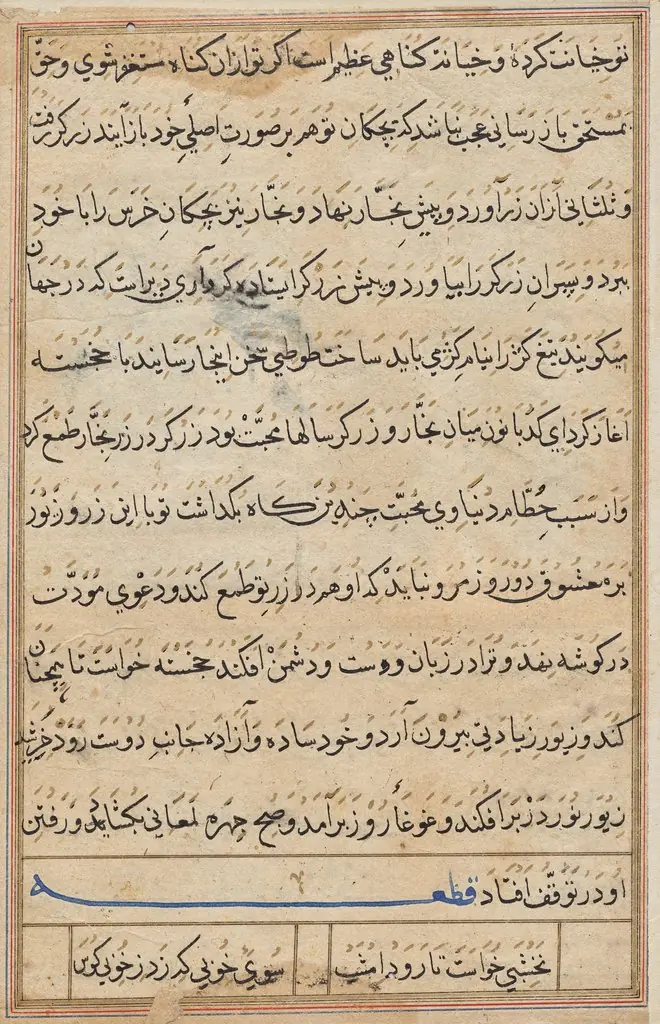
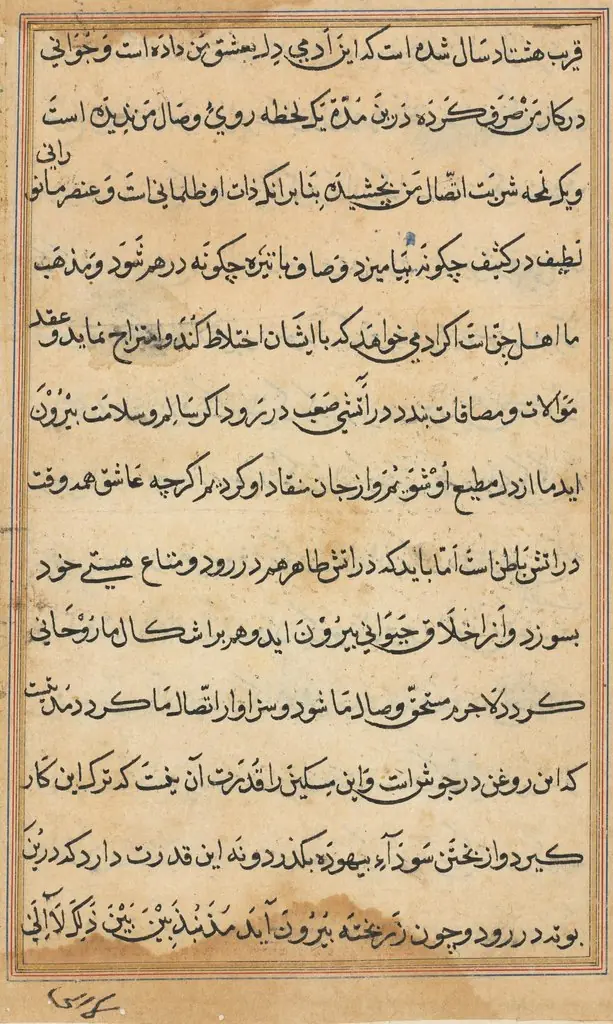
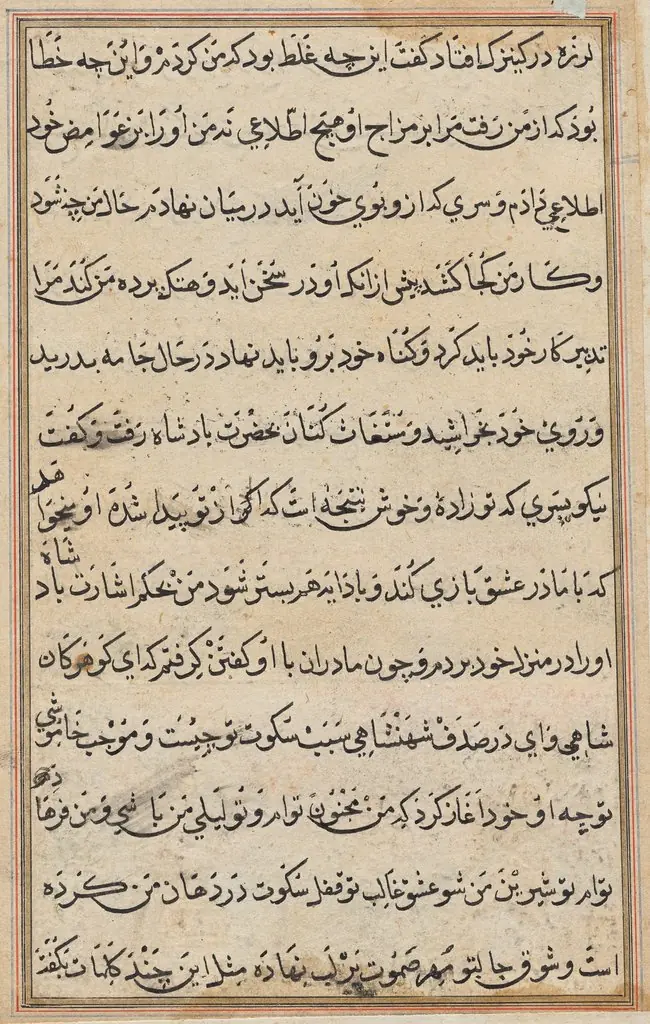
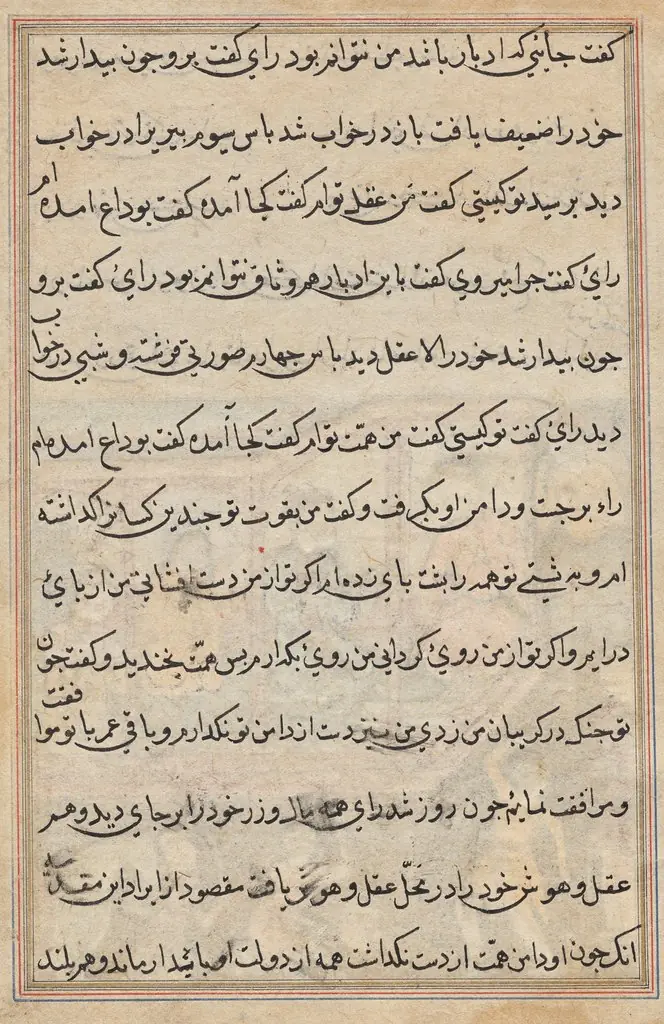
Page from Tales of a Parrot (Tuti-nama): text page is an unspecified painting. It dates from 1560 and is held in the collection of the Cleveland Museum of Art. This object is a single folio from the illustrated manuscript known as Tales of a Parrot (Tuti‑nama).
About this work
Technique & Style
This text page from the Tales of a Parrot (Tuti-nama), dated to 1560, exemplifies the Mughal manuscript tradition in its materials and execution.
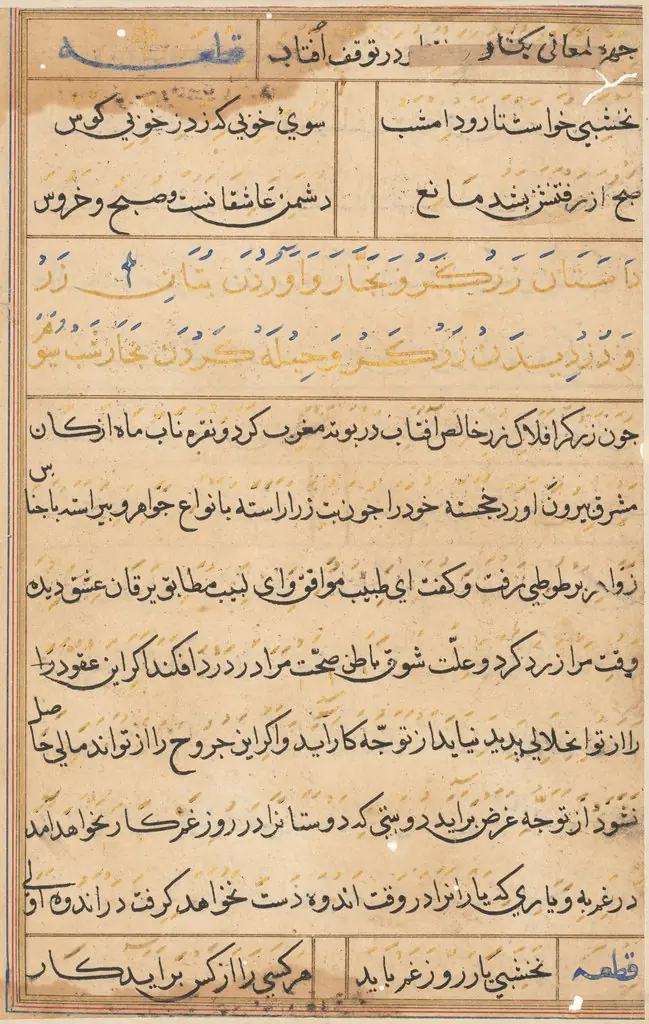
This text page from the Tales of a Parrot (Tuti-nama), dated to 1560, exemplifies the Mughal manuscript tradition in its materials and execution. The support is paper, prepared to receive both calligraphic text and decorative elements. Ink, likely carbon-based, was used for the Persian nastaliq script, while pigments, including opaque watercolor and gold leaf, were applied for illuminated details such as chapter headings and marginal embellishments.
Stylistically, the page adheres to the refined aesthetic of the Mughal atelier under Akbar’s patronage. The script is meticulously spaced, with a rhythmic cadence that balances legibility and ornament. Gold accents, typically reserved for divine or royal contexts, are sparingly integrated, reflecting the manuscript’s dual function as both literary and visual art.
The handling is precise, with fine brushwork defining the delicate floral and geometric motifs in the margins, a hallmark of the period’s manuscript illumination.
History & Provenance
The text page from the Tales of a Parrot (Tuti-nama) was created in 1560 within the Mughal Empire. Although the specific artist remains unidentified, the work is attributed to the period of Mughal manuscript production under imperial patronage. The painting was acquired by the Cleveland Museum of Art in 1962, where it entered the collection as accession number 1962.279.16.b. This acquisition marks the beginning of its documented modern ownership chain, transitioning from its original creation context to its current status as a held artifact in the museum's collection.
The painting is housed in the Cleveland Museum of Art, where it is cataloged under accession number 1962.279.16.b. It was created in 1560 within the Mughal Empire and has been part of the museum’s collection since its acquisition, though specific exhibition records are not detailed in the source.
Legacy
The manuscript page from the Tuti-nama, created around 1560 in the Mughal Empire, helped shape the visual language of illustrated Persian literature, influencing later manuscript traditions across South and Central Asia. Its compositional clarity and narrative framing were studied by later artists seeking to emulate Mughal book arts, particularly in regional workshops that adapted Persian motifs to local styles. The work entered the Cleveland Museum of Art collection and is cited in scholarly studies of Indo-Persian painting as an exemplar of the period’s narrative illustration techniques.
Overview
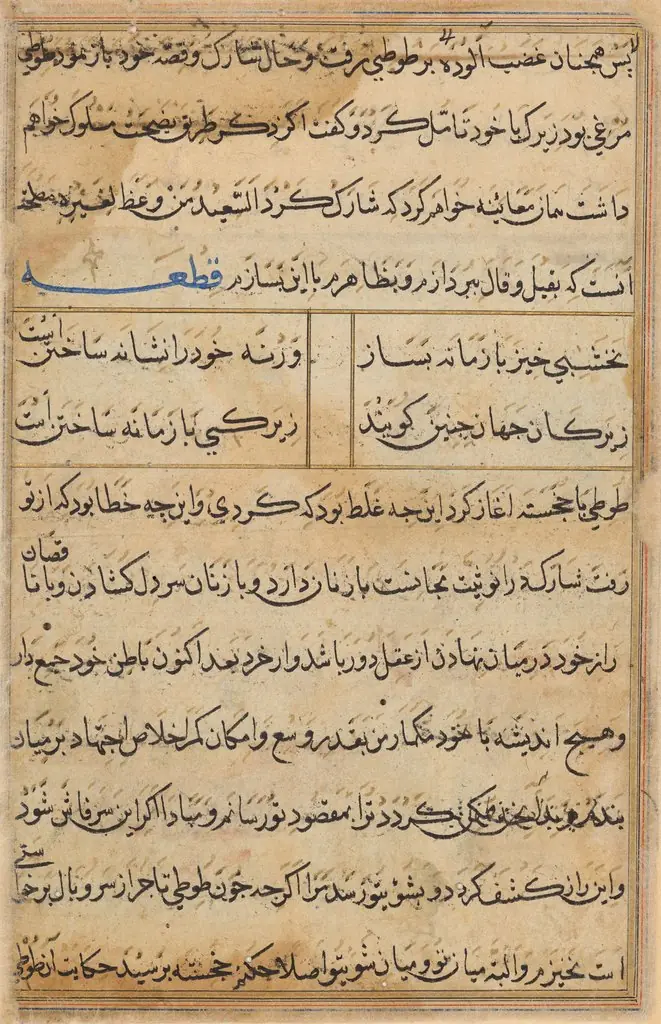
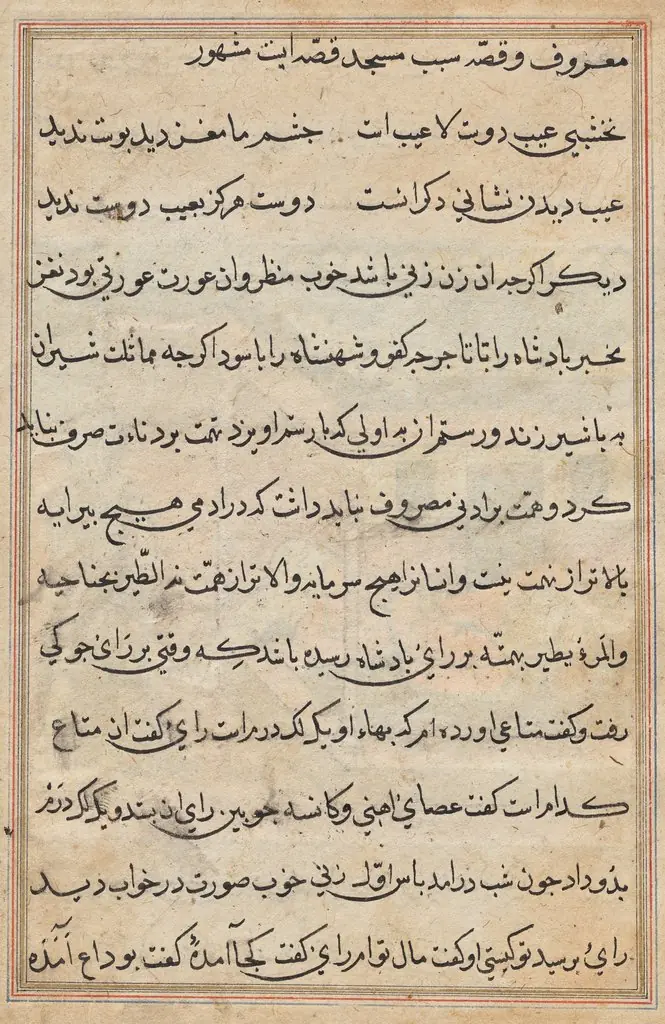
This object is a single folio from the illustrated manuscript known as Tales of a Parrot (Tuti‑nama). The page consists solely of calligraphic text rendered in black ink on a pale ground, framed by a narrow red margin along its edges. It measures roughly the size of a standard book leaf and is part of the Cleveland Museum of Art’s collection.
Subject & Meaning
The written material presents a narrative episode from the Tuti‑nama, a collection of moral and romantic stories popular in Persian literary tradition. The text was intended for a princely audience, offering both entertainment and ethical instruction, reflecting the courtly culture for which it was produced.
Context
During the period of its creation, illustrated manuscripts such as the Tuti‑nama served as vehicles for literary transmission across the Persianate courts of South and Central Asia. The emphasis on text over illustration in this leaf reflects a specific functional purpose, perhaps a personal copy for the prince’s private reading.
Artist & collection

- Page from Tales of a Parrot (Tuti-nama): text page
 Page from Tales of a Parrot (Tuti-nama): text page
 Page from Tales of a Parrot (Tuti-nama): text page
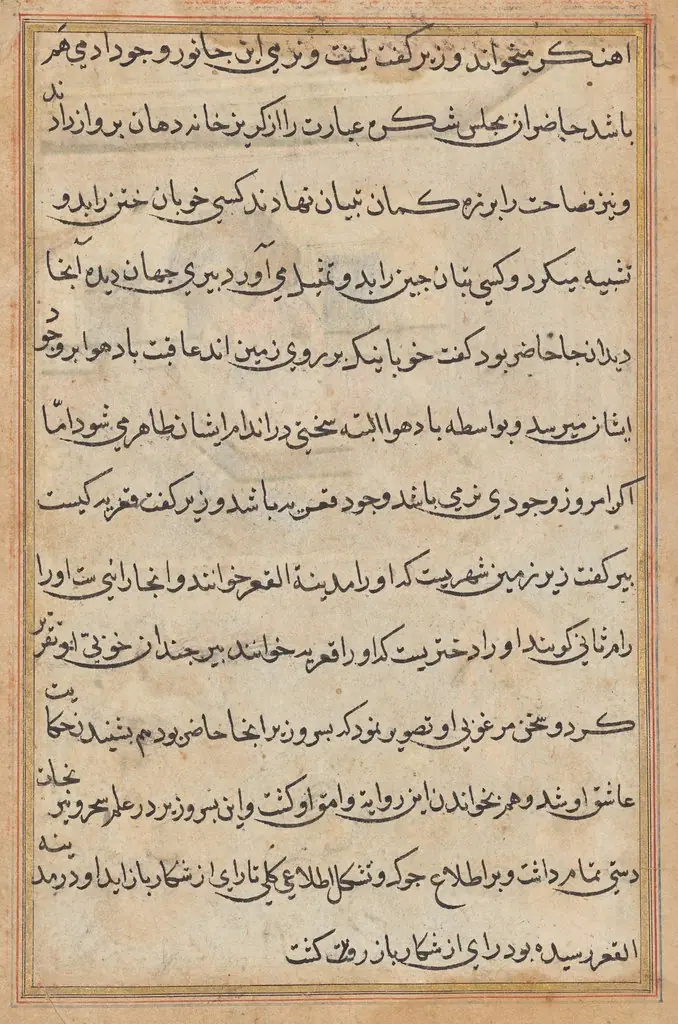 Page from Tales of a Parrot (Tuti-nama): text page
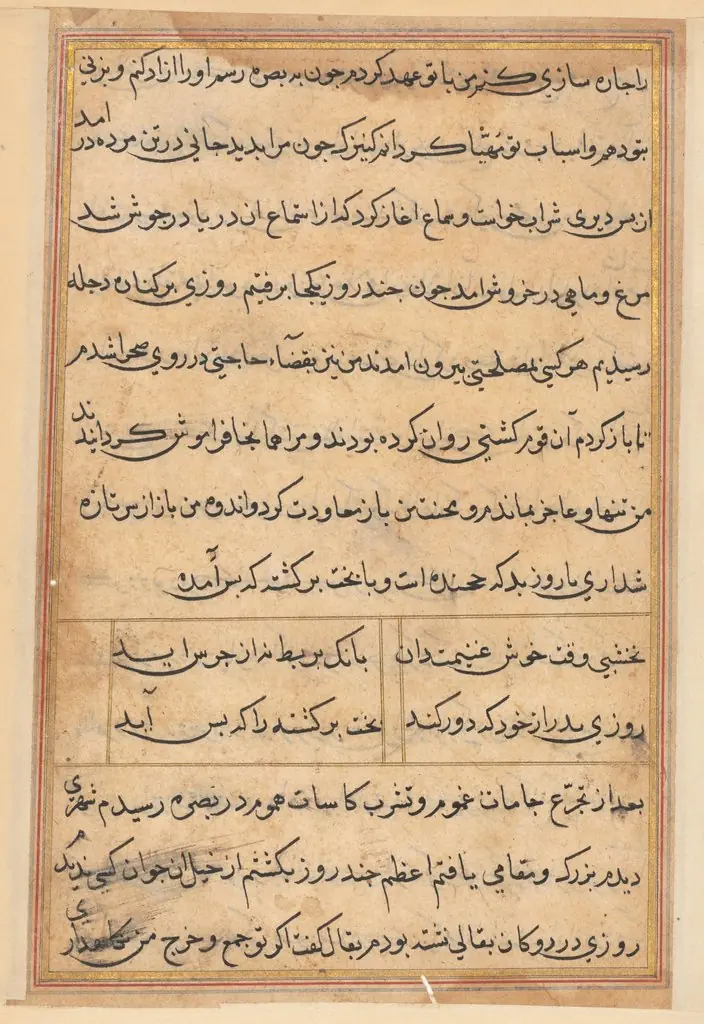 Page from Tales of a Parrot (Tuti-nama): text page
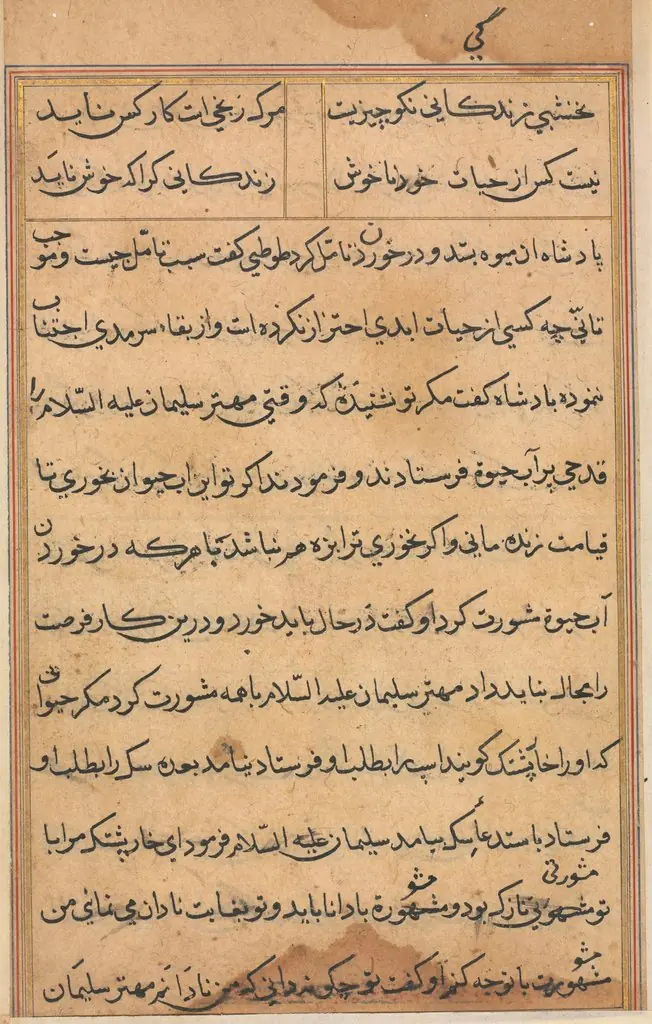 Page from Tales of a Parrot (Tuti-nama): text page
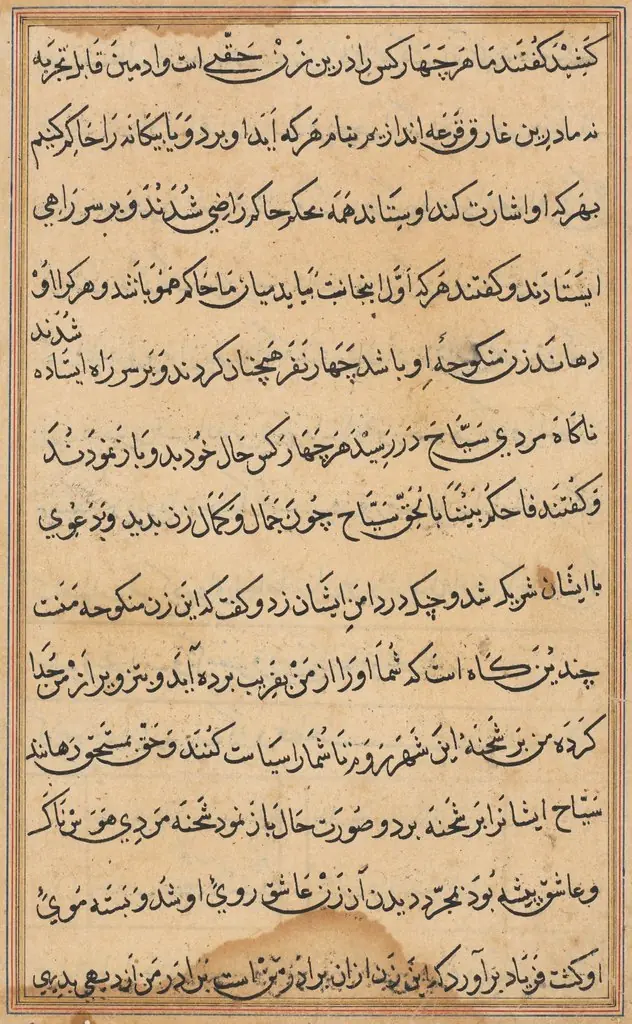 Page from Tales of a Parrot (Tuti-nama): text page
 Page from Tales of a Parrot (Tuti-nama): text page
 Page from Tales of a Parrot (Tuti-nama): text page
 Page from Tales of a Parrot (Tuti-nama): text page
 Page from Tales of a Parrot (Tuti-nama): text page
 Page from Tales of a Parrot (Tuti-nama): text page