Artwork
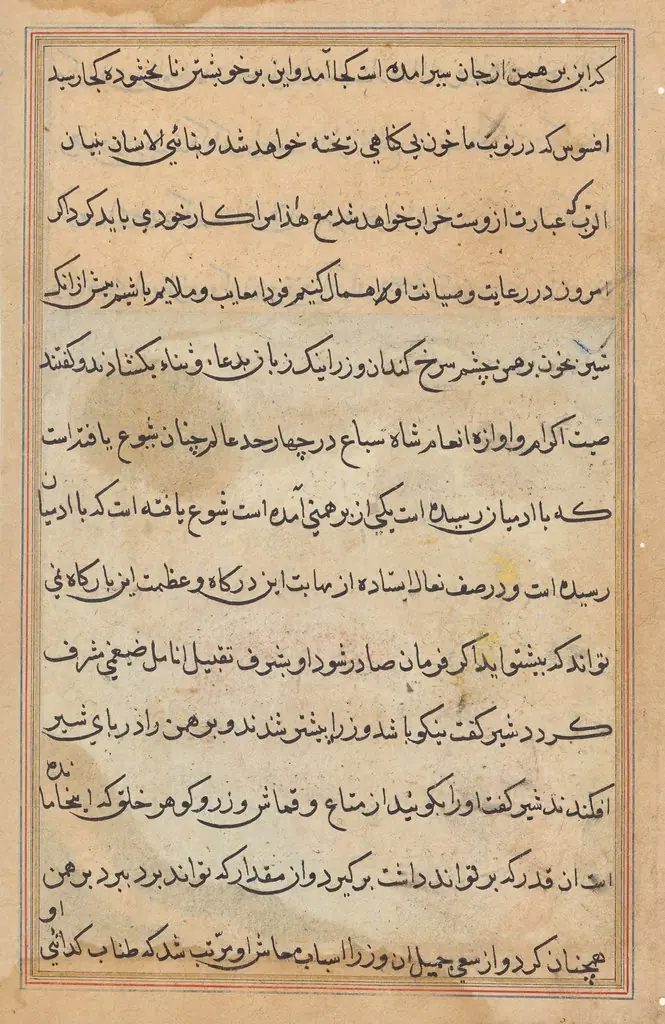
Page from Tales of a Parrot (Tuti-nama): text page
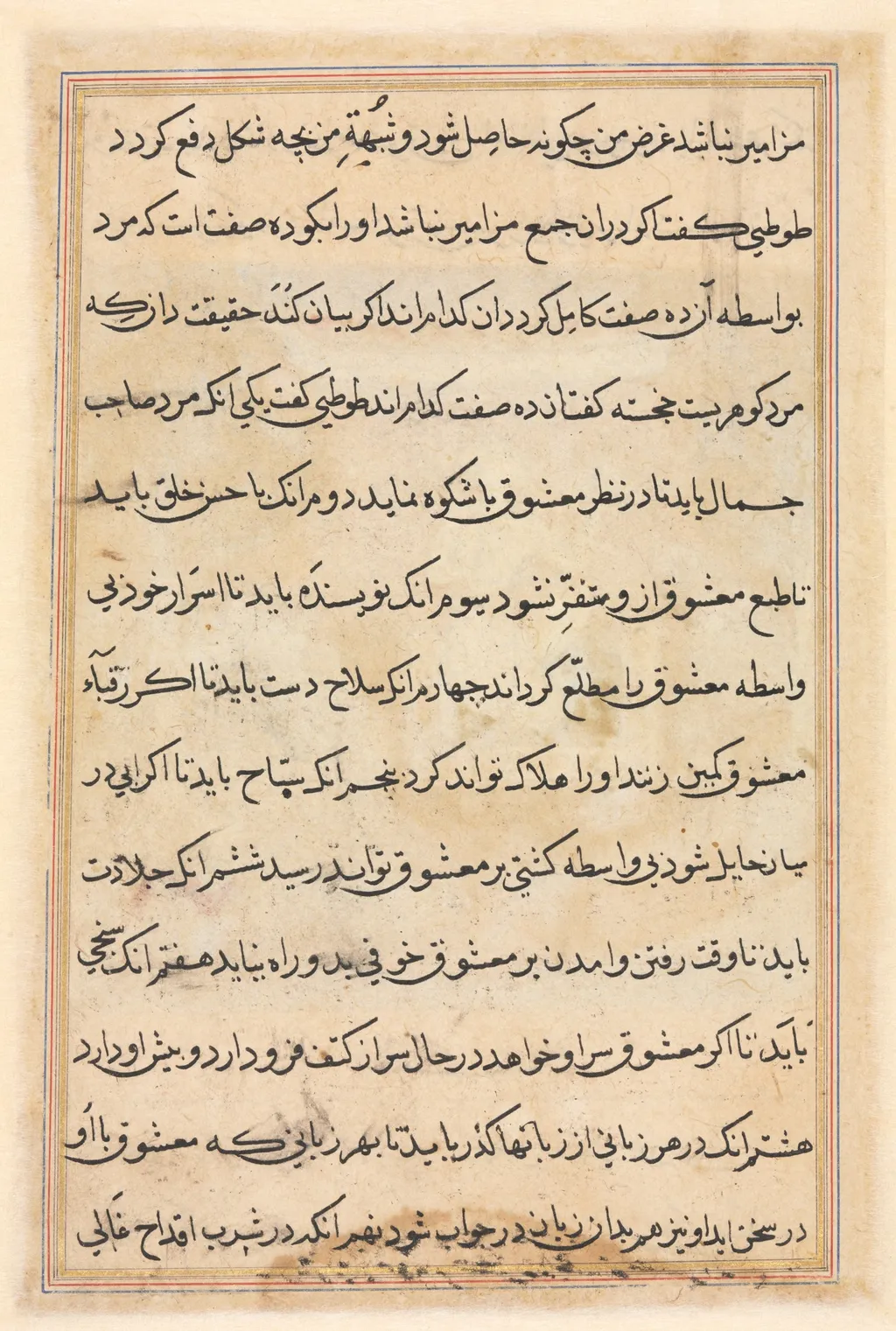
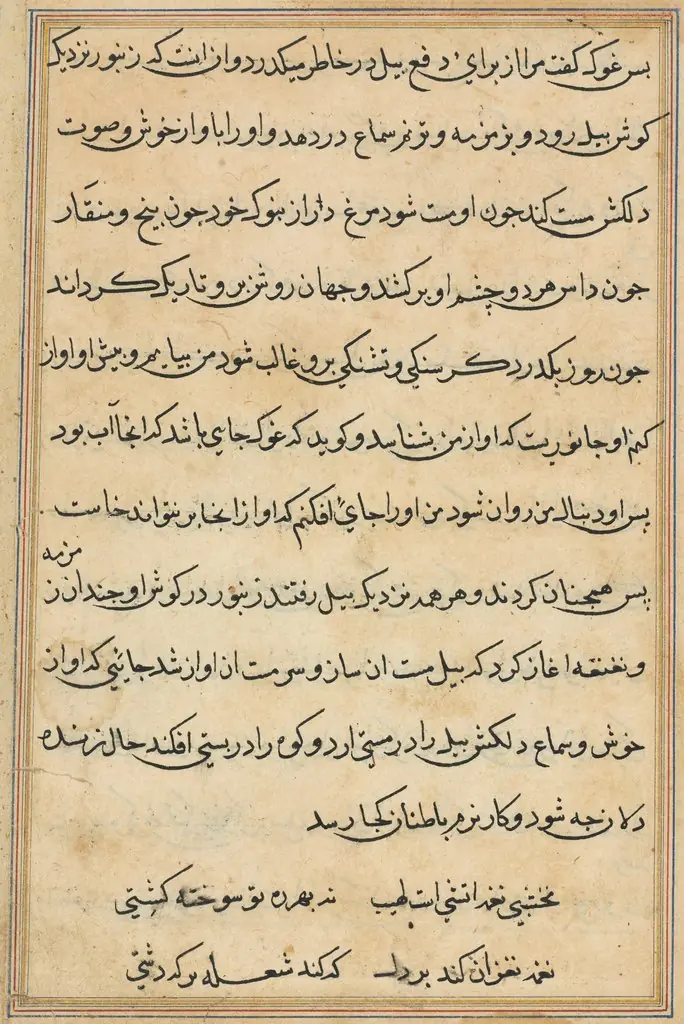
Page from Tales of a Parrot (Tuti-nama): text page is an unspecified painting. It dates from 1560 and is held in the collection of the Cleveland Museum of Art. This object is a single folio from the illustrated manuscript Tales of a Parrot (Tuti‑nama).
About this work
History & Provenance
Its provenance is documented within the museum’s holdings, reflecting Mughal imperial patronage and later transfer to a Western collection.
The text page from the Tales of a Parrot (Tuti-nama) is dated to 1560, aligning with the manuscript’s production during the reign of the Mughal emperor Akbar (r. 1556–1605), when the Tuti-nama was commissioned and illustrated.
By the mid-20th century, the page entered the collection of the Cleveland Museum of Art as part of a larger acquisition, where it is currently held as accession number 1962.279.110.a. Its provenance is documented within the museum’s holdings, reflecting Mughal imperial patronage and later transfer to a Western collection.
The page is held by the Cleveland Museum of Art, where it is catalogued under accession number 1962.279.110.a. Produced in 1560 within the Mughal Empire, it entered the museum's collection as part of its holdings of South Asian manuscript pages. No exhibition history is documented in the available sources.
Overview
This object is a single folio from the illustrated manuscript Tales of a Parrot (Tuti‑nama). The sheet measures roughly a standard page size and is composed of light‑brown paper edged with a thin decorative band of red and blue. Across the surface runs dense Arabic calligraphy arranged in neat horizontal lines, the ink varying slightly in darkness.
Subject & Meaning
The text on the page forms part of a narrative collection commissioned for Prince Salim, a member of the Mughal court. The stories, conveyed through the parrot’s voice, were intended both as entertainment and moral instruction, reflecting the court’s appreciation for literary refinement and the didactic role of storytelling.
Technique & Style
The calligraphic execution demonstrates a high level of precision characteristic of Mughal manuscript production. Black ink is applied in uniform strokes, with occasional emphasis achieved by darker lines. The surrounding border, rendered in thin red and blue pigments, provides a subtle visual frame without detracting from the dominant script, illustrating the period’s balanced aesthetic.
Context
During the Mughal era, illustrated books combined Persian literary traditions with Indian artistic sensibilities. The Tales of a Parrot exemplifies this synthesis, pairing elaborate calligraphy with modest decorative borders, and illustrates the patronage system that supported skilled scribes and illuminators within the imperial workshop.
Artist & collection

- Page from Tales of a Parrot (Tuti-nama): text page
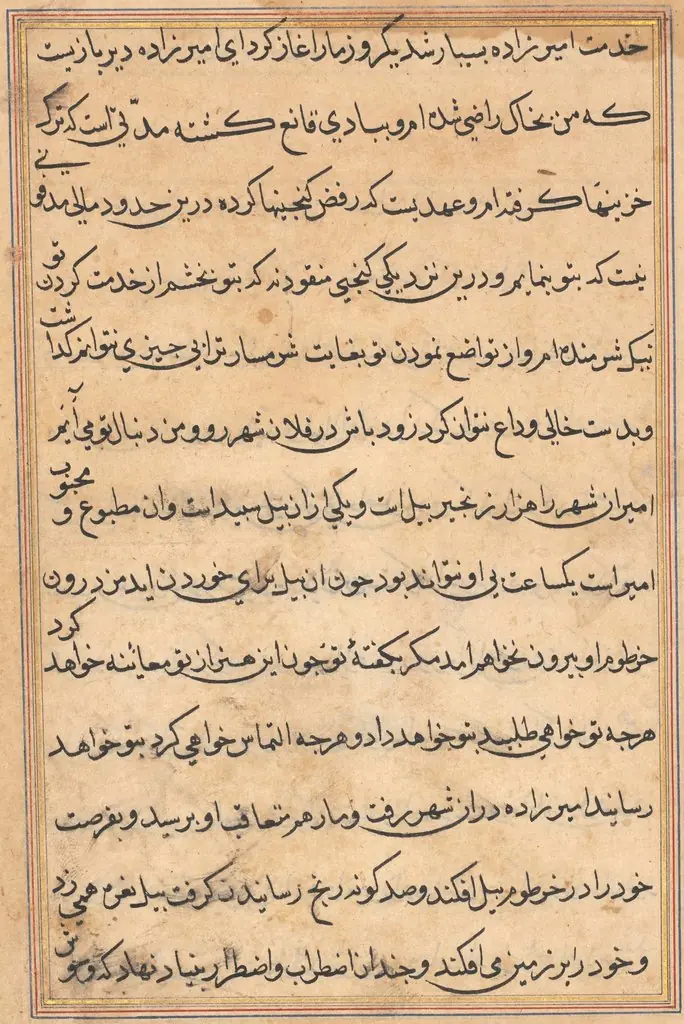 Page from Tales of a Parrot (Tuti-nama): text page
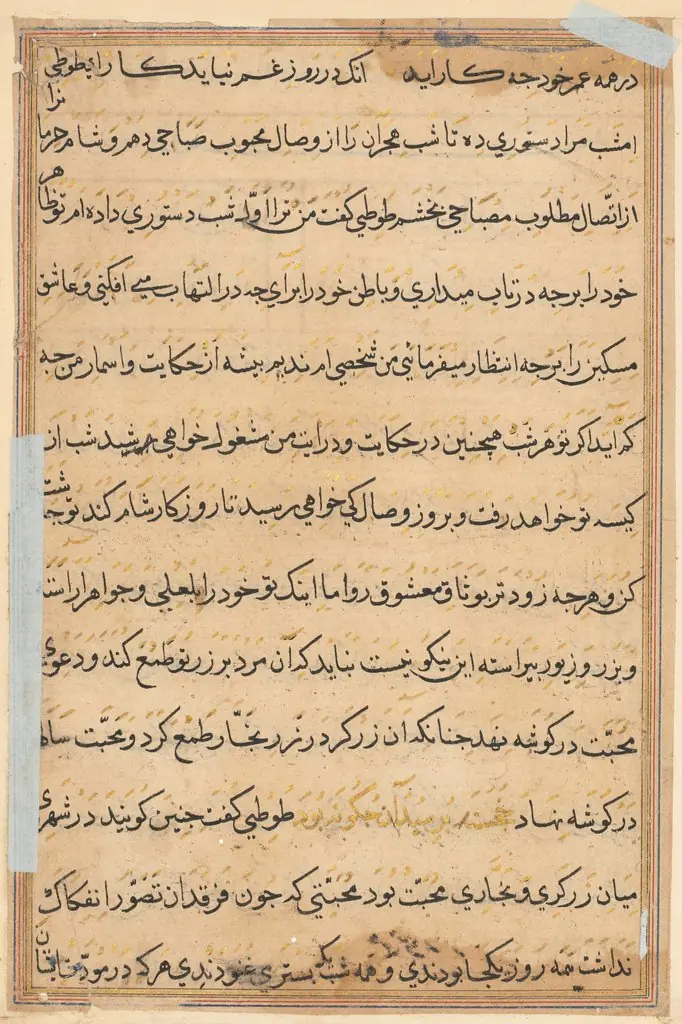 Page from Tales of a Parrot (Tuti-nama): text page
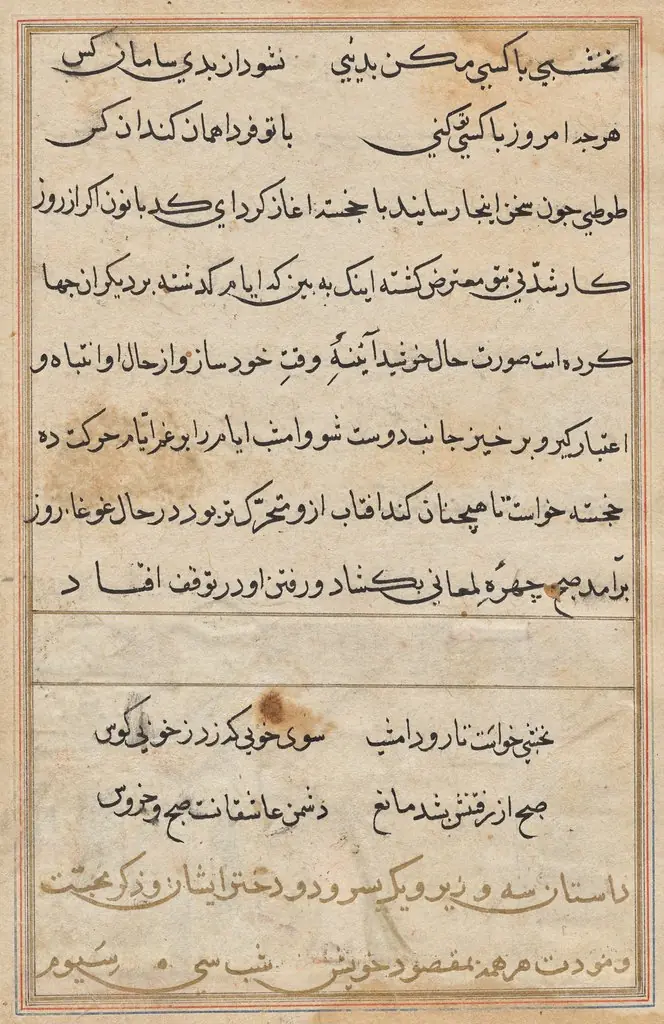 Page from Tales of a Parrot (Tuti-nama): text page
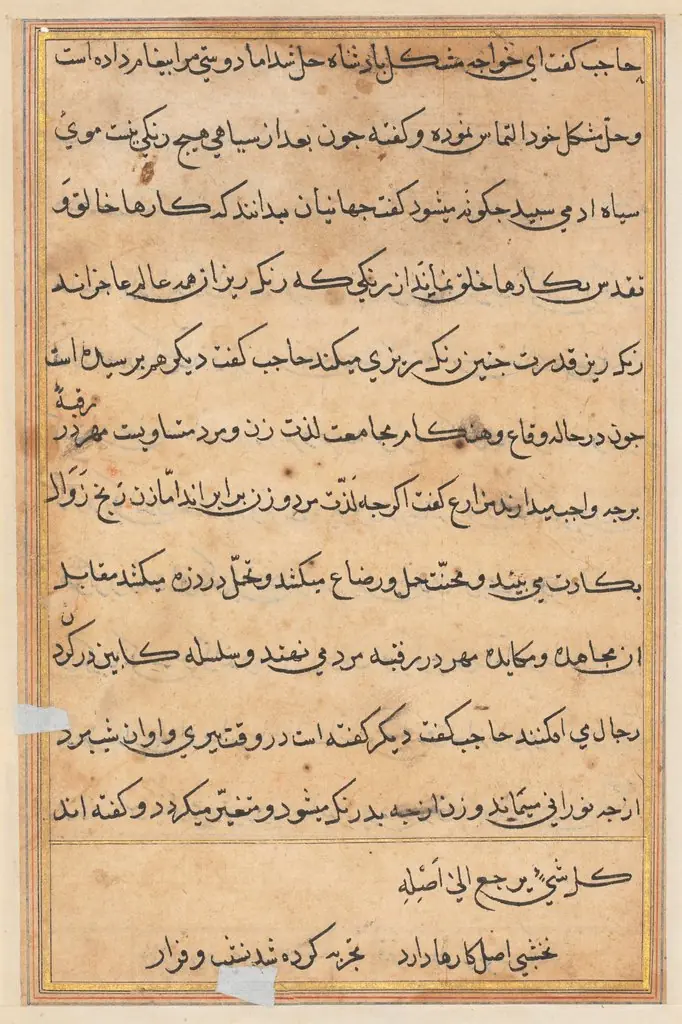 Page from Tales of a Parrot (Tuti-nama): text page
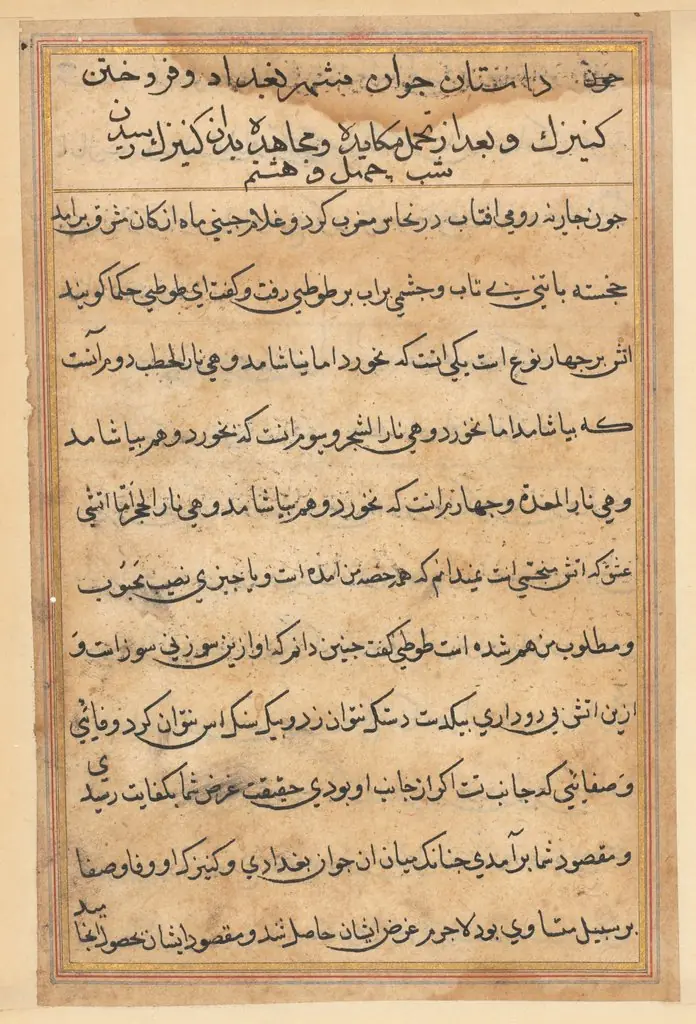 Page from Tales of a Parrot (Tuti-nama): text page
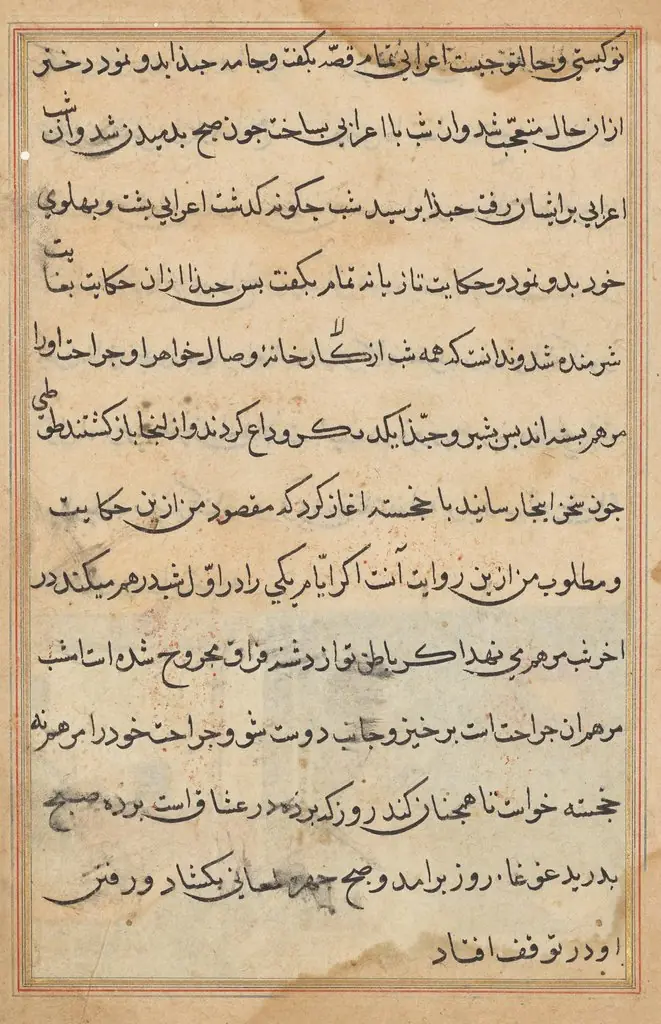 Page from Tales of a Parrot (Tuti-nama): text page
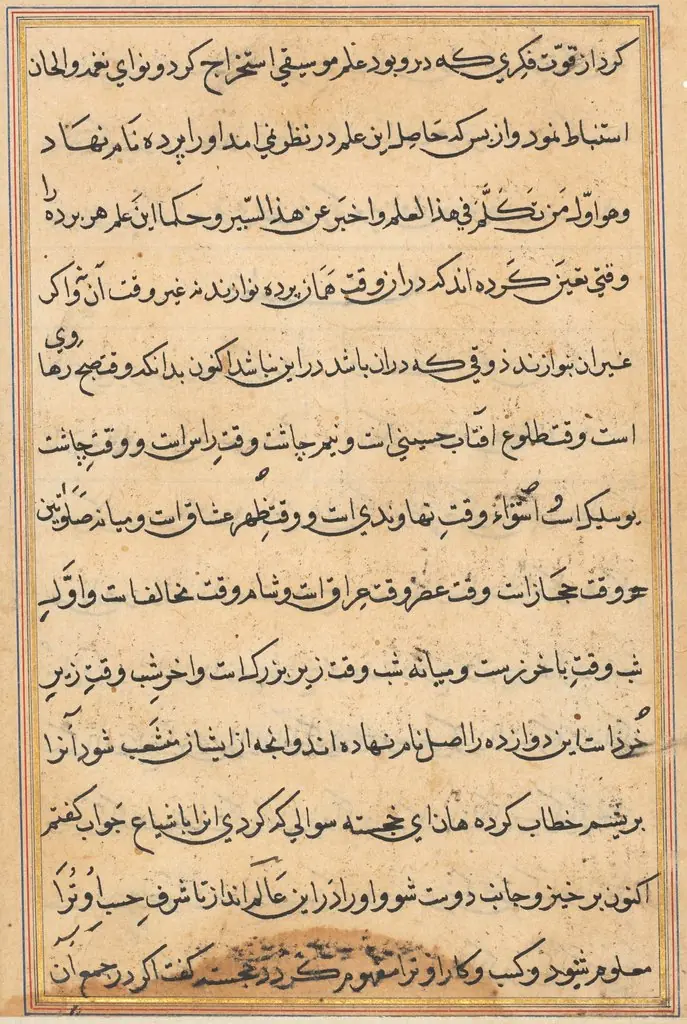 Page from Tales of a Parrot (Tuti-nama): text page
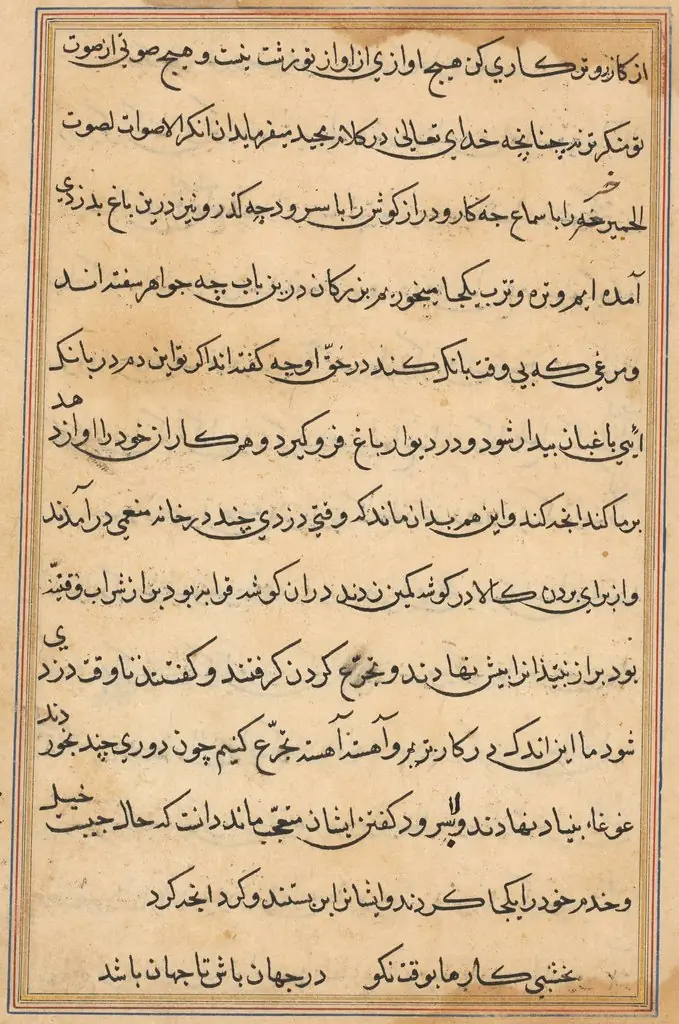 Page from Tales of a Parrot (Tuti-nama): text page
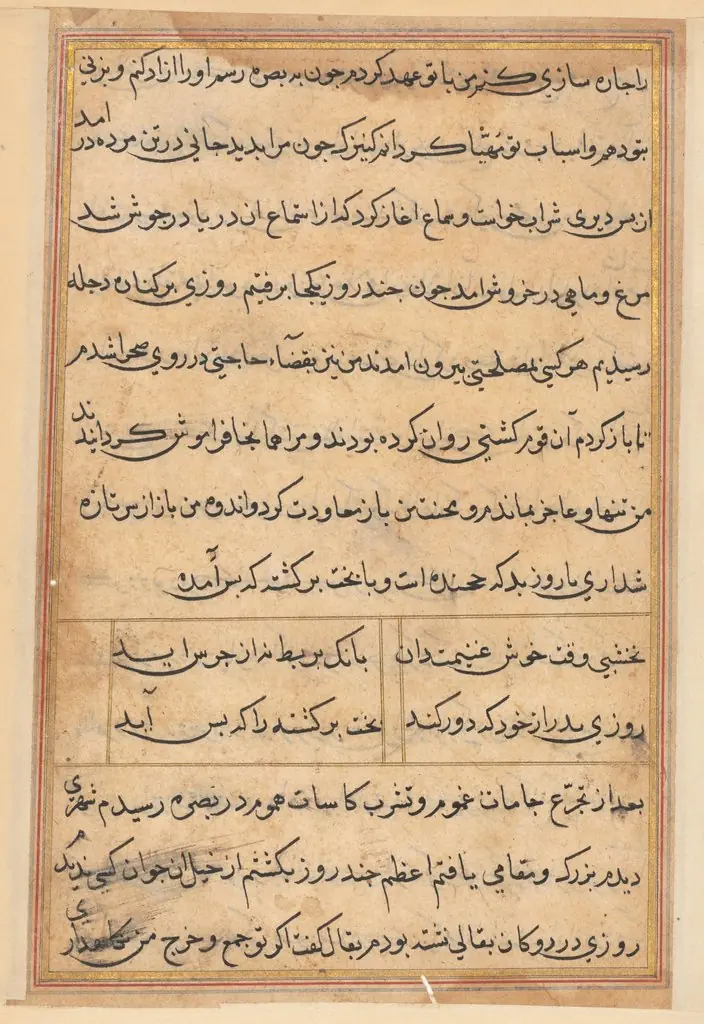 Page from Tales of a Parrot (Tuti-nama): text page
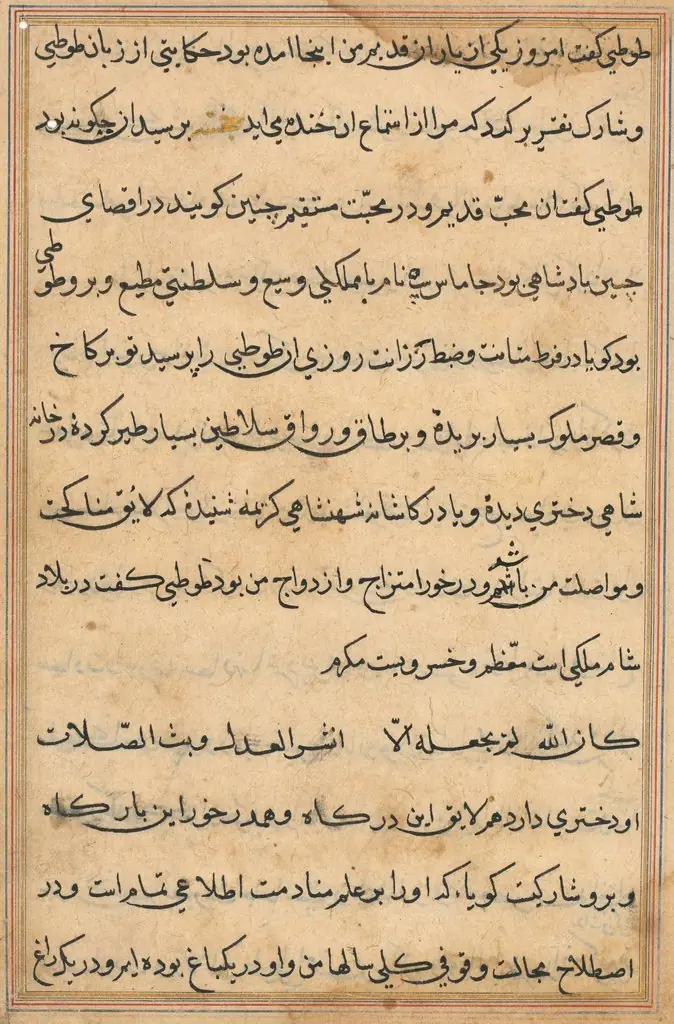 Page from Tales of a Parrot (Tuti-nama): text page
 Page from Tales of a Parrot (Tuti-nama): text page