Artwork
Page from Tales of a Parrot (Tuti-nama): text page
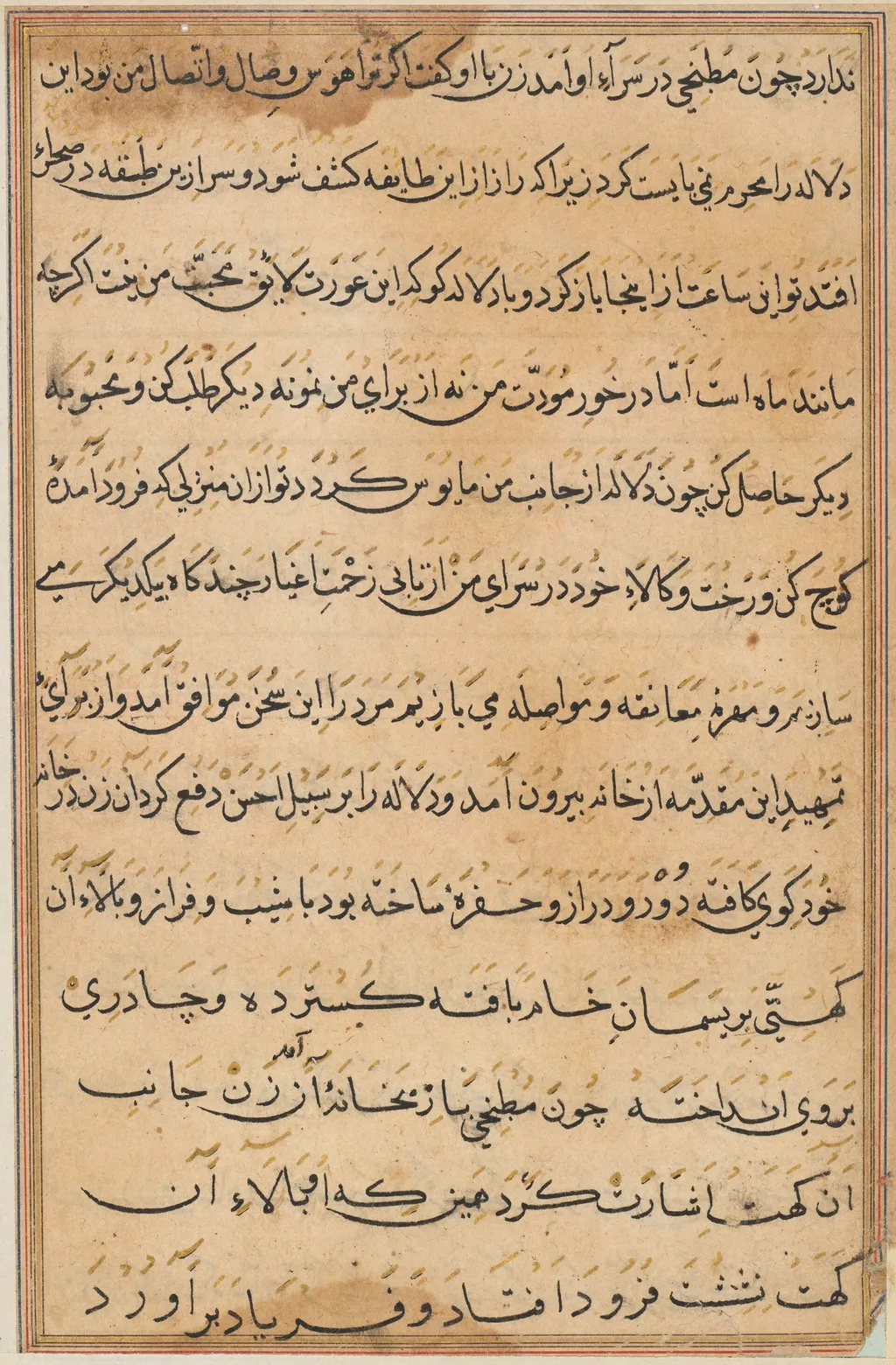
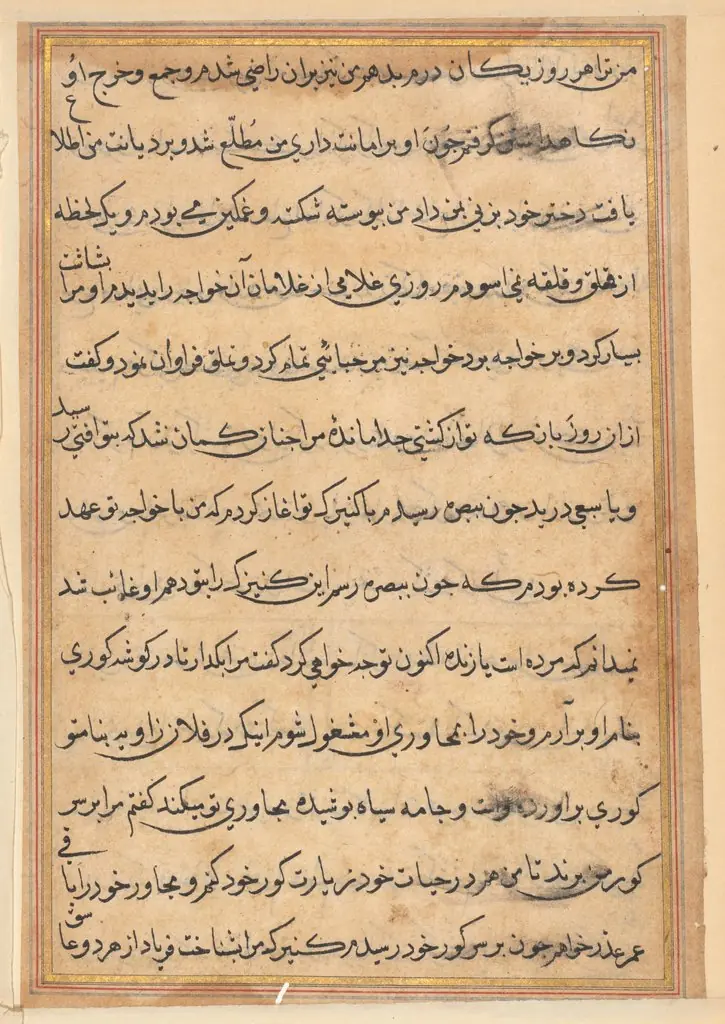
Page from Tales of a Parrot (Tuti-nama): text page is an unspecified painting. It dates from 1560 and is held in the collection of the Cleveland Museum of Art. This illuminated page originates from the Persian manuscript Tales of a Parrot (Tuti‑nama), a narrative composed for Prince Salim.
About this work
History & Provenance
This text page is dated to 1560 and is associated with the Mughal Empire, consistent with the patronage and manuscript traditions of that period.
This text page is dated to 1560 and is associated with the Mughal Empire, consistent with the patronage and manuscript traditions of that period.
It entered the collection of the Cleveland Museum of Art as accession number 1962.279.28.b in 1962.
The text page from the Tales of a Parrot (Tuti-nama), created in 1560, is held by the Cleveland Museum of Art in Cleveland. The work is cataloged under the accession number 1962.279.28.b within the museum's collection. Produced in the Mughal Empire, this painting is attributed to an unknown artist.
The provided sources do not list any specific exhibitions where this page has been displayed.
Overview
This illuminated page originates from the Persian manuscript Tales of a Parrot (Tuti‑nama), a narrative composed for Prince Salim. Executed in black ink on a lightly textured paper, the text is arranged in graceful, curved lines, punctuated by occasional larger letters. Small gold flecks are scattered across the surface, providing a subtle visual contrast.
Subject & Meaning
The page contains a segment of the Tuti‑nama story, a collection of moral anecdotes traditionally conveyed through the voice of a parrot. Intended for a princely audience, the text reflects the didactic and entertaining purposes of courtly literature in Safavid Persia.
Technique & Style
The calligraphy employs a refined black ink stroke, characteristic of Persian manuscript traditions, with a fluid, cursive hand that balances legibility and elegance. The gold specks, applied as a decorative element, enhance the visual rhythm without overwhelming the script, exemplifying restrained ornamentation.
Context
During the Safavid era, illustrated manuscripts served both as educational tools and as symbols of elite patronage. The Tuti‑nama belonged to a genre that combined literary art with moral instruction, often produced for members of the royal household.
Legacy
The page exemplifies the high level of calligraphic skill and subtle decorative practice in Persian book arts. Its preservation allows scholars to study Safavid textual aesthetics and the transmission of courtly literature across cultures.
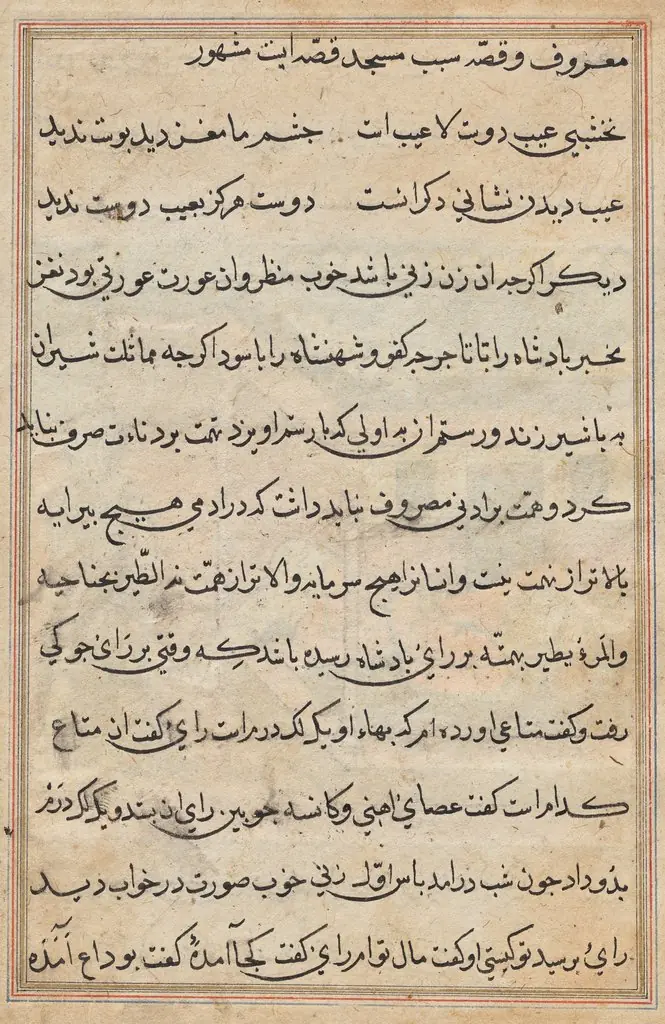
Artist & collection

- Page from Tales of a Parrot (Tuti-nama): text page
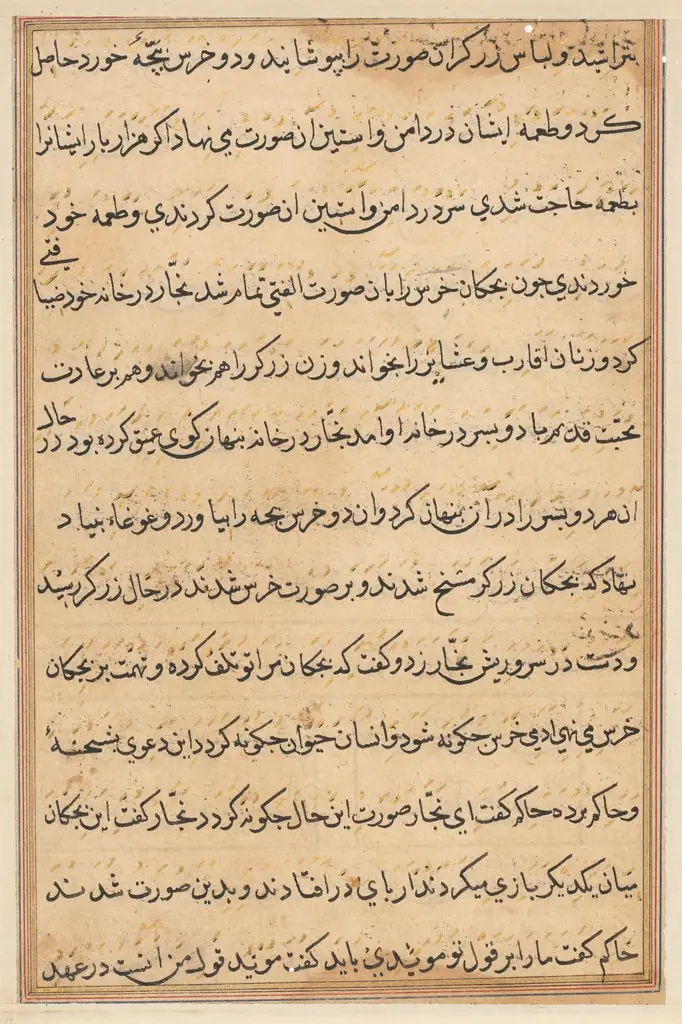 Page from Tales of a Parrot (Tuti-nama): text page
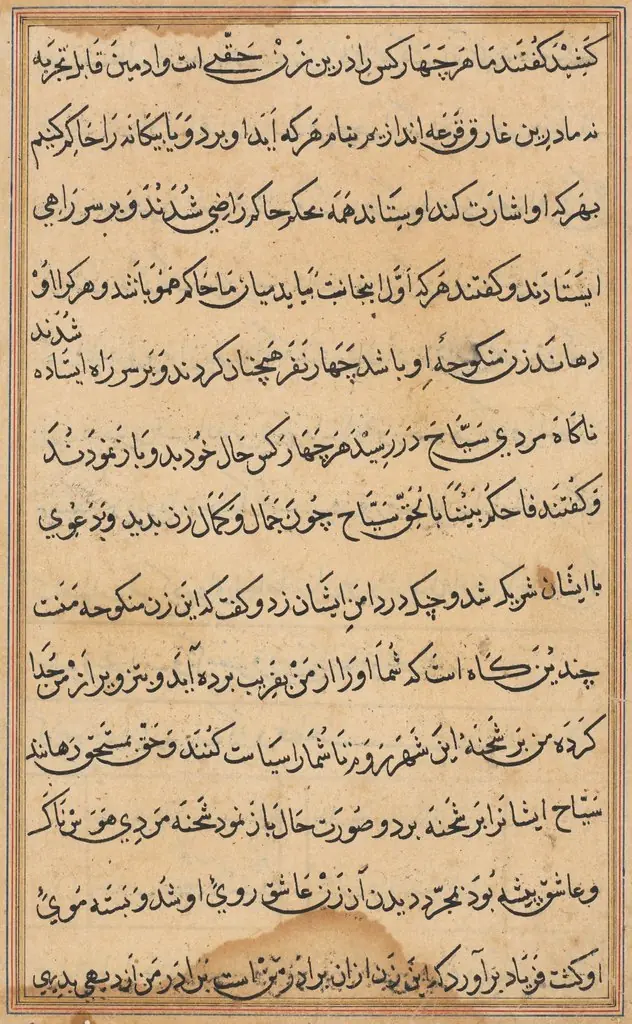 Page from Tales of a Parrot (Tuti-nama): text page
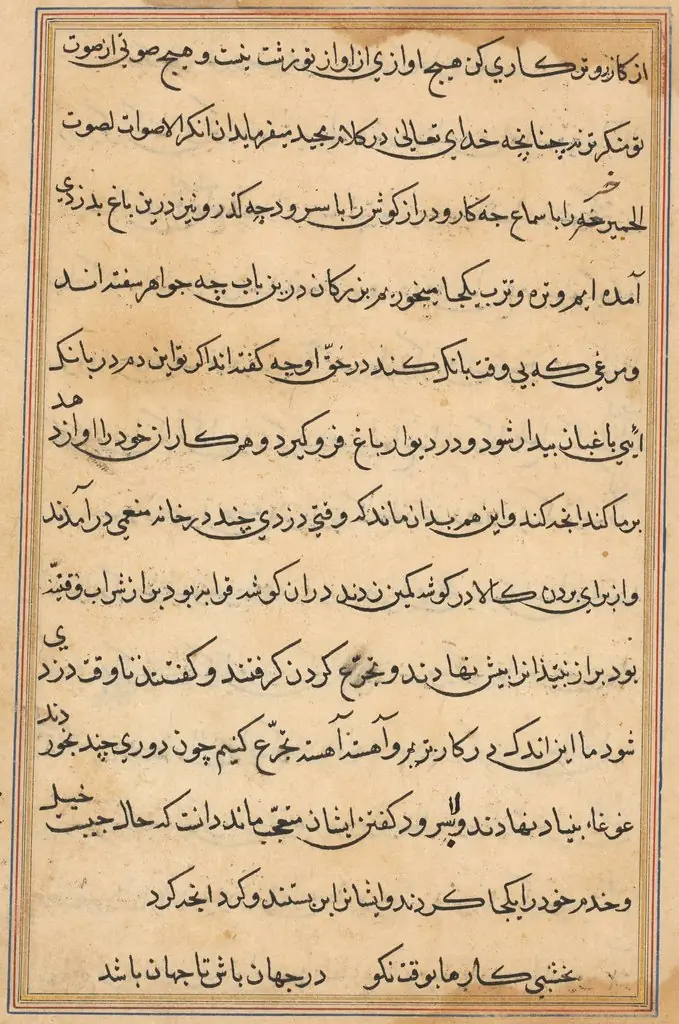 Page from Tales of a Parrot (Tuti-nama): text page
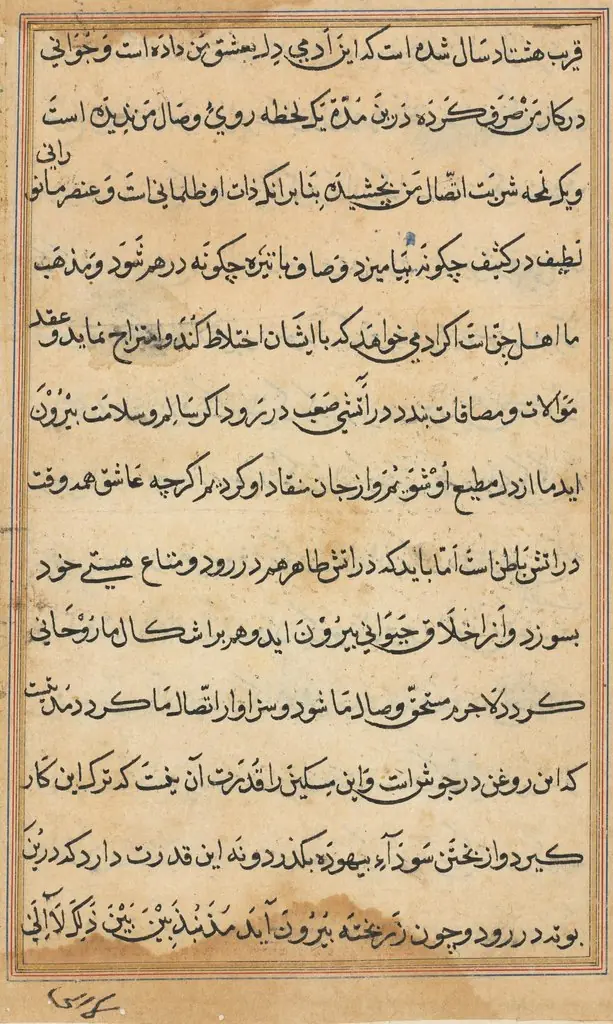 Page from Tales of a Parrot (Tuti-nama): text page
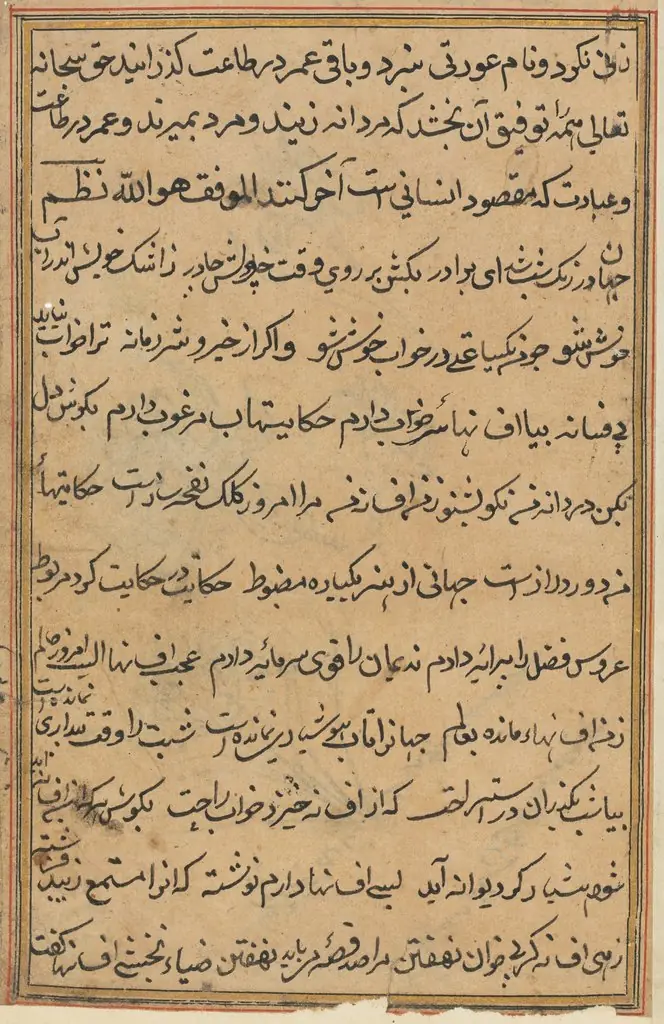 Page from Tales of a Parrot (Tuti-nama): text page
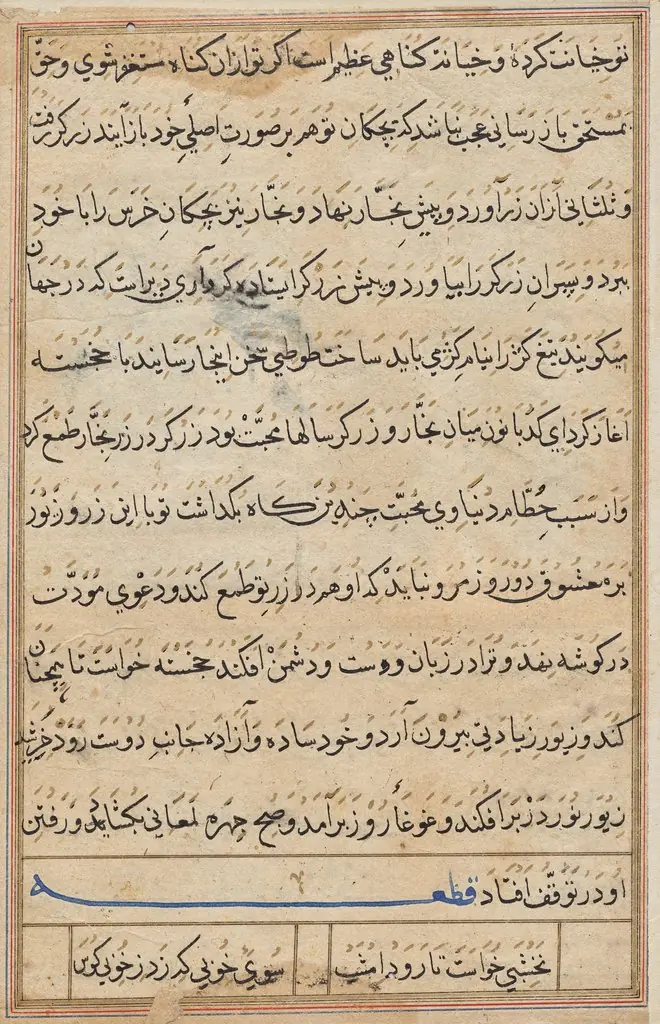 Page from Tales of a Parrot (Tuti-nama): text page
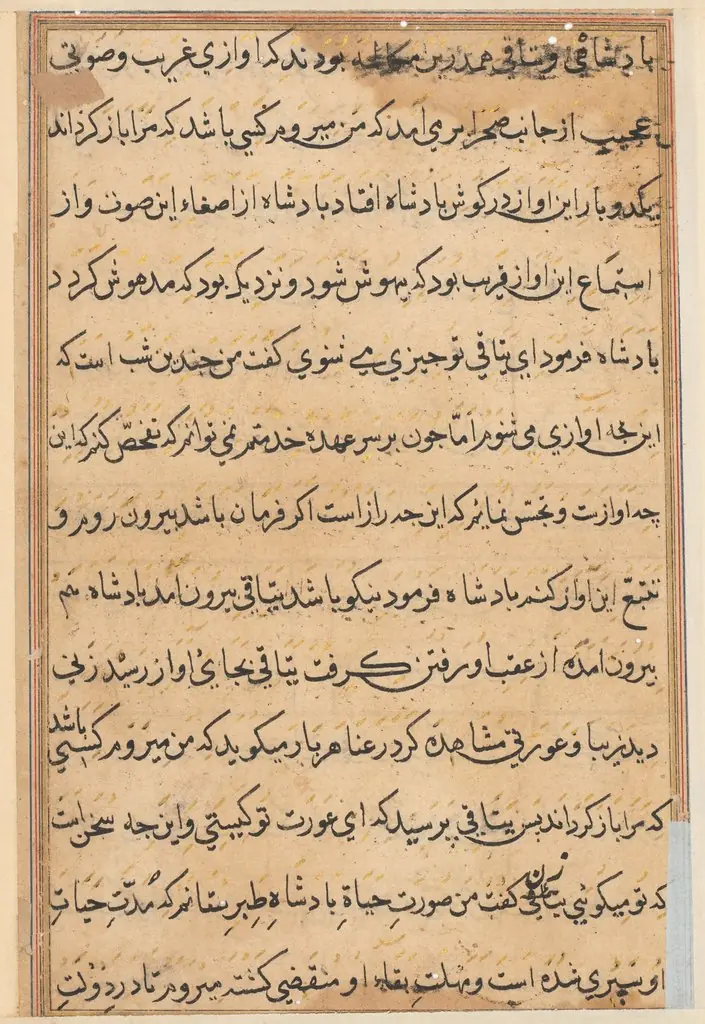 Page from Tales of a Parrot (Tuti-nama): text page
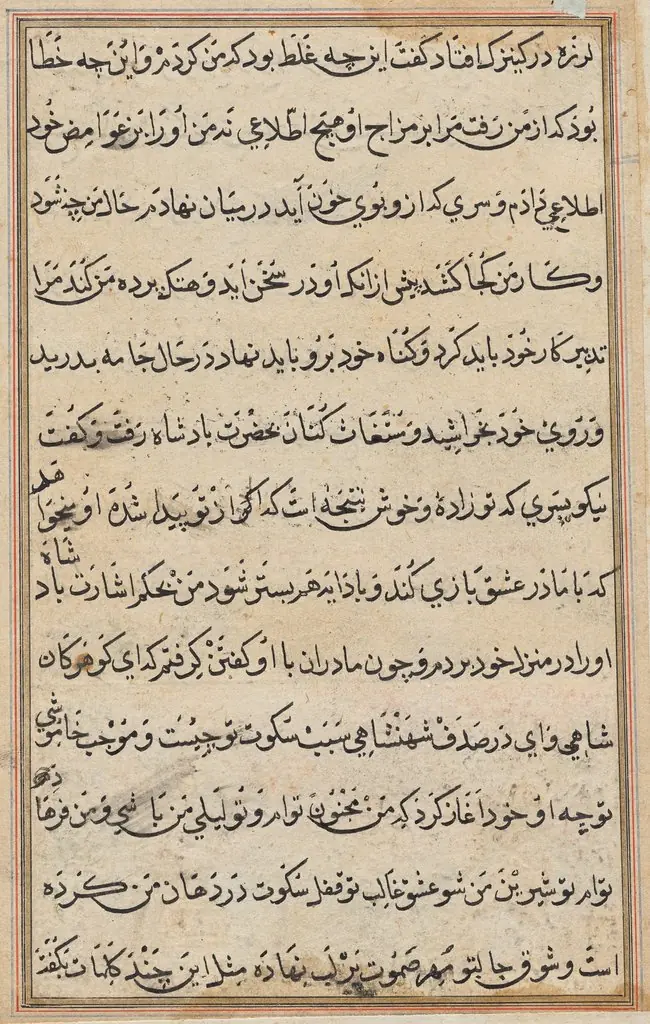 Page from Tales of a Parrot (Tuti-nama): text page
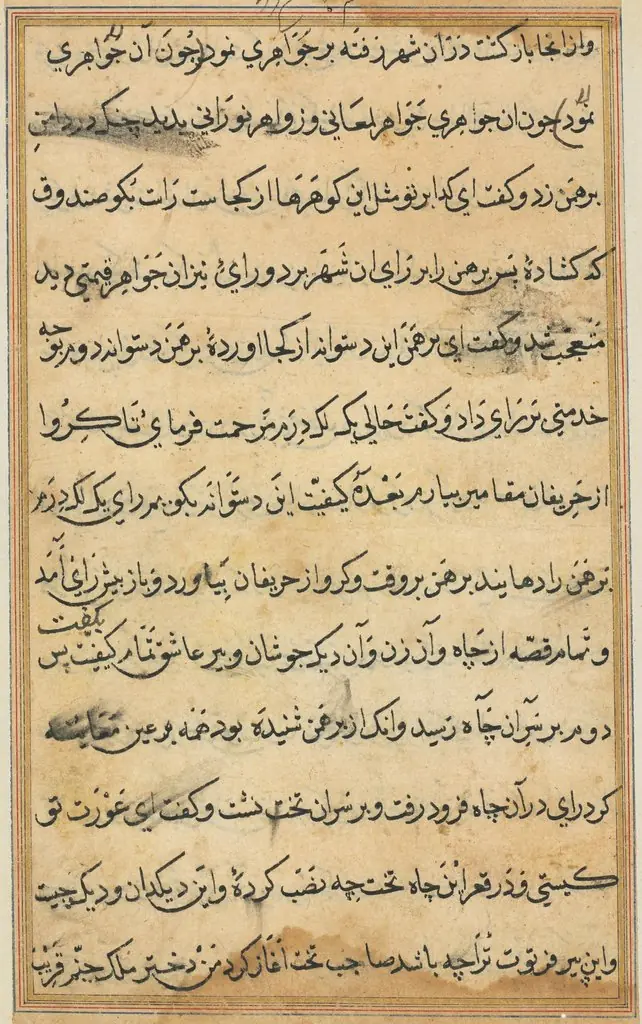 Page from Tales of a Parrot (Tuti-nama): text page
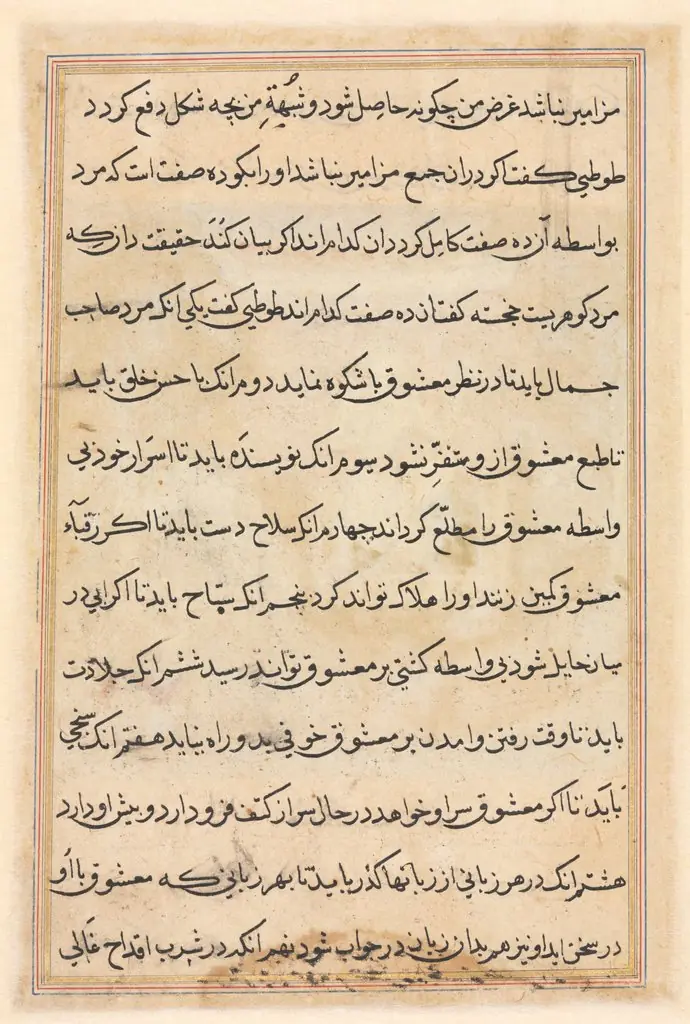 Page from Tales of a Parrot (Tuti-nama): text page
 Page from Tales of a Parrot (Tuti-nama): text page