Artwork
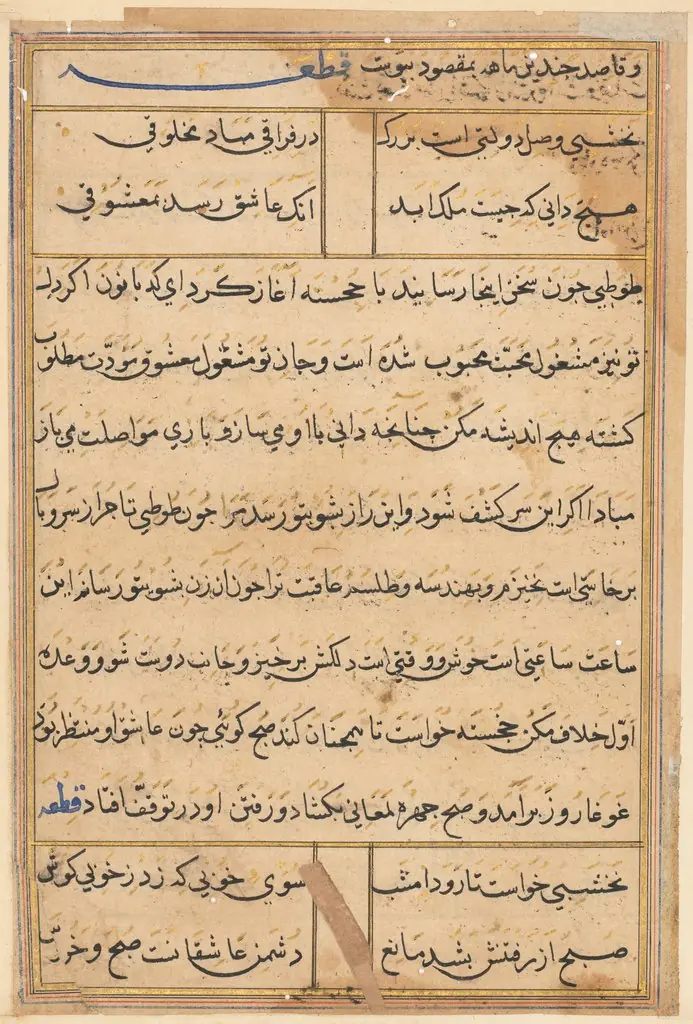
Page from Tales of a Parrot (Tuti-nama): text page
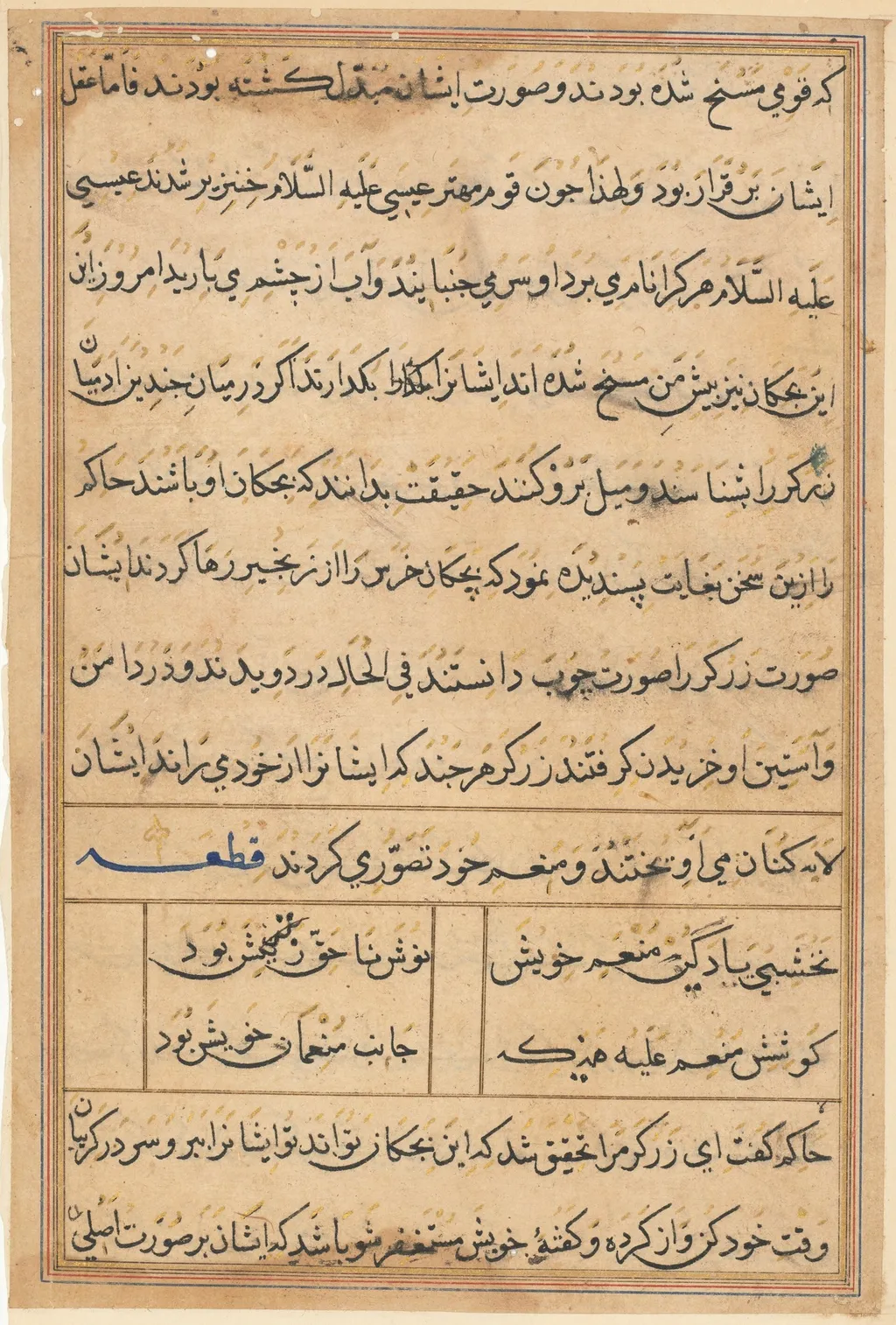
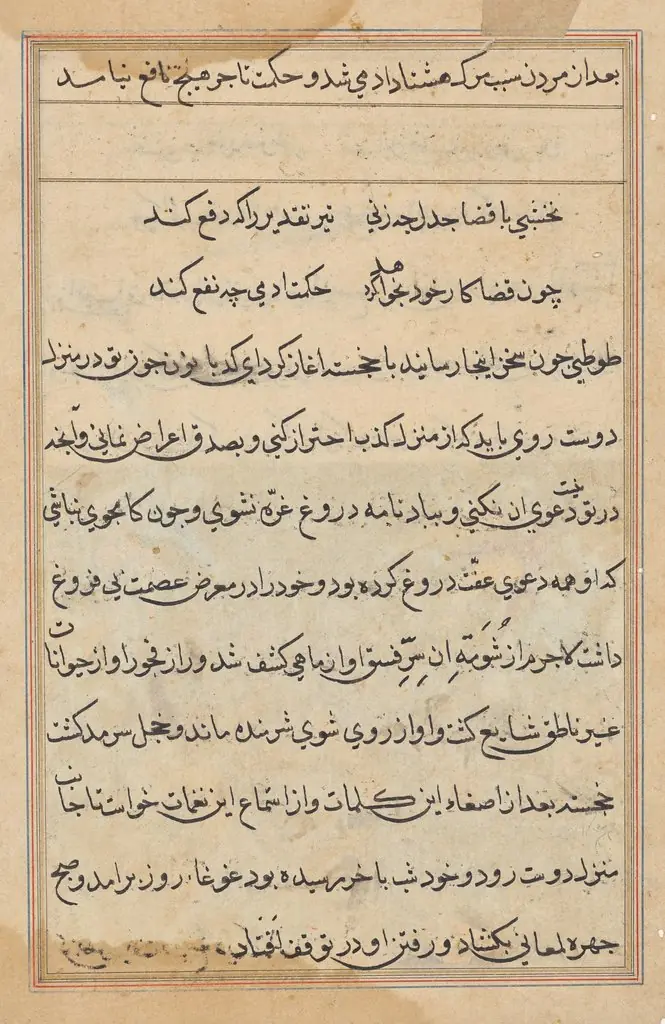
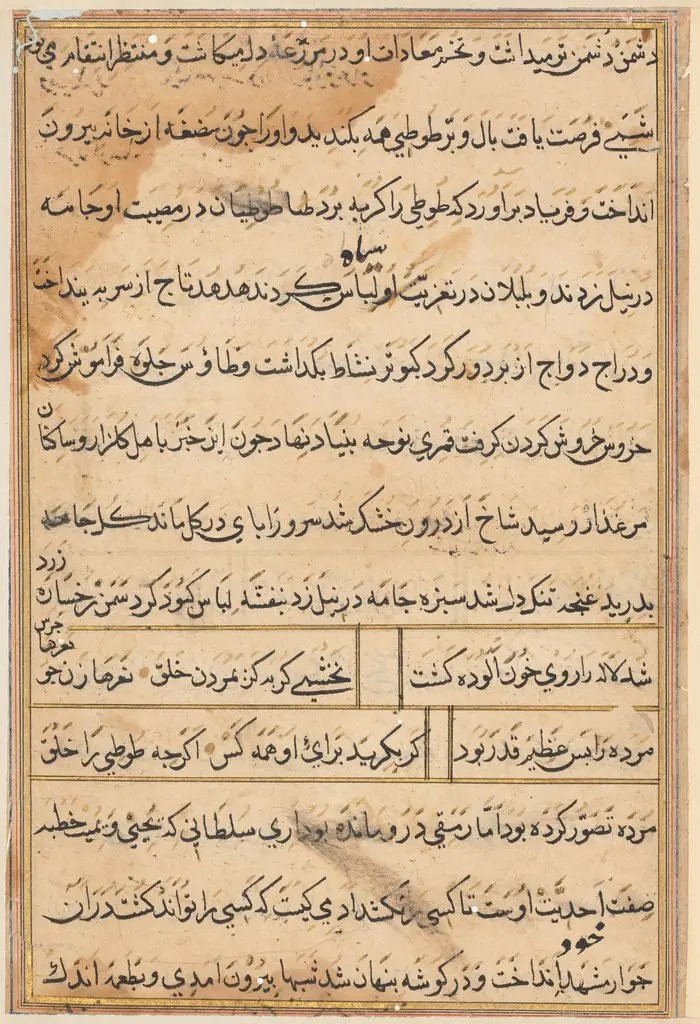
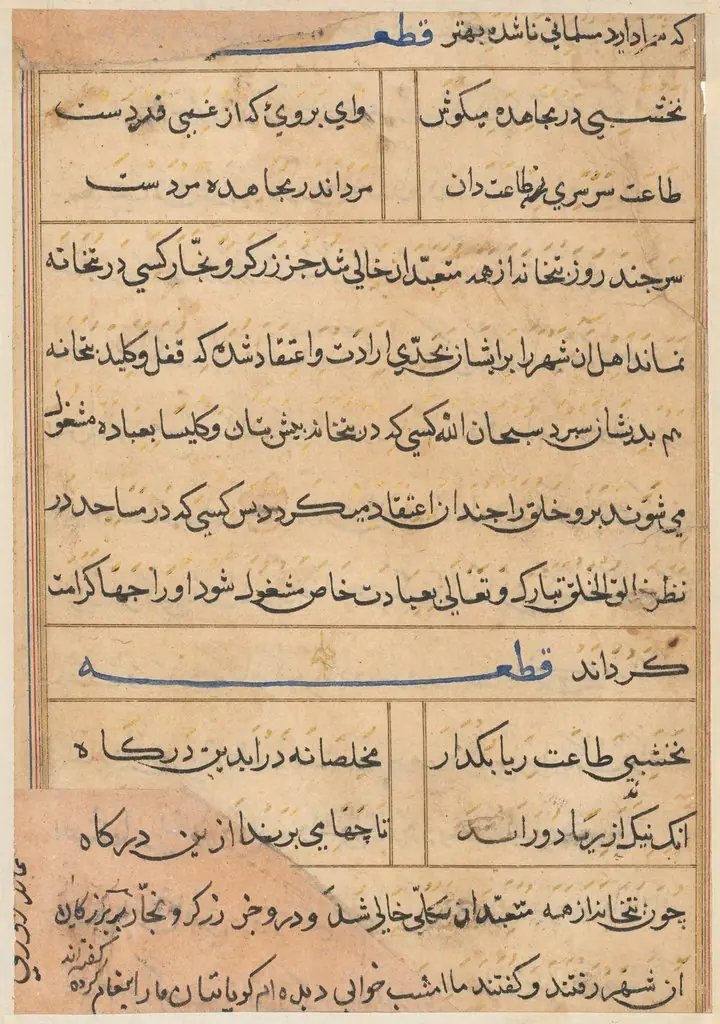
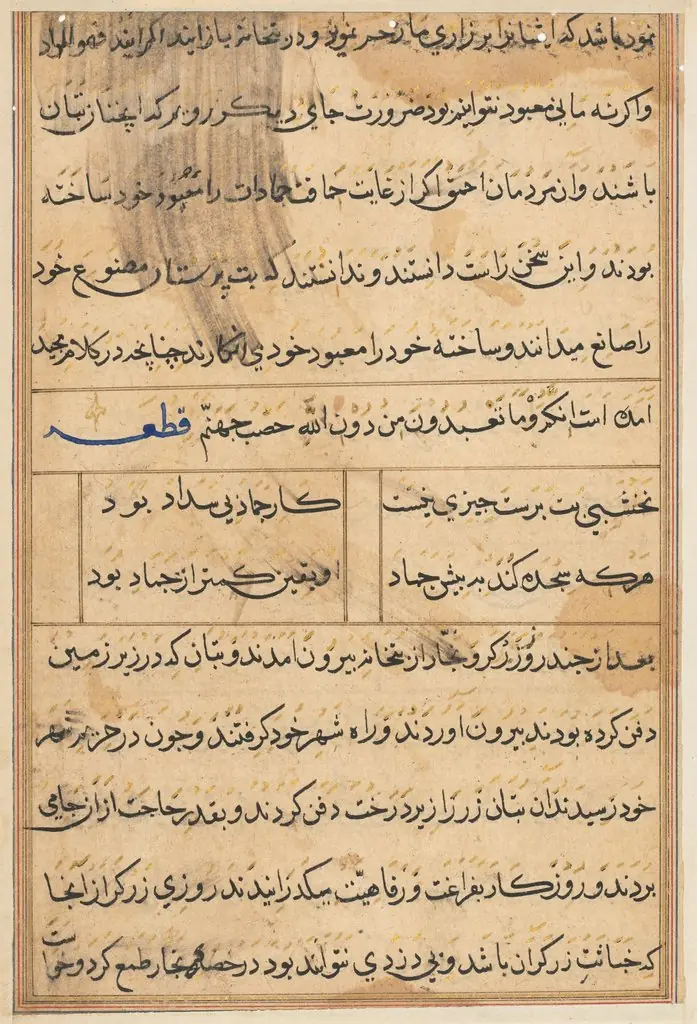
Page from Tales of a Parrot (Tuti-nama): text page is an unspecified painting. It dates from 1560 and is held in the collection of the Cleveland Museum of Art. This object is a painted page from the manuscript known as Tales of a Parrot (Tuti‑nama).
About this work
History & Provenance
The text page from the Tales of a Parrot (Tuti-nama) is held by the Cleveland Museum of Art, where it is recorded as inventory number 1962.
This text page from the Tales of a Parrot (Tuti-nama) was created in 1560 within the Mughal Empire. The specific artist responsible for this work remains unidentified in historical records. The manuscript was produced during the mid-16th century as part of a larger narrative cycle under Mughal patronage.
While the exact circumstances of its initial ownership are not detailed in the available records, the page later entered the collection of the Cleveland Museum of Art, where it is held as accession number 1962.279.22.b.
The text page from the Tales of a Parrot (Tuti-nama) is held by the Cleveland Museum of Art, where it is recorded as inventory number 1962.279.22.b. It was accessioned in 1962 as part of a larger acquisition of Mughal-era manuscripts and paintings.
Overview
This object is a painted page from the manuscript known as Tales of a Parrot (Tuti‑nama). The sheet is executed as a miniature painting rather than a printed page, and it presents a segment of text rendered in a cursive script that resembles Arabic calligraphy. The composition includes a decorative border and a narrow colored line framing the central block of writing.
Subject & Meaning
The inscribed passage belongs to the narrative tradition of the Tuti‑nama, a collection of moral and didactic stories traditionally conveyed through the voice of a parrot. The highlighted sections in gold likely mark key moral points or names within the story, guiding the reader’s attention to the most significant elements of the tale.
Technique & Style
The page was painted with black ink for the main body of text, while selective words are emphasized with gold leaf or pigment, creating a subtle contrast. A thin colored line runs along the border, and the overall layout follows the ornamental conventions of Persian‑influenced manuscript art, combining precise calligraphic strokes with decorative framing.
Context
Tuti‑nama texts were popular in the Islamic world from the medieval period onward, often used for education and entertainment in courtly and domestic settings. The use of gold to highlight portions of the script reflects a tradition of emphasizing moral instruction within the visual hierarchy of the page.
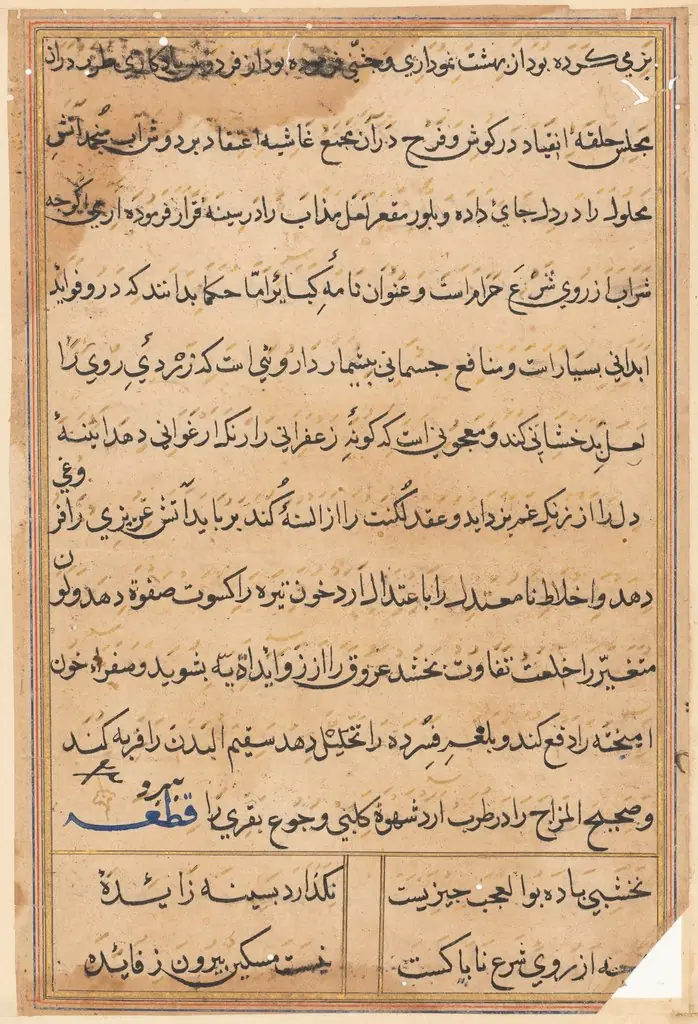
Artist & collection

- Page from Tales of a Parrot (Tuti-nama): text page
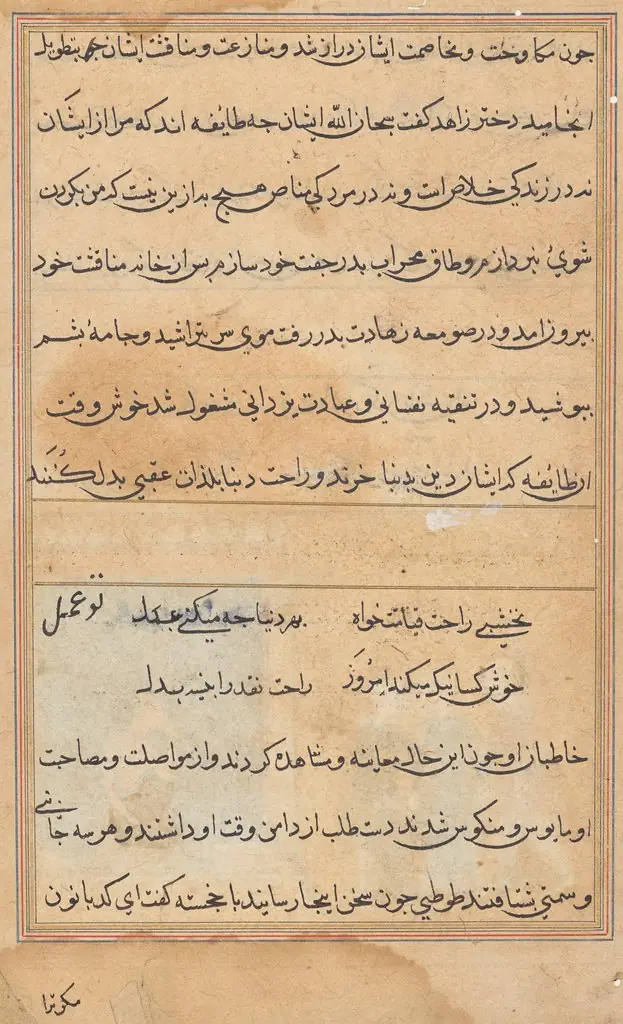 Page from Tales of a Parrot (Tuti-nama): text page
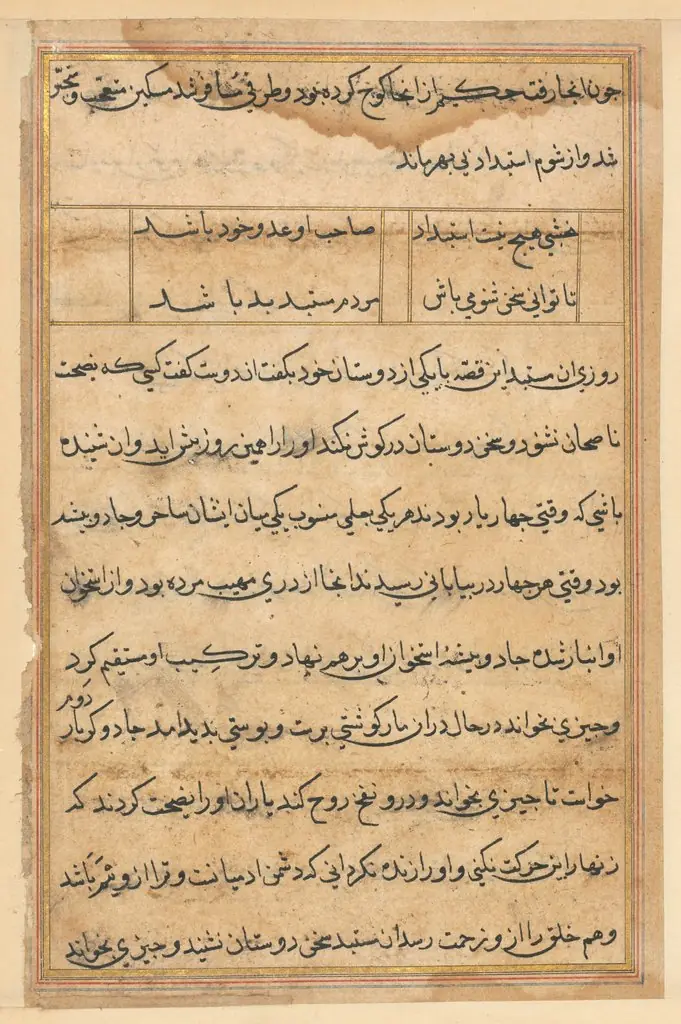 Page from Tales of a Parrot (Tuti-nama): text page
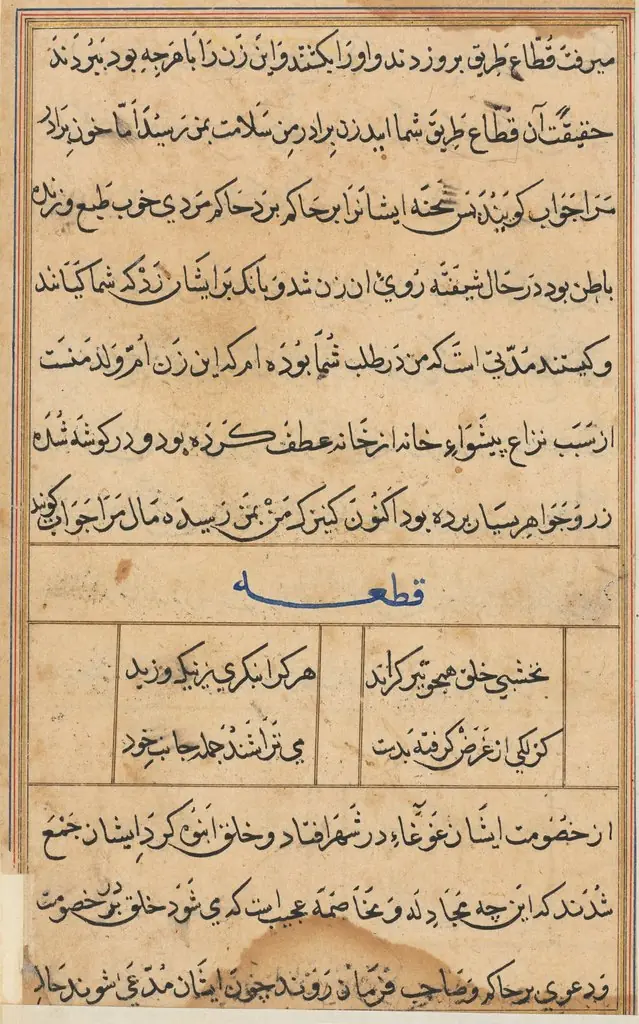 Page from Tales of a Parrot (Tuti-nama): text page
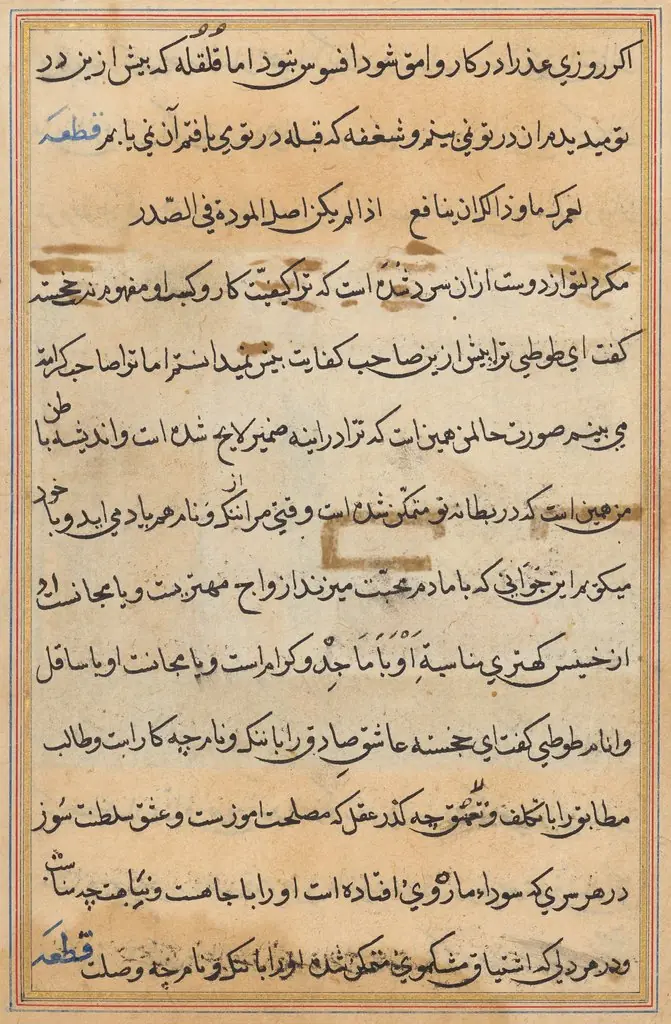 Page from Tales of a Parrot (Tuti-nama): text page
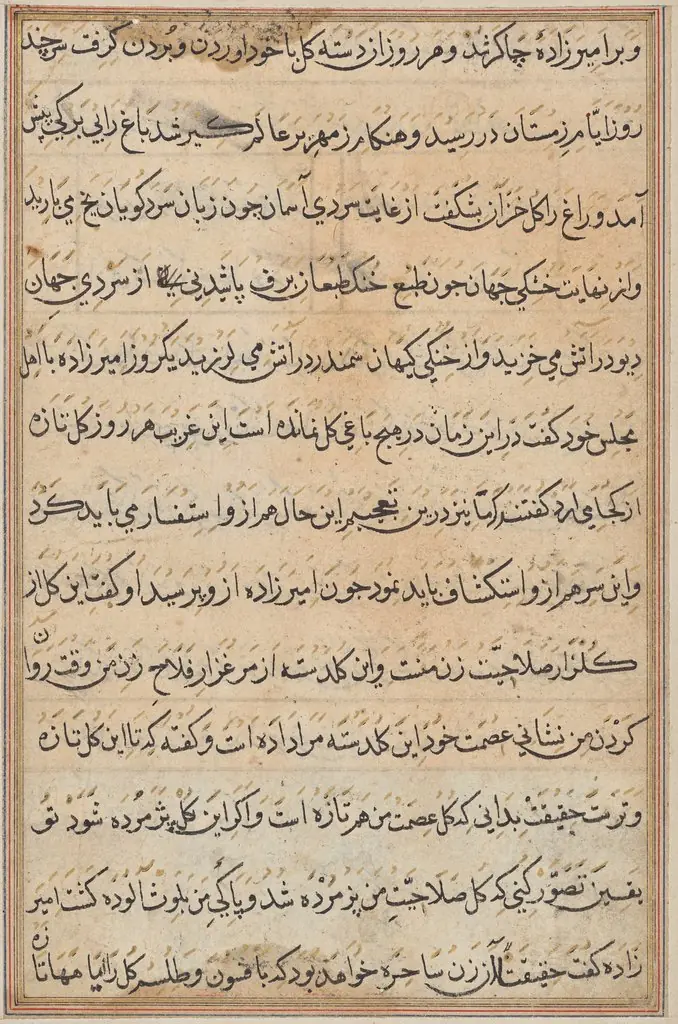 Page from Tales of a Parrot (Tuti-nama): text page
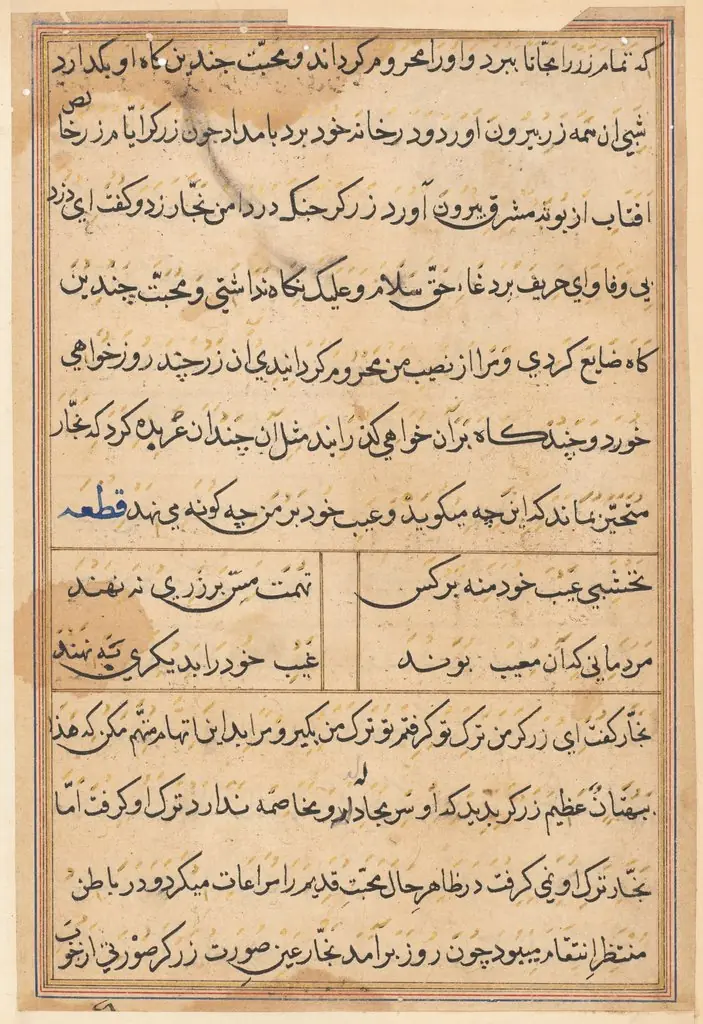 Page from Tales of a Parrot (Tuti-nama): text page
 Page from Tales of a Parrot (Tuti-nama): text page
 Tuti-Nama (Tales of a Parrot)
 Page from Tales of a Parrot (Tuti-nama): text page
 Page from Tales of a Parrot (Tuti-nama): text page
 Page from Tales of a Parrot (Tuti-nama): text page