Artwork
Tuti-Nama (Tales of a Parrot)
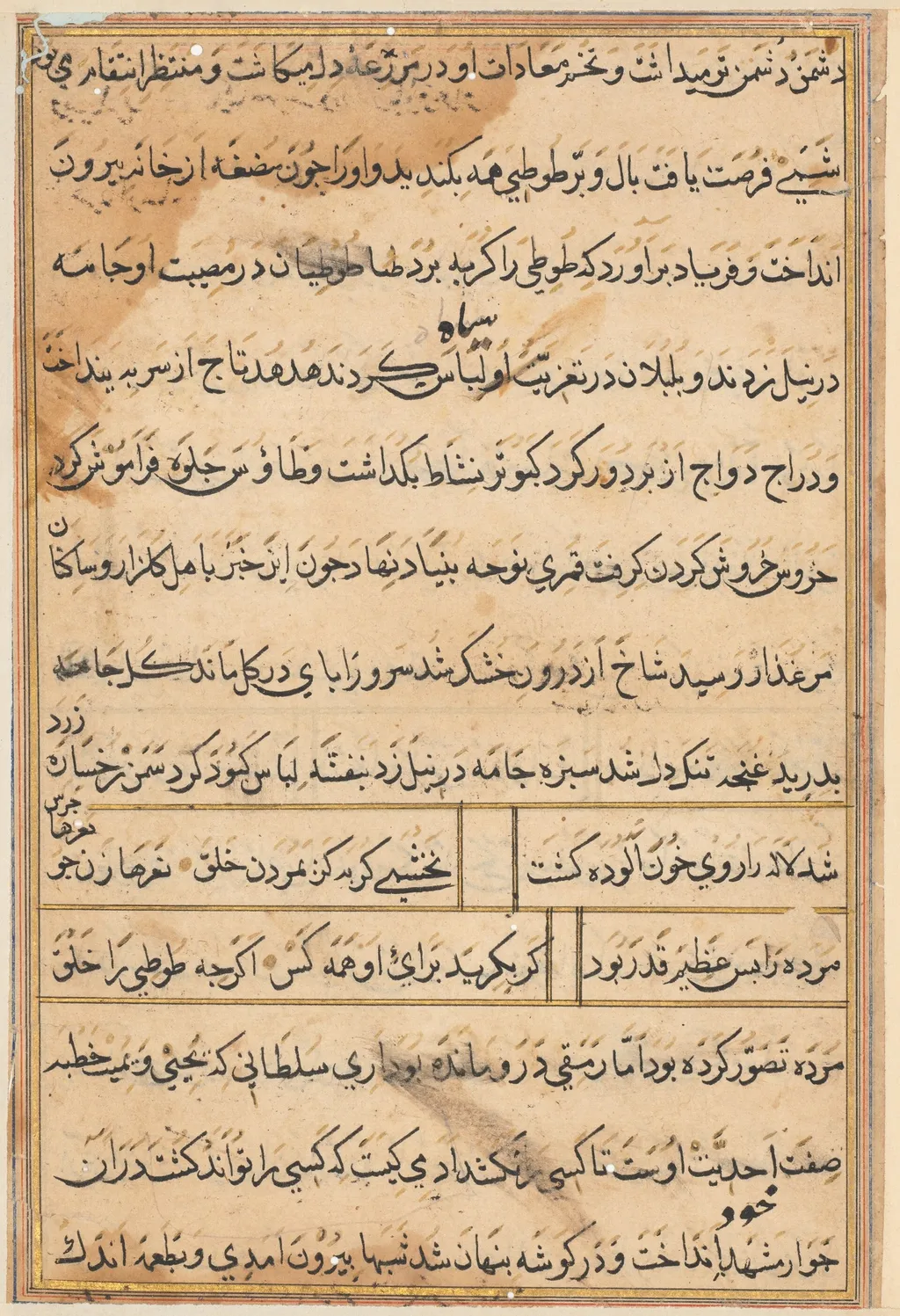
Tuti-Nama (Tales of a Parrot) is an unspecified painting. It dates from 1560 and is held in the collection of the Cleveland Museum of Art. The object is a single folio from the illustrated manuscript Tuti‑Nama ("Tales of a Parrot").
About this work
History & Provenance
Its provenance traces back to the Mughal court before entering the Cleveland Museum of Art's collection, where it remains on public view.
The Tuti‑nama (Tales of a Parrot) is a Mughal manuscript painting dated to 1560, as indicated by its inception date. Produced in the Mughal Empire, the work is attributed to an unknown artist and exists as a single folio. It is held by the Cleveland Museum of Art, where it is accessioned as 1962.279.9.b, reflecting its entry into the museum’s collection in 1962. No earlier provenance or ownership information is provided in the sources.
The painting Tuti-Nama (Tales of a Parrot) is housed in the collection of the Cleveland Museum of Art. It was created in 1560 in the Mughal Empire and is cataloged under the accession number 1962.279.9.b. The work has been exhibited at the museum, including in the 1962 exhibition of Indian miniature paintings.
Its provenance traces back to the Mughal court before entering the Cleveland Museum of Art's collection, where it remains on public view.
Context
The painting is part of the Tuti-Nama manuscript series produced during the reign of Mughal Emperor Akbar, reflecting the court's patronage of illustrated Persian literary works in the mid-16th century.
Scholarship highlights its role within the broader tradition of Indo-Persian manuscript illumination, emphasizing stylistic connections to other works commissioned by Akbar's workshop.
The artist remains unidentified, yet the piece is situated within the context of Mughal artistic innovation that blended Persian narrative traditions with local Indian aesthetics, influencing subsequent courtly painting practices.
Overview
The object is a single folio from the illustrated manuscript Tuti‑Nama ("Tales of a Parrot"). Rendered in black ink on a light‑yellowed paper, the page is bordered by a thin line of gold leaf. The surface shows signs of extensive handling, indicating frequent use or reading.
Subject & Meaning
The folio contains tightly set Arabic calligraphy that narrates a story involving a parrot, a common motif in Persian literary tradition used to convey moral or didactic themes. Larger initial letters punctuate the text, guiding the reader through the narrative.
Technique & Style
Ink is applied in a fluid, continuous hand, producing elegant, flowing strokes characteristic of classical Arabic manuscript writing. The gold border, applied as a thin leaf strip, frames the text without detracting from the script's legibility, reflecting a restrained decorative approach.
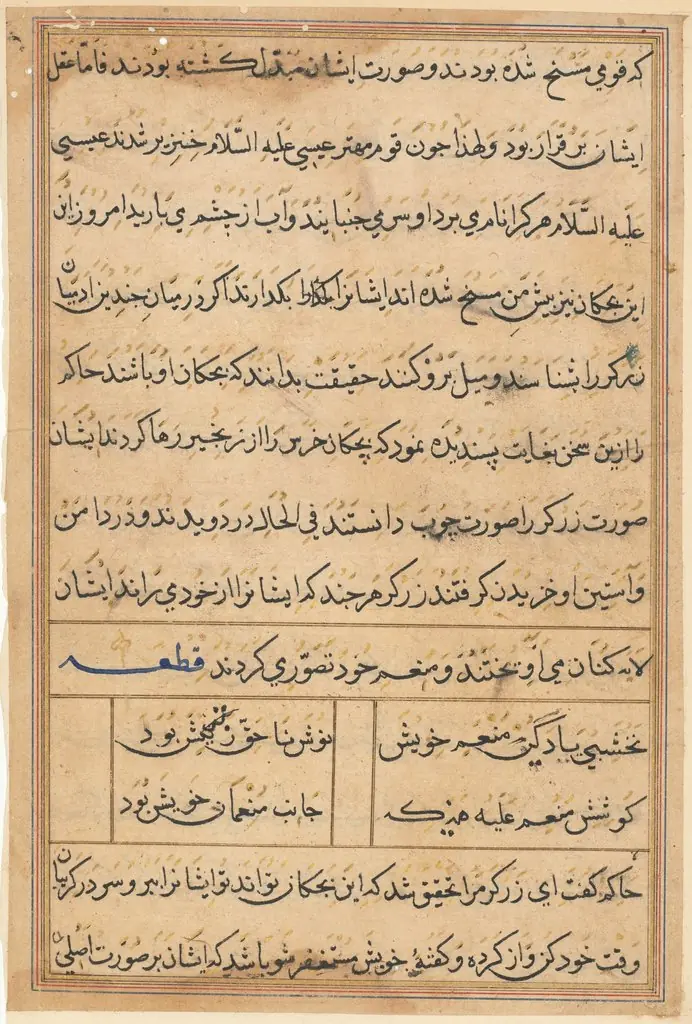
Artist & collection

- Page from Tales of a Parrot (Tuti-nama): text page
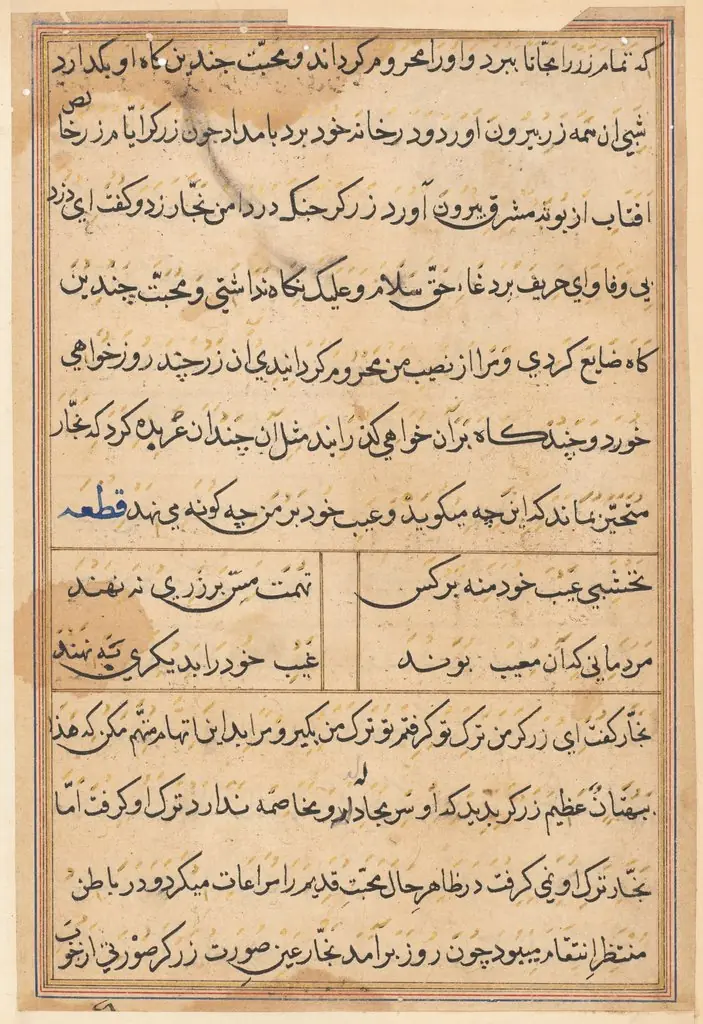 Page from Tales of a Parrot (Tuti-nama): text page
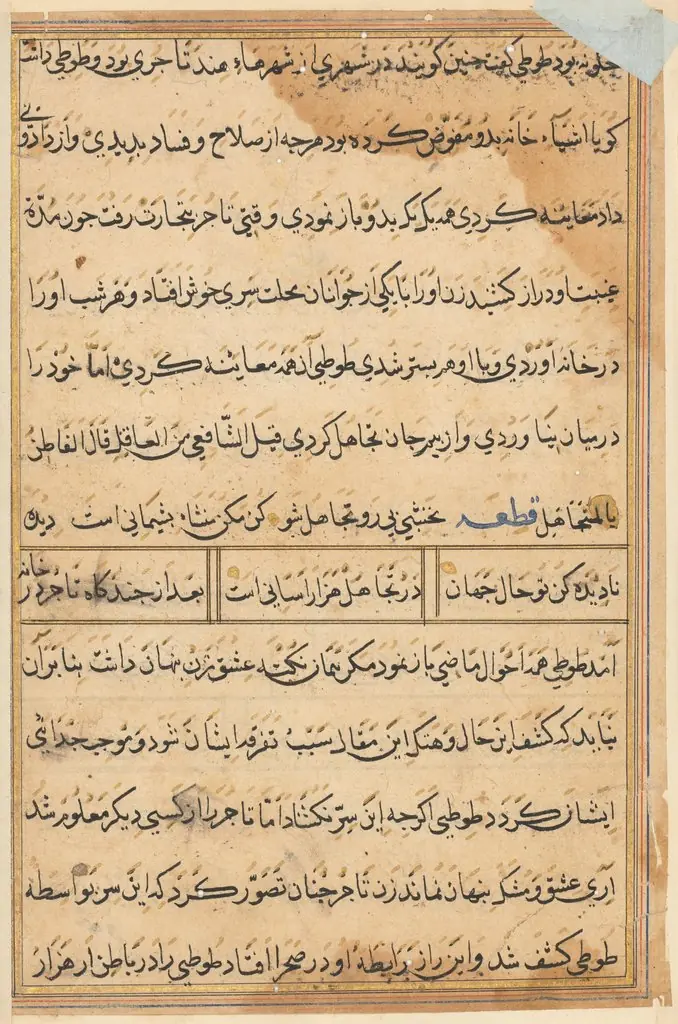 Page from Tales of a Parrot (Tuti-nama): text page
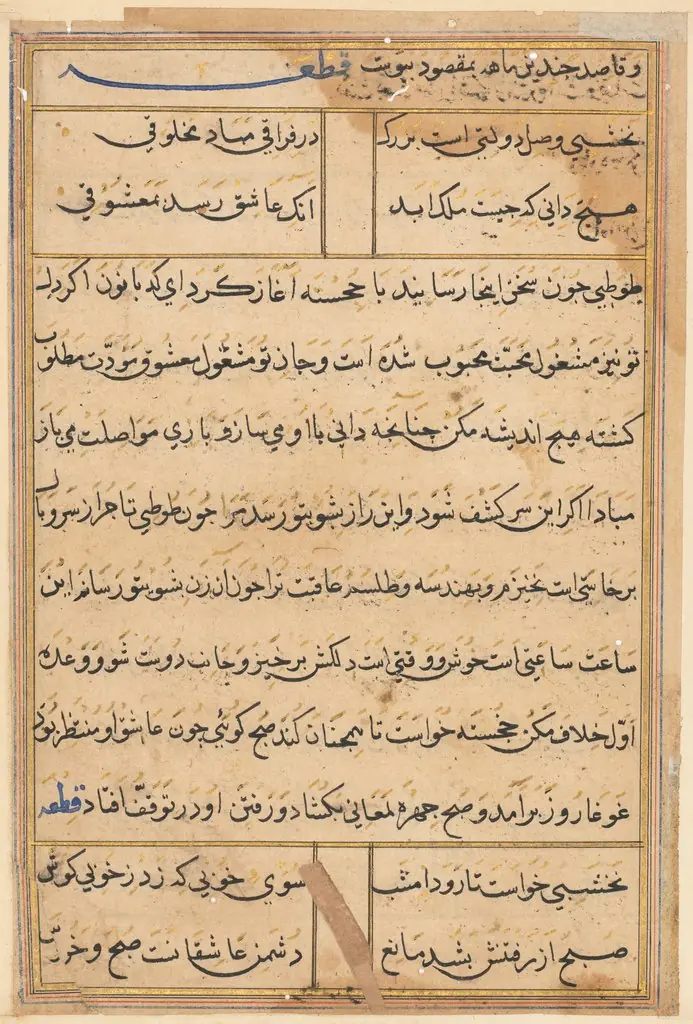 Page from Tales of a Parrot (Tuti-nama): text page
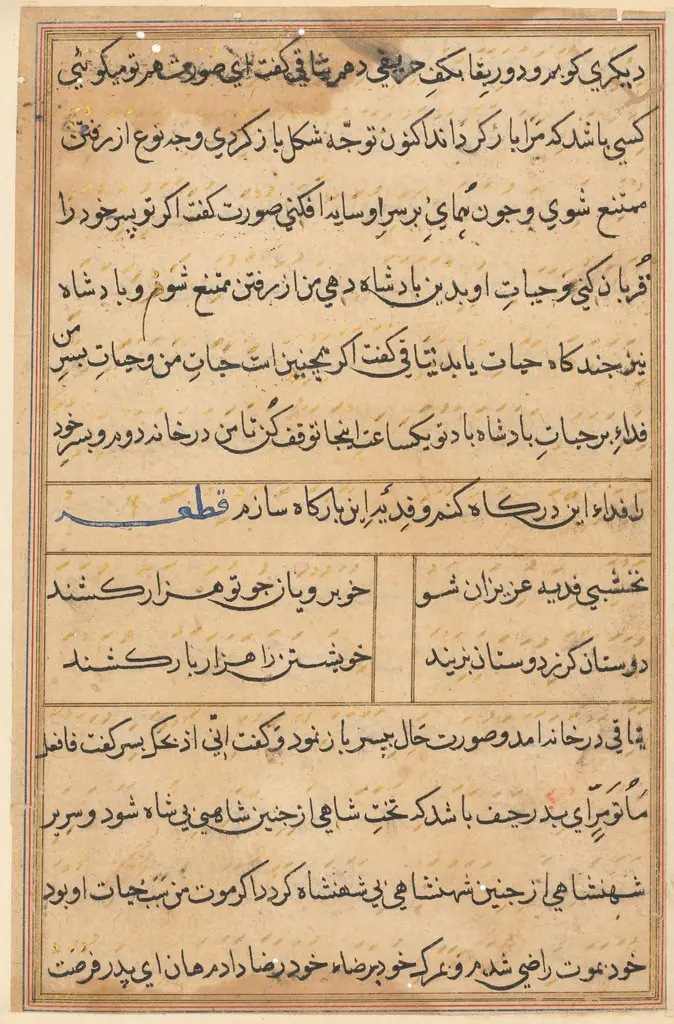 Page from Tales of a Parrot (Tuti-nama): text page
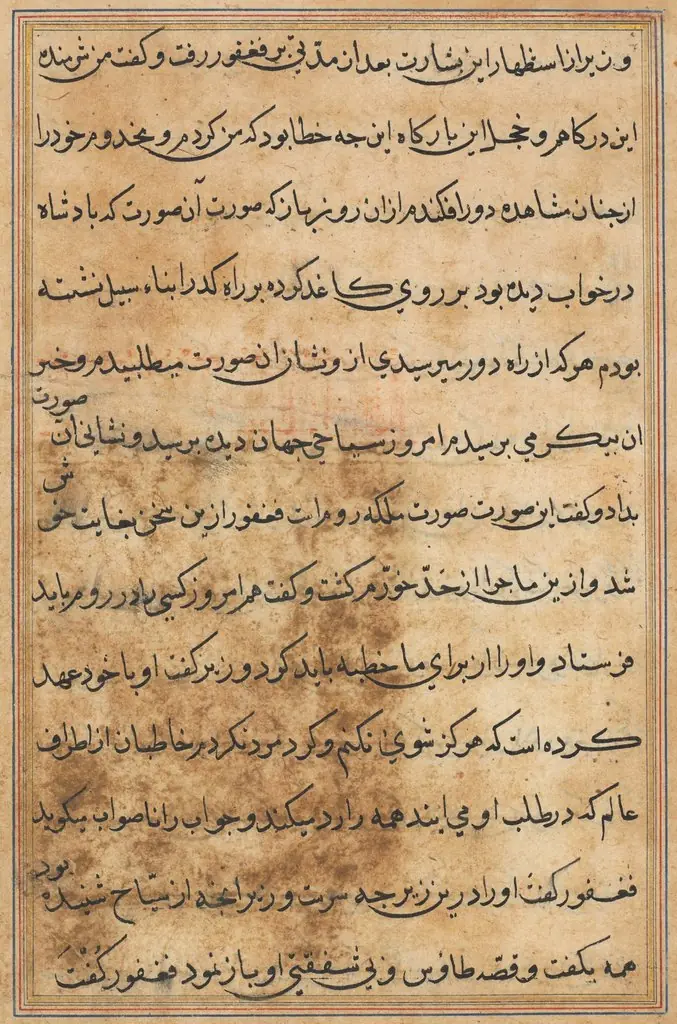 Page from Tales of a Parrot (Tuti-nama): text page
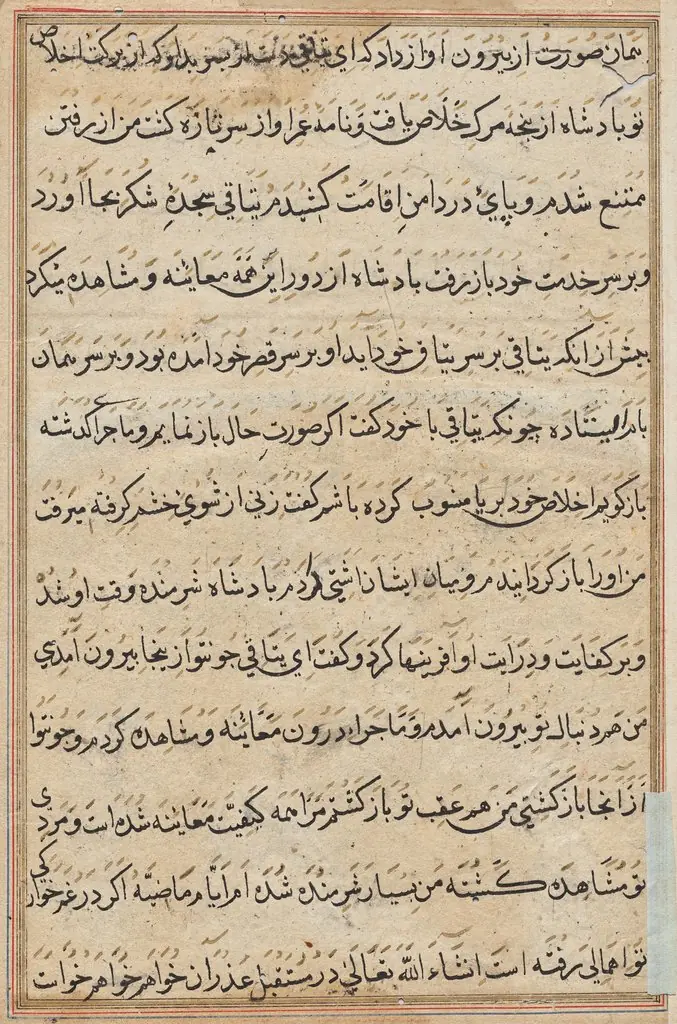 Page from Tales of a Parrot (Tuti-nama): text page
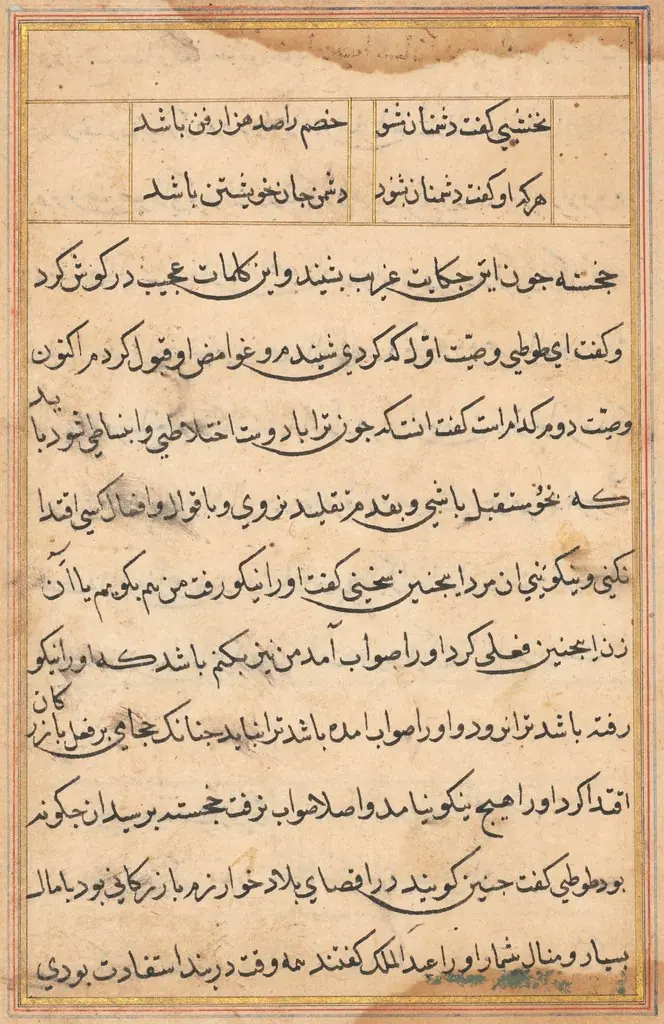 Page from Tales of a Parrot (Tuti-nama): text page
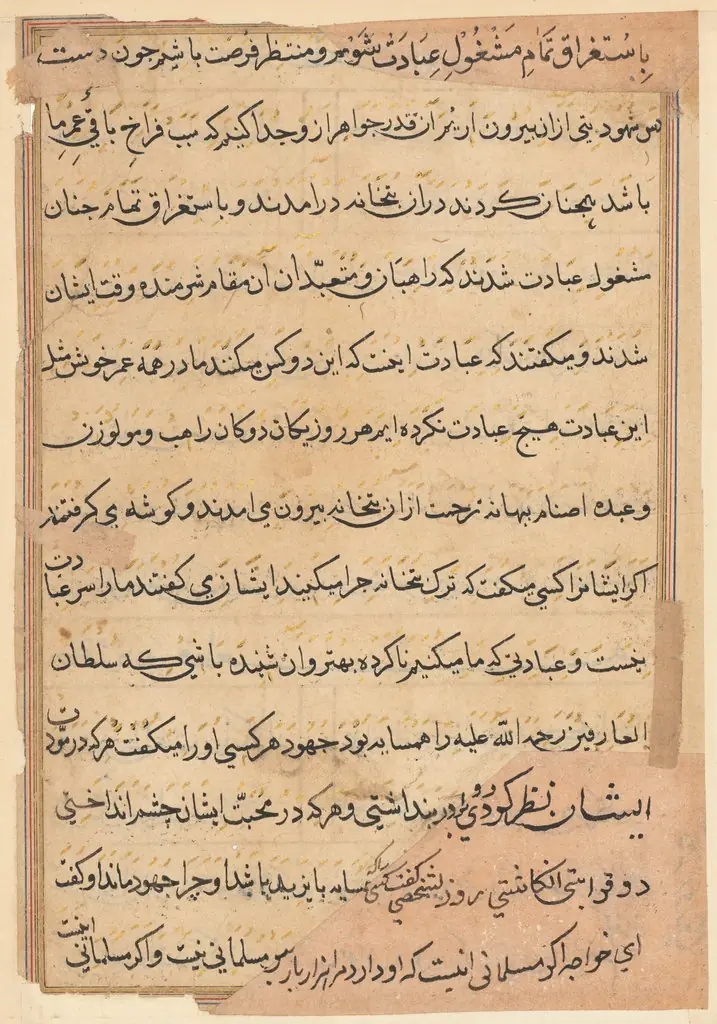 Page from Tales of a Parrot (Tuti-nama): text page
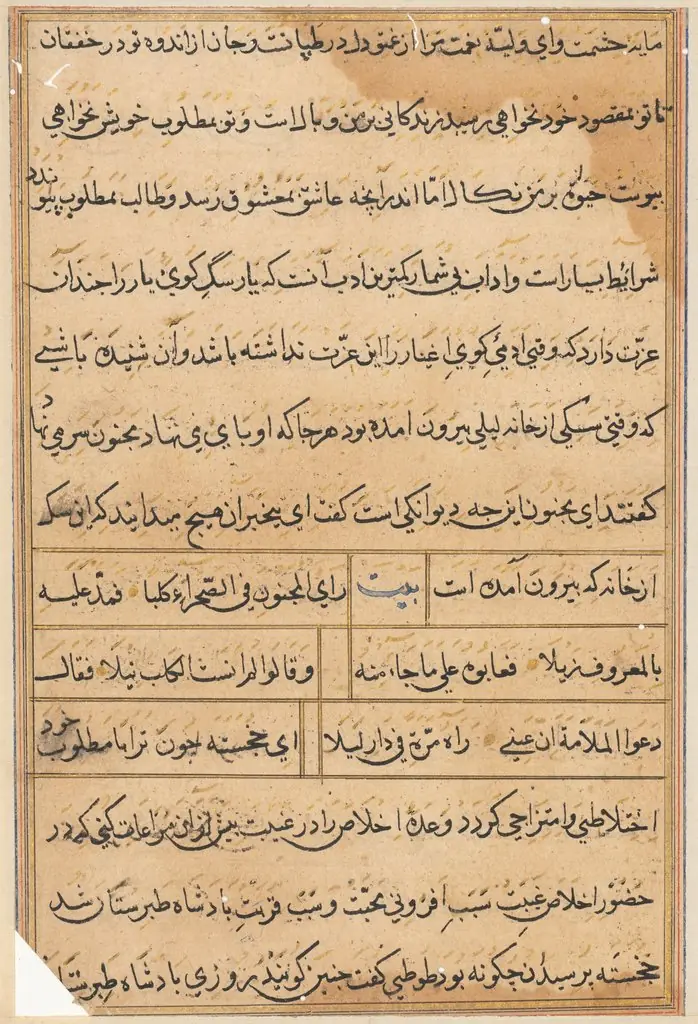 Page from Tales of a Parrot (Tuti-nama): text page
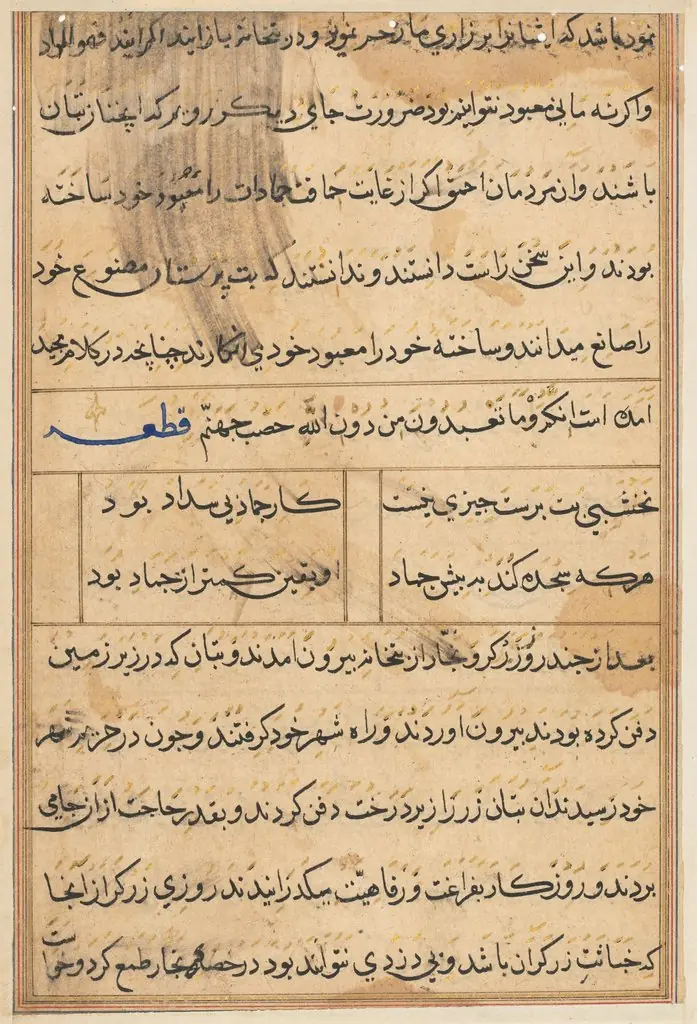 Page from Tales of a Parrot (Tuti-nama): text page
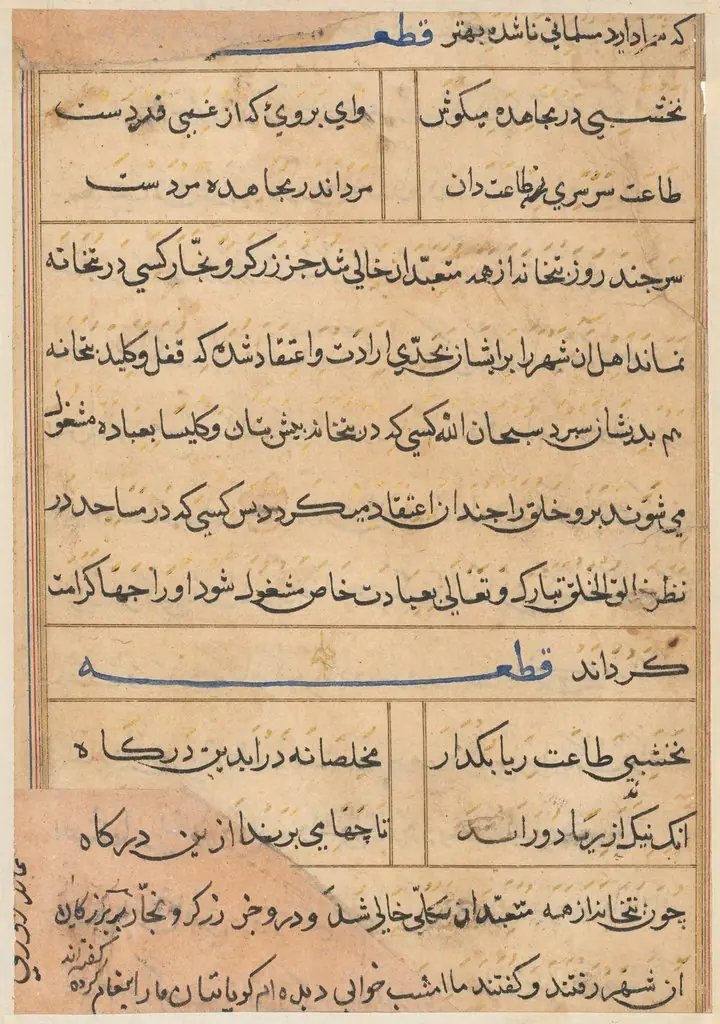 Page from Tales of a Parrot (Tuti-nama): text page