Artwork
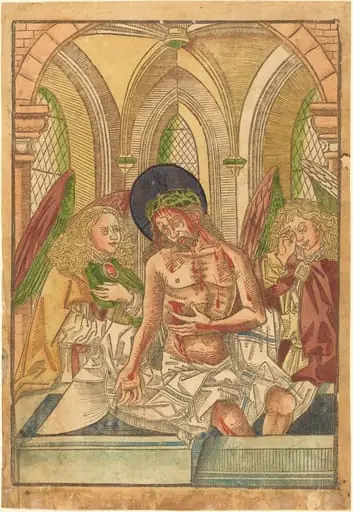
Pietà
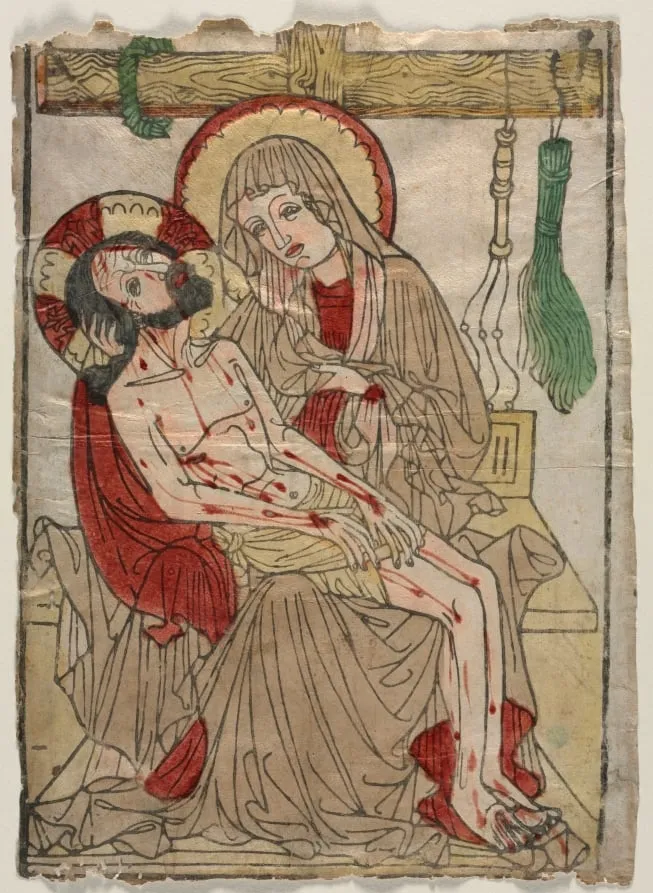
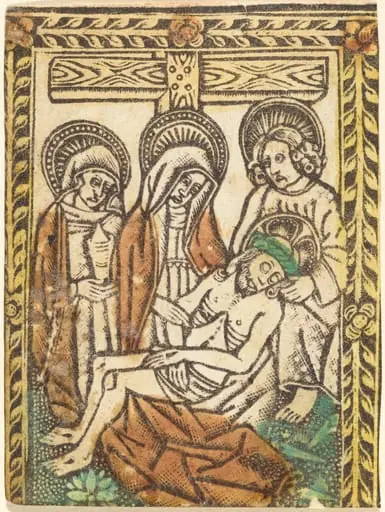
Pietà is a print by the Renaissance artist Unknown. It dates from 1460 and is held in the collection of the Cleveland Museum of Art.
- Accession no.
- 2002.4
- Credit line
- Severance and Greta Millikin Trust
About this work
The image is simple but full of feeling, Mary’s face is calm, even though her son is dead.
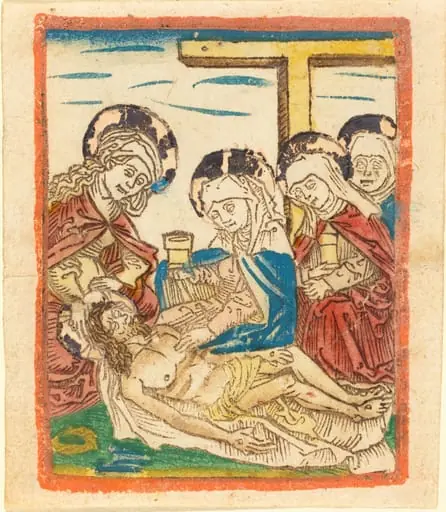
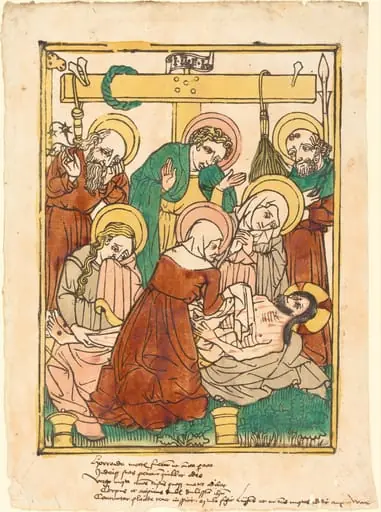
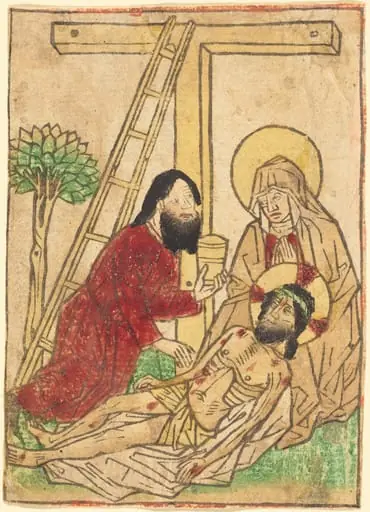
A young Mary cradles Jesus after the crucifixion. His pale body is marked with blood, and the cross behind them shows nails and a spear.
This was made for people who couldn’t read. The image is simple but full of feeling, Mary’s face is calm, even though her son is dead. The colors are soft, almost like a coloring book, to help people focus on the story.
Look up other works from southern germany, swabia, 15th century to see more like it.
Overview
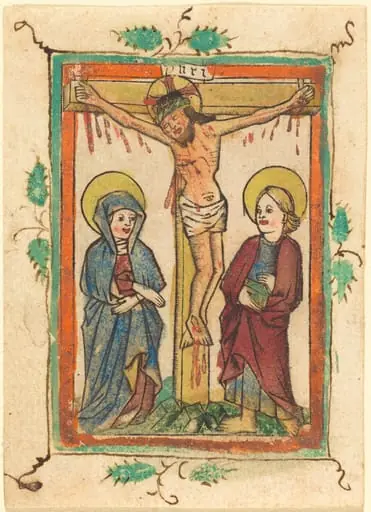
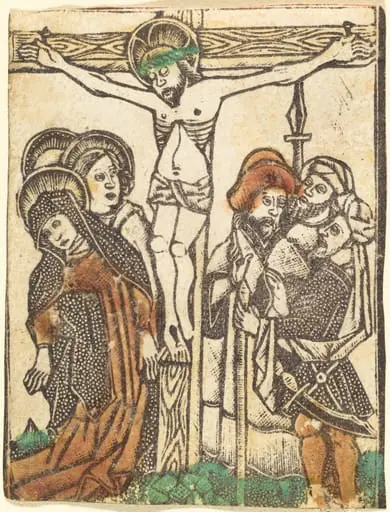
This 15th-century northern woodcut depicts a poignant scene of the Pietà, where a youthful Virgin Mary gently cradles the body of her deceased son, Jesus Christ. Notable for its large size, vibrant hand-coloring, and exceptional state of preservation, this print is the sole known impression of its kind.
Subject & Meaning
The image conveys the intense humanity of Mary’s grief, encouraging viewers to empathize with her sorrow. The composition includes symbolic elements: Christ’s pale, blood-marked body and the cross adorned with the Instruments of the Passion (nails, crown of thorns, scourges), emphasizing the narrative of Christ’s suffering.
Technique & Style
Executed by an anonymous craftsman, the woodcut features simple, direct lines and soft, watercolor hues, characteristic of its time. The hand-coloring, including the flesh tones and blood droplets, adds a tactile, intimate quality. Its style likely drew inspiration from contemporary German sculptures of the Pietà.
History & Provenance
Originally intended to be pasted inside a book cover (evidenced by adhesive remnants and insect holes on the verso), this preservation method contributed to its remarkably good condition. It is one of only about 20 surviving northern single-image woodcuts from its era.
Context
Created for a predominantly illiterate audience, this print facilitated a personal, emotional connection with religious subjects through straightforward, affective imagery. Similar works can be found among 15th-century productions from Southern Germany, particularly Swabia.
Artist & collection