Artwork
Pietà
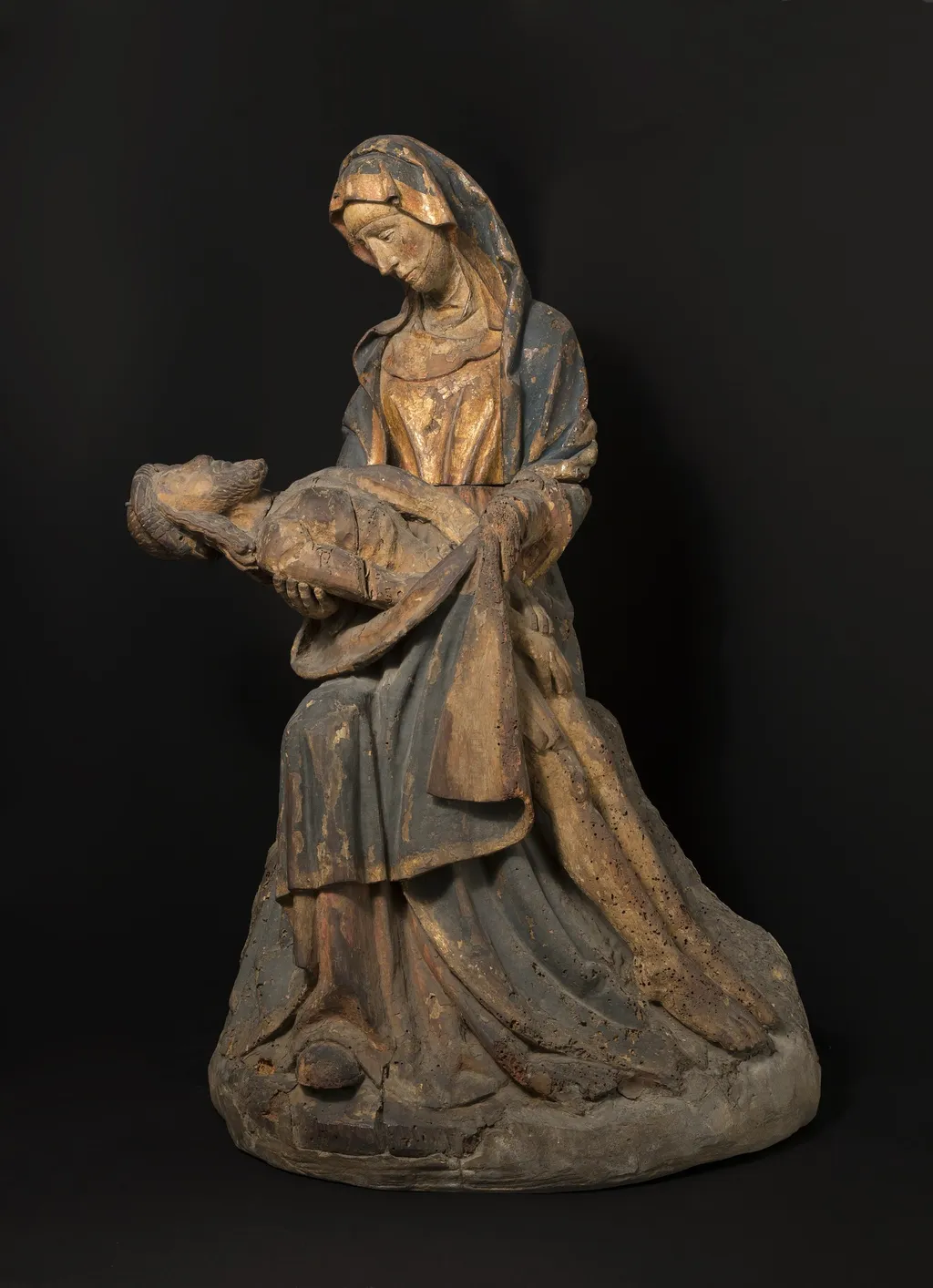
Pietà is an unspecified painting. It dates from 1450 and is held in the collection of the Metropolitan Museum of Art.
About this work
Subject & Meaning
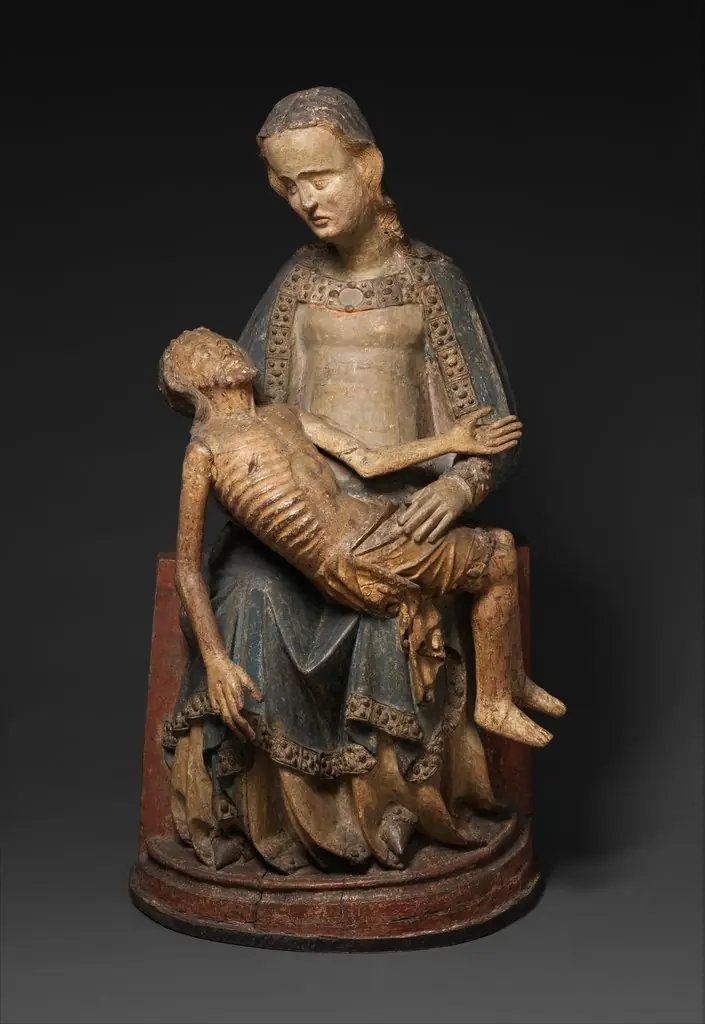
The Pietà depicts the Virgin Mary cradling the dead body of her son Jesus Christ following his crucifixion, a devotional subject rooted in Christian tradition.
The Pietà depicts the Virgin Mary cradling the dead body of her son Jesus Christ following his crucifixion, a devotional subject rooted in Christian tradition. As a religious painting, the work centers on this maternal lament, presenting Mary and Christ as its principal figures. The Pietà theme invites contemplation of Christ's sacrifice and Mary's grief, serving as a focus for personal devotion and meditation on the Passion.
Created around 1450, the painting belongs to the broader genre of religious art, where such imagery functioned both as a narrative reminder of the events after the Crucifixion and as a symbolic expression of compassion, mourning, and divine love.
History & Provenance
The Pietà is a religious panel painting dated to 1450, with its inception recorded as the mid-fifteenth century. The work is held in the collection of the Metropolitan Museum of Art, where it is catalogued under the accession number 25.120.266a, b, indicating it consists of two associated panels. Its current location is the Metropolitan Museum of Art, and it is classified as a religious painting depicting the Pietà, with Mary and Christ as the principal subjects.
The work is attributed to an anonymous maker rather than a documented named artist or workshop, and the available records do not specify a commissioning patron, an original site of creation, or an intermediate ownership chain prior to its acquisition by the museum. The physical dimensions of 119.4 by 67.3 centimeters are consistent with a devotional panel of considerable scale.
The work titled Pietà is housed in the Metropolitan Museum of Art in New York. Its accession numbers, as recorded in the museum’s catalogue, are 25.120.266a and 25.120.266b. The painting dates to 1450 and is classified as a religious work depicting Mary and Christ.
It is attributed to an anonymous artist and appears in the museum’s European paintings department. No exhibition history is documented in the available reference material so far.
Overview
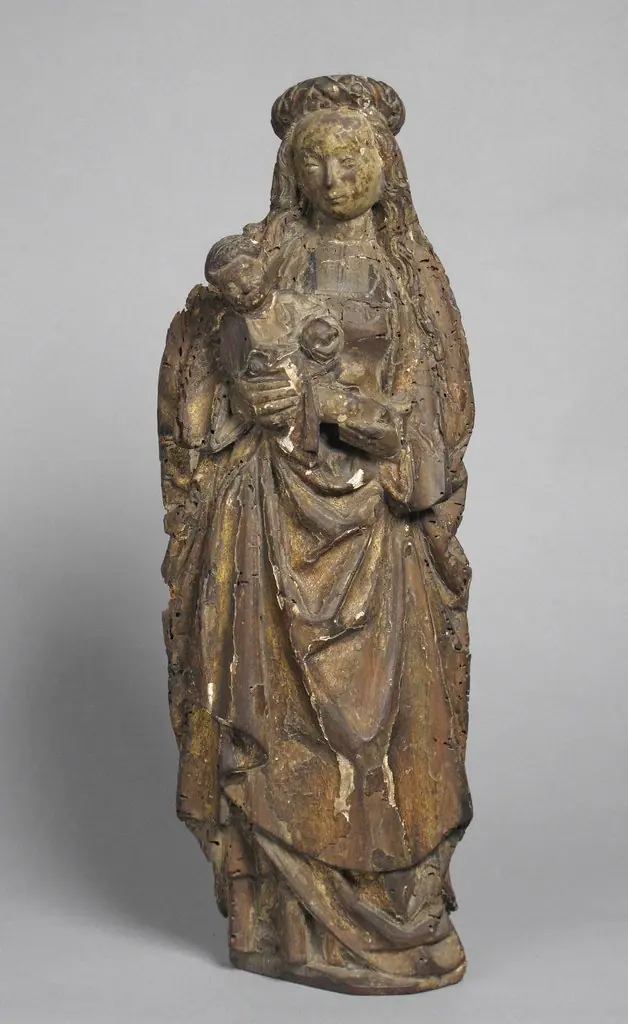
This sculpture depicts a Pietà, a traditional scene portraying the Virgin Mary cradling the lifeless body of Christ after his crucifixion. The composition emphasizes a moment of profound sorrow and tender care. The woman kneels, supporting the limp figure across her lap, her expression conveying a quiet grief. The piece's worn surface and remnants of gilding suggest its age and historical significance.
Technique & Style
The sculptor employed deep carving to render the voluminous folds of the woman's robe, creating a sense of weight and texture. The overall surface exhibits signs of age, with its worn appearance contributing to its historical character. Traces of gold leaf still adhere to the drapery, which, when illuminated, causes the figure to subtly gleam. This interplay of light and shadow enhances the sculpture's emotional resonance.
Artist & collection