Artwork
Portrait of a Man with a White Ruff
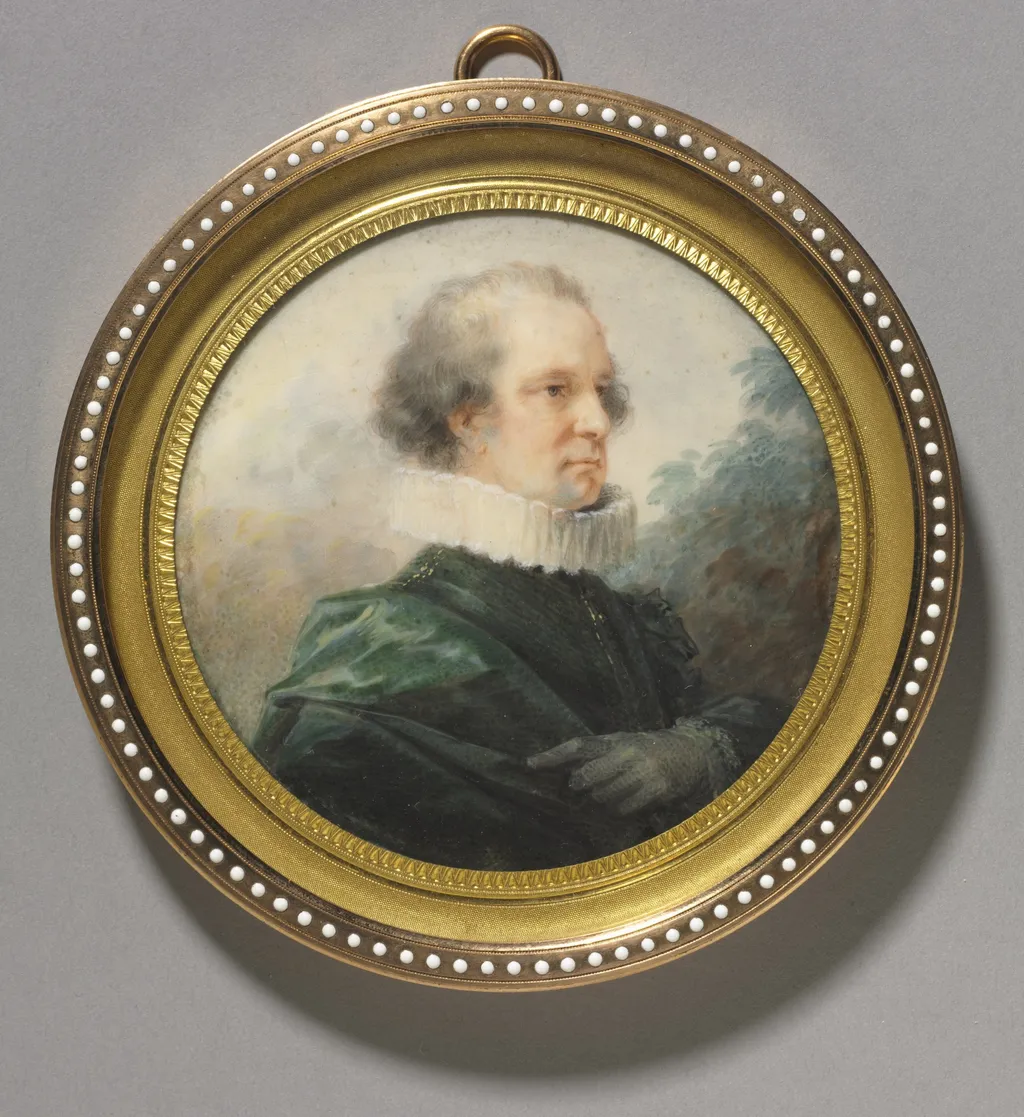
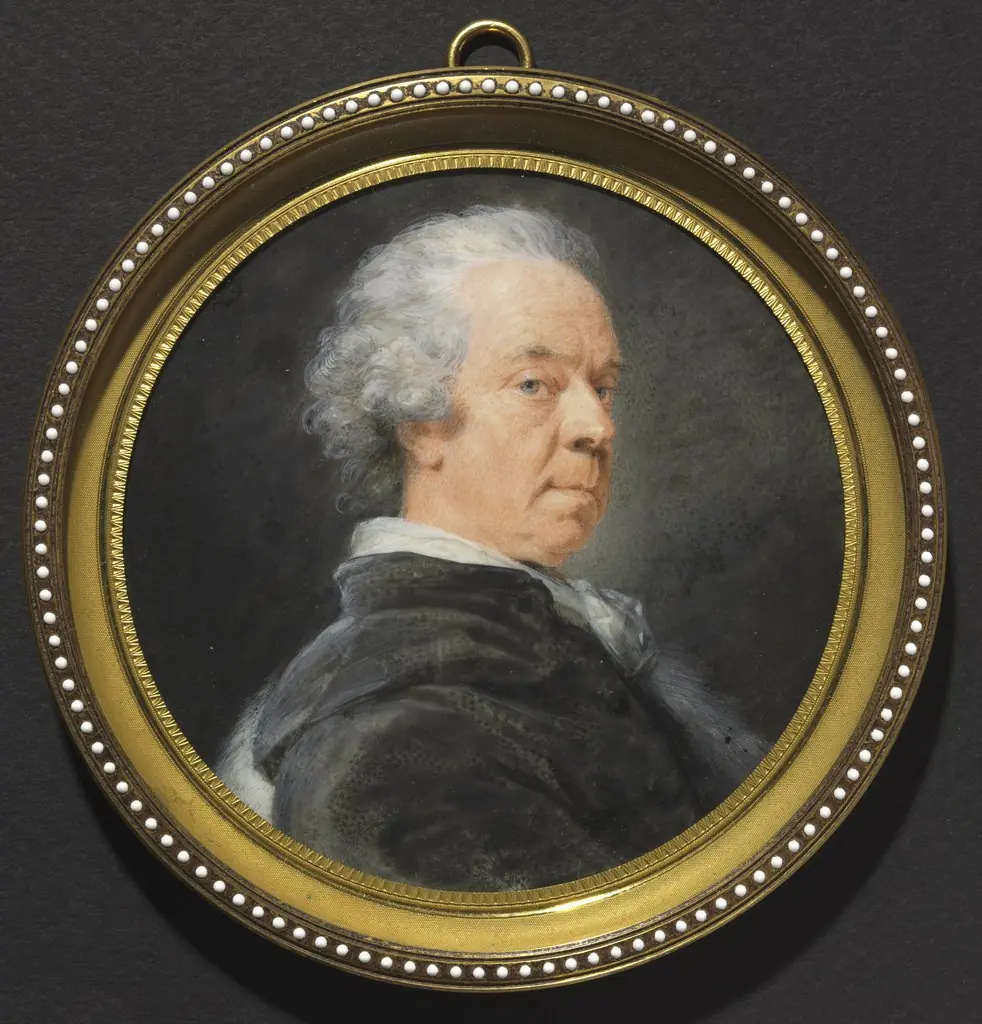
Portrait of a Man with a White Ruff is an unspecified painting. It dates from 1796 and is held in the collection of the Cleveland Museum of Art. The work is a modestly sized, circular oil painting depicting an elderly gentleman.
About this work
Technique & Style
The delicate handling of facial features and clothing details exemplifies the stylistic refinement characteristic of miniature painting in this period.
The work is a miniature portrait painted on ivory using watercolor technique, depicting a man wearing a white ruff. Executed in the late 18th century, it reflects the formal conventions of elite portraiture through precise rendering and restrained composition. The delicate handling of facial features and clothing details exemplifies the stylistic refinement characteristic of miniature painting in this period.
History & Provenance
The work is dated to 1790, a dating recorded for the portrait miniature attributed to Heinrich Friedrich Füger, a German artist active during the late eighteenth century. According to the available records, the piece is held in the Cleveland Museum of Art, where it is catalogued under accession number 1940.1208, indicating that it entered that institution's collection at some point prior to or during 1940. Beyond this institutional ownership, the sources provide no further detail regarding an earlier provenance chain, the identity of the sitter, or the circumstances of the work's original commission or creation history.
Overview
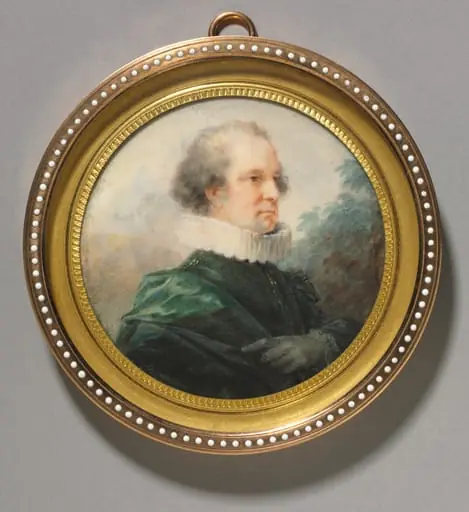
The work is a modestly sized, circular oil painting depicting an elderly gentleman. He is shown with tightly curled white hair, a pronounced white ruff, and a dark green overcoat worn over a lighter shirt. The composition is framed in gold, the frame itself adorned with a series of small white dots along its perimeter.
Subject & Meaning
The sitter appears to be a mature man of some standing, suggested by the elaborate ruff, a fashion element that signified status in the 16th and early 17th centuries. His sober expression and direct gaze convey a sense of dignity and perhaps a desire to be remembered with gravitas.
Context
Ruff collars, though most popular in the mid‑1500s to early 1600s, continued to appear in portraiture as a visual shorthand for rank and refinement. The work reflects this lingering convention, situating the sitter within a tradition of formal representation.
Artist & collection

 Portrait of a Man
 Portrait of Noël-François Charles Caille des Fontaines
 Portrait of Ivan Grigorevich, Count Chernyshev
 Portrait of a Man
 Portrait of a Man
 Portrait of Ivan Grigorevich, Count Chernyshev
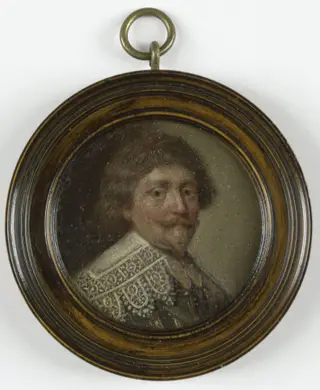 Portrait of Frederik Hendrik van Oranje-Nassau (1584-1647)
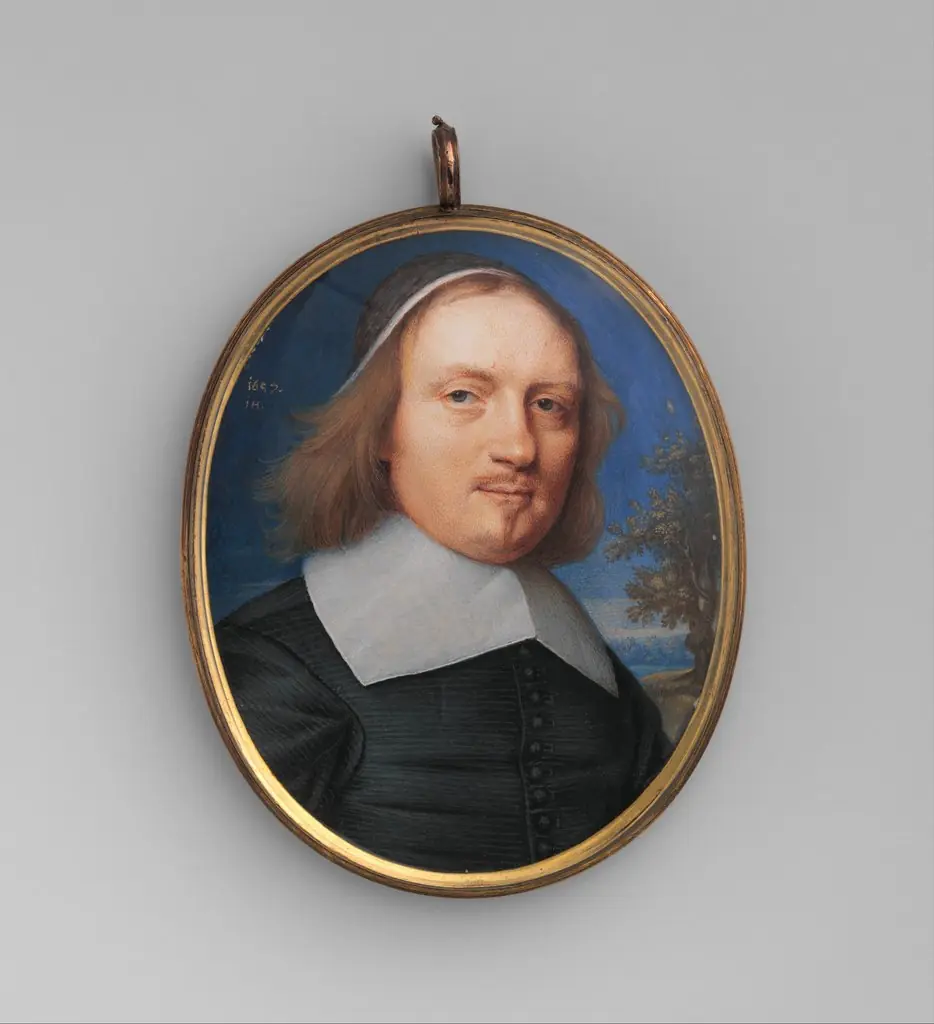 Dr. Brian Walton (born about 1600, died 1661)
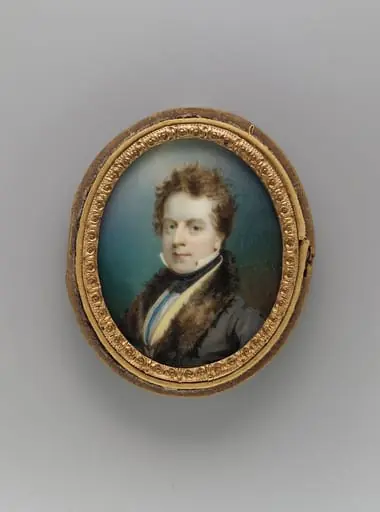 Self-portrait
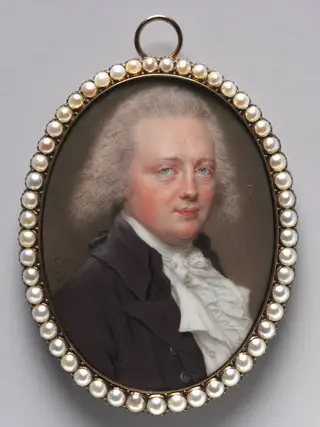 Portrait of a Man
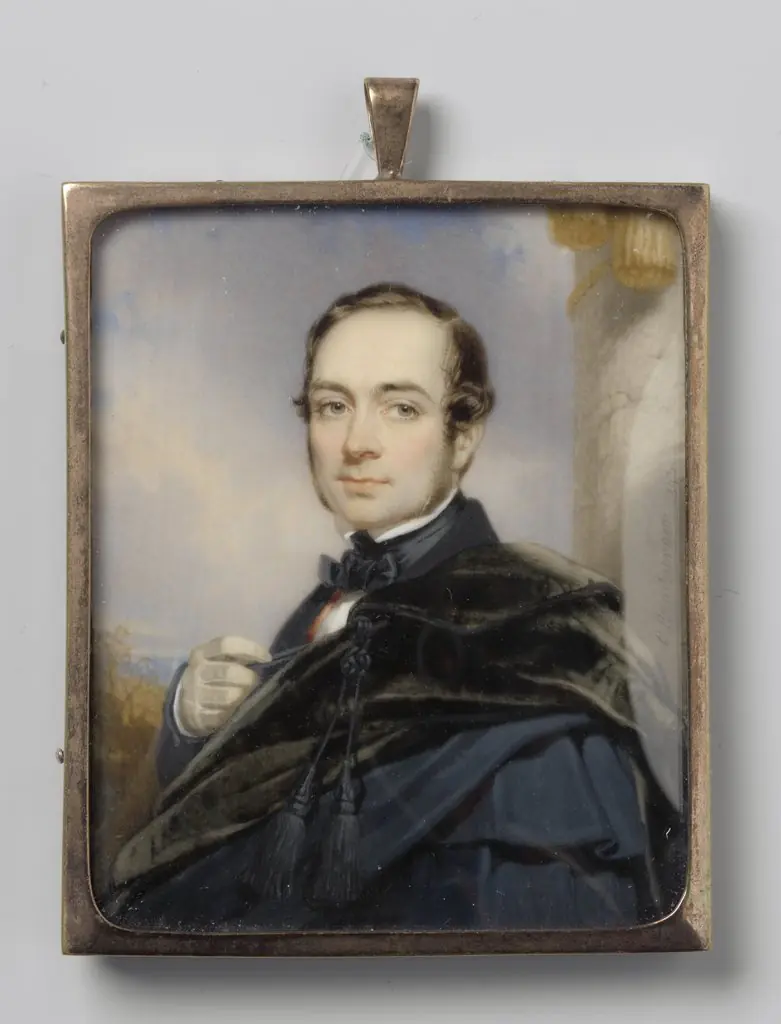 Portrait of a man
- Portrait of a Man with a White Ruff