Artwork
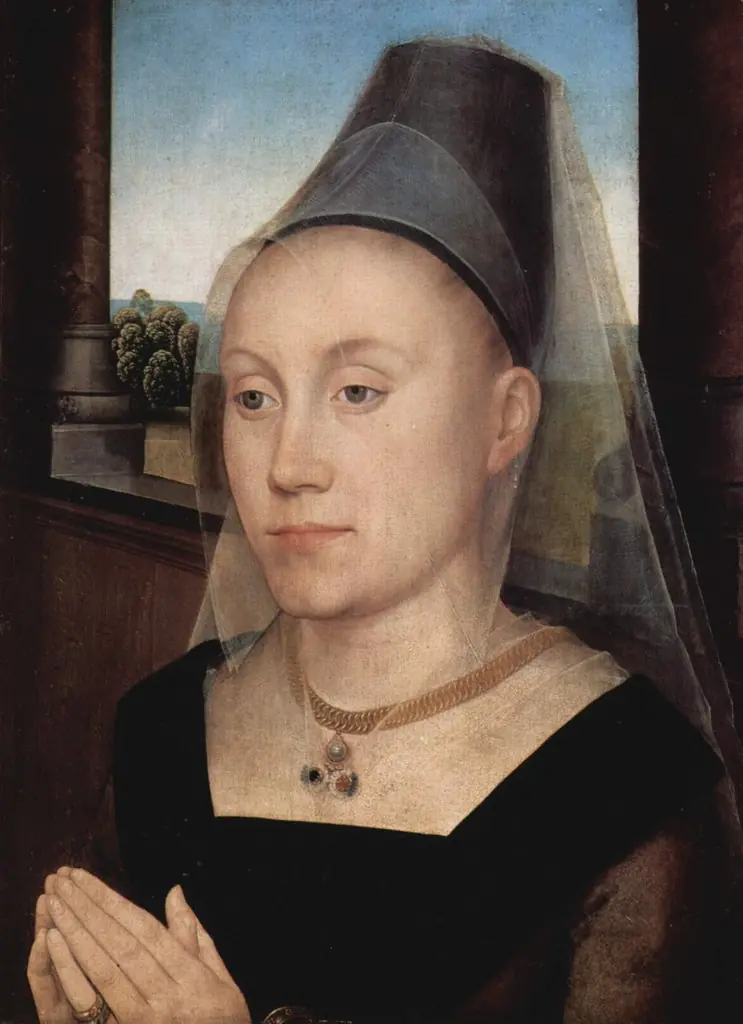
Portrait of a Woman
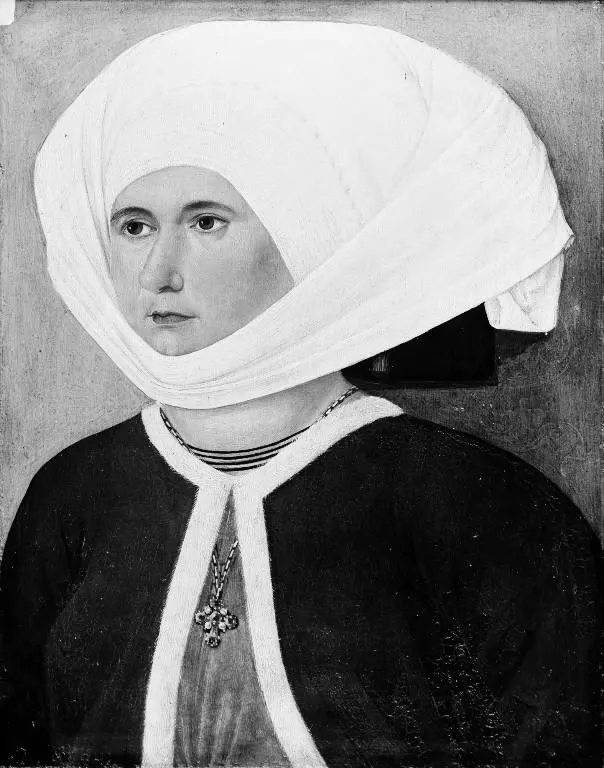
Portrait of a Woman is an unspecified painting by the Early Renaissance artist Unknown. It dates from 1472 and is held in the collection of the Statens Museum for Kunst.
About this work
Technique & Style
Consequently, a fuller characterization of the technique and style cannot be grounded in the available evidence.
The work is classified as a painting and takes the form of a portrait depicting a woman. According to the available catalogue data, the piece measures 410.0 in height by 325.0 in width, indicating a large-scale panel or canvas support. The genre is recorded simply as portrait, with the main subject identified as a woman.
No further technical details are documented in the consulted sources: the specific medium (such as oil or tempera), the support (panel, canvas, or other), the handling of paint, the stylistic school or workshop, and the present condition of the work are not reported. Consequently, a fuller characterization of the technique and style cannot be grounded in the available evidence.
History & Provenance
The Portrait of a Woman was created in 1472, a date established by both internal documentation and its Wikidata entry. The work has been attributed to an anonymous German artist active during the second half of the fifteenth century.
Since an unspecified date, the painting has been part of the collection of the Statens Museum for Kunst in Copenhagen, where it remains today. No earlier ownership history or commissioning details for the work have been documented in the available sources.
Overview
This portrait depicts a woman in subdued attire, characterized by dark, simple clothing, a prominent white head covering, and understated accessories, set against a plain dark background that emphasizes her facial expression.
Subject & Meaning
The subject's attire, including a white fur-trimmed collar and a detailed brooch, may signify modesty, sobriety, and potentially, family lineage or social status through the brooch, which could be a heraldic or symbolic piece.
Context
The use of chiaroscuro techniques and the overall somberness suggest the painting may align with artistic trends that emphasized emotional depth and simplicity, often seen in portraits of the period that valued introspection over opulence.
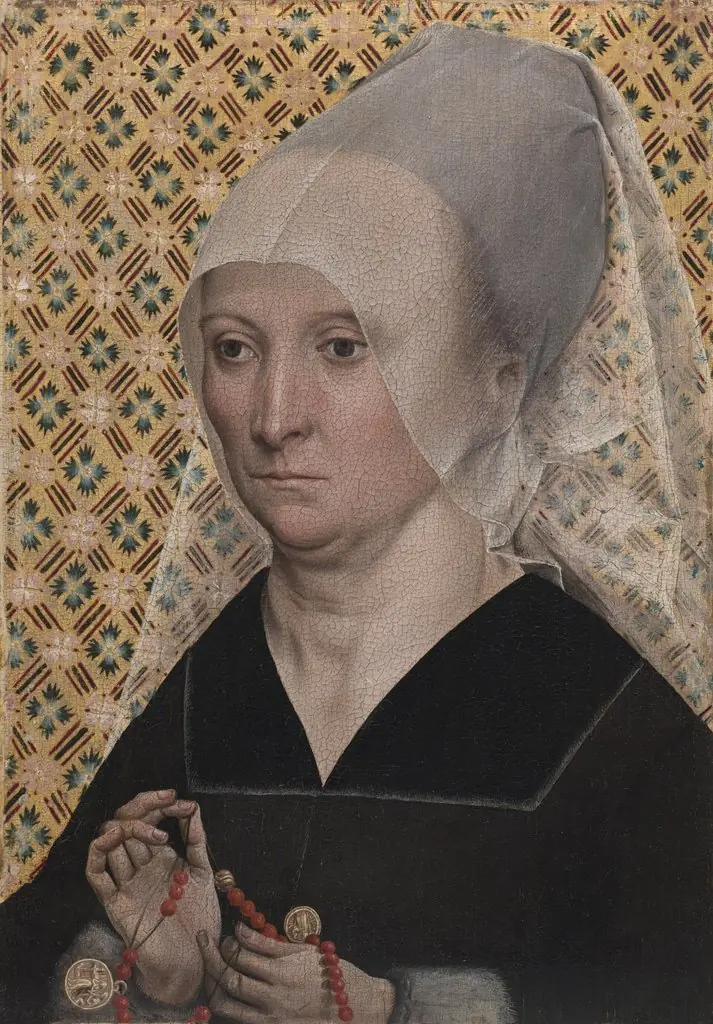
Artist & collection









- Portrait of a Woman
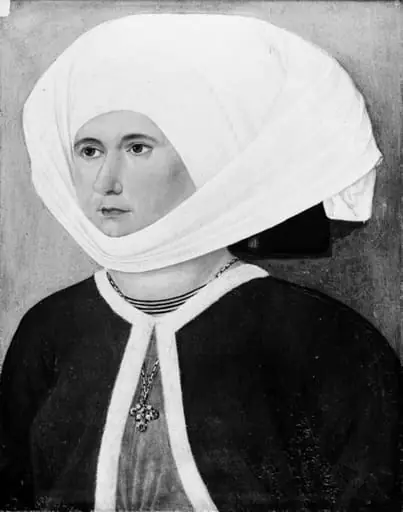 Portrait of a Woman
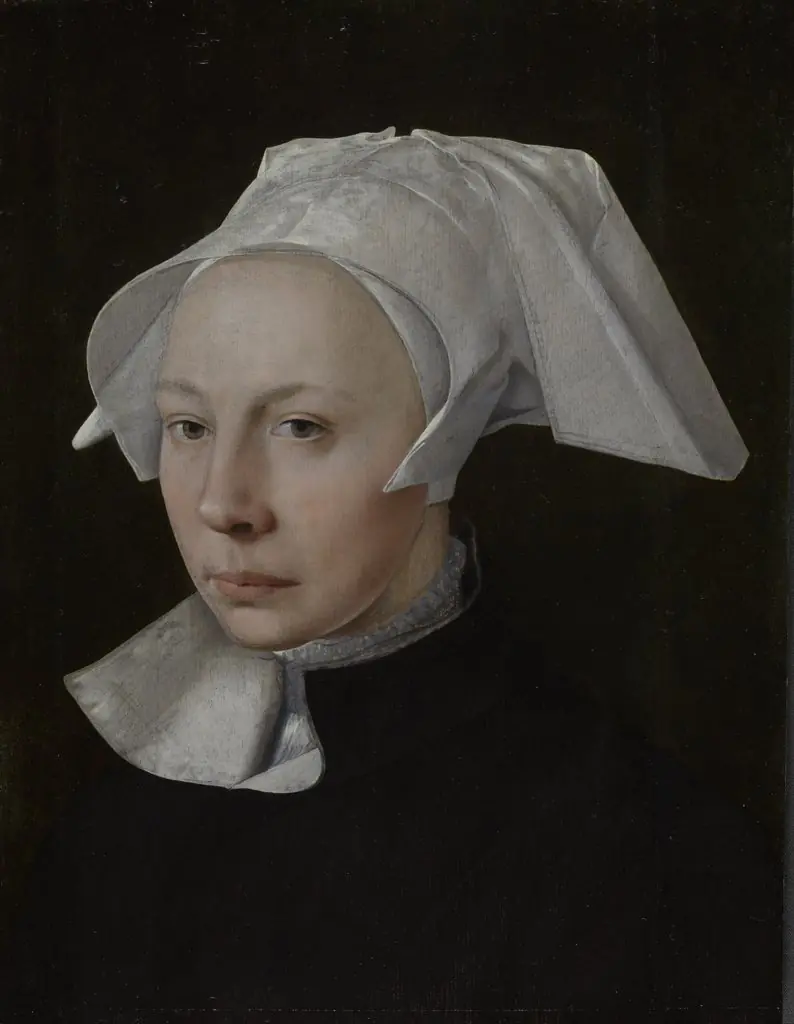 Portrait of a Woman
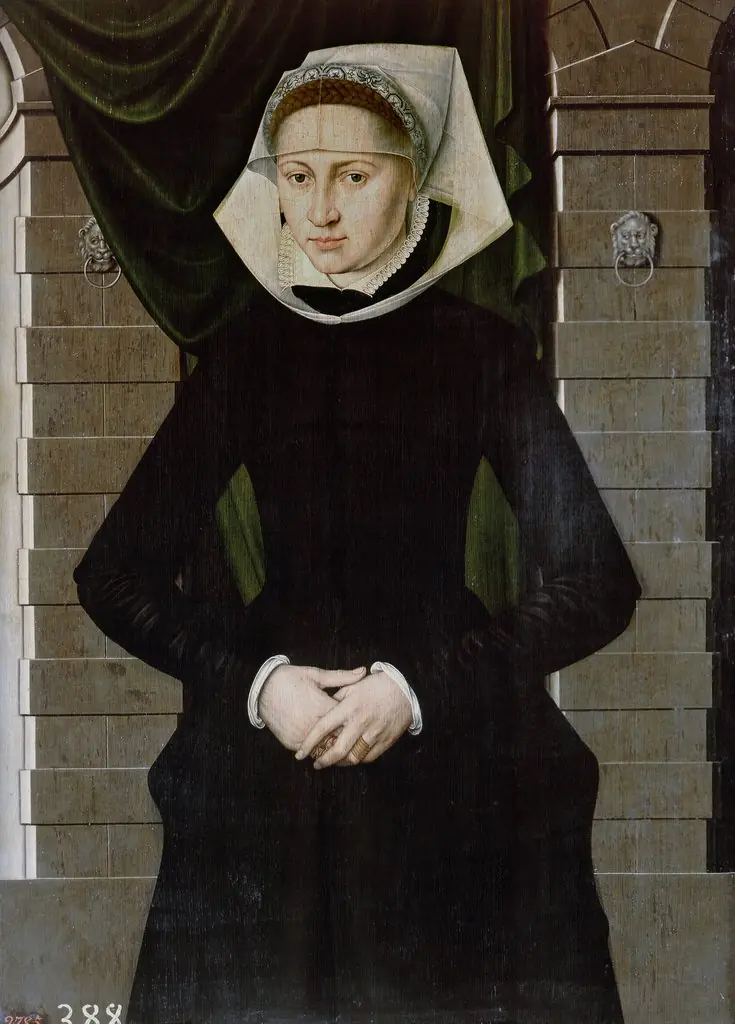 Dama holandesa
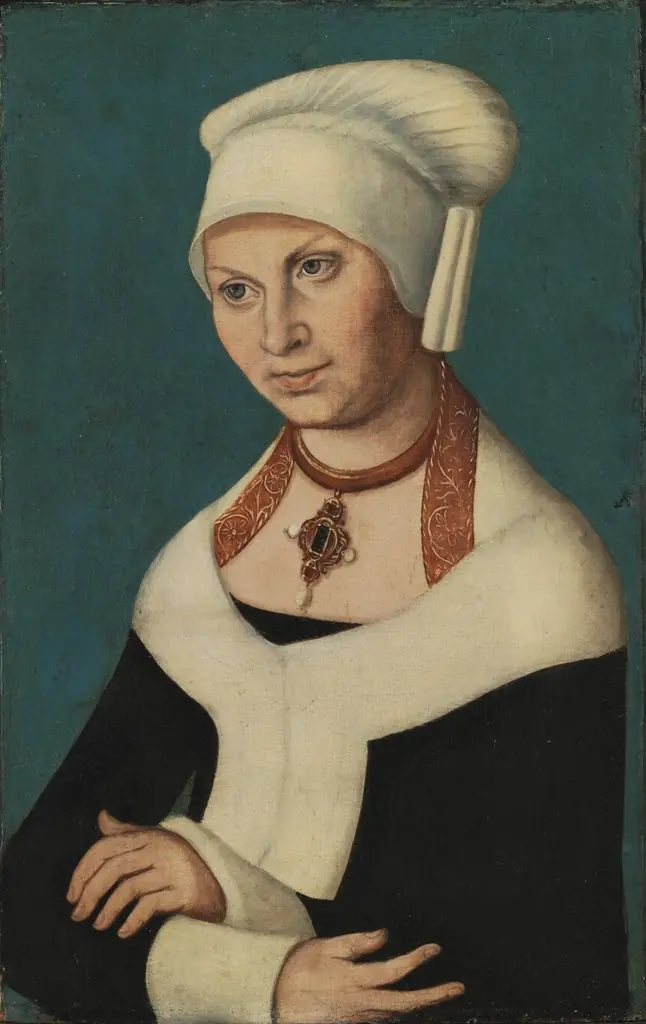 Portrait of the Duchess Barbara of Saxony, 1478-1534 (wife of George the Bearded)
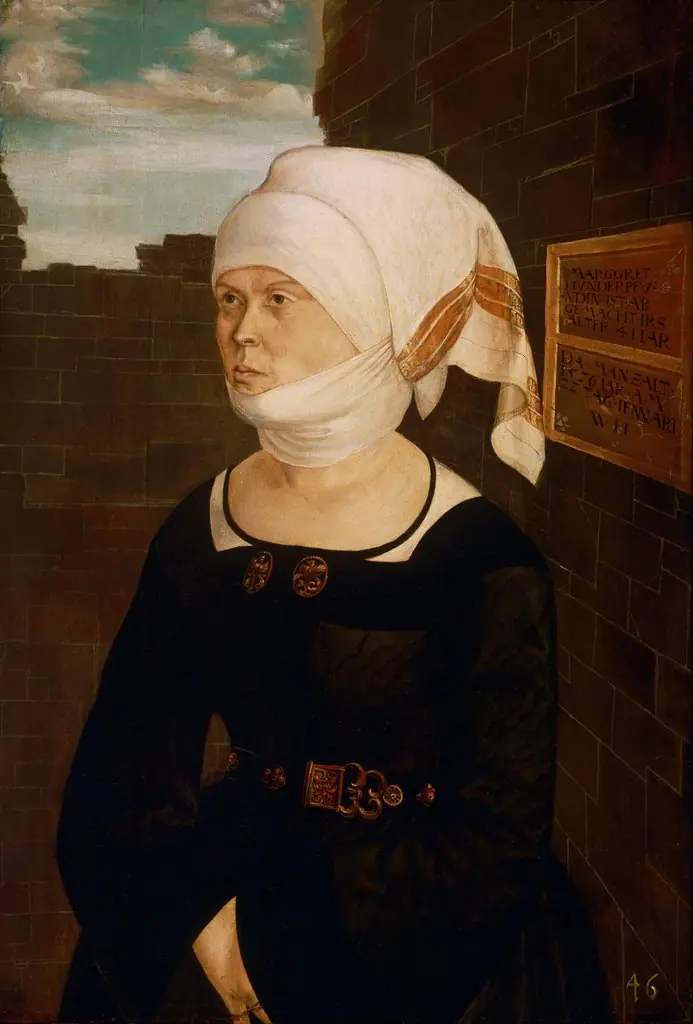 Portrait of Margaret Hundertpfundt
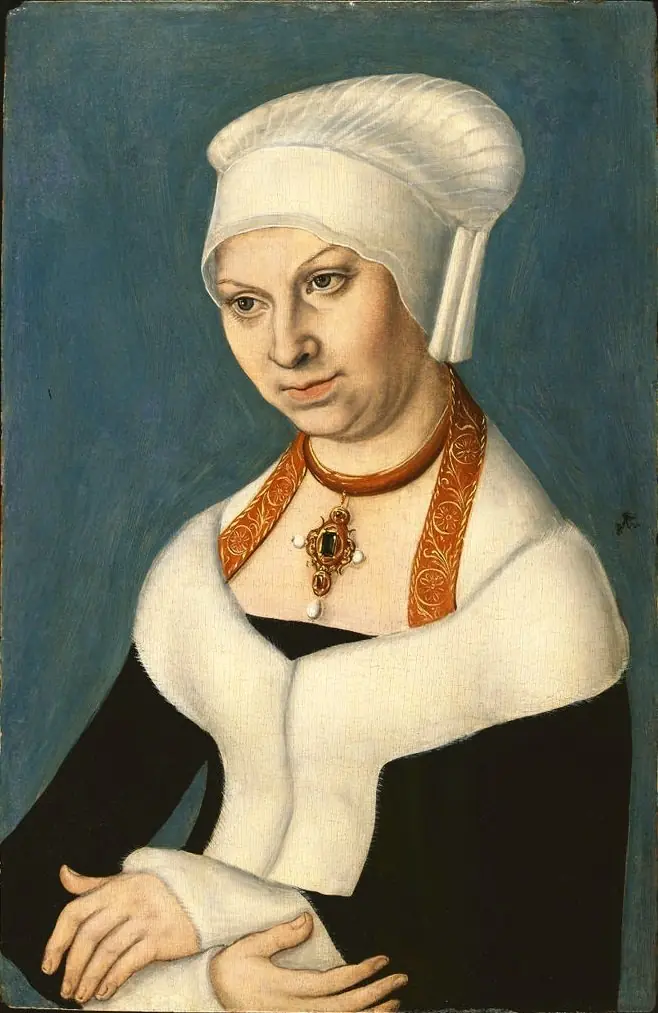 Portrait of Barbara Duchess of Saxony (1478-1534), Gemäldegalerie Berlin
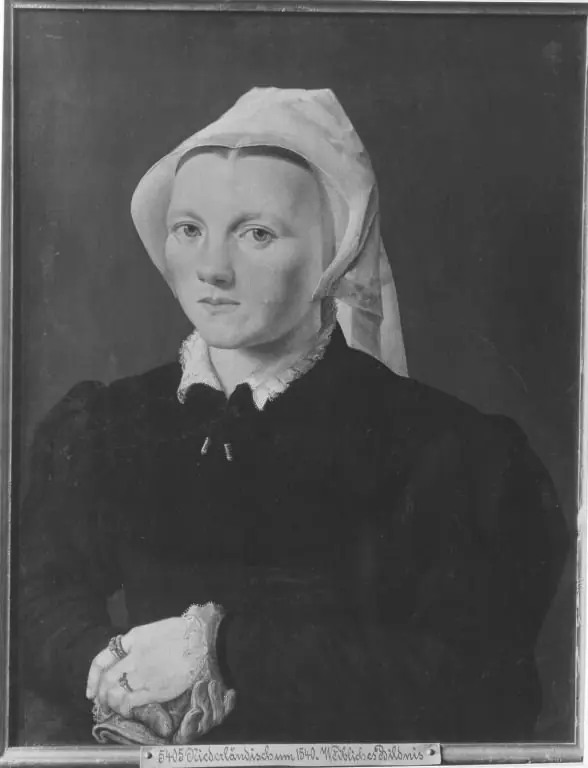 Portrait of a woman
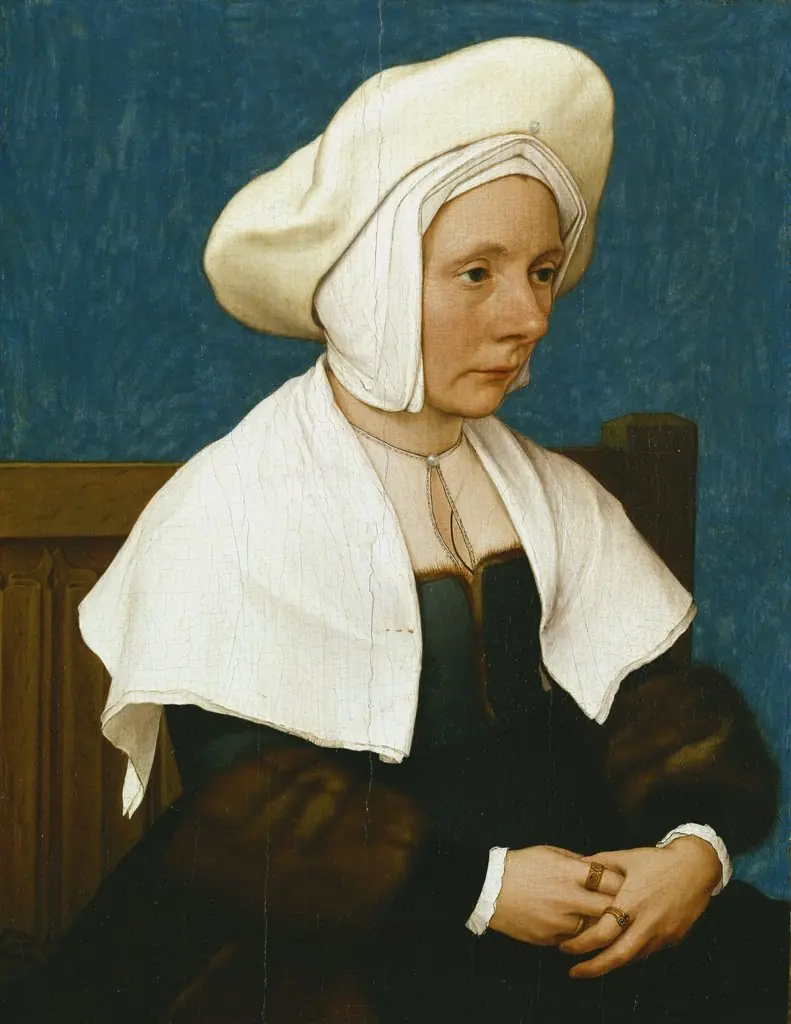 Portrait of a Woman
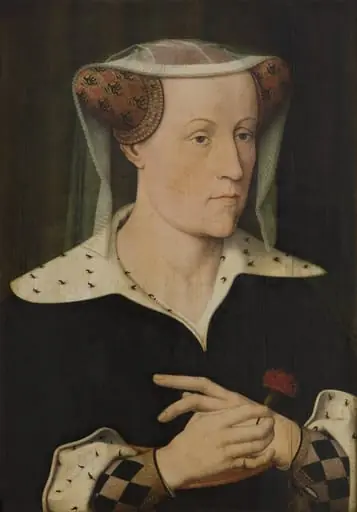 Jacoba of Bavaria, Countess of Holland and Zeeland
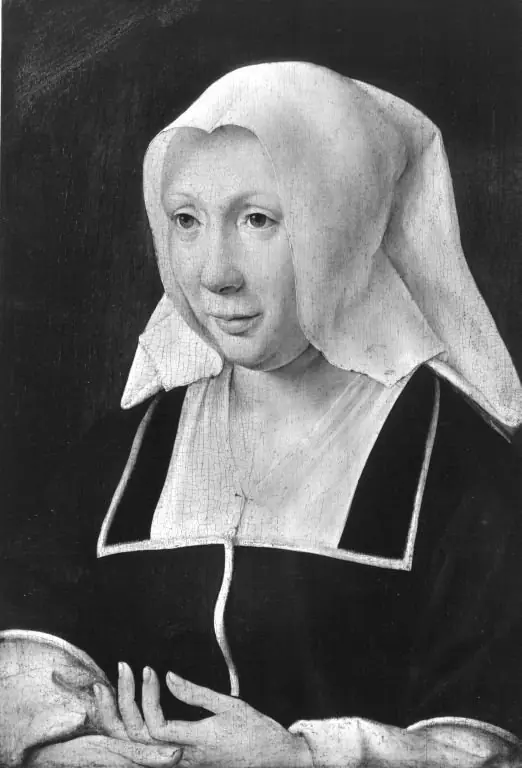 Portraits of a Couple: Female portrait
 Portrait of Barbara van Vlaendenbergh