Artwork
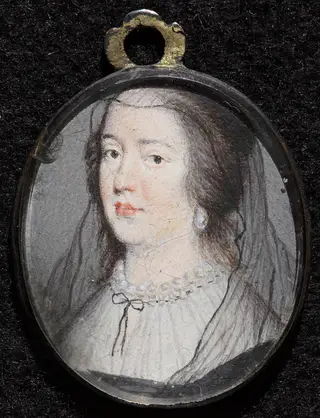
Portrait of a woman, possibly Anne Hyde, first wife of James II of England
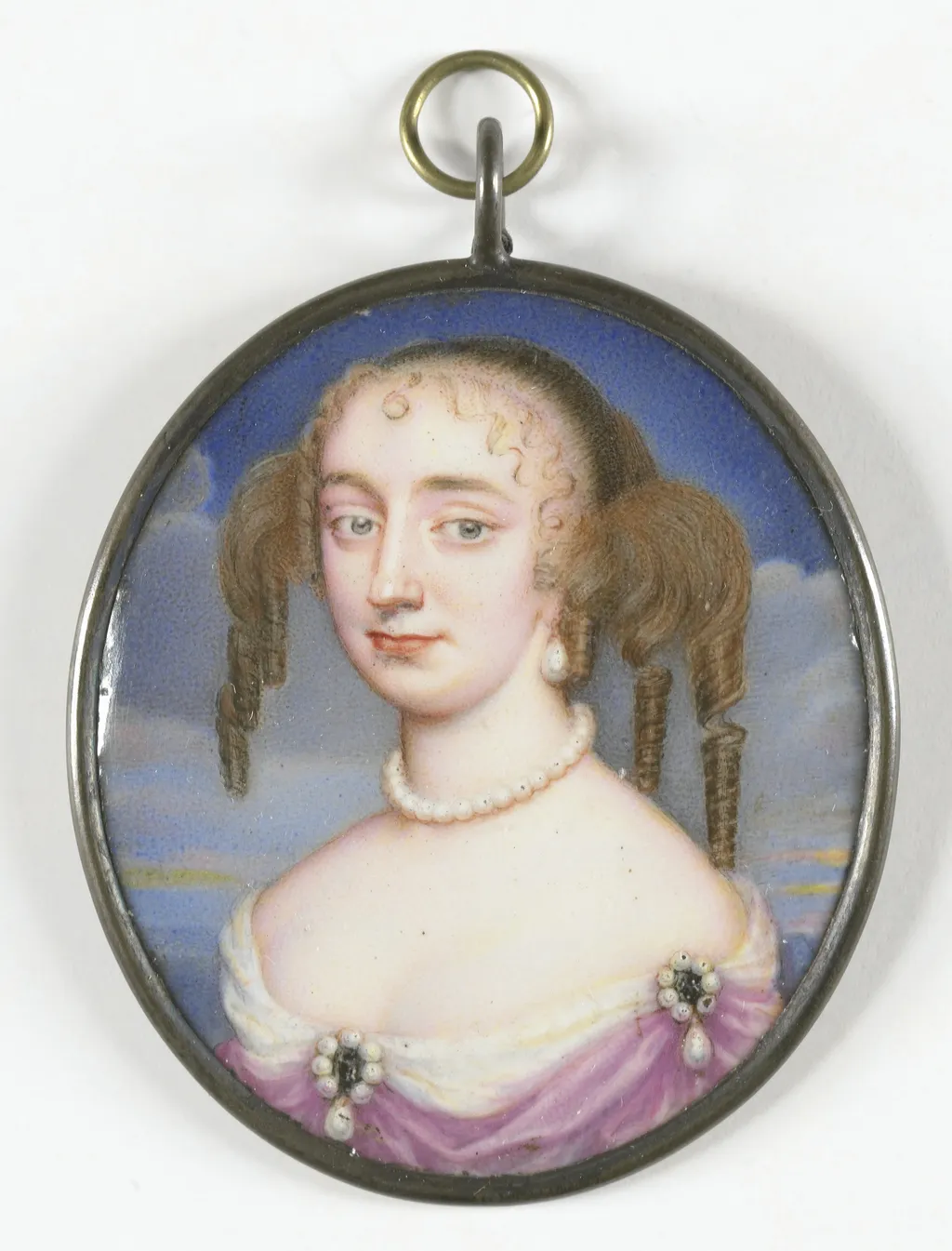
Portrait of a woman, possibly Anne Hyde, first wife of James II of England is a copper painting. It dates from 1662 and is held in the collection of the Rijksmuseum.
About this work
Subject & Meaning
6 cm, and casein-based medium point to a private, keepsake function rather than a formal state portrait.
The painting is thought to depict Anne Hyde, who became Duchess of York through her marriage to James, Duke of York (later James II of England), and is identified by the Rijksmuseum as Anne, Duchess of York. The attribution remains tentative, and the sitter is not named on a documented basis, so the identification rests on provenance and historical association rather than confirmed likeness.
Produced in 1662, the portrait belongs to a tradition of intimate courtly likenesses executed on copper, a support favored for its smooth surface and the fine detail it permitted in miniature-scale work. The small format, roughly 4.2 by 3.6 cm, and casein-based medium point to a private, keepsake function rather than a formal state portrait.
Because the sources do not describe specific attributes, costume details, emblems, or inscriptions within the image, no further iconographic or symbolic content can be reliably stated.
Technique & Style
The work was executed on a copper support using oil paint, as documented in the technical record. Its dimensions measure 4.2 cm by 3.6 cm, reflecting a small‑scale portrait format typical of mid‑17th‑century Dutch painting. The handling of brushwork and the rendering of facial features demonstrate a restrained, naturalistic style consistent with contemporary court portraiture.
History & Provenance
The work is an oil painting on copper created in 1662, depicting Anne, Duchess of York, and was originally commissioned by her. It entered the collection of the Rijksmuseum, where it remains on display. The dating is established by the inscription on the work and corroborated by scholarly catalogues, which place its execution in the mid‑1660s.
The painting has been part of the Rijksmuseum's holdings since the early twentieth century, having been acquired from a private collection.
The painting is held in the collection of the Rijksmuseum in Amsterdam, where it is documented as part of the museum's holdings alongside related portrait records.
No specific inventory number, accession identifier, or catalogue reference is provided in the available sources. Likewise, the sources do not record any exhibition history, loans, or public display dates for the work.
The painting's documented inception date is 1662, and it is recorded as an anonymous portrait executed on copper, depicting Anne, Duchess of York (Anne Hyde).
Legacy
The portrait of Anne Hyde, first wife of James II, has been recognized for its historical significance as a rare depiction of a 17th‑century royal consort. Its attribution to the period and identification of the sitter as Anne, Duchess of York, have informed scholarship on court portraiture and dynastic representation. The work’s presence in the Rijksmuseum collection has contributed to ongoing exhibitions that explore early Stuart family imagery, reinforcing its reputation as an important example of Dutch Golden Age portraiture.
Overview
The work is a small oval portrait executed on copper, depicting a seated woman with light skin, curly blond hair bound back, and a pearl necklace. She wears a pinkish garment with a low neckline, set against a muted blue background. Her expression is composed, her gaze steady, and the overall composition is intimate in scale.
Context
Portraits on copper were popular among European painters in the 17th century for their durability and capacity to render fine detail. The fashion of the sitter, a pink dress with a low neckline and pearl necklace, reflects contemporary courtly attire, aligning the work with other aristocratic representations of the English Restoration period.
Artist & collection

- Portrait of a Woman
 Portrait of a Woman
 Mary II Stuart
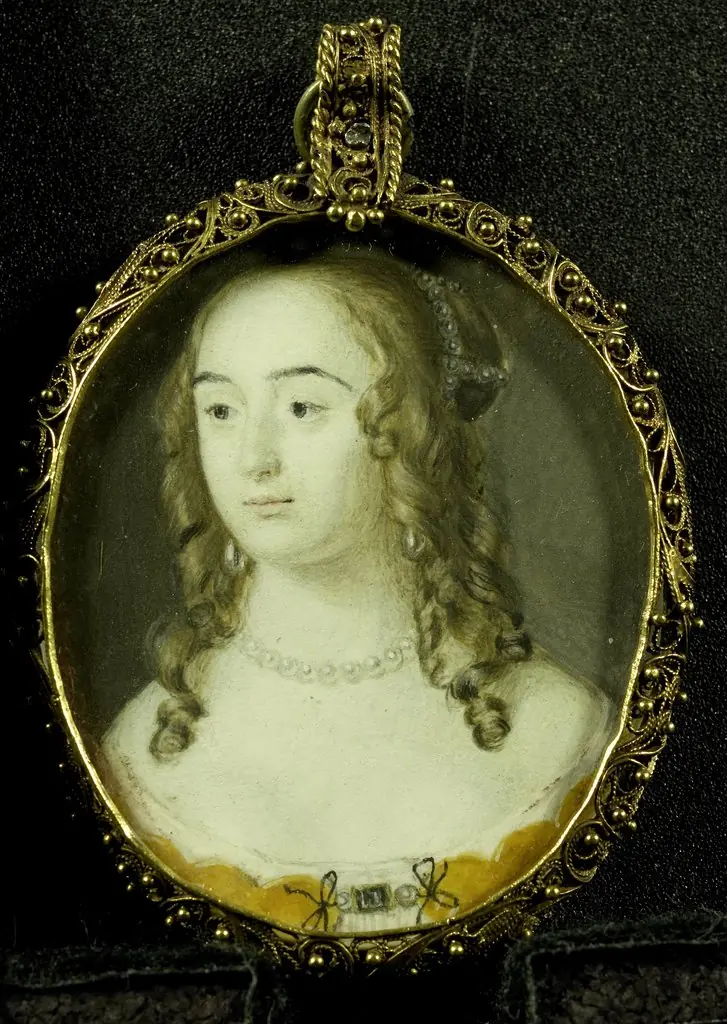 Henriette Marie (1626–51) of Paltz, daughter of Frederick V, King of Bohemia, nicknamed the 'Winter King'.
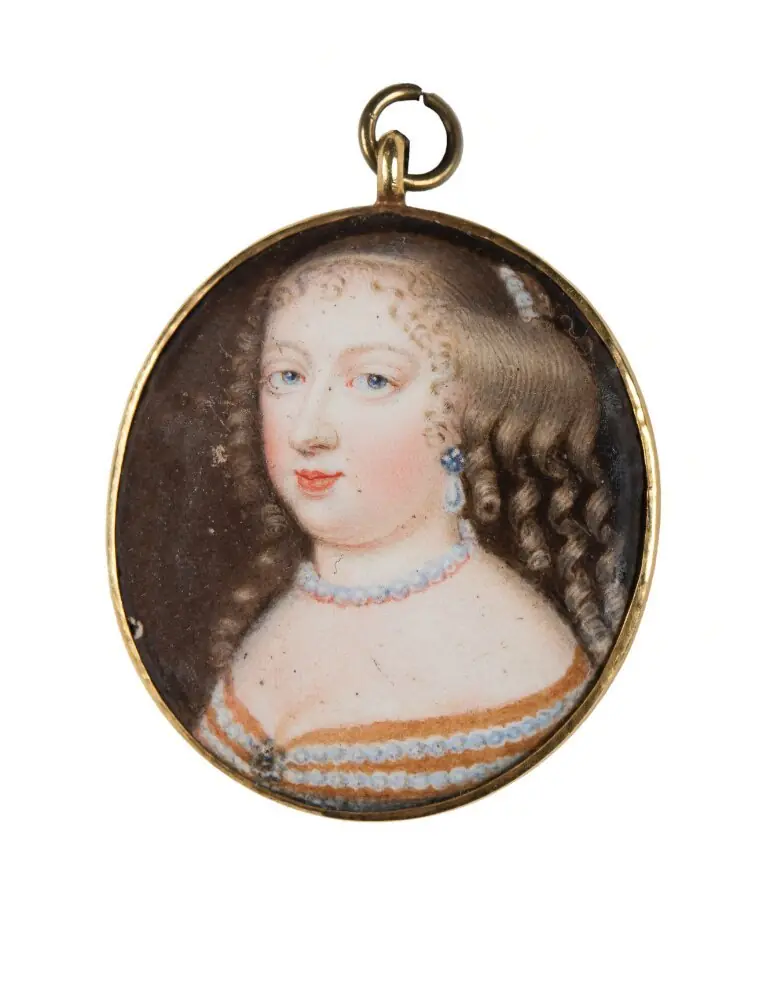 Hedvig Sofia, Landgravine of Hessen-Cassel
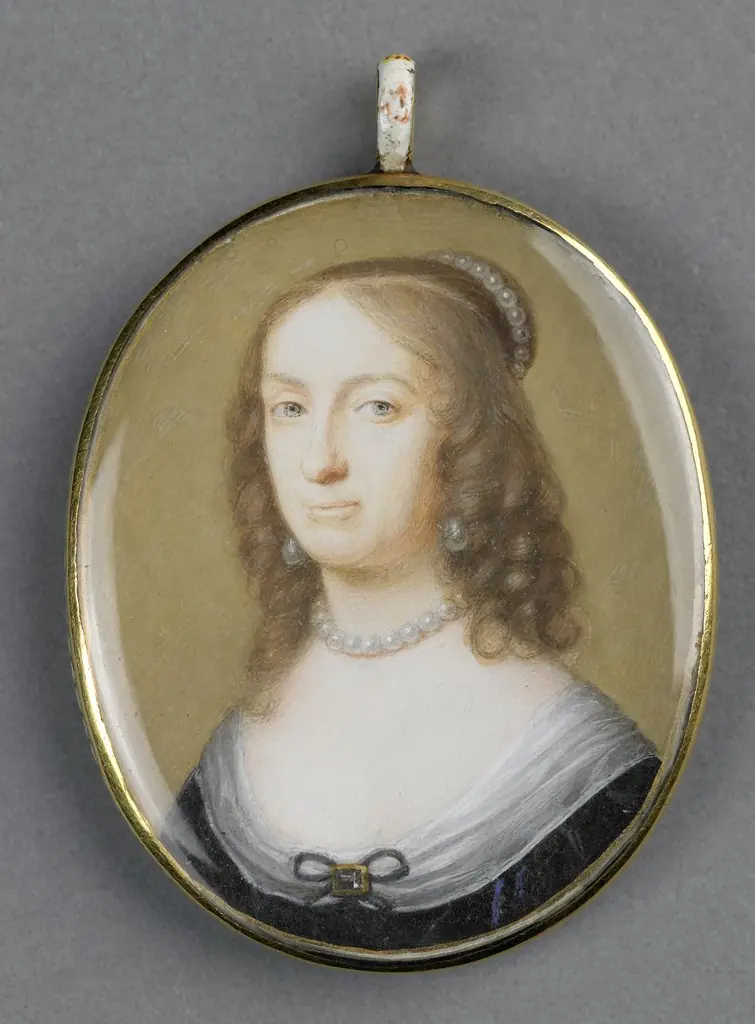 Portrait of Elizabeth, widow of Frederick V of the Palatinate
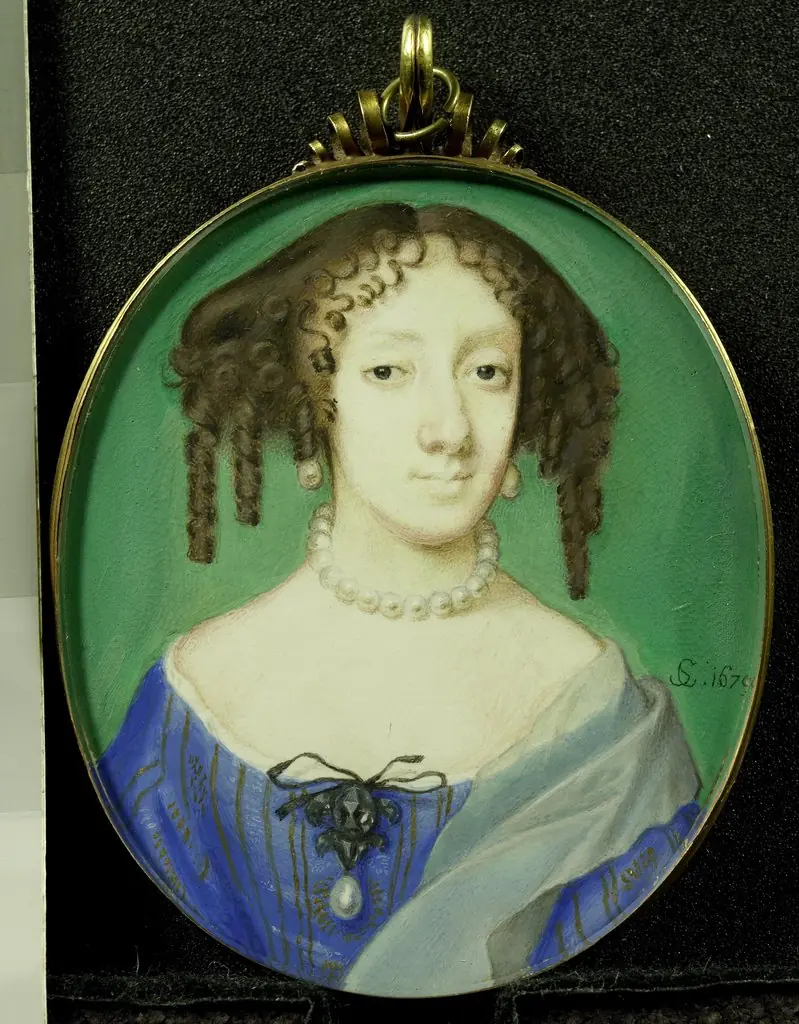 Henrietta, hertogin van Orléans
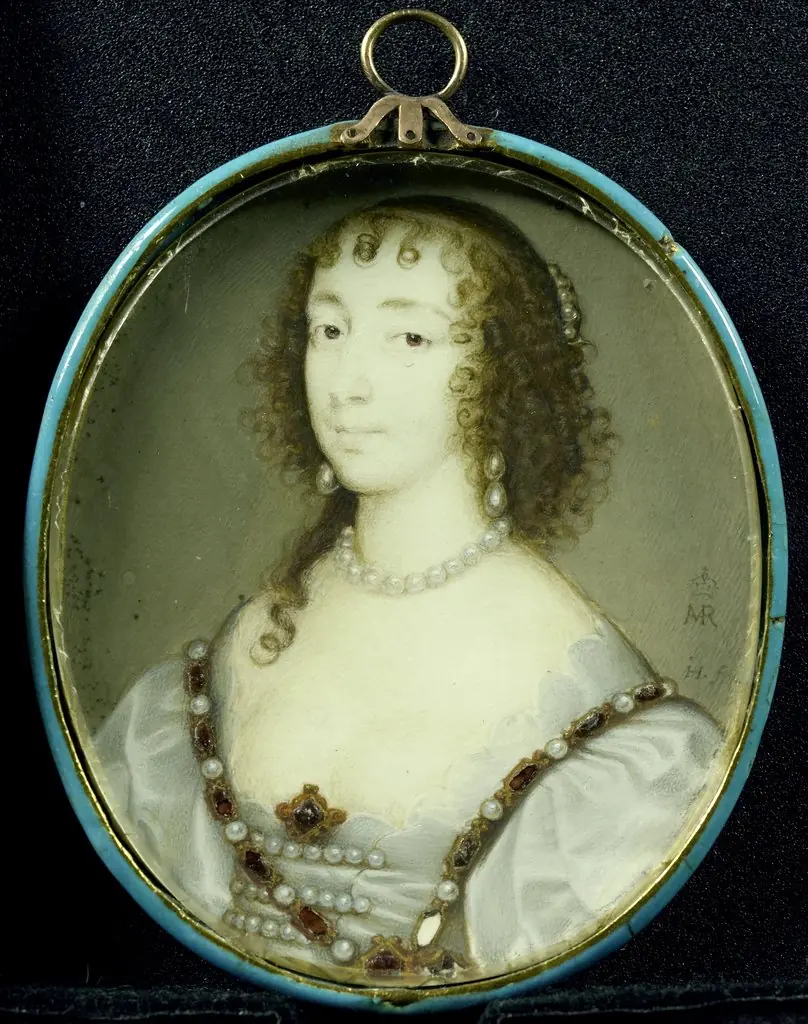 Portrait of Henriëtte Maria of France (1609-1669), wife of Charles I of England
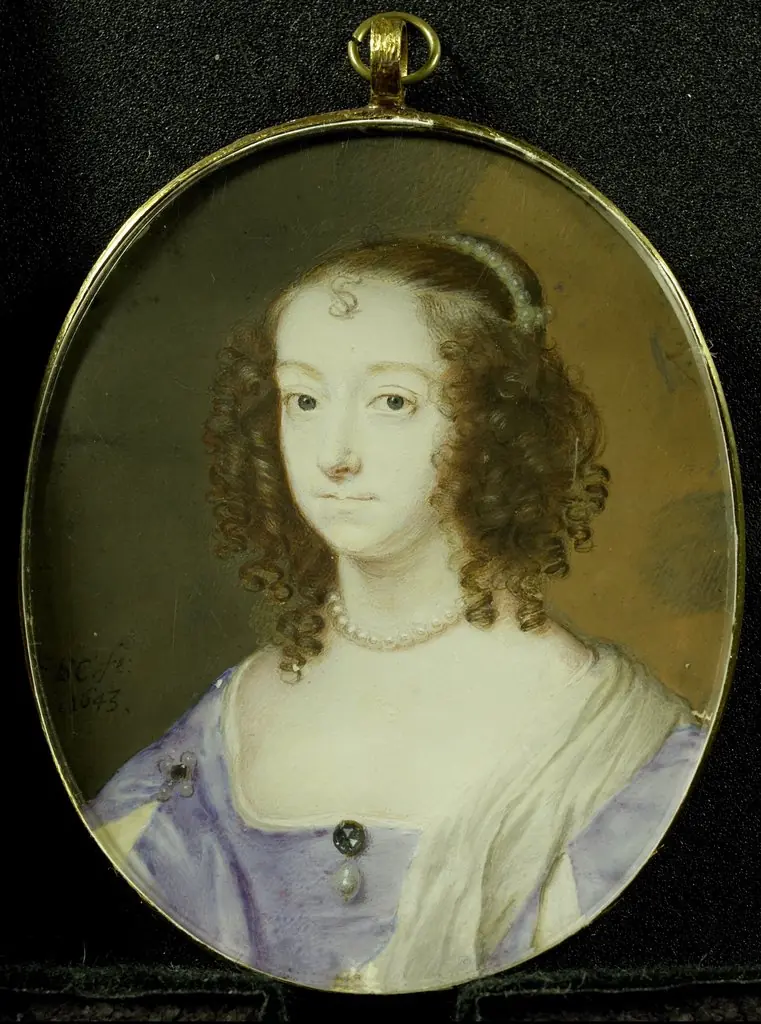 Portret van een vrouw
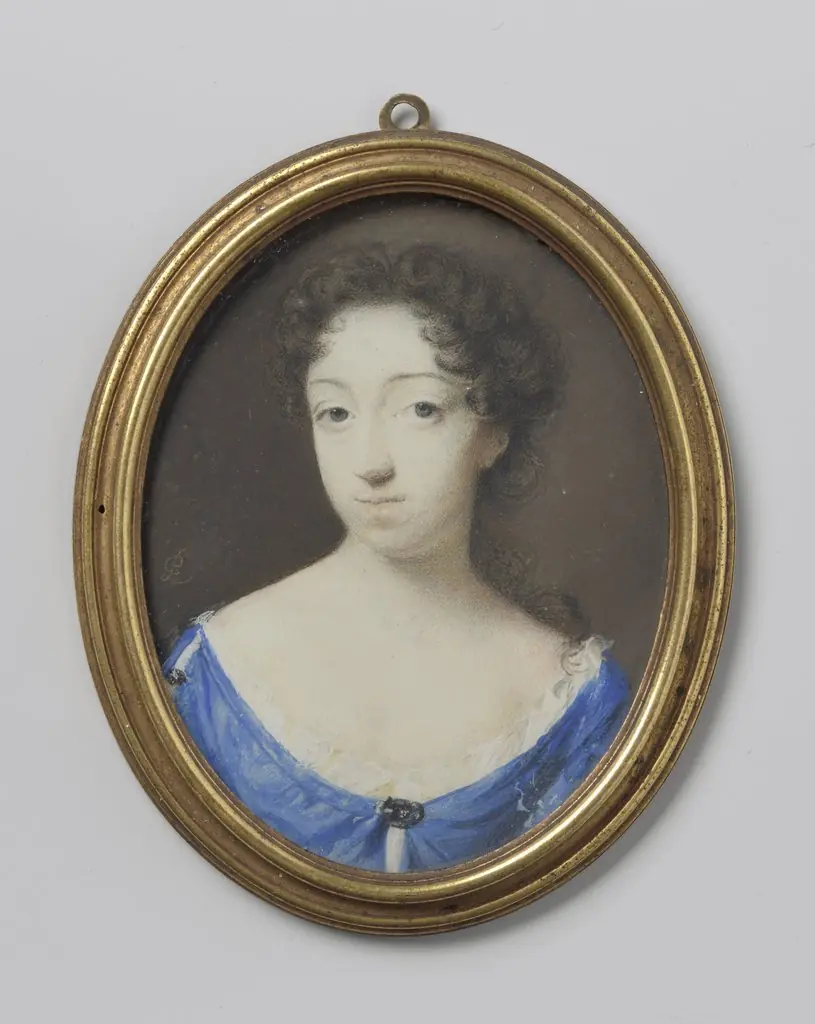 Portrait of a woman
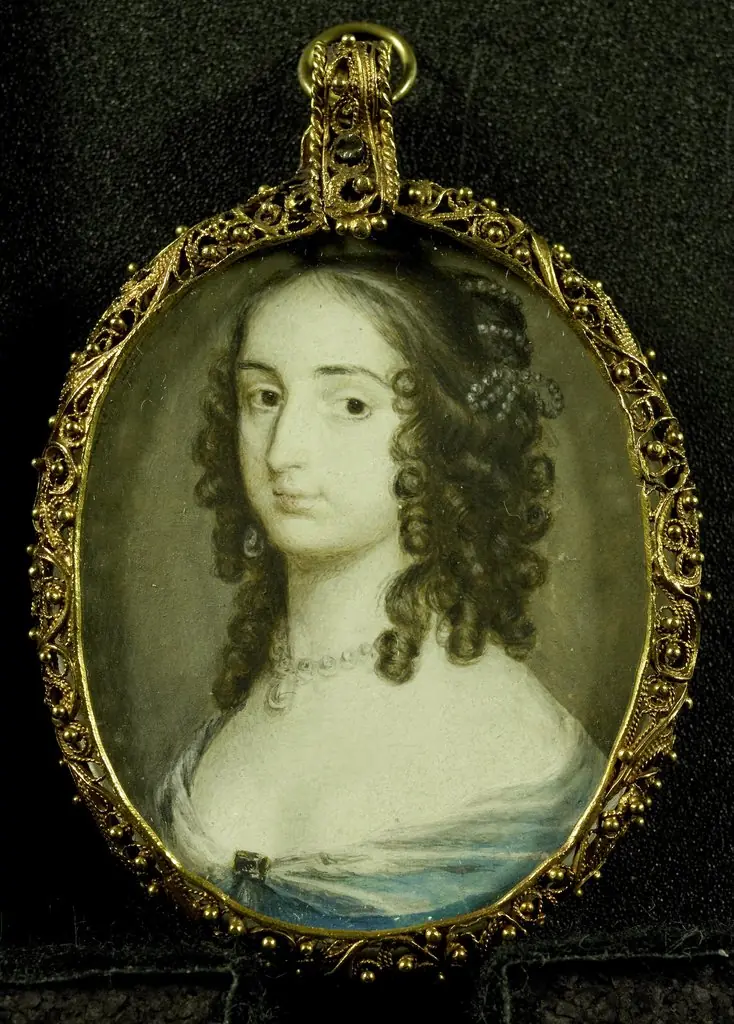 Portrait of Elisabeth of the Palatinate
 Amalie of Solms (1602-1675)