Artwork
Portrait of a Woman, Said to Be Caritas Pirckheimer (1467–1532)
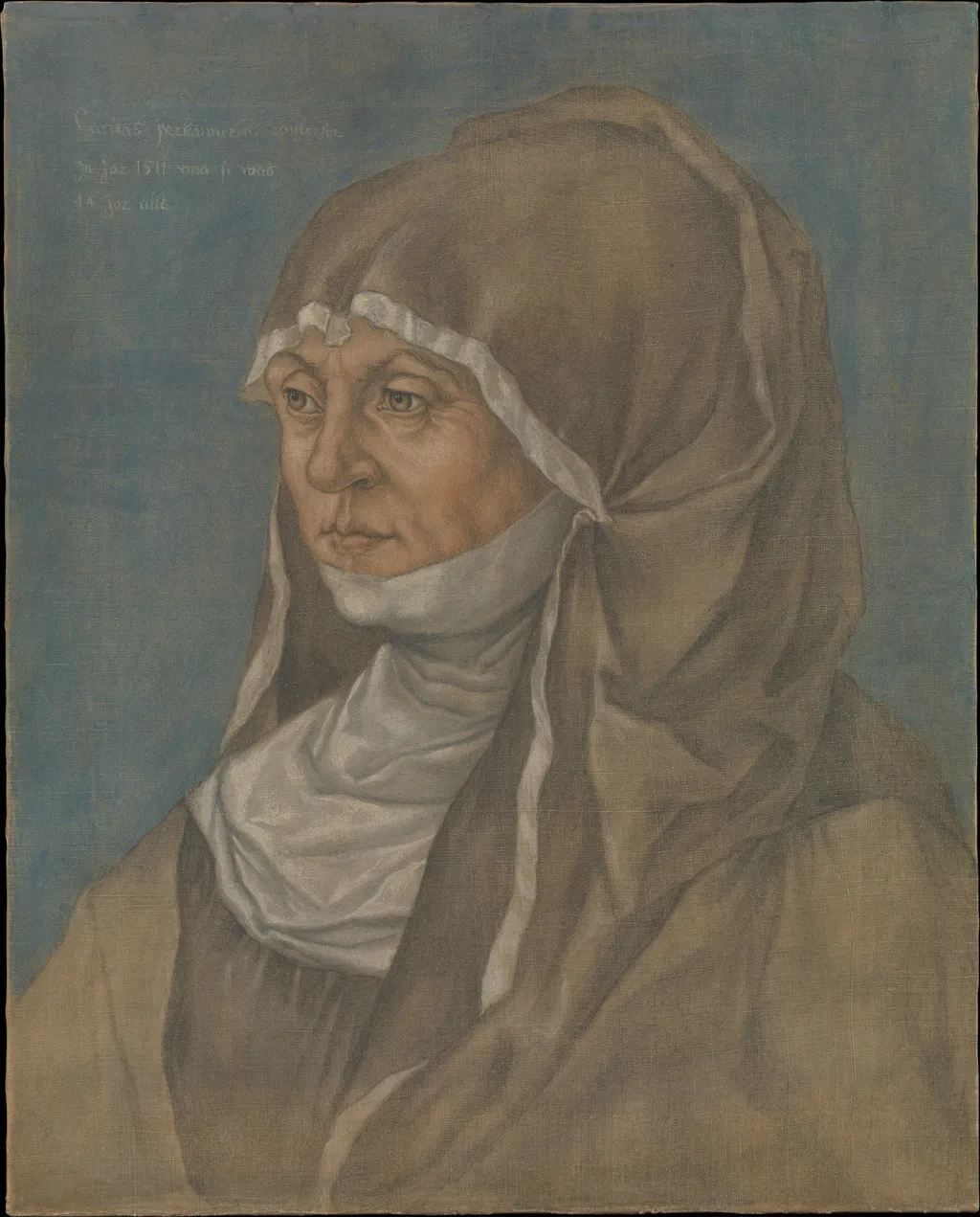
Portrait of a Woman, Said to Be Caritas Pirckheimer (1467–1532) is an unspecified painting. It dates from 2000 and is held in the collection of the Metropolitan Museum of Art. This painting, titled Portrait of a Woman, Said to Be Caritas Pirckheimer, presents an individual with a solemn demeanor.
About this work
Overview
The artwork captures a specific moment, conveying a sense of quiet introspection through the woman's direct gaze and composed expression.
This painting, titled Portrait of a Woman, Said to Be Caritas Pirckheimer, presents an individual with a solemn demeanor. The subject wears a white headscarf and a brown hooded cloak, which frames her face. The artwork captures a specific moment, conveying a sense of quiet introspection through the woman's direct gaze and composed expression.
The attribution to Caritas Pirckheimer, a notable abbess and humanist, suggests a figure of intellectual and spiritual significance.
Subject & Meaning
The woman in the portrait presents a serious and contemplative expression, engaging the viewer directly. Her attire, consisting of a simple white head covering and a dark, hooded garment, suggests a modest or possibly monastic context, aligning with the potential identification as Caritas Pirckheimer. As a respected figure of her era, Pirckheimer was known for her intellectual pursuits and leadership within the convent, lending a layer of historical and cultural depth to the portrayal.
Technique & Style
The artist employed chiaroscuro, a technique characterized by strong contrasts between light and dark, to imbue the portrait with a profound sense of three-dimensionality. This method is particularly evident in the rendering of the woman's face and the folds of her clothing, where transitions from shadow to illumination create volume and depth. The skillful application of chiaroscuro enhances the realism of the depiction, drawing attention to the subject's features and the texture of her garments.
Artist & collection

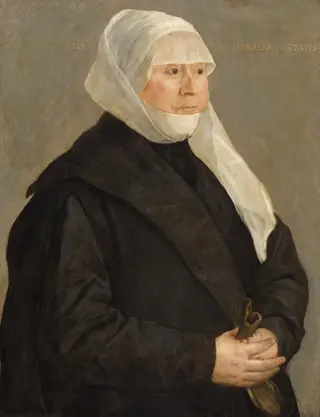
- Regina von Stetten (1499-1562), Gemahlin des Peter Honold
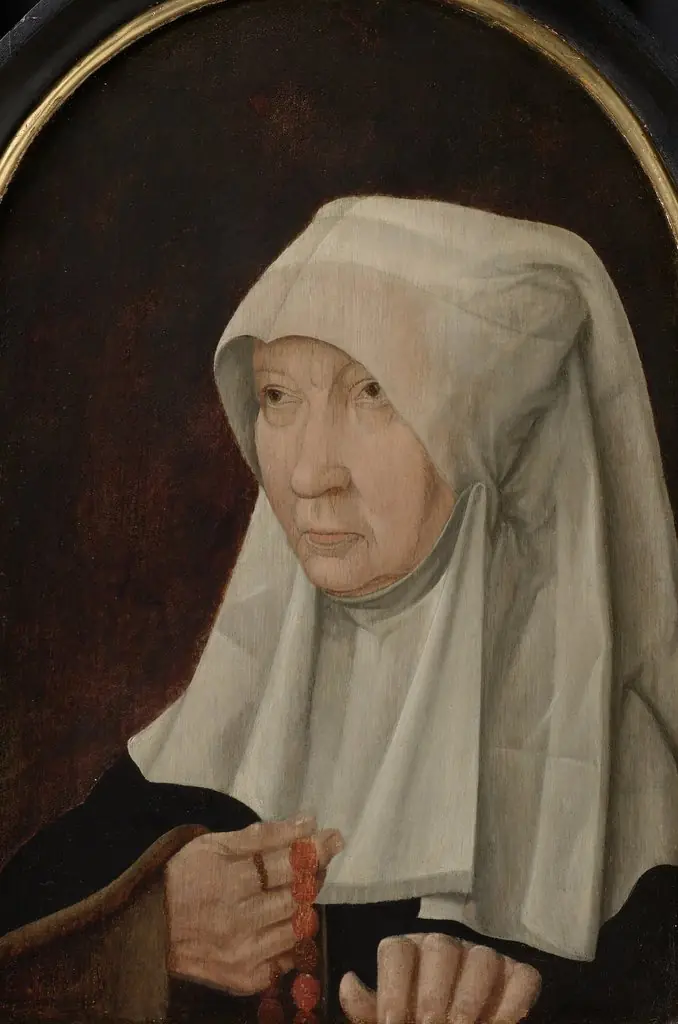 Portrait of Jacomina Claesdr van Ruyven (?-1509)
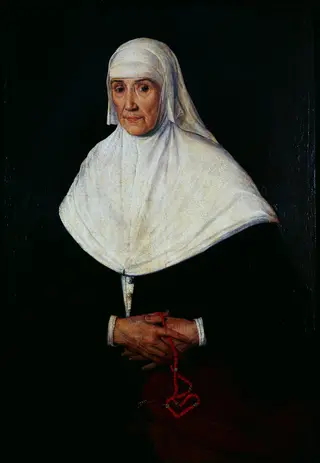 Senhora com Rosário
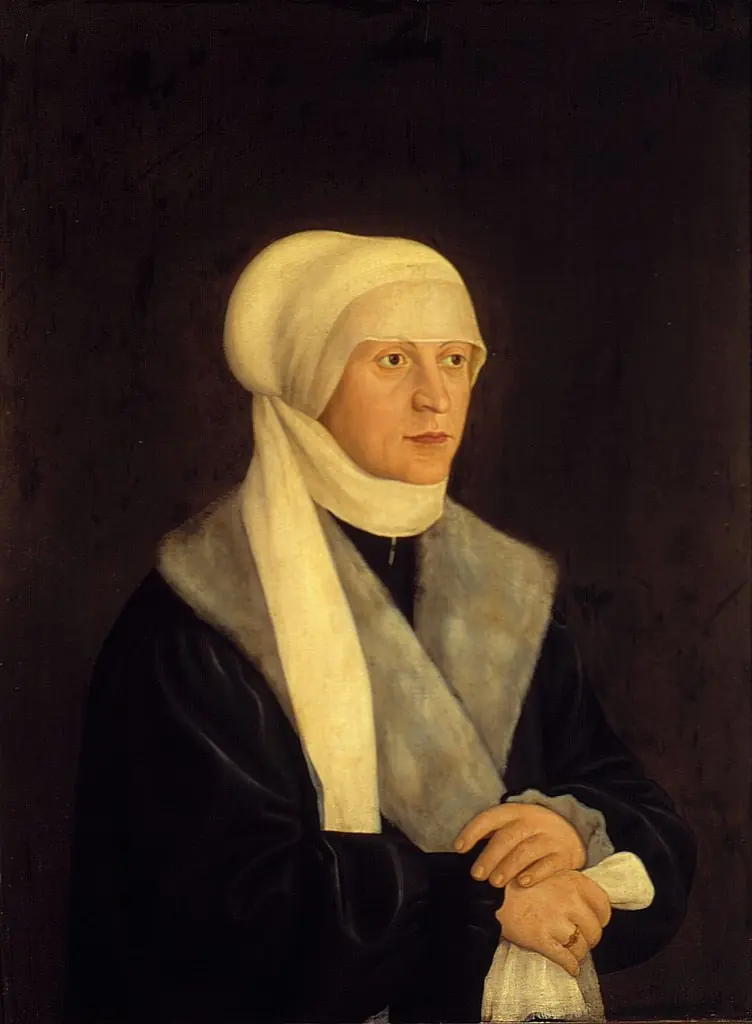 Portrait of Sabina of Bavaria
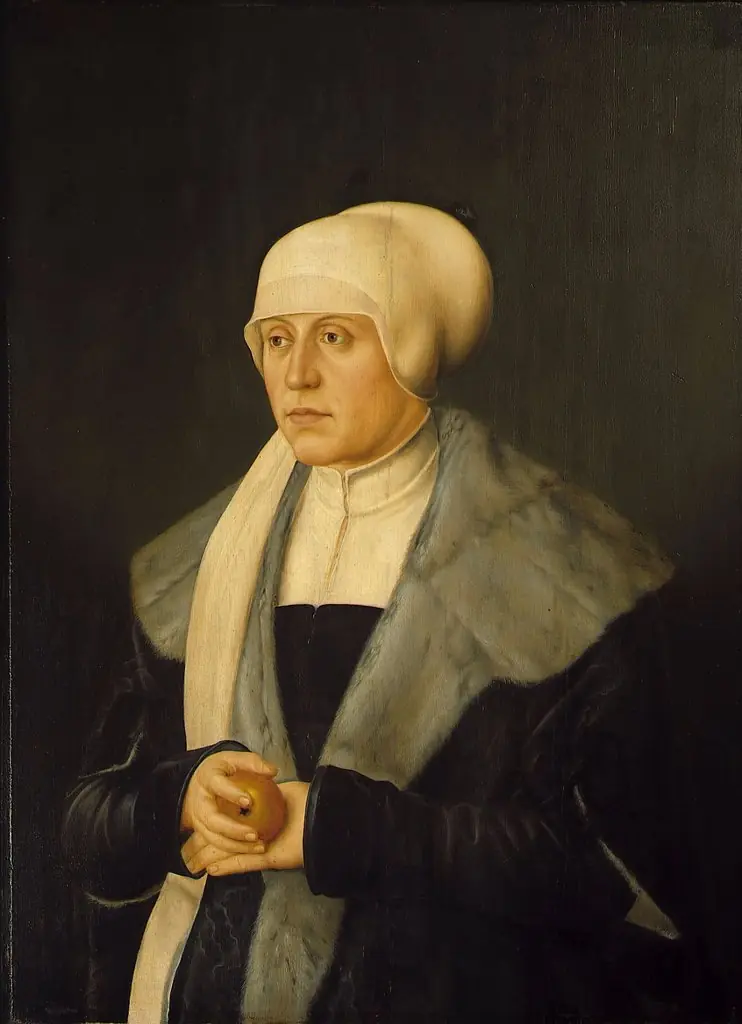 Kunigunde of Austria, wife of Duke Albrecht IV of Bavaria
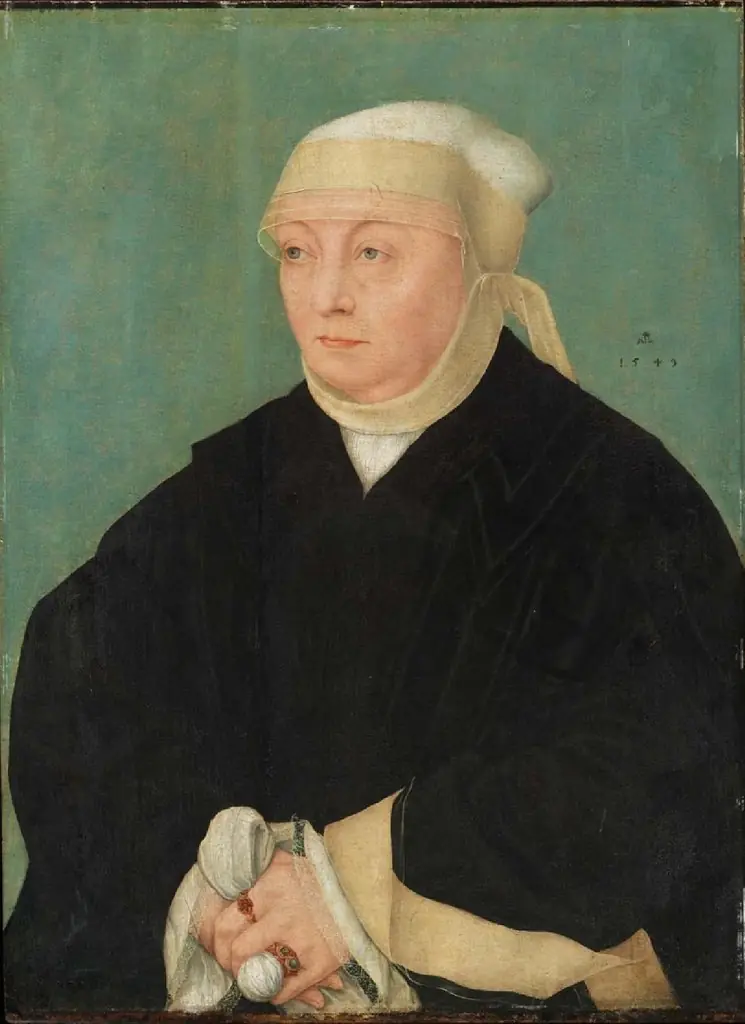 Portrait of a Woman
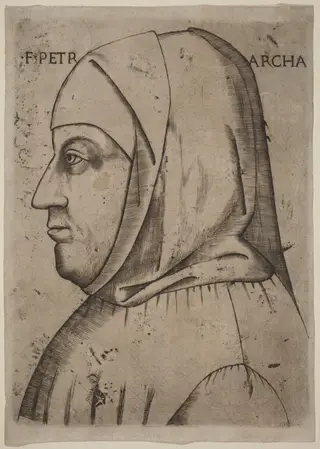 Portrait of Petrarch
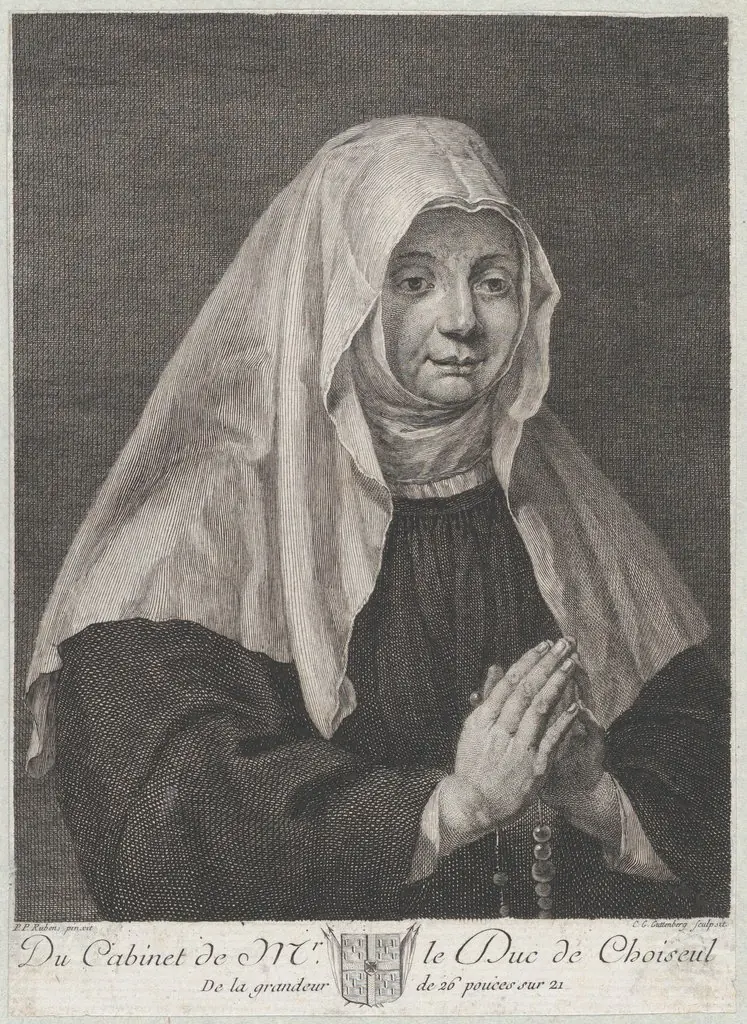 Portrait of a praying nun
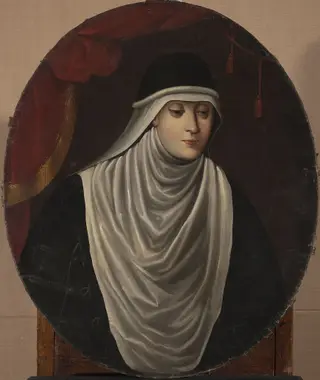 Portrait of Elżbieta Sieniawska née Gostomska (1573–1624)
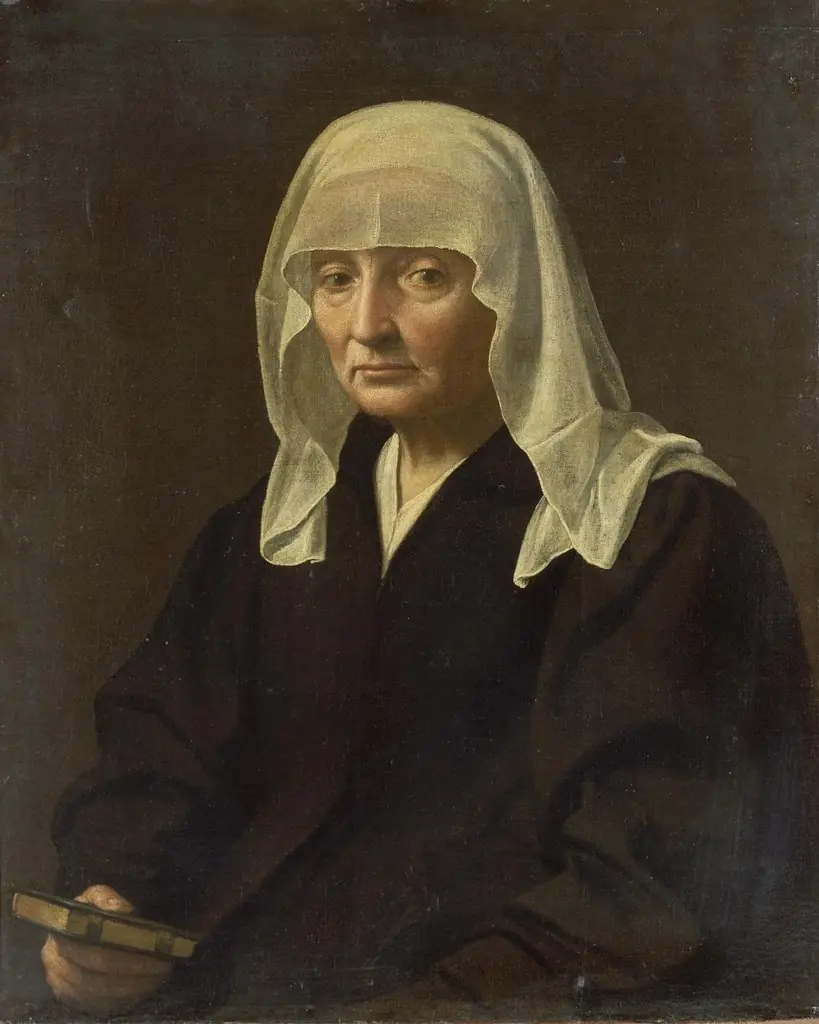 Portrait of an Old Woman
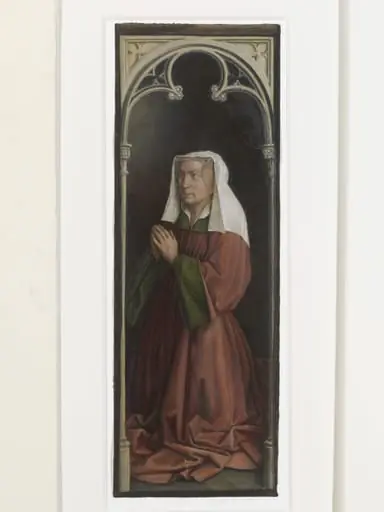 Copy of a detail from the Ghent Altarpiece, Isabelle Borluut, by Hubert and Jan van Eyck in the church of St Bavon, Ghent.
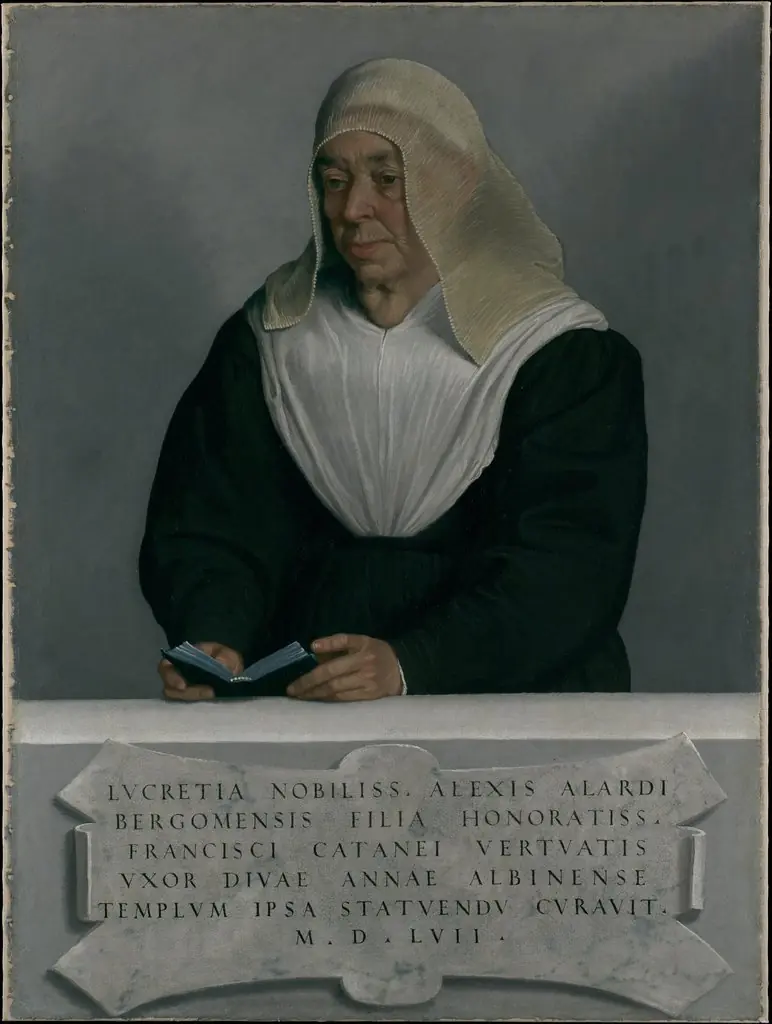 Abbess Lucrezia Agliardi Vertova (1490?–1558)