Artwork
Portrait of Alexander I. Markov (1781-1844) (2nd)
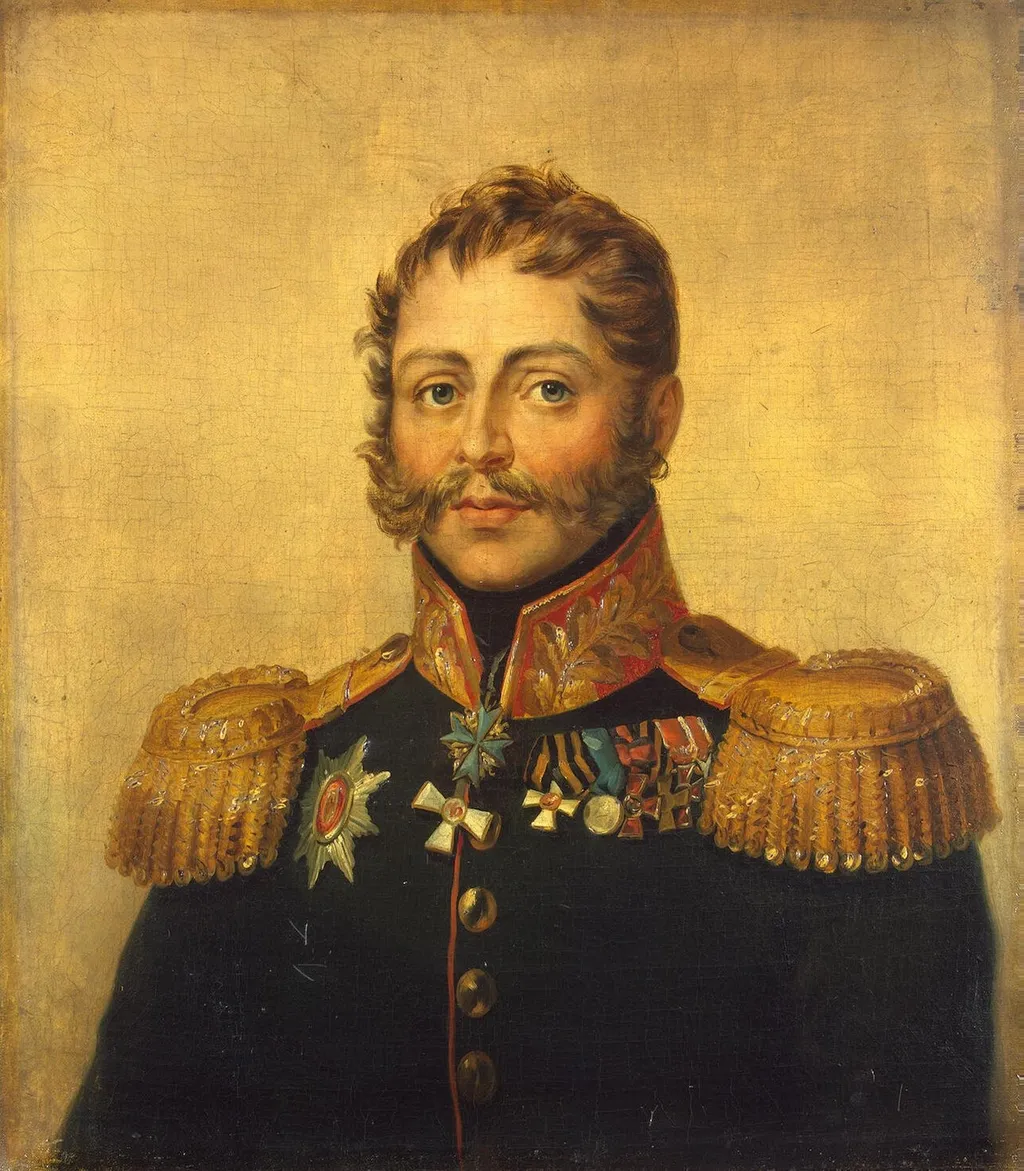
Portrait of Alexander I. Markov (1781-1844) (2nd) is an oil painting by the Russian Icon artist Unknown. It dates from 1823 and is held in the collection of the Hermitage Museum. The work is an oil painting titled Portrait of Alexander I.
About this work
Overview
Markov (1781-1844) (2nd) is an oil on canvas portrait painted in 1823, attributed to the workshop of the British artist George Dawe.
The Portrait of Alexander I. Markov (1781-1844) (2nd) is an oil on canvas portrait painted in 1823, attributed to the workshop of the British artist George Dawe. Measuring 70 by 62.5 centimeters, the bust-length military portrait depicts the Russian general Alexander Ivanovich Markov and is held in the collection of the State Hermitage Museum in St. Petersburg. The painting forms part of the celebrated Military Gallery of the Winter Palace, a monumental series of portraits commemorating the commanders of the Napoleonic Wars. While some sources list the artist as unknown, the attribution to Dawe's workshop reflects the collaborative production methods employed for this large-scale imperial commission, which required the rapid execution of numerous portraits to fill the gallery.
Subject & Meaning
The subject, Alexander Ivanovich Markov (1781-1844), was a Russian military commander who served during the Napoleonic era. The portrait presents him frontally with his head turned slightly to his right, his light brown hair, sideburns, and prominent curled mustache framing light-colored eyes that meet the viewer directly. His dark military coat with high collar, trimmed with red and elaborate gold embroidery, proclaims his rank through large gold epaulettes with dense fringe. The chest displays multiple decorations: a white enamel cross, a dark cross with a light center, a star-shaped badge with a red center, and clustered ribbon bars in blue, black, orange, and red. These insignia functioned as visual testimony to military distinction and imperial service. The plain, warm beige background, entirely unadorned, isolates the figure and focuses attention on the markers of status and honor, a convention typical of the ceremonial portraiture produced for the Military Gallery.
Technique & Style
Executed in oil on canvas, the portrait displays the smooth, highly finished brushwork characteristic of British academic portraiture adapted to Russian imperial requirements. The paint surface exhibits fine craquelure throughout, consistent with its age and medium. Light falls evenly from the left, modeling the face and creating soft shadows on the right side, while the metallic sheen of the gold elements is rendered with particular care. The palette is dominated by warm golds, deep blacks, and touches of red and blue from the decorations, set against the neutral background. The handling is precise in the facial features and insignia, with the three visible brass buttons and thin red piping meticulously described. This polished finish, combining psychological directness with documentary exactitude in the recording of rank and decoration, served the functional requirements of the Military Gallery commission, where portraits needed to be both individually recognizable and uniformly impressive.
History & Provenance
The portrait was created in 1823 as part of the Military Gallery of the Winter Palace, a project initiated by Tsar Alexander I to commemorate the heroes of the Patriotic War of 1812 and the subsequent campaigns against Napoleon. The dating to 1823 is confirmed by internal records, with one source noting a completion no later than 1827. George Dawe, the principal artist for the gallery, received the commission in 1819 and produced over 300 portraits with the assistance of his workshop; this portrait of Markov belongs to that collaborative production. The work entered the collection of the State Hermitage Museum in St. Petersburg, where it remains. An alternative source gives dimensions of 0.625 by 0.7 meters, consistent with the recorded 62.5 by 70 centimeters. No detailed exhibition history beyond its permanent installation in the Military Gallery is recorded in the available sources.
Context
The Military Gallery of the Winter Palace represented one of the most significant portrait commissions of the early nineteenth century, engaging British artistic expertise in the service of Russian imperial commemoration. George Dawe, son of the London mezzotint engraver Philip Dawe, had established his reputation with portraits of Waterloo veterans before receiving the tsar's invitation. The workshop system he employed was necessitated by the scale of the commission, which demanded consistent quality across hundreds of portraits executed within a compressed timeframe. The attribution to Dawe's workshop rather than to the master himself reflects current scholarly understanding of this production context. The portrait of Markov exemplifies how British portrait conventions, particularly the direct gaze and plain background derived from Thomas Lawrence's influence, were adapted to Russian requirements for documentary specificity in military regalia. Critical reception of the series has emphasized its value as historical record while acknowledging the variable quality inherent in workshop production.
Artist & collection









- Portrait of Ivan A. Argamakov (1775-1821) (2nd)
 Portrait of Alexander A. Bashilov (1777-1847/49)
 Portrait of Alexander P. Urusov (1768-1835)
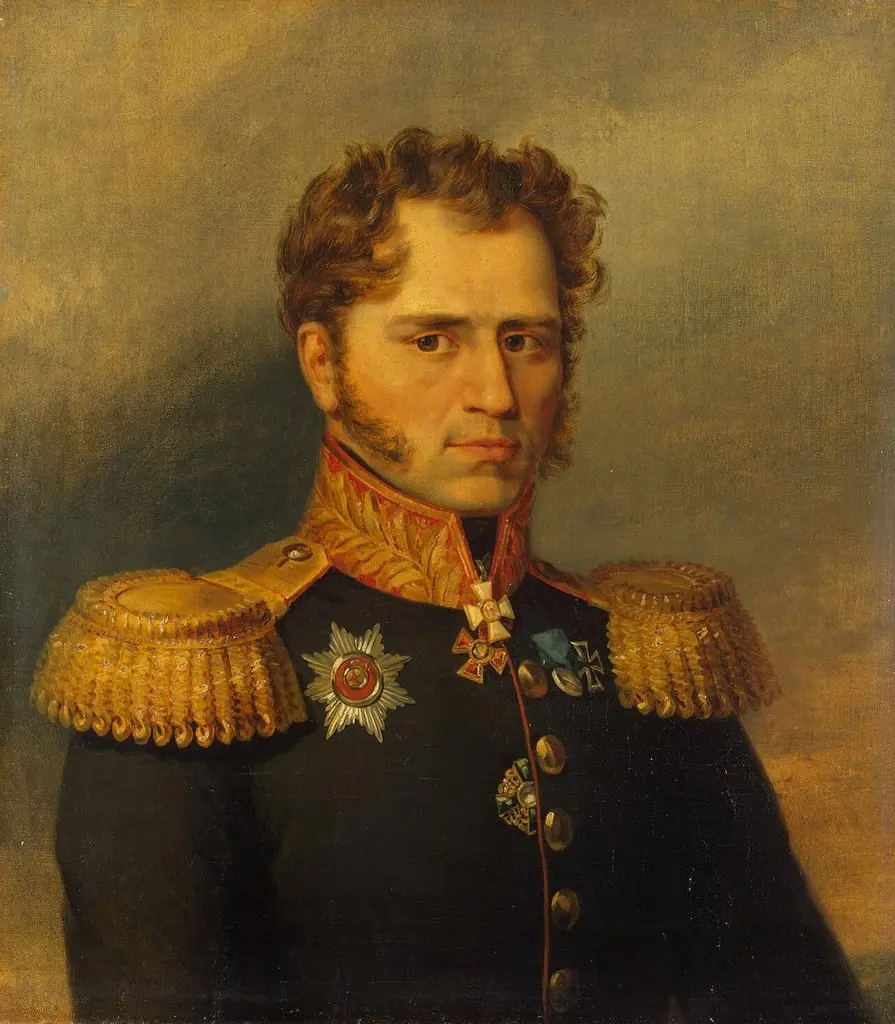 Portrait of Alexander I. Yushkov (1781 - after 1839)
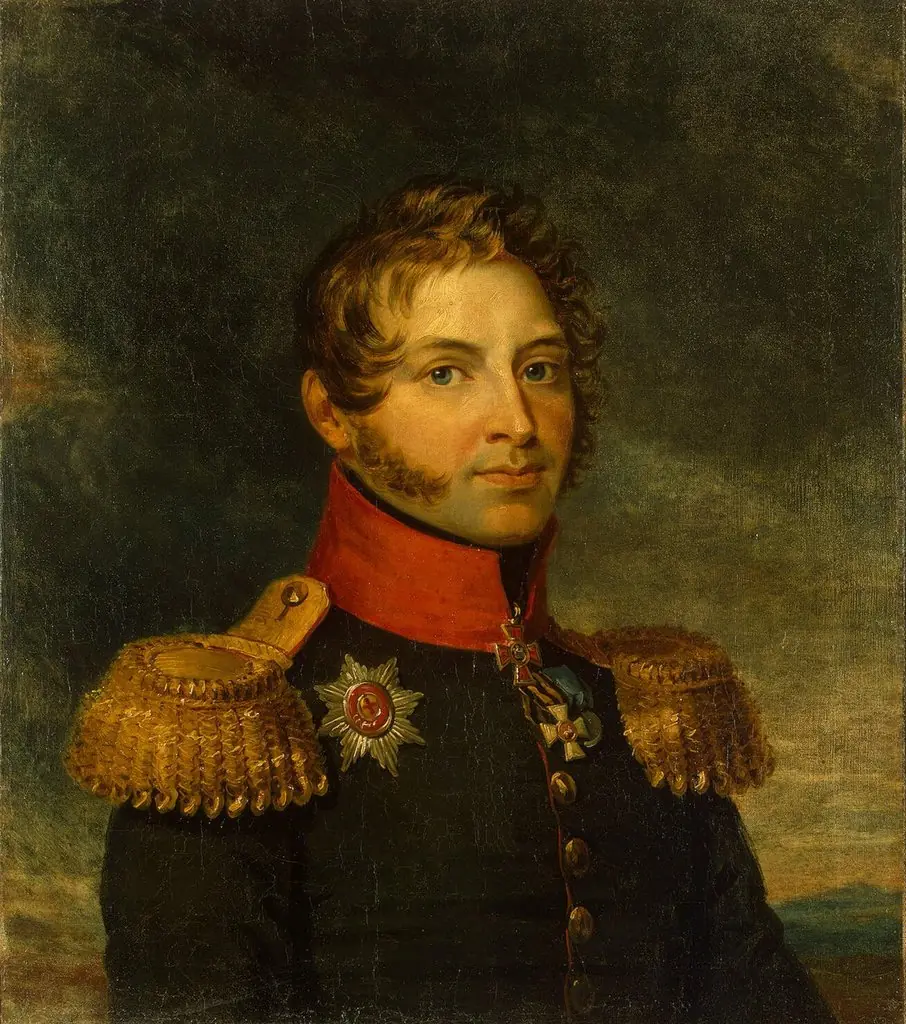 Portrait of Alexander P. Kutuzov (1777-1817)
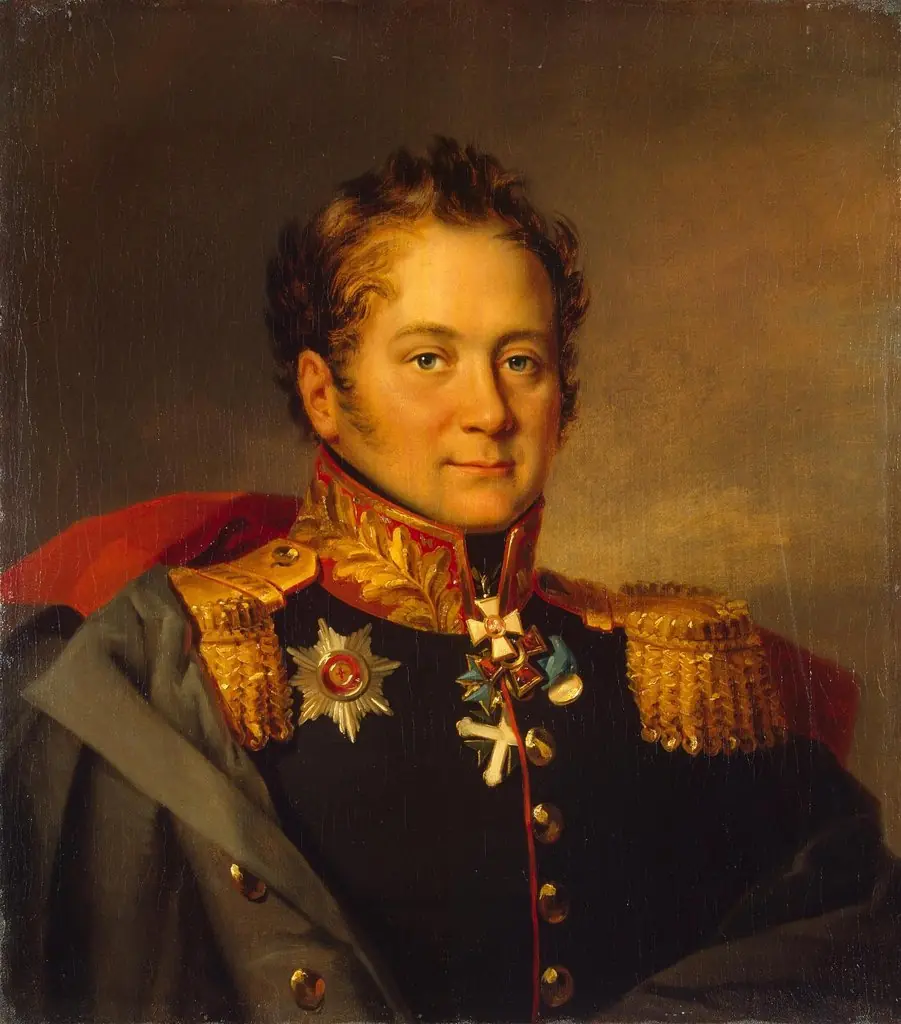 Portrait of Alexander A. Pisarev (1780-1848)
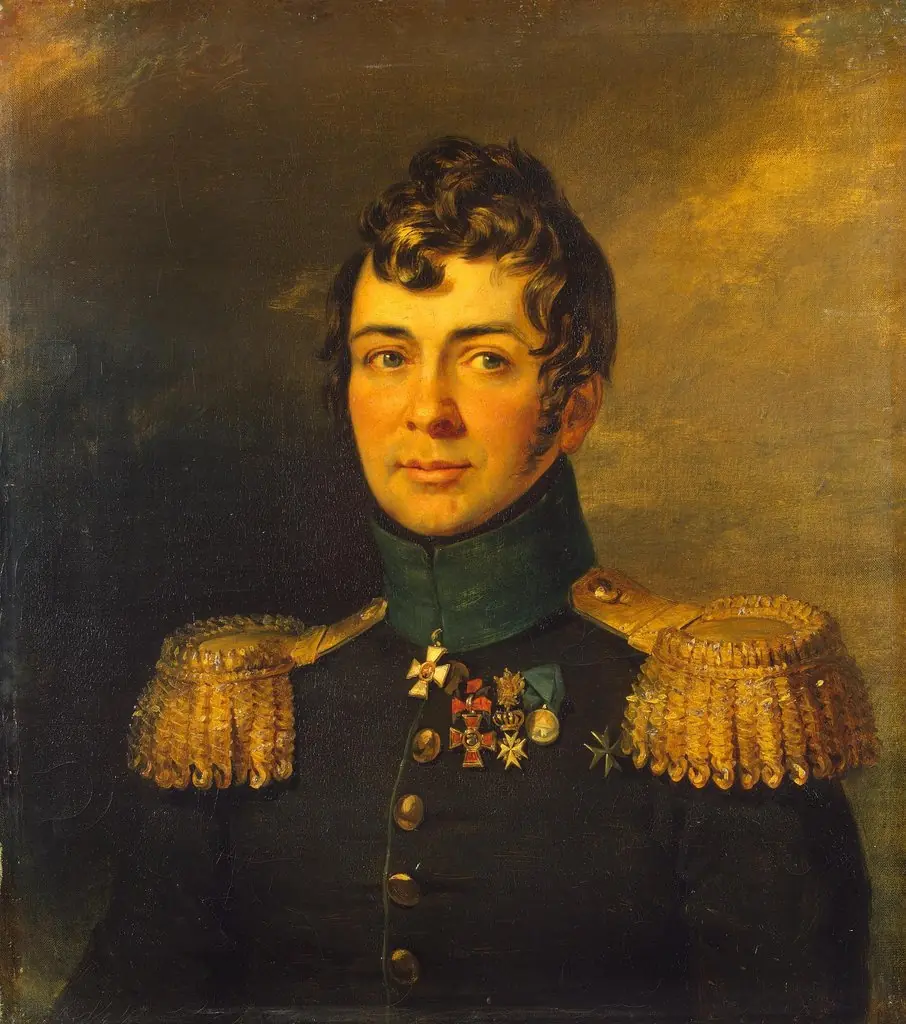 Portrait of Sergey N. Ushakov (1776-1814) (2nd)