Artwork
Portrait of Asaf Khan (1569–1641), from the Late Shah Jahan Album
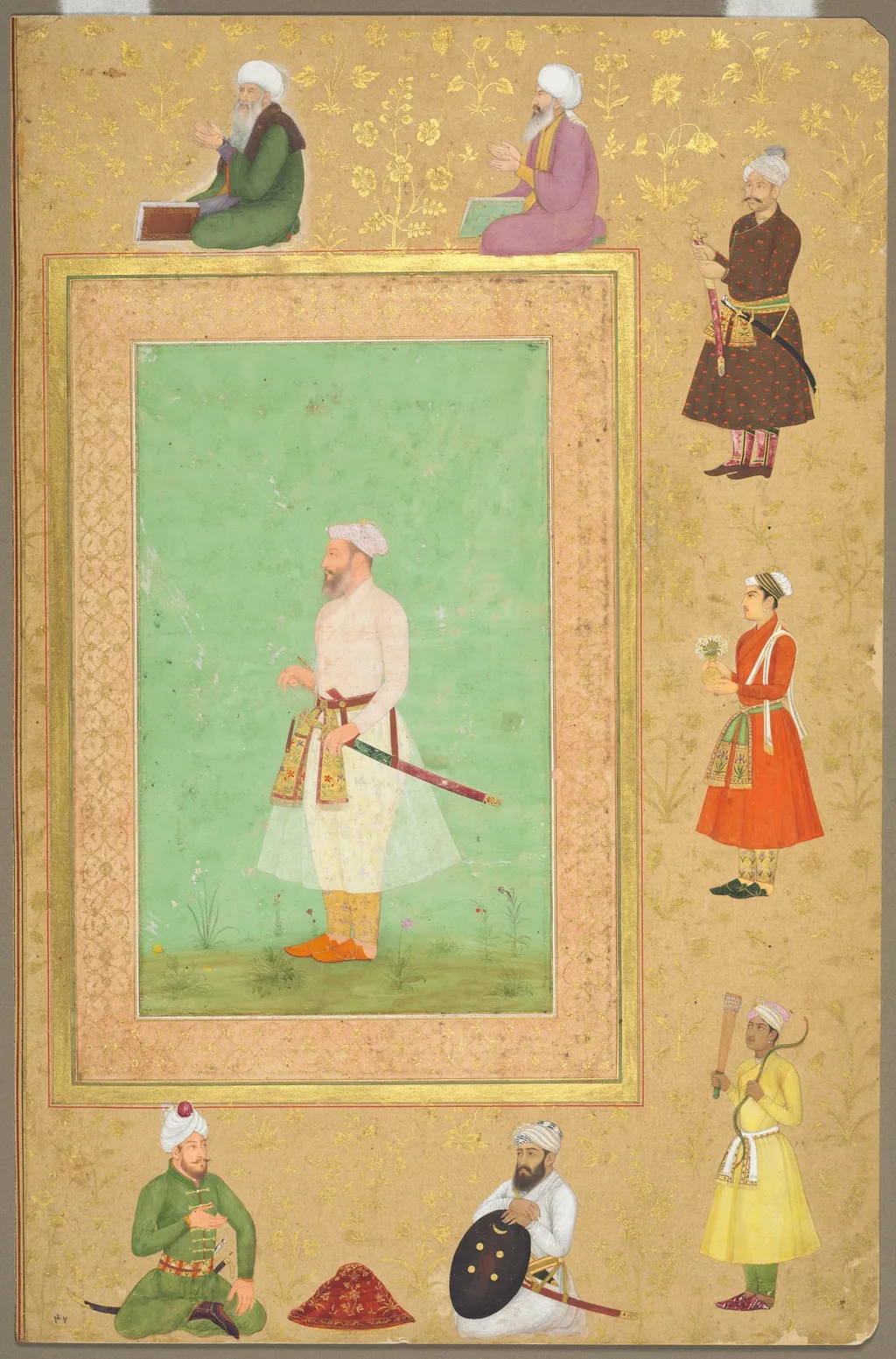
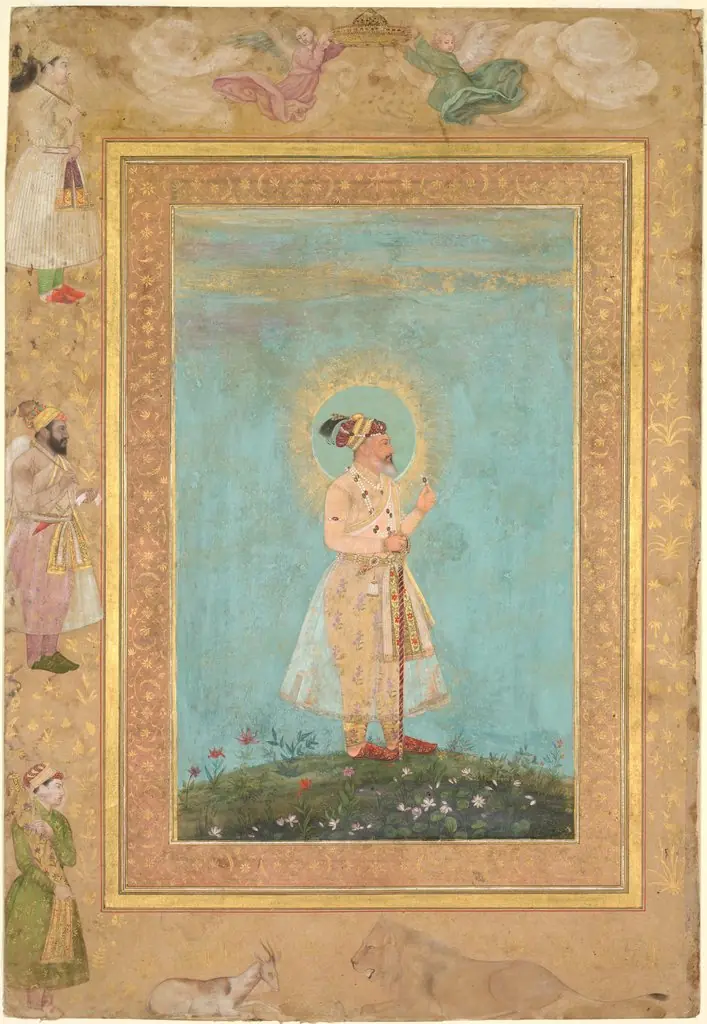
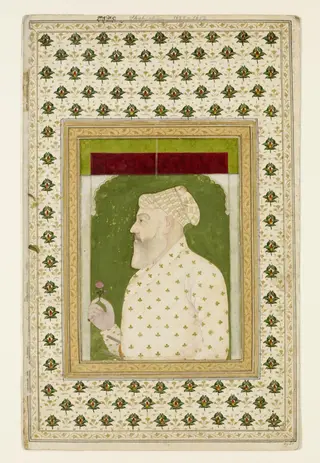
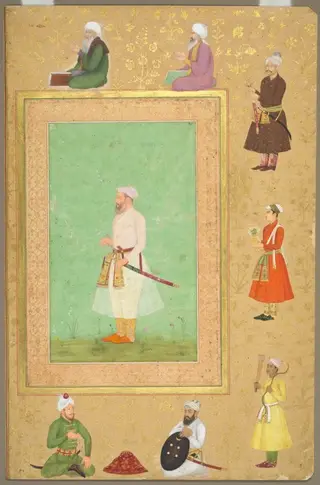
Portrait of Asaf Khan (1569–1641), from the Late Shah Jahan Album is an unspecified painting. It dates from 1653 and is held in the collection of the Cleveland Museum of Art. This painting presents a formal depiction of Asaf Khan (1569–1641), a prominent figure during the Mughal Empire.
About this work
Subject & Meaning
As a formal portrait, it functions to memorialize the sitter's status and identity, presenting him as the main subject of the composition.
The work depicts Abul-Hasan ibn Mirza Ghiyas Beg, historically known as Asaf Khan (1569–1641), a prominent Mughal noble. Created in 1653, this portrait is a posthumous representation, capturing his likeness within the Late Shah Jahan Album. As a formal portrait, it functions to memorialize the sitter's status and identity, presenting him as the main subject of the composition.
The work identifies him by his full patronymic, linking him to his lineage as the son of Mirza Ghiyas Beg. Executed by an unknown artist, the piece serves as a historical record of Asaf Khan's appearance and significance, preserved within the collection of the Cleveland Museum of Art.
History & Provenance
The Portrait of Asaf Khan originates from the Late Shah Jahan Album, dated 1653. It is attributed to an unknown artist and depicts Abul-Hasan ibn Mirza Ghiyas Beg, the Mughal noble commonly known as Asaf Khan. The work is held in the collection of the Cleveland Museum of Art, where it is catalogued under accession number 1945.168 as part of the permanent collection.
No details regarding its original commission, intermediate ownership, or specific chain of custody prior to its acquisition by the museum are documented in the available sources, and no specific exhibition history is recorded.
Legacy
Within Mughal studies, the portrait from the Late Shah Jahan Album (1653) exemplifies court portraiture of the period through its depiction of Abul-Hasan ibn Mirza Ghiyas Beg, a prominent noble. Held in the Cleveland Museum of Art, it contributes to the study of seventeenth-century Indian painting and Mughal portraiture. Its attribution to an unknown master, combined with its high quality, continues to inform discussions of workshop practice and patronage.
Overview
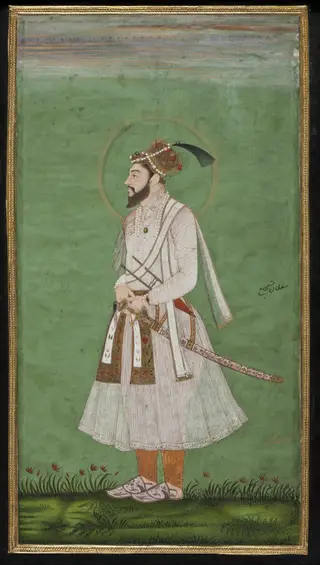
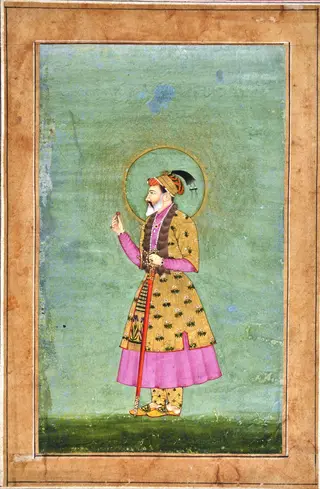
This painting presents a formal depiction of Asaf Khan (1569–1641), a prominent figure during the Mughal Empire. The central subject stands within a verdant landscape, enclosed by an ornate gold border. The artwork is characterized by its meticulous detail and rich color palette, conveying an atmosphere of courtly sophistication. It originates from the Late Shah Jahan Album, reflecting the artistic conventions of that period.
Technique & Style
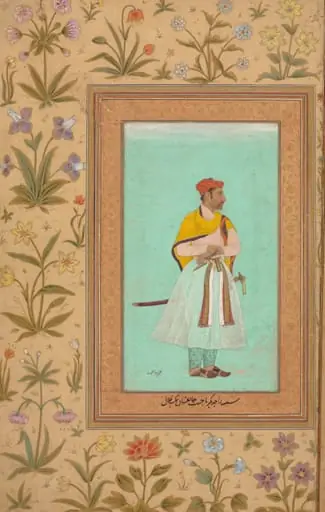
The painting exhibits a refined aesthetic typical of Mughal court art. Its composition centers on the standing figure, framed by a lush grassy setting. Intricate details are evident throughout, from the folds of the garments to the facial features and the delicate objects held by the background figures.
The use of vibrant colors contributes to an overall impression of elegance and precision, highlighting the luxurious nature of the imperial album from which it originates.
Artist & collection