Artwork
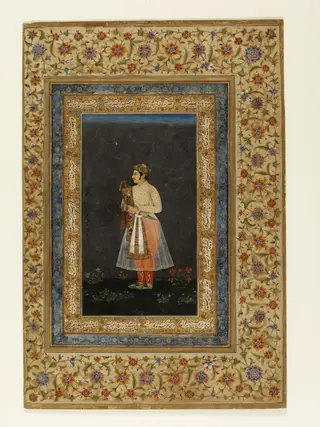
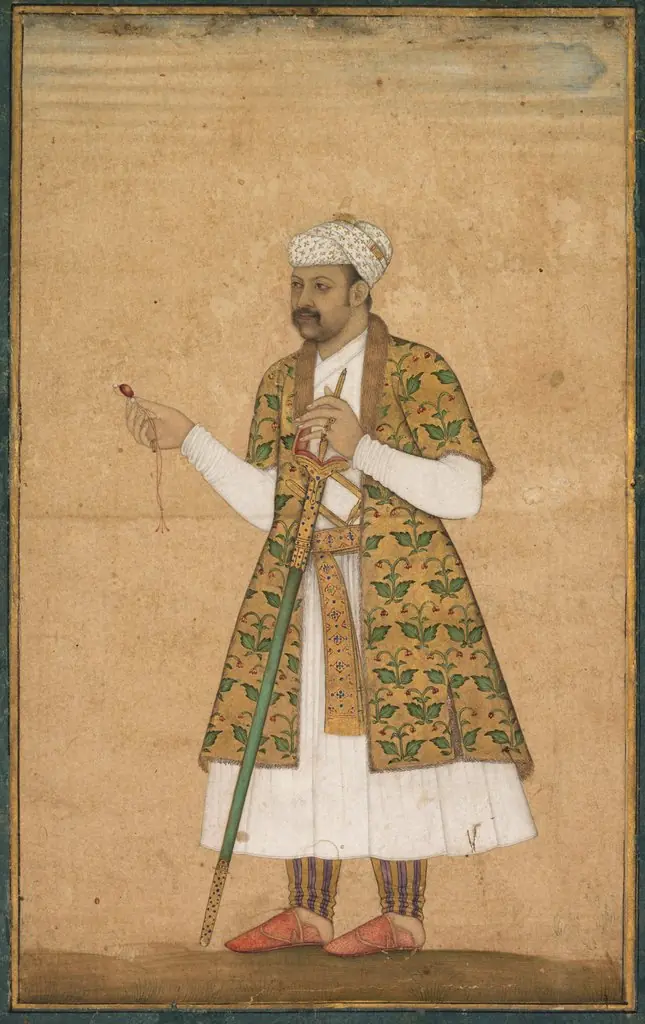
Shah Jahan holding a spinel and a long Deccan sword, from the Late Shah Jahan Album
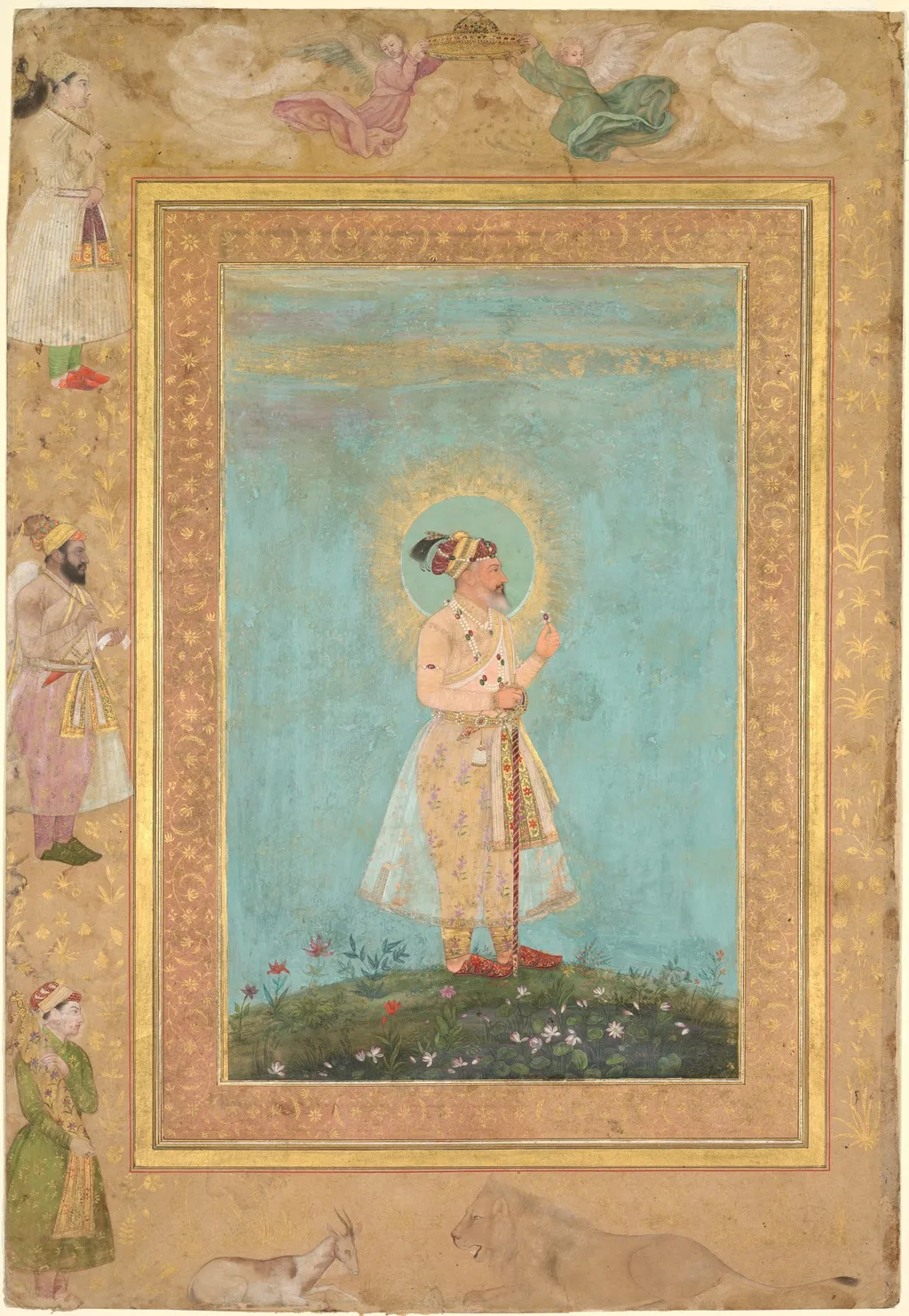
Shah Jahan holding a spinel and a long Deccan sword, from the Late Shah Jahan Album is an unspecified painting by the Mughal Painting artist Hashim. It dates from 1650 and is held in the collection of the Cleveland Museum of Art.
About this work
Subject & Meaning
As a work from the Late Shah Jahan Album, it was created around 1650 by the artist Hashim within the Mughal Empire.
The painting shows the Mughal emperor Shah Jahan holding a large spinel gem and a long Deccan sword. As a work from the Late Shah Jahan Album, it was created around 1650 by the artist Hashim within the Mughal Empire. The juxtaposition of a precious stone and a weapon emphasizes the emperor’s dual attributes of wealth and martial power, suggesting an image of imperial authority that combines luxury with military readiness.
History & Provenance
Created in 1650 within the Mughal Empire, this painting was executed by the artist Hashim, who was active from approximately 1598 until his death around 1650. The work is a component of the Late Shah Jahan Album, a collection reflecting the artistic output of the late reign of Emperor Shah Jahan. The piece is currently held in the collection of the Cleveland Museum of Art, where it is cataloged under the accession number 2013.328.
The artwork depicts the emperor holding a spinel and a long Deccan sword, serving as a historical record of Mughal portraiture from the mid-seventeenth century.
Overview
Created around 1650 by the Mughal painter Hashim, this miniature belongs to the Late Shah Jahan Album and is now in the collection of the Cleveland Museum of Art. It depicts a richly dressed figure standing on a verdant hill, clutching a red spinel and a long, curved Deccan sword, while a donkey rests nearby and other figures appear in the distant background.
Technique & Style
Executed in the fine brushwork of Mughal miniature painting, the work combines delicate line drawing with luminous washes of color. Gold leaf and intricate floral motifs adorn the costume, and the border features swirling arabesques populated by miniature figures, creating a layered visual narrative typical of late‑Shah Jahan court art.
Context
The late Shah Jahan period witnessed a flourishing of courtly arts, with painters like Hashim synthesizing Persian influences and indigenous Indian motifs. This piece reflects the empire’s political stability and its patronage of luxurious visual culture, situating the emperor within an idealized natural setting that reinforces his divine right to rule.
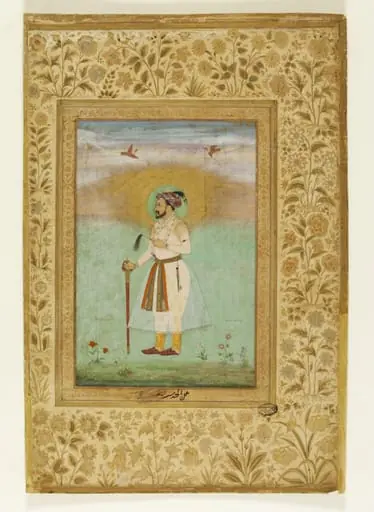
Own this work as a print
Artist & collection

- Untitled
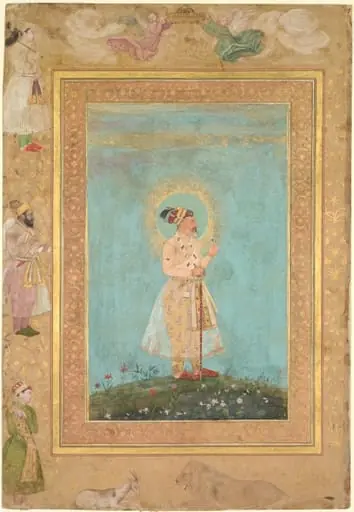 Shah Jahan holding a spinel and a long Deccan sword, from the Late Shah Jahan Album
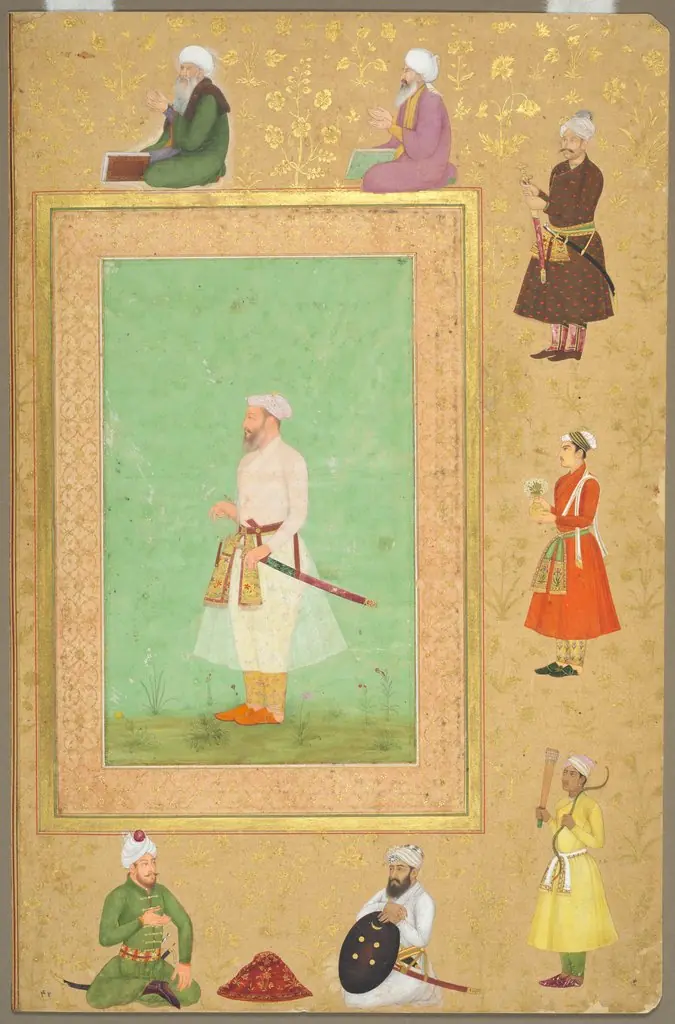 Portrait of Asaf Khan (1569–1641), from the Late Shah Jahan Album
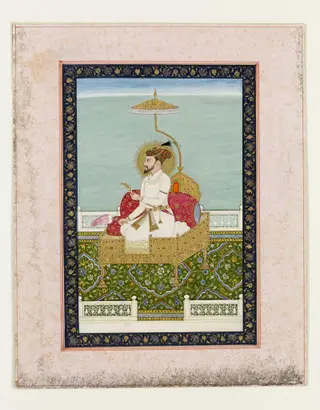 Shah Jahan
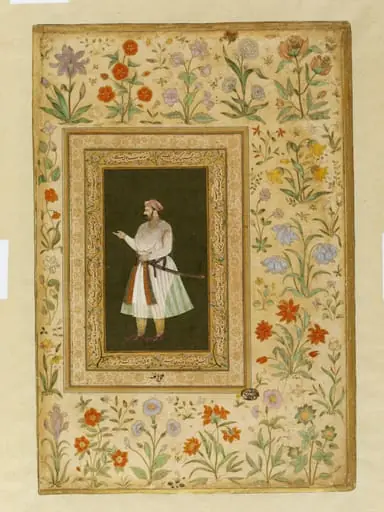 Untitled
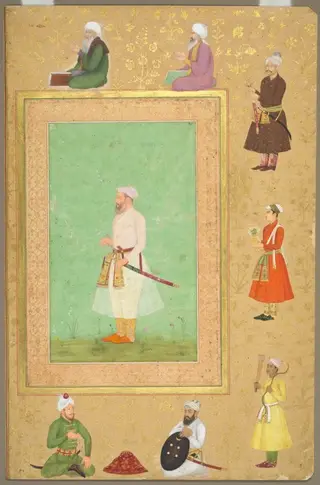 Portrait of Asaf Khan (1569–1641), from the Late Shah Jahan Album
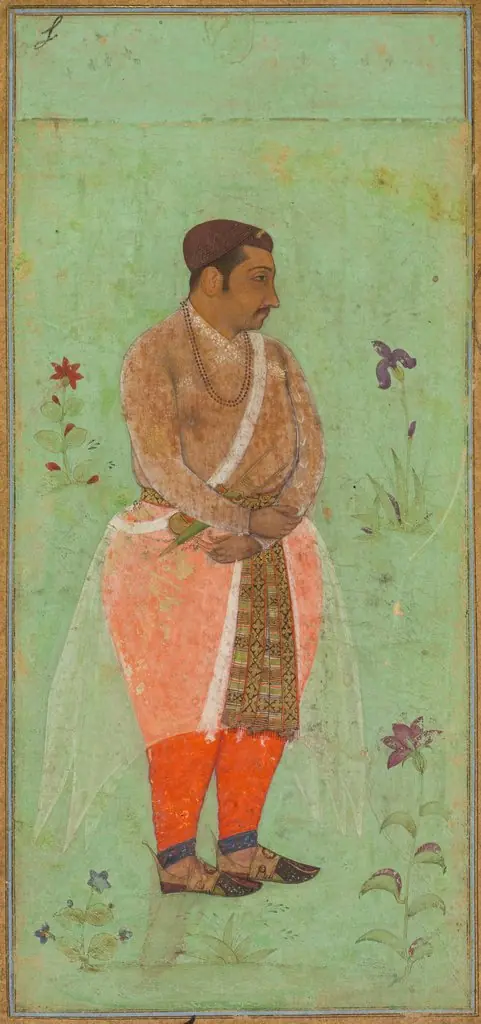 Portrait of Suraj Singh Rathor, Raja of Marwar and Maternal Uncle of Shah Jahan: A Page from the Prince Khurram Album
 A Courtier, Possibly Khan Alam, Holding a Spinel and a Deccan Sword