Artwork
Portrait of Count Alexei Orlov of Chesme
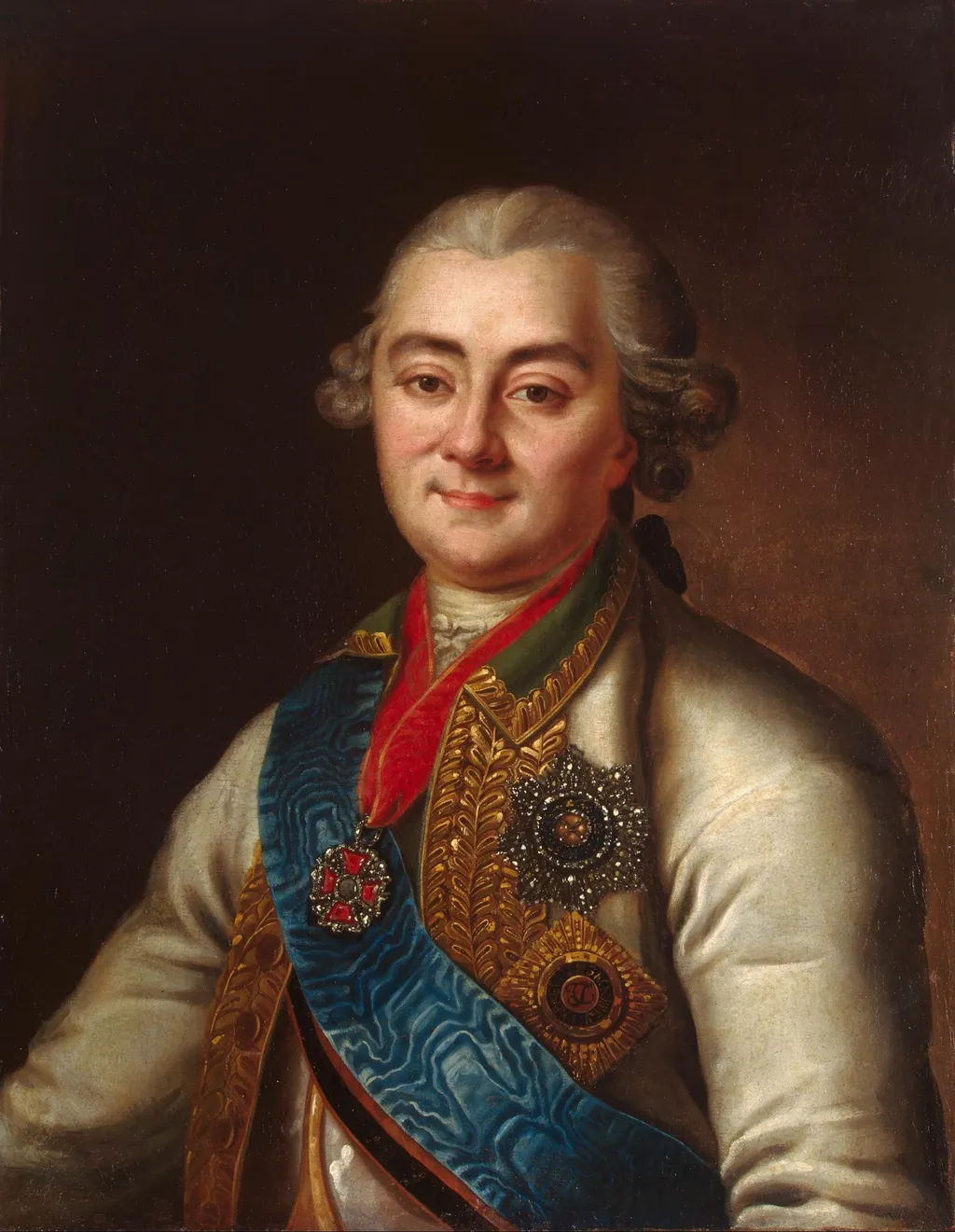
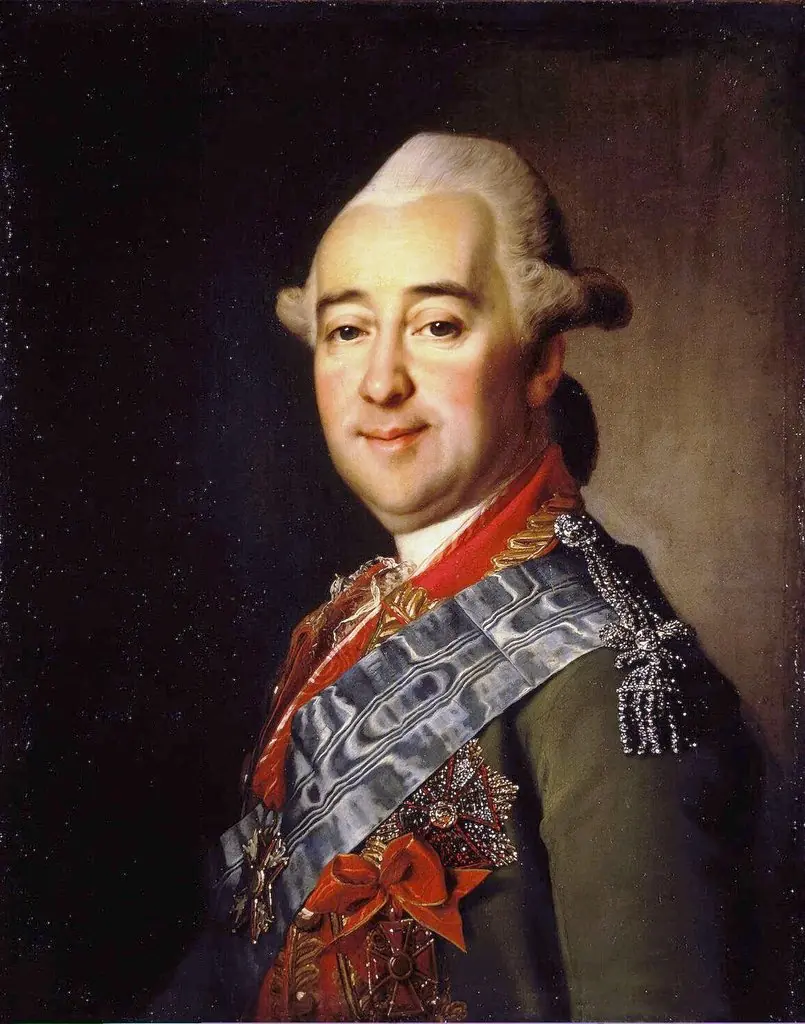
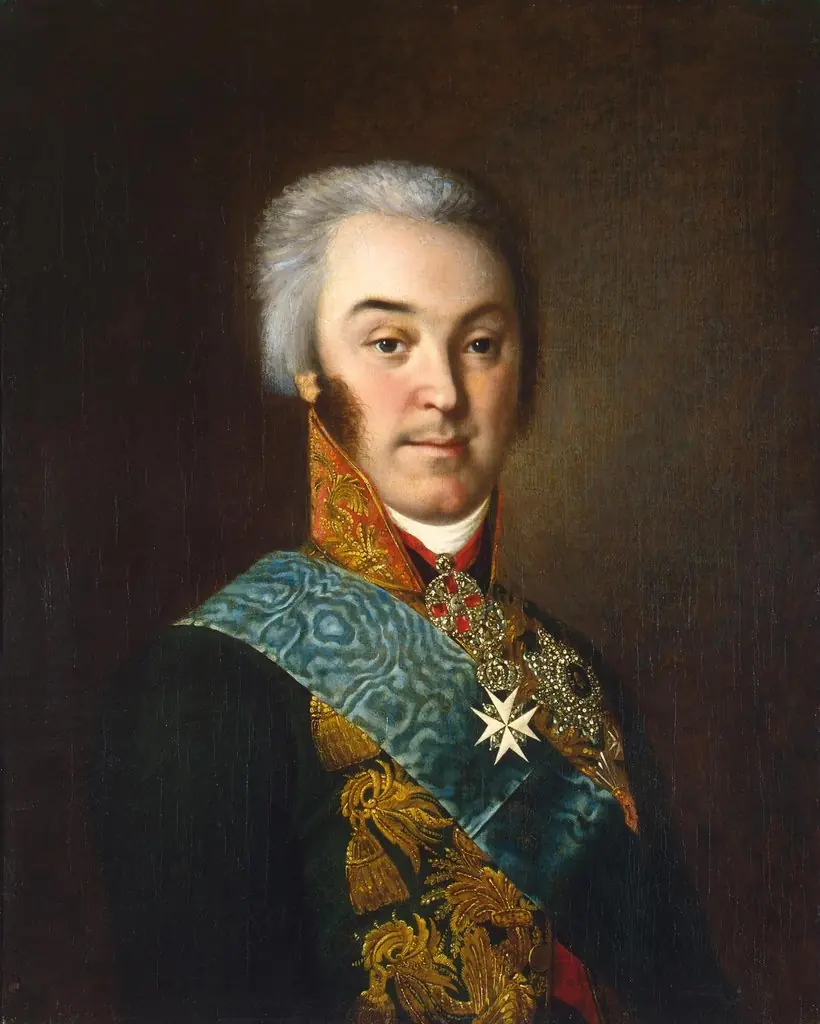
Portrait of Count Alexei Orlov of Chesme is an oil painting by the Rococo painting artist Unknown. It dates from 1792 and is held in the collection of the Hermitage Museum. The canvas presents Count Alexei Orlov of Chesme, rendered in oil paint.
About this work
Overview
The Portrait of Count Alexei Orlov of Chesme is an oil on canvas painting dated 1782, attributed to an unknown artist, and held in the collection of the Hermitage Museum in Saint Petersburg. Measuring 72 by 55 centimeters, this half-length portrait depicts one of the most prominent military and political figures of Catherine the Great's reign, commemorating a nobleman whose career encompassed conspiracy, naval command, and courtly power. The work survives as a significant document of Russian elite portraiture from the late eighteenth century, capturing the grandeur and symbolic apparatus of imperial service during a period of rapid Russian expansion and cultural development.
Subject & Meaning
These insignia proclaim his elevated rank and service to the crown, transforming the portrait into a statement of imperial loyalty and personal prestige.
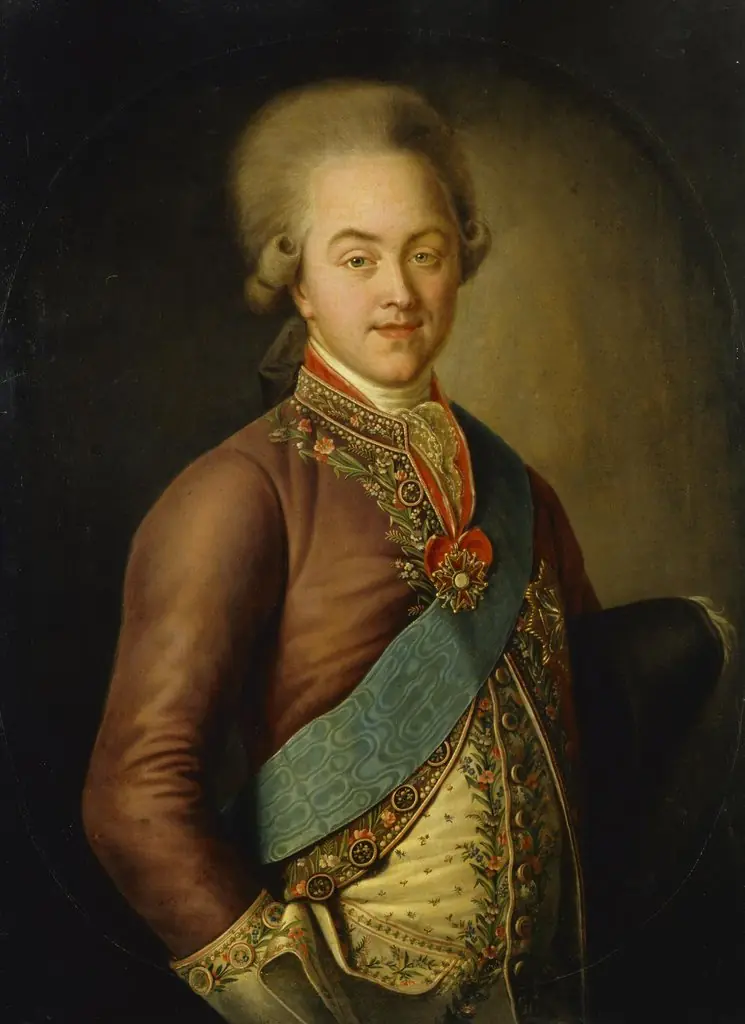
The portrait depicts Count Alexei Grigoryevich Orlov-Chesmensky (1737-1808), a Russian military officer and statesman who rose to prominence through his role in the 1762 coup that placed Catherine the Great on the throne. Orlov's subsequent career included command of the Baltic Fleet and decisive leadership at the Battle of Chesma in 1770, for which he received the honorific Chesmensky. The painting presents him frontally against a dark, undefined background, his powdered wig tied with a black ribbon, wearing a white coat with gold-embroidered edges and a standing collar lined with red fabric. A blue silk sash crosses his chest from right shoulder to left hip, bearing a jeweled apparatus, while two large star-shaped orders, one gold and one silver, glitter on his chest. These insignia proclaim his elevated rank and service to the crown, transforming the portrait into a statement of imperial loyalty and personal prestige. The slight smile and flushed cheeks suggest confidence and vitality, while the absence of any landscape or setting focuses attention entirely upon the figure and his decorations.
Technique & Style
The painting is executed in oil on canvas with fine, blended brushwork that creates smooth flesh tones and carefully rendered fabrics. Light falls evenly across the figure, leaving the background in deep shadow, a compositional strategy that isolates the subject and emphasizes his presence. The handling is particularly detailed in the metallic embroidery and jeweled decorations, where tighter brushwork captures the reflective qualities of gold thread and star-shaped orders. The face is rendered with pale, smooth tones and subtle modeling, while the textiles, including the blue silk sash and the white coat with its gold edges, display attention to the varied textures of elite dress. This approach aligns with conventions of eighteenth-century European court portraiture, where the accurate depiction of rank and status through costume and insignia often took precedence over psychological depth or environmental context.
History & Provenance
The portrait is dated 1782, a period when Orlov remained an established figure at court despite the gradual decline of the Orlov family's influence following his brother Grigory's fall from favor. The painting entered the Hermitage Museum collection, though the precise circumstances of its acquisition are not specified in available sources. It has been exhibited publicly as part of the museum's holdings, including in the exhibition Jewels! The Glitter of the Russian Court. The work remains in the Hermitage Museum, located in Saint Petersburg, Russia, where it forms part of the institution's extensive collection of Russian imperial portraiture.
Context
The portrait belongs to a substantial body of images depicting Alexei Orlov, with at least twenty-five portraits of him identified across museum and archival collections. This proliferation reflects both his historical importance and the demand for representations of Catherine the Great's key collaborators. The painting's attribution to an unknown artist is typical of much Russian portraiture from this period, where workshop practices and the circulation of models often complicate questions of authorship. The work's emphasis on military and courtly decoration rather than personal characterization corresponds to the functional requirements of elite portraiture in Catherine's Russia, where images served to reinforce hierarchies of service and reward. Scholarly attention to such portraits has focused on their value as historical documents and as evidence of the visual culture surrounding the Russian court, rather than on attributional or aesthetic questions.
Legacy
The Portrait of Count Alexei Orlov of Chesme endures as a representative example of late eighteenth-century Russian aristocratic portraiture, preserved and displayed within one of the world's major museum collections. Its continued presence in the Hermitage ensures access for scholars and visitors interested in the visual culture of Catherine the Great's reign and the individuals who shaped Russian political and military history. The painting contributes to the broader cultural memory of Orlov, a figure whose biography, encompassing conspiracy, naval victory, and livestock breeding, has made him a subject of sustained historical interest. As part of the Hermitage's holdings, the portrait participates in ongoing efforts to document and present the material culture of the Russian imperial court to international audiences.
Artist & collection