Artwork
Portrait of Henry Stuart, Duke of Gloucester
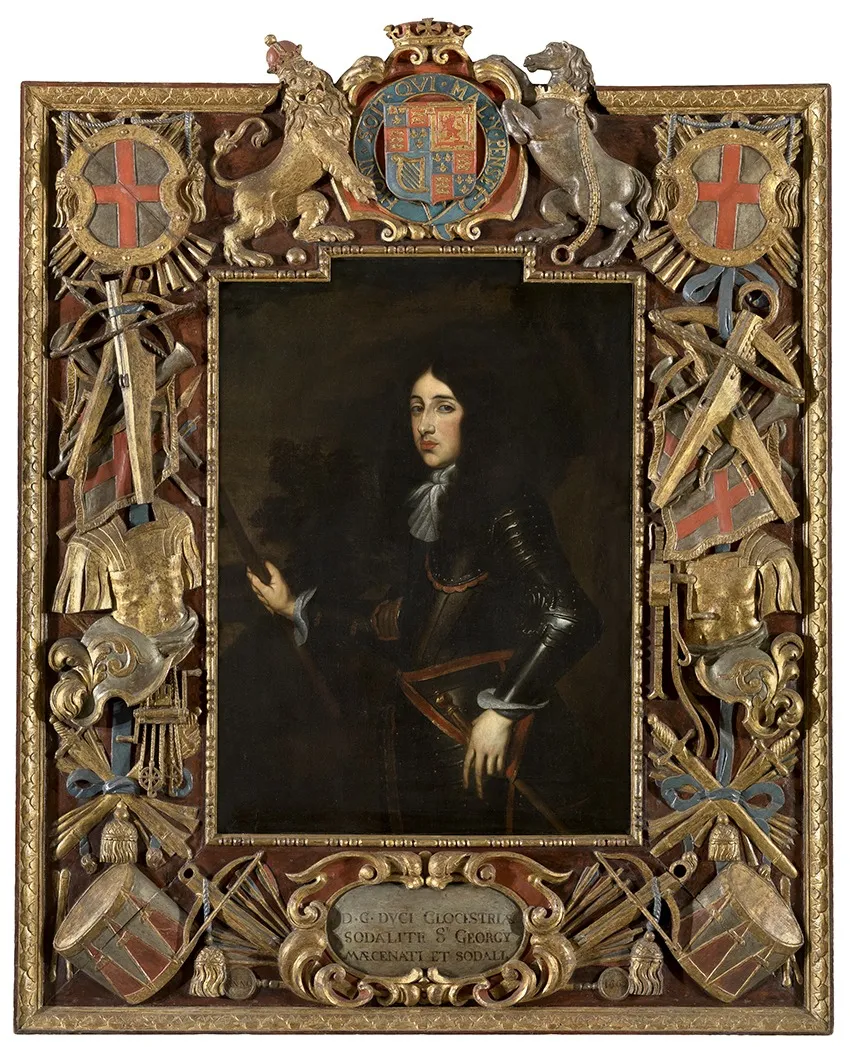
Portrait of Henry Stuart, Duke of Gloucester is an oil painting by Unknown. It dates from 1662 and is held in the collection of the Groeningemuseum. The oil portrait depicts Henry Stuart, Duke of Gloucester, seated in a dark costume with a lace collar, his right hand resting on a table.
About this work
Overview
The Portrait of Henry Stuart, Duke of Gloucester is an oil painting on canvas dated 1662, attributed to an unknown artist after Jan Boeckhorst.
The Portrait of Henry Stuart, Duke of Gloucester is an oil painting on canvas dated 1662, attributed to an unknown artist after Jan Boeckhorst. Measuring 107 by 84.5 centimeters, the work depicts the young English prince in full armor and is now held in the Groeningemuseum in Bruges, Belgium. The painting belongs to a significant cluster of posthumous and derivative portraits of Henry Stuart that emerged during and after the Interregnum, when images of the exiled Stuart family carried urgent political weight. While the specific painting in the Groeningemuseum is less well known than related versions, it participates in a broader visual program of dynastic legitimacy that circulated among European courts.
Subject & Meaning
The portrait depicts Henry Stuart, Duke of Gloucester (1640-1660), the third son of Charles I and Queen Henrietta Maria. The central painted panel shows a standing male figure in dark polished armor with a white lace collar, his right hand extended to grasp a baton or staff, his left hand resting at his side, facing slightly left against a dark muted background with faint suggestion of landscape. The iconography of armor, baton, and martial bearing transforms the thirteen-year-old prince into an image of adult authority and military preparedness. The elaborate carved and gilded frame that dominates the composition reinforces this message of sovereignty: at top center sits a crowned coat of arms flanked by a golden lion at left and a silver unicorn at right, circular medallions bearing red ancles in the upper corners, and trophies of armor, weapons, and military equipment including helmets, swords, guns, and banners with red crosses along the vertical sides. A cartouche with inscribed text occupies the bottom center, while shield-shaped emblems with diagonal stripes fill the lower corners. The frame's heraldic program explicitly links Henry to royal authority and the military defense of the Stuart claim, even as the actual sitter was a political pawn in exile.
Technique & Style
The painting is executed in oil on canvas, with dimensions of 107 by 84.5 centimeters. The painted surface shows smooth brushwork typical of formal portraiture, with light falling evenly across the figure and subtle modeling on the armor and face. The palette consists primarily of gold, deep brown, black, and touches of red and blue. The contrast between the relatively restrained painted panel and the extraordinarily ornate gilt and polychrome carved frame is striking: the frame's three-dimensional sculptural elements overwhelm the two-dimensional image, suggesting that the object functioned as much as a piece of decorative court art as a straightforward likeness. The Wikidata entry identifies the work as 'painting after Jan Boeckhorst,' indicating it derives from a composition by the Münster-born painter who worked in Rubens's Antwerp studio before moving to the Hague. Boeckhorst's known portraits of European aristocracy typically featured vigorous brushwork and rich coloration; the smoother, more derivative handling here is consistent with a copy or studio version after his design.
History & Provenance
The Groeningemuseum's specific version of this portrait type has a sparse documented provenance compared to the better-known related paintings. The museum's collection location in Bruges places it within the Flemish cultural sphere where Boeckhorst worked and where Stuart imagery retained cultural significance. The date of 1662 inscribed for this version places it two years after Henry's death from smallpox in September 1660, confirming its status as a posthumous image produced during the early Restoration period, when Charles II's court actively promoted visual commemorations of the royal family. The painting's accession history at the Groeningemuseum is not detailed in the available sources, though the institution's dual designation with the Gruuthusemuseum suggests it forms part of a larger municipal collection with historical and decorative arts holdings.
Context
The portrait exists within a dense field of Stuart imagery produced during the Interregnum and Restoration. Henry, Duke of Gloucester, was associated with twenty-one portraits in the National Portrait Gallery's records, indicating the demand for his image despite his early death. The most significant related work is Adriaen Hanneman's c. 1653 portrait of Henry, now in the National Gallery of Art, Washington, which shows the prince at approximately twelve or thirteen years old in a three-quarter-length pose with breastplate, brocaded doublet, and baton. That painting, commissioned around Henry's investiture as Knight of the Garter at The Hague in May 1653, deliberately echoed Anthony van Dyck's 1641 portrait of the future Charles II to stress dynastic continuity. The Groeningemuseum version, dated 1662 and attributed to an unknown artist after Jan Boeckhorst, participates in this same iconographic tradition but at further remove. The Boeckhorst attribution connects it to the circle of Flemish Baroque court painters who specialized in aristocratic portraiture, while the 'unknown artist' designation suggests scholarly uncertainty about the exact hand. Critical reception of these Stuart portraits has focused on their political function: as the NGA's entry notes, the Stuart court in exile 'desperately' sought to maintain its integrity through visual means, and portraits of Henry served as surrogates for royal presence in European courts where the family sought support.
Legacy
The afterlife of Henry's portraiture outlived the prince himself by centuries. George Vertue's 1736 line engraving after an unknown artist, now in the National Portrait Gallery's reference collection, demonstrates continued demand for Henry's image well into the eighteenth century. The National Portrait Gallery also holds another version after Johann Boeckhorst, dated circa 1659, given by Harold Lee-Dillon in 1922. The most dramatic provenance belongs to Hanneman's prime version, which passed from Count Heinrich von Brühl in Dresden to Catherine the Great's Imperial Hermitage Gallery in Saint Petersburg, before its controversial sale in November 1930 through Matthiesen Gallery, Berlin, P. and D. Colnaghi and Co., London, and M. Knoedler and Co., New York, to Andrew W. Mellon, who gifted it to the National Gallery of Art in 1937. The intensity of attribution disputes around that painting, including payments to scholars to uphold a Van Dyck attribution, reveals how powerfully these Stuart portraits continued to signify artistic prestige and political legitimacy. The Groeningemuseum's more modest version, while lacking this dramatic provenance, similarly testifies to the enduring European fascination with the tragic young prince and the exiled Stuart cause.
Artist & collection









 Portrait of Duke Giovanni Gastone de' Medici (1671-1737)
 King Charles I (II?) of England
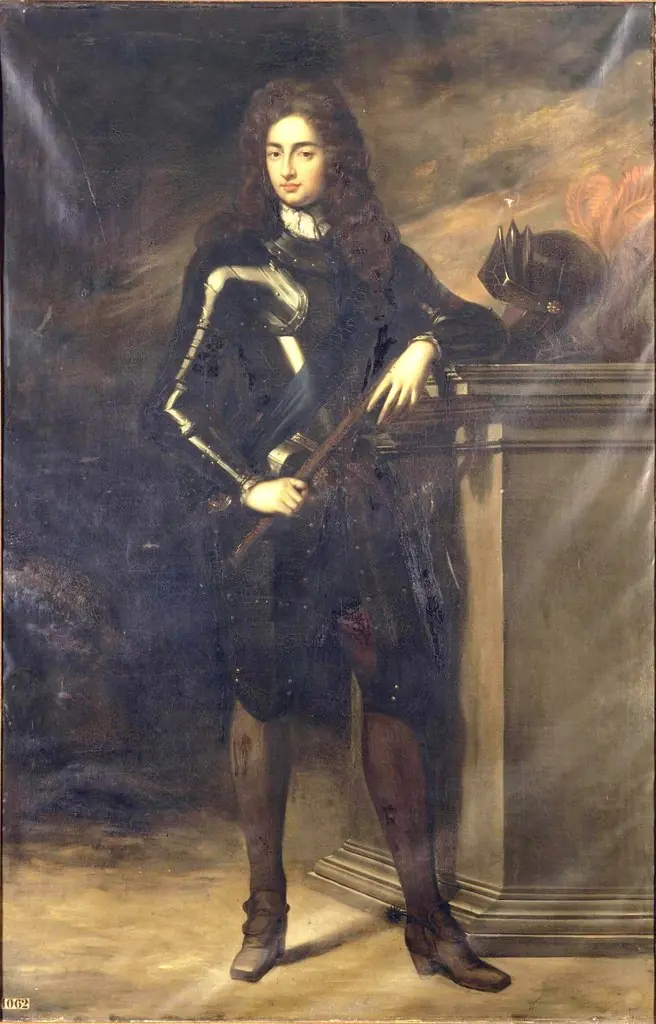 Portrait of James FitzJames, 1st Duke of Berwick
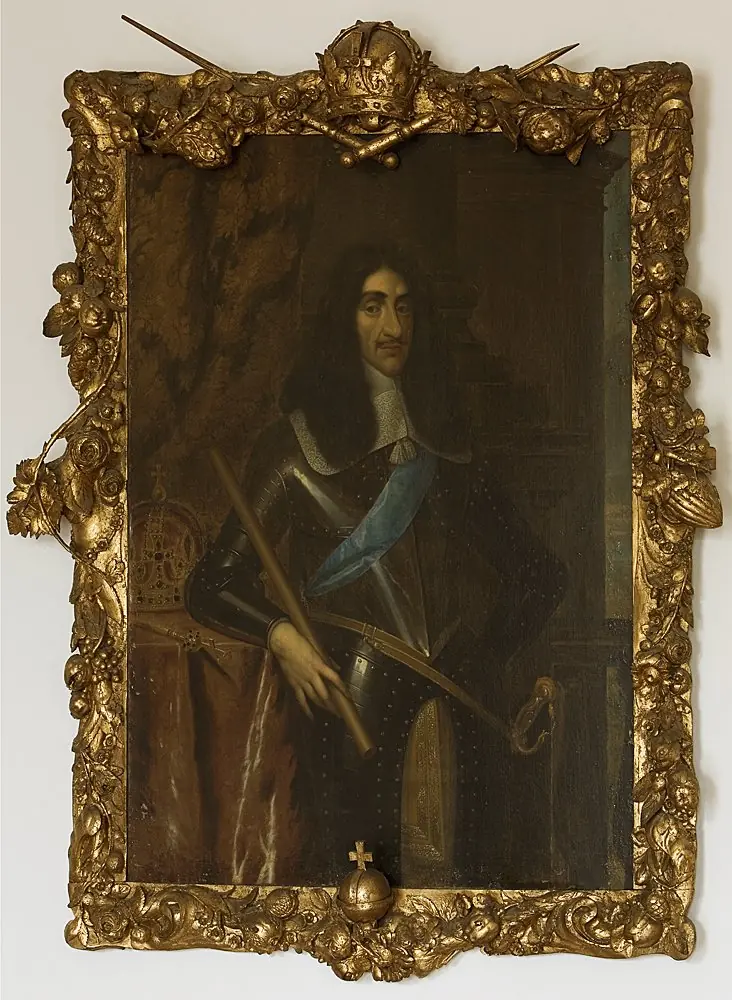 King Charles I (II?) of England
 Portrait of Harmen Lijnslager, Secretary of the Admiralty of Amsterdam
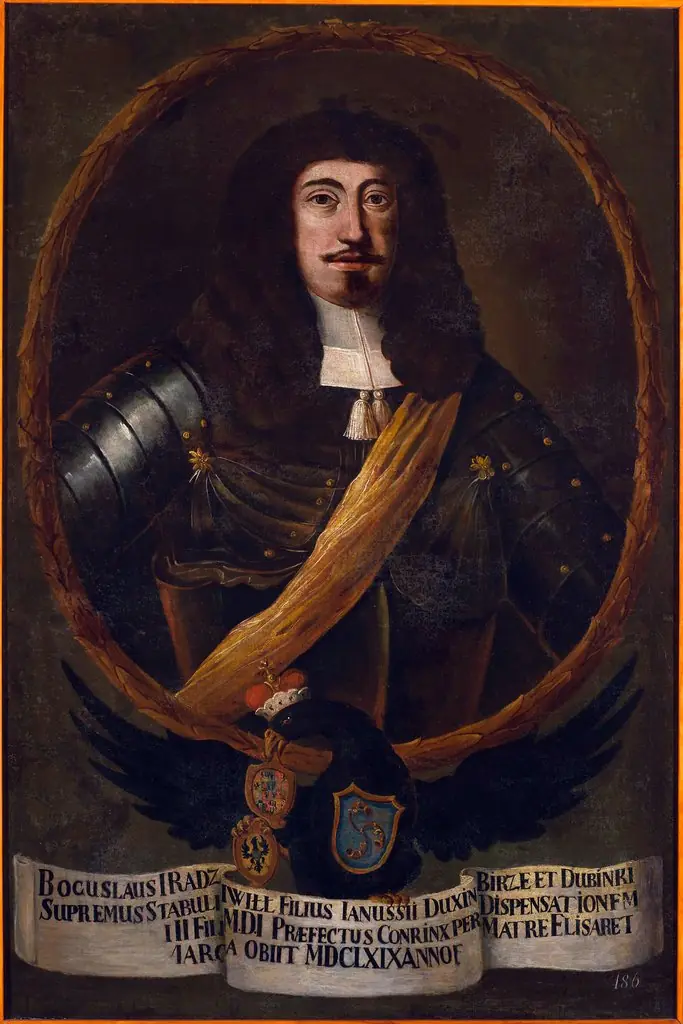 Portrait of Bogusław Radziwiłł (1620–1669)
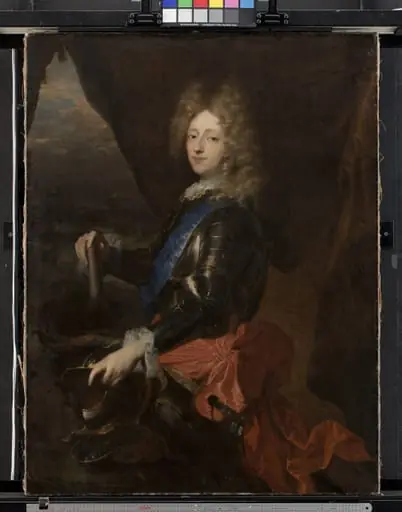 Portrait of King Frederik IV as Prince
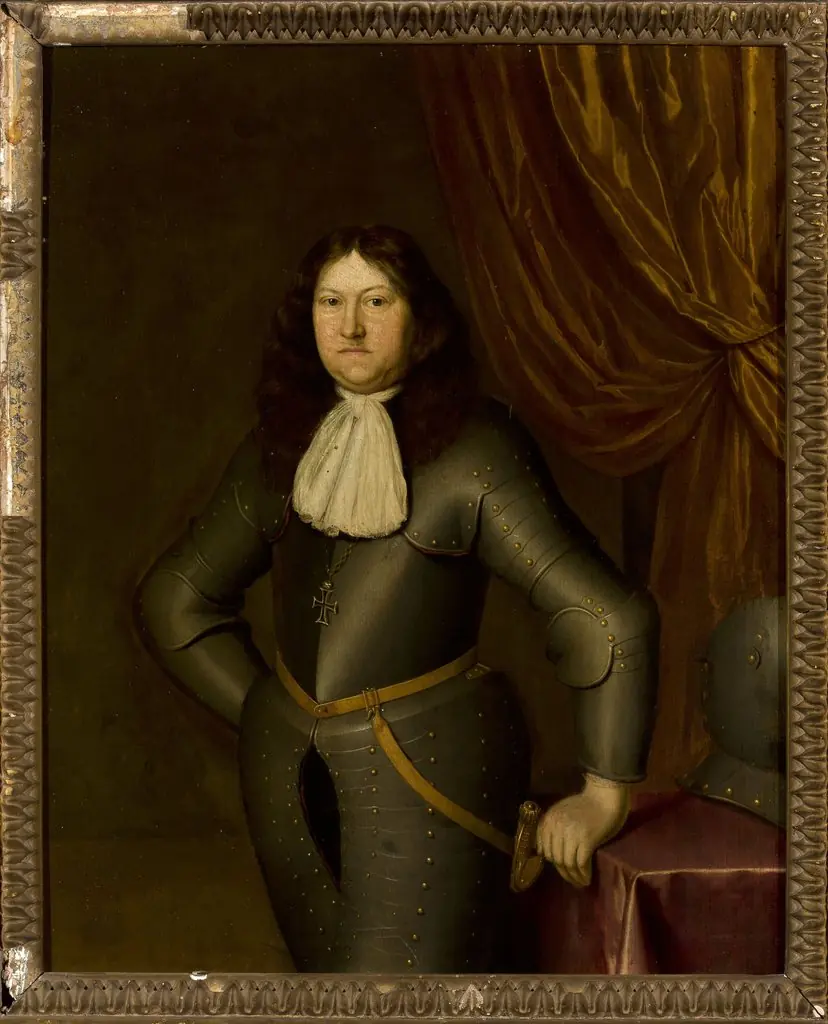 Knight in armour with a German order
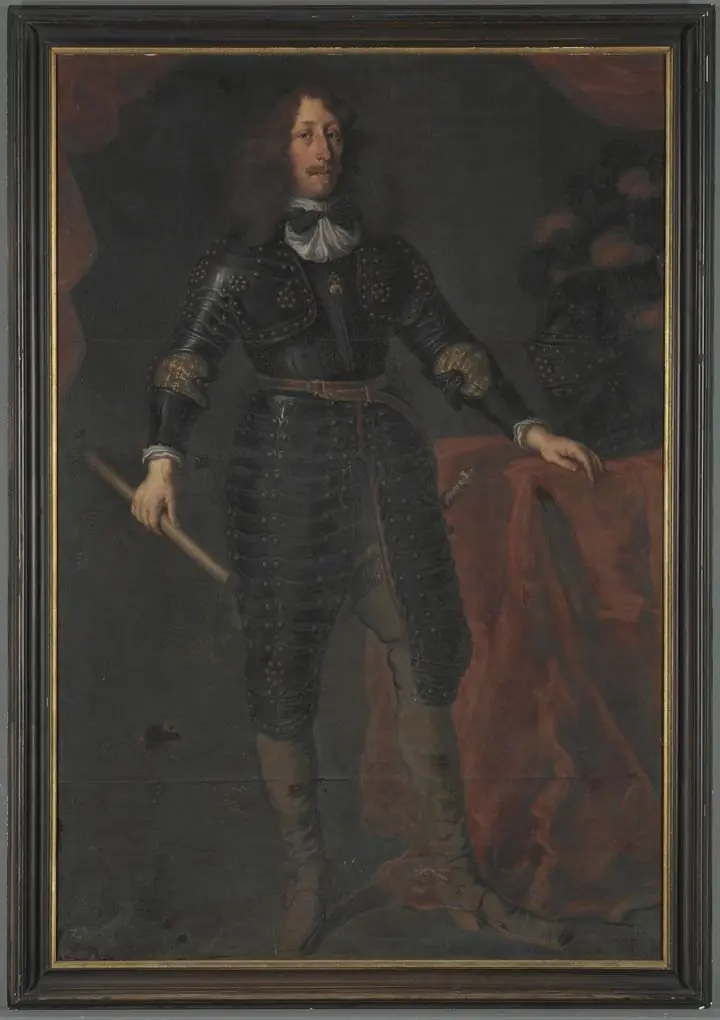 Portrait of duke Philipp Wilhelm, Elector Palatine (1615-1690)
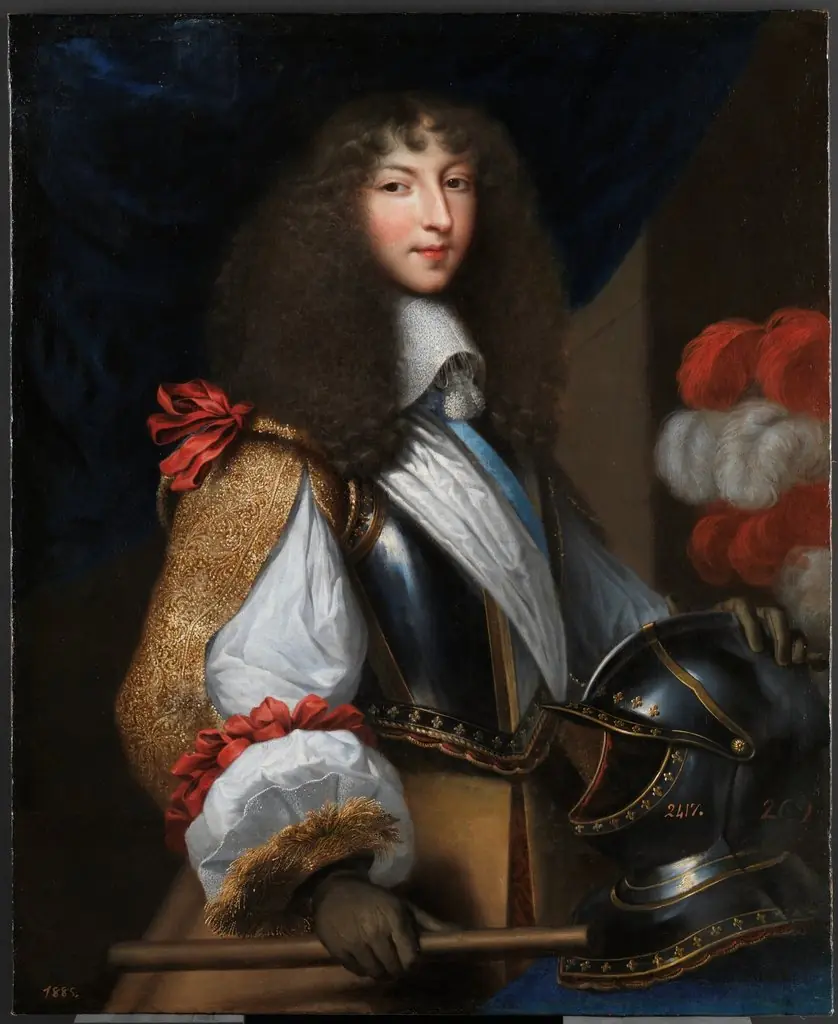 Louis XIV as a young man