Artwork
Portrait of Ivan Gonta (d. 1768), one of the insurrection leaders in Ukraine
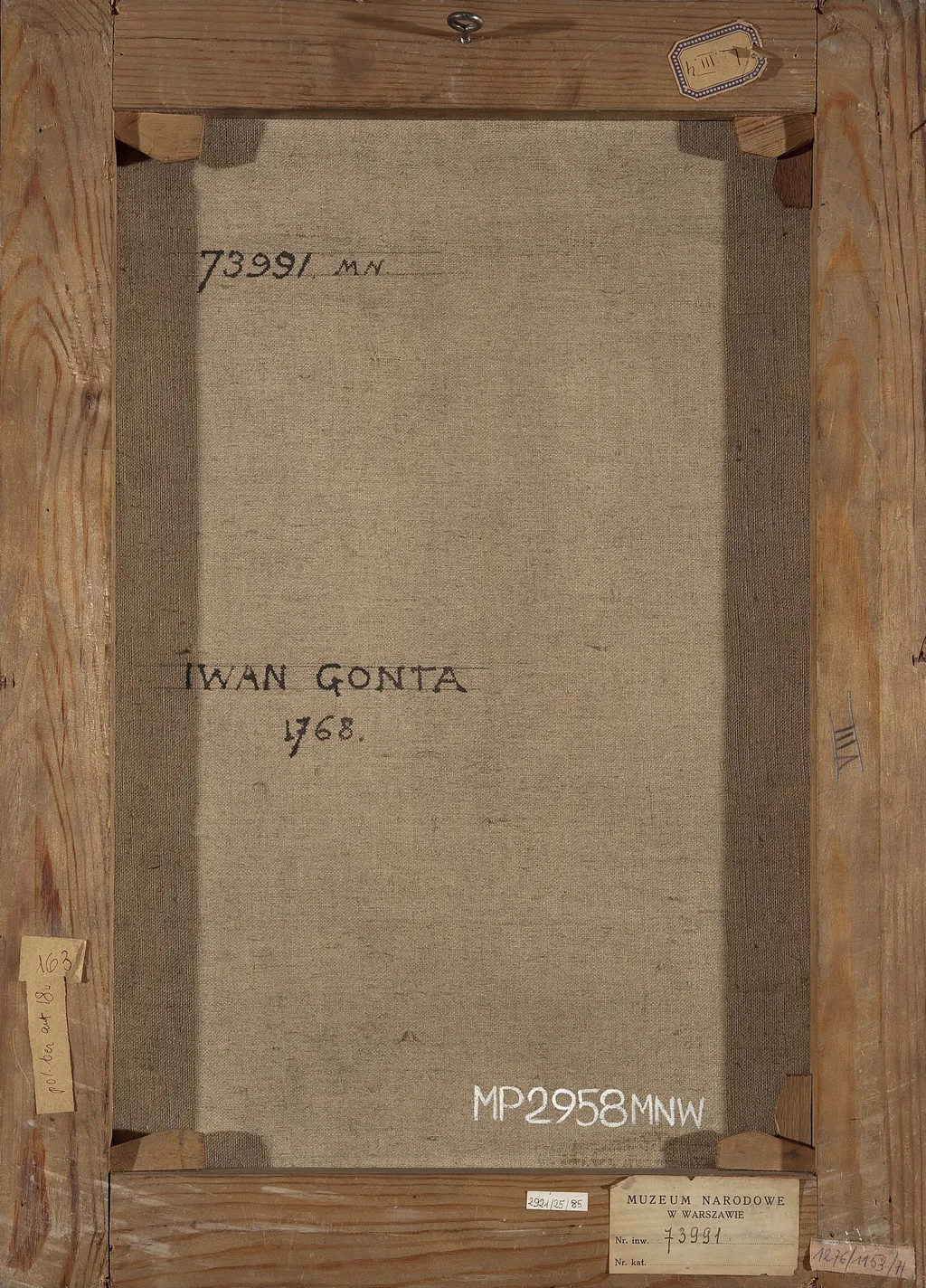
Portrait of Ivan Gonta (d. 1768), one of the insurrection leaders in Ukraine is an oil painting by the Rococo painting artist Unknown. It dates from 1768 and is held in the collection of the National Museum in Warsaw.
About this work
Next, look up chiaroscuro, a technique that uses strong light and shadow to create depth.
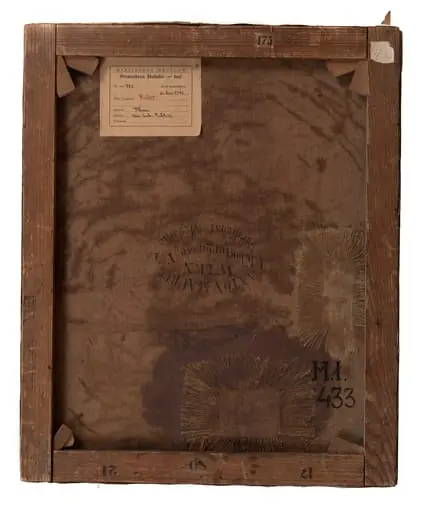
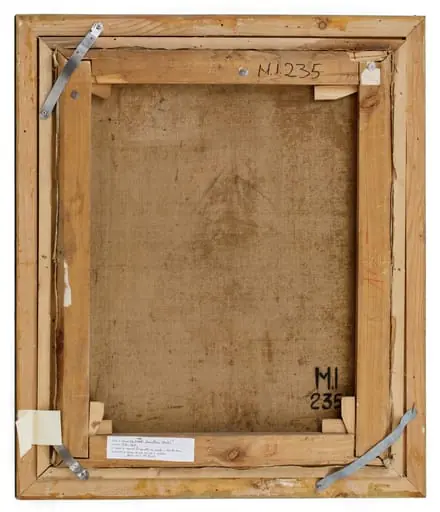
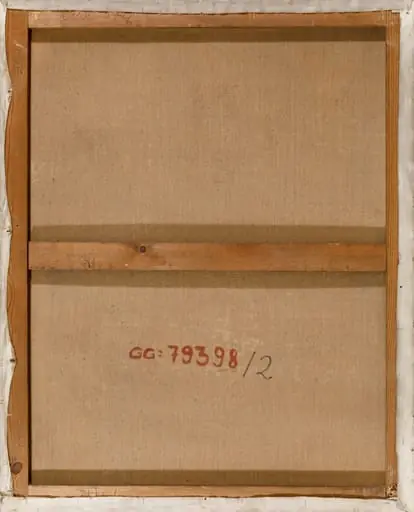
This is an empty wooden frame with a faded canvas inside. The frame is worn, with visible screws and a small label on the right side. The canvas itself is plain, showing no clear image, just a light, even tone.
The artist’s name, Ivan Gonta, and the year 1768 are written on the canvas in faded ink. This suggests the painting once showed a portrait of a historical figure.
Next, look up chiaroscuro, a technique that uses strong light and shadow to create depth.
Overview
This work consists of an empty wooden frame housing a faded canvas, once bearing a portrait of Ivan Gonta, a leader in the 1768 Ukrainian insurrection. The surface now displays only a uniform, pale tone, with faint ink inscriptions identifying the subject and date. The frame shows signs of age, worn edges, exposed screws, and a small label, suggesting prolonged handling and storage without conservation.
Subject & Meaning
Ivan Gonta was a Cossack commander who played a role in the Koliivshchyna uprising against Polish nobility and Orthodox clergy. The portrait’s survival as a nearly blank canvas implies its symbolic weight outweighed its visual preservation. The faded text serves as the sole link to Gonta’s historical presence, transforming the work into a relic of memory rather than representation.
Technique & Style
Though the image is lost, the original painting likely employed chiaroscuro, a technique common in 18th-century portraiture to model form through contrast. The use of such lighting would have emphasized Gonta’s features and authority, aligning with conventions of military portraiture of the period. The current state obscures these effects, leaving only traces of their former function.
History & Provenance
The painting’s provenance is undocumented beyond its association with Gonta’s legacy. Its survival in a degraded state suggests it was not preserved by institutions but possibly kept in private or regional hands. The presence of a label and inked text indicates attempts at identification, yet no record confirms its creation, ownership, or relocation after the uprising’s suppression.
Context
Created during or shortly after the 1768 uprising, the portrait would have served as both commemoration and political statement. In a time when visual culture was tightly controlled, images of rebel leaders were often destroyed. The survival of this frame, even in ruin, hints at underground preservation efforts among communities sympathetic to the insurrection.
Legacy
The canvas now functions as an absence made visible, a void that speaks to the erasure of rebel figures from official histories. Its deterioration mirrors the fragility of collective memory. Rather than conveying Gonta’s likeness, it testifies to the persistence of his name and the cost of his resistance, becoming a silent monument to forgotten resistance.
Artist & collection