Artwork
Portrait of Lucy Russell, Countess of Bedford, née Harrington
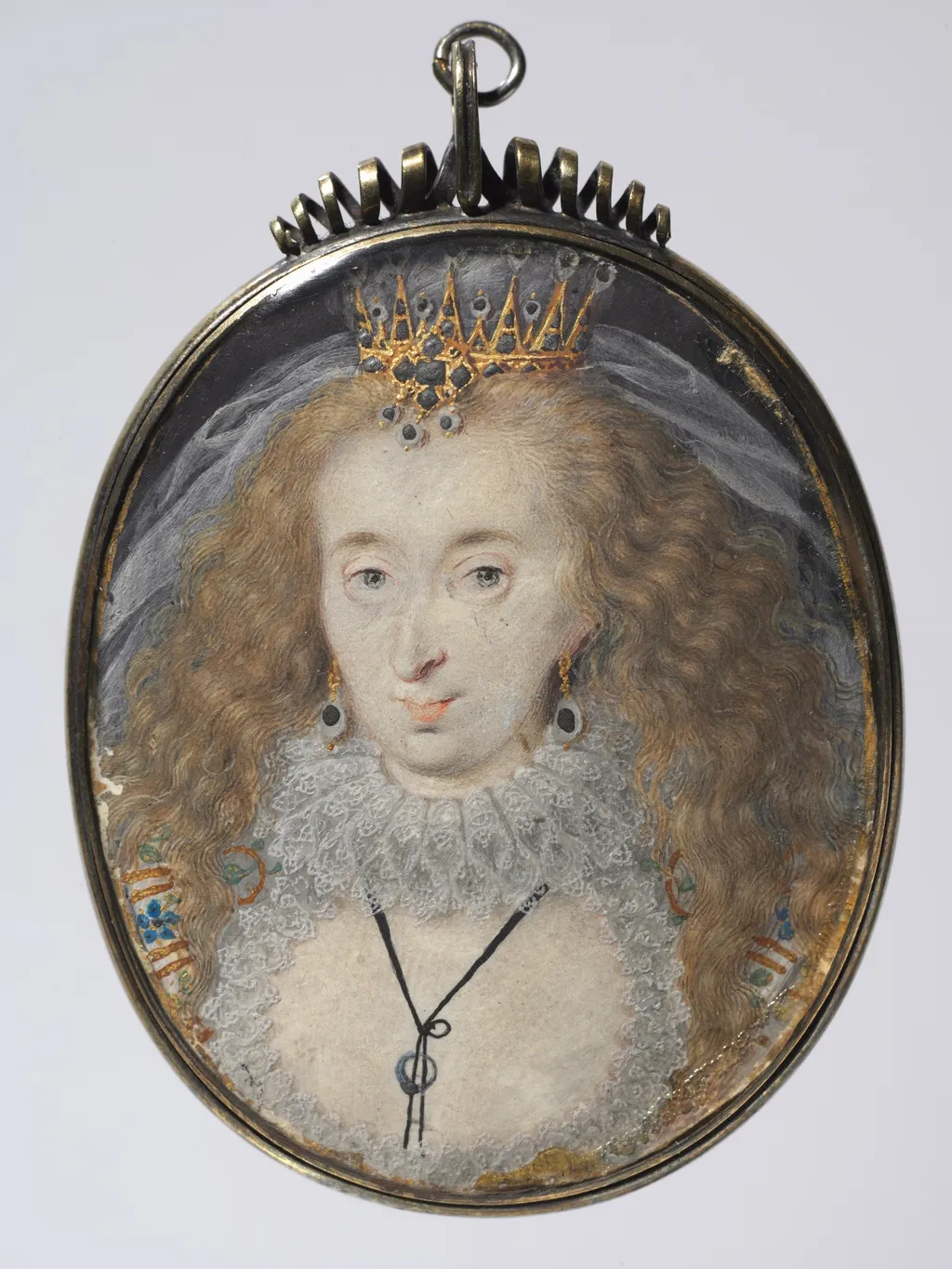
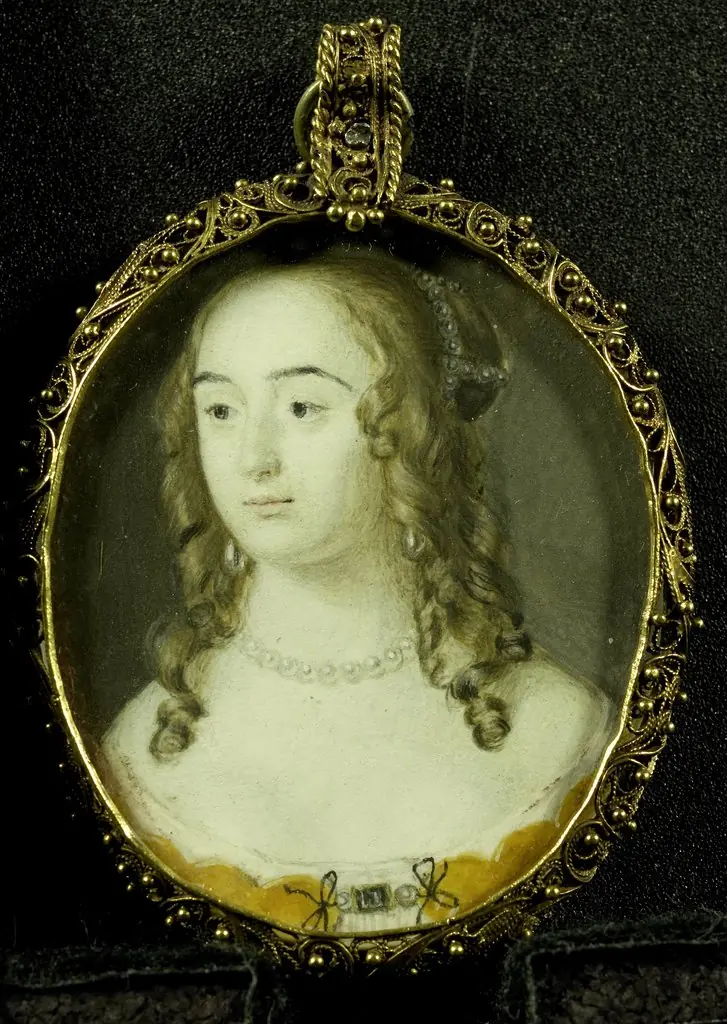
Portrait of Lucy Russell, Countess of Bedford, née Harrington is an unspecified painting. It dates from 1603 and is held in the collection of the Cleveland Museum of Art. This small, oval painting depicts Lucy Russell, Countess of Bedford, née Harrington.
About this work
Technique & Style
As a miniature, the piece belongs to a specific genre of small-scale portraiture distinct from large-scale oil paintings.
The work is a portrait miniature created in 1603 by the artist Isaac Oliver. As a miniature, the piece belongs to a specific genre of small-scale portraiture distinct from large-scale oil paintings. The Cleveland Museum of Art holds this object, which dates to the early seventeenth century.
The description identifies the work primarily by its classification as a miniature rather than detailing specific pigments, binding media, or the support material such as vellum or card.
History & Provenance
The portrait of Lucy Russell, Countess of Bedford, was produced in 1603. It is classified as a portrait miniature and is attributed to the English miniaturist Isaac Oliver (born in France), who was active in the late sixteenth and early seventeenth centuries.
The work entered the collection of the Cleveland Museum of Art. No earlier ownership records are documented in the available sources; while the internal catalogue lists the artist as unknown, the attribution to Oliver and the creation date of 1603 derive from the cited record.
Overview
This small, oval painting depicts Lucy Russell, Countess of Bedford, née Harrington. The portrait emphasizes her face, framed by curly blonde hair and adorned with a pearl necklace and a prominent white ruff collar. A golden crown rests upon her head, set against a dark, unadorned background, which draws the viewer's gaze directly to the sitter.
Subject & Meaning
The golden crown worn by the Countess of Bedford signifies her elevated status within the English aristocracy, suggesting a position of considerable influence and prestige. The intimate scale of the painting, encased within a metal ring resembling a locket, implies it was intended for private contemplation or as a personal keepsake, reflecting a common practice for portraits of high-ranking individuals during the period.
Artist & collection

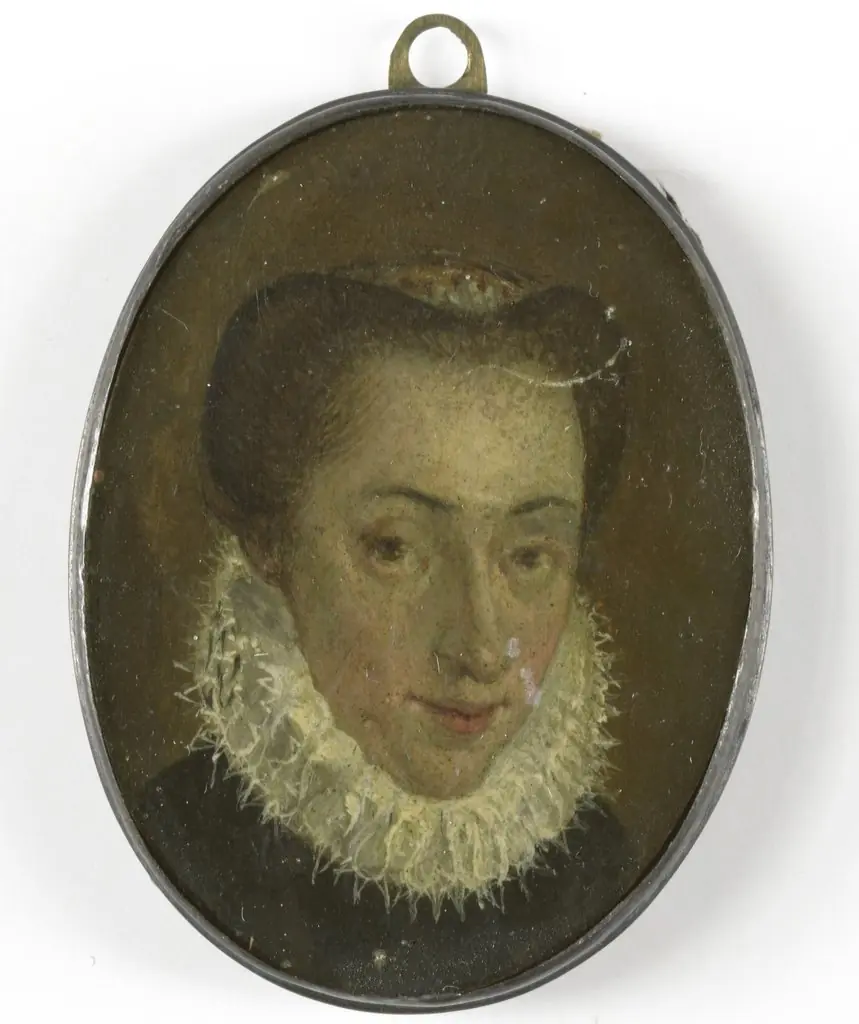 Portrait of a Lady
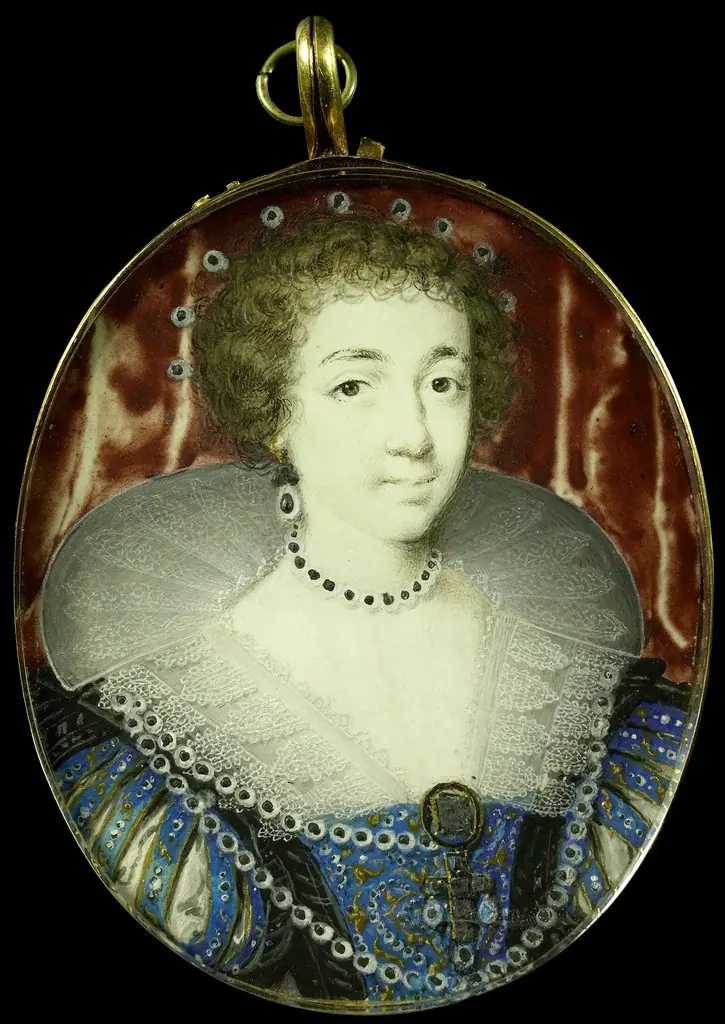 Portrait of Henriëtte Maria (1609-1669), wife of Charles I of England
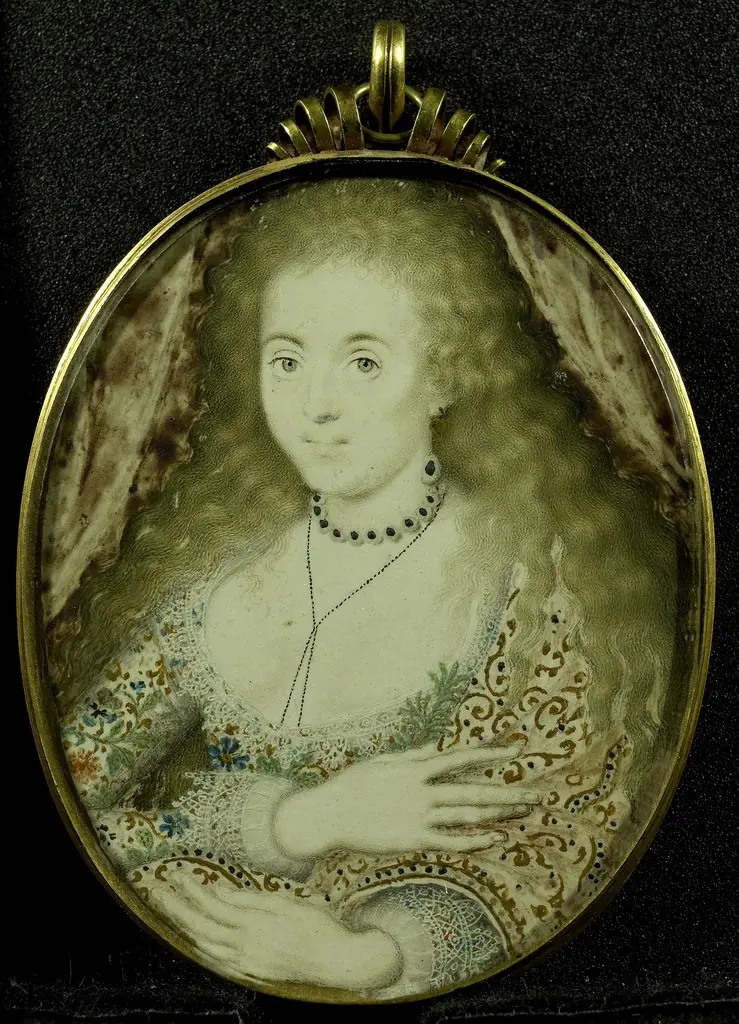 Arabella Stuart
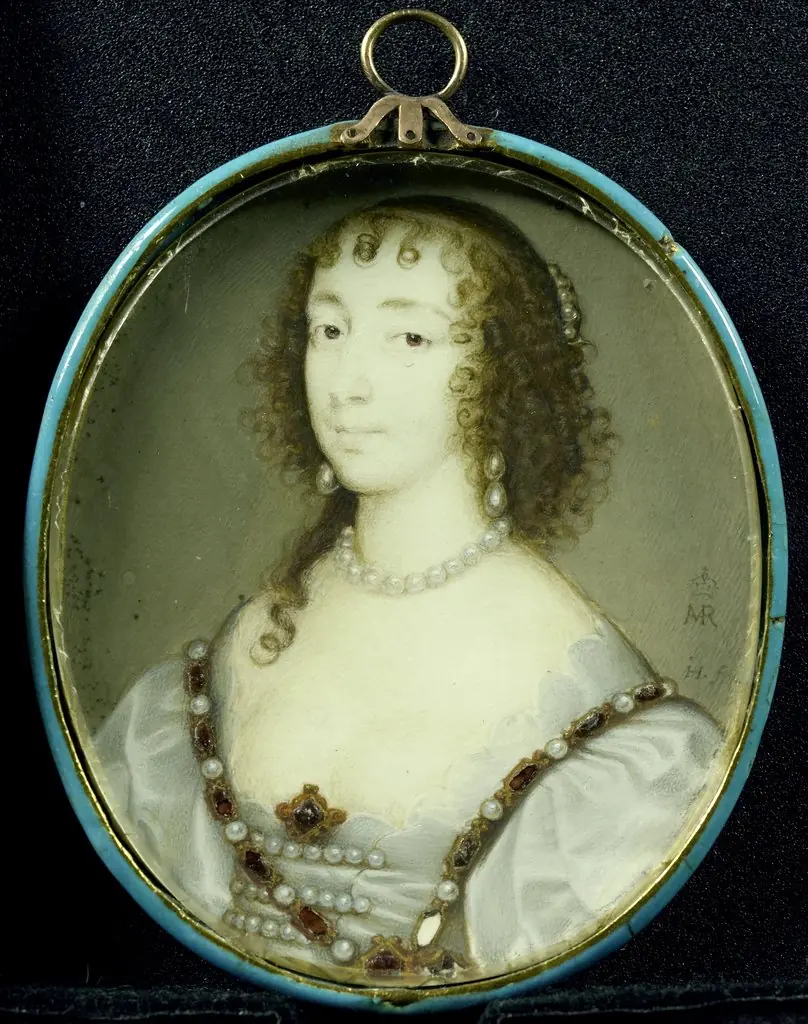 Portrait of Henriëtte Maria of France (1609-1669), wife of Charles I of England
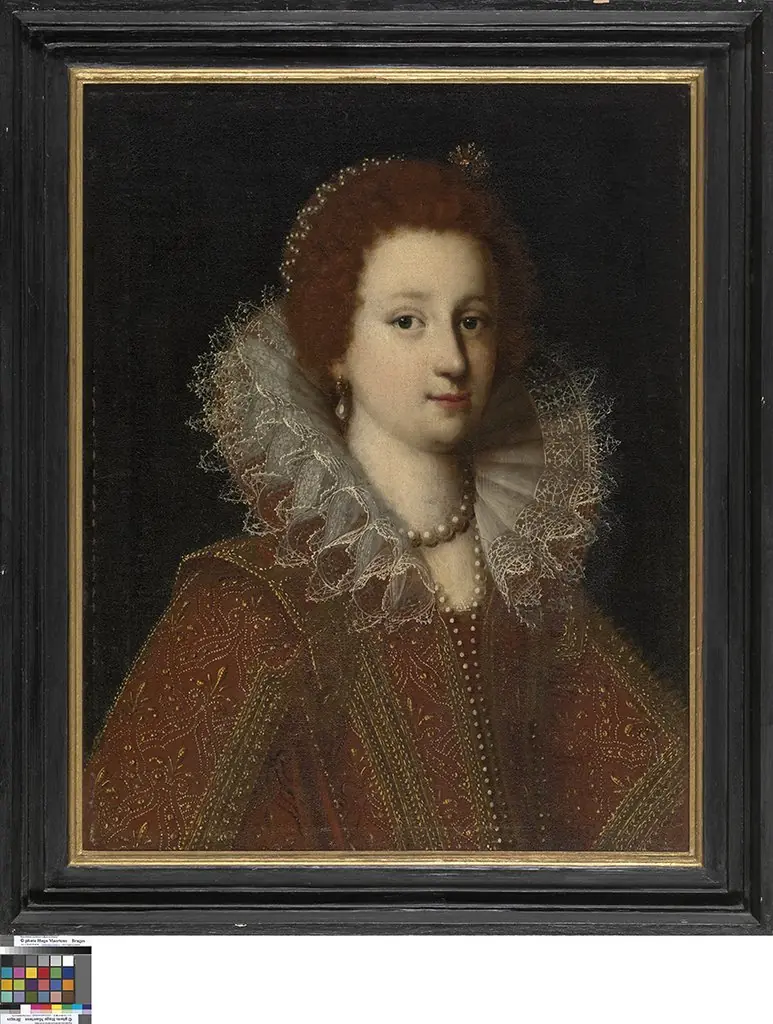 Portret van een vrouw
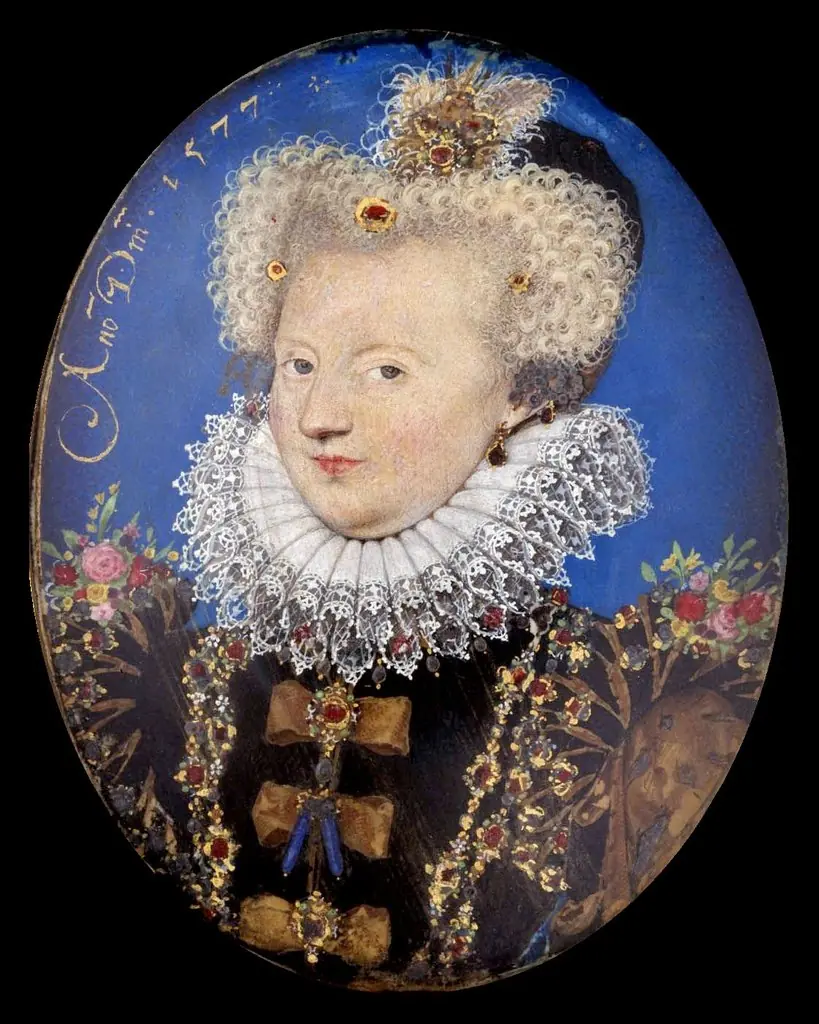 Marguerite of Valois, Queen of Navarre
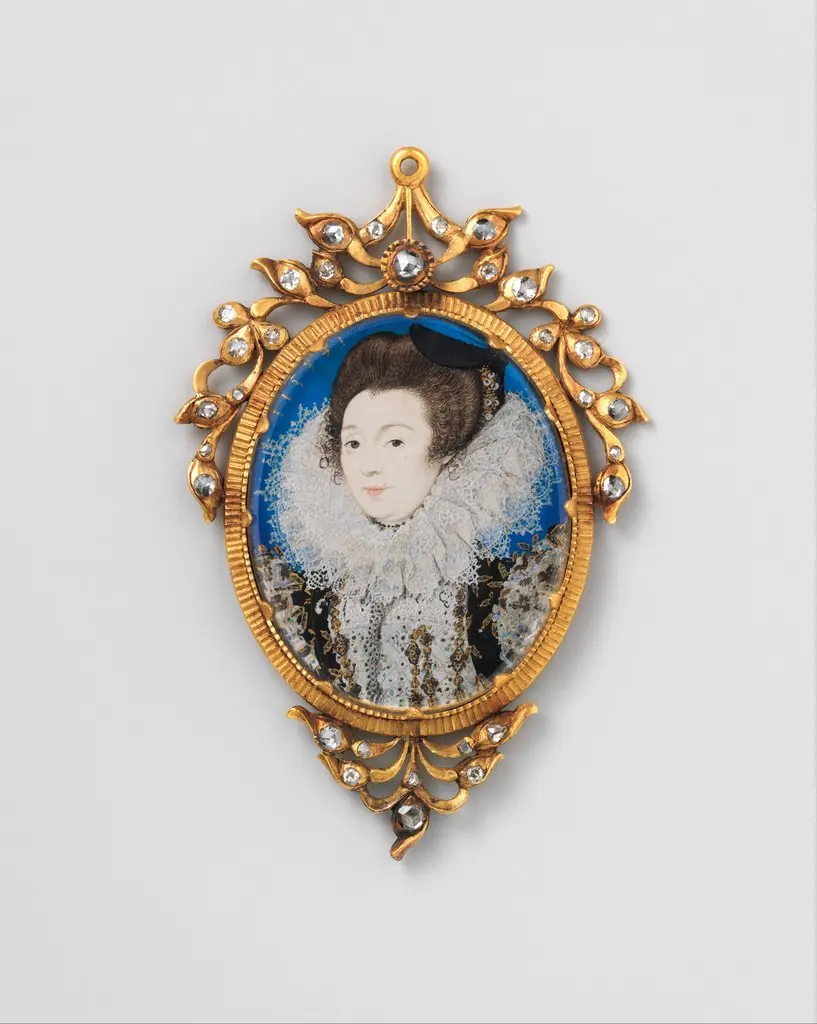 Portrait of a Woman
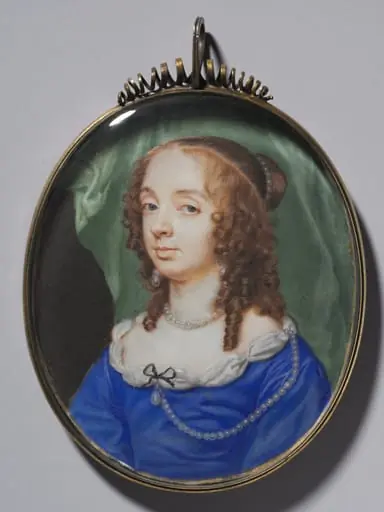 Portrait of a Woman
 Henriette Marie (1626–51) of Paltz, daughter of Frederick V, King of Bohemia, nicknamed the 'Winter King'.