Artwork
Portrait of a Lady
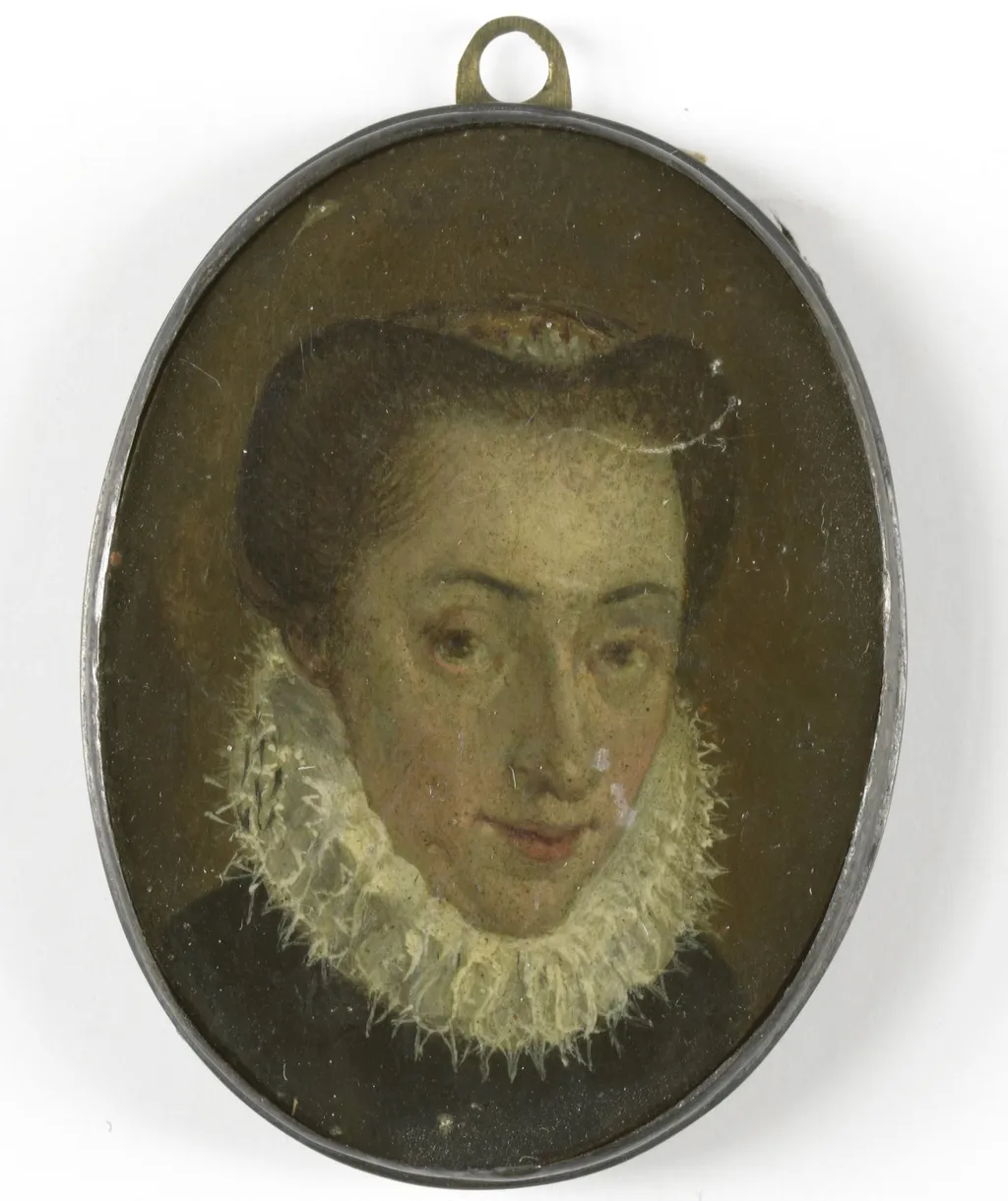
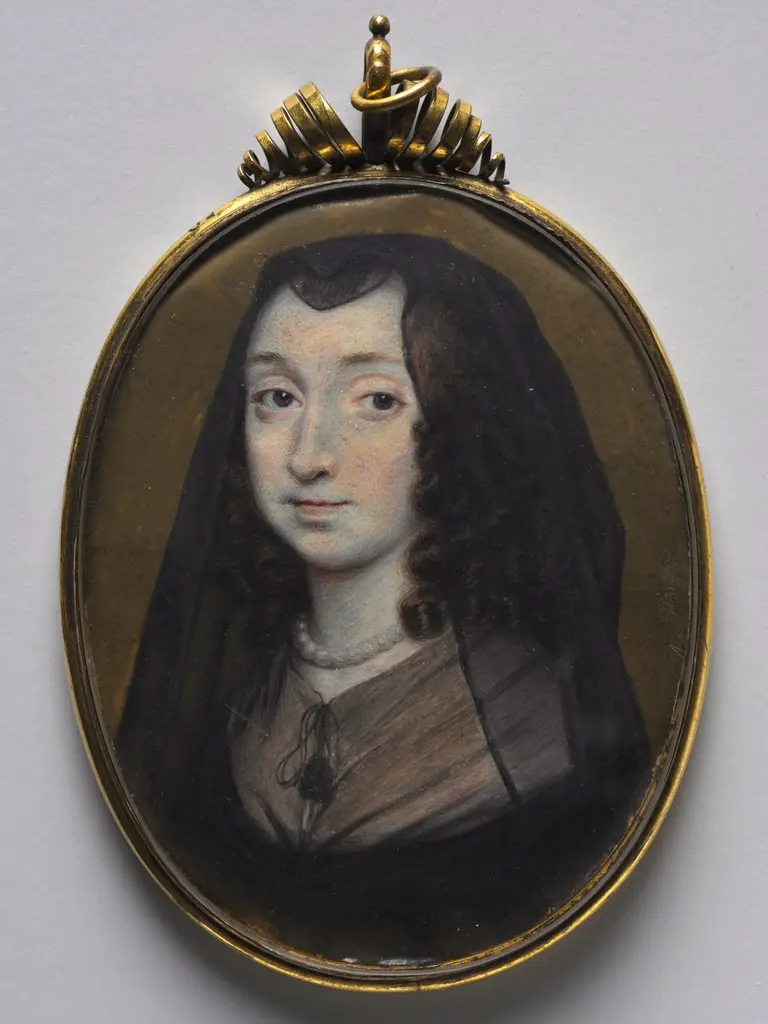
Portrait of a Lady is an oil painting. It dates from 1575 and is held in the collection of the Rijksmuseum. The work is an oval portrait executed on copper, depicting a seated woman from the shoulders up.
About this work
Technique & Style
Created in 1575 within the Low Countries, this portrait miniature is executed in oil paint on a copper support.
Created in 1575 within the Low Countries, this portrait miniature is executed in oil paint on a copper support. The work measures 4.4 cm in height and 3.3 cm in width, reflecting the intimate scale characteristic of the genre. As a painting depicting a woman, the piece utilizes the smooth, non-absorbent surface of the metal to achieve the fine detail typical of sixteenth-century miniature portraiture.
The combination of oil medium and copper panel was a favored technique during this period for producing durable, lustrous images suitable for personal possession.
History & Provenance
The portrait miniature is dated to 1575 and was produced in the Low Countries on a copper support using oil paint. Measuring 4.4 cm in height and 3.3 cm in width, the work depicts an unidentified woman and is classified as a miniature portrait. The artist remains unknown, and no documentary evidence of a specific commission has survived.
Since its creation the painting has entered the Rijksmuseum’s collection, where it is currently housed and catalogued as part of the museum’s holdings of portrait miniatures.
Context
The work is commonly identified as a 1575 portrait miniature painted on copper in the Low Countries. It entered the Rijksmuseum collection and is classified as a portrait genre work, reflecting early modern portraiture conventions in the region.
Scholarly attention focuses on its material technique and provenance, with the copper support and miniature format situating it within the artistic practices of the period. The attribution to an unknown artist remains stable across catalogues, though the piece is frequently discussed in studies of portrait miniatures as a distinct genre.
Its placement in art history emphasizes the transition from panel painting to smaller-scale, intimate portraits, highlighting shifts in patronage and representation during the late 16th century.
Overview
The work is an oval portrait executed on copper, depicting a seated woman from the shoulders up. She is dressed in a dark garment accented by a high, stiff white collar that folds into ruffles. Her hair is gathered back, and her expression is composed, with lips slightly ajar. The dark ground plane isolates the figure, enhancing the contrast between skin and attire.
Subject & Meaning
The sitter appears to be a lady of some standing, suggested by the refined collar and the careful rendering of her features. The calm demeanor and modest pose convey a sense of dignity and restraint typical of portraiture intended to reflect personal virtue or social status.
Artist & collection

- Portrait of a Lady
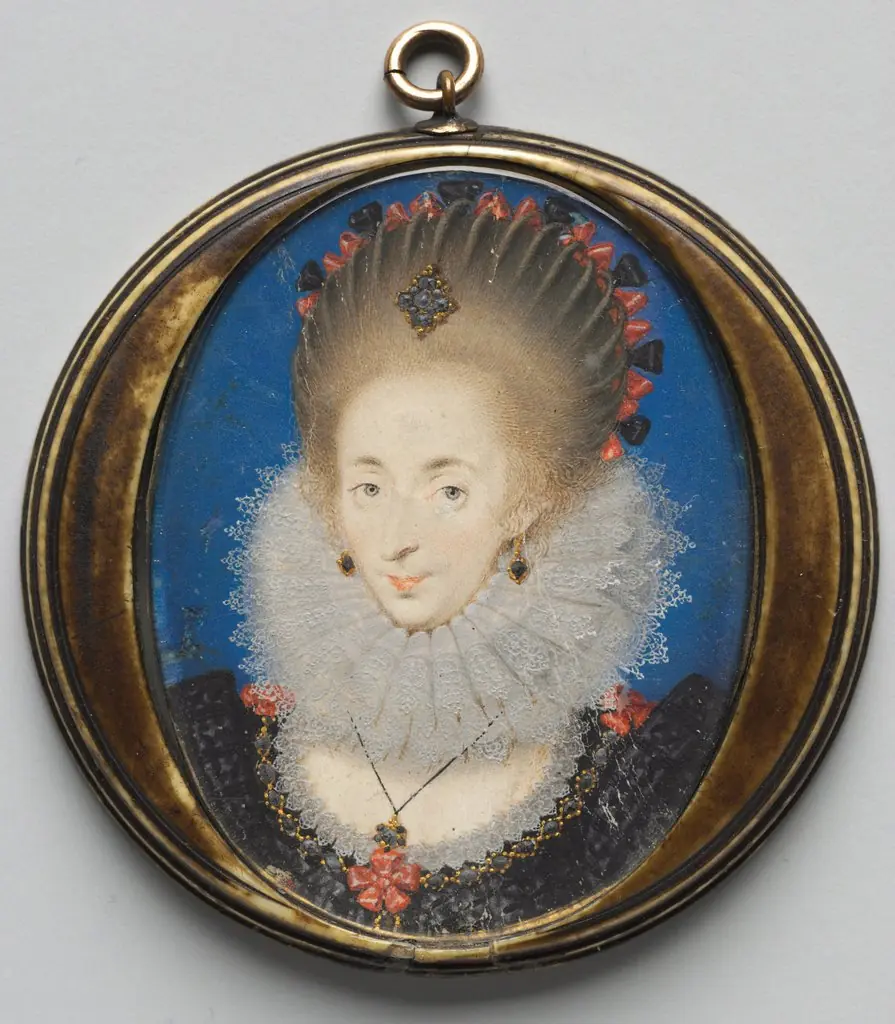 Portrait of Lucy Russell, Countess of Bedford, née Harrington
 Portrait of Lucy Russell, Countess of Bedford, née Harrington
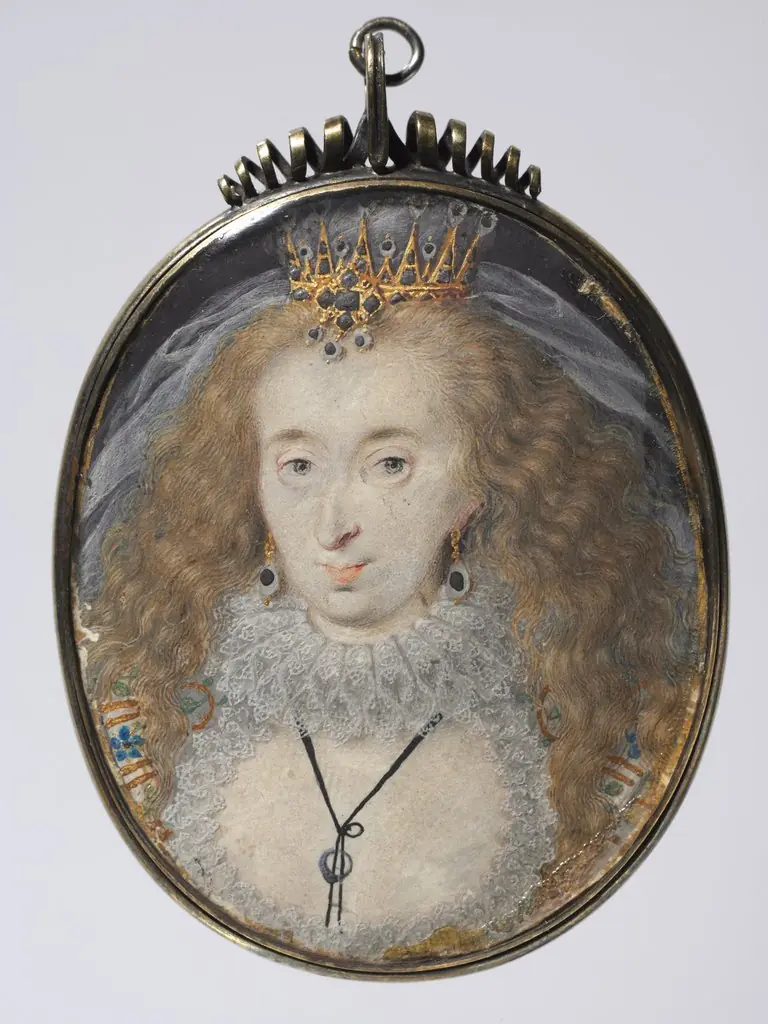 Portrait of Lucy Russell, Countess of Bedford, née Harrington
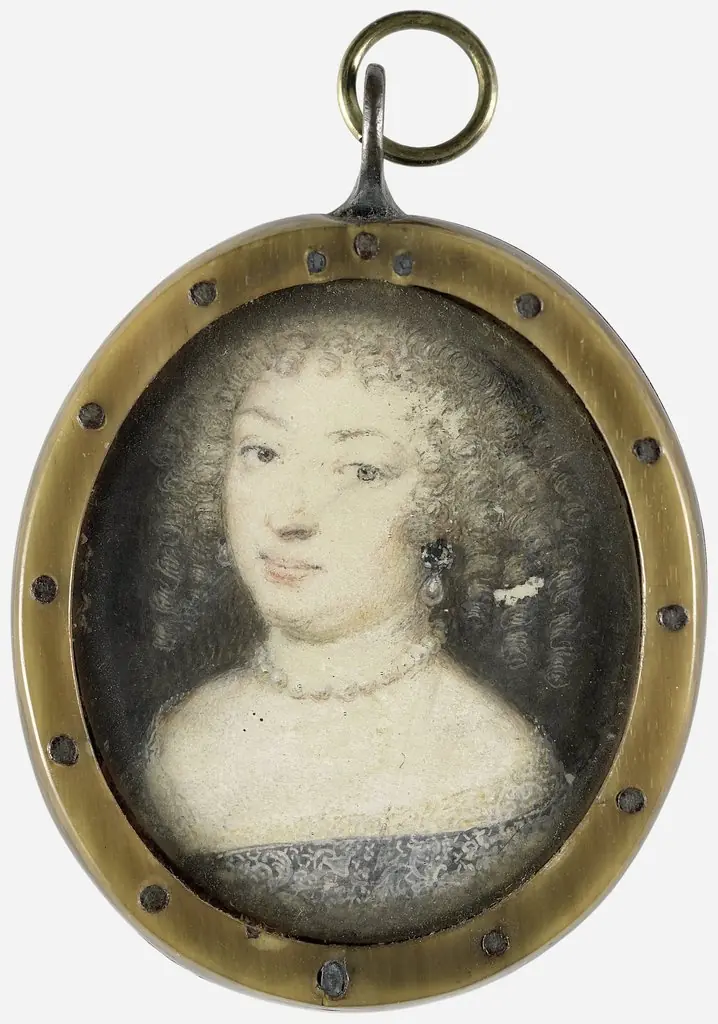 Marie, markiezin van Sévigné (1626-96)
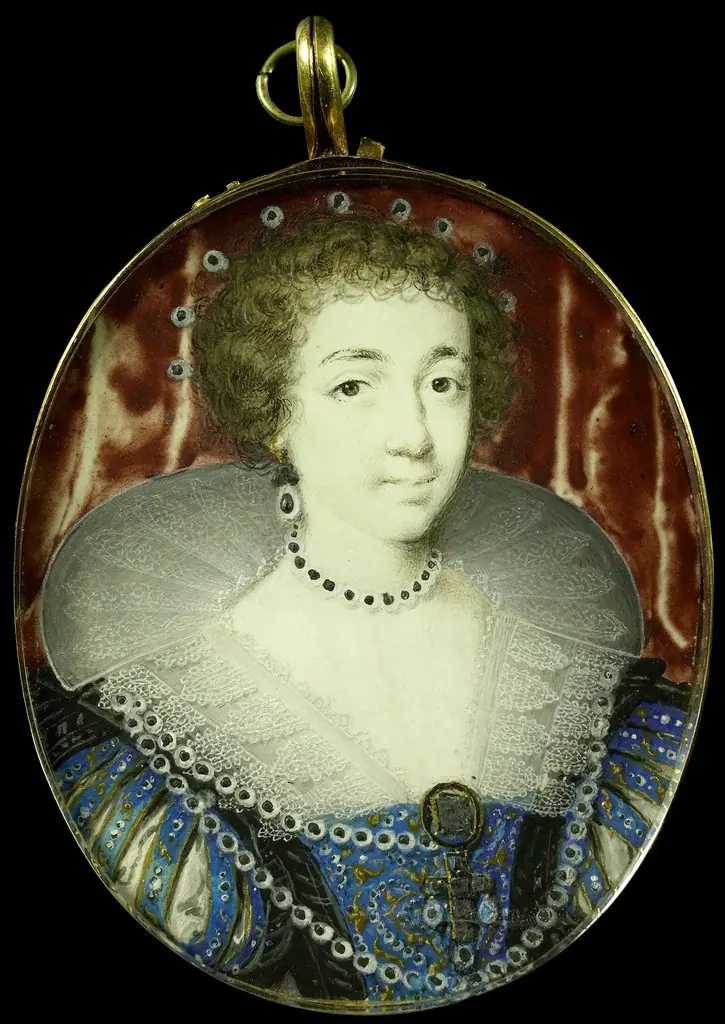 Portrait of Henriëtte Maria (1609-1669), wife of Charles I of England
 Portrait of Lucy Russell, Countess of Bedford, née Harrington
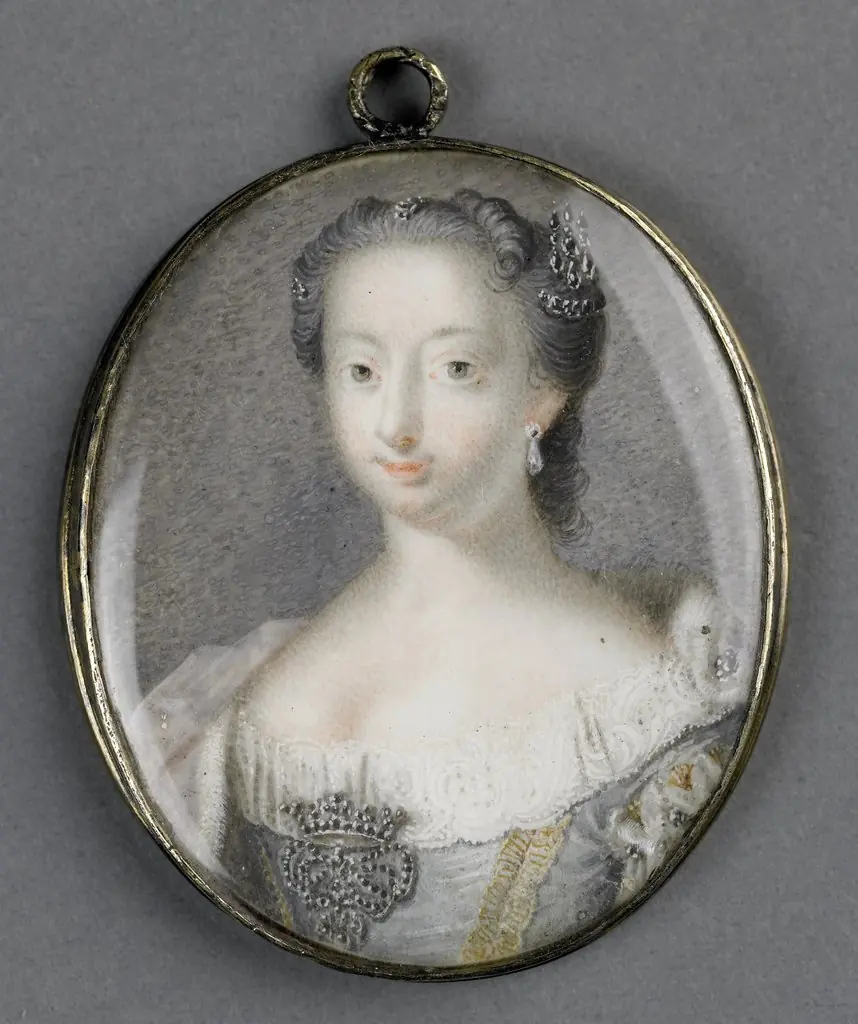 Anna Hanover (1709-59). Wife of Prince William IV
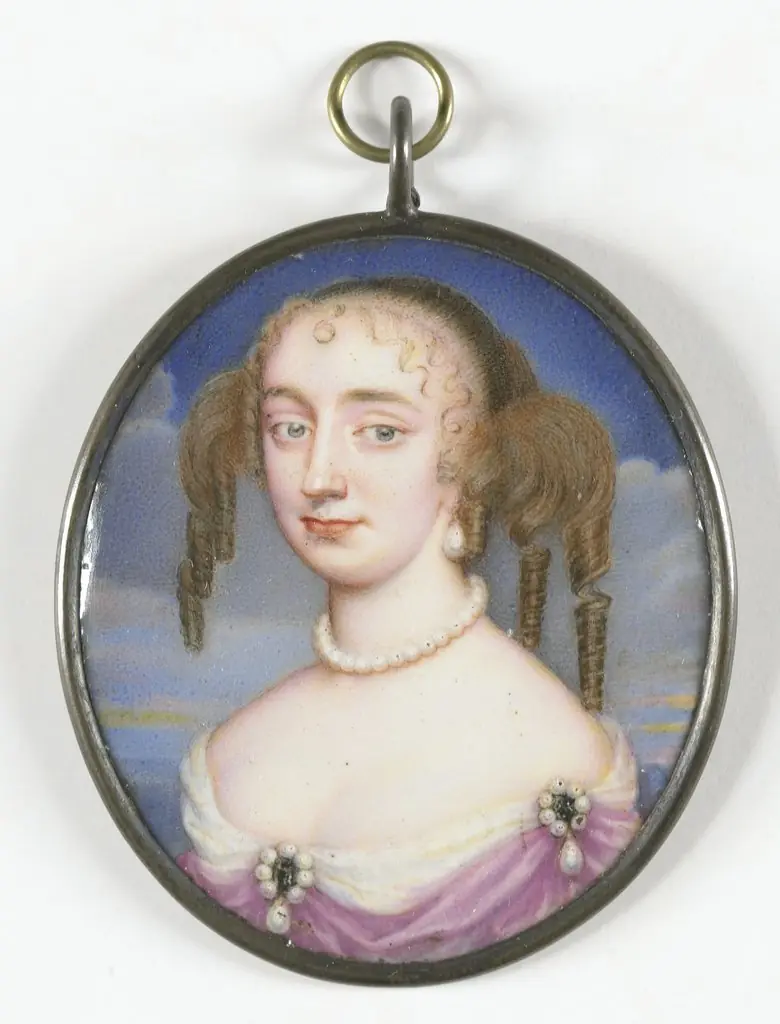 Portrait of a woman, possibly Anne Hyde, first wife of James II of England
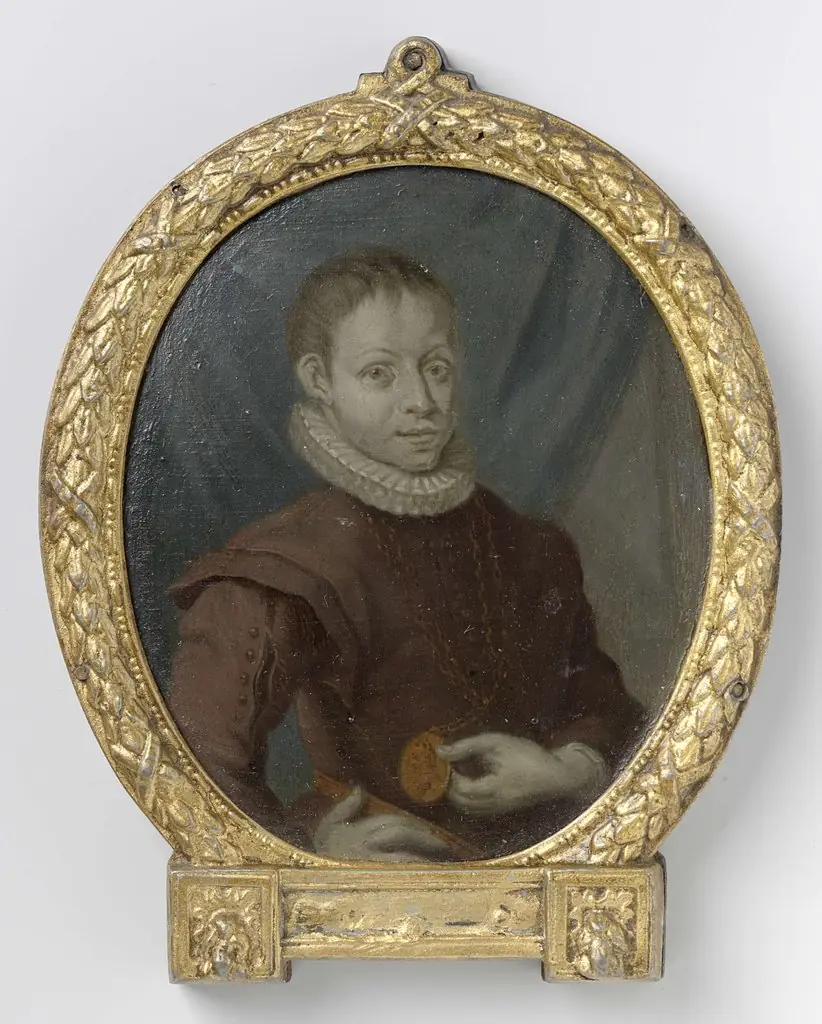 Hugo de Groot op jonge leeftijd
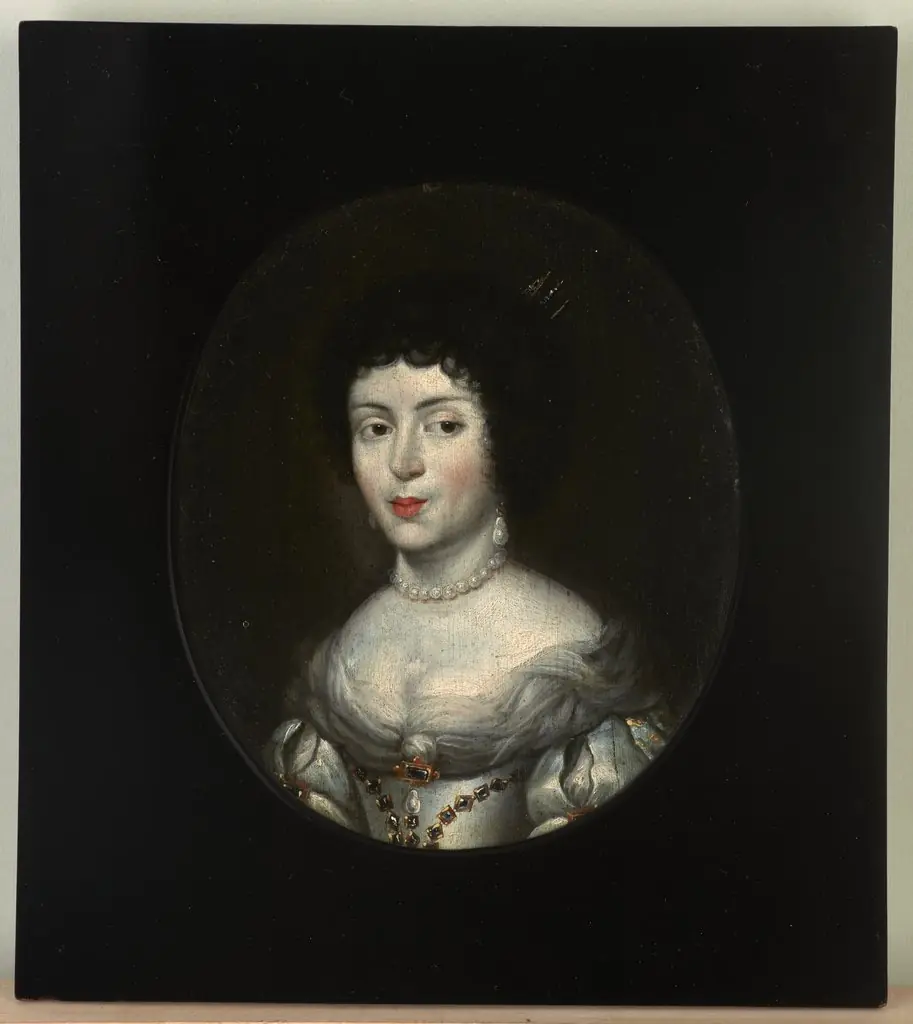 Portret Marii Kazimiery de la Grange d'Arquien Sobieskiej, zwanej Marysieńką (1641-1716), królowej Polski, żony Jana III Sobieskiego
 Portrait of Elizabeth Morrison, Lady Capell of Hadham