Artwork
Portrait of Sen no Rikyū with his Death Poem
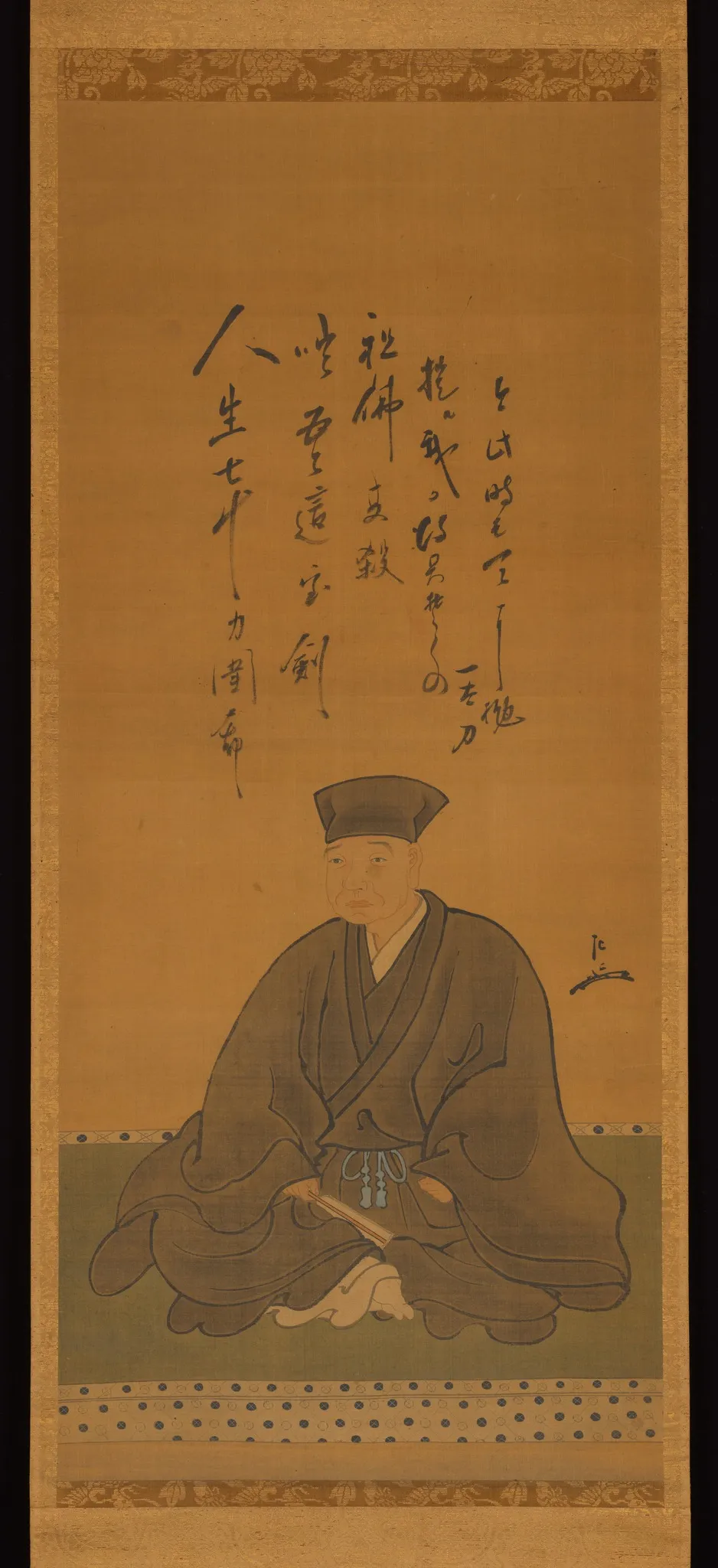
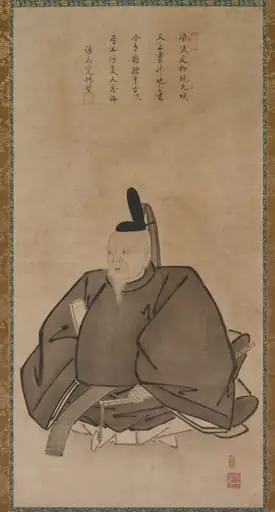
Portrait of Sen no Rikyū with his Death Poem is an unspecified painting. It dates from 1616 and is held in the collection of the Metropolitan Museum of Art. The work depicts a seated figure dressed in dark robes and a black cap, holding a scroll against a uniform golden‑brown backdrop.
About this work
Subject & Meaning
The painting portrays Sen no Rikyū, the influential sixteenth‑century tea master renowned for shaping the Japanese aesthetic of wabi‑sabi, and incorporates his own death poem as a symbolic element. The work’s iconography emphasizes his role as a spiritual guide and his contemplation of impermanence, reflecting the Zen principles that underpinned his practice. By integrating the poem directly into the composition, the portrait conveys both the subject’s personal legacy and the broader cultural significance of his teachings within the tea ceremony.
History & Provenance
The Portrait of Sen no Rikyū with his Death Poem is a painting created in Japan in 1616. The work is attributed to an unidentified artist. It is currently held in the collection of the Metropolitan Museum of Art.
No further details regarding the original commission, specific ownership chain, or the precise circumstances of its creation are provided in the available records.
Legacy
The portrait of Sen no Rikyū, created in 1616, is recognized as a pivotal image of the tea master within the history of Japanese art.
The portrait of Sen no Rikyū, created in 1616, is recognized as a pivotal image of the tea master within the history of Japanese art. Its depiction of Rikyū alongside his death poem has contributed to shaping his cultural image as the idealized embodiment of wabi‑cha aesthetics, influencing subsequent artistic representations and scholarly interpretations of the tea ceremony. The work’s presence in the collection of the Metropolitan Museum of Art has ensured continued public and academic attention to Rikyū’s legacy, reinforcing his status as a central figure in the narrative of Japanese cultural history.
Overview
The work depicts a seated figure dressed in dark robes and a black cap, holding a scroll against a uniform golden‑brown backdrop. A green mat lies beneath him, and vertical black calligraphy runs along the upper edge of the composition. The subject’s expression is restrained and contemplative, emphasizing the solemnity of the scene.
Technique & Style
Executed in ink and color on paper, the painting employs a limited palette that accentuates the figure’s dark clothing against the warm background. The brushwork is precise in the rendering of the robes and scroll, while the calligraphic inscription is rendered in a traditional vertical format, reflecting the conventions of Japanese portraiture of the period.
Context
Created during a time when reverence for historic tea masters was expressed through visual and literary homage, the portrait aligns with contemporary practices of commemorating scholars and artists by depicting them alongside their written works. The inclusion of Rikyū’s death poem reflects the broader Edo‑era interest in the integration of poetry, calligraphy, and painting.
Artist & collection

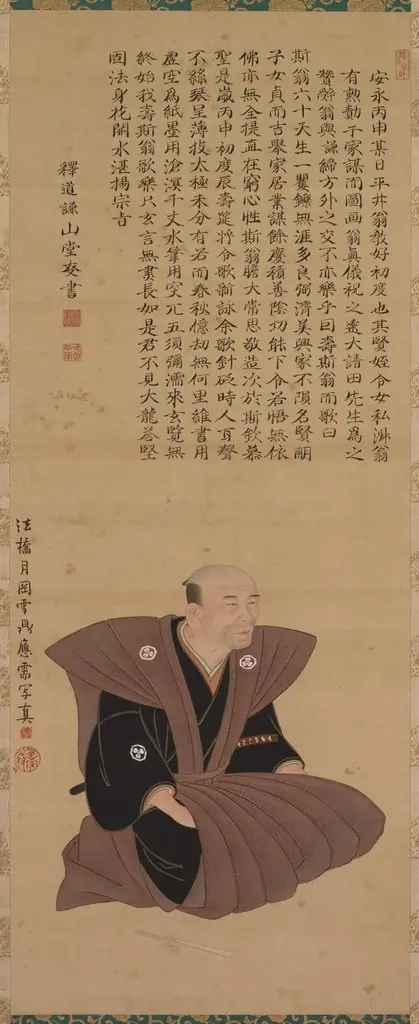
- Pair of Portraits of Samurai-Officials: Hirai Kyosei and Hirai Rinsei
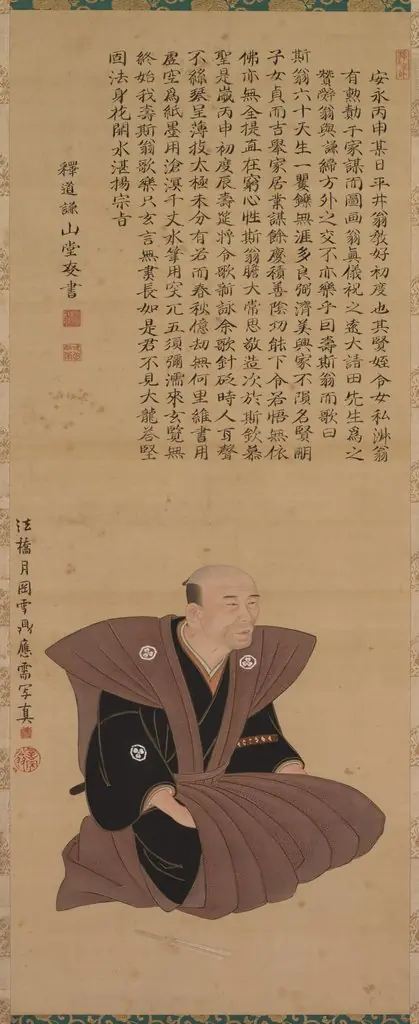 Portrait of Samurai-Official: Hirai KyoseiHirai Kyosei
 Portrait of Samurai-Official: Hirai KyoseiHirai Kyosei
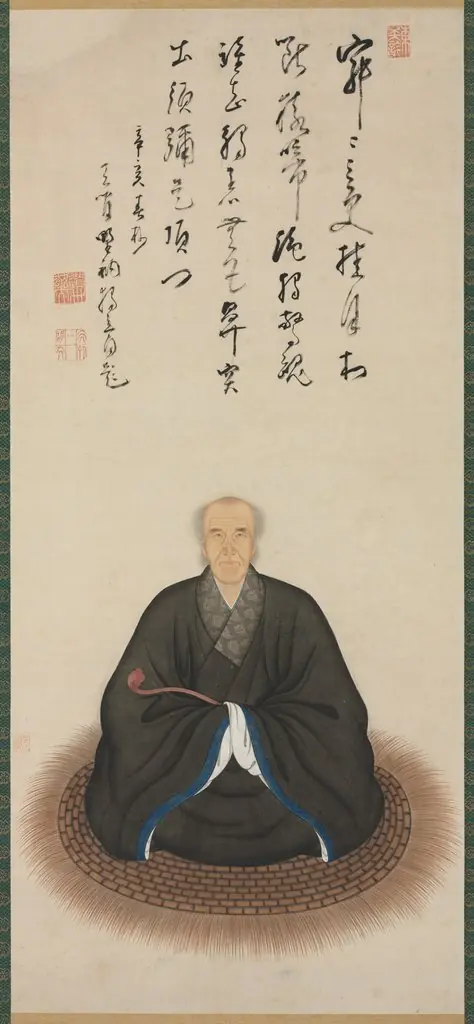 Portrait of Duli Xingyi
 Untitled
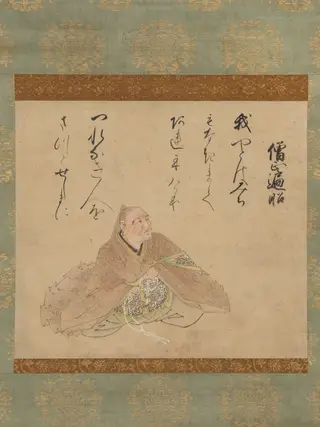 Archbishop Henjō (Sōjō Henjō zu), from the Dōon Version of the Thirty-Six Poetic Immortals
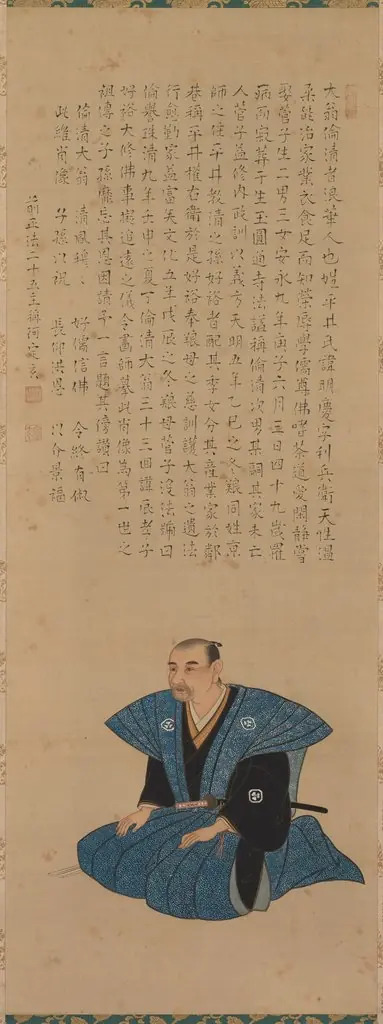 Portrait of Samurai-Official: Hirai Rinsei
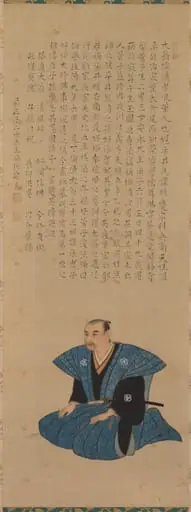 Portrait of Samurai-Official: Hirai Rinsei
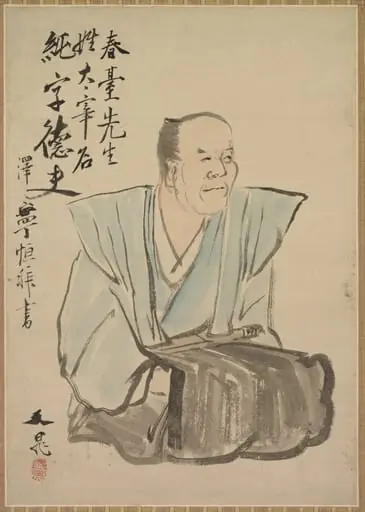 Imaginary Portrait of Shundai Dazai
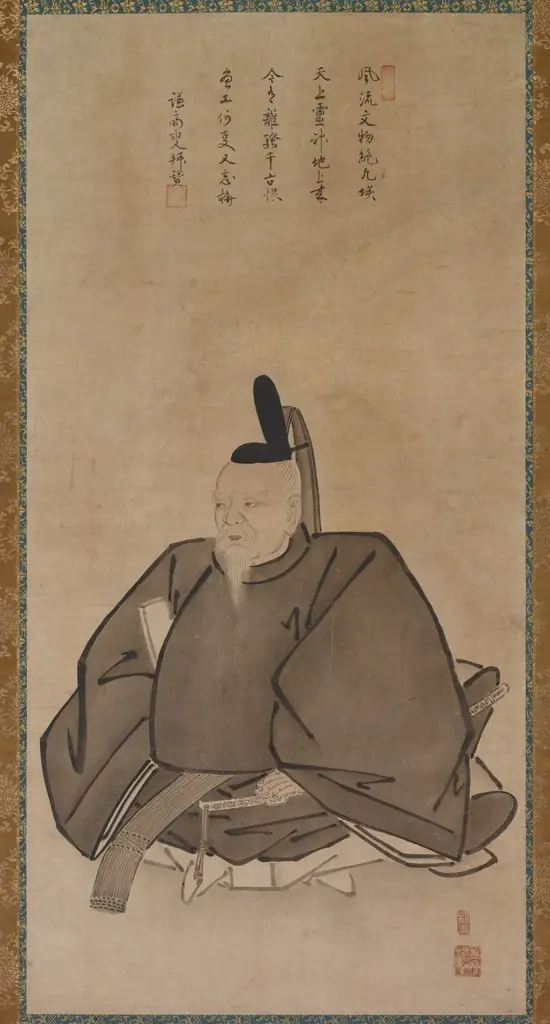 Portrait of Sugawara Michizane
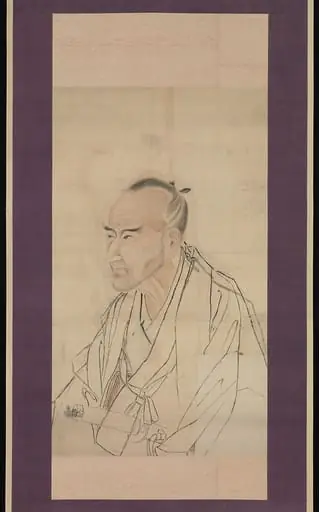 Untitled
 Portrait of Sugawara Michizane