Artwork
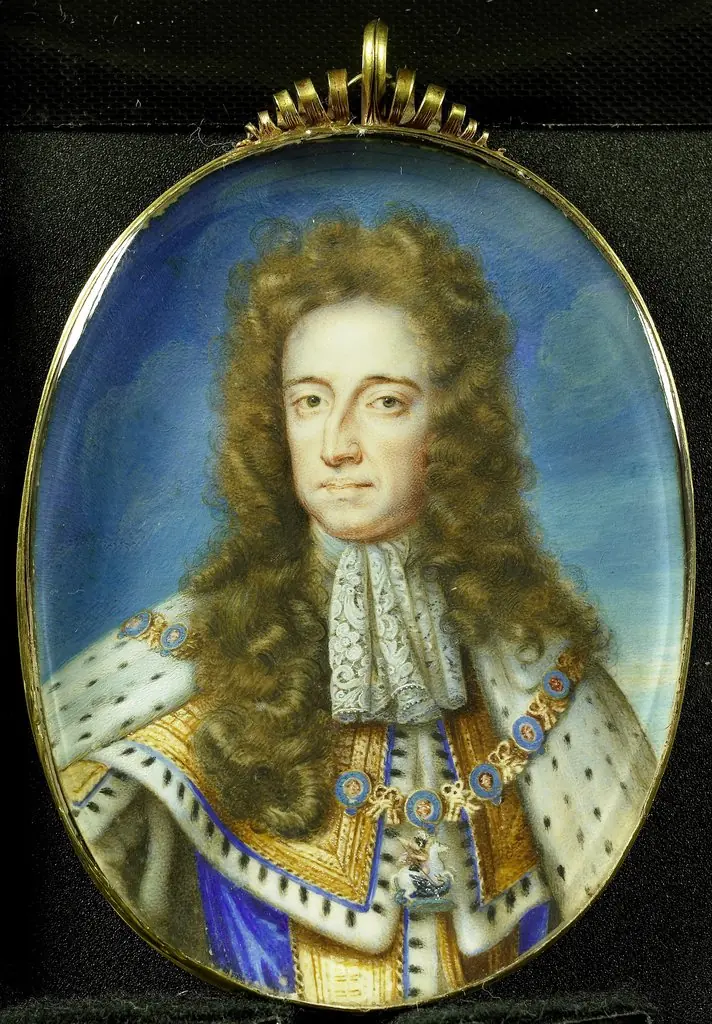
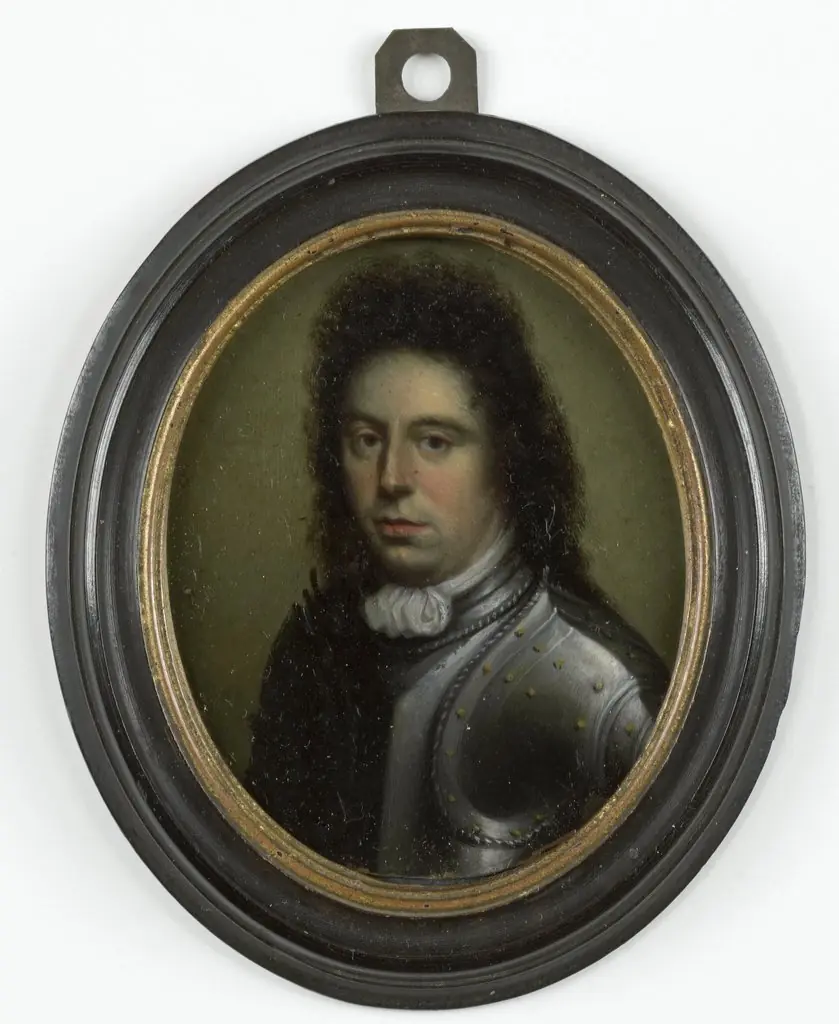
Portrait of William III, Prince of Orange and King of England after 1689
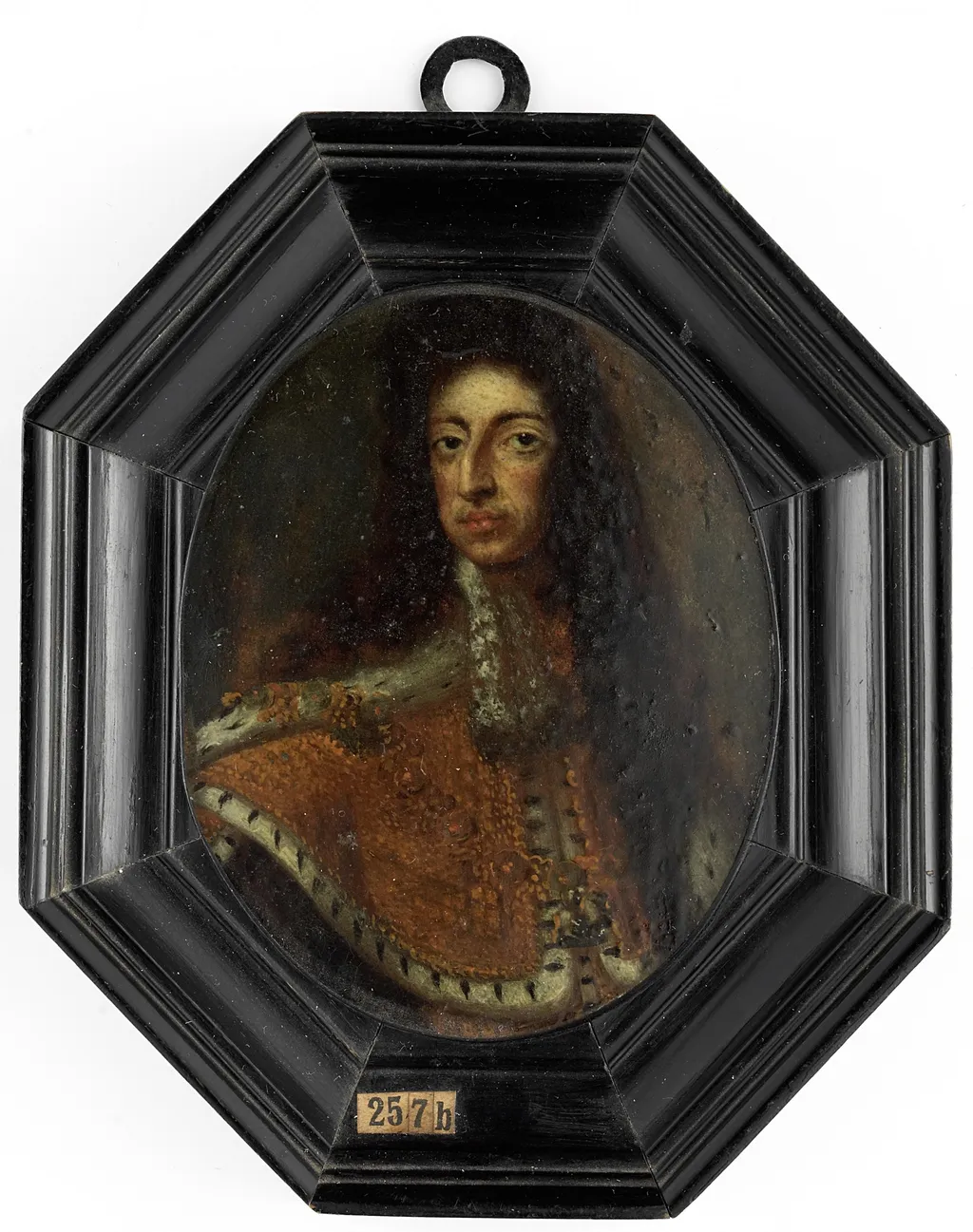
Portrait of William III, Prince of Orange and King of England after 1689 is an oil painting. It dates from 1698 and is held in the collection of the Rijksmuseum. This portrait, executed on tin and framed in a black octagon, depicts William III, Prince of Orange and King of England, subsequent to 1689.
About this work
Subject & Meaning
As a formal portrait, the image focuses on the monarch's likeness to establish his identity and status following his accession to the English throne.
The work depicts William III, Prince of Orange and King of England, serving as the main subject of this anonymous portrait created in 1695. As a formal portrait, the image focuses on the monarch's likeness to establish his identity and status following his accession to the English throne. The depiction functions as a direct visual representation of the ruler, anchoring the artwork within the genre of royal portraiture without additional elaborated symbolism specified in the available records.
Technique & Style
The work is an oil on tin painting measuring 9.4 cm by 7.5 cm, created in the Northern Low Countries around 1695. It depicts William III of England and belongs to the portrait genre, reflecting a formal composition typical of late 17th-century portraiture. The surface exhibits handling characteristics consistent with tin support, including subtle warping and a muted sheen, while the application of oil paint demonstrates controlled layering and fine detail in facial features.
These formal qualities underscore the work's technical precision and stylistic alignment with Dutch portrait conventions of the period.
History & Provenance
The painting was created in 1695, as indicated by its inception date in the collection record. It is attributed to an anonymous artist and executed in oil on tin, a medium specified in the museum documentation. The work entered the holdings of the Rijksmuseum, where it remains located, with dimensions recorded as 9.4 cm in height and 7.5 cm in width.
The subject depicted is William III of England, reflecting his political prominence in the Northern Low Countries during this period.
The painting is held by the Rijksmuseum, Amsterdam, where it is inventoried as SK-C-196.
It was exhibited at the Rijksmuseum in the 1900s as part of the museum’s long-term display of Dutch portraits, and again in the 1935 exhibition “Nederlandsche portretten uit den aanvang der 18e eeuw.”
Overview
This portrait, executed on tin and framed in a black octagon, depicts William III, Prince of Orange and King of England, subsequent to 1689. The subject is prominently featured with a calm, serious expression, set against a dark background that accentuates his face.
Context
Produced during William III's rule, the portrait reflects the artistic and political climate of late 17th-century Europe, where such depictions served to solidify royal legitimacy and presence across territories.
Artist & collection

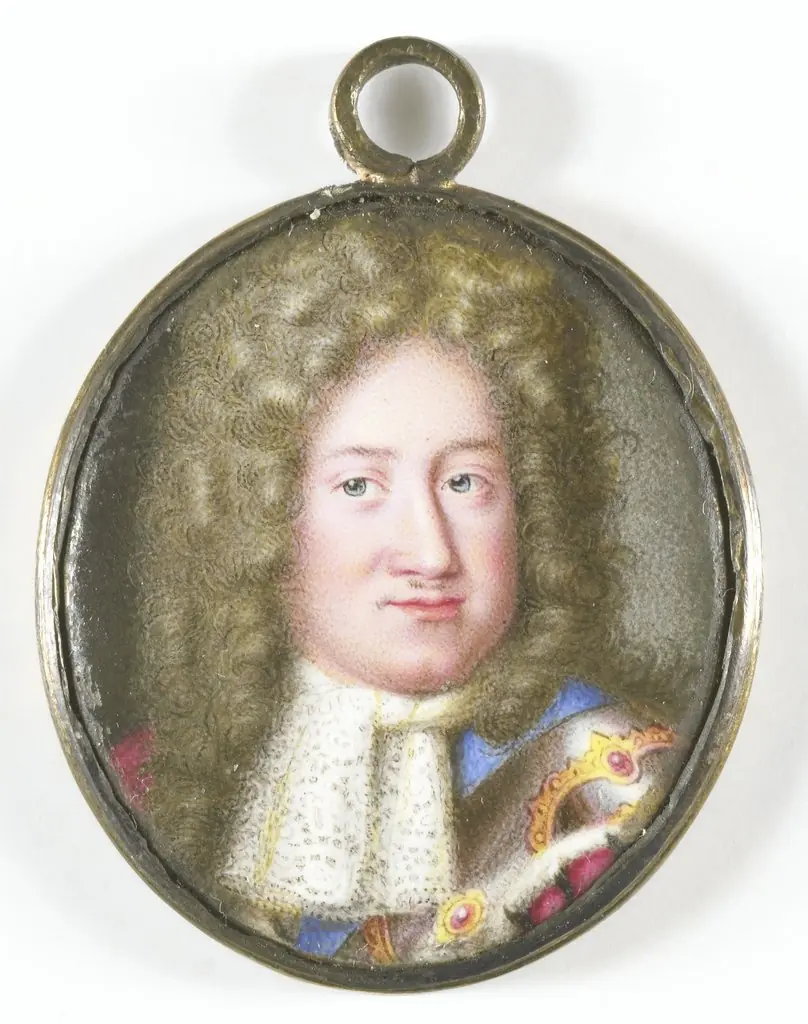 Portrait of Friedrich I van Pruisen (1657-1713)
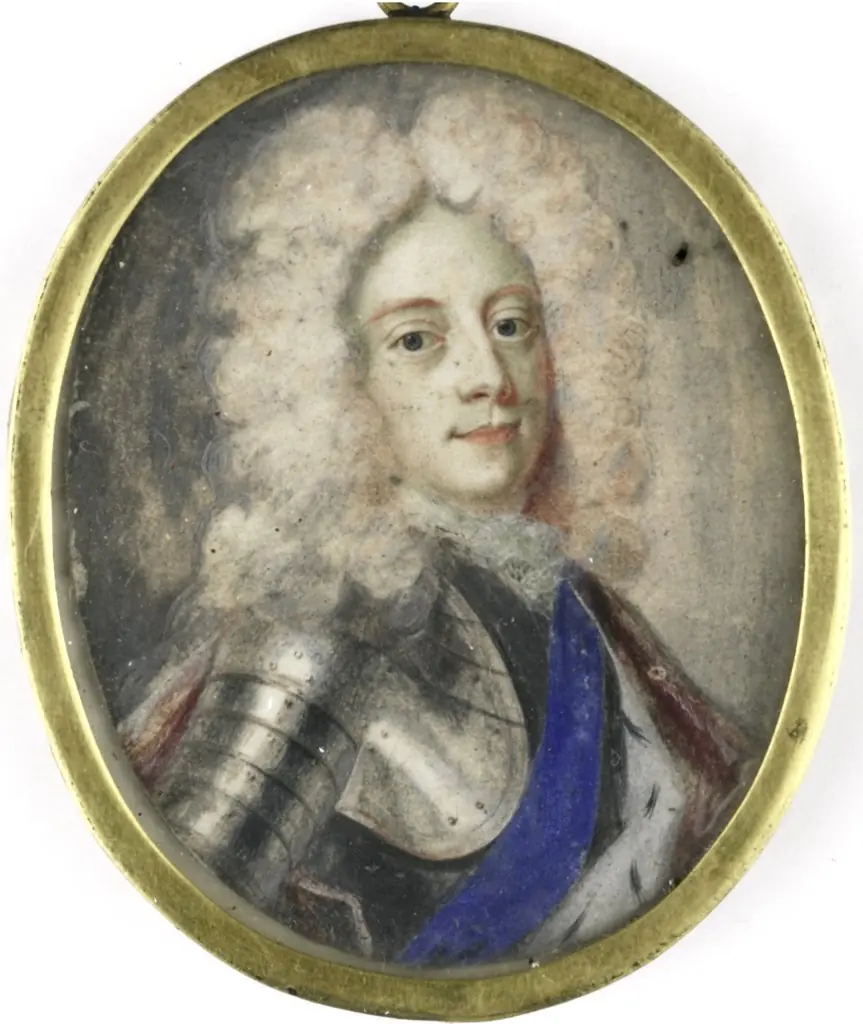 Portrait of Christiaan V van Denemarken (1646-1699)
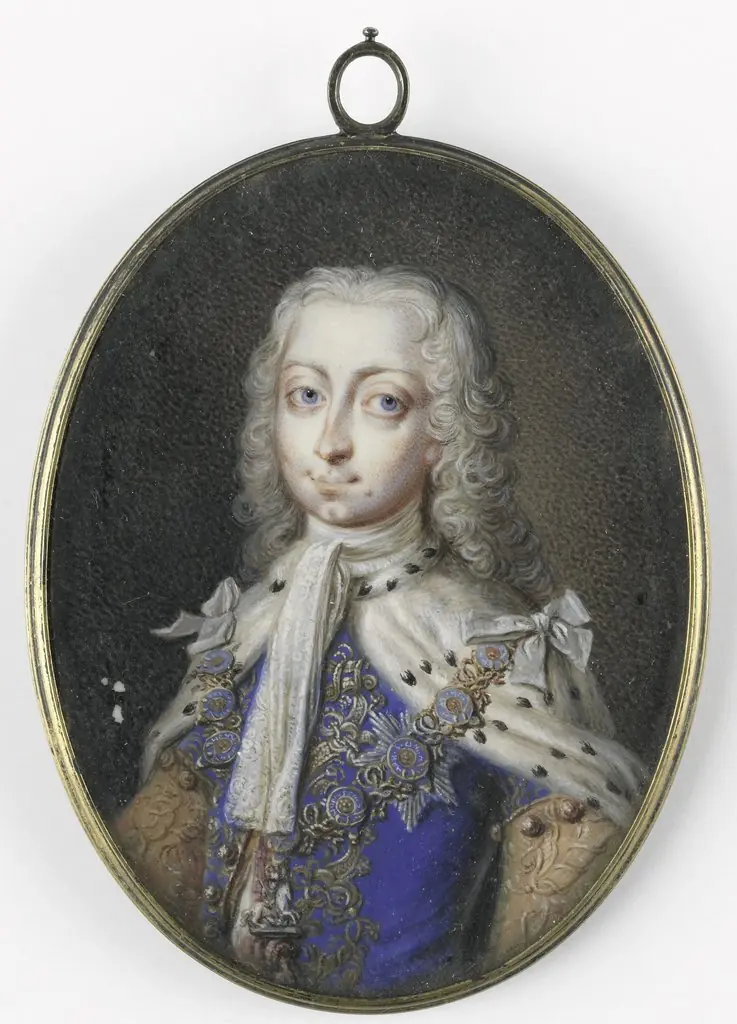 Frederick Louis (1707-51), prins van Wales. Zoon van koning George II
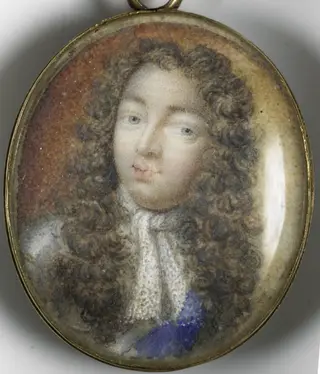 Portret van een man en een vrouw (keerzijde) vermoedelijk Willem Frederik Markgraaf van Brandenburg-Anspach (1686-1723) en zijn vrouw Christiane Charlotte van Württemberg (1694-1723)
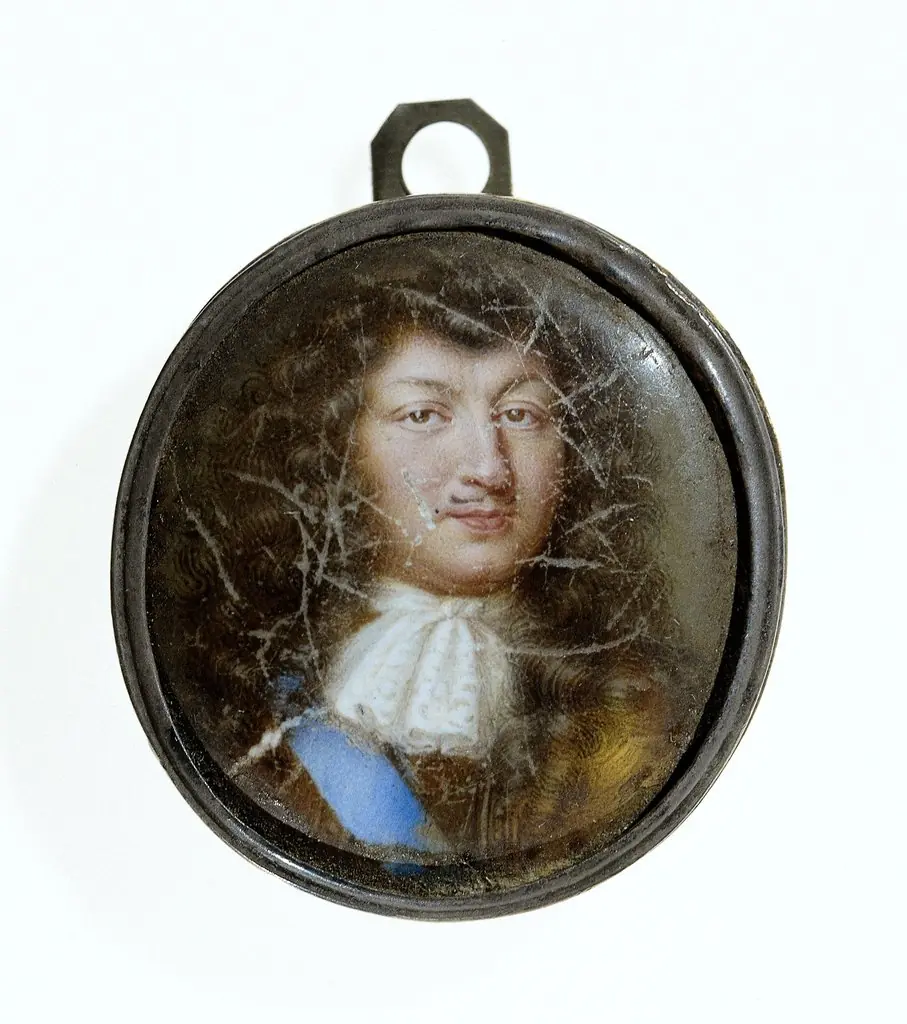 Portrait of Lodewijk XIV de Bourbon (1638-1715)
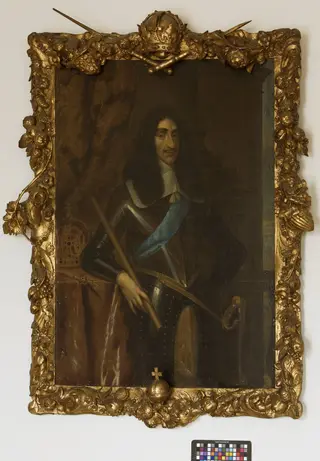 King Charles I (II?) of England
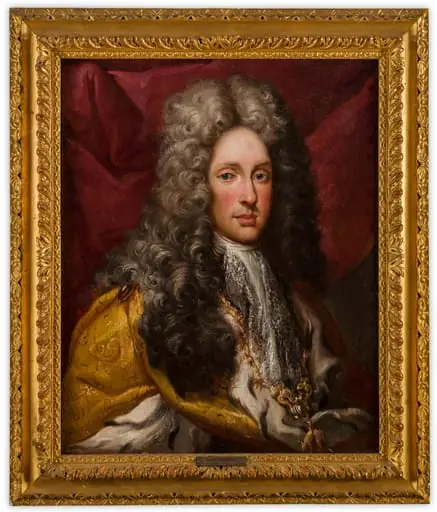 Pyhän saksalais-roomalaisen valtakunnan keisari Joosef I
 Portret van een officier