Artwork
William III
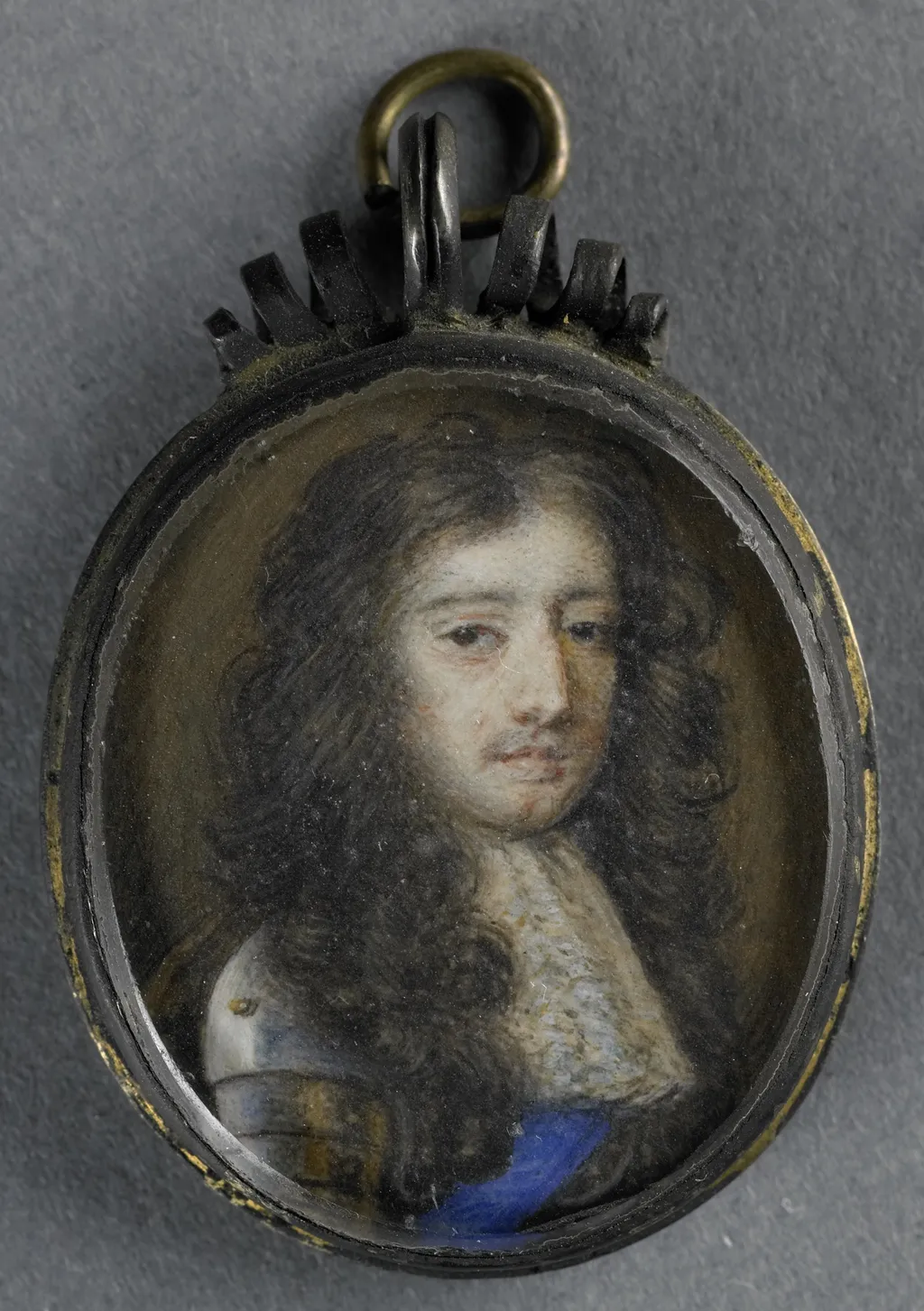
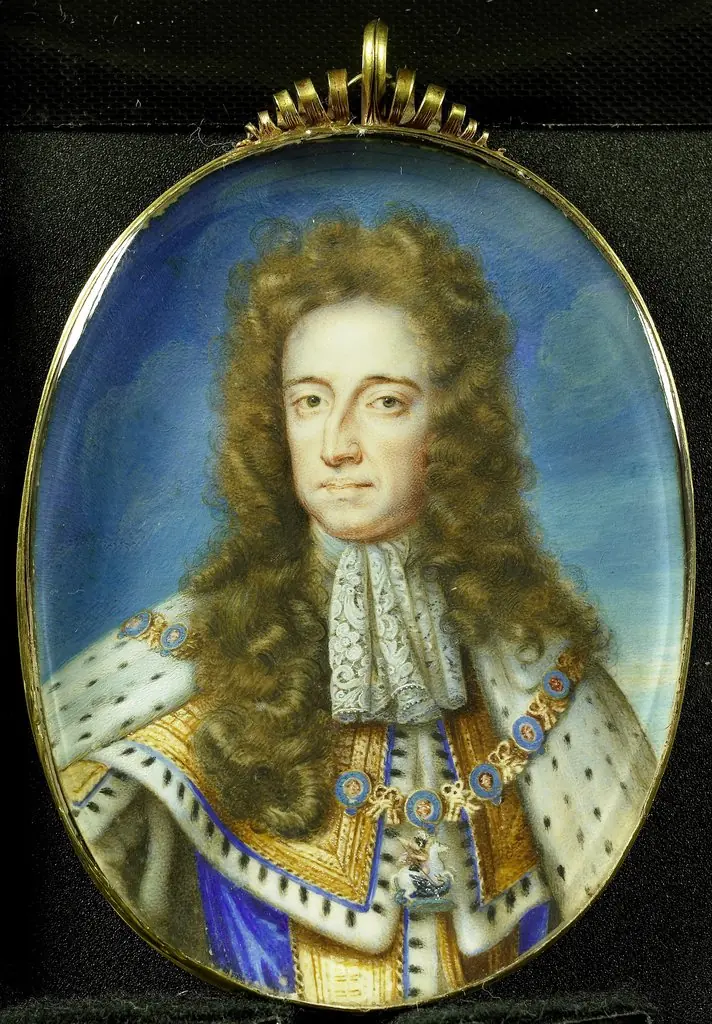
William III is an unspecified painting by the Flemish Baroque painting artist Richard Gibson. It dates from 1689 and is held in the collection of the Rijksmuseum.
About this work
Subject & Meaning
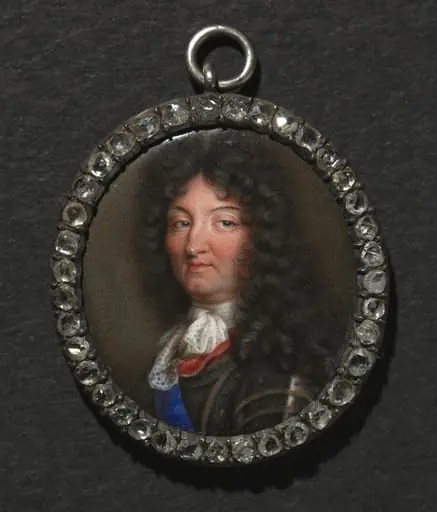
This small-scale portrait depicts William III of England, shown in three-quarter view turned slightly to the left against a plain ground.
This small-scale portrait depicts William III of England, shown in three-quarter view turned slightly to the left against a plain ground. The sitter’s sober attire and restrained pose emphasize his status as a constitutional monarch rather than a martial ruler. The use of cardboard as support signals the work’s function as a portable image suitable for private circulation among supporters of the Dutch-born king, underscoring the political ties between the Dutch Republic and England during his reign.
The absence of overt regalia or allegorical devices focuses attention on the individual, reflecting contemporary portrait conventions that cultivated an image of probity and continuity after the upheavals of the 1650s and 1660s.
Technique & Style
This miniature painting employs cardboard as its support, executed by Richard Gibson in 1677. The work is rendered in a refined, small-scale format with dimensions of 2.4 cm in height and 2 cm in width, characteristic of miniature portraiture of the period.
The handling reflects the meticulous brushwork typical of Gibson’s practice, emphasizing delicate facial features and restrained detailing. Stylistically, the composition adheres to the conventions of Dutch miniature portraiture, with a focus on clarity and precision in the depiction of the sitter.
History & Provenance
The miniature portrait of William III was created by Richard Gibson in 1677, as indicated by both the artist’s inscription and the work’s inclusion in the Rijksmuseum’s holdings.
The work is painted on cardboard and depicts William III of England, aligning with the historical context of the late 17th century. The dimensions of the painting are 2.4 cm in height and 2 cm in width, reflecting the small scale typical of portrait miniatures of the period.
The work is currently held in the collection of the Rijksmuseum, where it is catalogued as part of their holdings.
The miniature is part of the Rijksmuseum's collection and is on permanent display there. It entered the museum's inventory under the accession number SK-A-1875 and has been featured in the museum's exhibitions on Dutch Golden Age portraiture and miniature painting.
Context
The painting William III by Richard Gibson was created in 1677 in Holland and is classified as a miniature executed in cardboard. It is part of the Rijksmuseum's collection and has been studied within scholarly discussions of 17th-century English portraiture and courtly symbolism. The work's small scale and use of unconventional materials reflect the artistic experimentation characteristic of the Dutch Golden Age, situating Gibson's production within broader European trends in portrait miniatures.
Overview
Created in 1689, this oval portrait presents William III of England rendered on cardboard. The figure is shown in a simple white shirt accented by a blue sash, his dark hair falling in loose waves. Set within a black frame topped by a gold ring, the composition conveys a restrained, contemplative presence.
Own this work as a print
Artist & collection
Artist
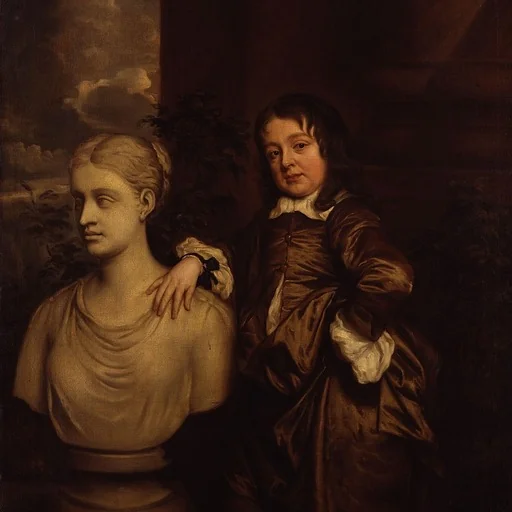
Richard Gibson (1615 – 23 July 1690), known as "Dwarf Gibson", was an English painter of portrait miniatures and a court dwarf in England during the reigns of Charles I, Oliver Cromwell, Charles II, and William III and Mary II.

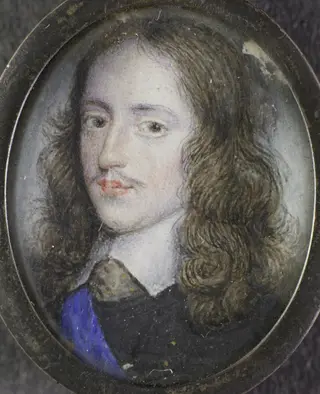 Willem II (1626-50), prins van Oranje
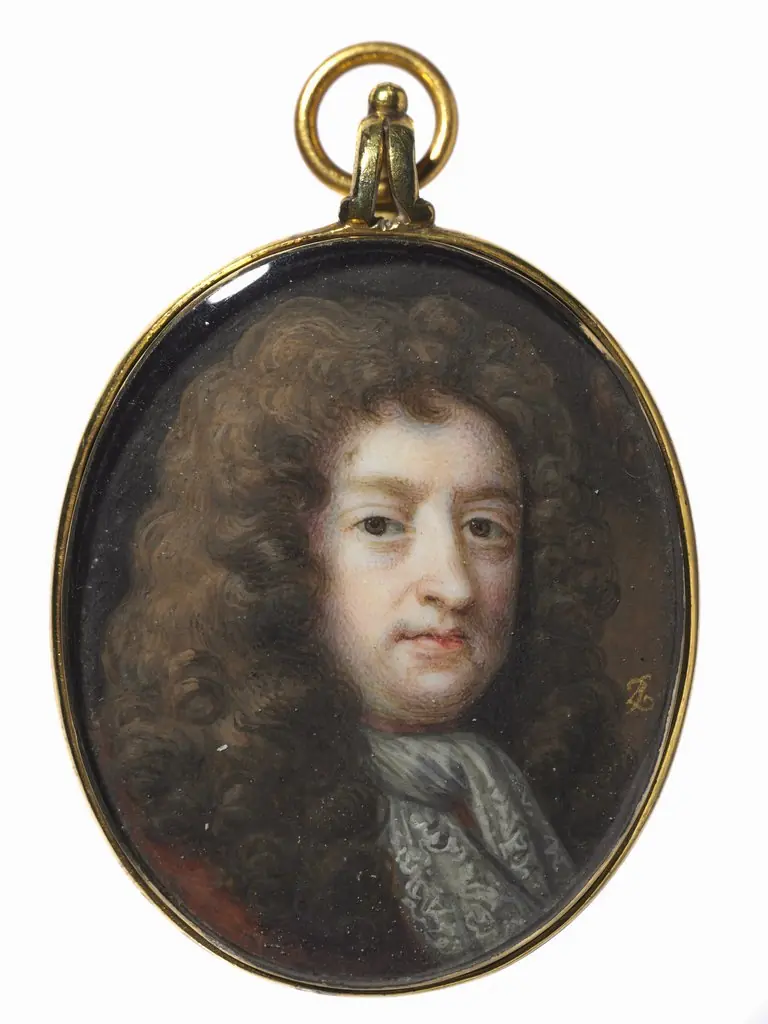 Portrait of Samuel Butler
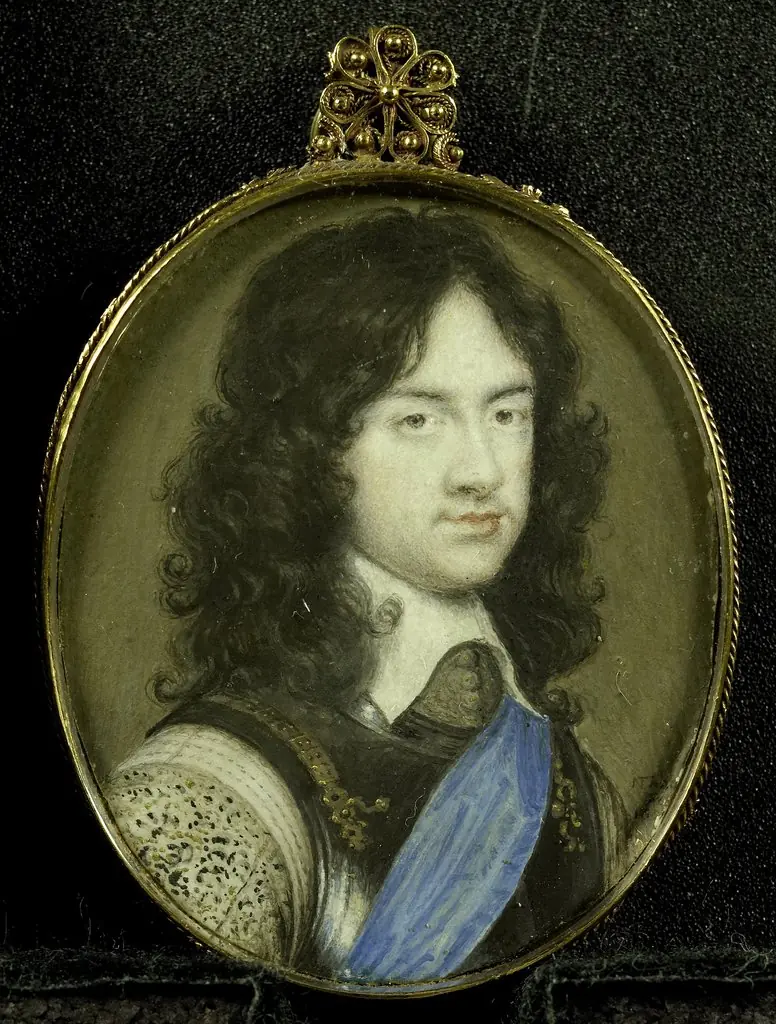 Portrait of Prince Charles Stuart of Wales
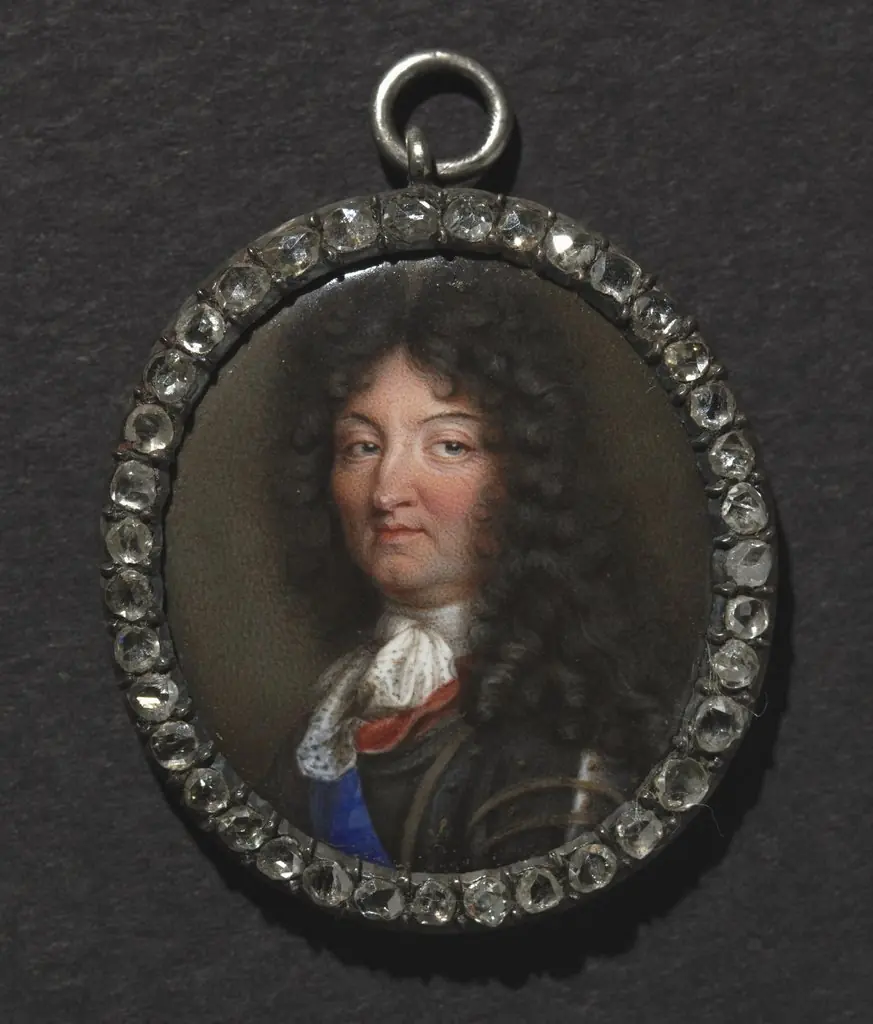 Portrait of King Louis XIV
 Portret van een man en een vrouw (keerzijde) vermoedelijk Willem Frederik Markgraaf van Brandenburg-Anspach (1686-1723) en zijn vrouw Christiane Charlotte van Württemberg (1694-1723)
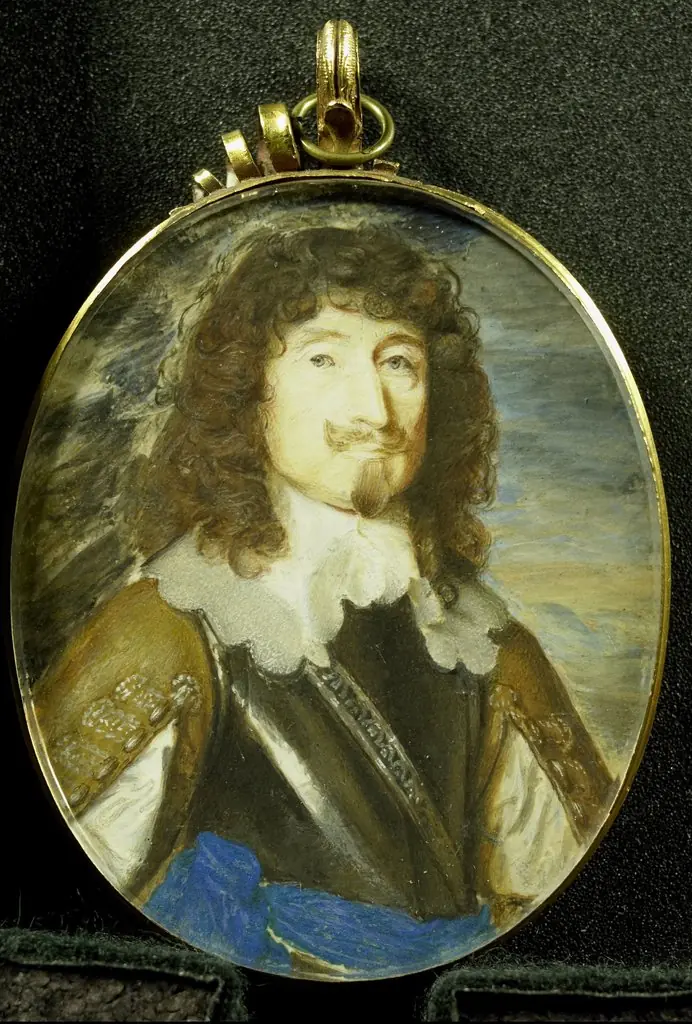 George Gordon (died 1649), 2nd marquess of Huntley
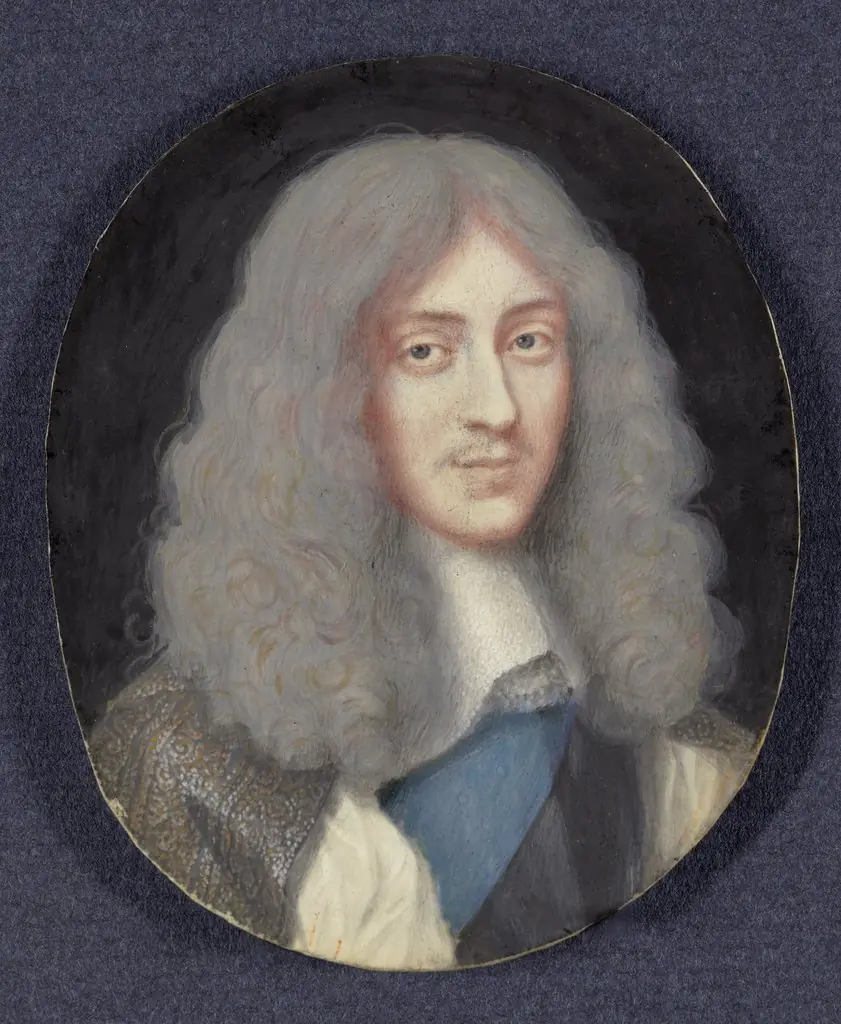 James II (1633-1701), the future King of England, as a young man
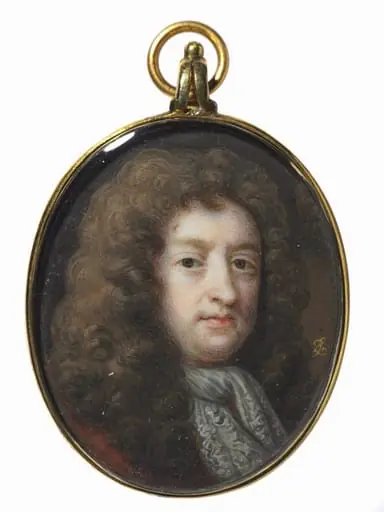 Portrait of Samuel Butler
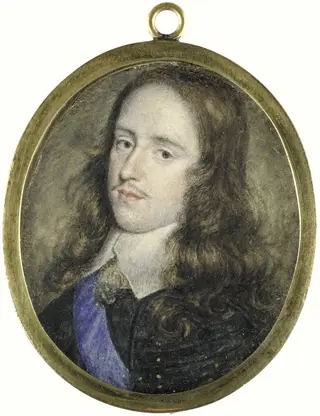 Portrait of Willem II van Oranje- Nassau (1626-1650)
 Portrait of King Louis XIV