Artwork
Portret van een man en een vrouw (keerzijde) vermoedelijk Willem Frederik Markgraaf van Brandenburg-Anspach (1686-1723) en zijn vrouw Christiane Charlotte van Württemberg (1694-1723)
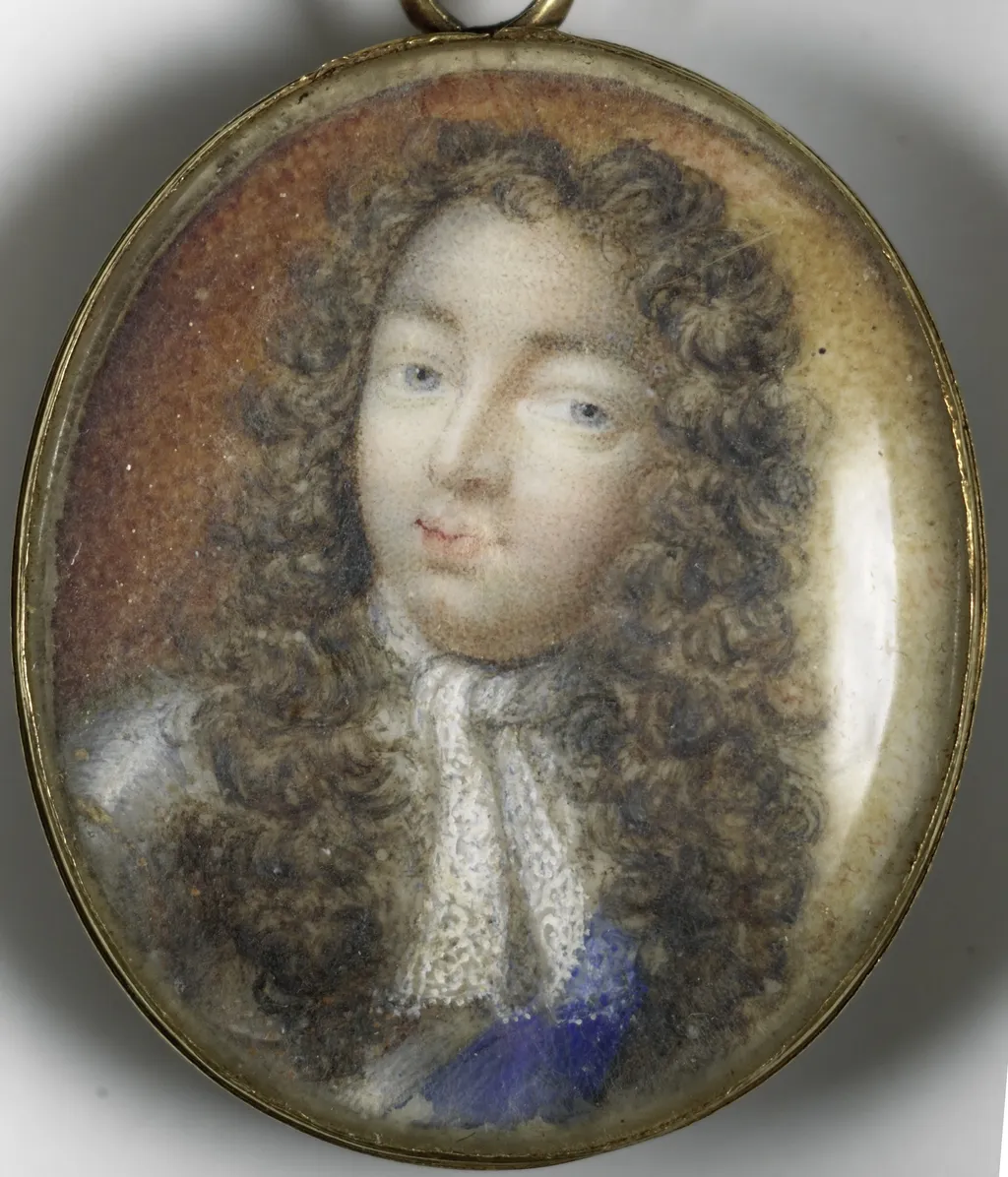
Portret van een man en een vrouw (keerzijde) vermoedelijk Willem Frederik Markgraaf van Brandenburg-Anspach (1686-1723) en zijn vrouw Christiane Charlotte van Württemberg (1694-1723) is an ivory painting by the Rococo painting artist Unknown. It dates from 1720 and is held in the collection of the Rijksmuseum. This round portrait, executed in ivory, depicts two figures in profile, rendered through meticulous carving rather than pigment.
About this work
Technique & Style
The composition is symmetrical, with the sitters aligned and the woman placed slightly forward, emphasizing the pair’s marital bond.
The miniature is painted on ivory, a material commonly used for small-scale portraiture in the early eighteenth century. Handling is precise, with fine brushwork suited to the support’s smooth, polished surface. The composition is symmetrical, with the sitters aligned and the woman placed slightly forward, emphasizing the pair’s marital bond.
Stylistically, the work adheres to the conventions of German portrait miniatures of the period, characterized by restrained elegance and careful delineation of facial features. The subdued palette and delicate modeling reflect the restrained aesthetic typical of such works.
History & Provenance
The double portrait on the reverse, depicting the presumed figures of Margrave Wilhelm Friedrich of Brandenburg-Anspach and his wife Christiane Charlotte of Württemberg, was created in 1720. Executed in ivory, this miniature work originated in Germany. As an anonymous piece, the specific identity of the artist and the details regarding the original commission or patron remain unrecorded in the available documentation. The work is currently held in the collection of the Rijksmuseum.
The ivory portrait miniature is held in the collection of the Rijksmuseum in the Netherlands. The work, created in 1720, measures 2.8 cm in height and 2.4 cm in width. While the piece is cataloged within the museum's holdings, the provided records do not list a specific inventory number or detail any past exhibitions for this object.
Legacy
The painting's later influence and reputation are tied to its presence in the Rijksmuseum collection, where it is recognized as a notable example of 18th-century ivory portraiture. Its attribution to Willem Frederik Markgraaf van Brandenburg-Anspach and his wife Christiane Charlotte van Württemberg has contributed to scholarly discussions on German aristocratic portraiture during the early 1700s.
The work's legacy is further shaped by its classification as an anonymous painting within the museum's holdings, reflecting evolving interpretations of authorship and provenance in Dutch and German art traditions.
Overview
This round portrait, executed in ivory, depicts two figures in profile, rendered through meticulous carving rather than pigment. The medium’s natural pale tone forms the basis of the composition, with subtle gradations of shading lending volume to facial features. The work’s modest scale and worn edges suggest it was intended for intimate viewing, possibly as a personal memento or decorative object.
Subject & Meaning
The double portrait is believed to represent Willem Frederik, Margrave of Brandenburg-Ansbach, and his wife, Christiane Charlotte of Württemberg. The profiles, set against a dark ground, emphasize the subjects’ social status through refined detailing of costume and physiognomy. Such ivory carvings often served as commemorative objects, preserving likenesses of nobility in a durable yet delicate form.
Context
Ivory portrait miniatures emerged as a luxury art form in the Baroque period, favored by aristocrats for their personal and diplomatic value. The medium’s rarity and the skill required for carving elevated such works above painted miniatures. This example reflects the era’s fascination with portraiture as a means of asserting lineage and presence, even in absence.
Artist & collection