Artwork
Profane paintings from Sigena: Knights in battle and soldier attacked by a lion
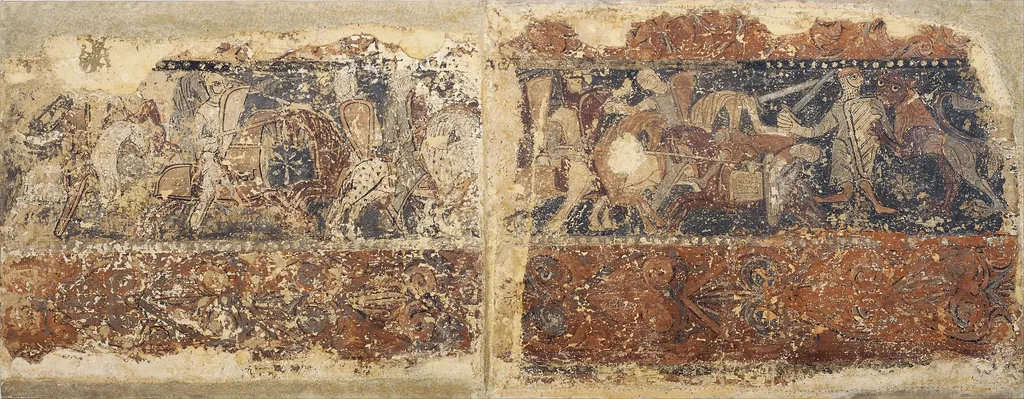
Profane paintings from Sigena: Knights in battle and soldier attacked by a lion is an unspecified painting by the Romanesque artist Unknown. It dates from 1200 and is held in the collection of the Museu Nacional d'Art de Catalunya.
About this work
Overview
This painting is a surviving fragment from a larger medieval narrative cycle originally located in the Royal Monastery of Santa María de Sigena.
This painting is a surviving fragment from a larger medieval narrative cycle originally located in the Royal Monastery of Santa María de Sigena. It depicts two distinct battle scenes: a group of mounted knights in combat and a lone soldier under assault by a lion. Rendered in subdued earth tones with careful shading, the work emphasizes texture and movement, suggesting it was part of a series illustrating chivalric or moral themes.
Subject & Meaning
The dual scenes likely convey symbolic contrasts, human conflict on the left, and a trial of courage against nature on the right. The lion, a common medieval emblem of danger or divine test, may represent a moral challenge faced by the warrior. Together, the images could reflect ideals of knightly virtue under duress, blending historical warfare with allegorical tradition common in monastic art.
Technique & Style
The artist employed fine brushwork to render armor details, fabric folds, and the lion’s fur with tactile precision. Chiaroscuro is used subtly to model forms and suggest volume, while the muted palette of ochres, browns, and grays enhances the somber tone. Compositionally, the scenes are tightly framed, focusing attention on action and physical tension without background distraction.
History & Provenance
The painting originated in the 13th-century Cistercian monastery of Sigena in Aragon, Spain, likely as part of a series decorating a chapter house or refectory. It was removed during the 19th-century secularization of church property and later fragmented. The surviving panel was recovered and conserved, now held in a public collection as a rare example of Iberian Romanesque mural painting.
Context
Created during a period when monastic communities commissioned didactic imagery, the work reflects the fusion of religious instruction with secular chivalric culture. Similar scenes appear in other Spanish and French monastic sites, where battle motifs served as metaphors for spiritual struggle. The style aligns with regional Romanesque traditions, though its naturalism suggests contact with broader European pictorial developments.
Legacy
As one of the few preserved fragments from Sigena’s original decorative scheme, it offers insight into the visual language of medieval Iberian monastic art. Its survival, despite fragmentation and dispersal, underscores the fragility of medieval wall paintings. Scholars value it for its technical skill and as evidence of how secular themes were integrated into religious spaces.
Artist & collection









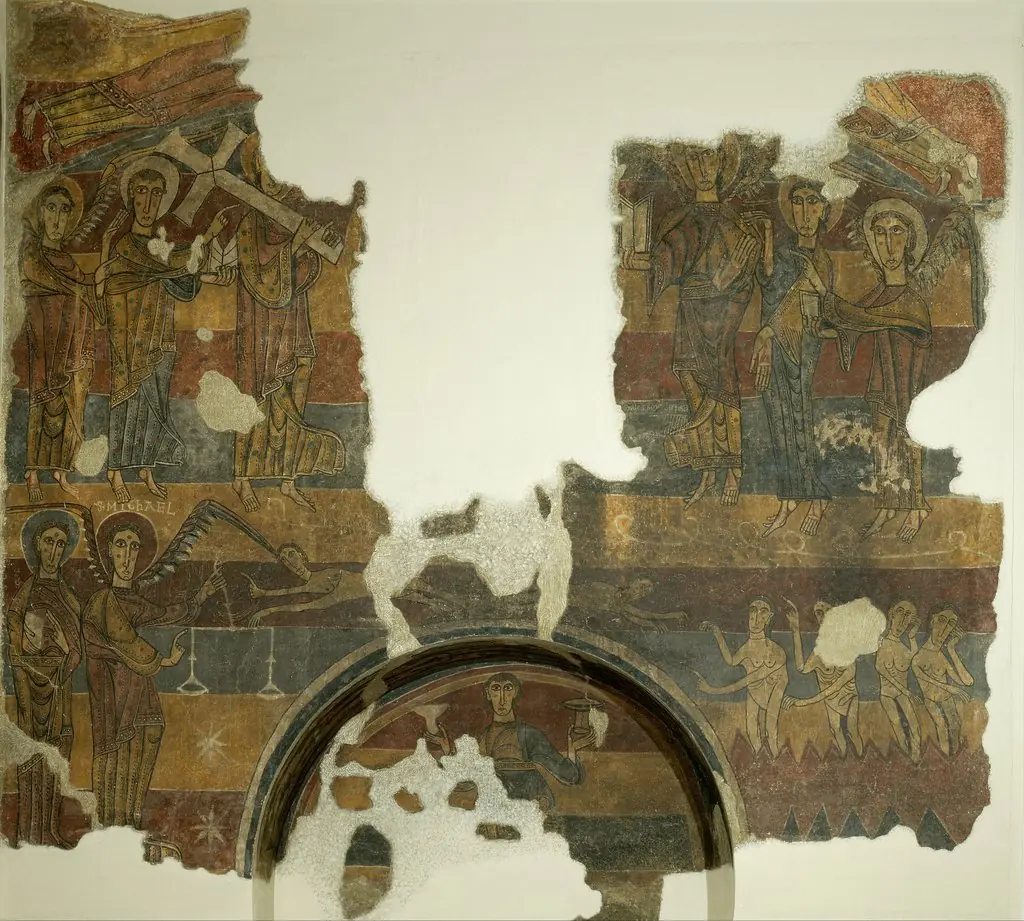 The Day of Judgement from Santa Maria de Taüll
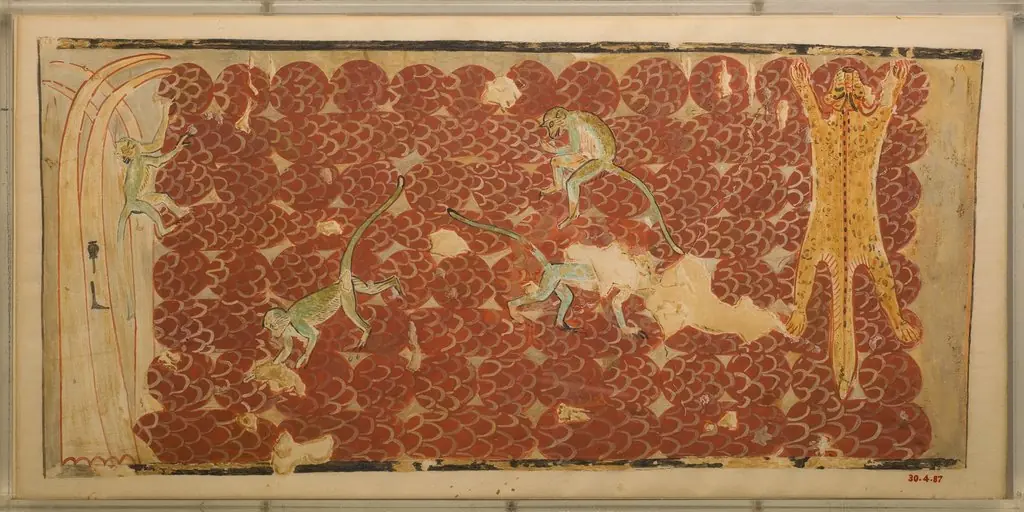 Provisions from Nubia Stored in the Temple, Tomb of Rekhmire
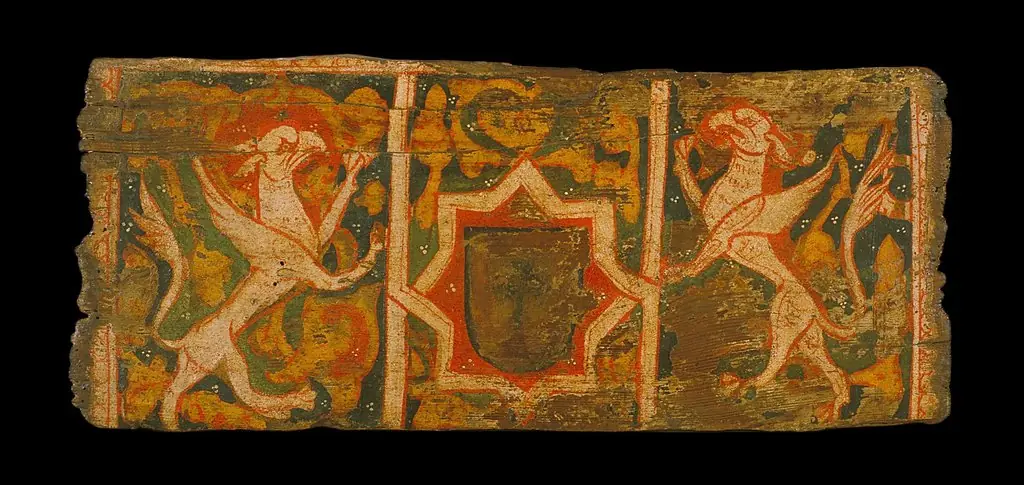 Coffered ceiling panel with coat of arms and griffins rampant
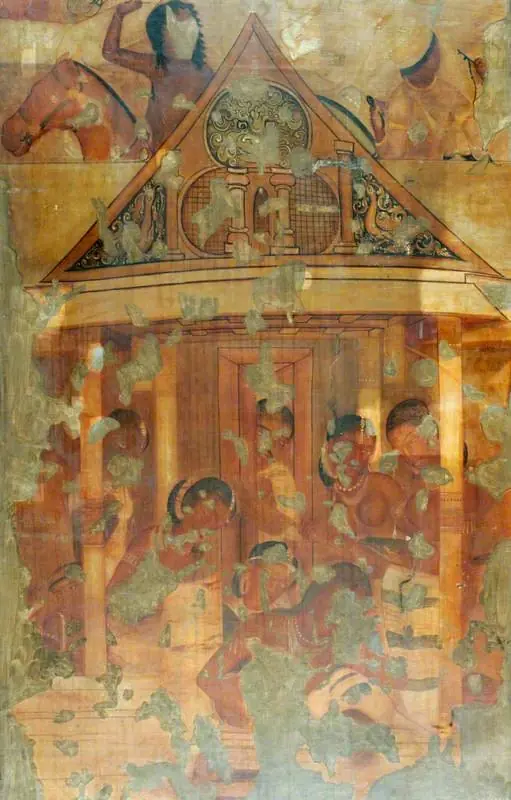 Copy of Painting inside the Caves of Ajanta (cave 17)
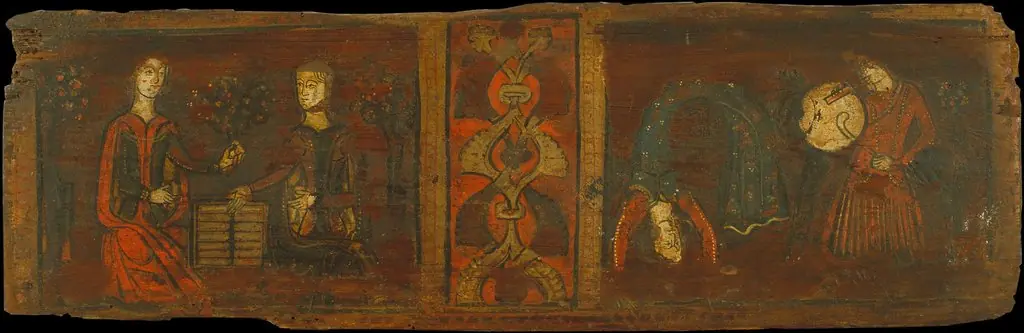 Small coffered ceiling panel with scenes of gallantry and dancing
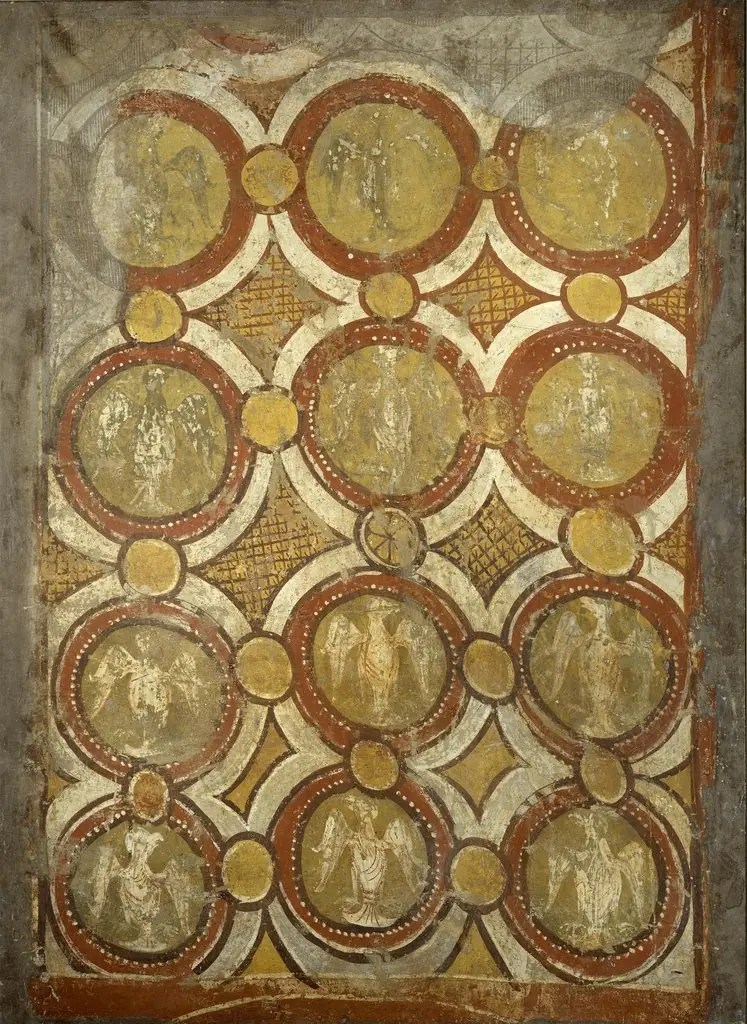 Decorative Panel with Eagles
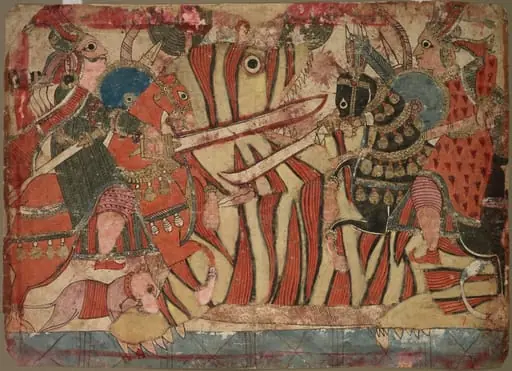 Illustration of the Mahabharata