Artwork
宋人枇杷猿戲圖 軸
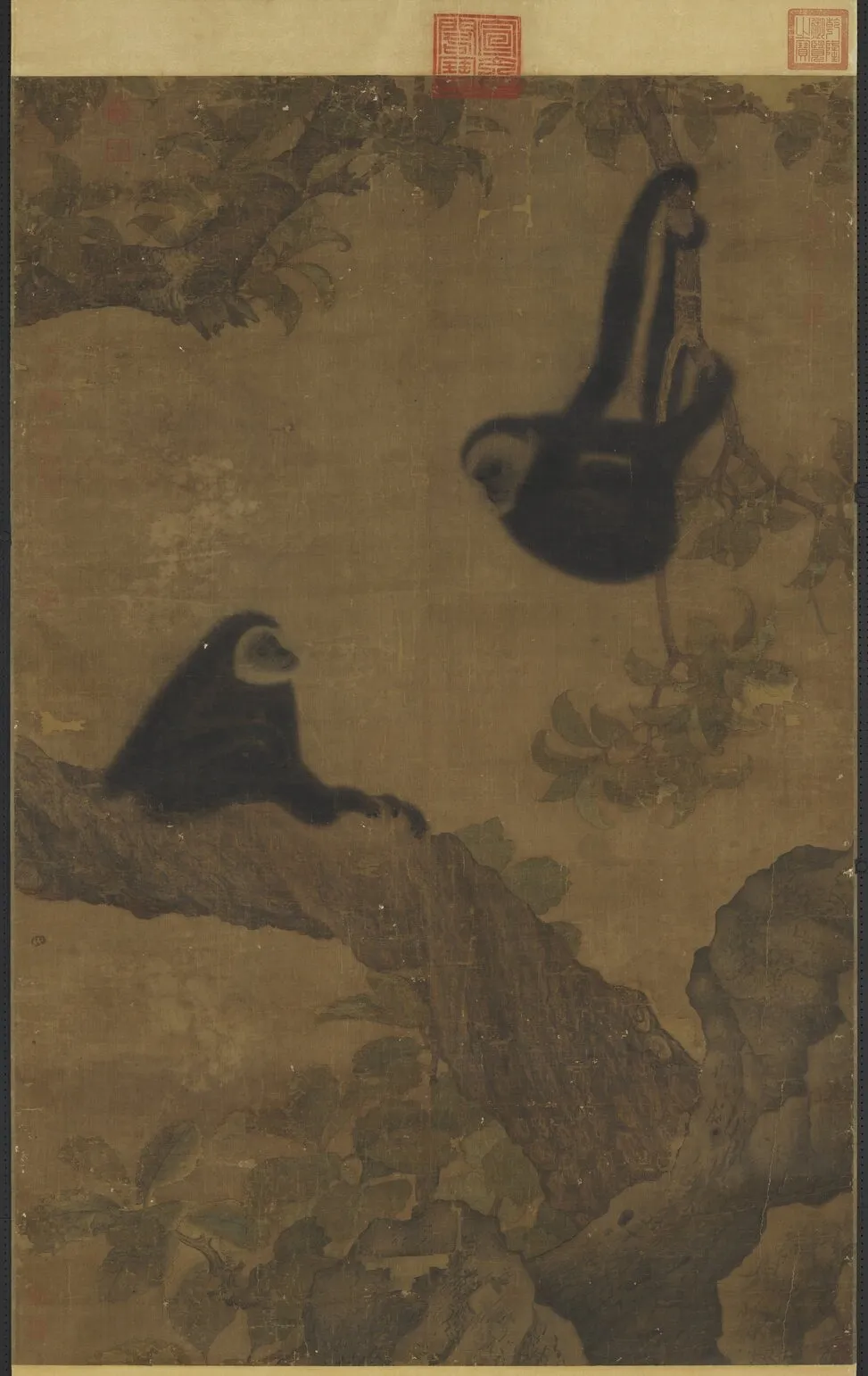
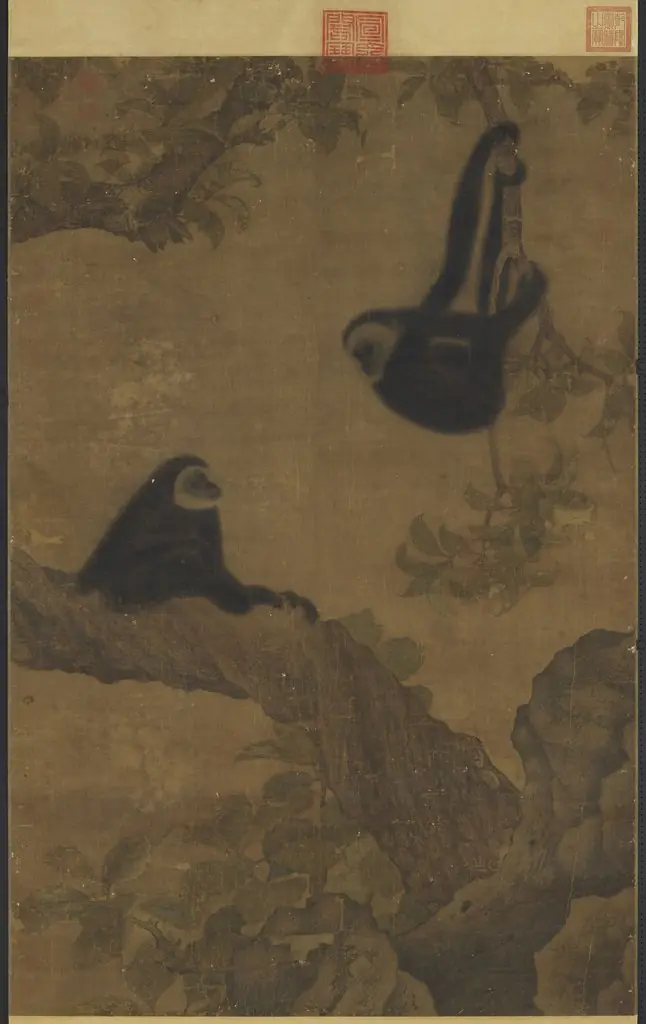
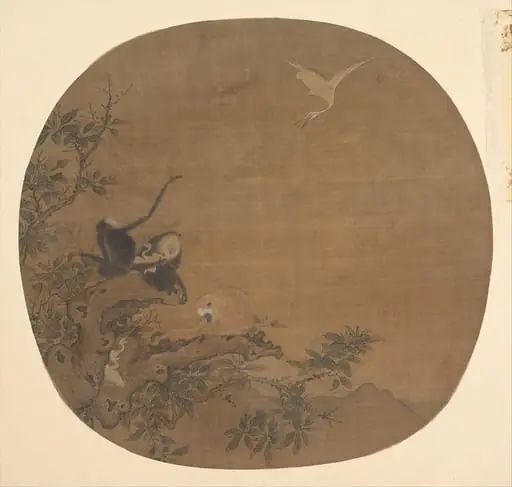
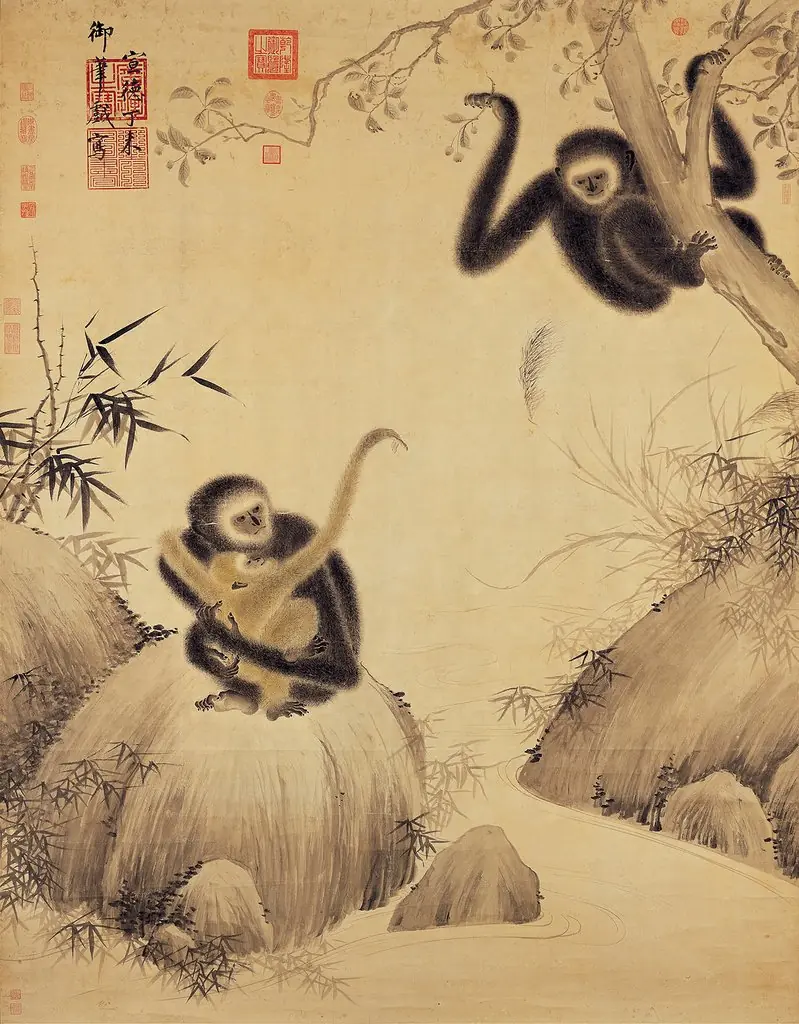
宋人枇杷猿戲圖 軸 is an unspecified painting by Unknown. It dates from 1850 and is held in the collection of the National Palace Museum. This silk scroll, titled “Song‑person Loquat Monkey Play Scene,” presents a quiet tableau of two monochrome monkeys perched amid a tree.
About this work
Overview
This silk scroll, titled “Song‑person Loquat Monkey Play Scene,” presents a quiet tableau of two monochrome monkeys perched amid a tree. One figure hangs upside‑down from a branch, while the other sits upright, observing its companion. The composition is set against a muted brown ground, with subtle darker shading that suggests depth without overwhelming the delicate brushwork.
Subject & Meaning
The work captures a moment of playful interaction between the primates, a motif often employed in Chinese art to symbolize wit, curiosity, and the harmonious relationship between humans and nature. The contrasting postures—one inverted, one attentive—invite contemplation of balance and the spontaneous joy found in everyday observation.
Technique & Style
Executed on fine silk, the painting relies on restrained brushstrokes that convey the monkeys’ forms with minimal lines. The artist employs a limited palette of black, white, and earthy browns, allowing tonal variations to model the figures and foliage. The smooth silk surface enhances the subtle gradations of ink, creating a serene, almost meditative visual effect.
History & Provenance
The scroll is part of the collection of the National Palace Museum, which acquired it as a representative example of Song‑period genre painting. Its provenance traces back to the imperial archives, where such silk works were valued for both their aesthetic qualities and their didactic symbolism.
Context
During the Song dynasty, paintings of animals in natural settings flourished as scholars sought to reflect moral virtues through depictions of the natural world. Monkeys, in particular, appeared frequently in literati circles, serving as allegorical figures that embodied cleverness and the capacity for self‑reflection.
Artist & collection

 Domestic Scene
 Giacomo and Cardinal Marco, investing Andrea, Abbot of San Zeno, with his Benefice
 The Nymph of Fontainebleau
 Portrait of a Woman
 Madonna and Child with Saints in the Enclosed Garden
 Venus and Minerva
 Family Group of Four on Sofa
 Wall painting from Room H of the Villa of P. Fannius Synistor at Boscoreale