Artwork
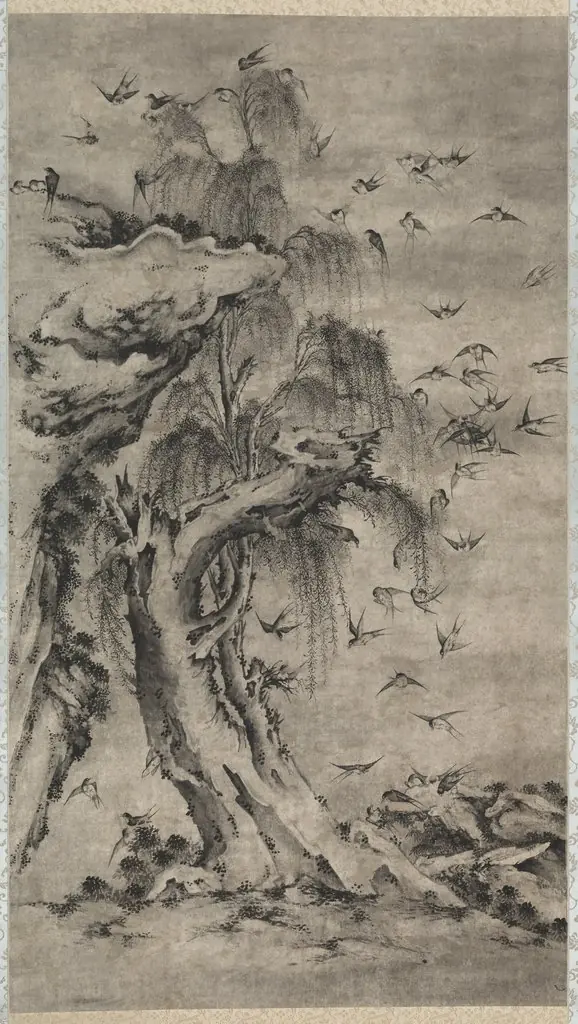
Willow and Magpie
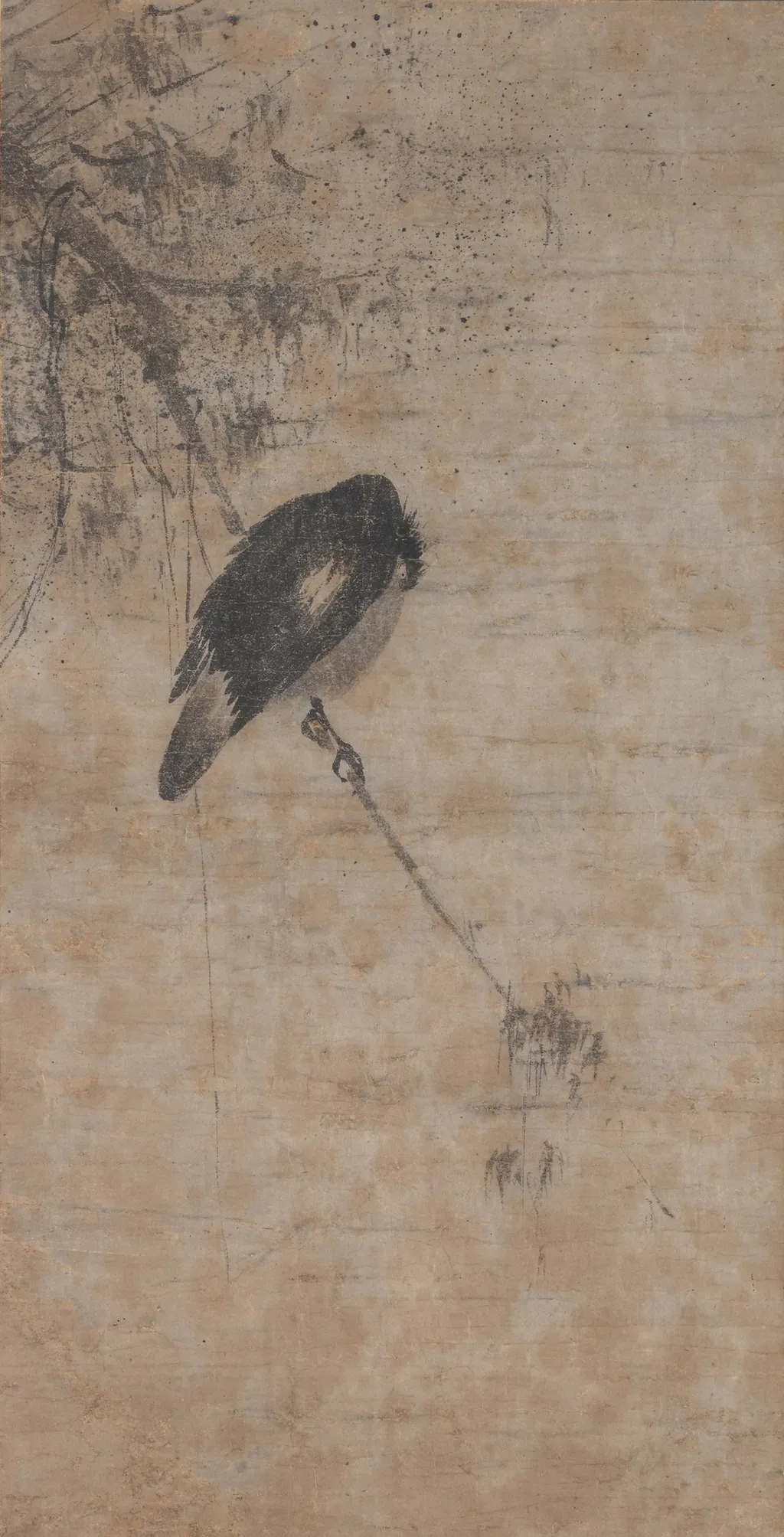
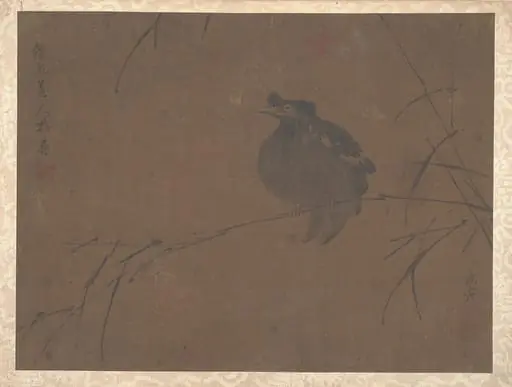
Willow and Magpie is an unspecified painting by the Chinese Orthodox School artist Muqi. It dates from 1250 and is held in the collection of the Cleveland Museum of Art.
About this work
Overview
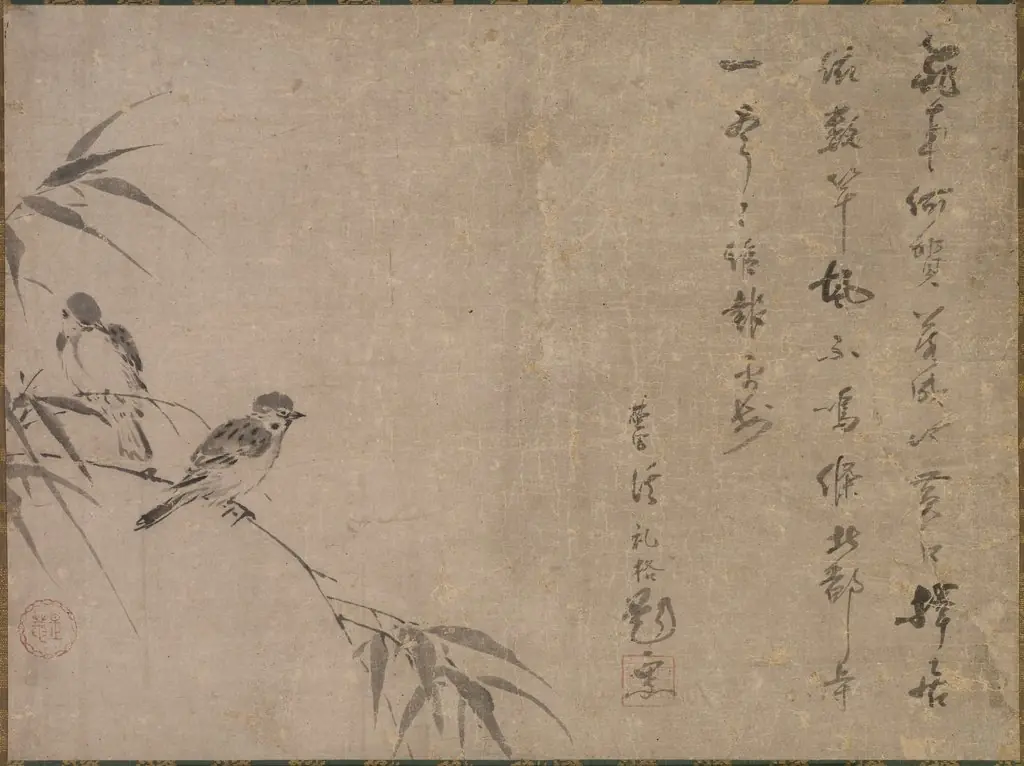
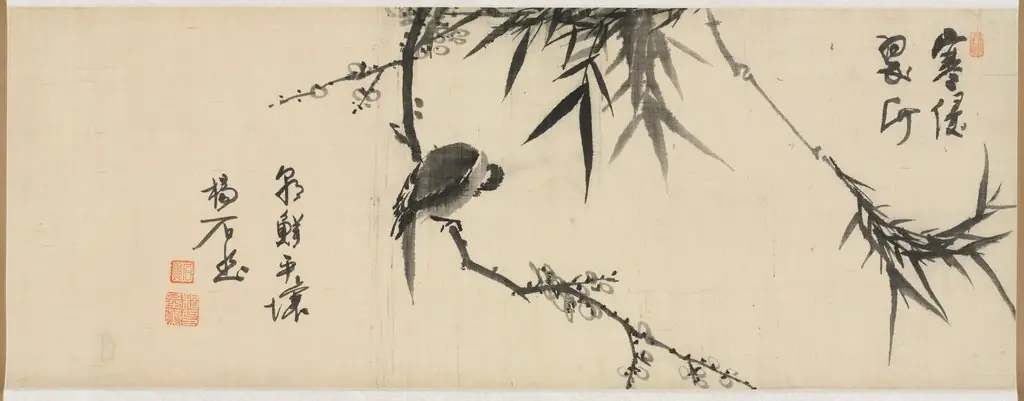
Willow and Magpie is a modest Chinese painting attributed to the monk-artist Muqi, dating to around 1250. Executed on paper, the work measures only a few centimeters across and is part of the collection of the Cleveland Museum of Art. Its composition is spare, focusing on a single bird against an unadorned surface.
Subject & Meaning
The central figure is a magpie perched on a slender branch, its dark plumage rendered with crisp brushwork. In Chinese symbolism, magpies often signify good news or auspicious encounters, suggesting the painting may have been intended as a subtle talisman of favorable omens.
Technique & Style
Muqi employs a monochrome ink palette, allowing the bird’s silhouette to contrast sharply with a lightly washed background that resembles a rough wall. The artist leaves portions of the paper untouched, creating negative space that heightens the visual impact of the bird and hints at a minimalist aesthetic characteristic of Chan Buddhist art.
History & Provenance
Created in the mid‑13th century, the piece remained in private collections for several centuries before entering the Cleveland Museum of Art’s holdings in the 20th century. Its attribution to Muqi is based on stylistic parallels with other dated works by the monk-painter.
Context
Muqi was a prominent figure in the Southern Song period, known for integrating Zen Buddhist principles into visual art. Willow and Magpie reflects the era’s preference for understated compositions that invite contemplation, aligning with the broader cultural movement toward simplicity and spiritual introspection.
Artist & collection