Artwork
Radha and Krishna
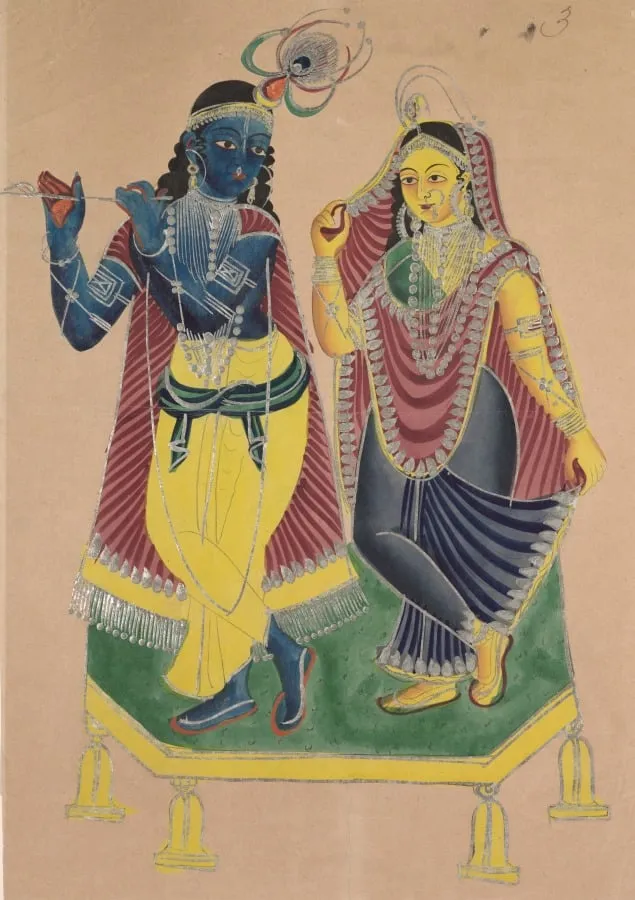
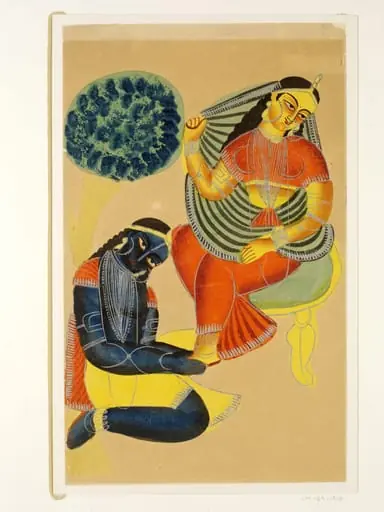
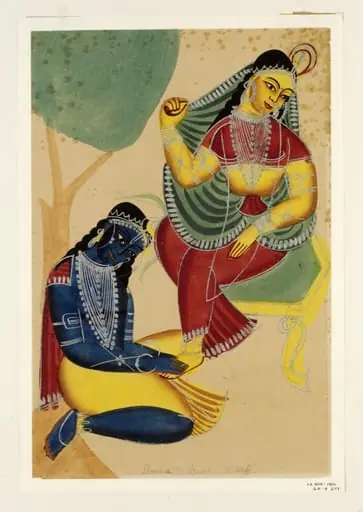
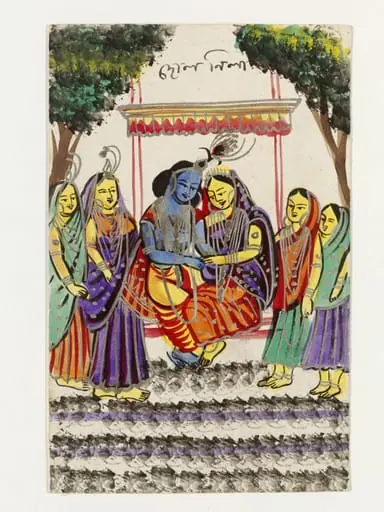
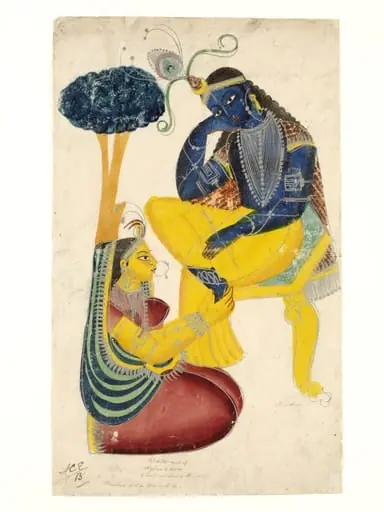
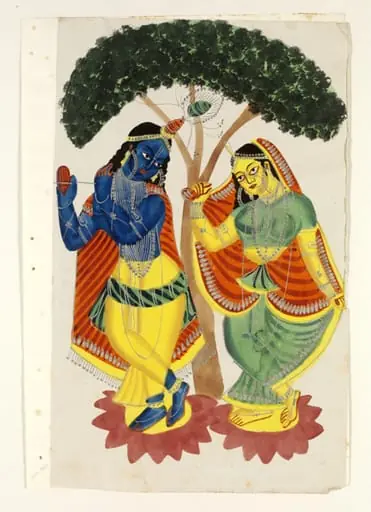
Radha and Krishna is an unspecified painting by the Bengal School artist Unknown. It dates from 1890 and is held in the collection of the Cleveland Museum of Art. The work depicts a pair of mythological figures positioned on a green platform edged in yellow.
- Accession no.
- 2003.167
About this work
Overview
The work depicts a pair of mythological figures positioned on a green platform edged in yellow. The left figure is rendered with blue skin, dressed in a vivid red‑yellow costume and holding a flute, while the right figure wears a red headscarf, yellow‑blue garments, and carries a fan. Both are adorned with intricate jewelry and stand in a relaxed, symmetrical pose against an unadorned backdrop.
Subject & Meaning
The characters are recognisable as the Hindu deities Radha and Krishna, central to devotional narratives that celebrate divine love. Their calm expressions and intimate proximity suggest a moment of tender interaction, emphasizing themes of spiritual union and the idealized romance celebrated in Vaishnavite tradition.
Technique & Style
Executed in a flat, decorative manner, the painting relies on bold, saturated colours and patterned clothing to convey visual interest. The figures are outlined with clear contours, and the surface is largely devoid of depth cues, a hallmark of folk‑art approaches that prioritize narrative clarity over realistic modeling.
Context
The composition aligns with the aesthetic of 19th‑century Bengali popular art, particularly the Kalighat school, which often portrayed mythological scenes with vivid palettes and simplified forms. Such works were commonly produced for devotional use and for sale to pilgrims visiting the Kalighat temple complex.
Legacy
While the piece reflects a specific regional style, its depiction of Radha and Krishna continues to influence contemporary visual interpretations of the pair, reinforcing their enduring presence in Indian religious and artistic iconography.
Artist & collection