Artwork
Rakkan (Arhat)
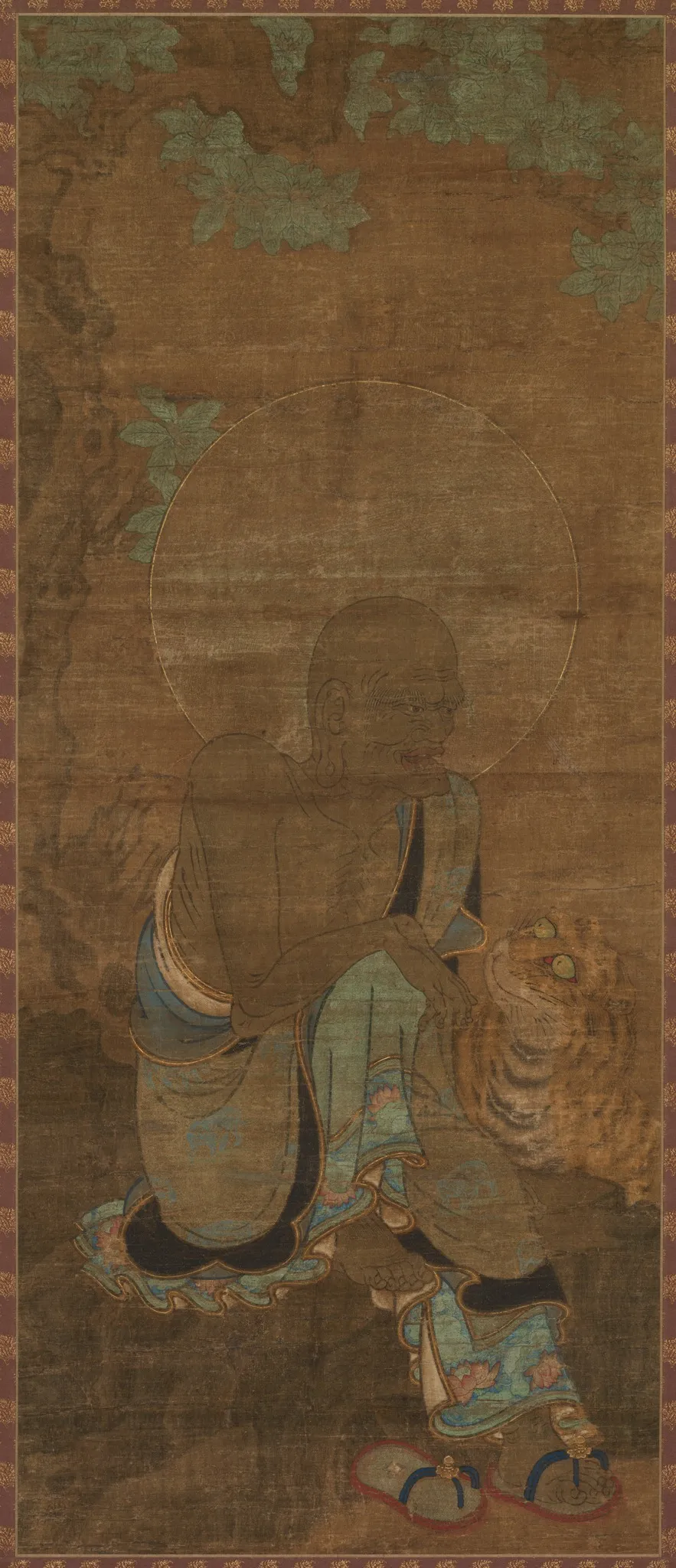
Rakkan (Arhat) is an unspecified painting. It dates from 1349 and is held in the collection of the Cleveland Museum of Art.
About this work
History & Provenance
The painting Rakkan (Arhat) is dated to 1349. It is held in the collection of the Cleveland Museum of Art in Cleveland, Ohio, which acquired it in 1991 under the accession number 1991.61. The museum's records attribute the work to an unknown artist and classify it as a painting depicting a human figure. No specific exhibition history is documented in the available sources.
Context
The piece is attributed to an unknown artist and is held in the collection of the Cleveland Museum of Art in Cleveland, Ohio.
Rakkan (Arhat) is a painting dated 1349, classified within the painting genre and depicting a human figure. The piece is attributed to an unknown artist and is held in the collection of the Cleveland Museum of Art in Cleveland, Ohio. Its creation date places it in the mid-fourteenth century, a period marked by limited documentation of individual artists, while its inclusion in a major museum's holdings reflects its relevance to the study of medieval Asian visual culture.
Overview
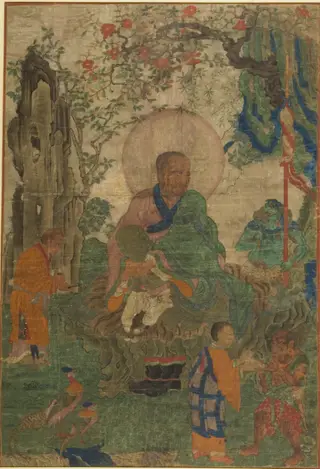
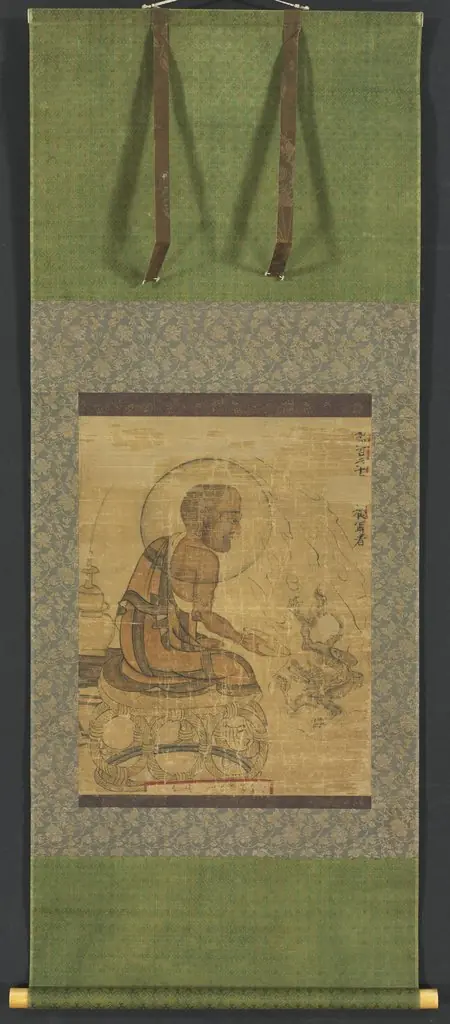
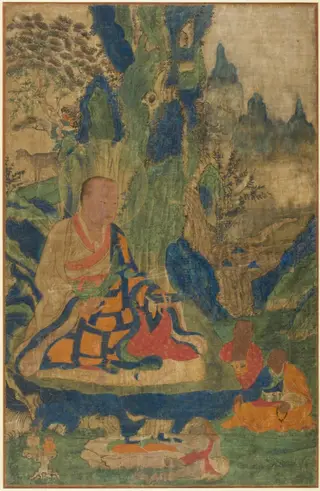
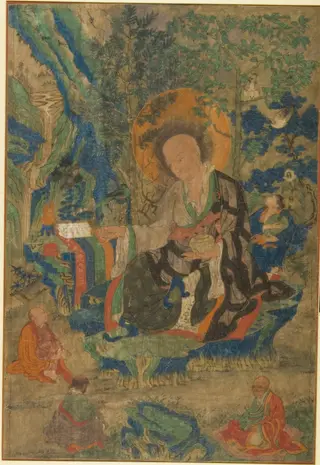
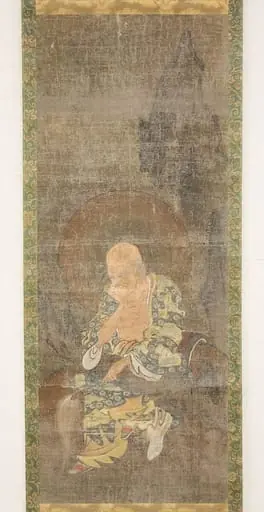
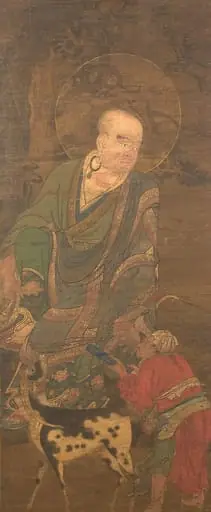
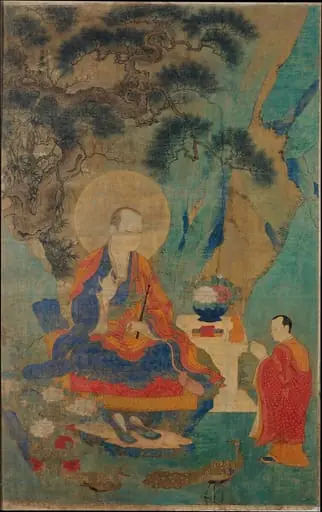
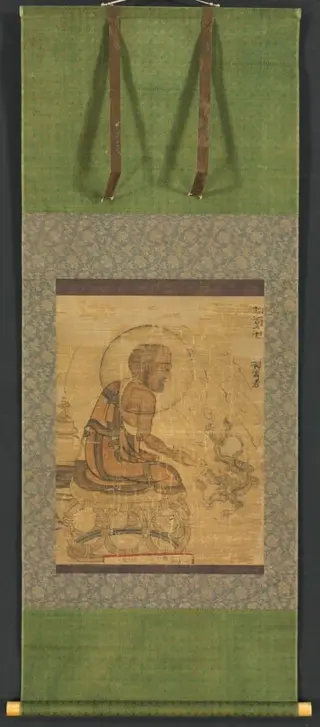
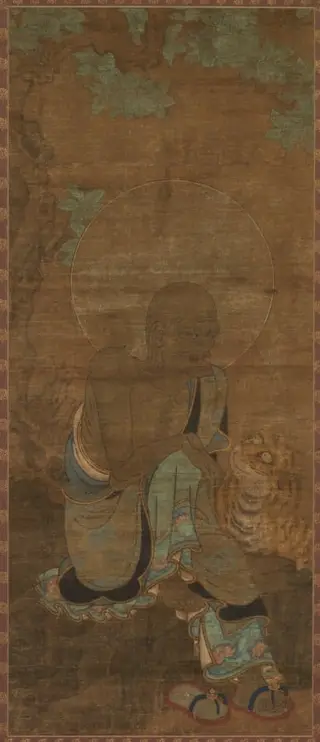
This painting, titled Rakkan (Arhat), depicts a seated figure with a serene expression and a bare chest, adorned in layered robes of muted blues and greens. A golden halo emanates from behind the figure's head, whose feet rest upon a small, round cushion. The background features stylized foliage and clouds rendered in earthy tones of brown and green, contributing to the work's overall contemplative atmosphere.
Subject & Meaning
The artwork portrays a Rakkan, also known as an Arhat, a revered figure in Buddhist tradition who has achieved a high level of spiritual enlightenment. The subject's calm demeanor and simple posture convey a sense of inner peace and detachment, central tenets of Buddhist philosophy. The presence of a cloth bundle in one hand might symbolize the ascetic life or the transmission of teachings.
Technique & Style
The painting employs a distinctive East Asian artistic approach, characterized by the use of flat color fields and clear, defined outlines. This stylistic choice contributes to the figure's tranquil presence and the overall legibility of the composition. The palette of faded blues, greens, and earthy browns creates a harmonious and subdued visual experience, typical of certain devotional works from the region.
Artist & collection