Artwork
Monju with Five Hair Knots
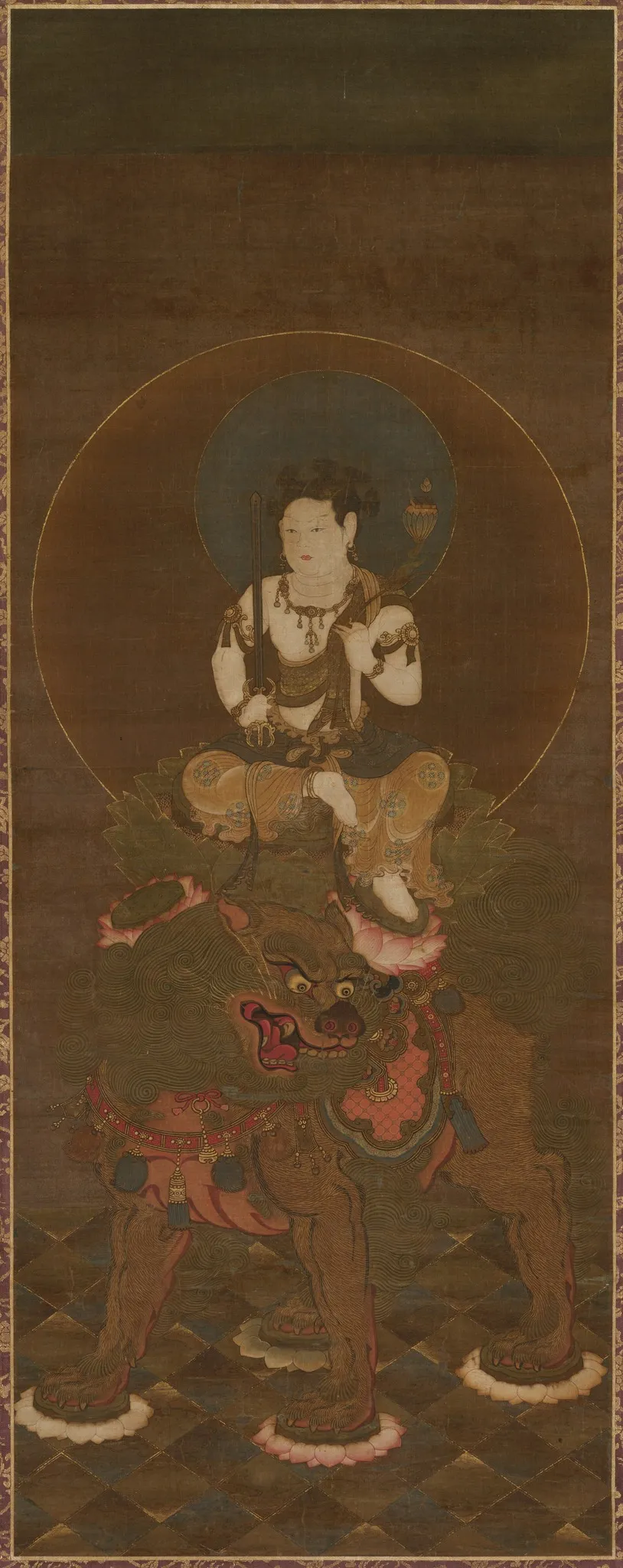
Monju with Five Hair Knots is an unspecified painting. It dates from 1300 and is held in the collection of the Cleveland Museum of Art.
About this work
History & Provenance
The painting is dated to 1299 based on its internal record, with the Cleveland Museum of Art’s accession file placing its creation in Japan during that year.
The painting is dated to 1299 based on its internal record, with the Cleveland Museum of Art’s accession file placing its creation in Japan during that year.
It entered the Cleveland Museum of Art’s collection in 1971 as accession number 1971.21, where it has remained in Cleveland, Ohio.
Monju with Five Hair Knots is held in the collection of the Cleveland Museum of Art, located in Cleveland. The work carries the accession number 1971.21 within the institution's registry. Created in 1299, this religious painting originates from Japan and is attributed to an unknown artist.
Overview
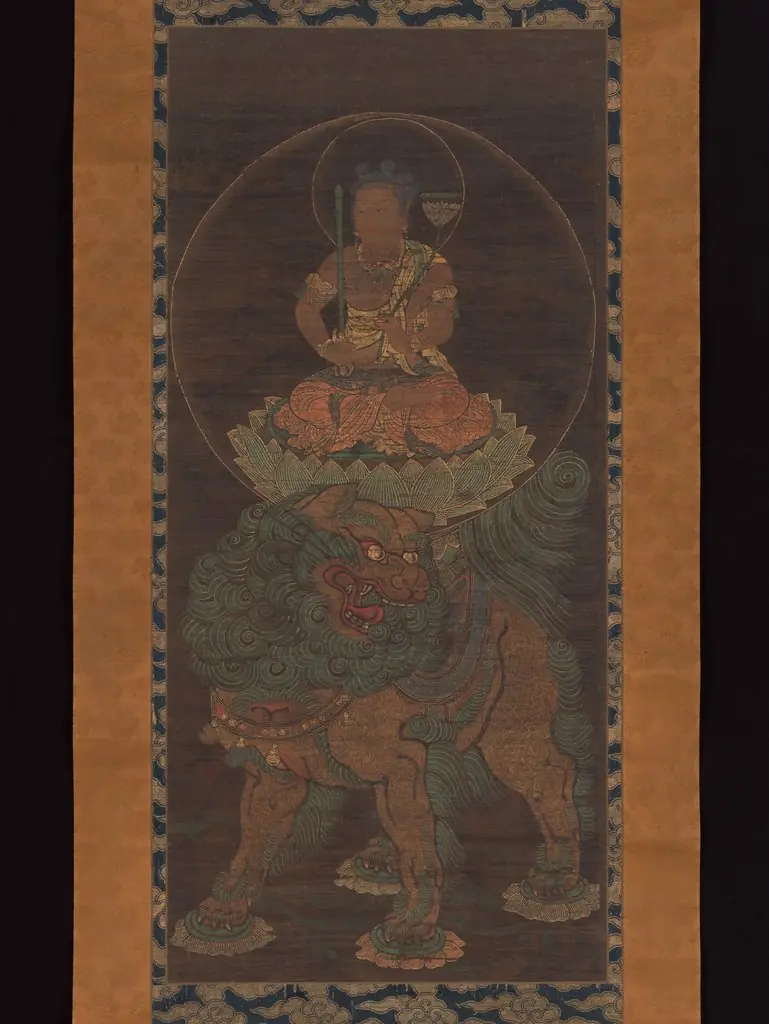
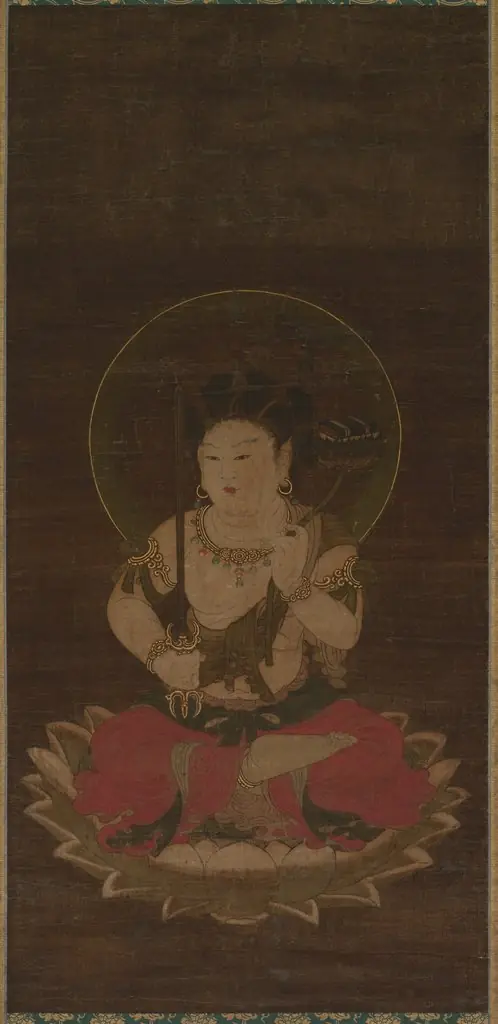
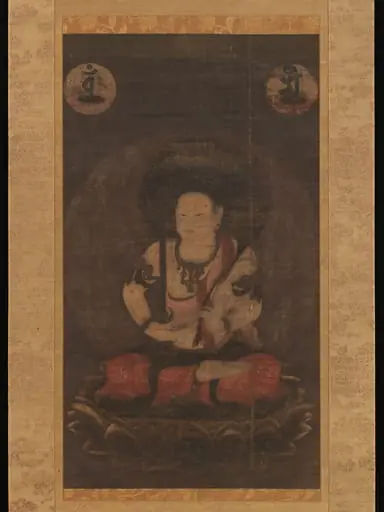
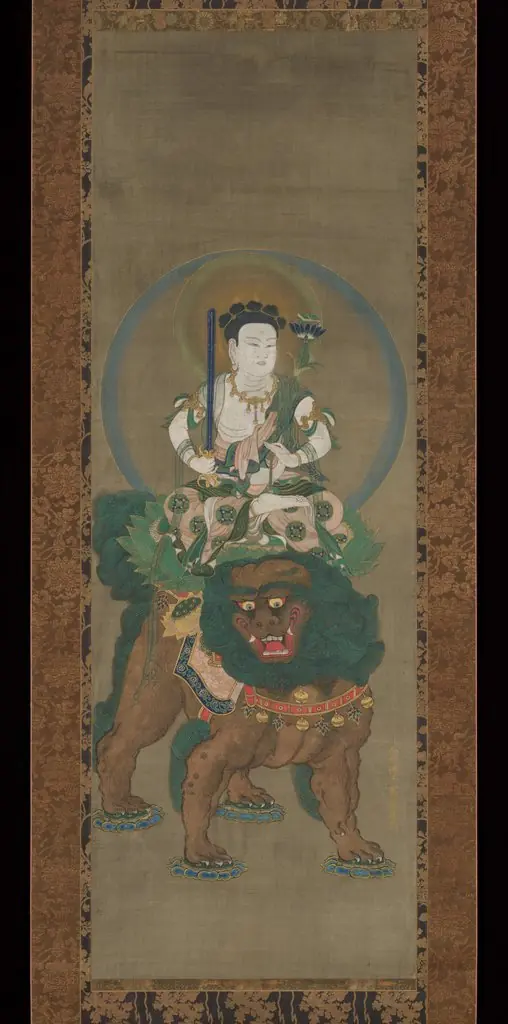
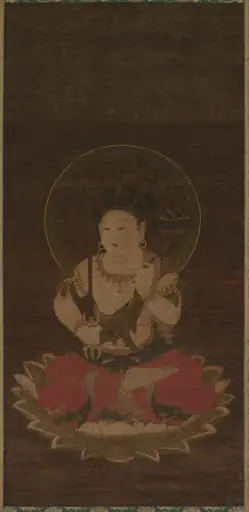
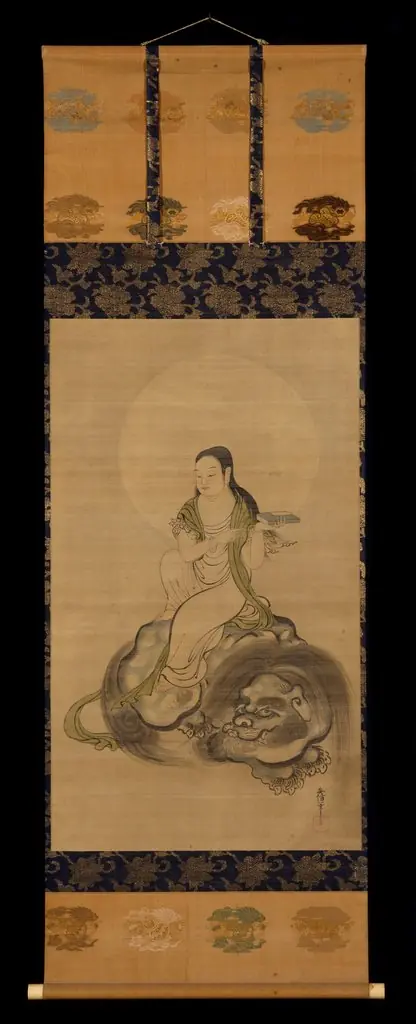
This painting, titled Monju with Five Hair Knots, depicts the bodhisattva Monju (Manjushri) enthroned upon a mythical beast. A radiant halo encircles the figure's head, emphasizing their spiritual significance. The composition draws the viewer's attention to the central deity, whose distinctive hairstyle and elaborate attire are rendered with considerable detail. The muted background allows the vibrant colors of the main subject to stand out.
Subject & Meaning
The artwork portrays Monju, the bodhisattva of wisdom, identifiable by the five knots in his hair, which symbolize the five dhyani-buddhas or the five wisdoms of Buddhism. He is typically shown holding a sword (representing the cutting of ignorance) or a scroll (representing the Prajnaparamita sutra). While the specific object in his hand is not detailed, his posture and mount, often a lion, signifying the roar of the Dharma, reinforce his role as a powerful dispenser of wisdom.
Technique & Style
The artist employed a dynamic visual approach, utilizing bold lines and a vivid palette to create a sense of energy within the composition. The intricate patterns on Monju's flowing robe are rendered with precision, contrasting with the fierce, expressive features of the mythical creature below. The deliberate use of strong colors against a subtle brown background accentuates the central figure, ensuring their prominence and contributing to the painting's overall impactful presence.

Artist & collection