Artwork
Roundel with Agony in the Garden
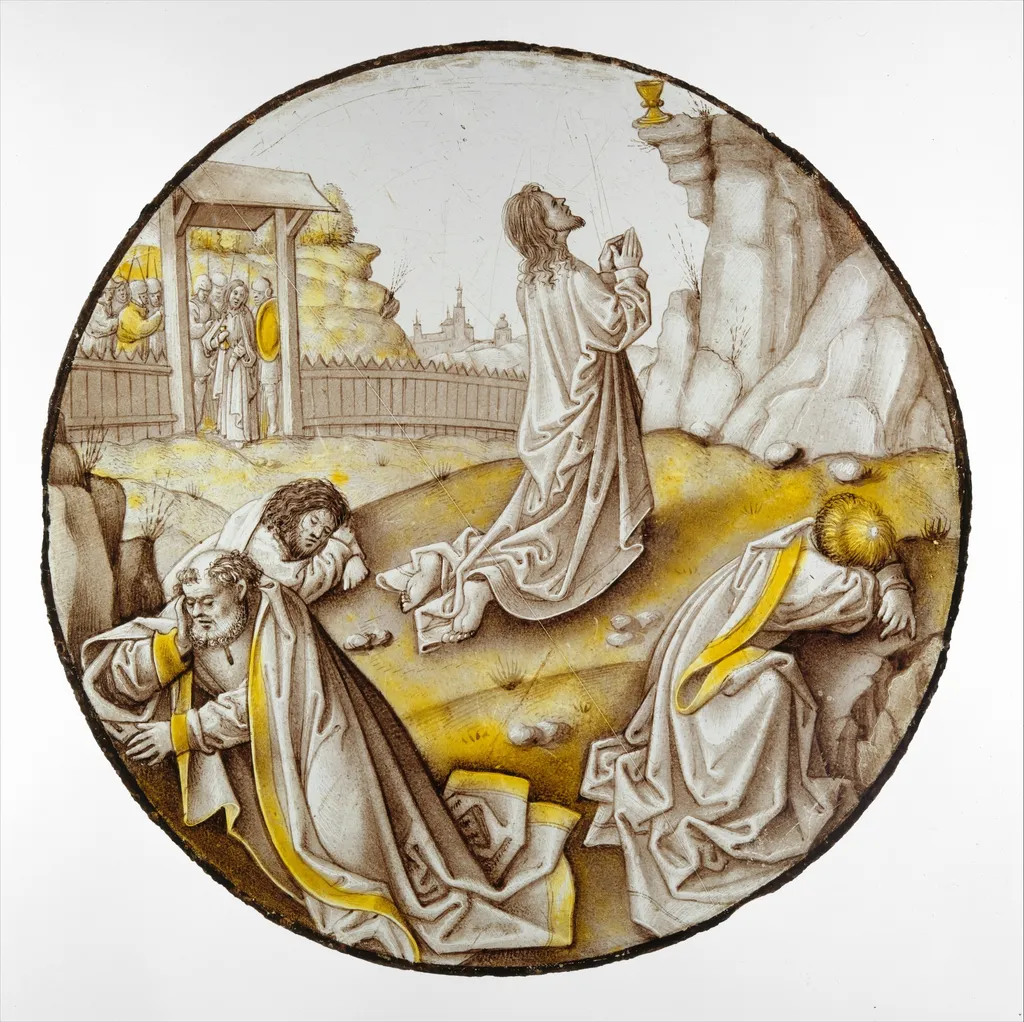
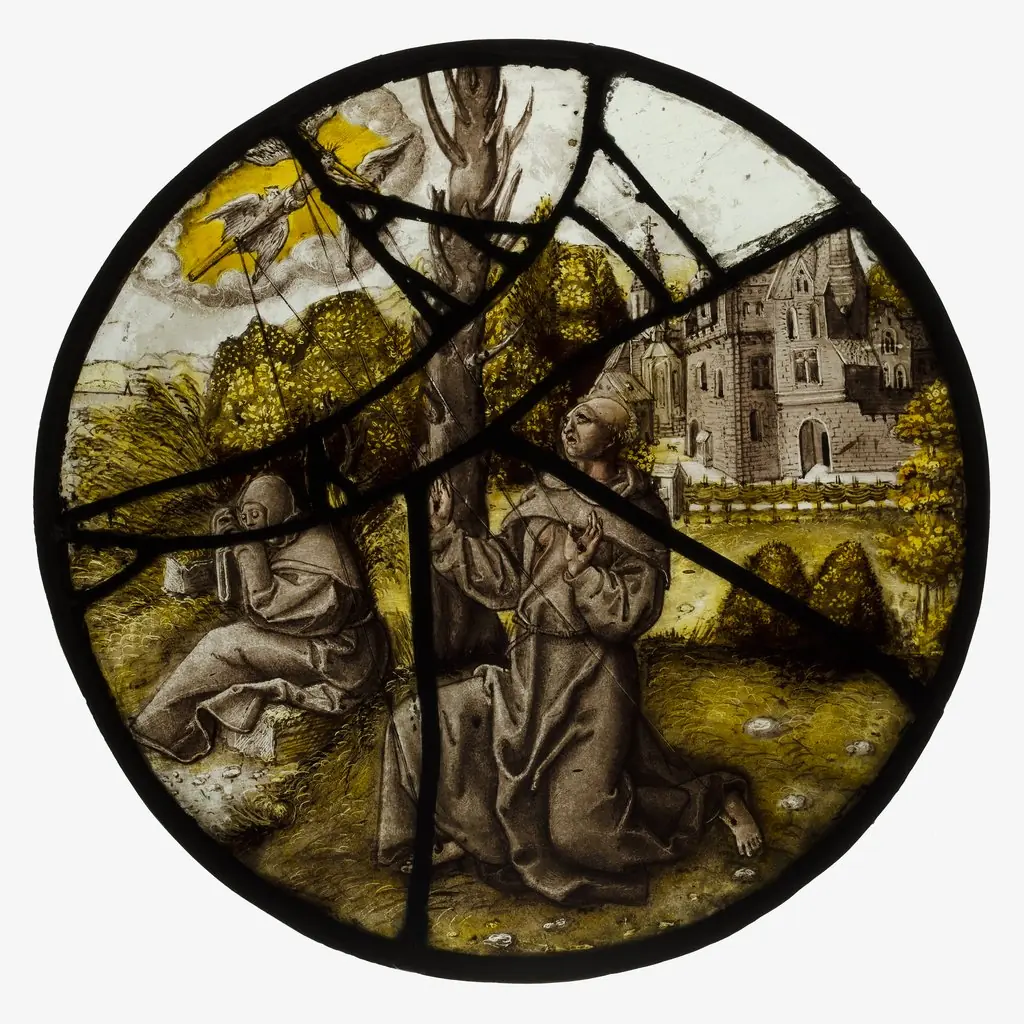
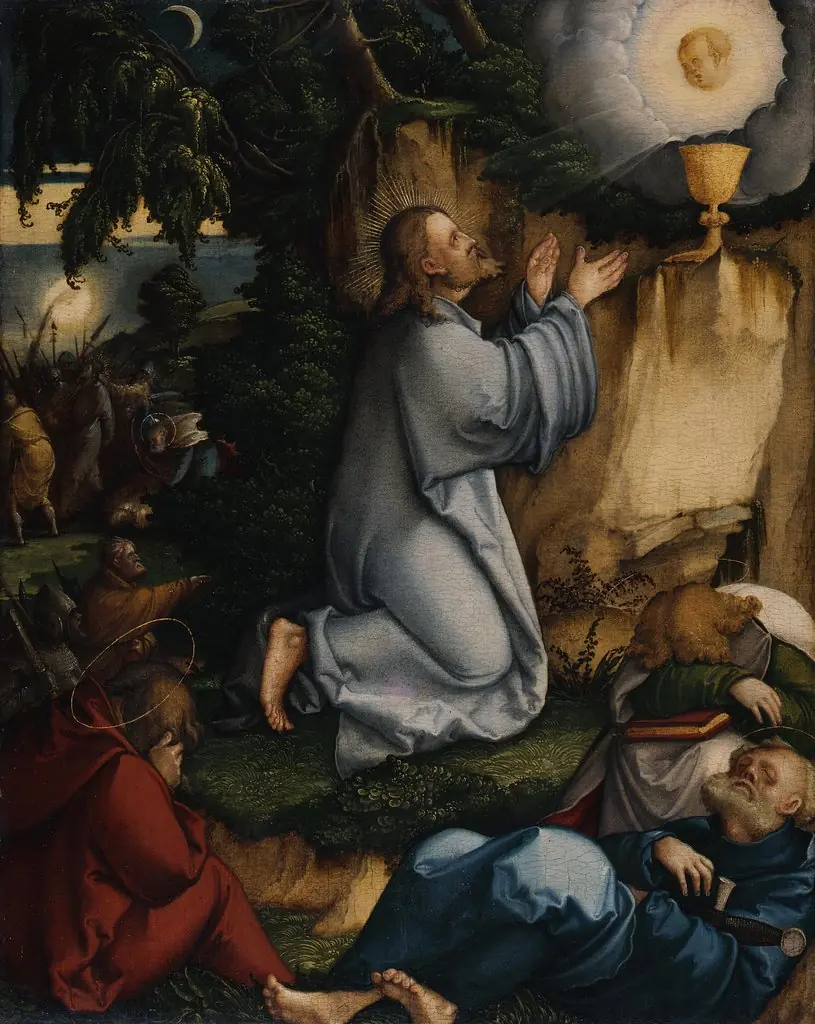
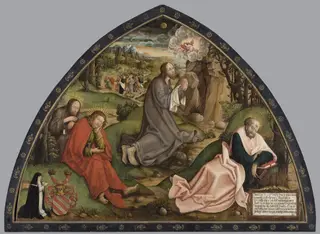
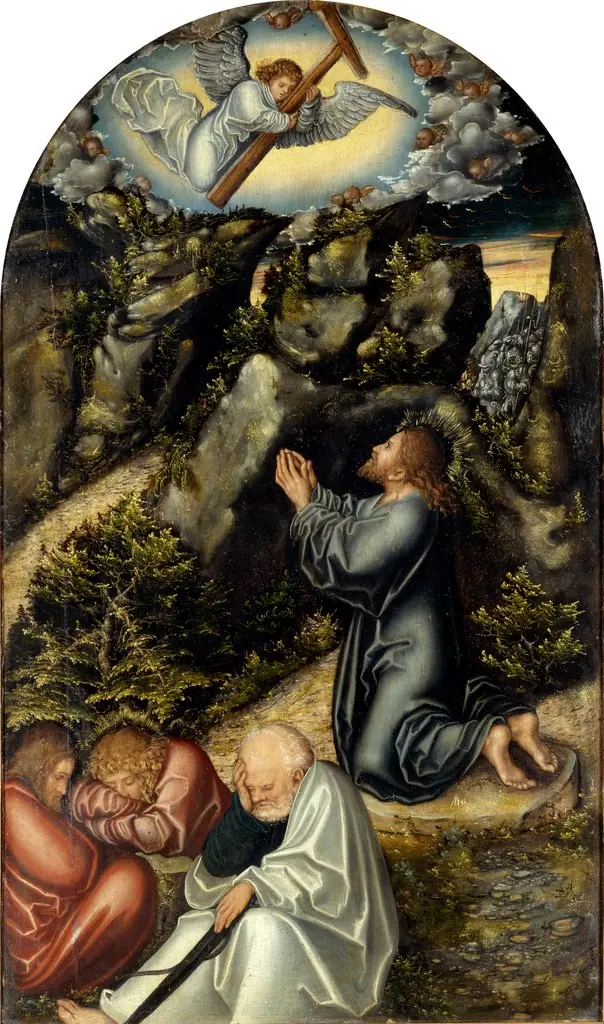
Roundel with Agony in the Garden is an unspecified painting. It dates from 1515 and is held in the collection of the Metropolitan Museum of Art. The work is a circular panel depicting a nocturnal scene dominated by a solitary, robed figure with uplifted arms, appearing to pray.
About this work
Subject & Meaning
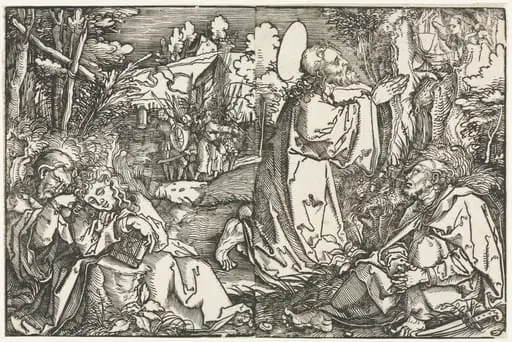
The roundel portrays the moment of Christ’s agony in the Garden of Gethsemane, a scene drawn from the Passion narrative in the Gospels.
The roundel portrays the moment of Christ’s agony in the Garden of Gethsemane, a scene drawn from the Passion narrative in the Gospels. The figure shown kneeling in prayer embodies Christ’s human suffering and submission to divine will, while the surrounding landscape underscores the solitude and impending betrayal. Symbolically, the work links the physical torment of Christ with spiritual anguish, inviting contemplation of sacrifice and redemption.
Its presence in the Metropolitan Museum of Art highlights the museum’s collection of early Northern Renaissance devotional imagery.
History & Provenance
The roundel depicting the Agony in the Garden was created in 1515. The work is classified as a painting and was executed by an anonymous artist, with no specific master identified in available records. Since its inception in the early sixteenth century, the object has entered the collection of the Metropolitan Museum of Art, where it is currently held.
The museum serves as both the current owner and the location where the piece is preserved. No further details regarding an original commission, intermediate owners, or a specific chain of custody prior to its arrival at the museum are provided in the source material.
Roundel with Agony in the Garden is held in the collection of the Metropolitan Museum of Art, where it is catalogued under accession or inventory number 2020.113.7. The work was first exhibited in the museum’s European Paintings galleries as part of the permanent display of early Renaissance works.
Context
The roundel depicting an agony scene in a garden was created in 1515 and is attributed to an anonymous painter whose work is held in the Metropolitan Museum of Art. Its iconography, drawn from the biblical Agony in the Garden narrative, reflects High Renaissance devotional practices and provides insight into the devotional art produced in Northern Italy during the early 16th century. Scholarship emphasizes its role within the broader corpus of anonymous religious paintings, situating it amid contemporary artistic experimentation and devotional patronage.
The work's stylistic features align with known trends in devotional painting of the period, contributing to understandings of artistic exchange and anonymous authorship in early Renaissance art.
Overview
The work is a circular panel depicting a nocturnal scene dominated by a solitary, robed figure with uplifted arms, appearing to pray. He is surrounded by three cloaked men lying on the ground, while a modest structure with a lit window behind them frames a small group of standing figures. The palette relies on earthy browns and yellows, punctuated by occasional gold highlights.
Technique & Style
The artist employs chiaroscuro, using the window’s glow to carve out the forms against a deep, shadowed background. This contrast creates a three‑dimensional effect, emphasizing the central figure’s gesture. The composition balances flat decorative elements of the round format with a realistic rendering of light and texture, while the limited color range reinforces the somber atmosphere.
Artist & collection