Artwork
The Agony in the Garden
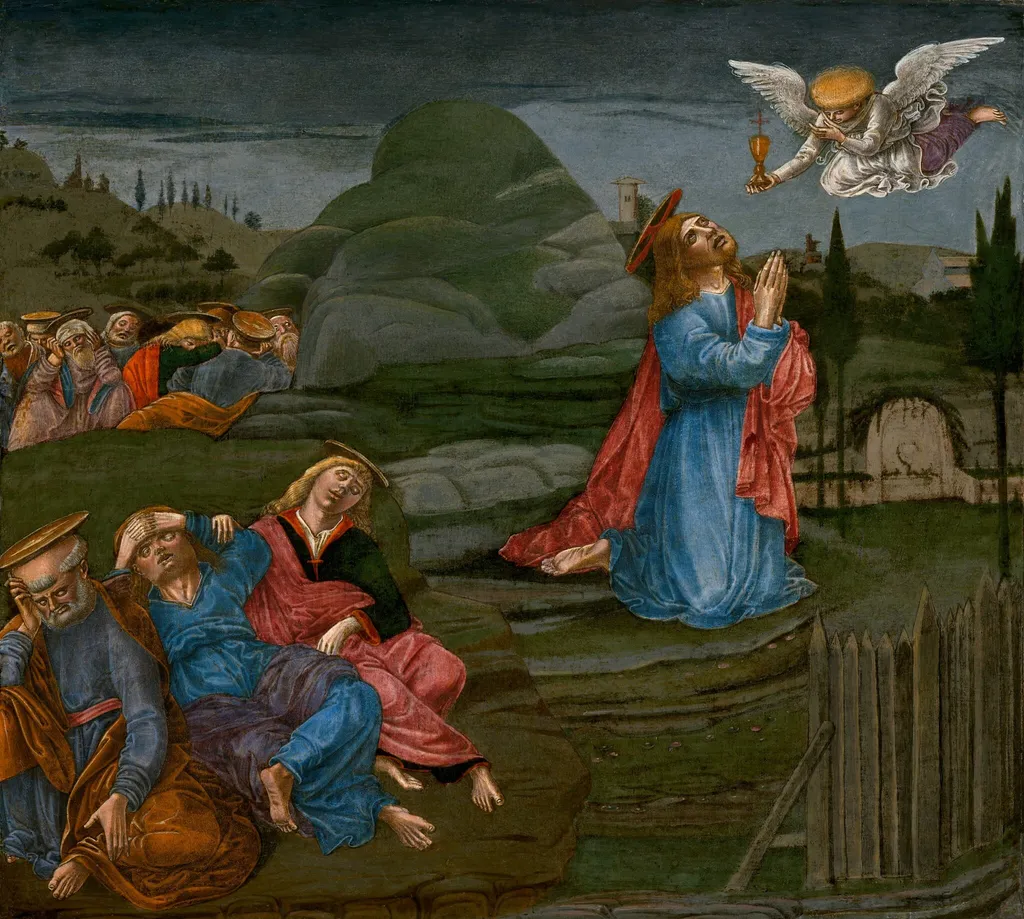
The Agony in the Garden is a tempera painting by the Early Renaissance artist Benvenuto di Giovanni. It dates from 1491 and is held in the collection of the National Gallery of Art.
About this work
Subject & Meaning
The Agony in the Garden portrays Christ in the Garden of Gethsemane at the moment of his apprehension, a scene drawn from the New Testament passion narrative.
The Agony in the Garden portrays Christ in the Garden of Gethsemane at the moment of his apprehension, a scene drawn from the New Testament passion narrative. The composition is identified by a halo that marks the central figure as the divine subject, a standard iconographic attribute in religious painting. Benvenuto di Giovanni renders the moment of spiritual anguish through a modest, intimate setting that emphasizes human vulnerability before divine sacrifice.
The work belongs to the late‑15th‑century Italian religious genre, reflecting contemporary devotional practices that focused on Christ’s suffering. Its provenance traces from a Florentine private collection to the Samuel H. Kress Foundation and finally to the National Gallery of Art, underscoring its recognized significance as a devotional masterpiece.
Technique & Style
The Agony in the Garden is painted in tempera on a wooden panel, a technique typical of early Renaissance devotional works. The piece belongs to the religious genre and depicts a haloed figure in the Garden of Gethsemane, as described in the sources. Its formal qualities include a modest scale appropriate for private contemplation, linear drawing, and a restrained palette that heightens the emotional gravity of the scene.
The work’s support is a panel, and its execution in tempera aligns with the documented medium. Condition information is not documented in the available records.
History & Provenance
The Agony in the Garden by Benvenuto di Giovanni is dated to approximately 1491. The work was commissioned or created by an unknown patron, as no direct records of its original commission survive. By May 1938, the painting was in the possession of Count Alessandro Contini Bonacossi in Florence.
It was subsequently purchased later that year by the Samuel H. Kress Foundation in New York, as documented in the Kress Collection archives. In 1939, the painting was donated to the National Gallery of Art (NGA) in Washington, D.C., where it remains part of the Samuel H. Kress Collection.
Context
Benvenuto di Giovanni's 'The Agony in the Garden' (c. 1491), a tempera panel depicting the biblical moment of Christ's prayer in Gethsemane, exemplifies early Renaissance devotional painting. The work's religious genre and halo motif reflect contemporary devotional practices, situating it within the artist's broader output of sacred imagery. Its inclusion in the Samuel H. Kress Collection and subsequent donation to the National Gallery of Art have made it a subject of scholarly reference in catalogues of Italian Renaissance painting, underscoring its significance in the study of 15th‑century Florentine art.
Overview
Benvenuto di Giovanni's The Agony in the Garden, created around 1491, exemplifies early Renaissance religious painting. Executed in tempera on panel, this work by the Sienese artist depicts a pivotal biblical moment. It reflects the stylistic developments of its era while showcasing Giovanni's sustained engagement with painting throughout his career, which also included contributions to manuscript illumination and monumental frescoes.
Own this work as a print
Artist & collection

Artist
Benvenuto di Giovanni, also known as Benvenuto di Giovanni di Meo del Guasta (13 September 1436 – c.

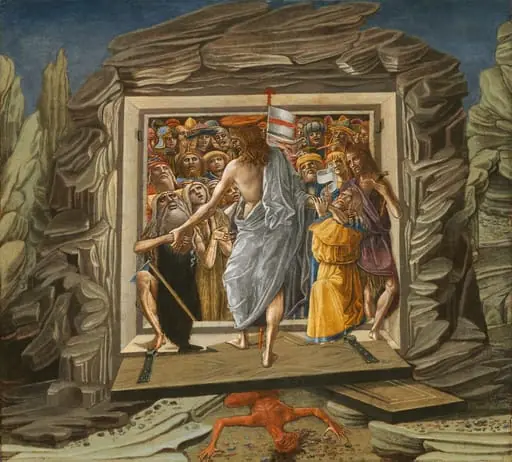
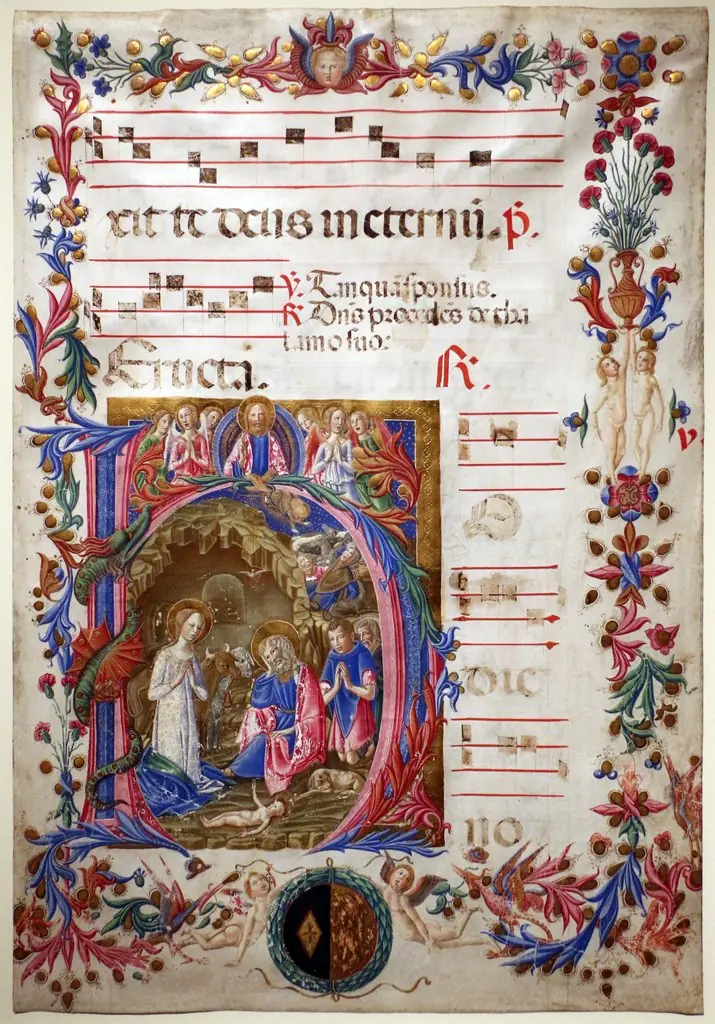
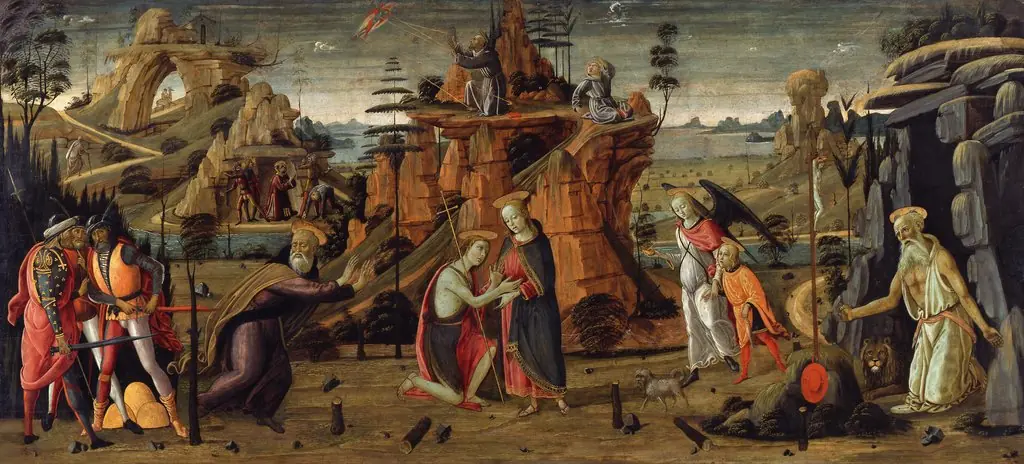 Landscape with biblical scenes and scenes from the legends of saints
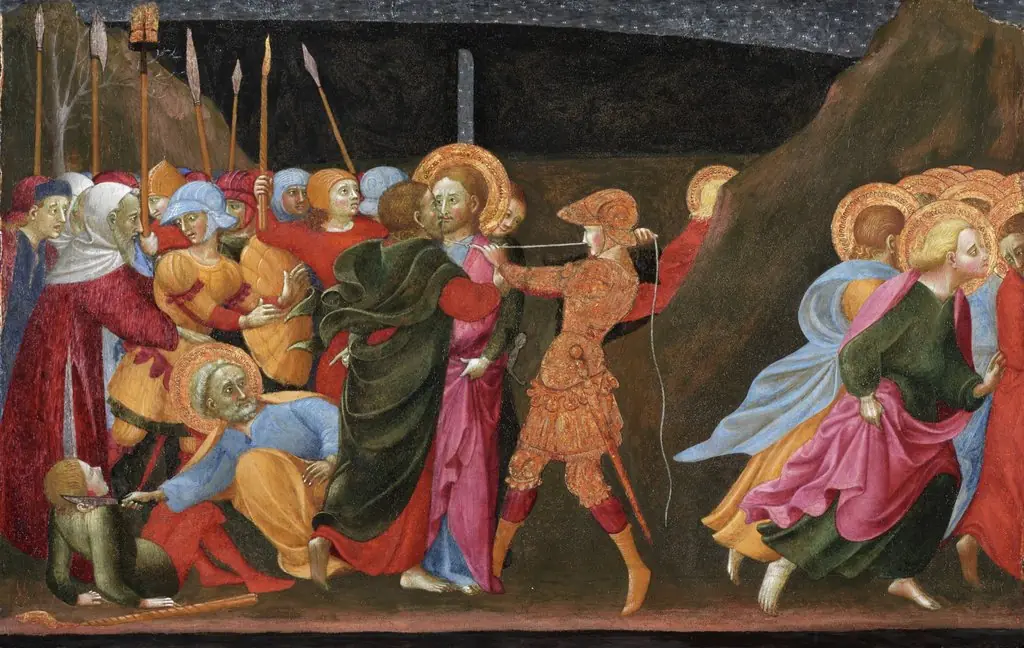 The Betrayal of Christ
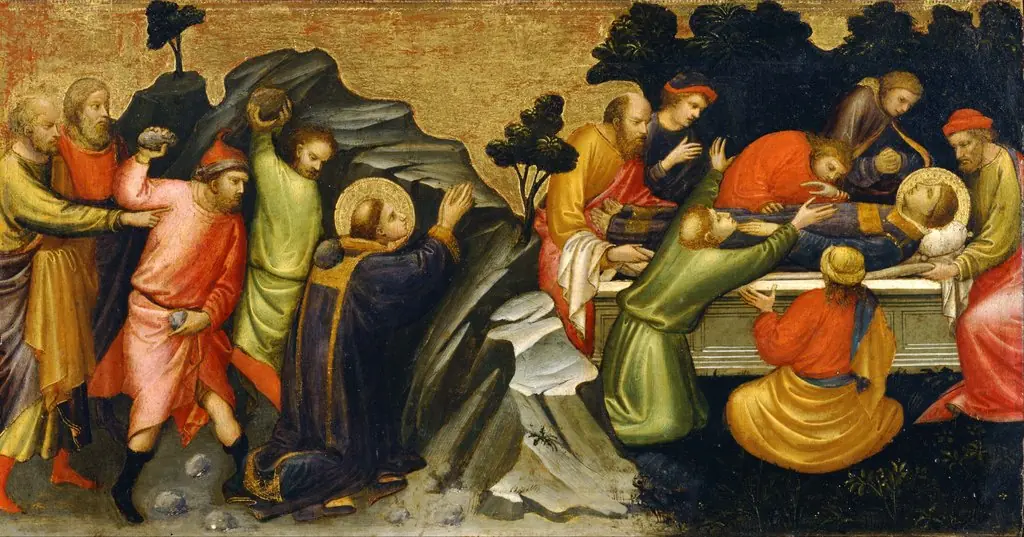 Predella Panel Representing the Legend of St. Stephen: The Stoning of St. Stephen
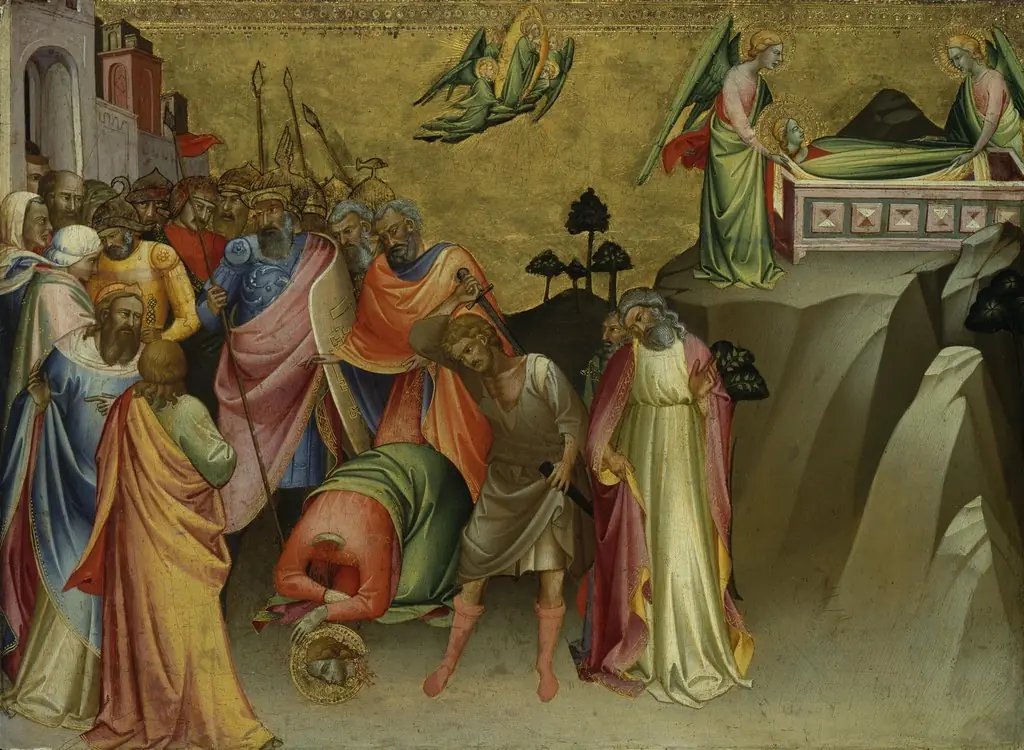 The Beheading of St. Catherine of Alexandria
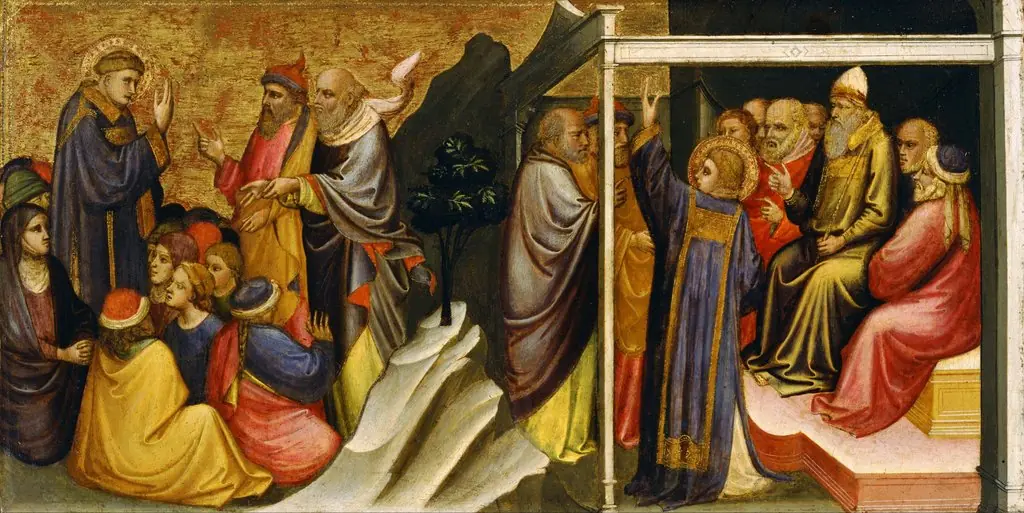 Predella Panel Representing the Legend of St. Stephen: St. Stephen Preaching
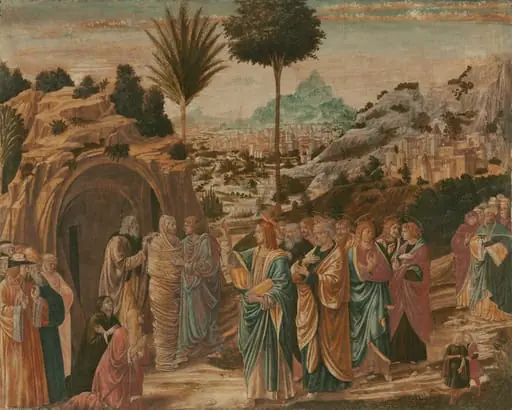 The Raising of Lazarus
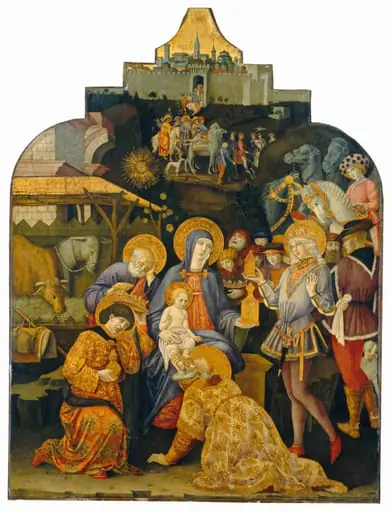
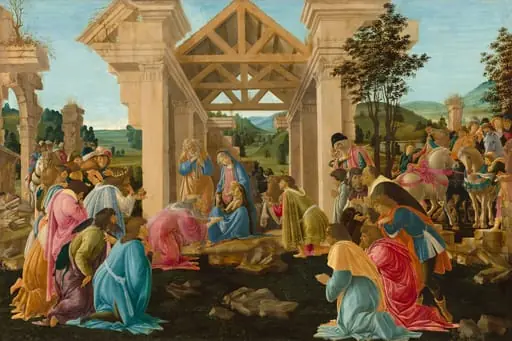 The Adoration of the Magi
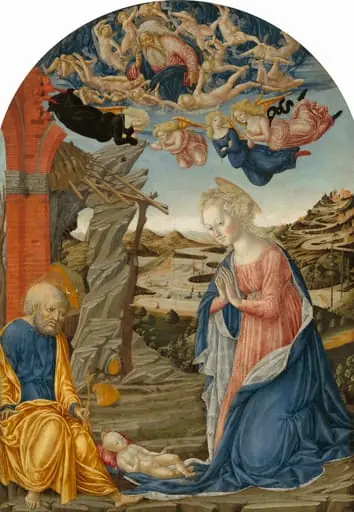 The Nativity, with God the Father Surrounded by Angels and Cherubim
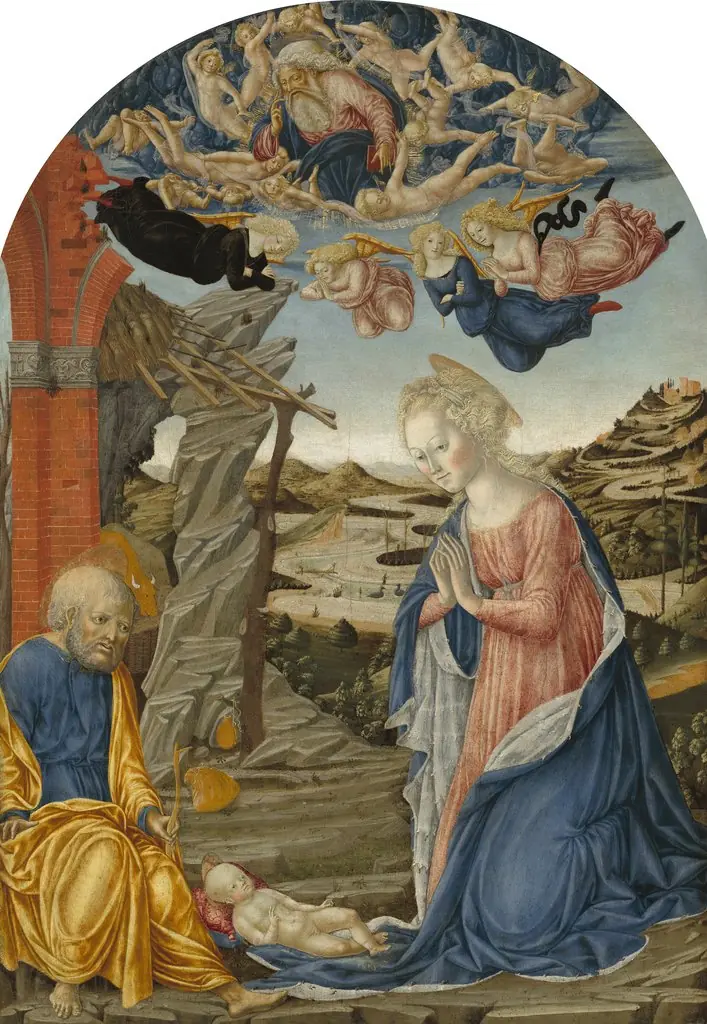 The Nativity