Artwork
Roundel with Mordecai Overhearing the Conspirators
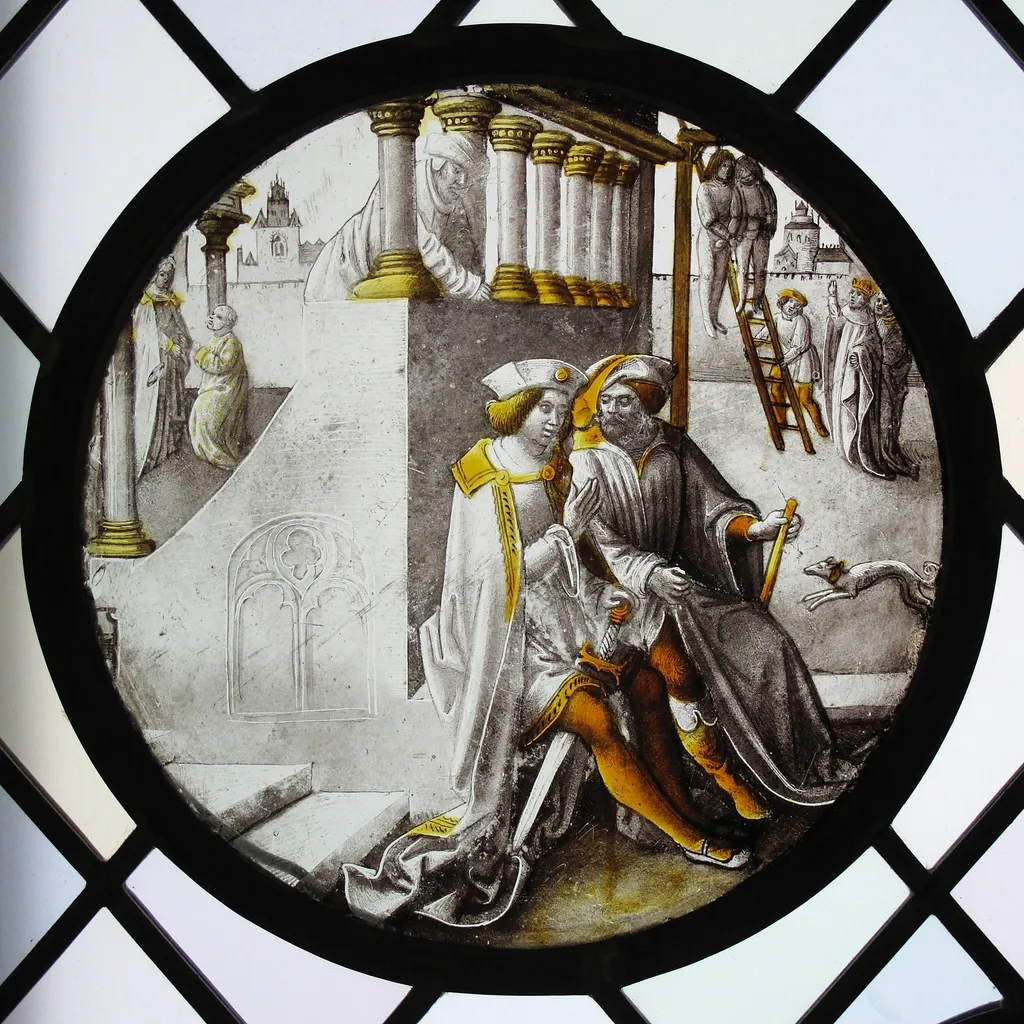
Roundel with Mordecai Overhearing the Conspirators is an unspecified painting. It dates from 1515 and is held in the collection of the Metropolitan Museum of Art. The work is a circular panel, known as a roundel, depicting a solitary figure seated on a bench.
About this work
History & Provenance
The work was part of the exhibition "German Paintings from the Collection of the Metropolitan Museum of Art," which was shown at the museum in 2003.
The Roundel with Mordecai Overhearing the Conspirators is an anonymous painting created in 1515. Classified as a painting, the work depicts a man and is currently held in the collection of the Metropolitan Museum of Art. No specific details regarding the original commission, the chain of ownership prior to its arrival at the museum, or the specific circumstances of its creation are provided in the available records.
The roundel titled Roundel with Mordecai Overhearing the Conspiators is held in the collection of the Metropolitan Museum of Art in New York. It is cataloged under the accession number 2003.379. The work was part of the exhibition "German Paintings from the Collection of the Metropolitan Museum of Art," which was shown at the museum in 2003.
Context
The roundel depicting Mordecai overhearing conspirators is attributed to an anonymous painter and dated to 1515. It is held in the collection of the Metropolitan Museum of Art in New York. The work belongs to the broader corpus of early 16th-century panel paintings associated with the artistic milieu of the Netherlands, reflecting contemporary narrative interests in moral and political intrigue.
Legacy
The roundel depicting Mordecai overhearing conspirators, painted in 1515, entered the collection of the Metropolitan Museum of Art, where it has been displayed as part of the museum’s early Northern Renaissance holdings. Its rare subject and composition have inspired scholarly discussion of narrative devices in early Netherlandish painting, though the work is seldom cited as a direct influence on later artists.
Overview
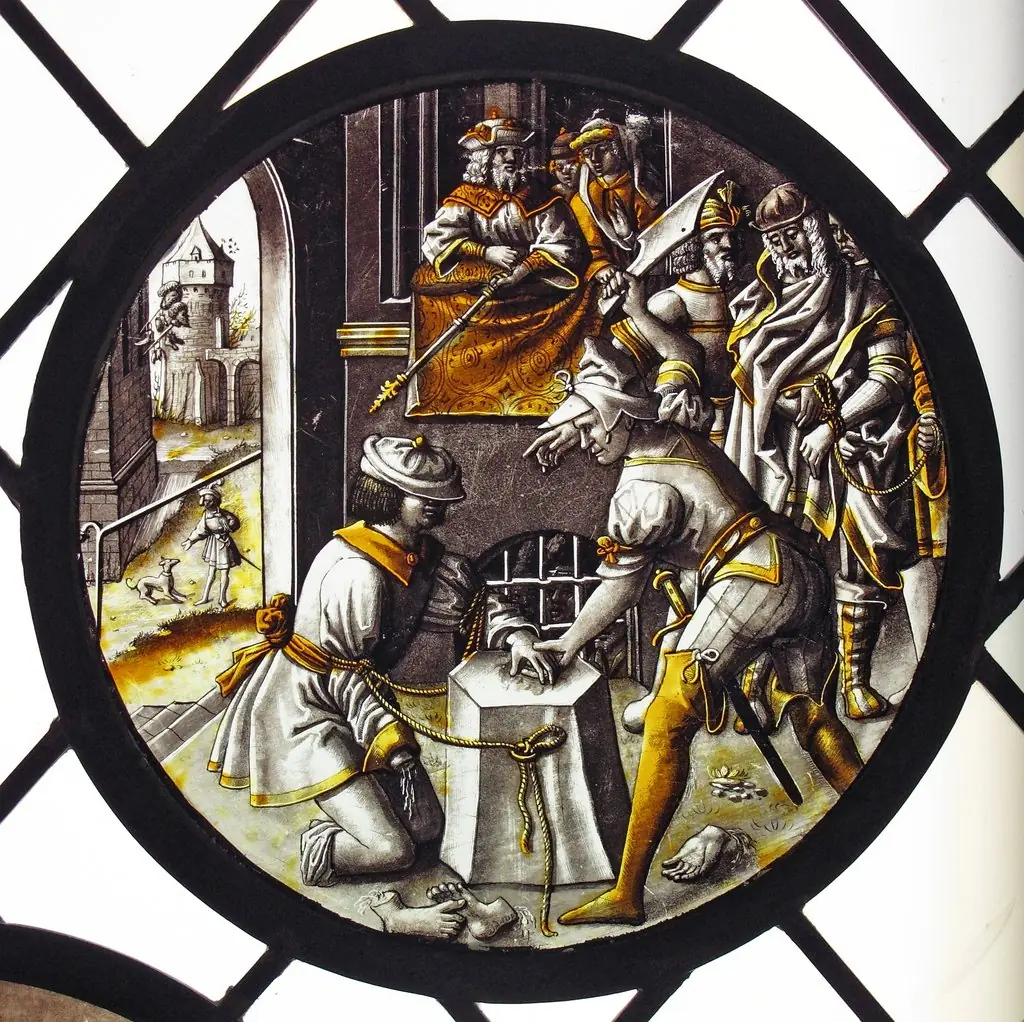
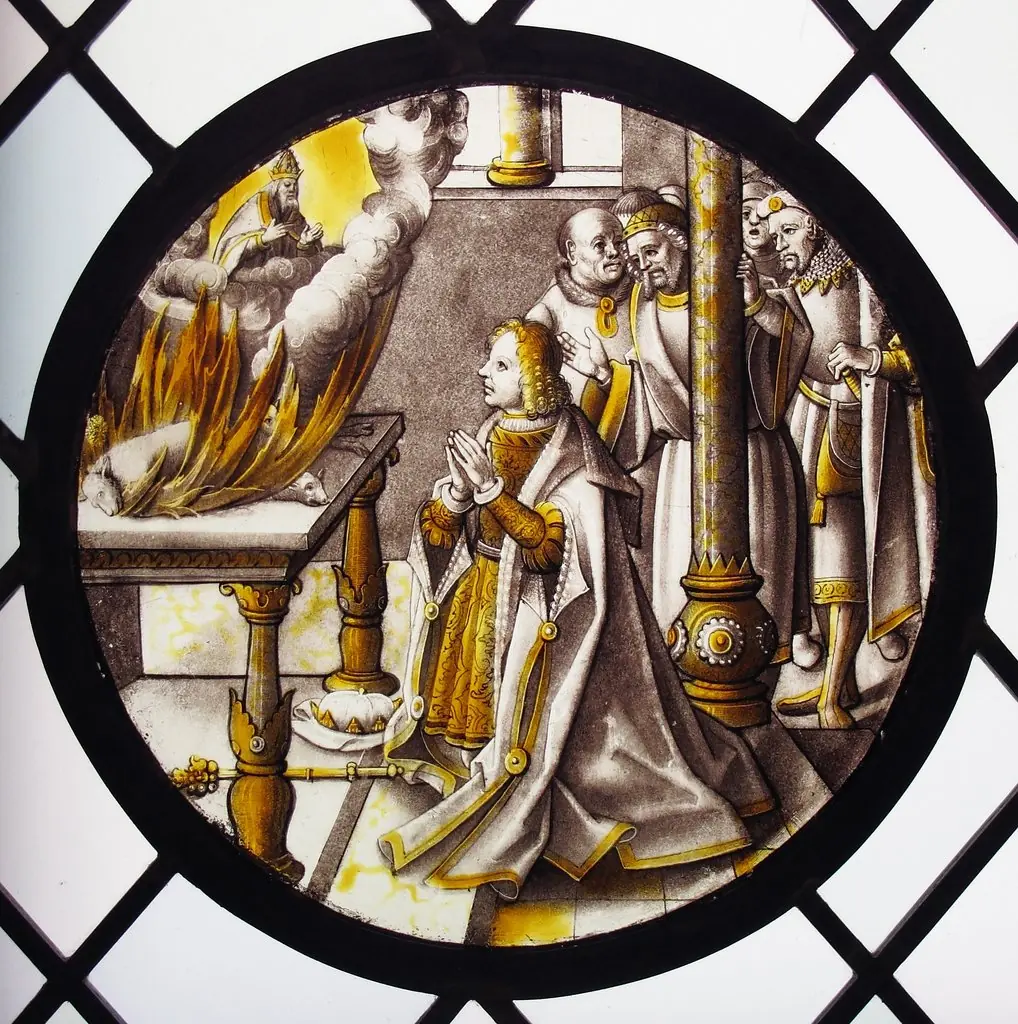
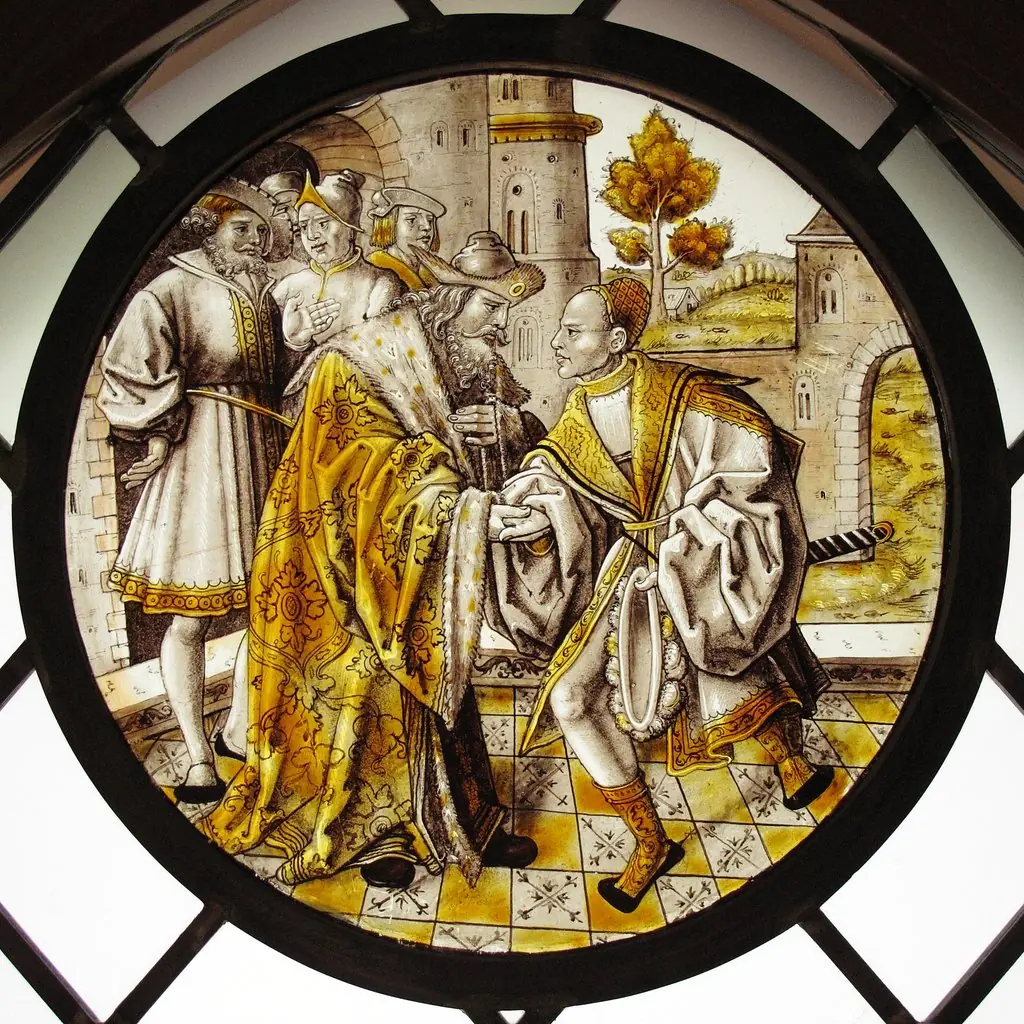
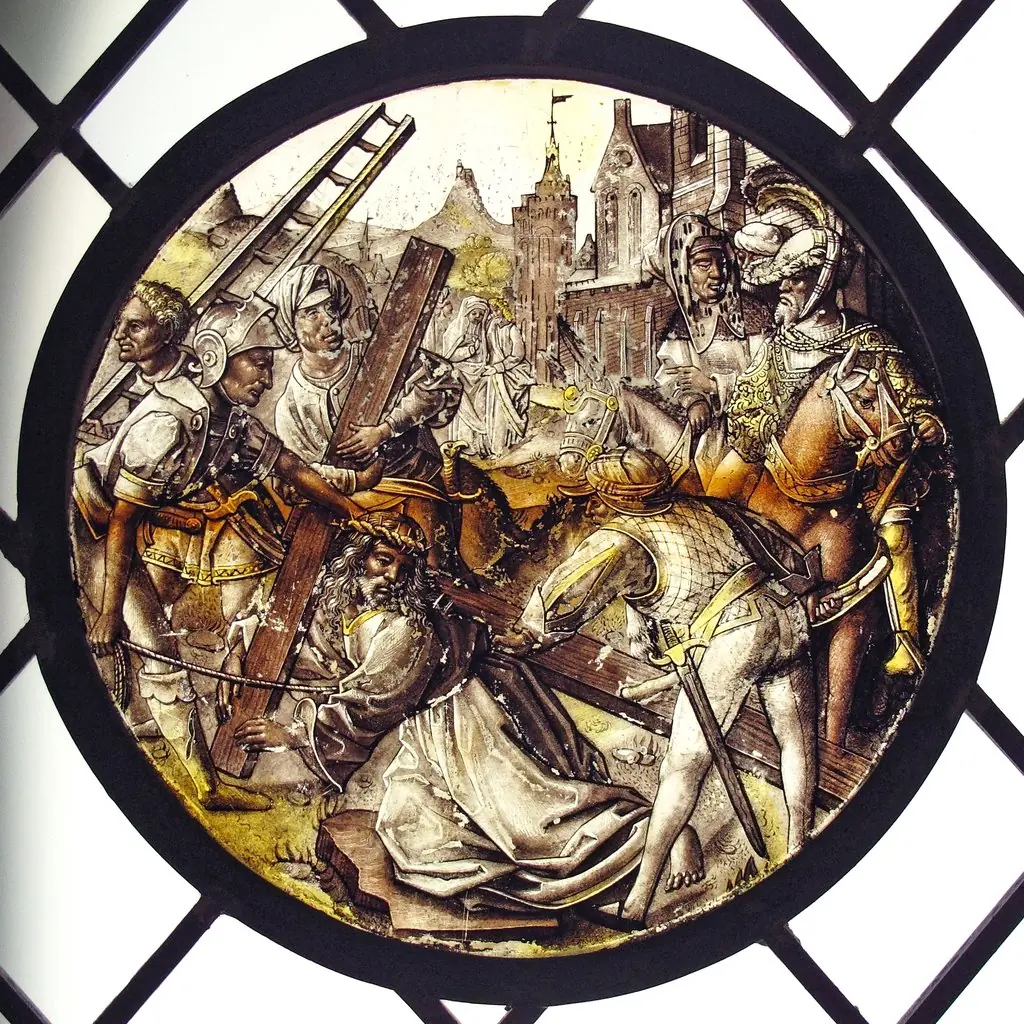
The work is a circular panel, known as a roundel, depicting a solitary figure seated on a bench. The central man is dressed in a long robe and a hat, his expression one of concern as he appears to be eavesdropping on nearby voices. A dog can be seen moving in the background, adding a hint of narrative activity.
Subject & Meaning
The composition suggests a moment of covert listening, with the seated individual appearing troubled by the conversation he overhears. The presence of the dog and the ambiguous surrounding figures create a sense of tension, implying a plot or conspiracy that the central figure is inadvertently privy to.
Technique & Style
Executed in a limited palette of gray and white, the painting relies on tonal contrast to model forms, while selective touches of yellow draw attention to specific details, such as the figure’s robe or the bench. The round format emphasizes the enclosed, intimate nature of the scene.
Artist & collection

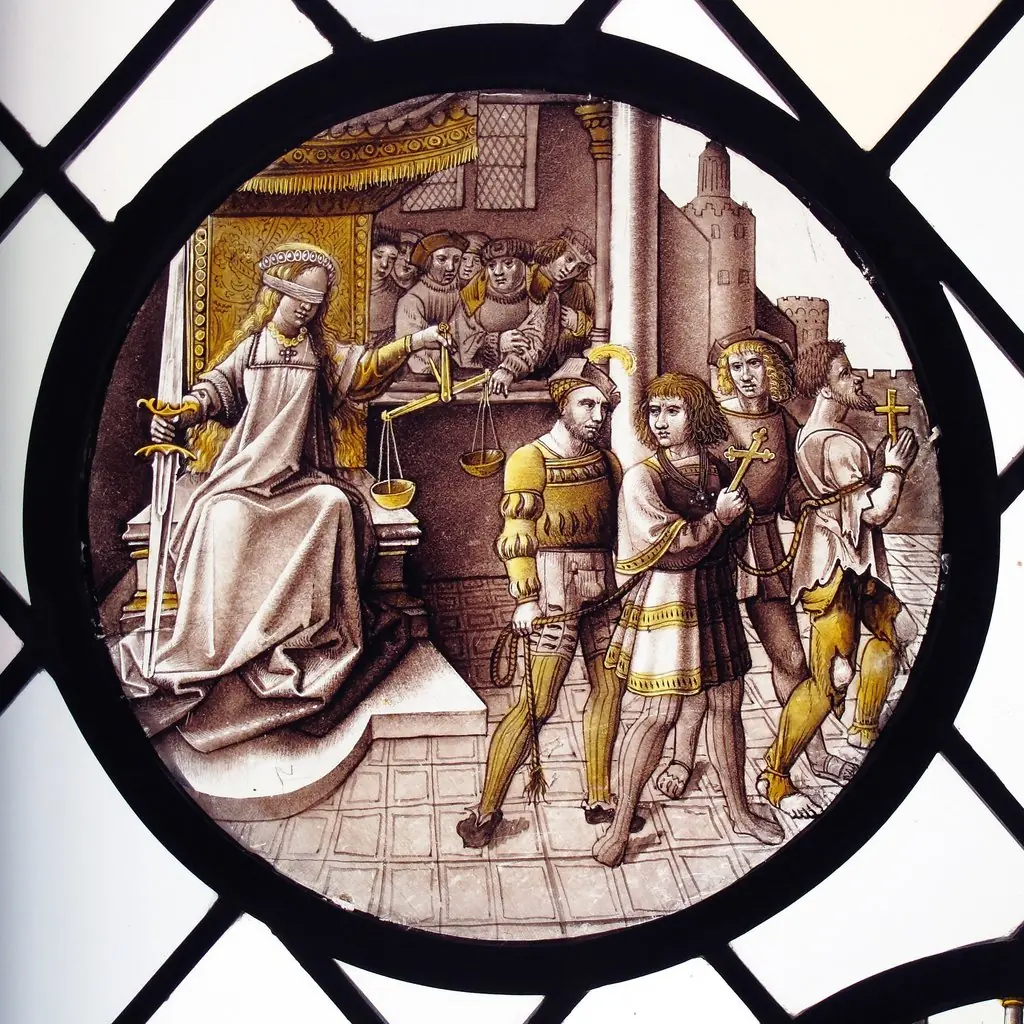
- Roundel with Justice
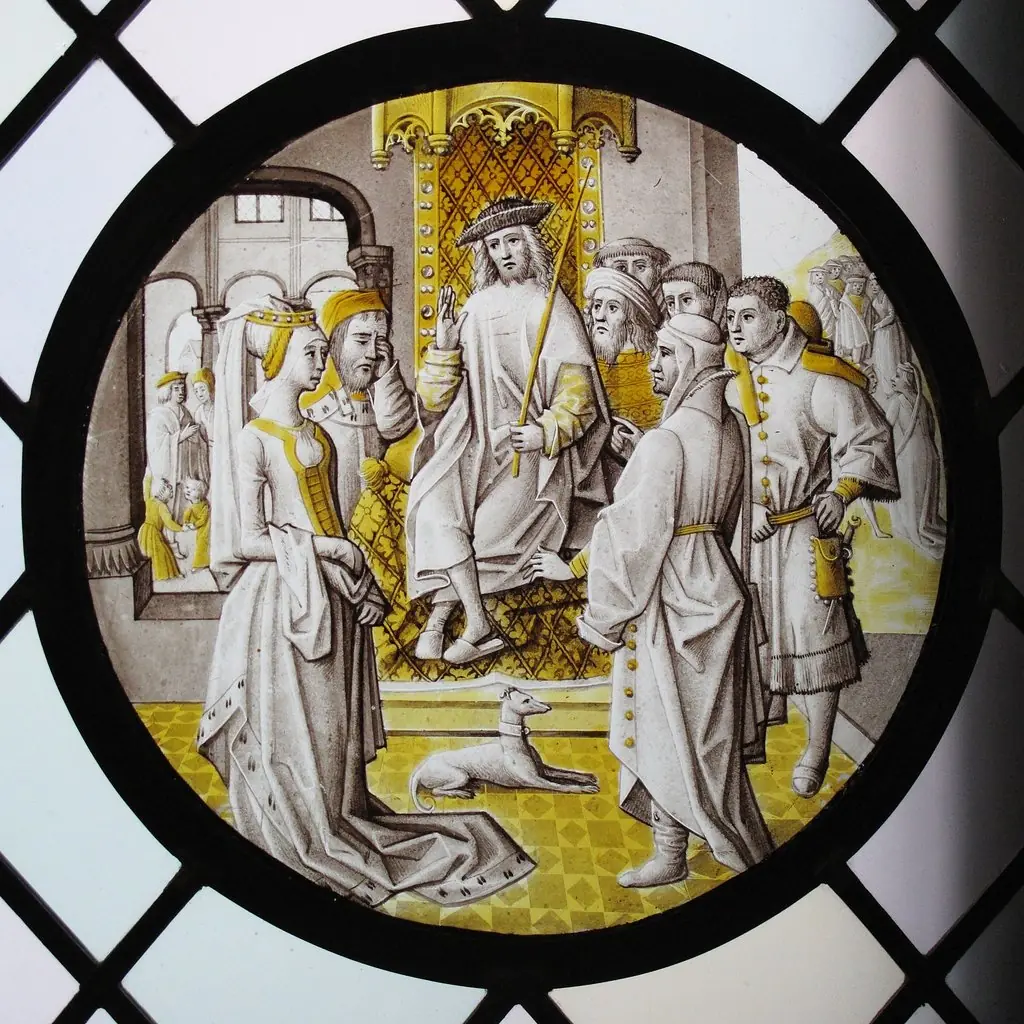 Roundel with Susanna In Judgement
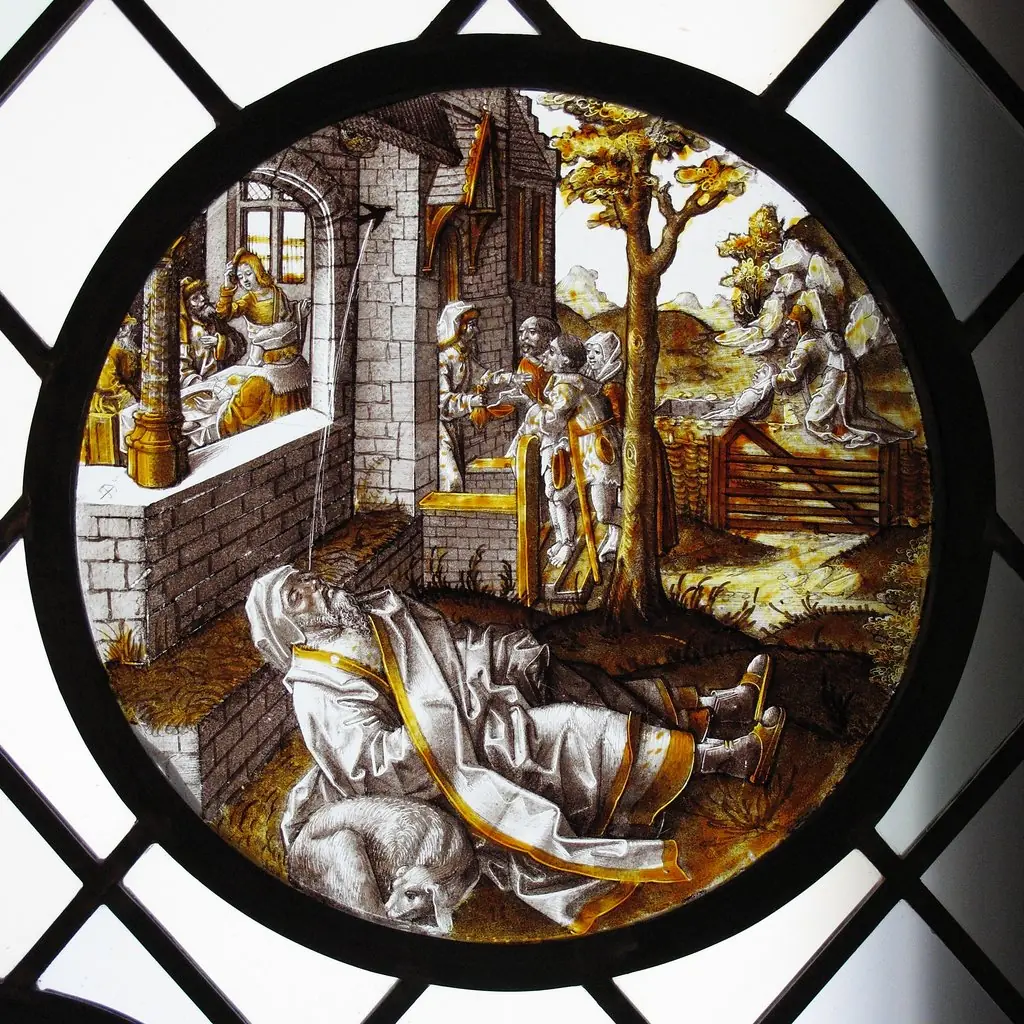 Roundel with the Blinding of Tobit (from a Series)
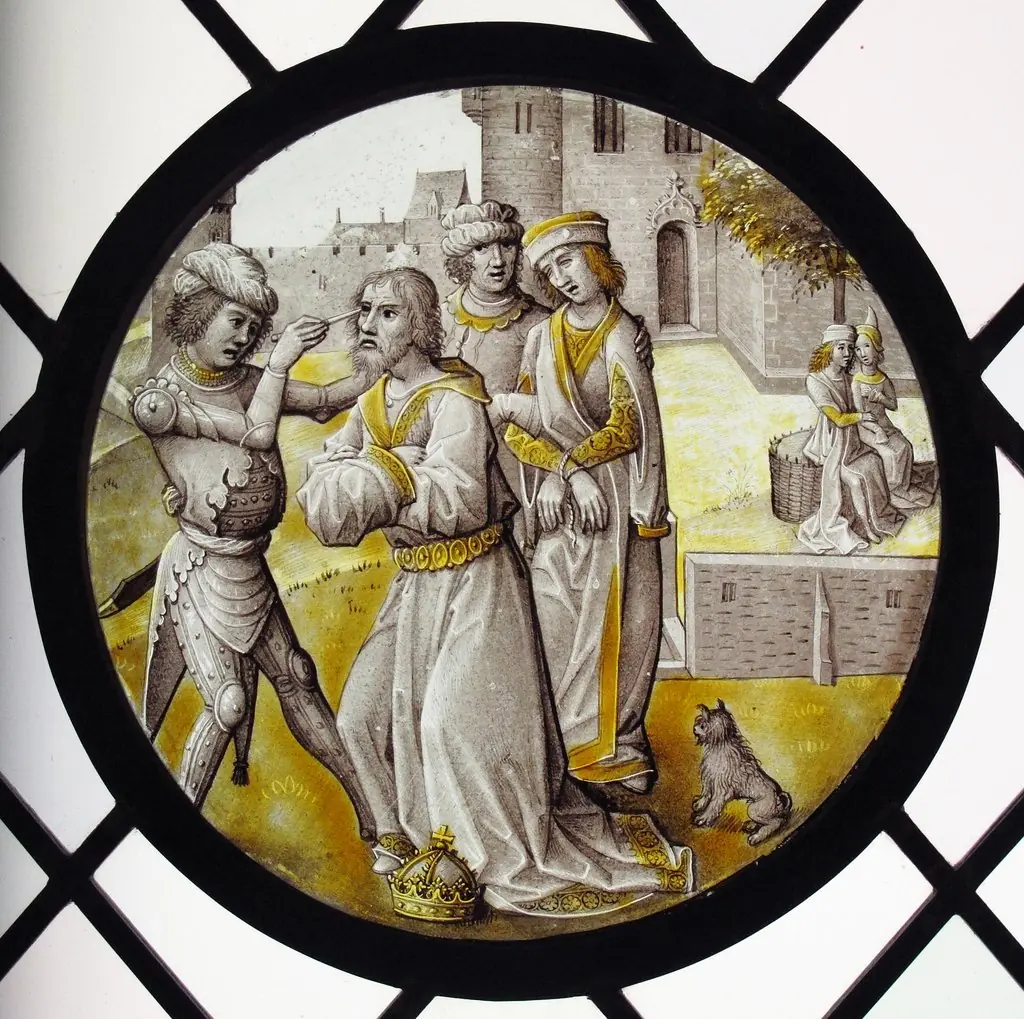 Roundel with the Blinding of Zaleucus of Locria
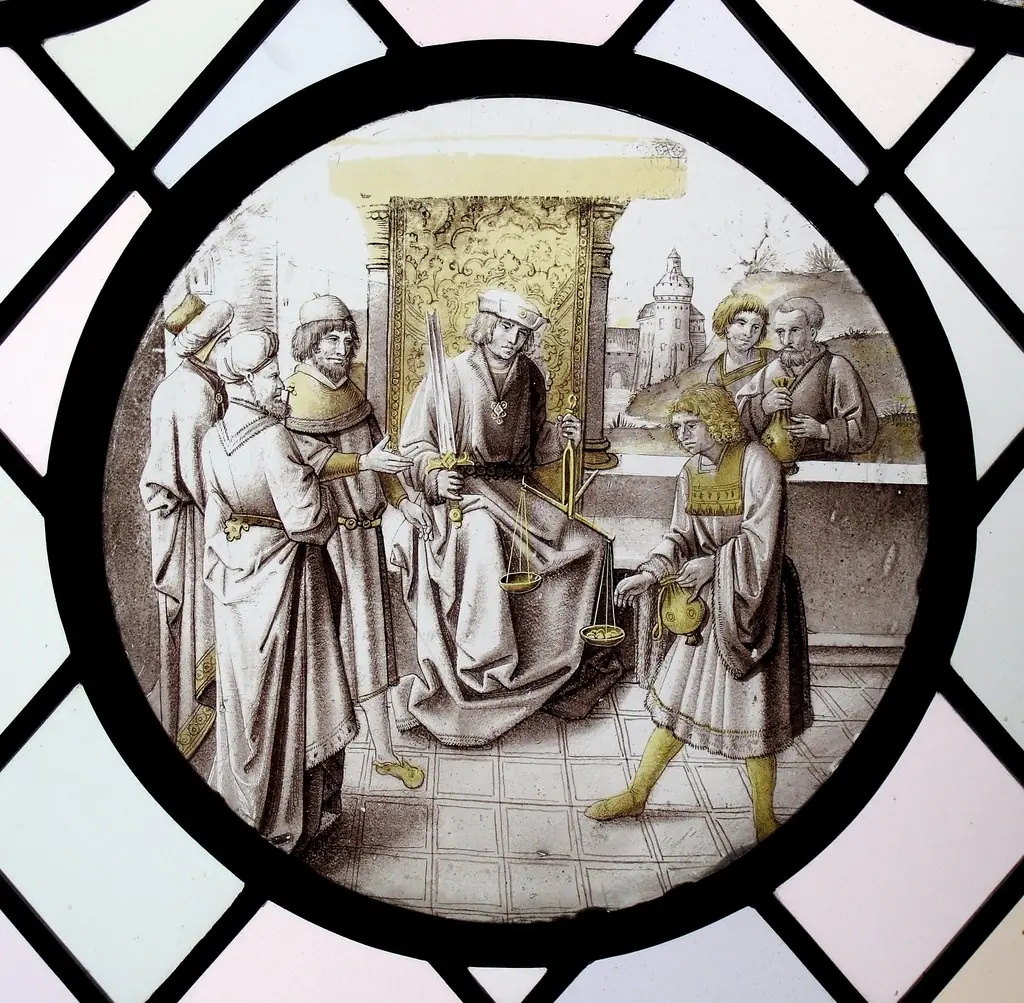 Roundel with Judgment or Allegorical Scene
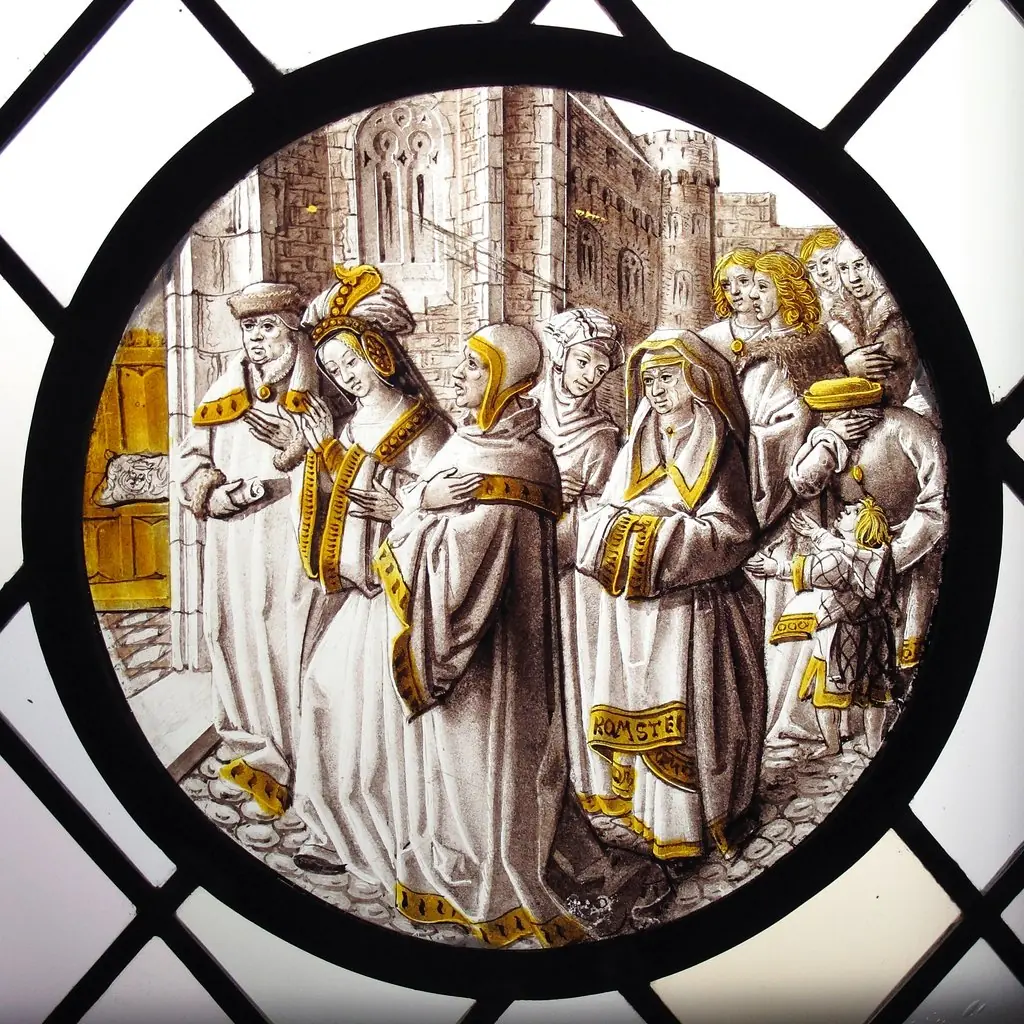 Roundel with Susanna Led to Judgement
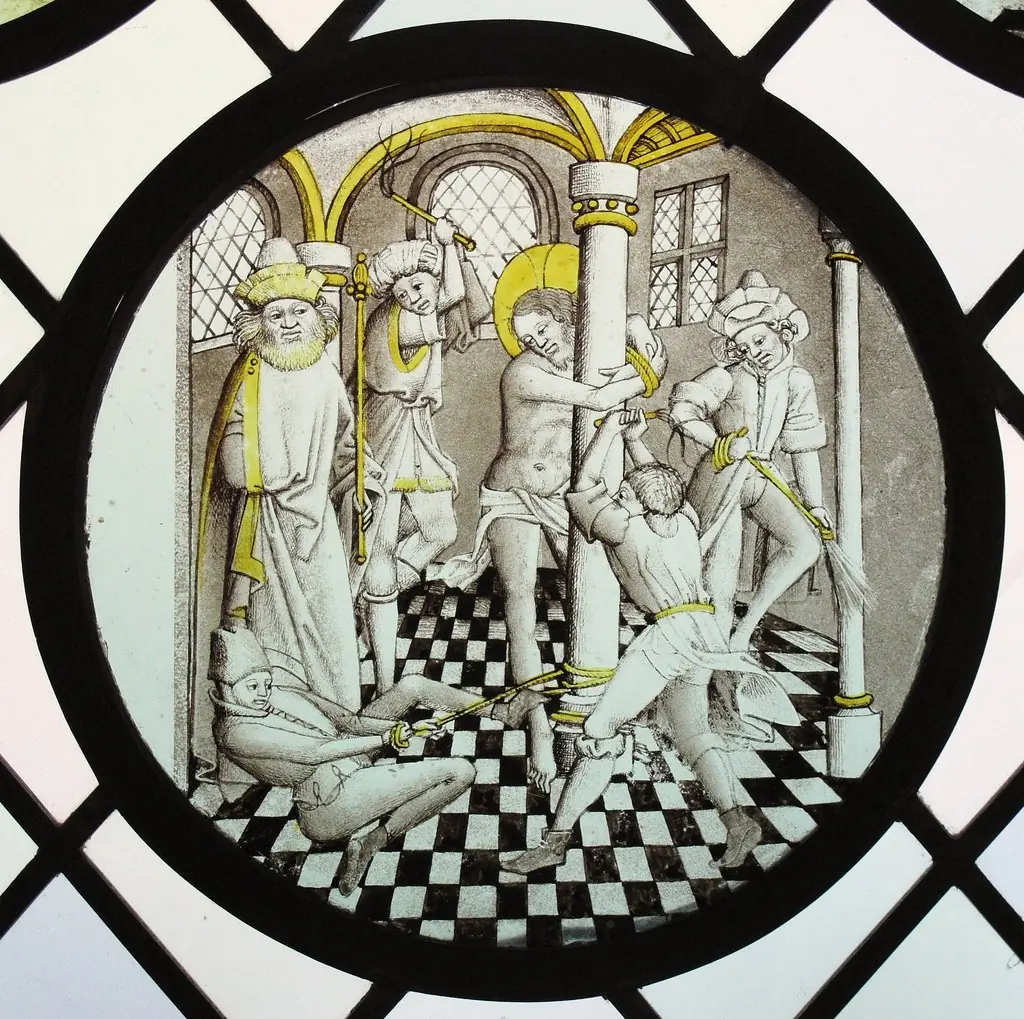 Roundel with the Flagellation
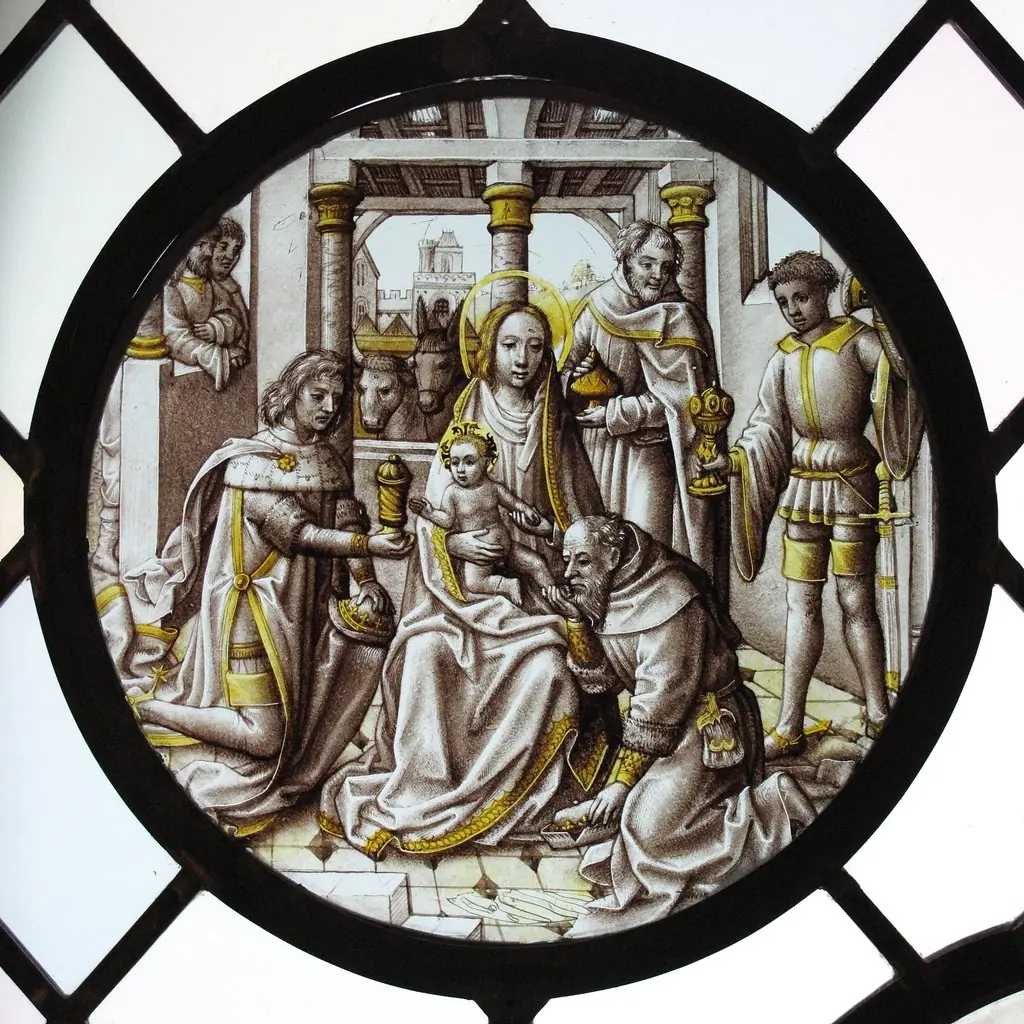 Roundel with the Adoration of the Magi
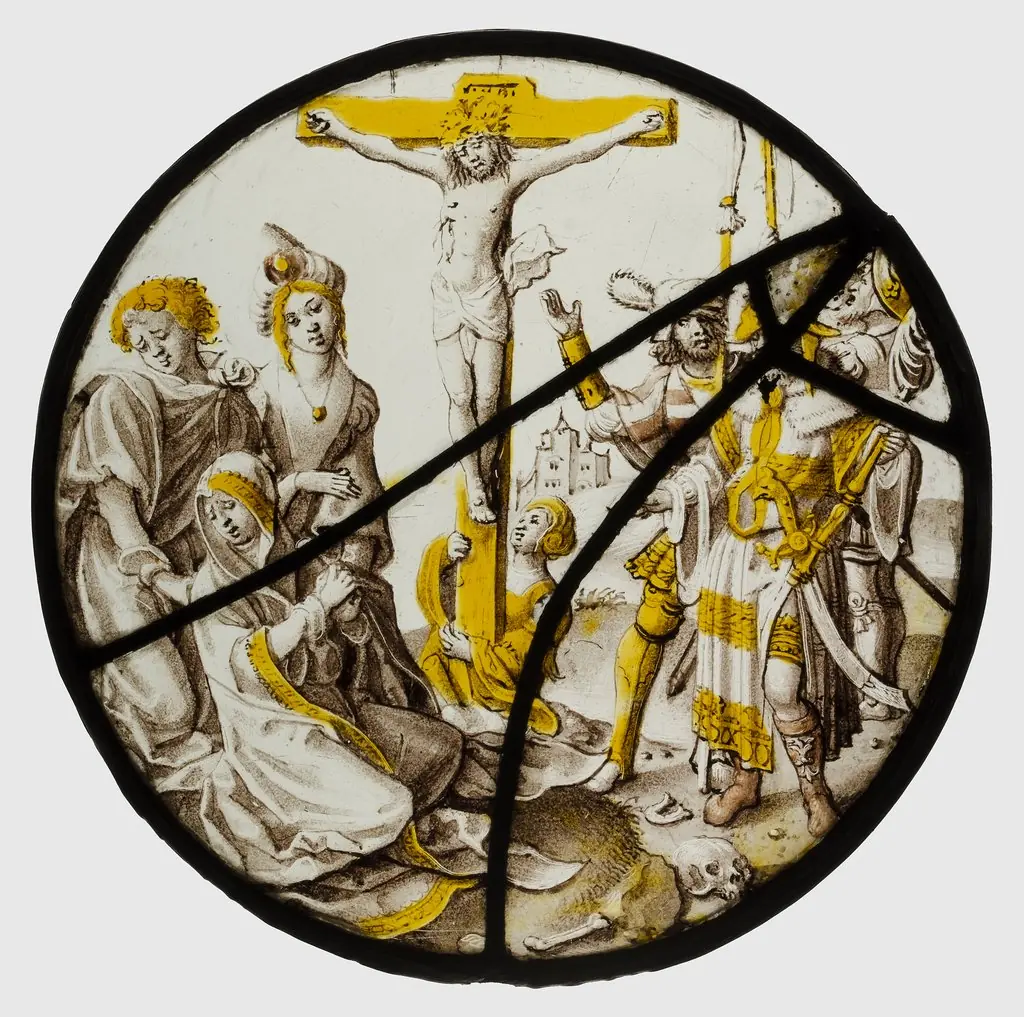 Roundel with the Crucifixion
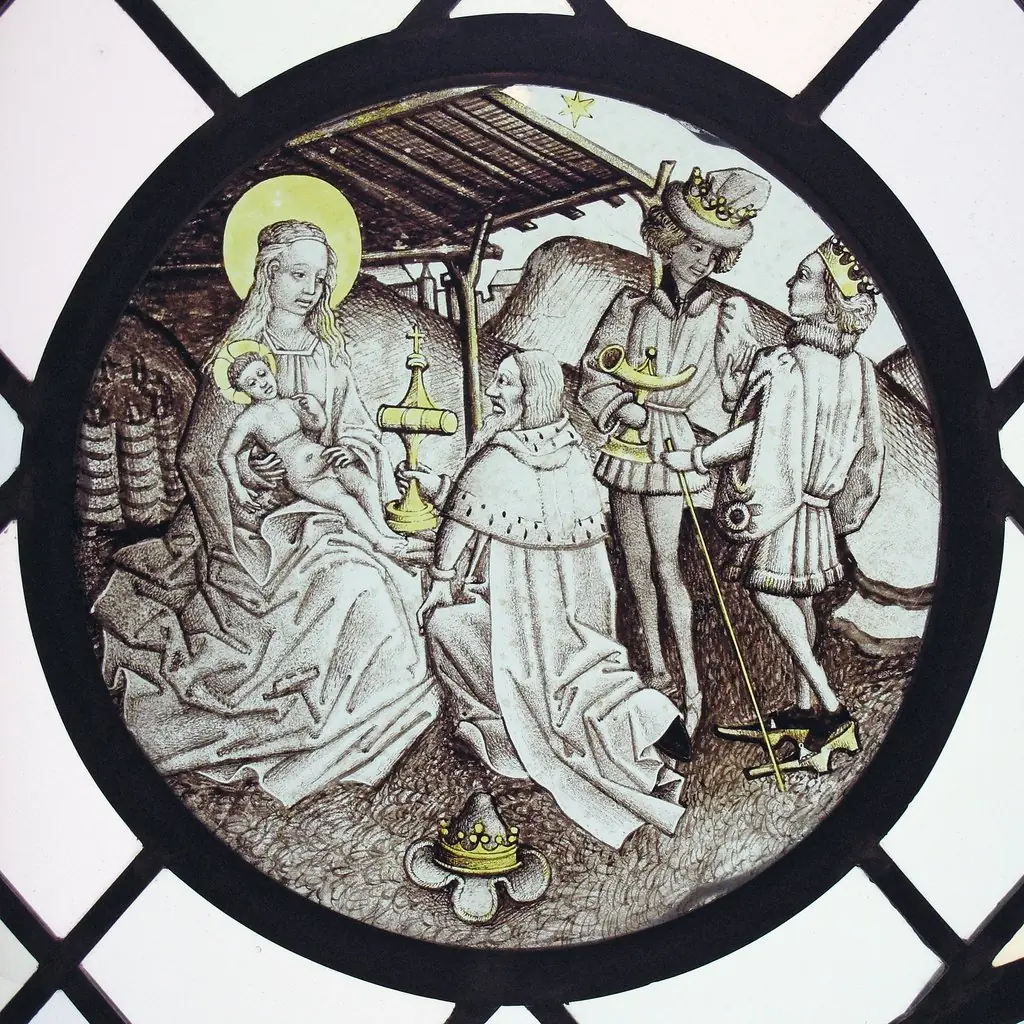 Roundel with Adoration of the Magi
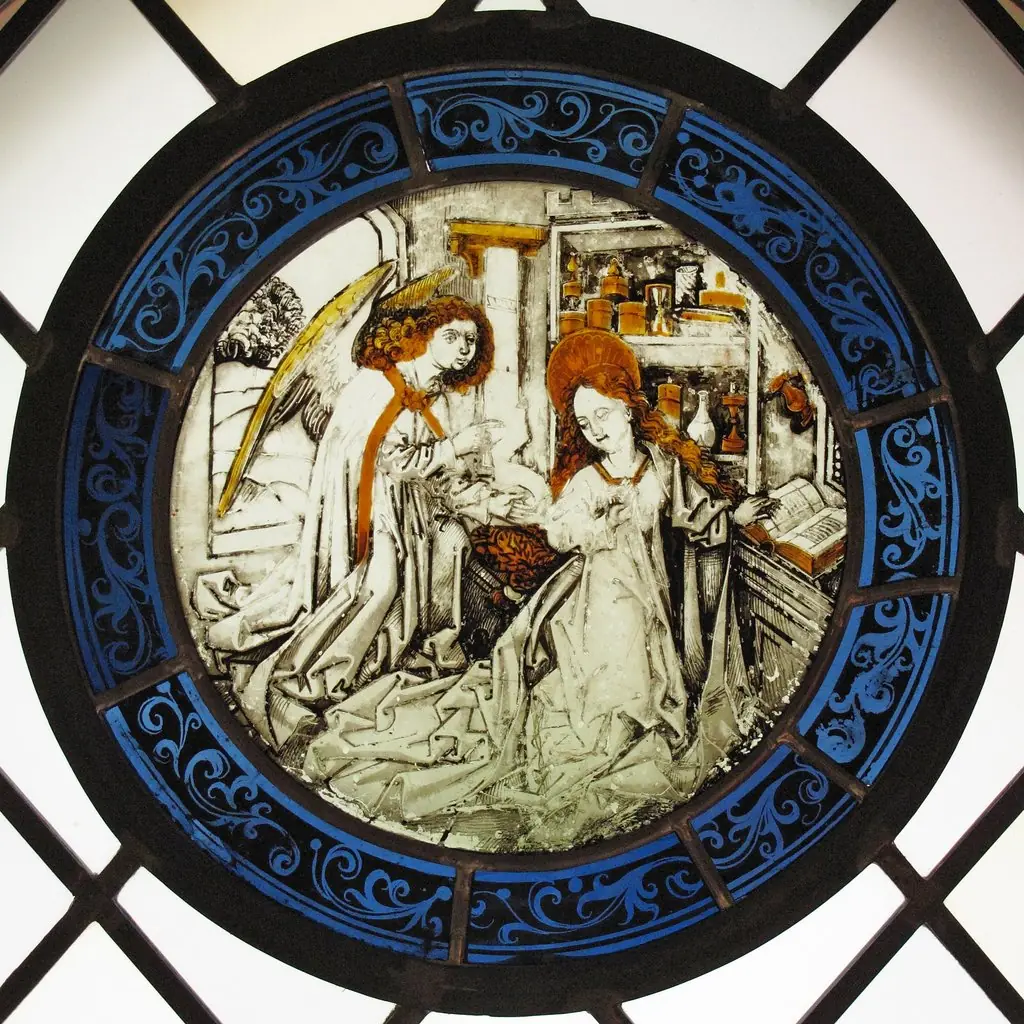 Roundel with the Annunciation
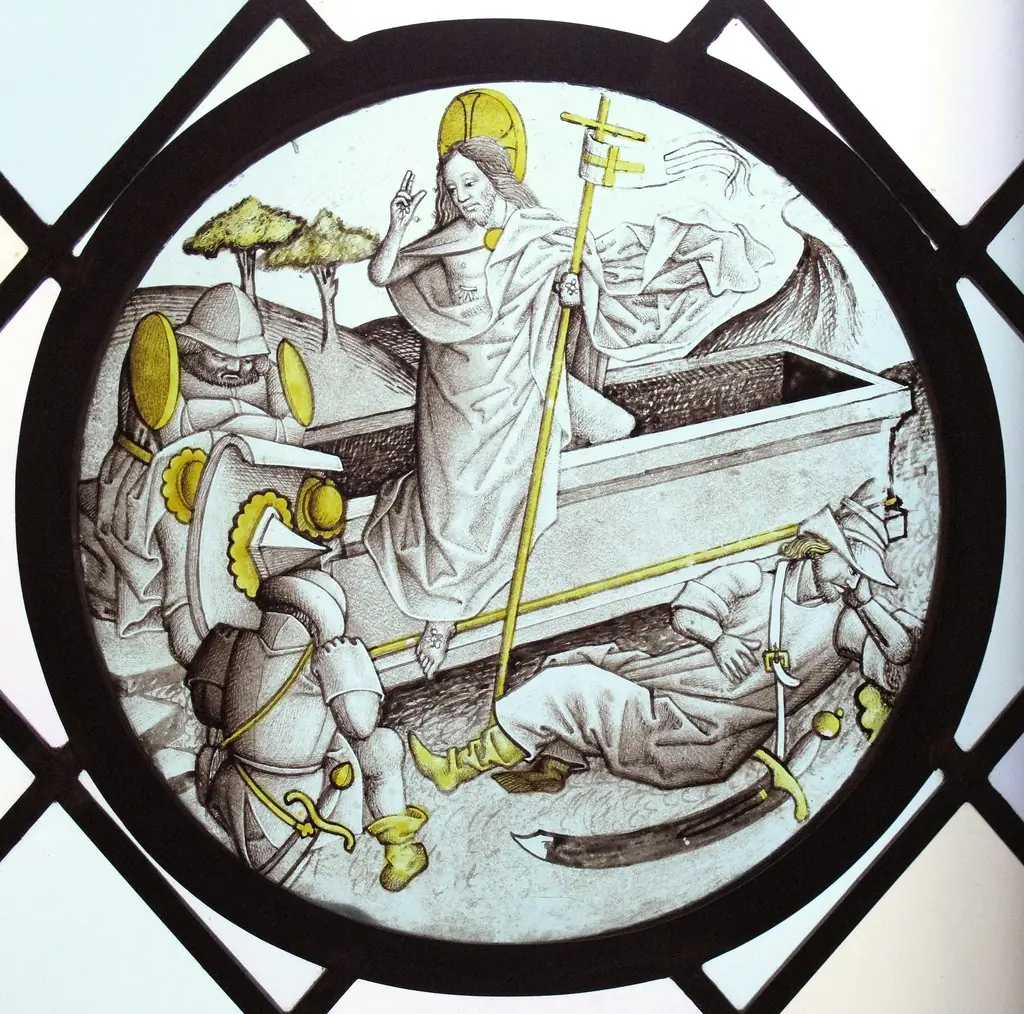 Roundel with the Resurrection