Artwork
Roundel with Susanna In Judgement
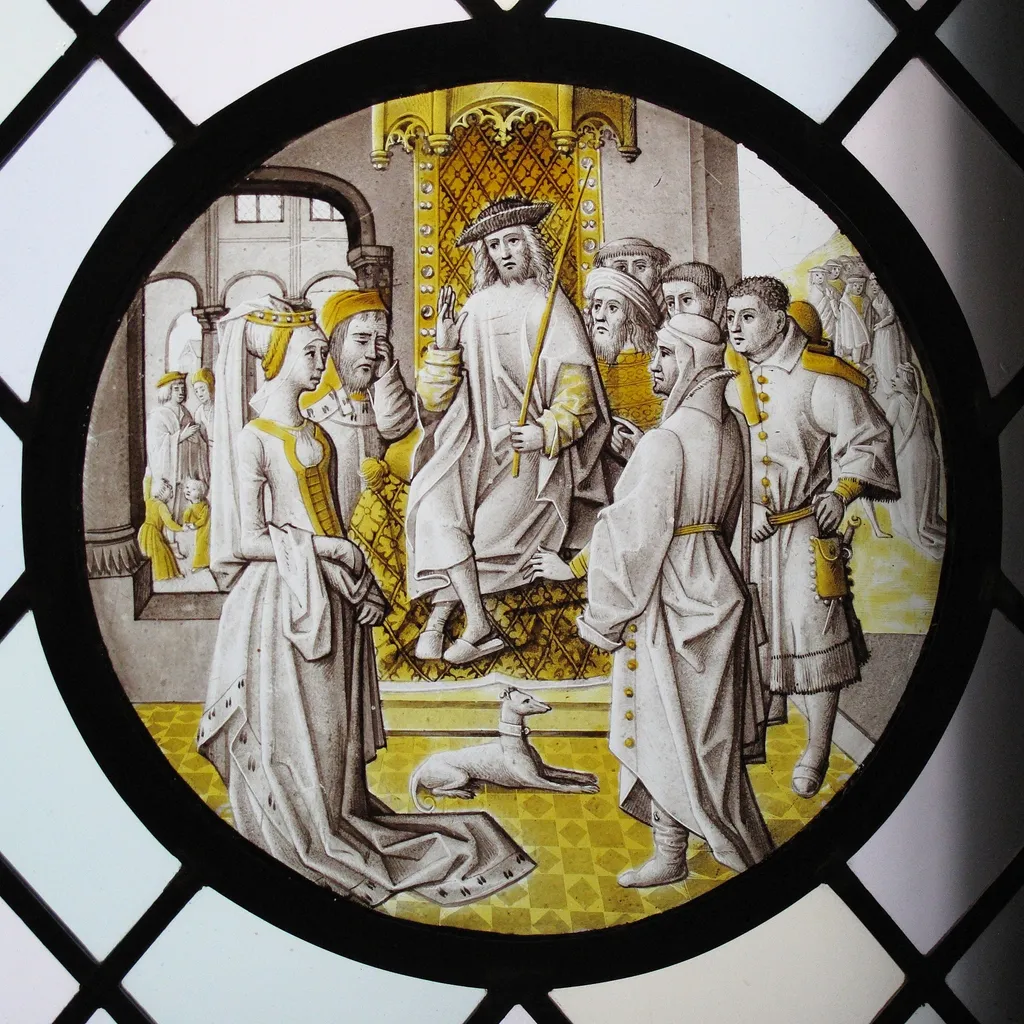
Roundel with Susanna In Judgement is an unspecified painting. It dates from 1510 and is held in the collection of the Metropolitan Museum of Art. The work is a painted roundel portraying the biblical episode of Susanna.
About this work
History & Provenance
The piece was included in the exhibition "Early Netherlandish Painting in the Metropolitan Museum of Art," which was on view from 1983 through 1984.
The roundel depicting Susanna in Judgement was created in 1510. The work is attributed to a follower of the Master of the Joseph Panels, with some scholarship suggesting Jacob Van Lathem as the possible artist. It currently resides in the collection of the Metropolitan Museum of Art, where it is classified as a painting.
The work is held in the collection of the Metropolitan Museum of Art in New York. It carries the accession number 1983.206.3. The piece was included in the exhibition "Early Netherlandish Painting in the Metropolitan Museum of Art," which was on view from 1983 through 1984.
Overview
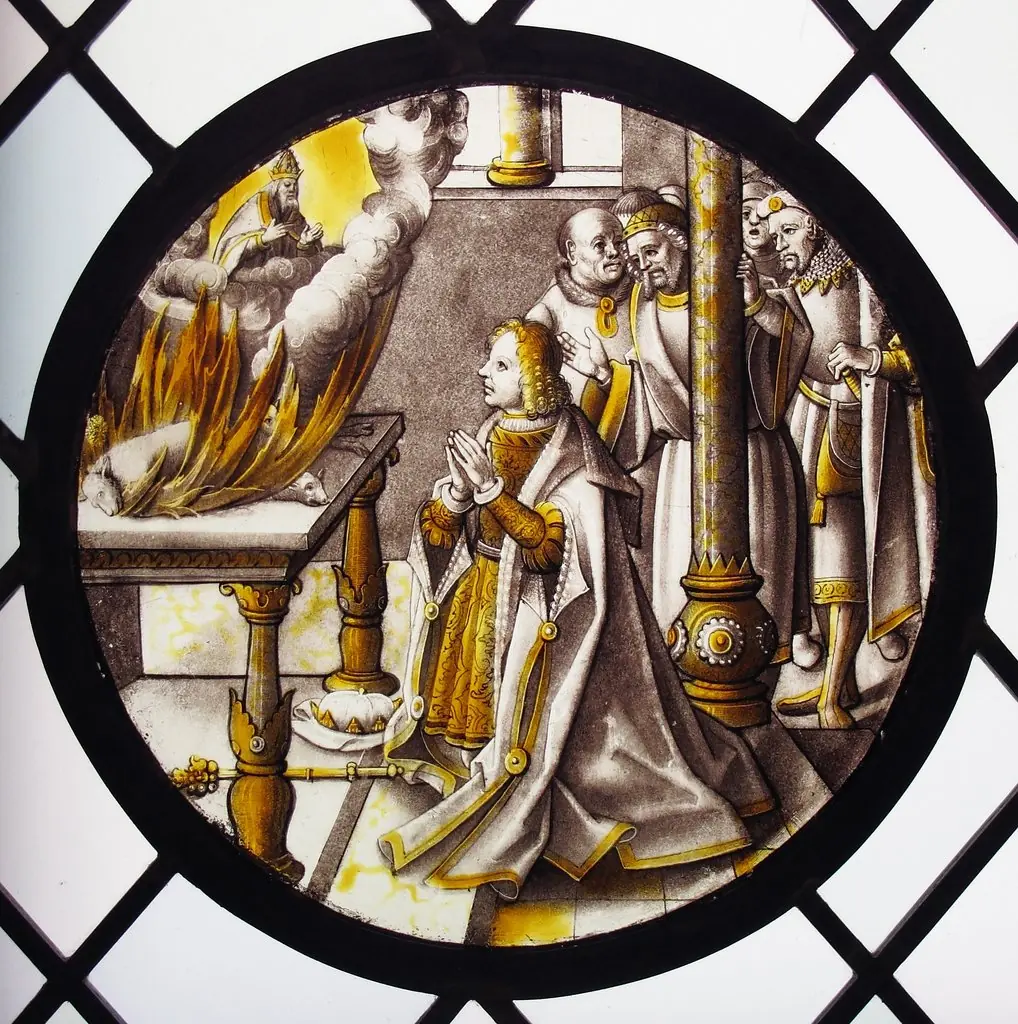
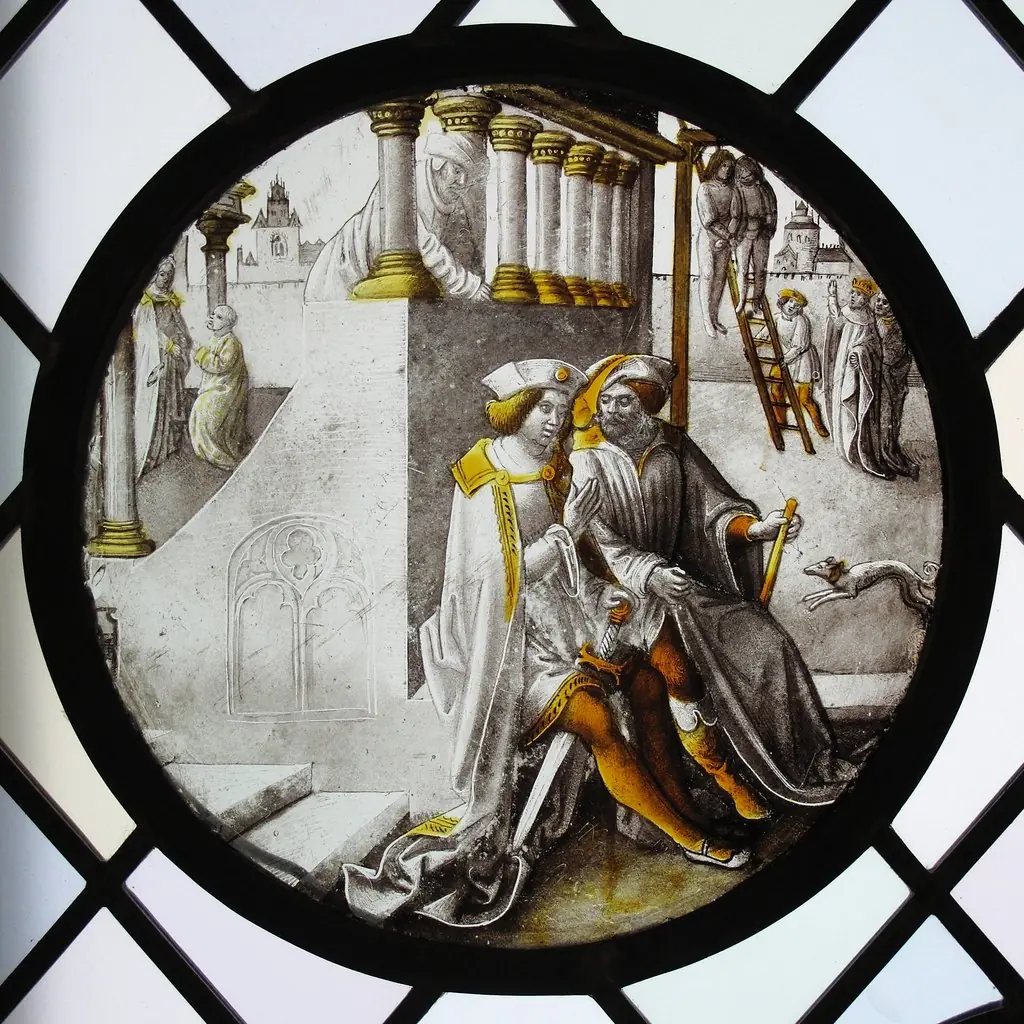
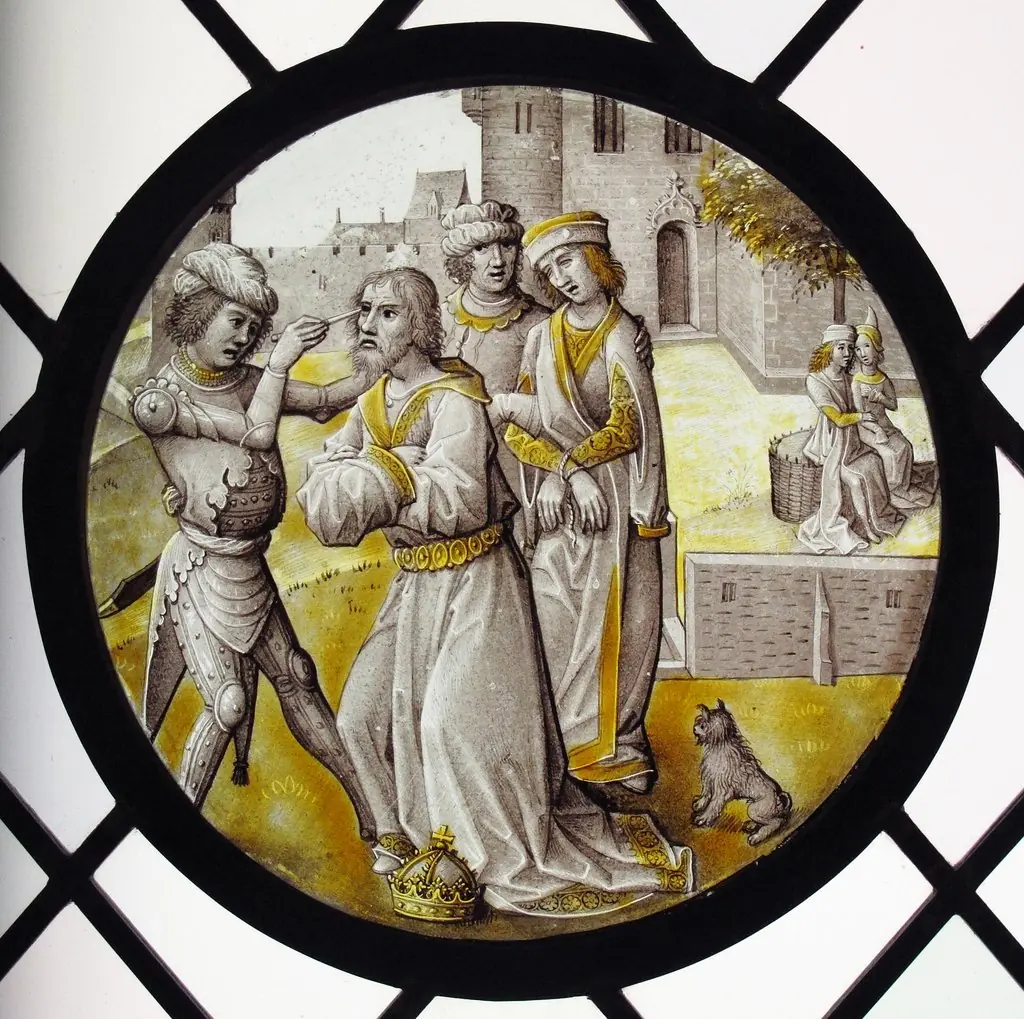
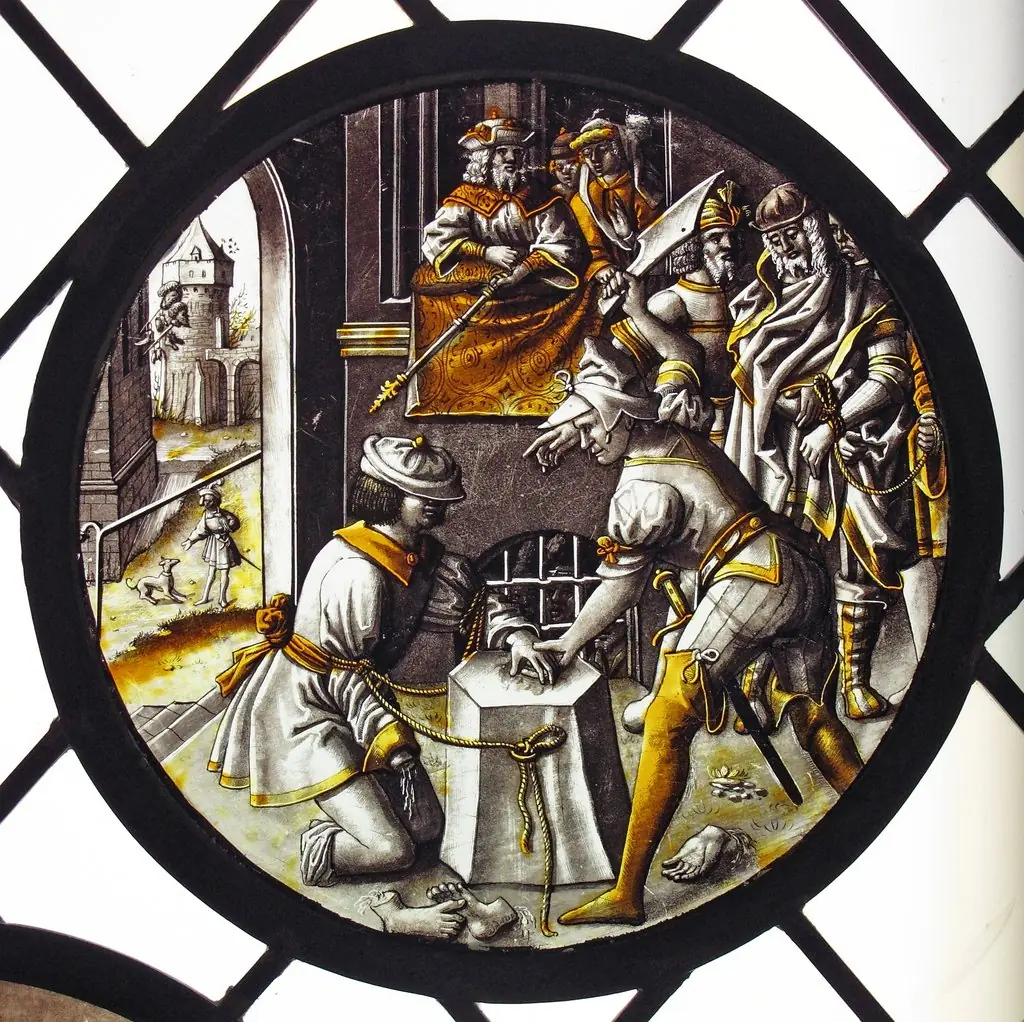
The work is a painted roundel portraying the biblical episode of Susanna. Central to the composition is a woman in a flowing gown crowned, surrounded by robed men who hold various objects such as a staff or a book. An arched window opens onto an exterior figure, while the interior is filled with elaborate patterned wall and floor decoration. The piece belongs to the collection of the Metropolitan Museum of Art.
Subject & Meaning
The scene illustrates the story of Susanna, a narrative from the Book of Daniel in which the virtuous woman is confronted by lecherous elders. The crown and dignified posture emphasize her innocence and status, while the surrounding men convey the accusatory atmosphere. The open window and external observer may suggest the presence of divine or public scrutiny, reinforcing the moral tension of judgment versus truth.
Technique & Style
Executed as a roundel, the painting employs a vivid palette and intricate detailing to render textiles, architectural elements, and ornamental motifs. The figures are rendered with a balanced use of light and shadow, giving a three‑dimensional quality to the drapery and furnishings. The decorative arch and patterned surfaces reflect a Renaissance interest in classical architecture and ornamental design.
Context
The depiction of Susanna aligns with a long tradition of biblical subjects used to explore themes of virtue, justice, and the abuse of power. Such narratives were popular in European art from the medieval period through the Renaissance, often serving both devotional and didactic purposes. The inclusion of elaborate interior décor reflects contemporary tastes for opulent settings that elevate the moral drama of the story.
Artist & collection

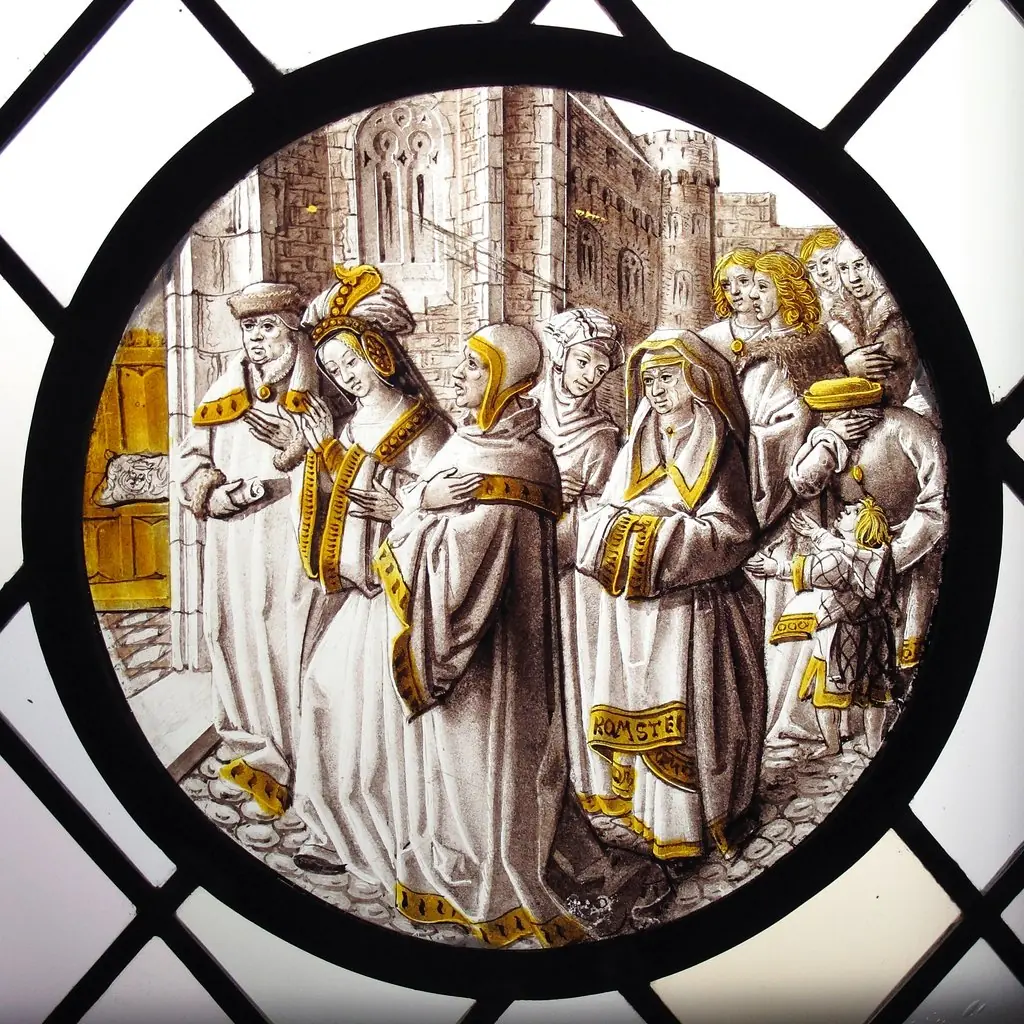
- Roundel with Susanna Led to Judgement
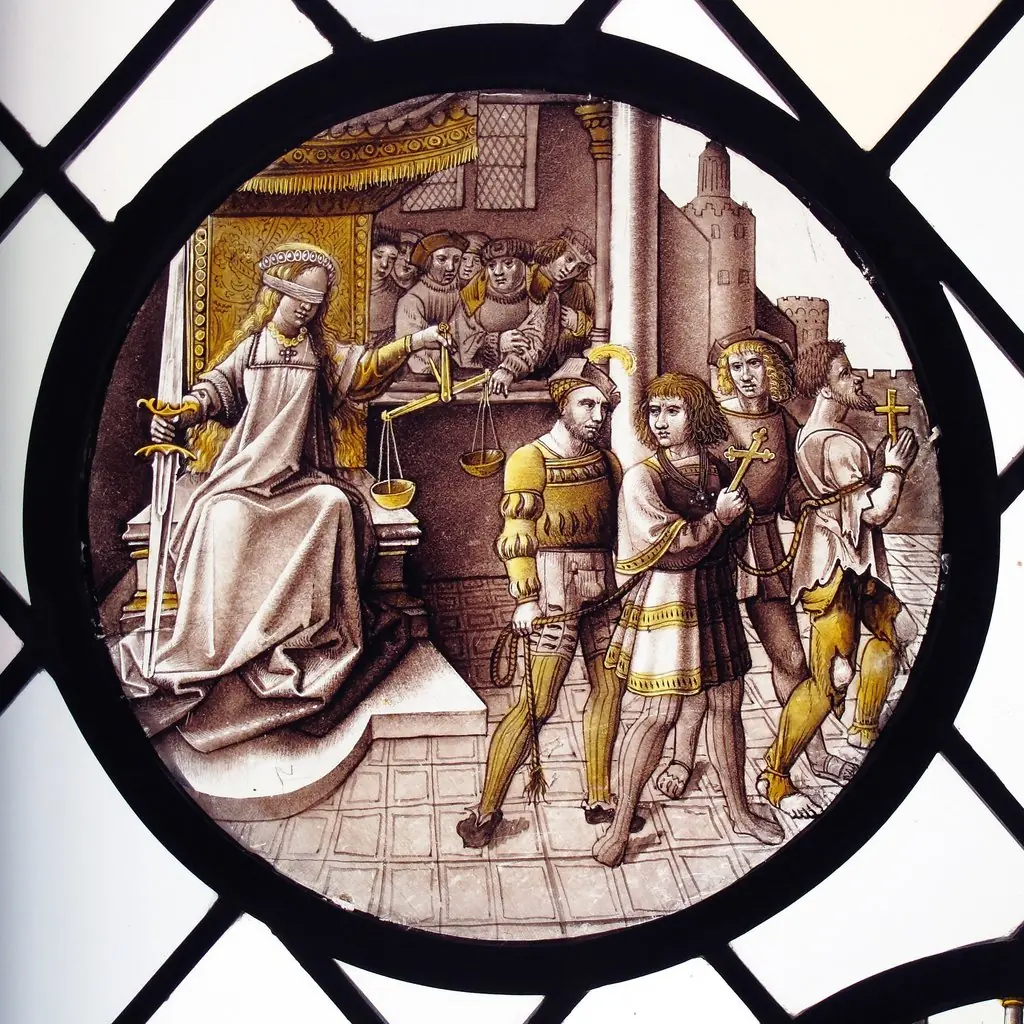 Roundel with Justice
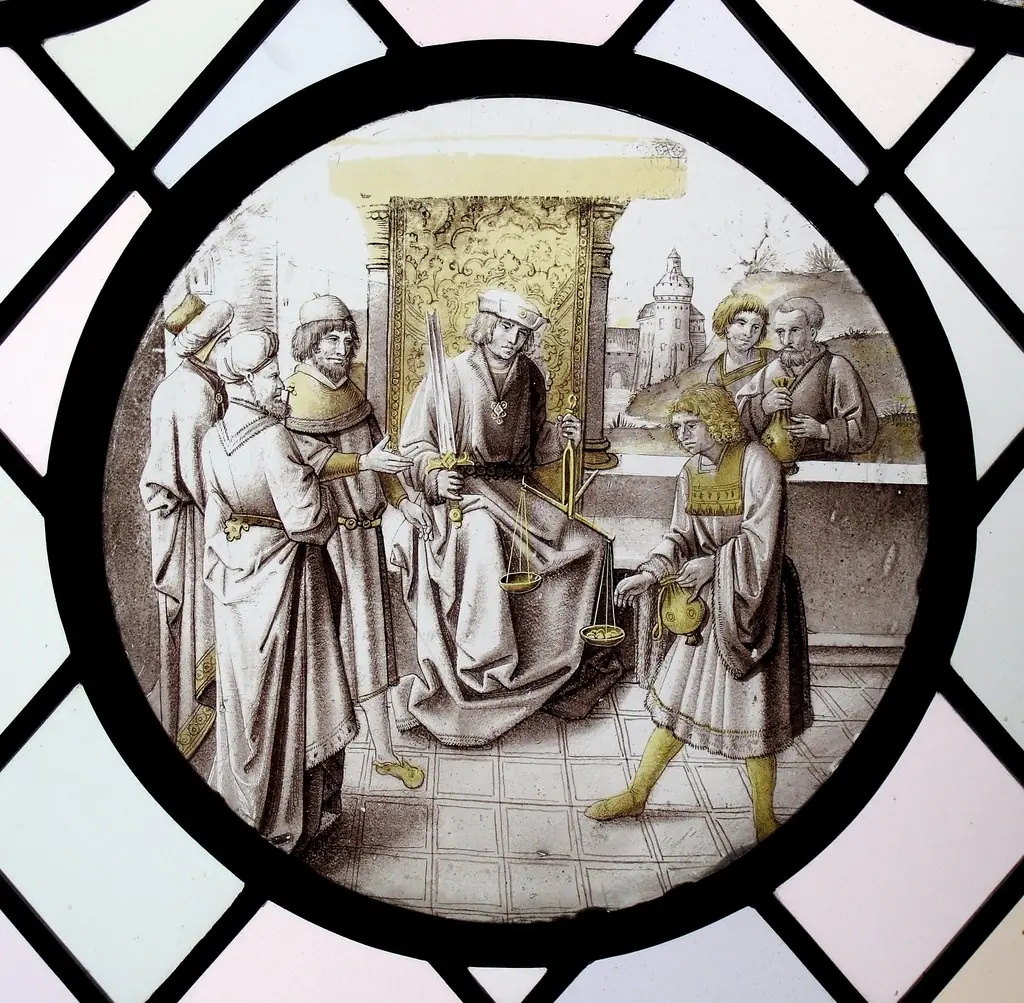 Roundel with Judgment or Allegorical Scene
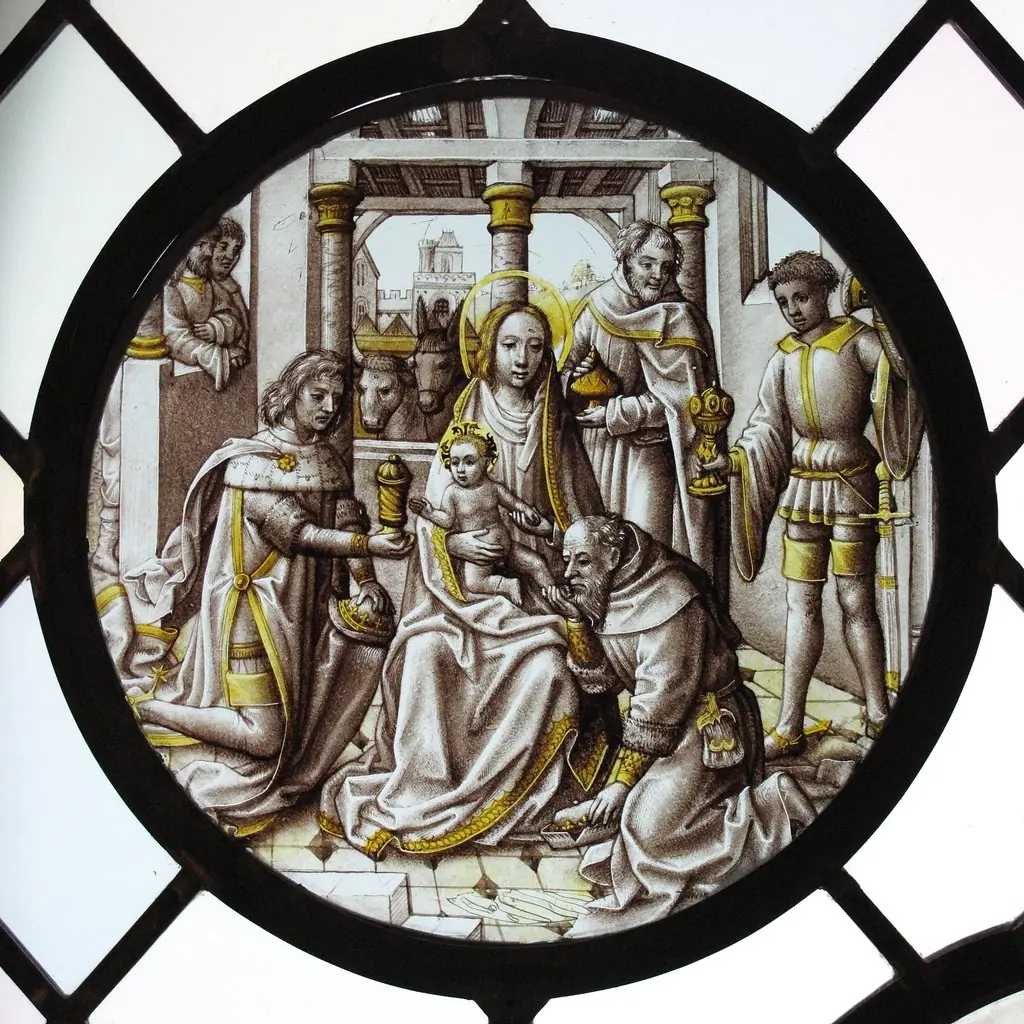 Roundel with the Adoration of the Magi
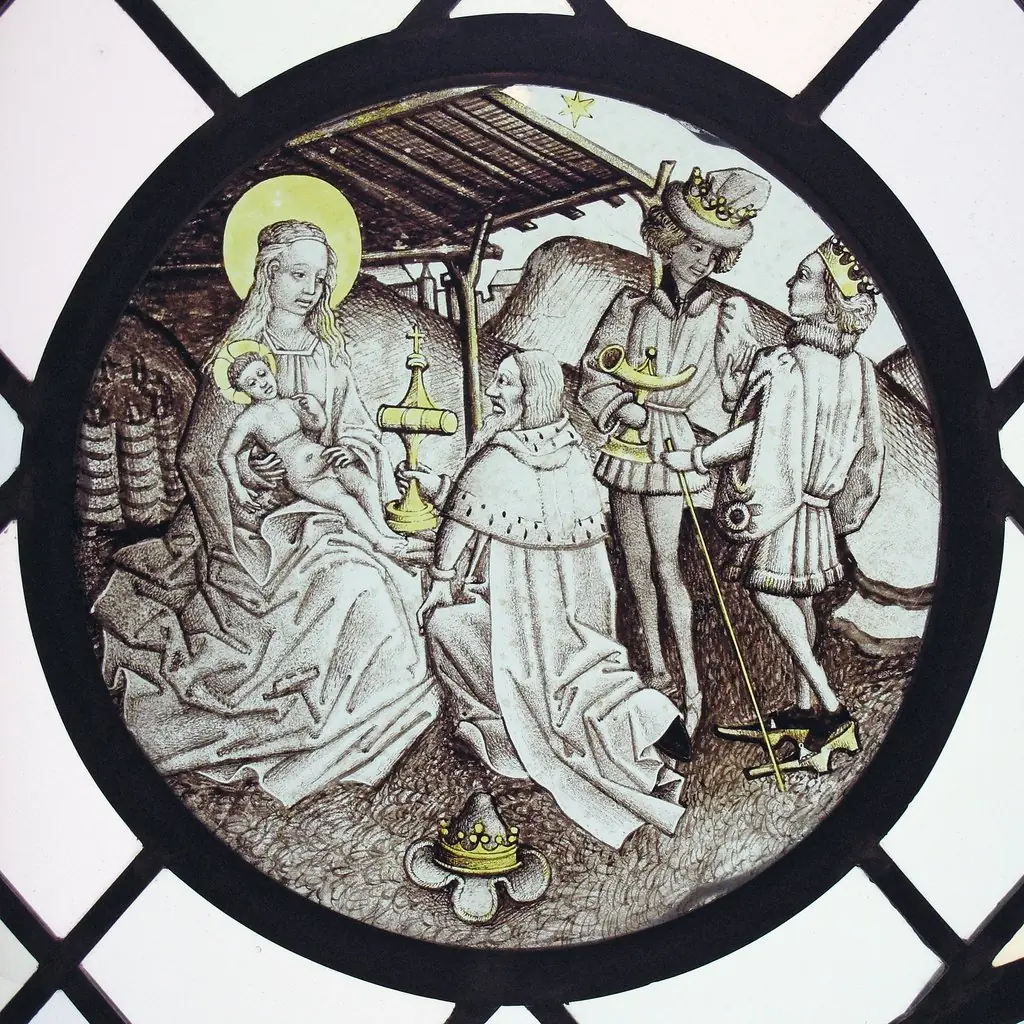 Roundel with Adoration of the Magi
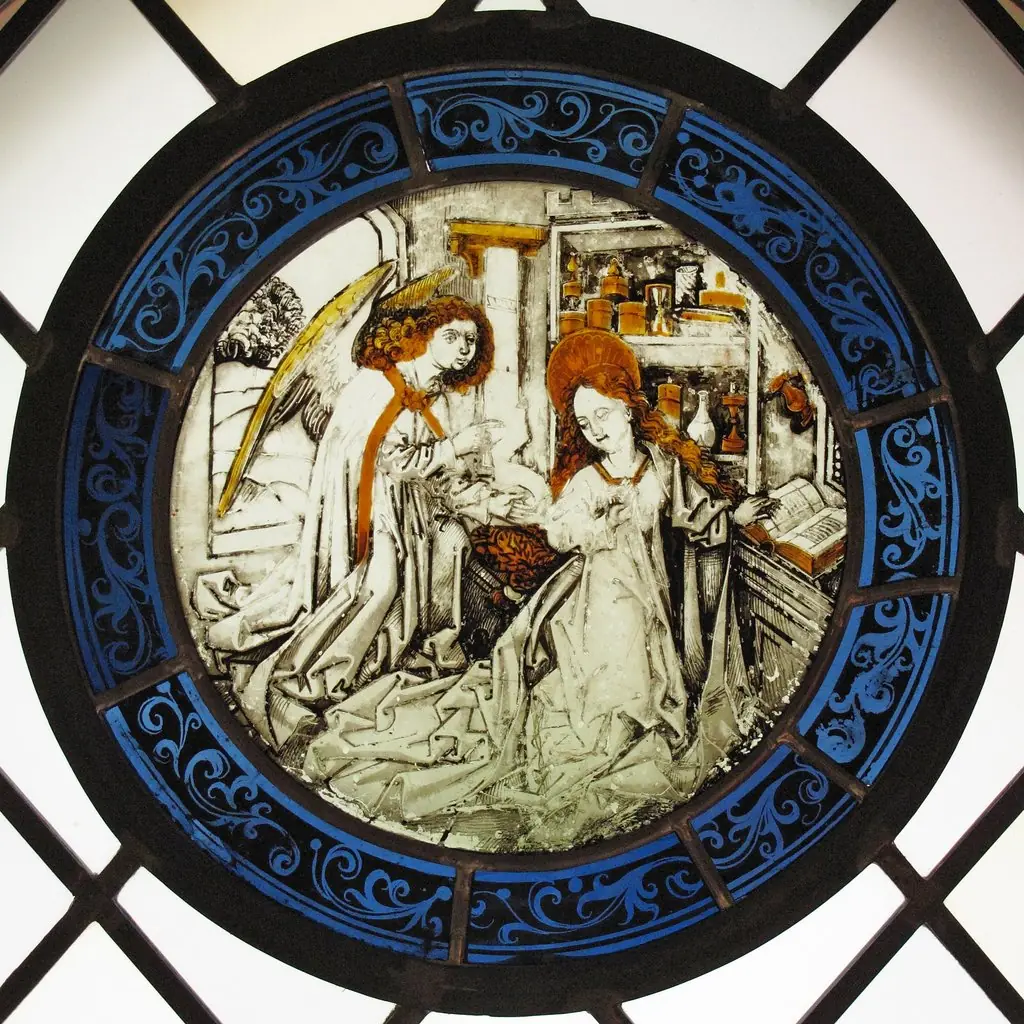 Roundel with the Annunciation
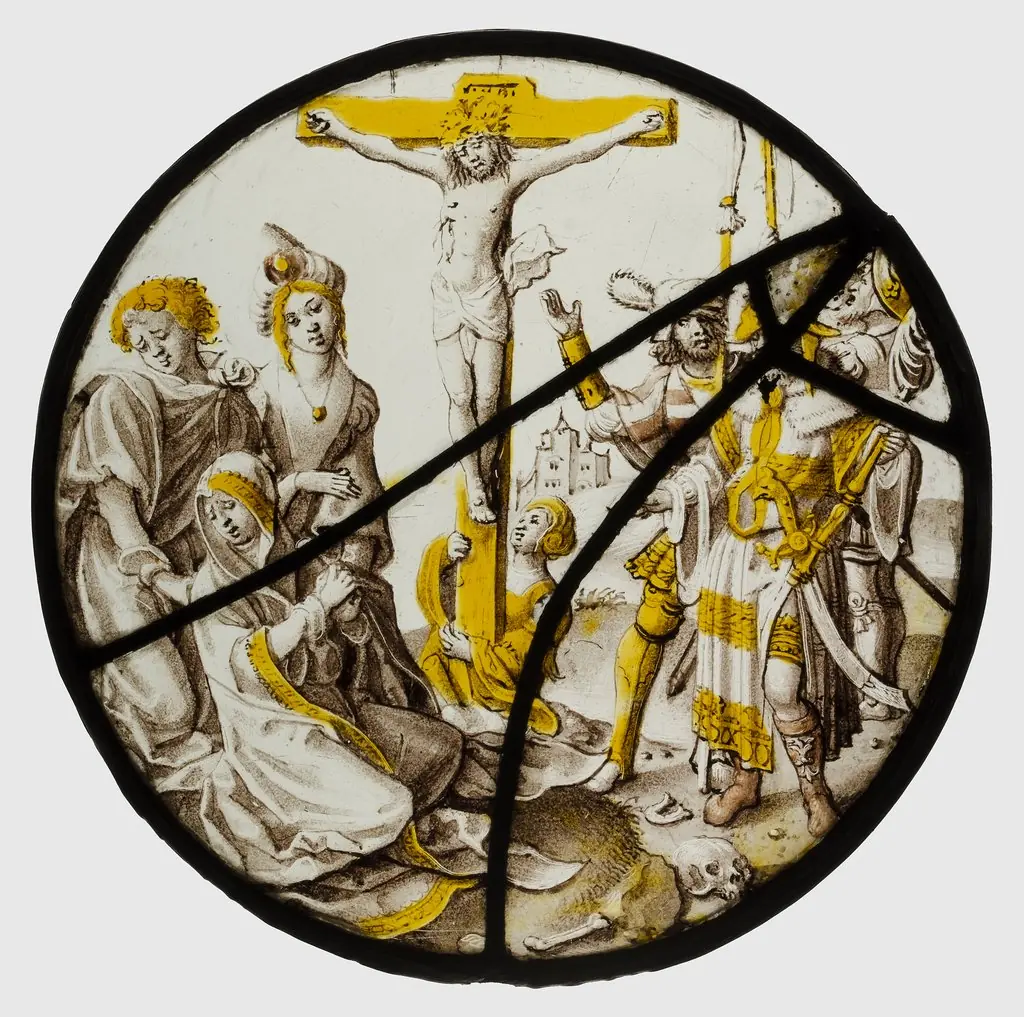 Roundel with the Crucifixion
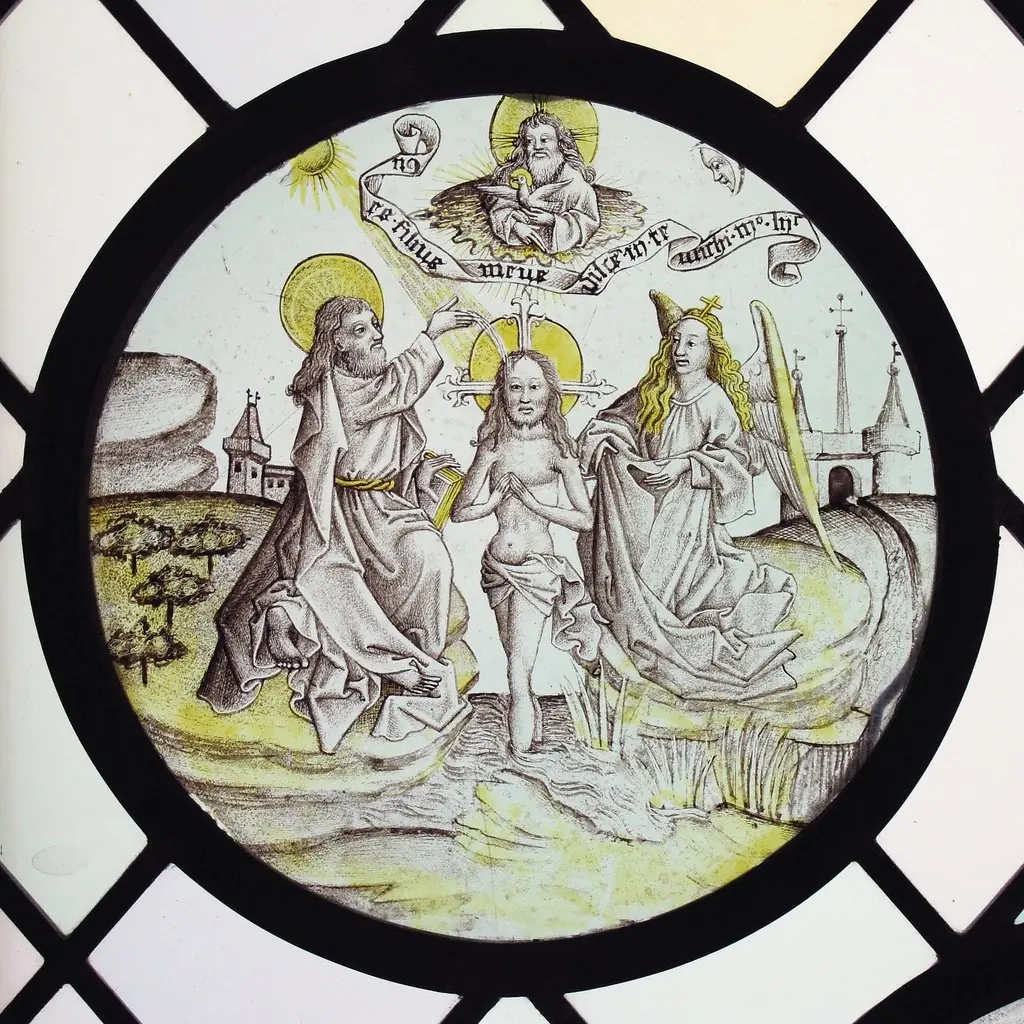 Roundel with the Baptism of Christ
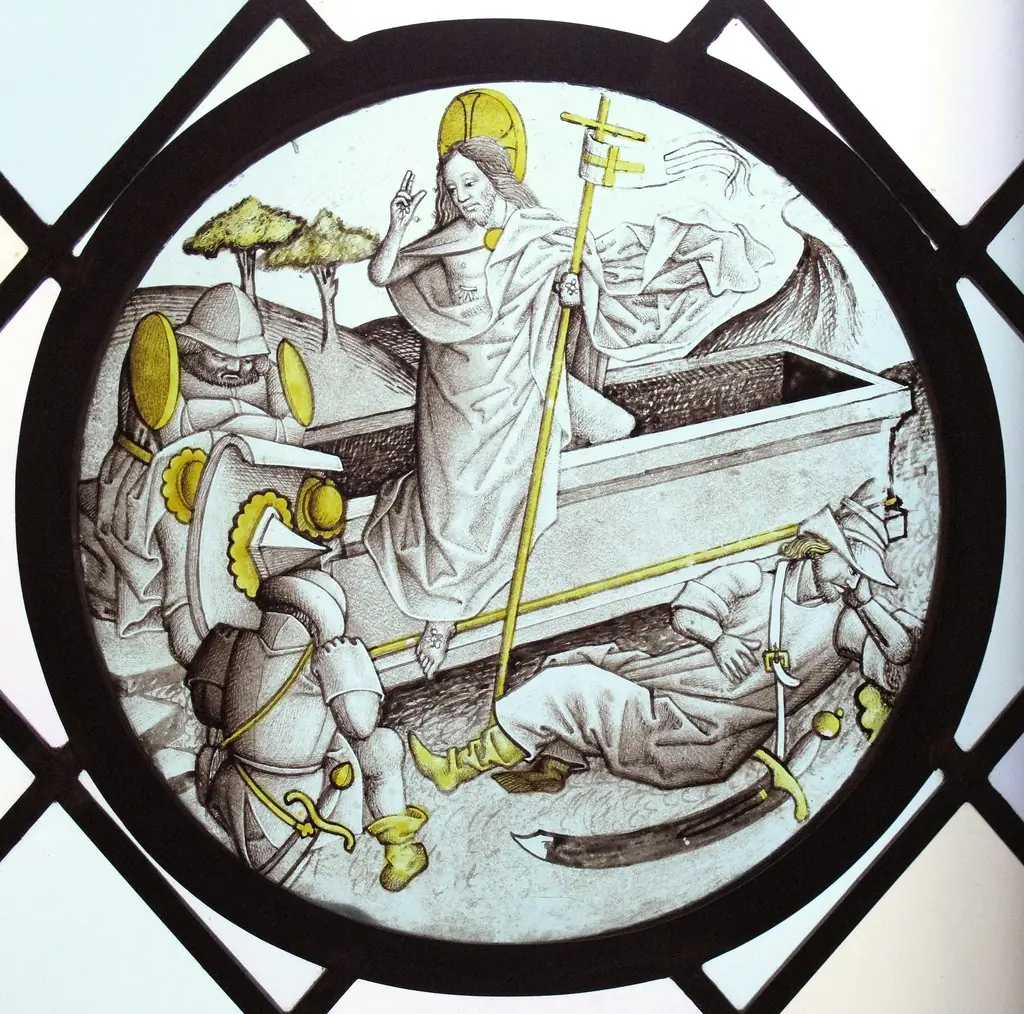 Roundel with the Resurrection
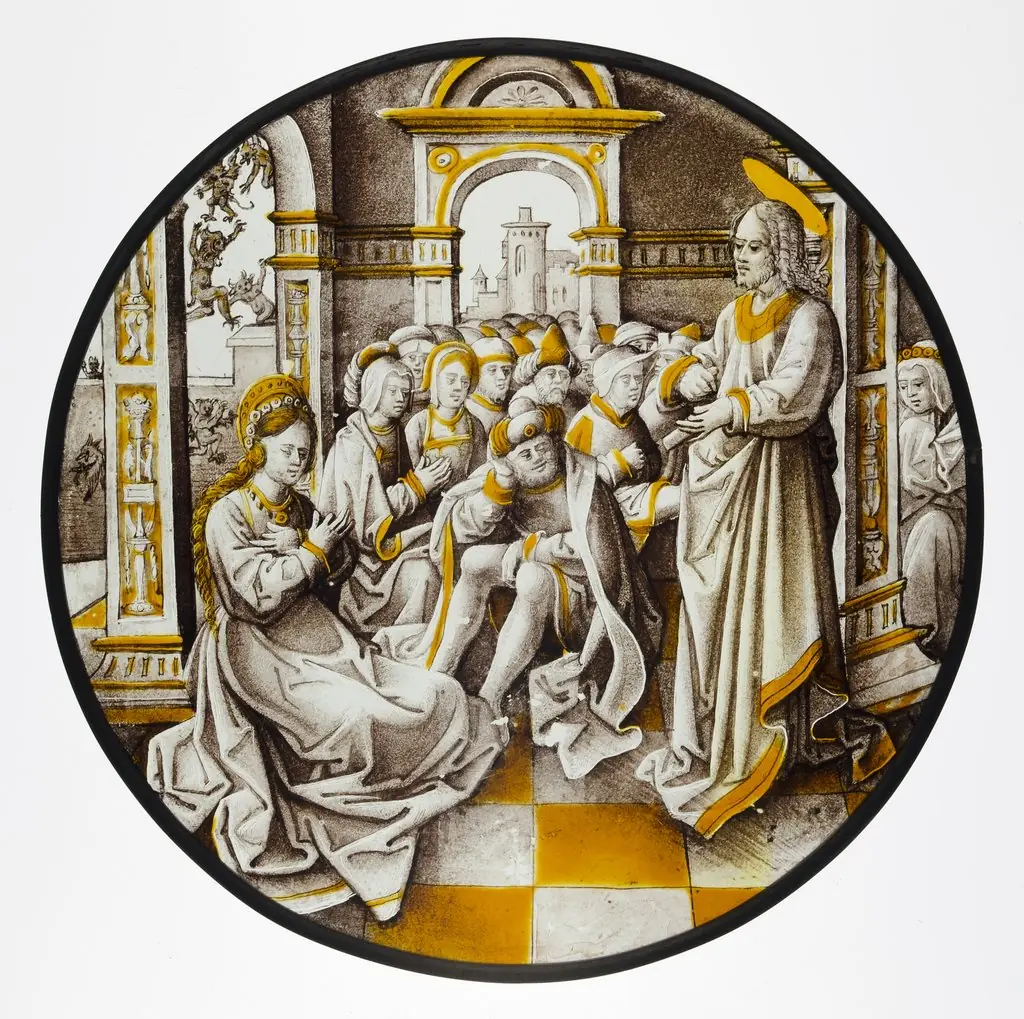 Roundel with Christ and the Adulterous Woman
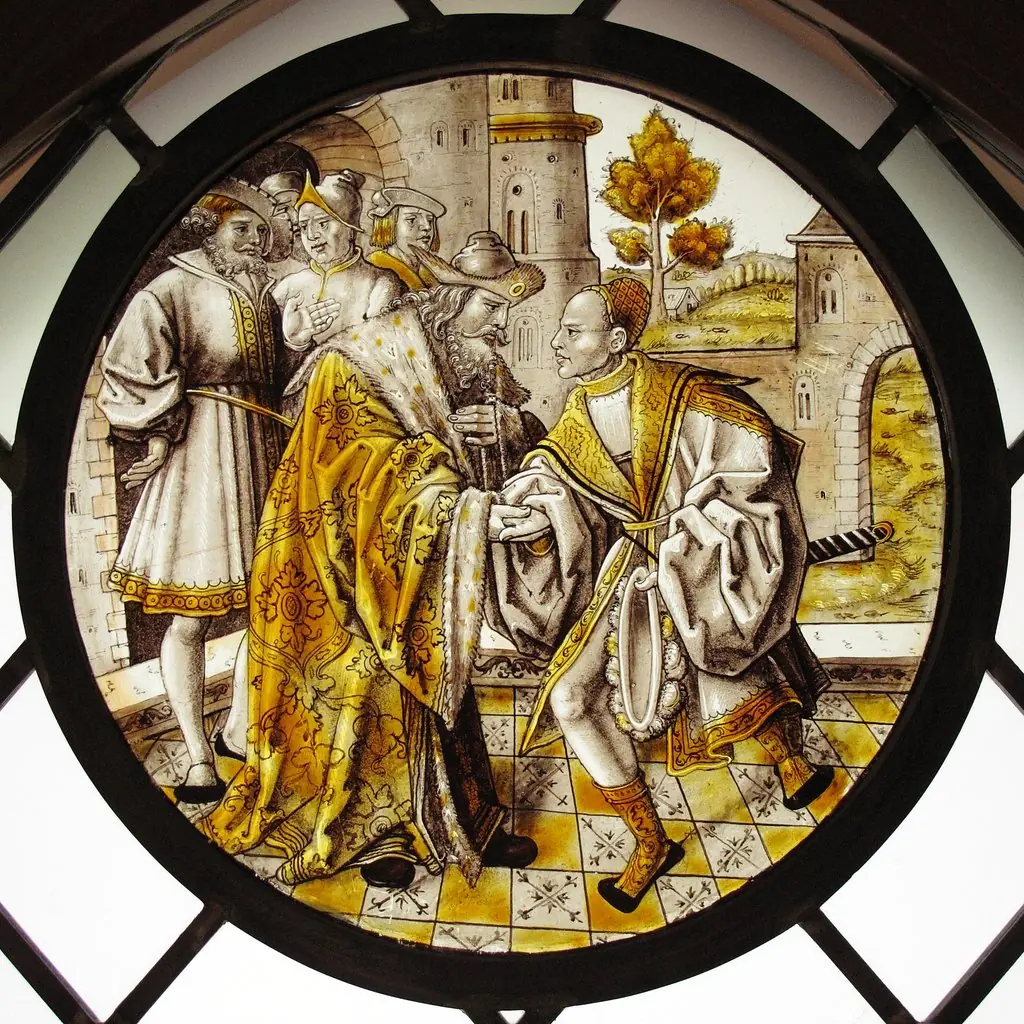 Roundel with Return of the Prodigal Son
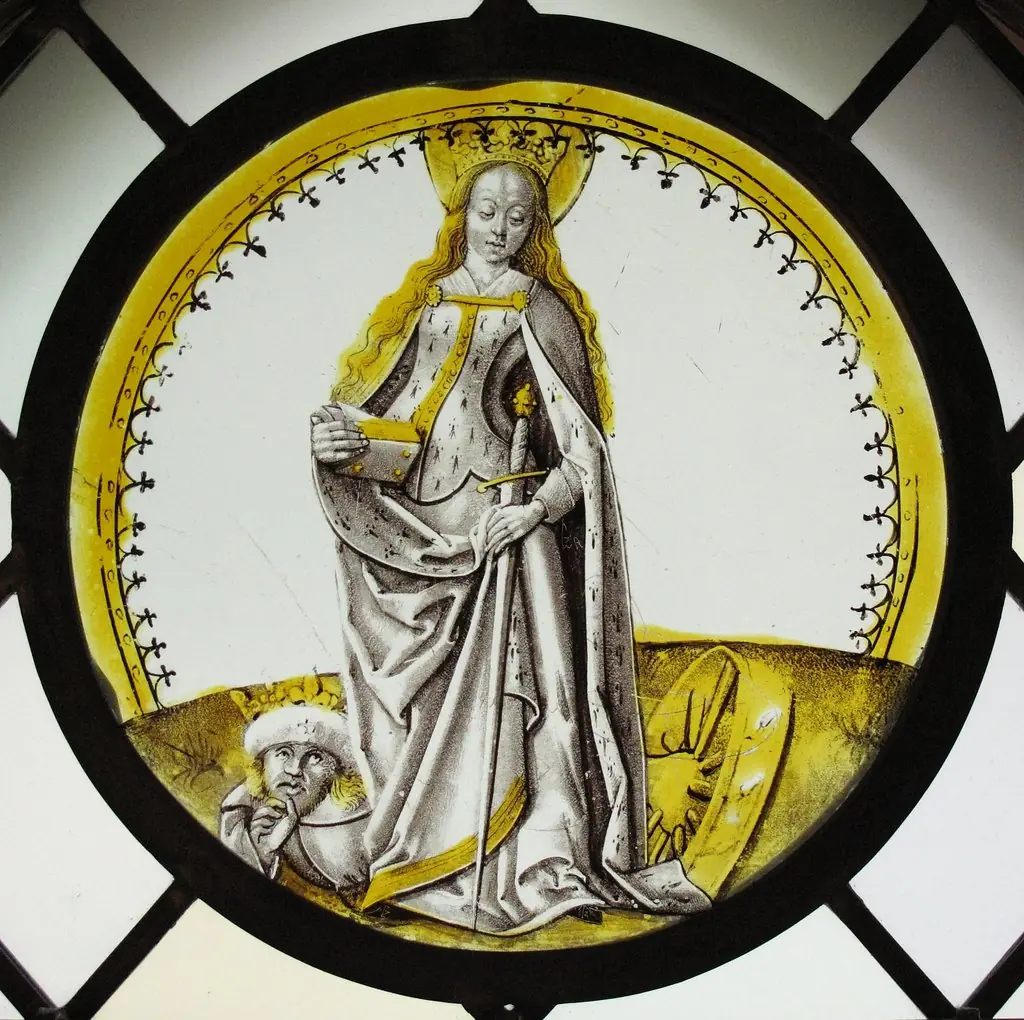 Roundel with Saint Catherine of Alexandria