Artwork
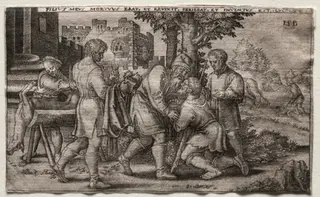
Roundel with Return of the Prodigal Son
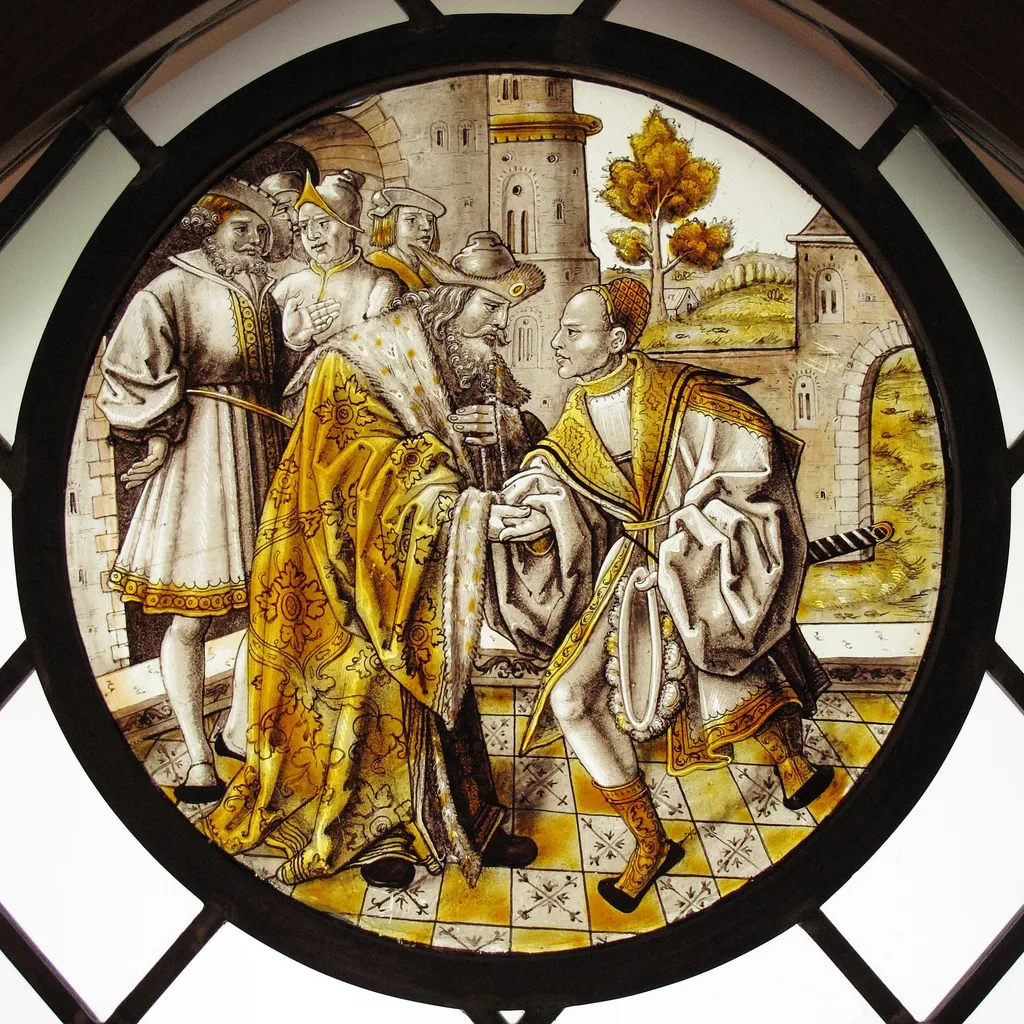
Roundel with Return of the Prodigal Son is an unspecified painting. It dates from 1530 and is held in the collection of the Metropolitan Museum of Art.
About this work
Subject & Meaning
The work's central iconography focuses on the specific moment of the son's return, depicting a male figure to represent the protagonist of the biblical story.
Created in 1530, this anonymous religious painting illustrates the Parable of the Prodigal Son, a narrative derived from Christian scripture. The work's central iconography focuses on the specific moment of the son's return, depicting a male figure to represent the protagonist of the biblical story. As a piece of religious art, the roundel serves as a visual interpretation of themes regarding repentance, forgiveness, and familial reconciliation inherent in the parable.
The depiction relies on the recognizable narrative elements of the story to convey its spiritual meaning to the viewer, functioning as a devotional object that encapsulates the moral lessons of the text through a single, focused scene.
Context
The work, dated 1530, is an anonymous religious painting that exemplifies early sixteenth‑century depictions of the Parable of the Prodigal Son. Its composition, recorded in the Metropolitan Museum of Art's collection, reflects the broader trend of narrative biblical subjects in devotional art of the period. Scholarship on the piece situates it within the corpus of anonymous workshop outputs, highlighting the diffusion of popular Gospel stories in visual culture.
As a roundel, it demonstrates the adaptation of portable devotional formats for private contemplation, underscoring its significance in the evolution of religious imagery before the mid‑sixteenth century.
Overview
This painting, titled Roundel with Return of the Prodigal Son, illustrates a biblical narrative. The composition features several male figures, including a kneeling individual and another prominently dressed in yellow, set within an outdoor courtyard. Architectural elements and trees define the background, establishing a specific setting for the dramatic encounter. The work is executed as a painting, typical of its period.
Technique & Style
The artist employs a restricted color palette, predominantly using shades of yellow, white, and brown to define the scene. Depth and volume are achieved through the skillful application of chiaroscuro, creating pronounced contrasts between illuminated and shadowed areas. The brushwork is both detailed and expressive, with visible strokes contributing to a dynamic quality and conveying a sense of movement and energy within the depicted narrative.
Artist & collection

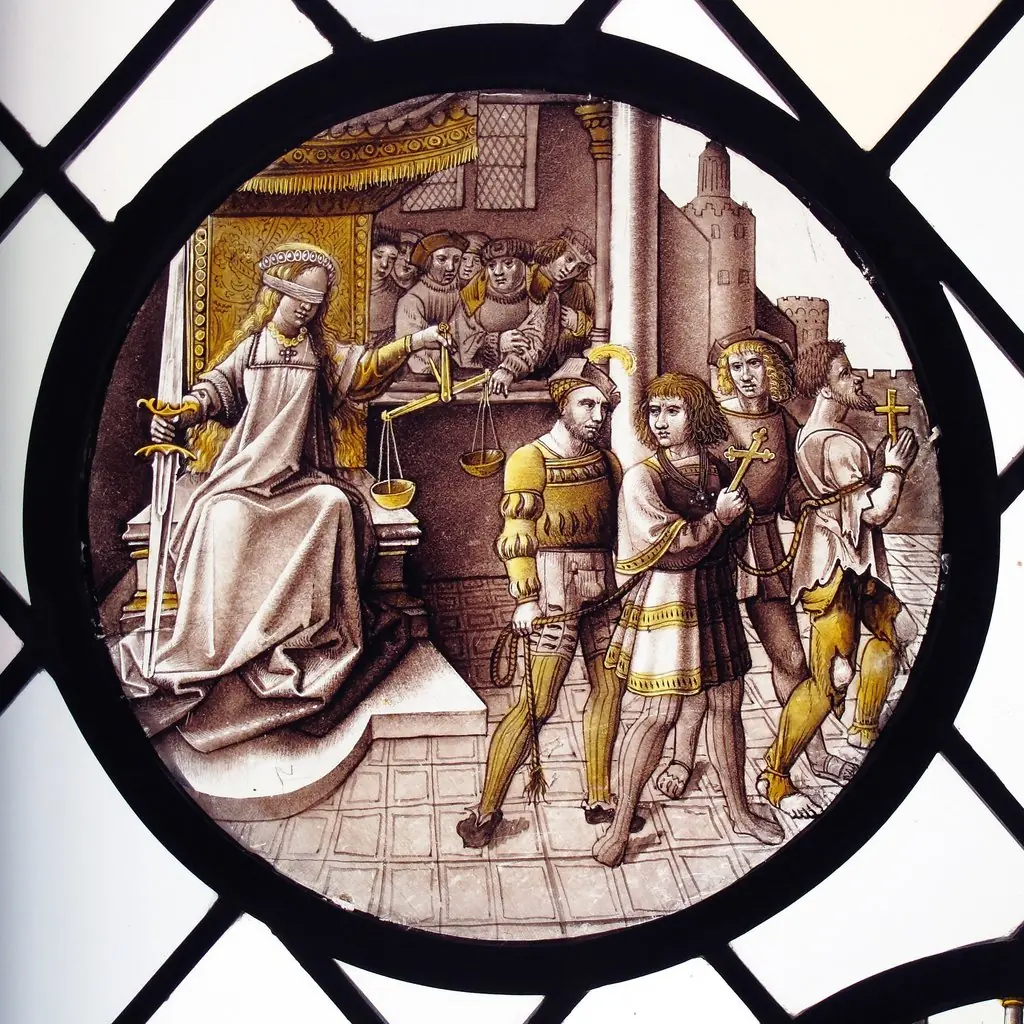 Roundel with Justice
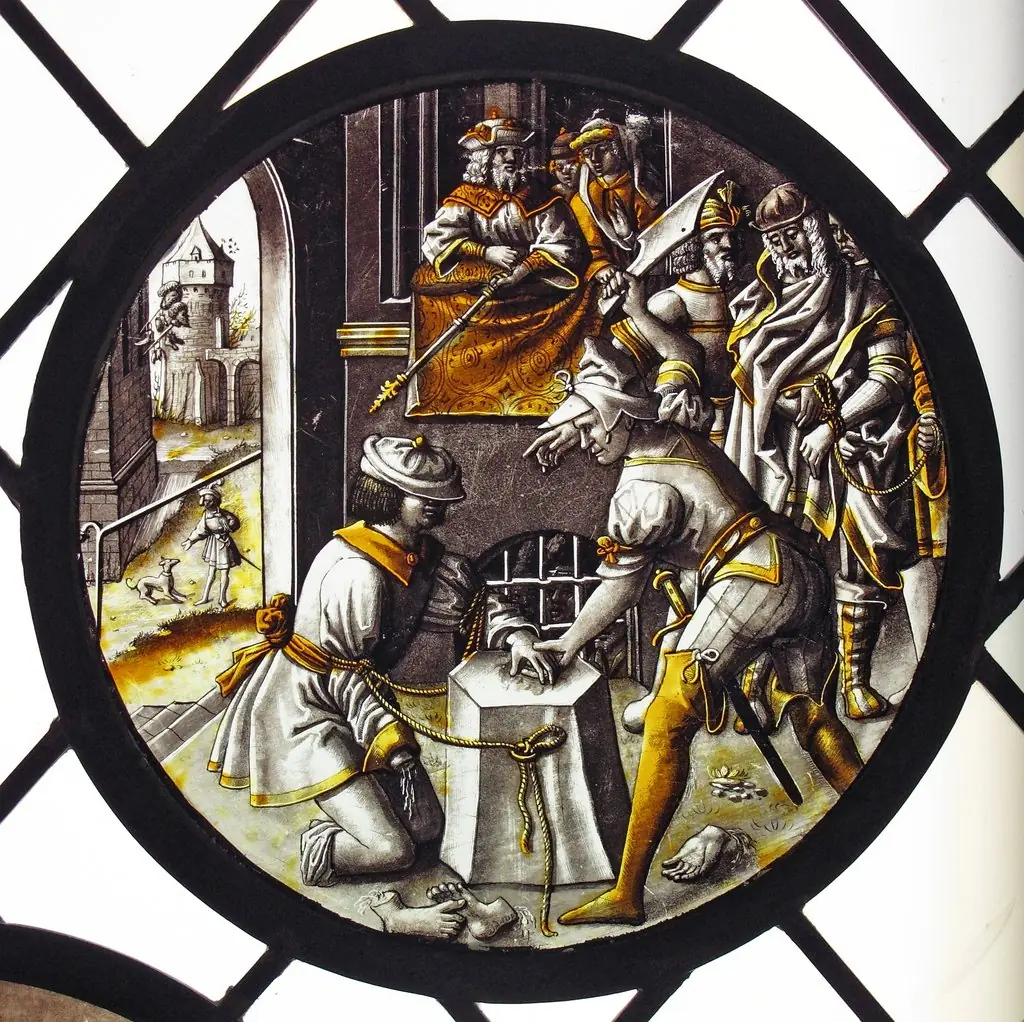 Roundel with Martyrdom of Saint Jacobus Intercisus
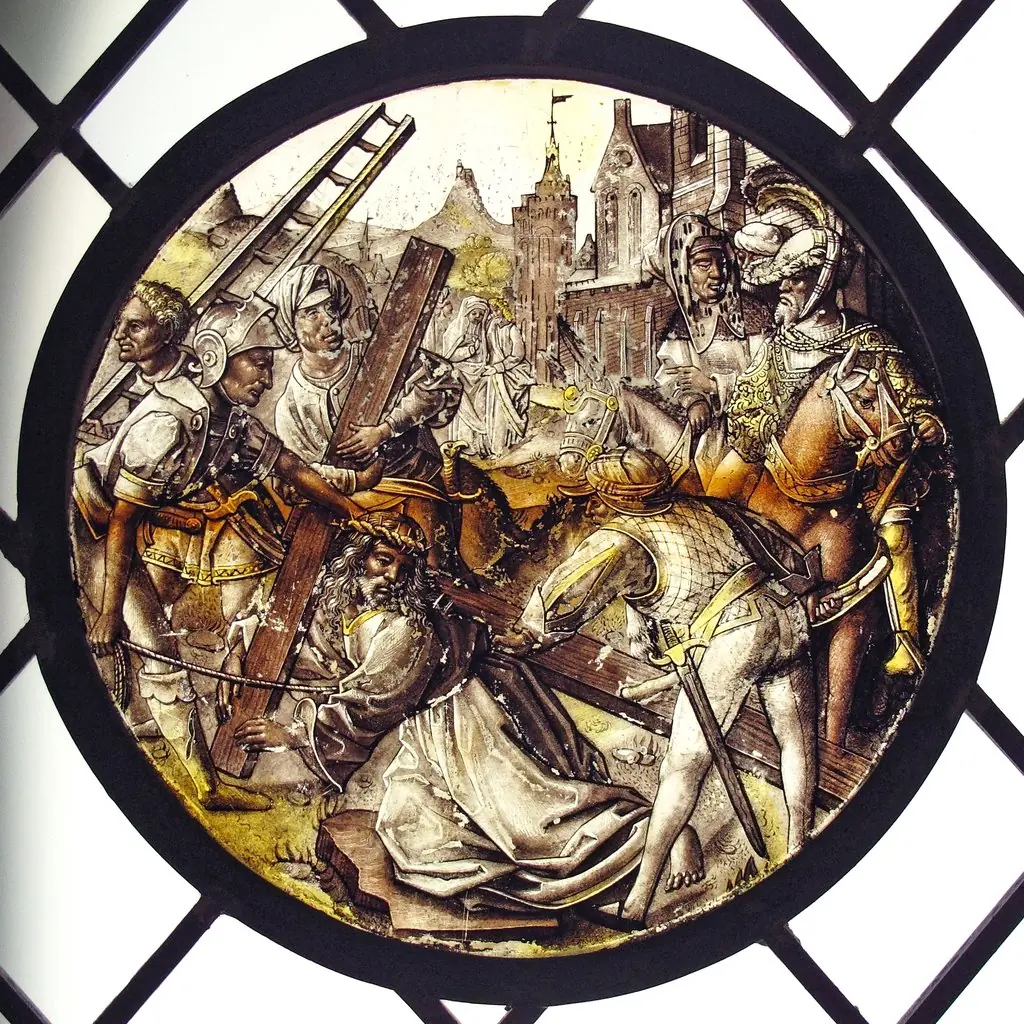 Roundel with Christ Bearing the Cross
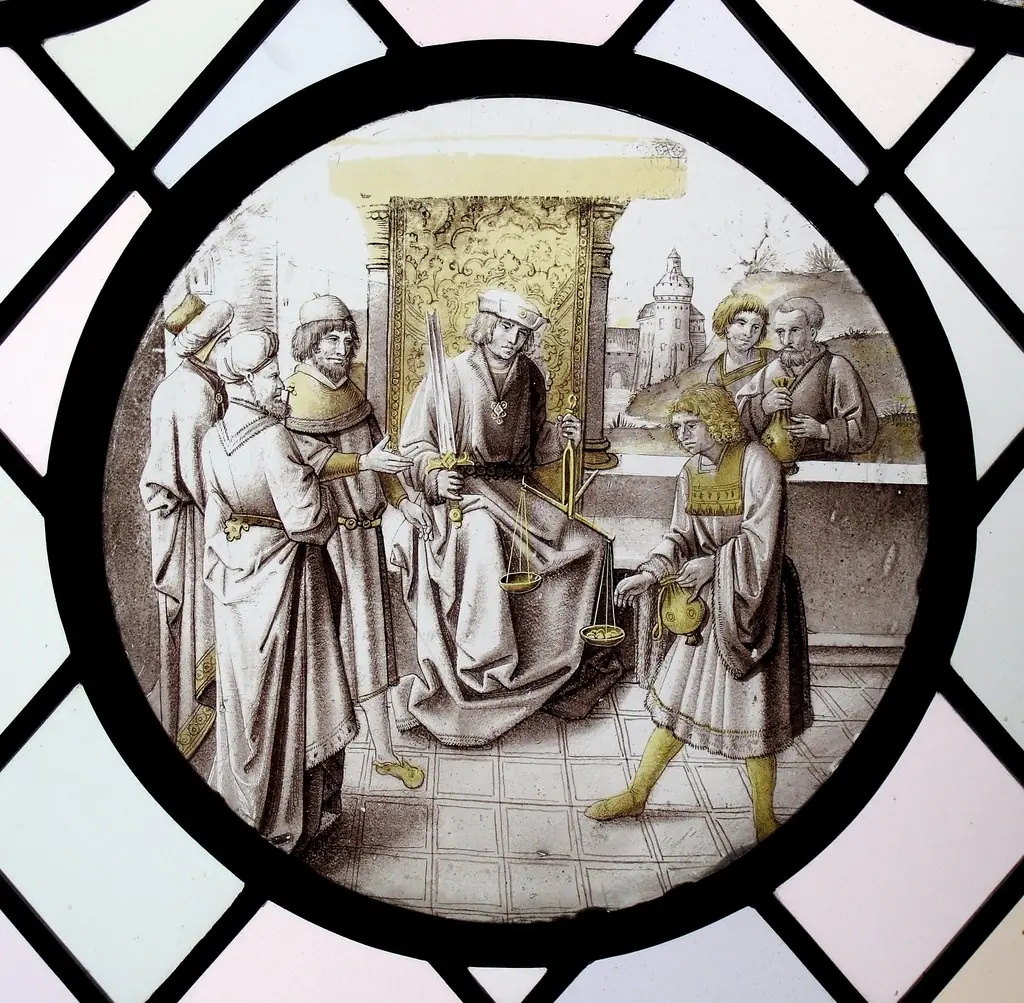 Roundel with Judgment or Allegorical Scene
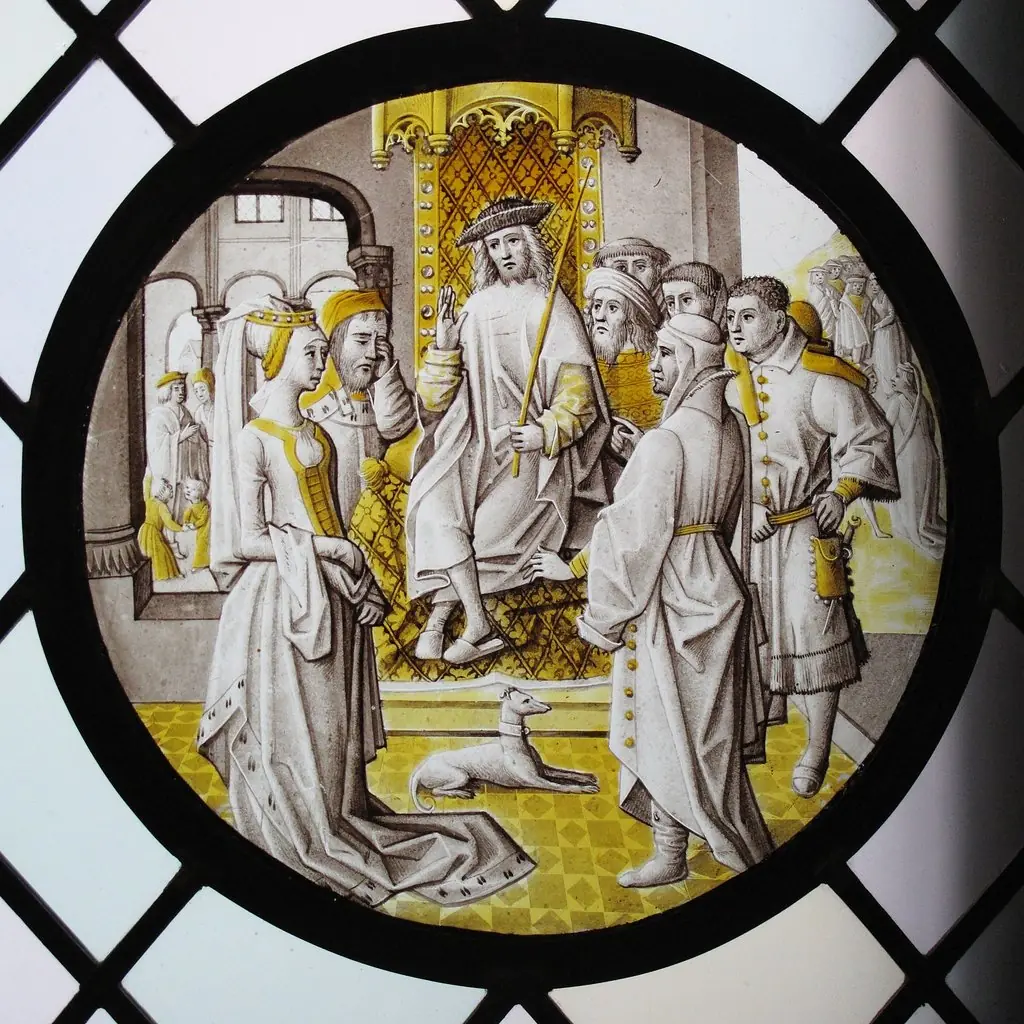 Roundel with Susanna In Judgement
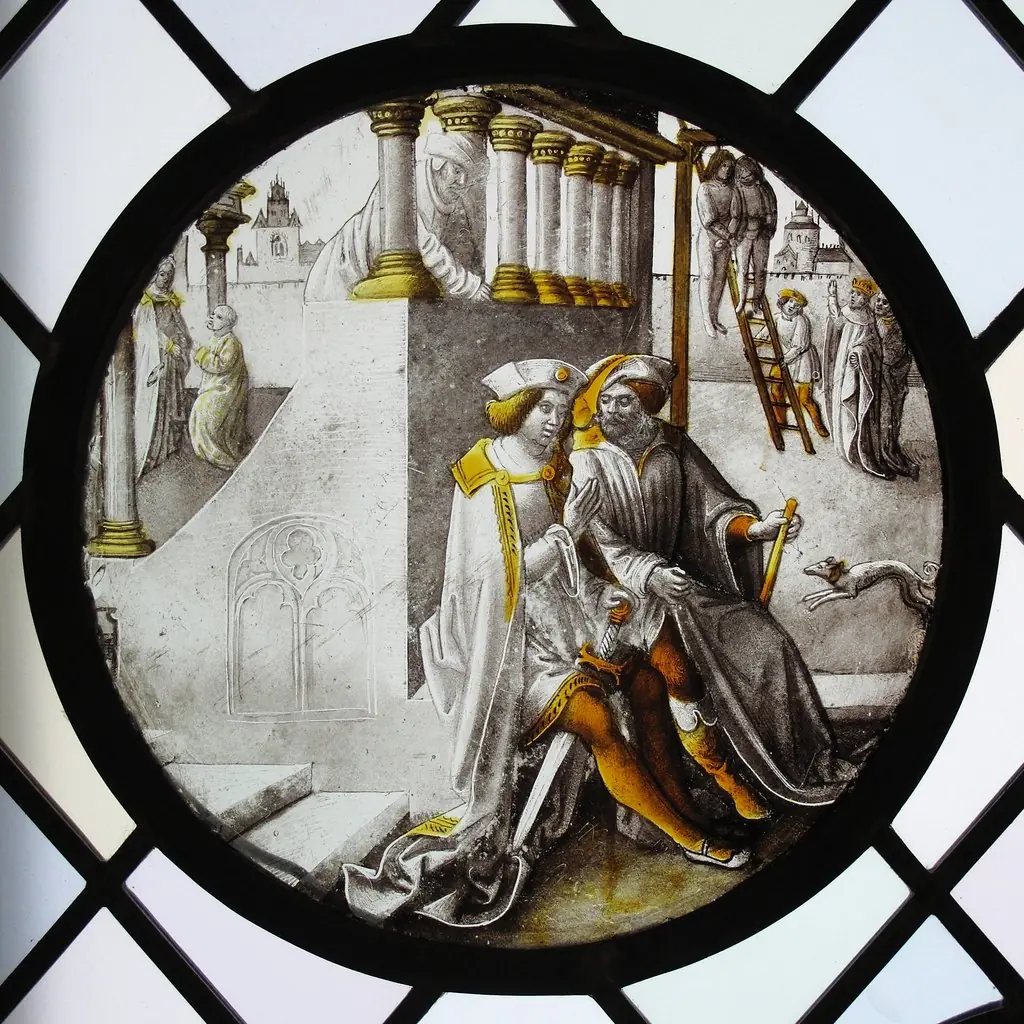 Roundel with Mordecai Overhearing the Conspirators
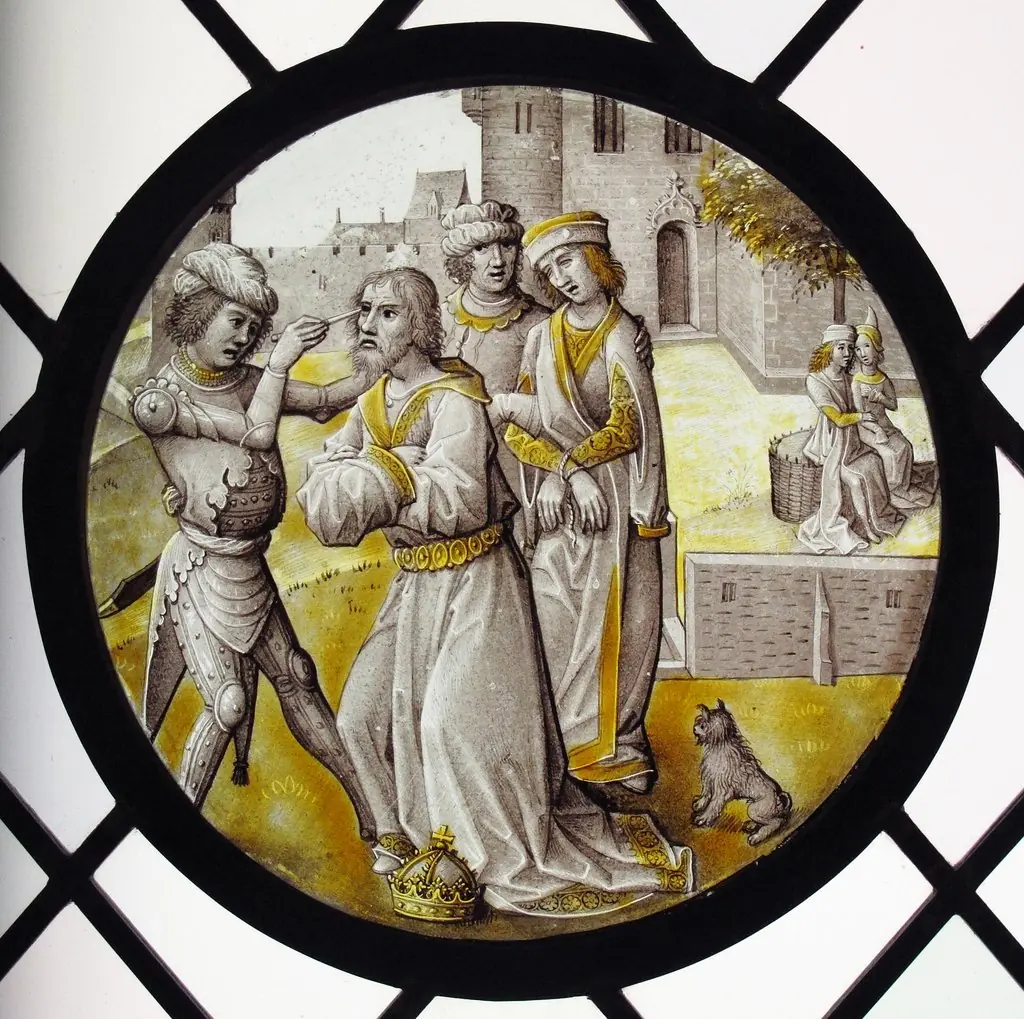 Roundel with the Blinding of Zaleucus of Locria
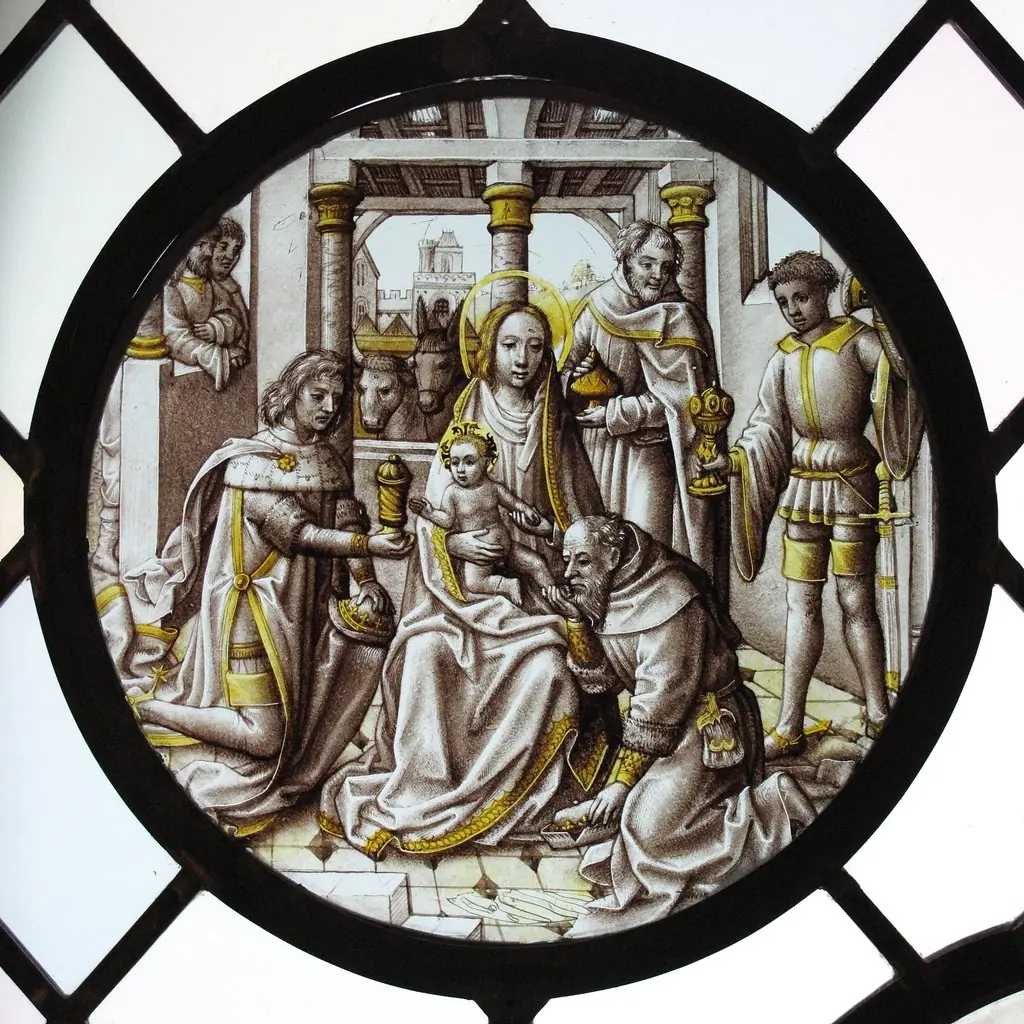 Roundel with the Adoration of the Magi
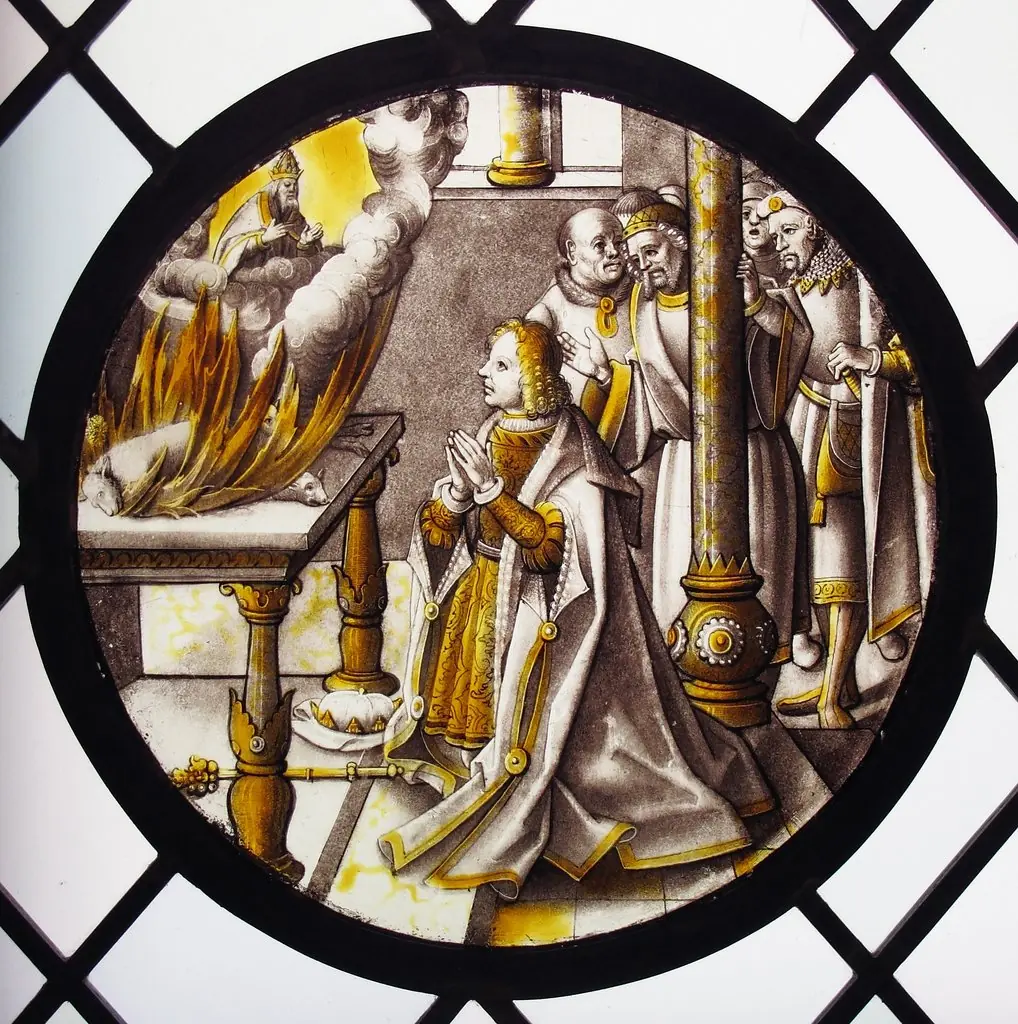 Roundel with Sacrifice in the Temple
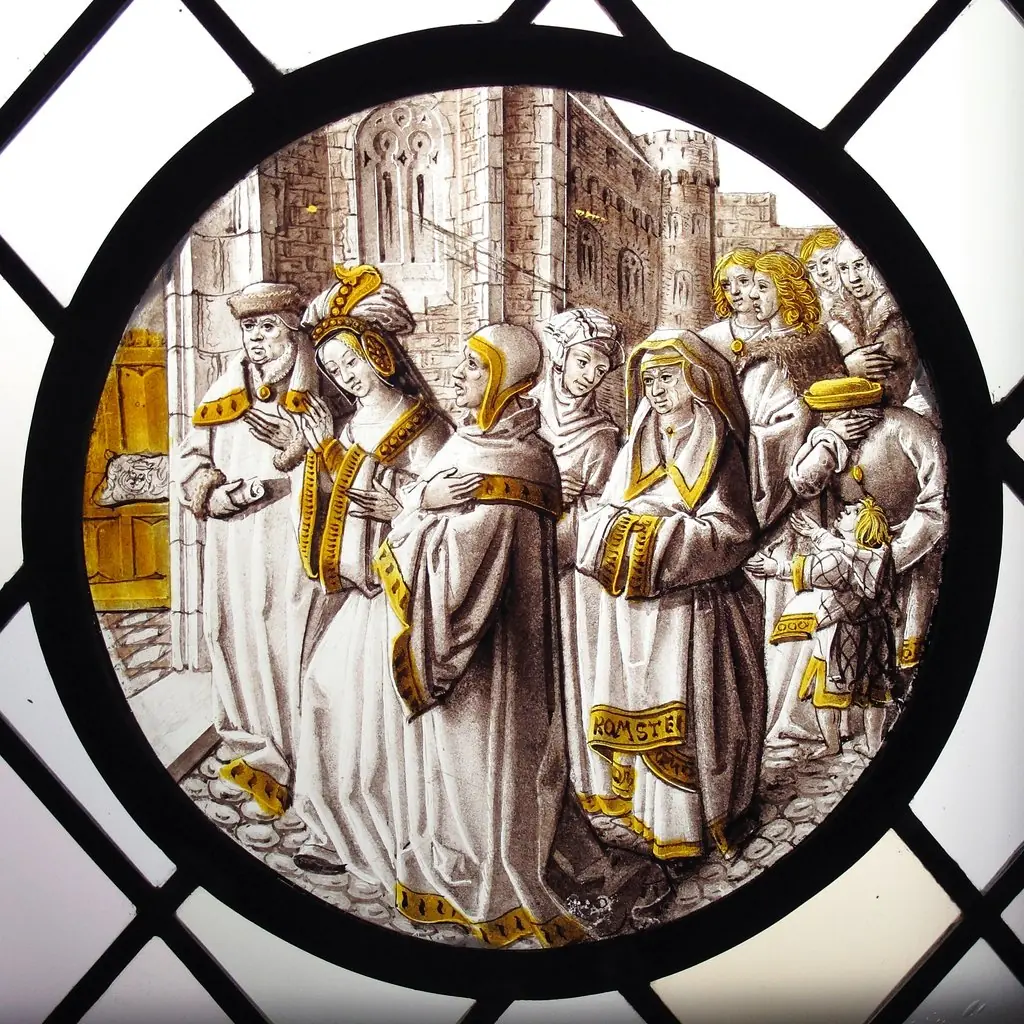 Roundel with Susanna Led to Judgement