Artwork
Roundel with Saint Agnes
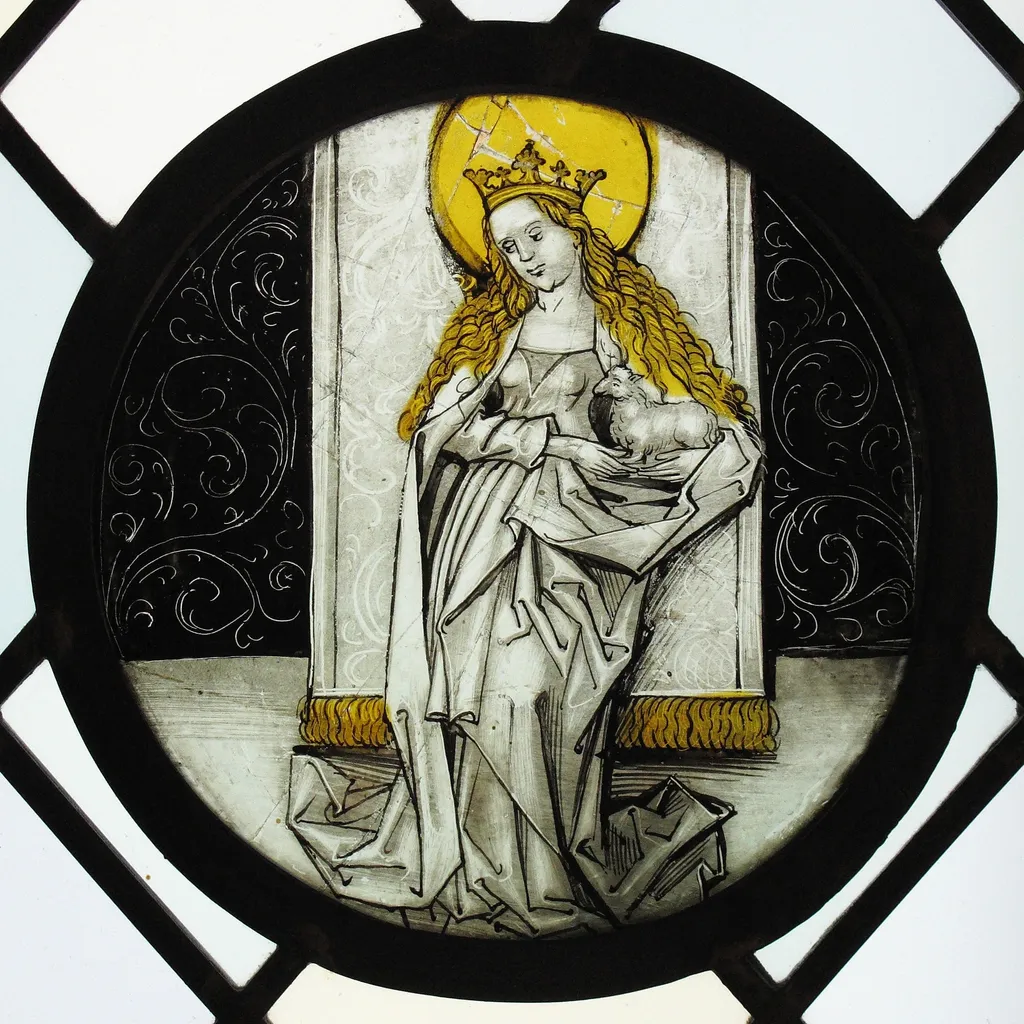
Roundel with Saint Agnes is an unspecified painting. It dates from 1496 and is held in the collection of the Metropolitan Museum of Art. This circular painting depicts Saint Agnes, a female figure with long blonde hair, crowned in gold.
About this work
History & Provenance
The roundel depicting Saint Agnes was created in 1496 as a religious painting. While the specific patron or commissioning body remains unidentified in available records, the work is attributed to an anonymous artist active during this period. The piece entered the collection of the Metropolitan Museum of Art, where it is currently held and displayed as part of its holdings of religious art.
Context
It is an anonymous piece that entered the collection of the Metropolitan Museum of Art, where it remains on view.
Roundel with Saint Agnes is a late fifteenth-century religious painting dated to 1496. The work is categorized as a painting and belongs to the religious genre, depicting a solitary female figure. It is an anonymous piece that entered the collection of the Metropolitan Museum of Art, where it remains on view.
Its creation toward the turn of the century situates it within the broader trajectory of devotional imagery produced in workshops of the period, illustrating the prevalence of unnamed artists who specialized in intimate devotional subjects. The roundel's stylistic simplicity and iconographic focus on Saint Agnes reflect contemporary liturgical tastes.
Overview
This circular painting depicts Saint Agnes, a female figure with long blonde hair, crowned in gold. She stands on a modest platform, cradling a small lamb. Her gray robe, accented with yellow trim, contrasts with the predominantly black background, which features subtle white swirling patterns. A small boat rests at her feet, adding a curious detail to the composition.
Subject & Meaning
The central figure is identifiable as Saint Agnes, a Christian martyr. The lamb she holds is a traditional attribute, symbolizing innocence, purity, and sacrifice, often associated with Christ himself and the virtue of kindness. This iconography reinforces her identity and the religious narratives connected to her life and martyrdom.
Technique & Style
The painting exhibits a distinct stylistic approach characterized by its use of flat, unmodulated colors and prominent, bold outlines. This technique contributes to a simplified, almost two-dimensional appearance, evoking artistic traditions from earlier periods. The stark background further emphasizes the central figure, creating a clear and direct visual statement.
Artist & collection

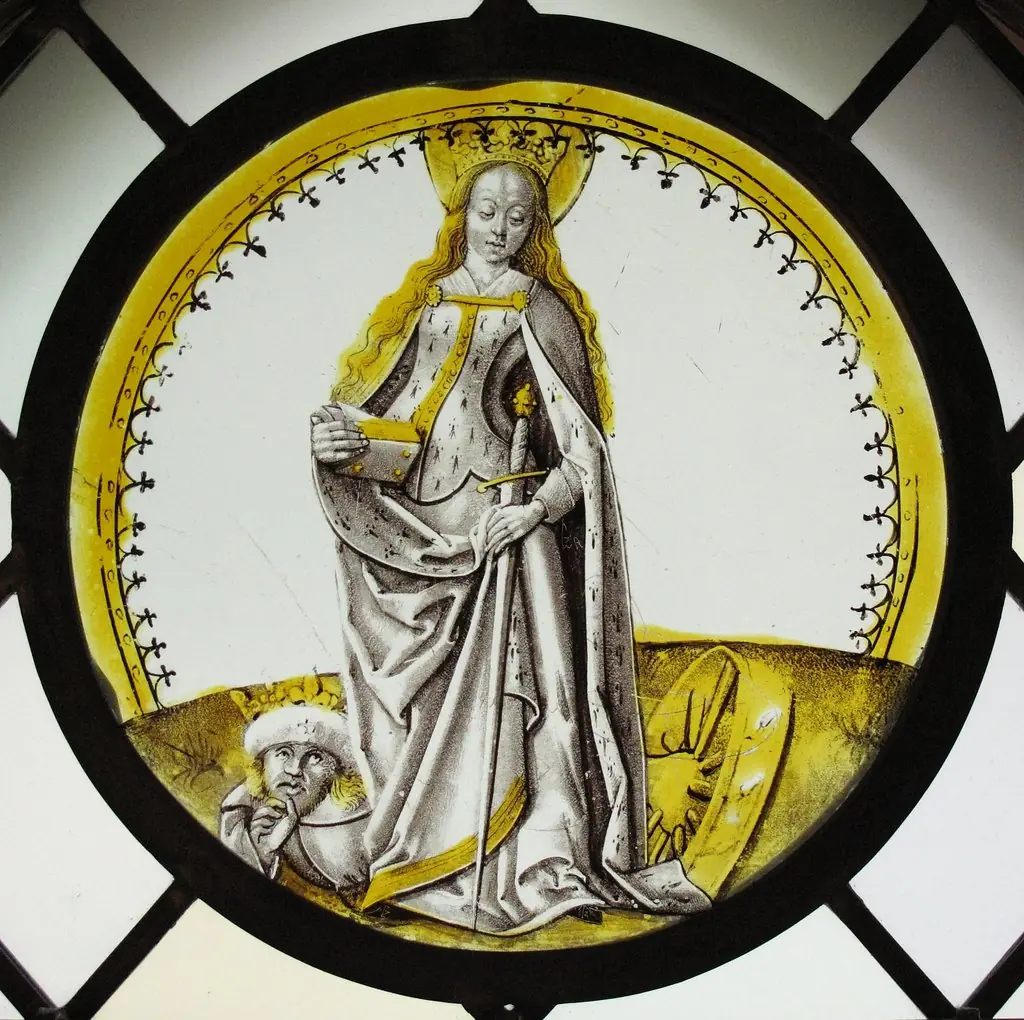
- Roundel with Saint Catherine of Alexandria
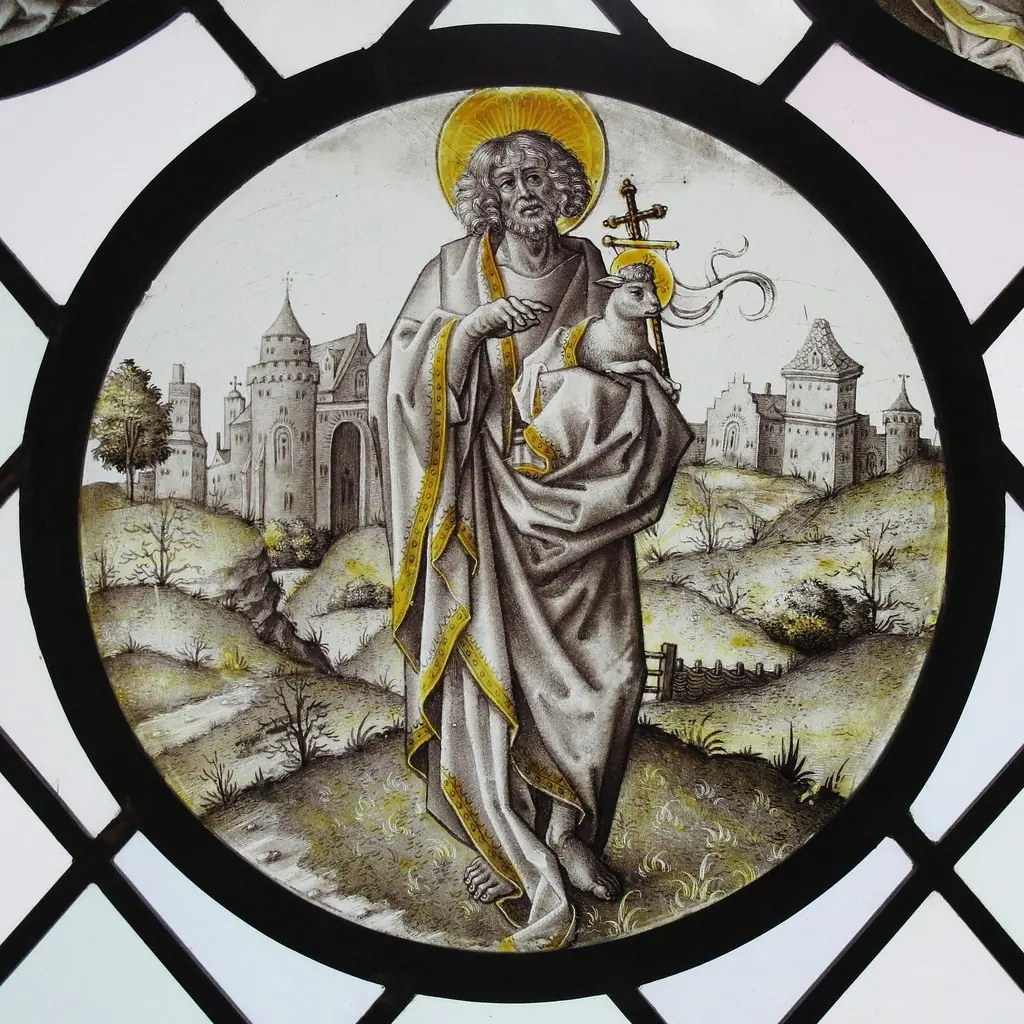 Roundel with Saint John The Baptist
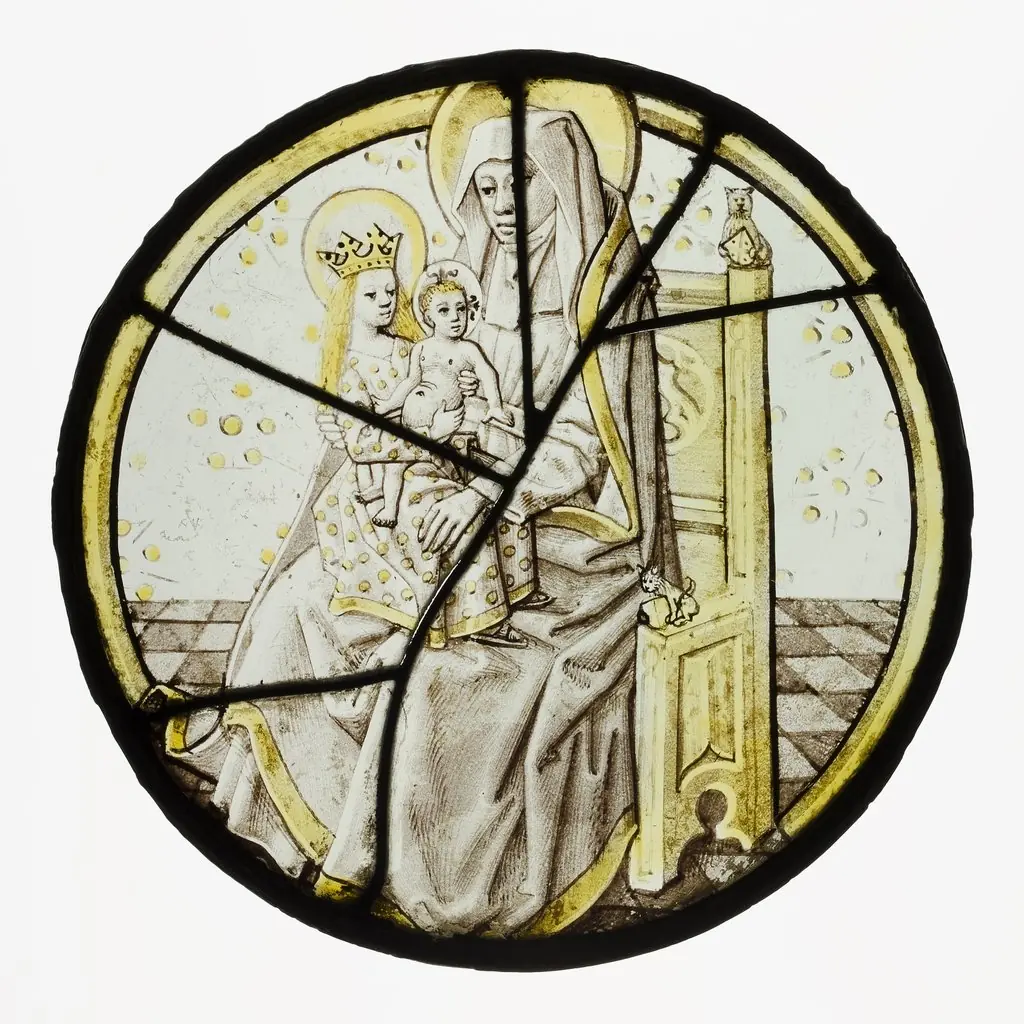 Roundel with Saint Anne with the Virgin and Child
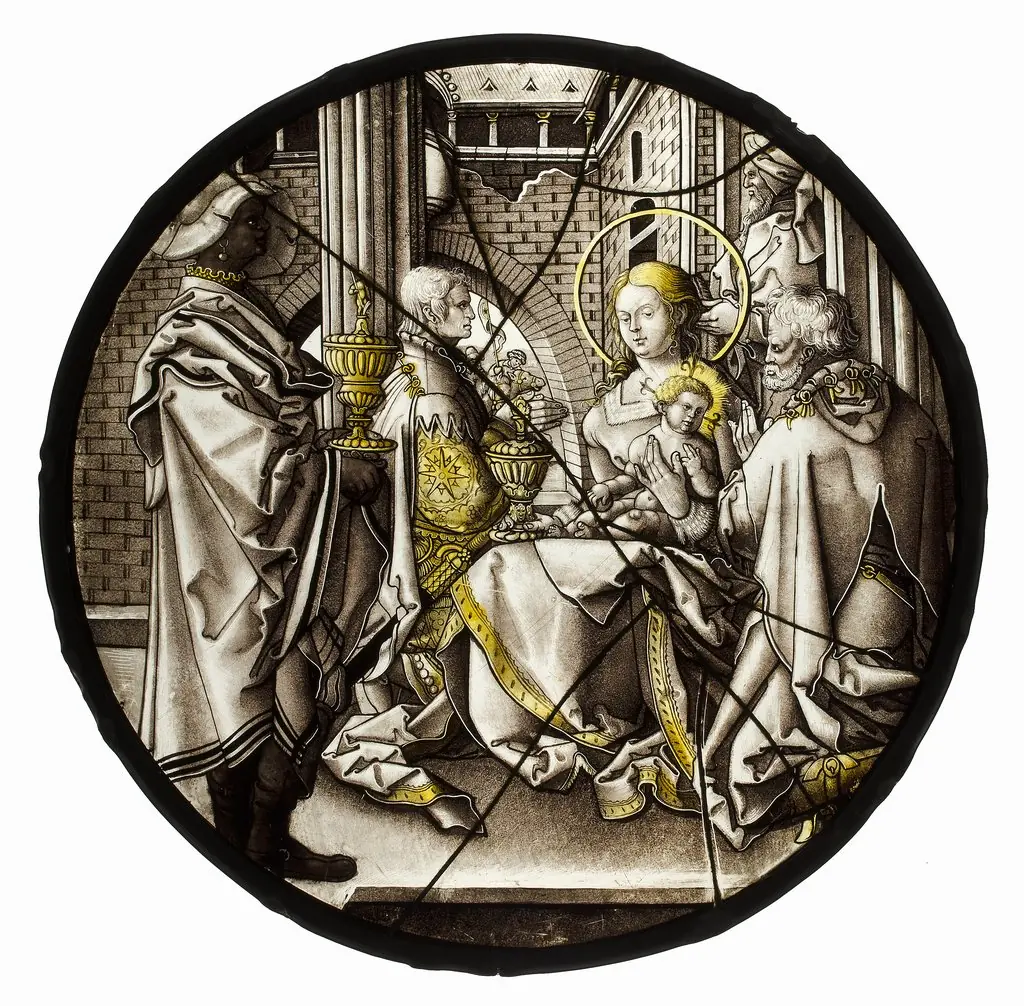 Roundel with Adoration of the Magi
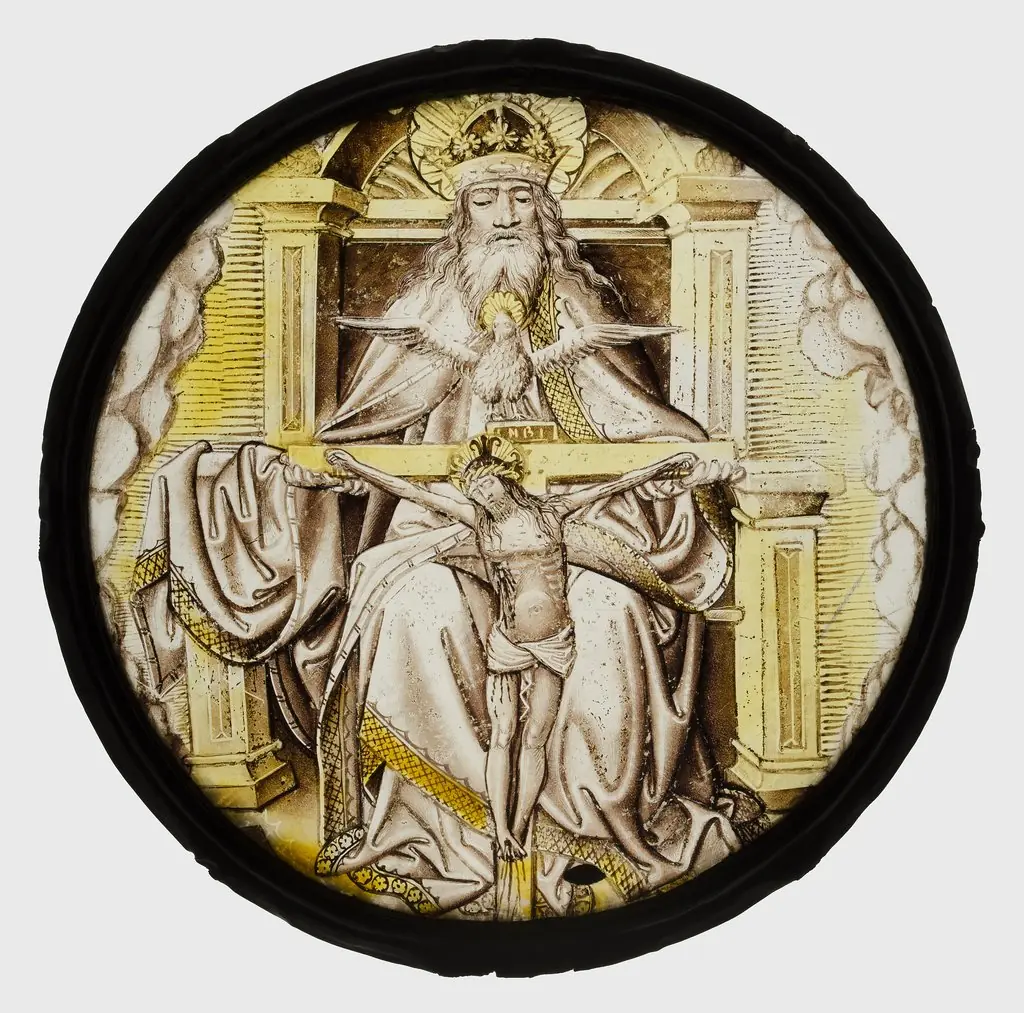 Roundel with the Holy Trinity
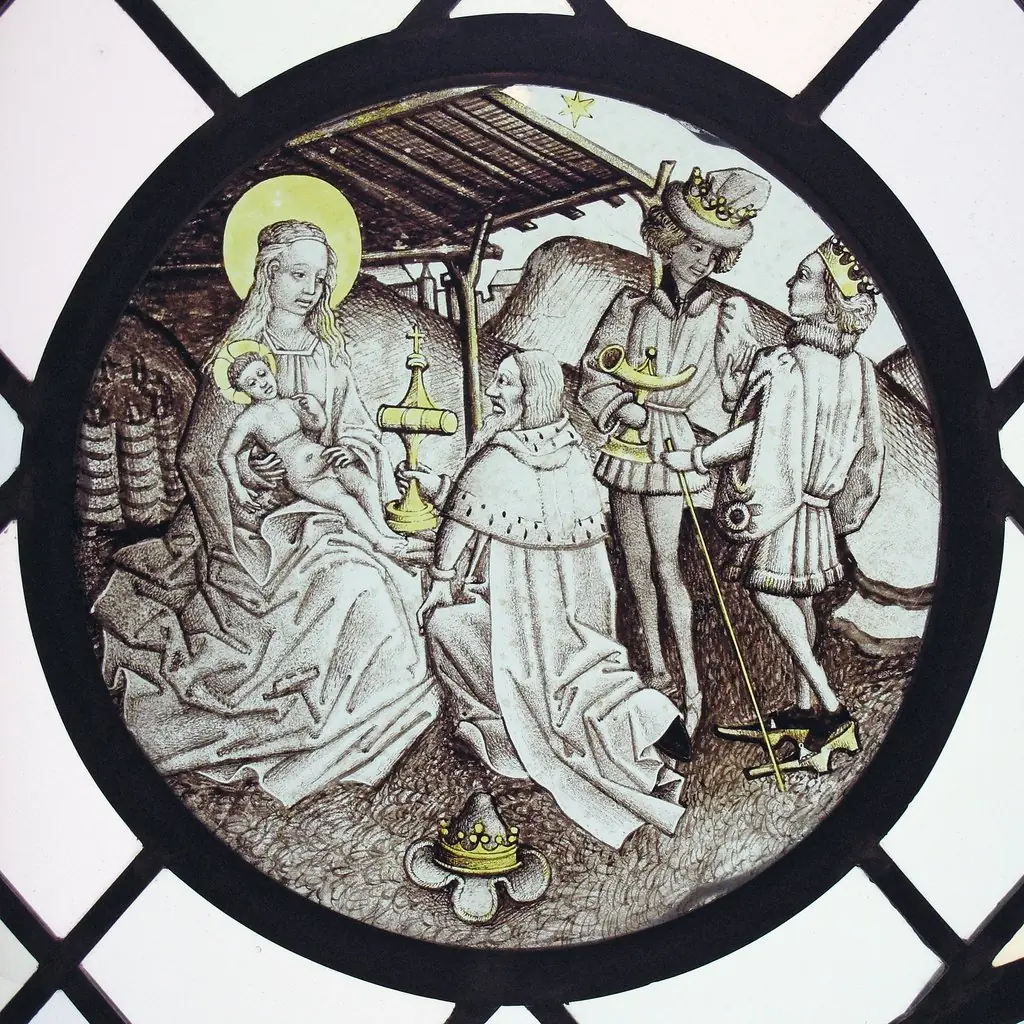 Roundel with Adoration of the Magi
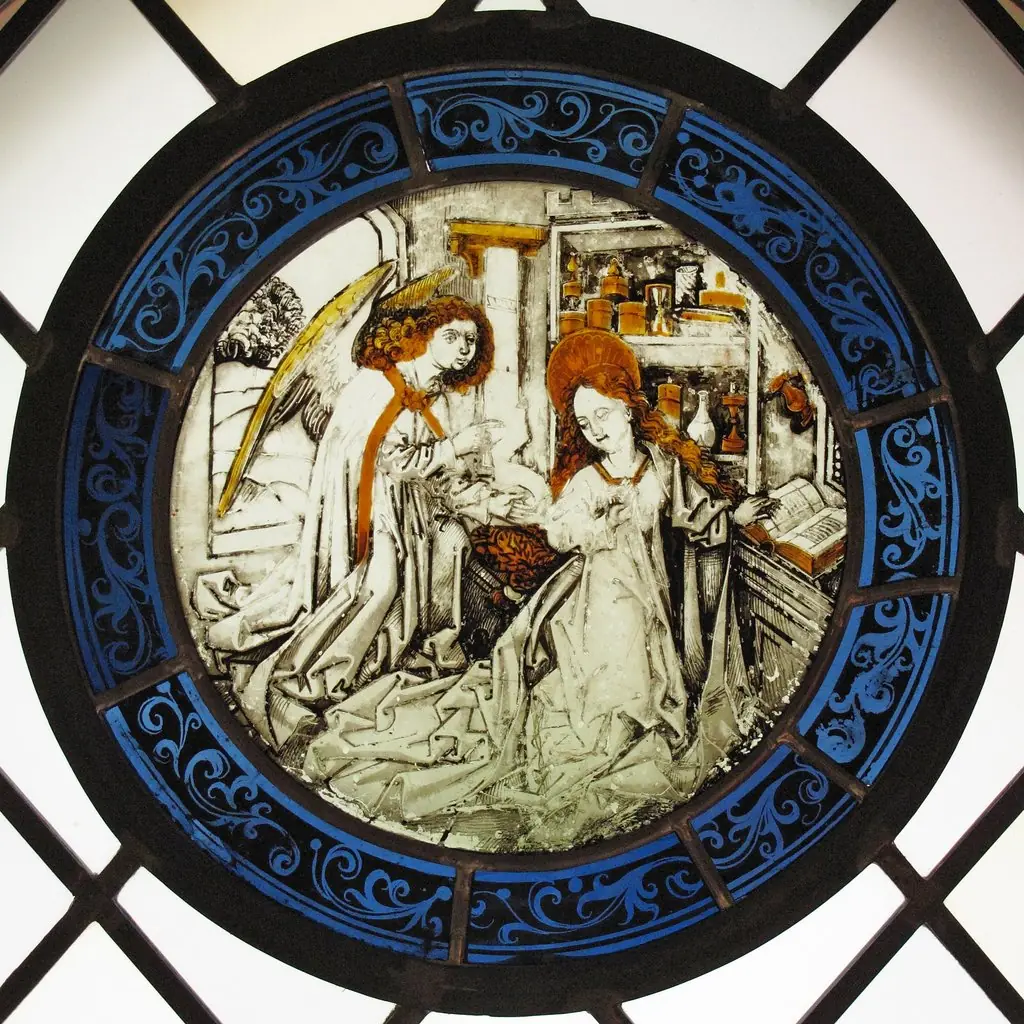 Roundel with the Annunciation
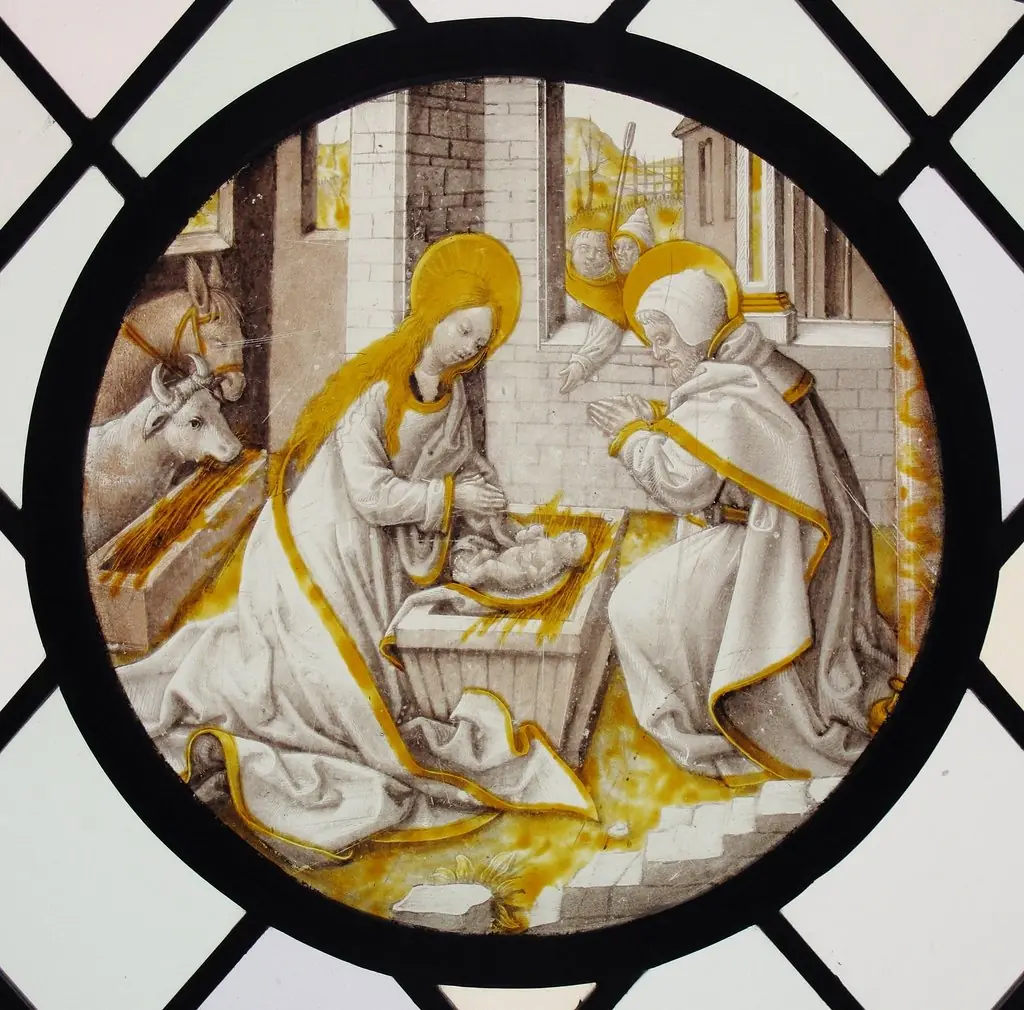 Roundel with the Nativity
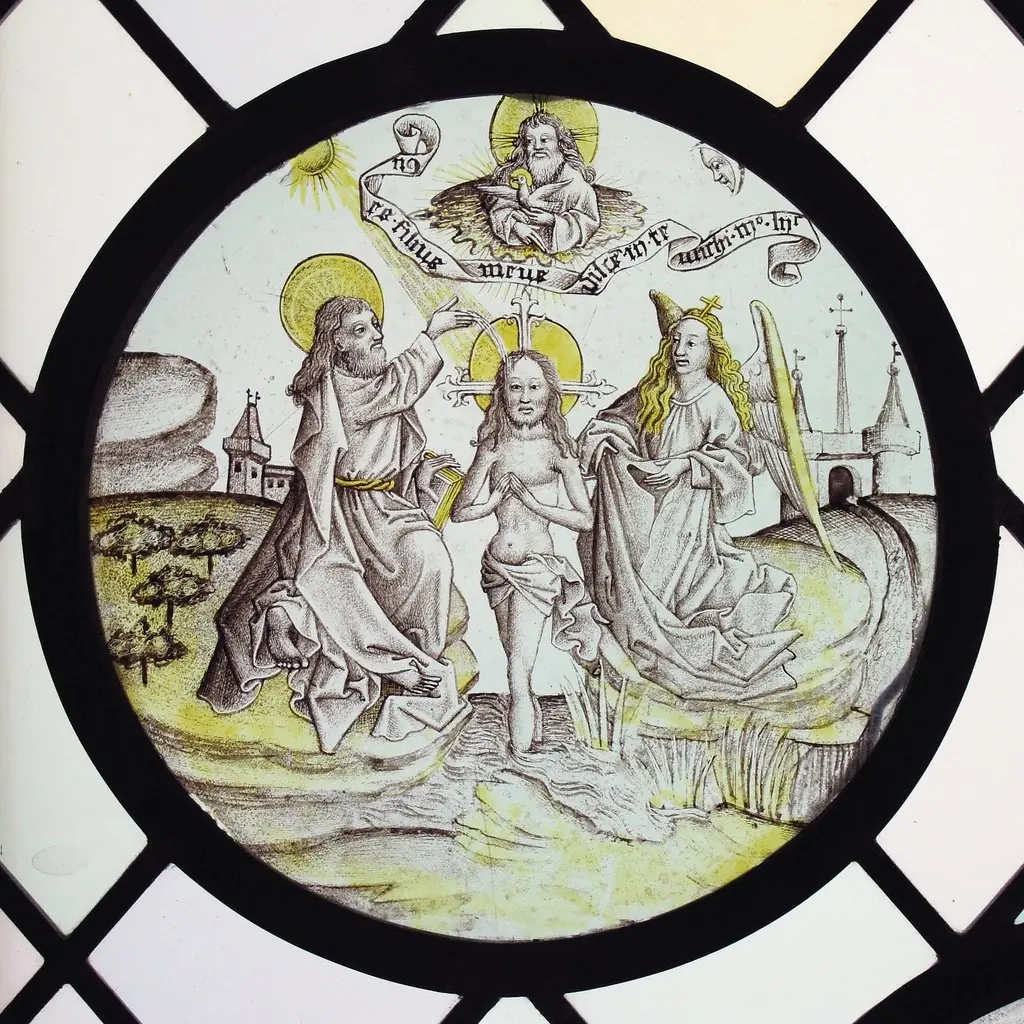 Roundel with the Baptism of Christ
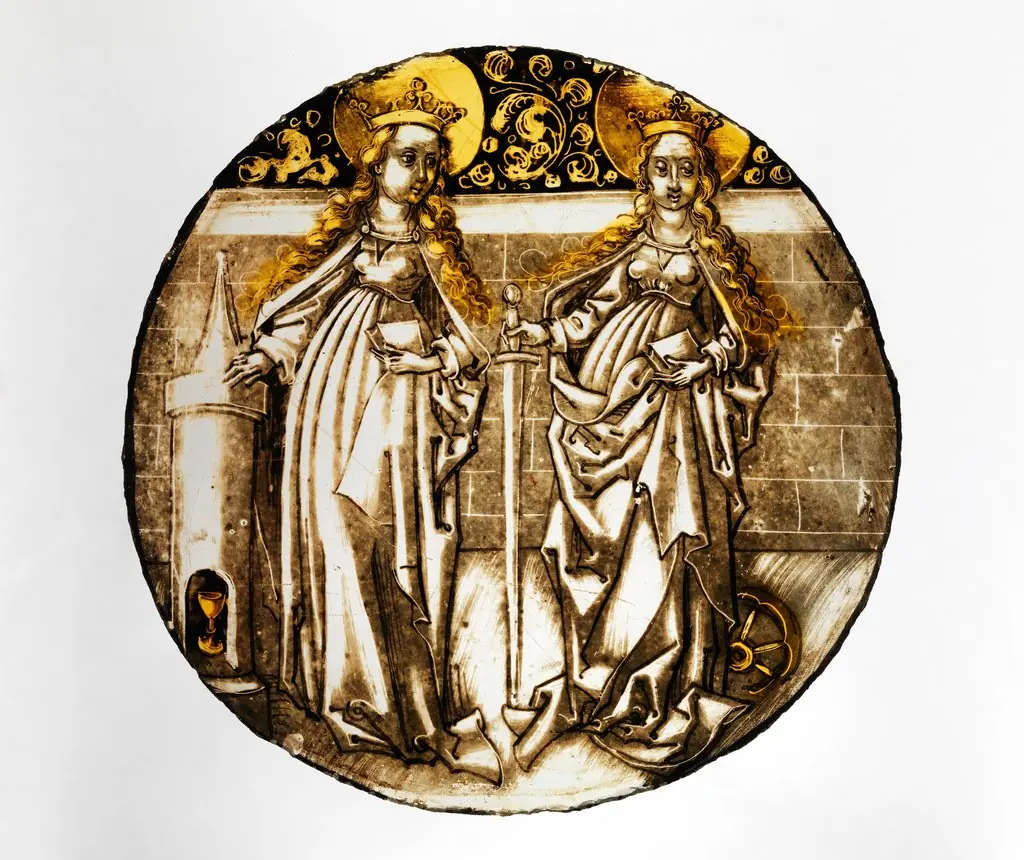 Roundel with Saints Barbara and Catherine
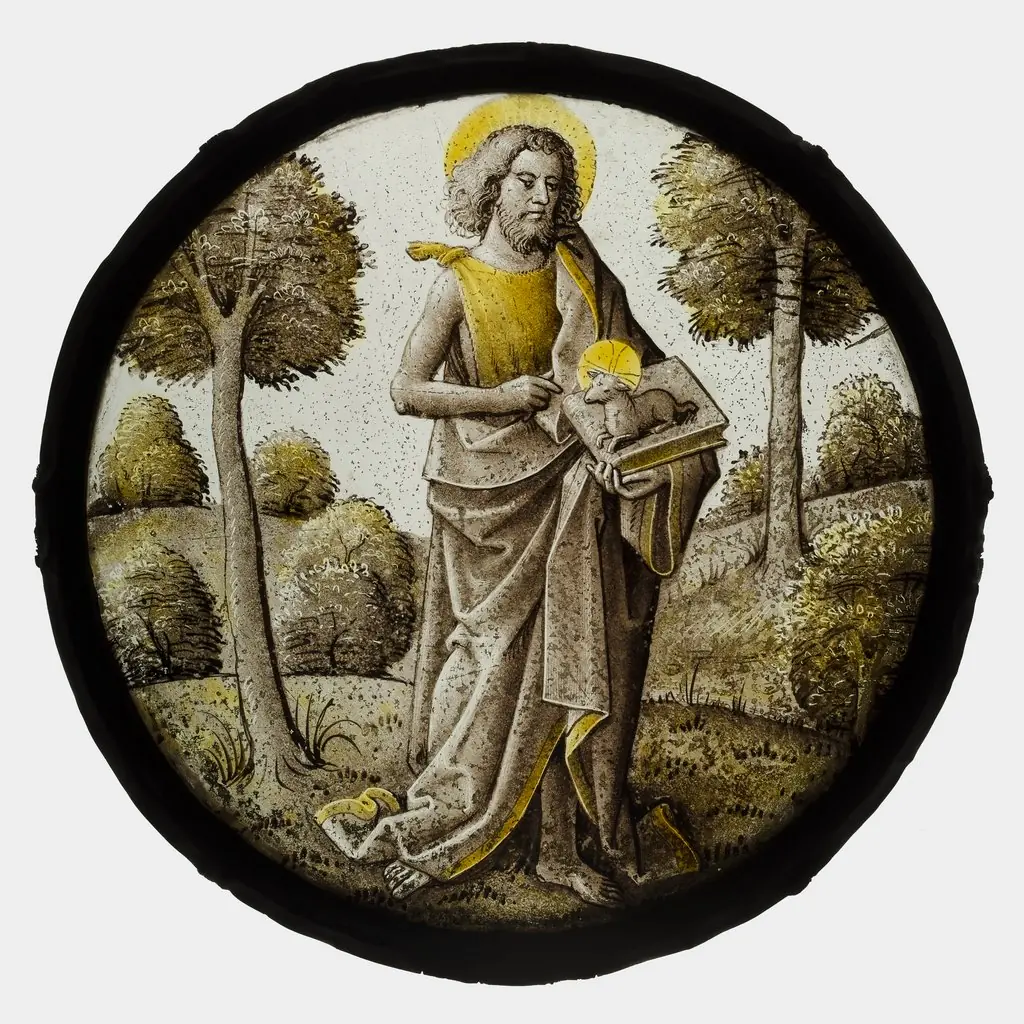 Roundel with Saint John the Baptist
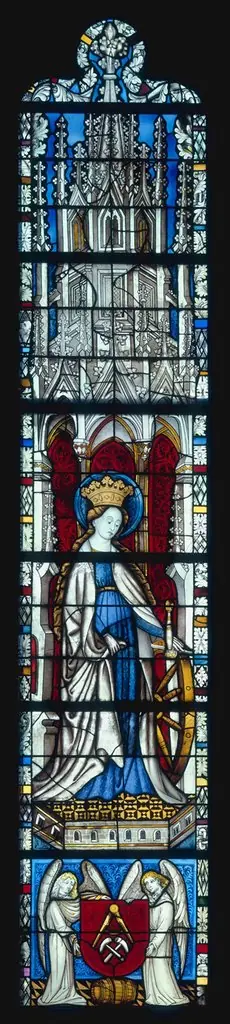 The Virgin Mary and Five Standing Saints above Predella Panels
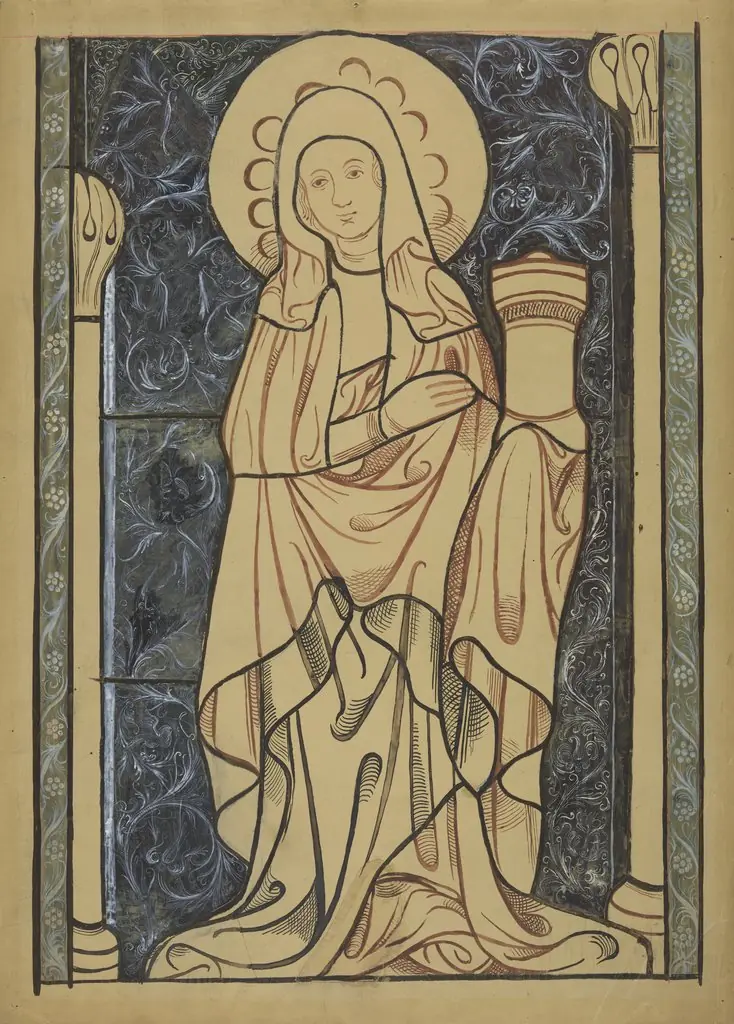 Saint Mary Magdalene. Artistic reconstruction of a stained-glass panel from the Dominican church in Kraków
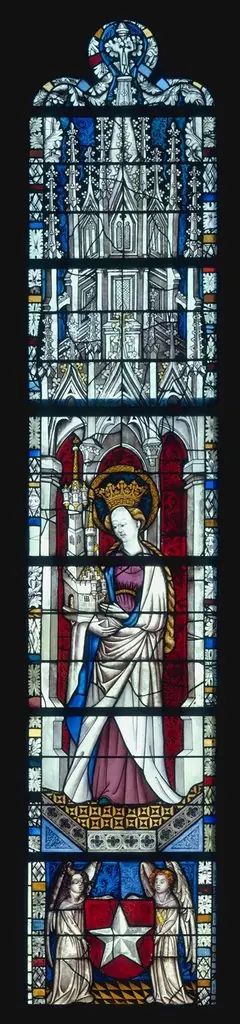 The Virgin Mary and Five Standing Saints above Predella Panels
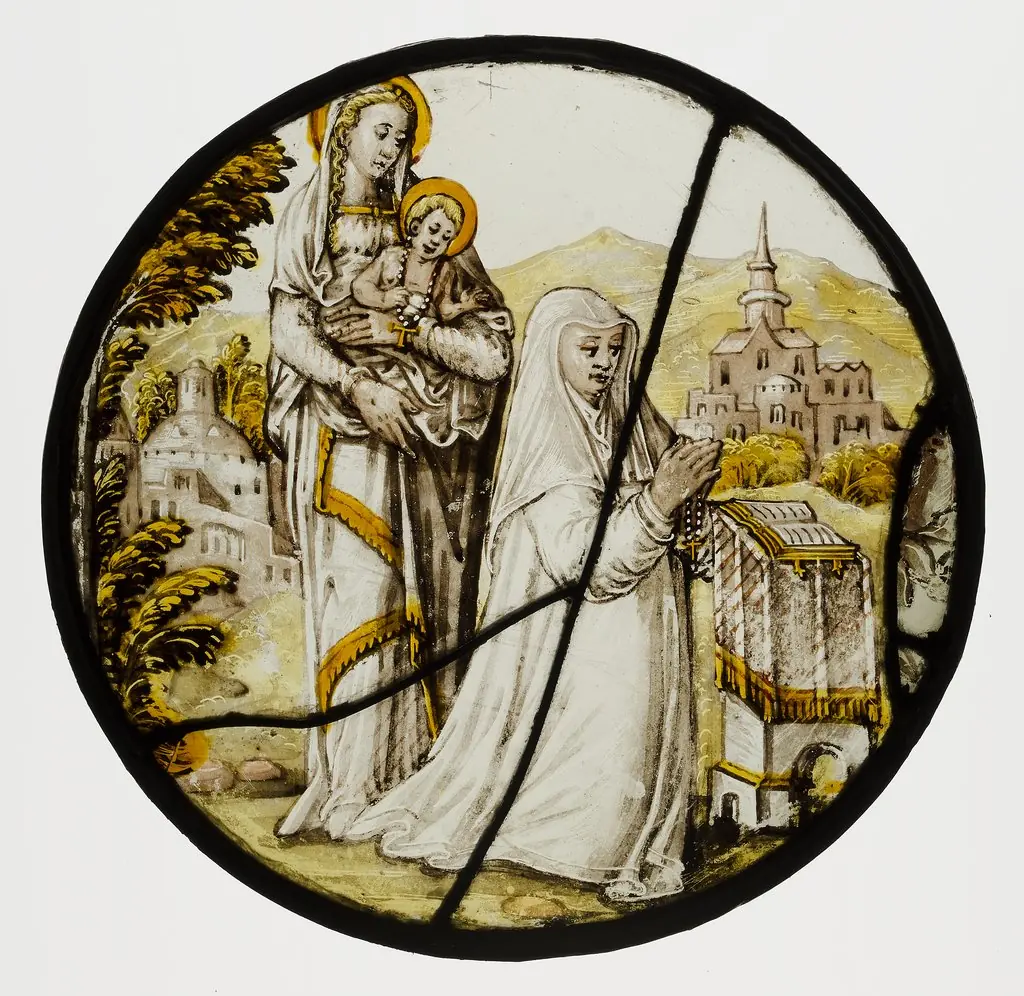 Roundel with Virgin and Child and a Carmelite Donatrix
 Stained Glass Panel with Queen Kunigunde
 Roundel with the Adoration of the Magi