Artwork
Stained Glass Panel with Queen Kunigunde
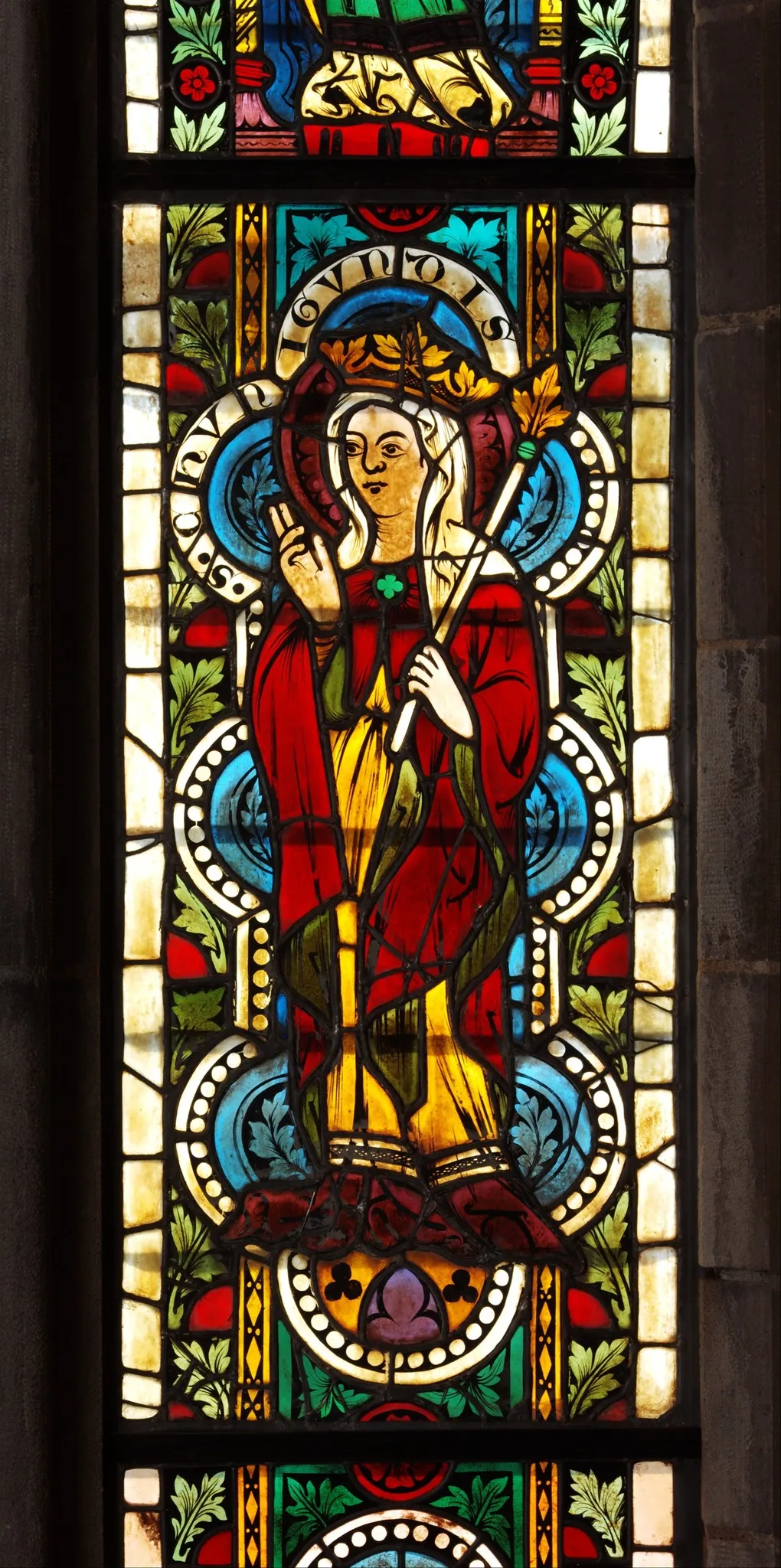
Stained Glass Panel with Queen Kunigunde is an unspecified painting. It dates from 1350 and is held in the collection of the Metropolitan Museum of Art. The panel is a work of stained glass portraying a regal figure in a composed stance.
About this work
Subject & Meaning
The panel portrays Queen Kunigunde, a saintly figure in the German medieval tradition, emphasizing her royal lineage and piety.
The panel portrays Queen Kunigunde, a saintly figure in the German medieval tradition, emphasizing her royal lineage and piety. Her regal attire and serene expression symbolize both earthly authority and divine devotion, reflecting the intersection of monarchy and sanctity in 14th-century Central European art. The work functions as a devotional image within the church of Saint Leonhard, reinforcing the queen's cultic significance and her role as a protector of the realm.
Technique & Style
Stained Glass Panel with Queen Kunigunde is an anonymous stained-glass work executed around 1350 for the church of Saint Leonhard in Carinthia, Austria. The panel measures 97.8 cm in height and 44.5 cm in width, giving it a tall, narrow format suited to a figural glazed composition. It is held in the collection of the Metropolitan Museum of Art.
History & Provenance
The stained glass panel depicting Queen Kunigunde was created around 1350, originally made for the church of Saint Leonhard in Carinthia, Austria. It measures 97.8 cm in height and 44.5 cm in width. The panel subsequently entered the collection of the Metropolitan Museum of Art in New York, where it is currently held.
Overview
The panel is a work of stained glass portraying a regal figure in a composed stance. She is dressed in a red mantle layered over a yellow gown, crowned, and holding a scepter in her right hand while her left hand is lifted in a gesture that suggests blessing or greeting. The composition is framed by ornamental foliage and floral motifs, rendered in bright, saturated hues.
Context
Such panels were commonly incorporated into ecclesiastical settings or royal chapels, where they functioned both as decorative elements and as visual affirmations of dynastic legitimacy. The inclusion of a queen alongside symbolic regalia reflects the intertwining of religious and political narratives typical of the era.
Artist & collection

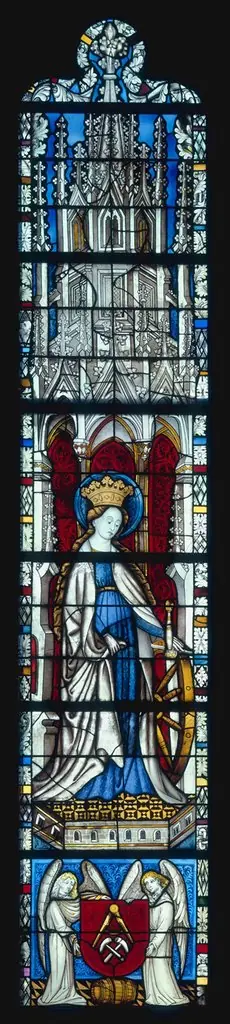 The Virgin Mary and Five Standing Saints above Predella Panels
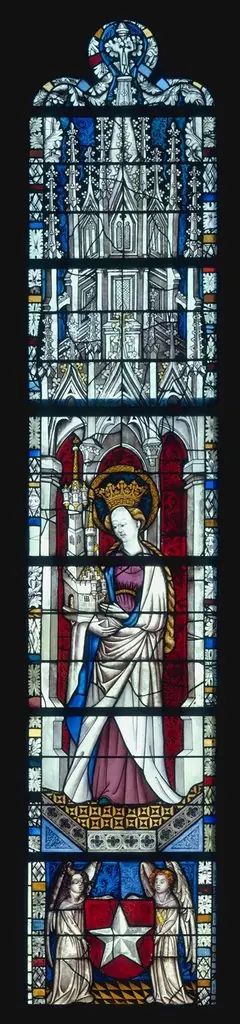 The Virgin Mary and Five Standing Saints above Predella Panels
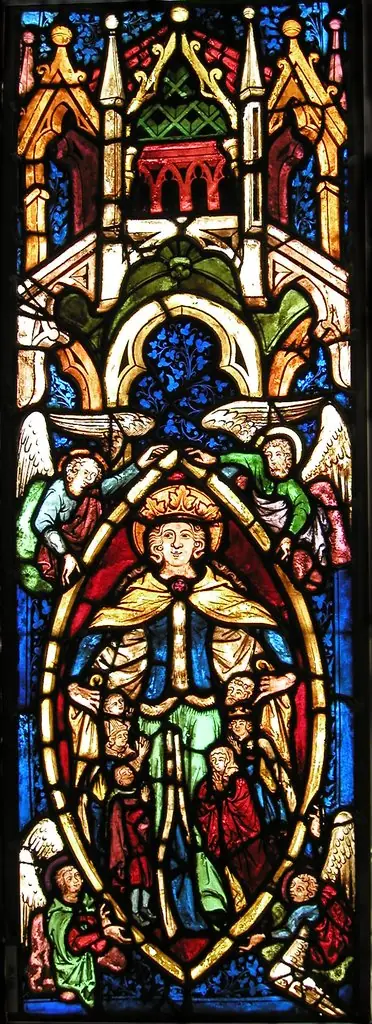 Madonna of Mercy
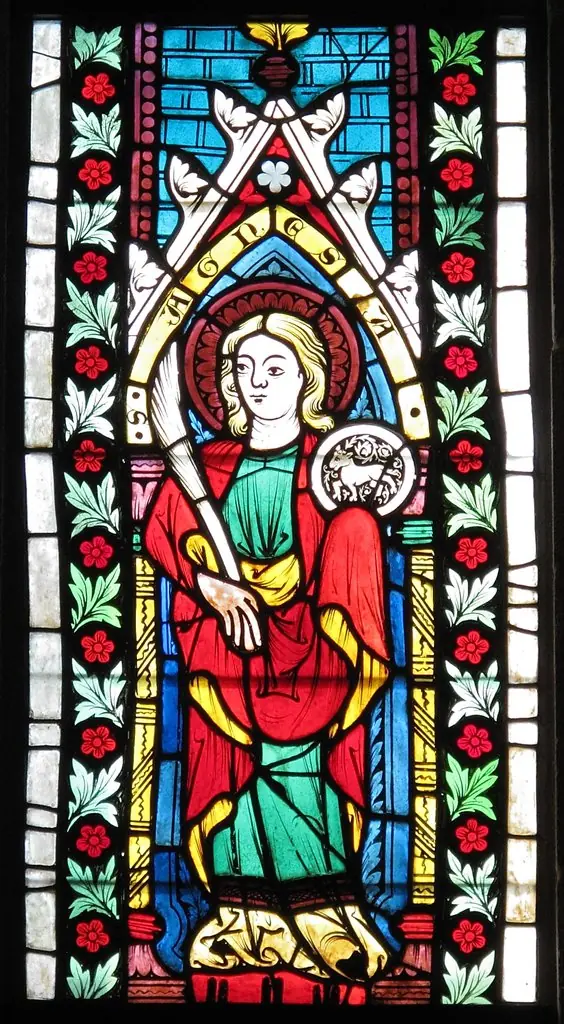 Saint Agnes
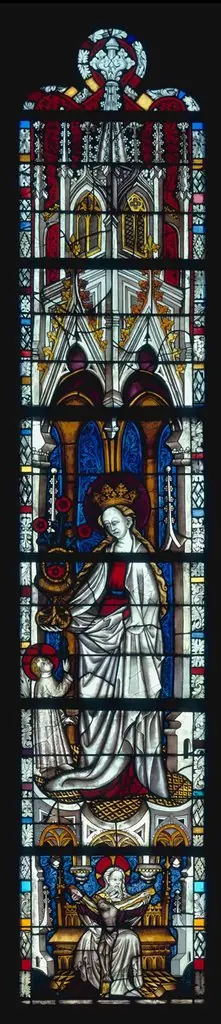 The Virgin Mary and Five Standing Saints above Predella Panels
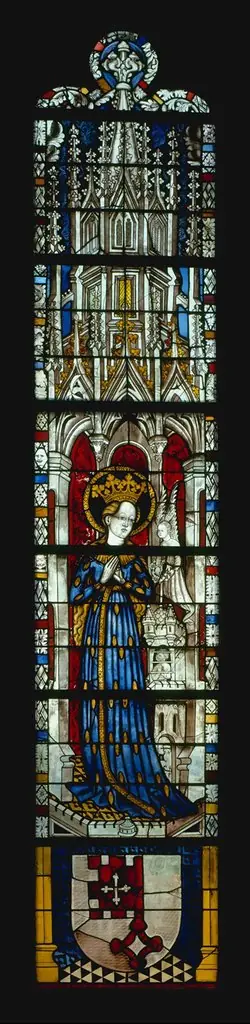 The Virgin Mary and Five Standing Saints above Predella Panels
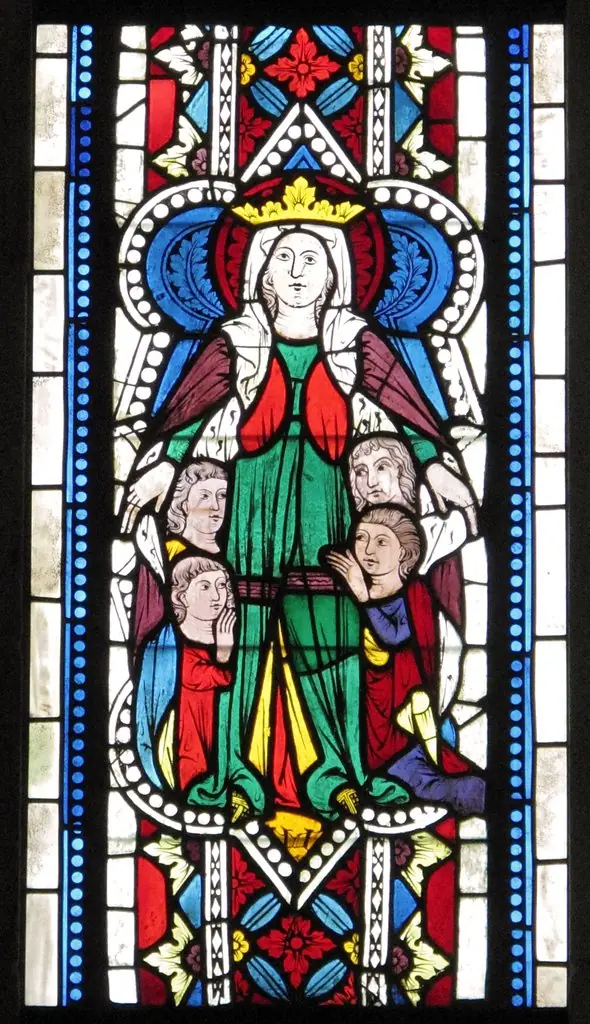 Madonna of Mercy
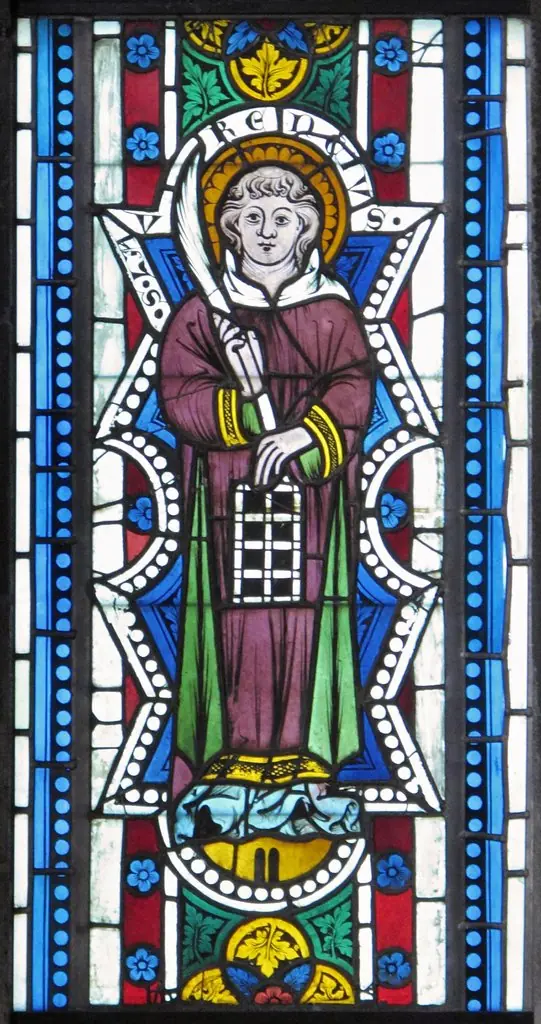 Saint Lawrence
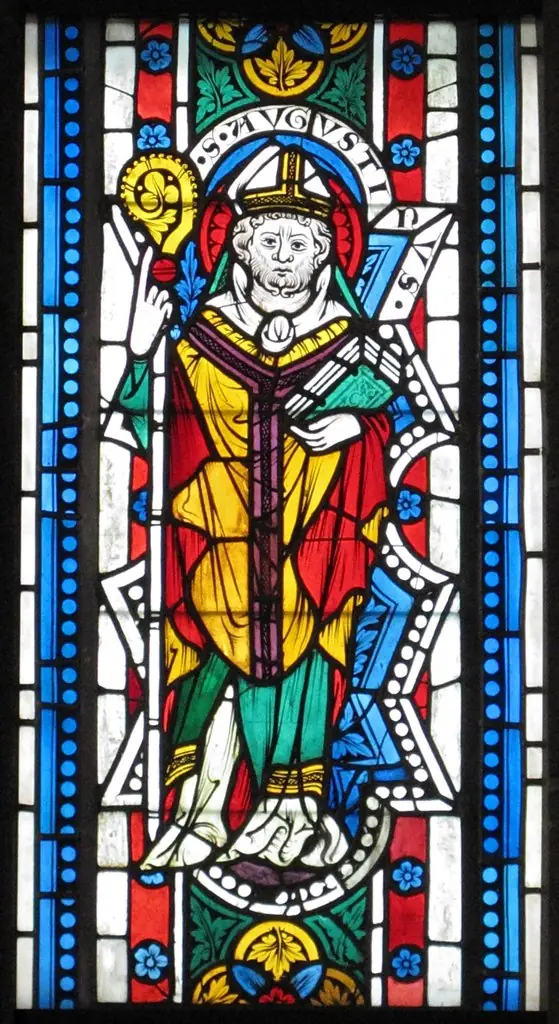 Saint Augustine