Artwork
Christ on the Cross
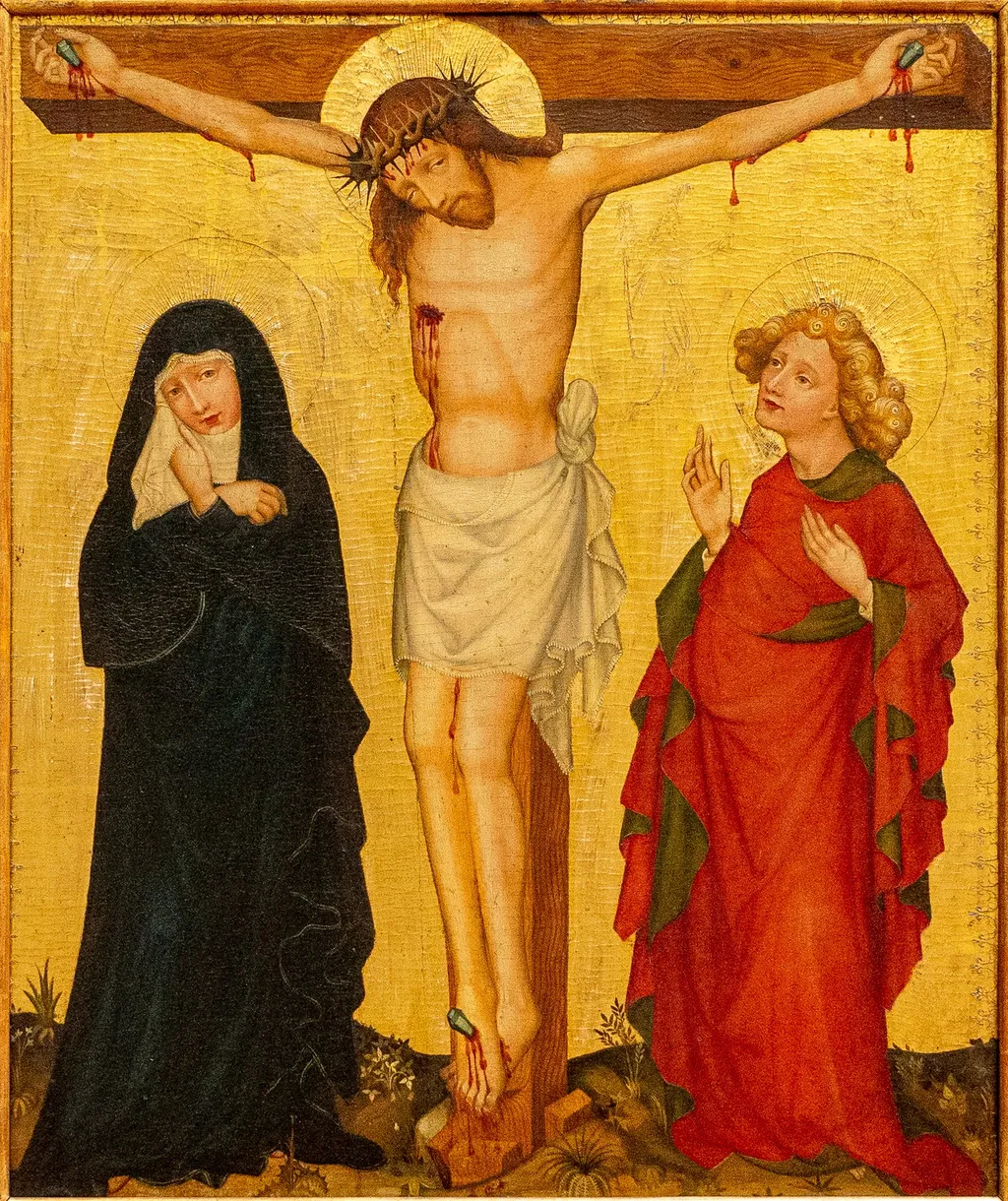
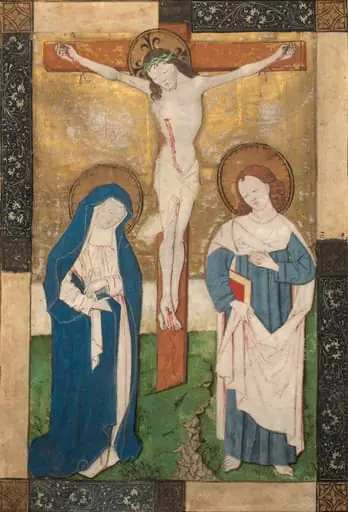
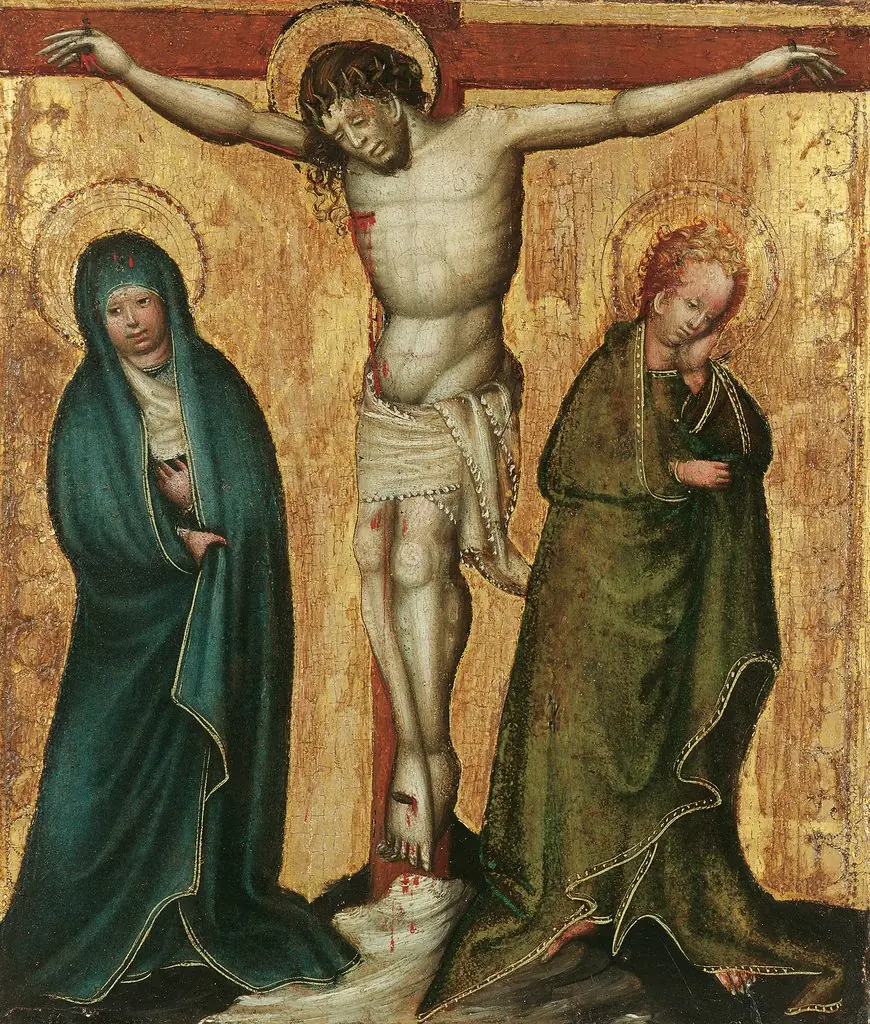
Christ on the Cross is an oil painting by the Byzantine icon painting artist Unknown. It dates from 1400 and is held in the collection of the Gemäldegalerie Berlin. The work presents a crucifixion scene rendered in oil, with Christ at its centre on the cross.
About this work
Overview
It is currently held in the Gemäldegalerie Berlin, where it is displayed in Hall I among the collection of German painting of the 13th through 16th centuries.
Christ on the Cross is an anonymous religious painting dated to the year 1400. Executed in oil paint, the work measures 85 by 81 centimeters and belongs to the genre of religious art. It is currently held in the Gemäldegalerie Berlin, where it is displayed in Hall I among the collection of German painting of the 13th through 16th centuries. The artwork represents a significant late medieval interpretation of the crucifixion, emphasizing human agony and symbolic grief within a rigid, hieratic composition.
Subject & Meaning
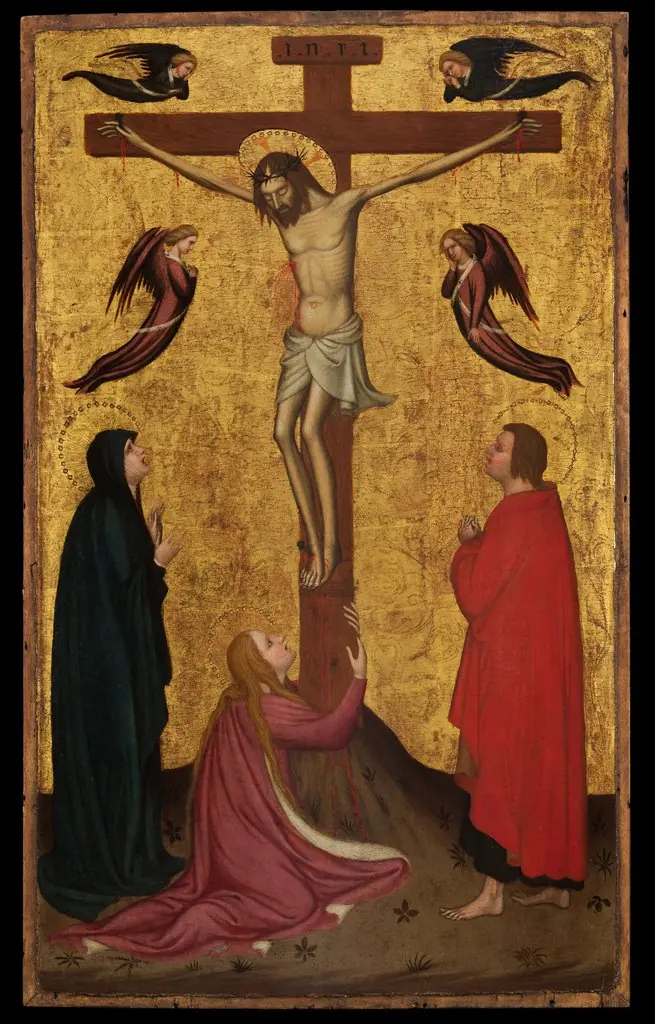
The painting depicts the crucifixion of Jesus Christ, flanked by two haloed figures against a flat gold background. The central figure wears a crown of thorns and a white cloth around his hips, with visible wounds on his hands, feet, and side, from which blood drips. His head tilts to the right with eyes closed, signifying death. To the left stands a figure in a dark blue or black robe with a white wimple, raising a hand to her face in a gesture of grief, representing the mourning Virgin. To the right stands a figure in a red robe with a green undergarment, hands raised in an expressive gesture, likely representing John the Evangelist. The emphasis on the wounds, the blood, and the humiliating crown of thorns reflects a Gothic-era shift toward highlighting the all-too-human agony and suffering of Christ, a devotional focus partly influenced by popular preachers like Saint Francis.
Technique & Style
The work is painted in oil on panel and incorporates gold leaf, producing a smooth, linear finish with minimal modeling or deep shadow. The palette is dominated by the flat gold background, the deep blue-black of the mourning figure's robe, the vibrant red of the right figure's garment, and the pale flesh tones of Christ. The space is shallow and hieratic, devoid of any landscape or architectural setting, save for small plants at the bottom edge. The surface now exhibits fine craquelure throughout. Although the medium is listed as oil paint, the visual handling aligns closely with the linear and flat aesthetic typical of egg tempera applications from this period. Traces of the body having been covered in bloody wounds remain visible, though the composition is noted to be bereft of some of its original color over time.
History & Provenance
Created around 1400, the painting is attributed to an unknown artist. The work is part of the collection of the Gemäldegalerie Berlin, situated within the museum's section dedicated to German painting of the 13th to the 16th centuries in Hall I. Specific details regarding its early commission, ownership chain, or exhibition history are not established in the available records.
Context
Created at the turn of the 15th century, the painting emerges from a broader 14th-century artistic context that stressed the all-too-human agony of a real tortured body. This focus on physical suffering and emotional grief was heavily influenced by popular preachers like Saint Francis, who encouraged empathetic meditation on the Passion of Christ. The Gothic era increasingly replaced regal iconography, such as a majestic crown, with the humiliating Crown of Thorns, and distorted Christ's features to emphasize his bodily suffering. The hieratic composition and gold background of this work anchor it in late medieval traditions, bridging the gap between earlier symbolic representations and the growing late Gothic demand for visceral, humanized depictions of sacred figures.
Artist & collection