Artwork
Roundel with Christ Carrying the Cross with Saint Veronica
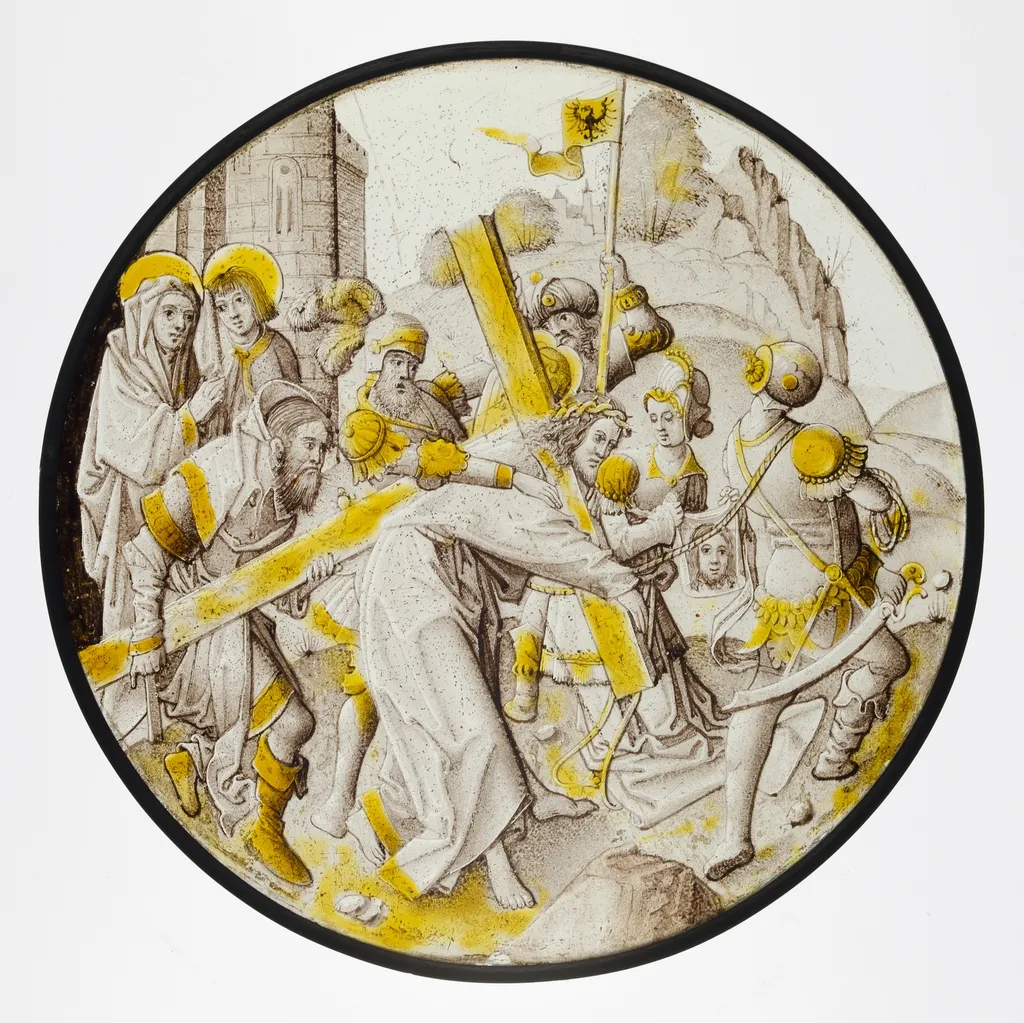
Roundel with Christ Carrying the Cross with Saint Veronica is an unspecified painting. It dates from 1520 and is held in the collection of the Metropolitan Museum of Art. This circular painting, or roundel, portrays Christ carrying the heavy wooden cross on his path to crucifixion.
About this work
Subject & Meaning
The work belongs to the religious genre, reflecting Counter‑Reformation themes of suffering, compassion, and redemption.
The roundel portrays the biblical moment of Christ bearing the cross accompanied by Saint Veronica, a saint traditionally associated with the veil (the "Veronica" legend). In this composition the figure of Christ is shown in the act of carrying the cross, while Veronica, identified as a woman saint, appears in close proximity, emphasizing the narrative of the Passion. The work belongs to the religious genre, reflecting Counter‑Reformation themes of suffering, compassion, and redemption.
Its creation in 1520 places it within the early 16th‑century European artistic context, where such devotional subjects were common in both public and private worship spaces.
History & Provenance
Created in 1520, this religious roundel depicts Christ carrying the cross alongside Saint Veronica. The work is currently attributed to an anonymous artist, with no specific creator identified in available records. While details regarding its original commission or early ownership history remain undocumented in the provided sources, the painting is part of the collection at the Metropolitan Museum of Art, where it is currently located. The inception date is firmly established as 1520, placing the work within the early sixteenth century.
Context
The roundel titled “Christ Carrying the Cross with Saint Veronica” is an anonymous religious painting dated to 1520, classified as a work of the early sixteenth‑century painting tradition. Its iconography, depicting Christ bearing the cross alongside Saint Veronica and other figures, aligns with devotional imagery common in contemporary European art. The piece resides in the Metropolitan Museum of Art, underscoring its significance within museum collections of the period.
As an anonymous work, it reflects the collaborative and often unattributed nature of artistic production in the early 1500s, offering insight into the devotional practices and stylistic conventions of the era.
Overview
This circular painting, or roundel, portrays Christ carrying the heavy wooden cross on his path to crucifixion. A crowd of onlookers and helpers surrounds the central figure, whose weary expression and barefoot state convey his suffering. The composition captures a moment of profound religious significance, rendered with attention to the narrative details of the Passion.
Technique & Style
The artist utilized a roundel format, characteristic of certain devotional or decorative pieces. Gold accents are strategically applied to delineate halos and enrich the drapery of figures' garments, creating a subtle luminosity. This emphasis on select details, set against a background of faded colors and architectural elements, draws the viewer's eye to the spiritual core of the scene.
Artist & collection

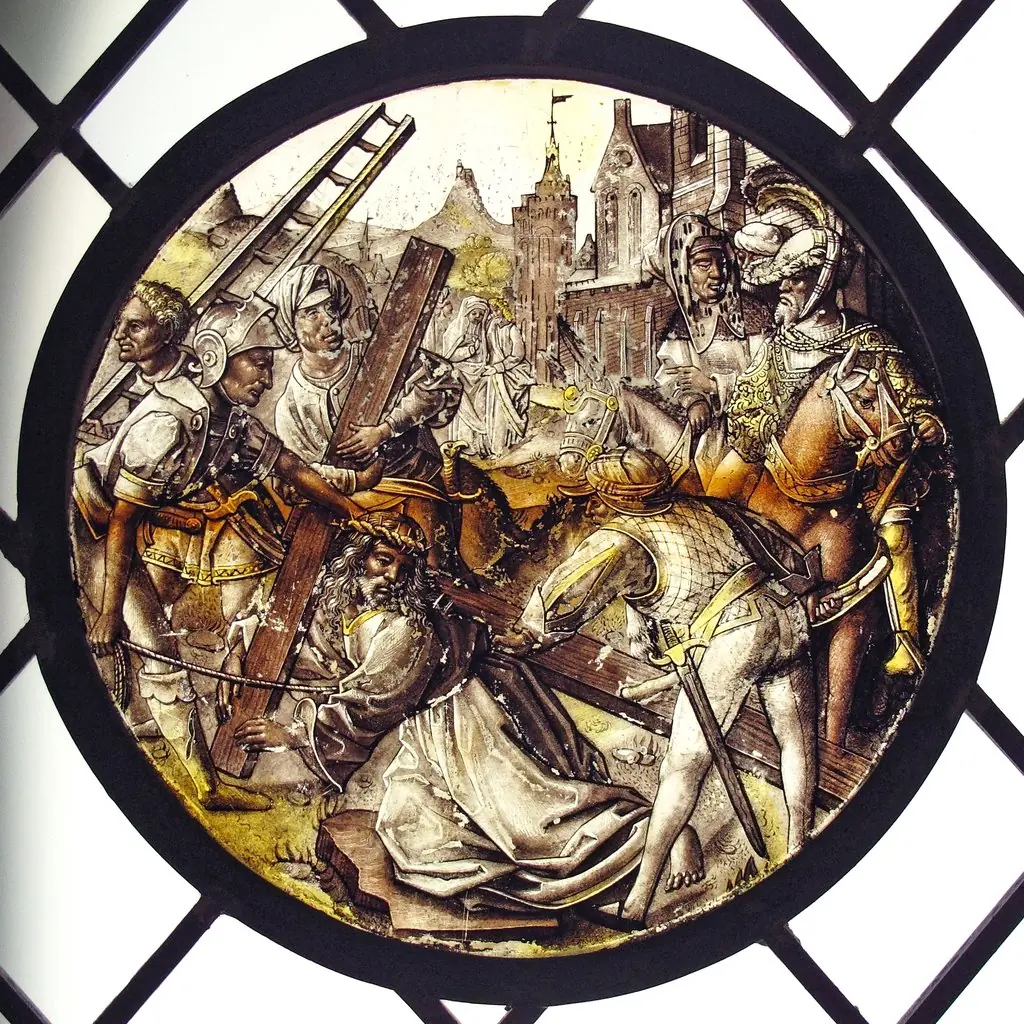
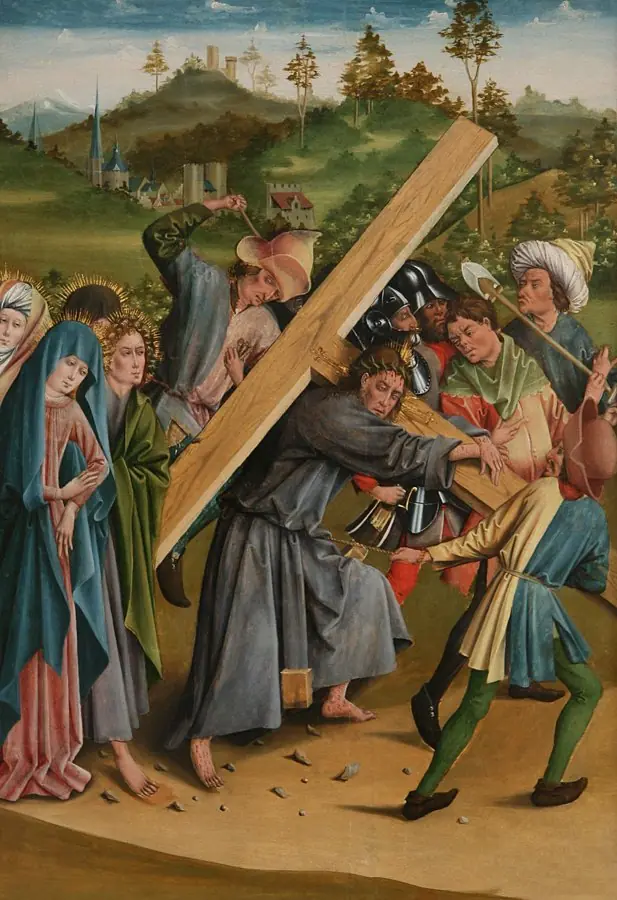 Christ carrying the cross
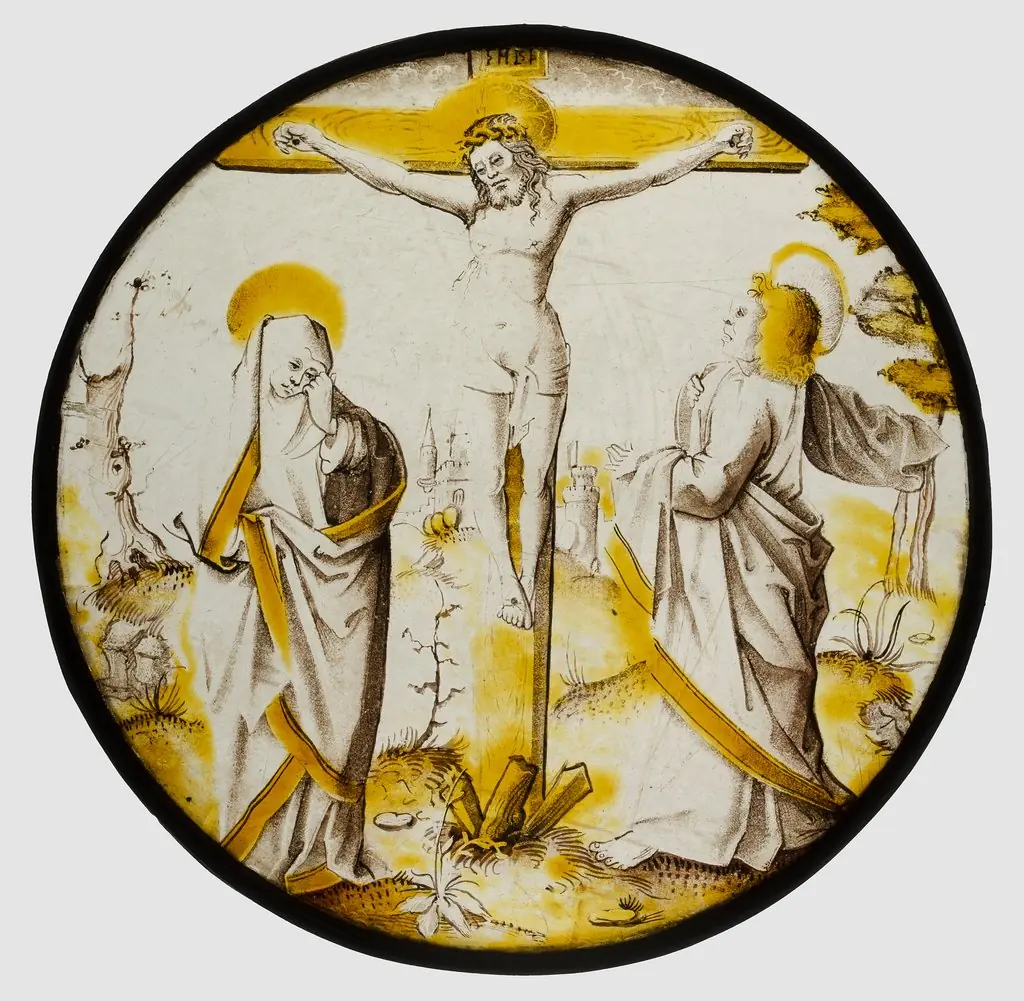 Roundel with the Crucifixion, the Virgin, and Saint John
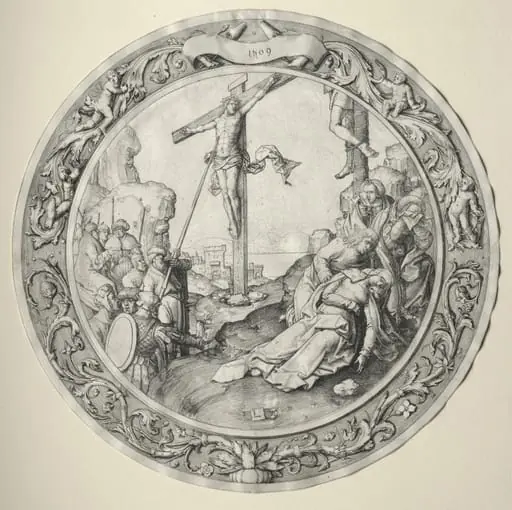 The Round Passion: The Crucifixion
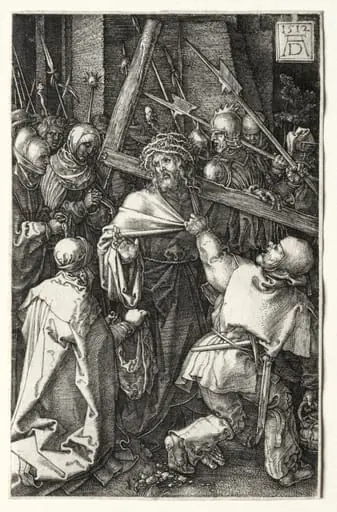 Christ Carrying the Cross
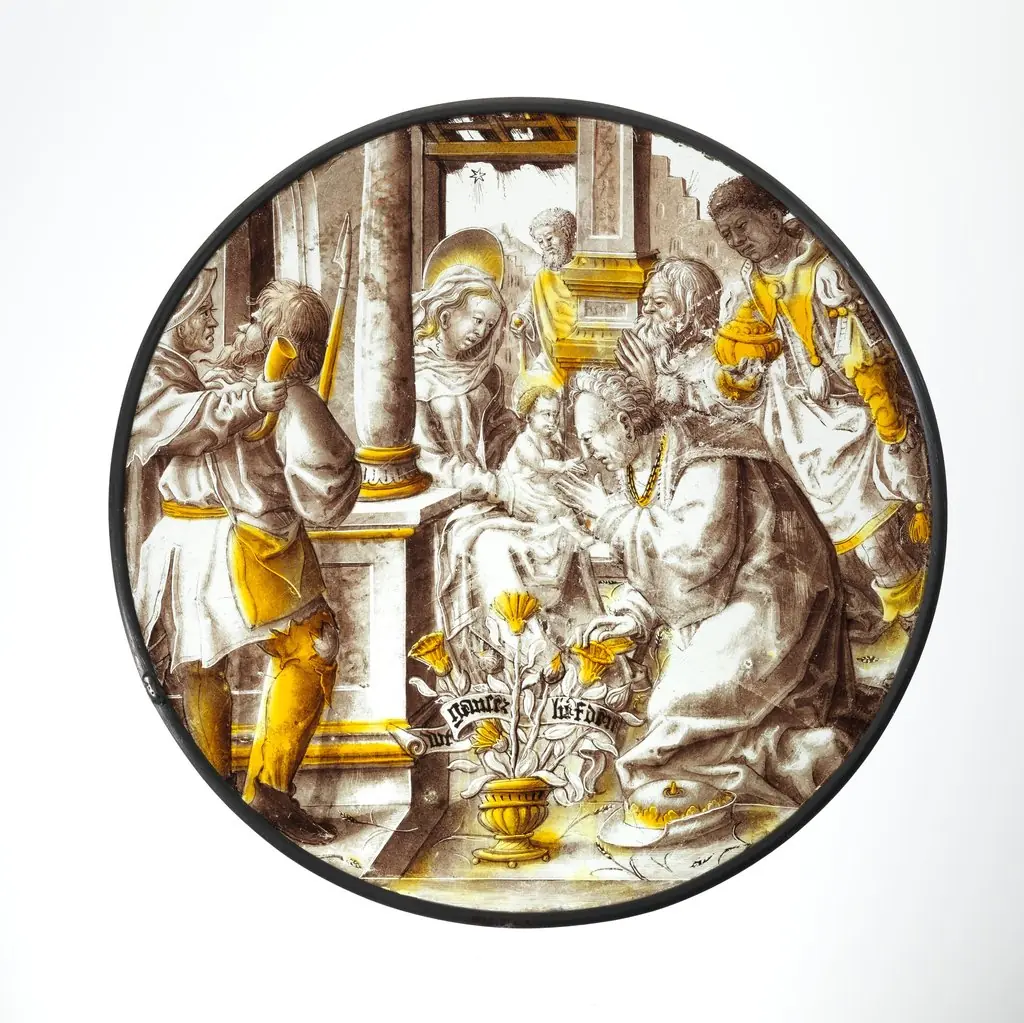 Roundel with Adoration of the Kings
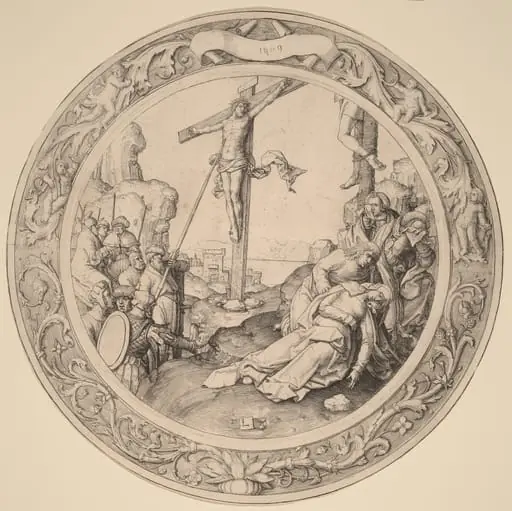 The Crucifixion
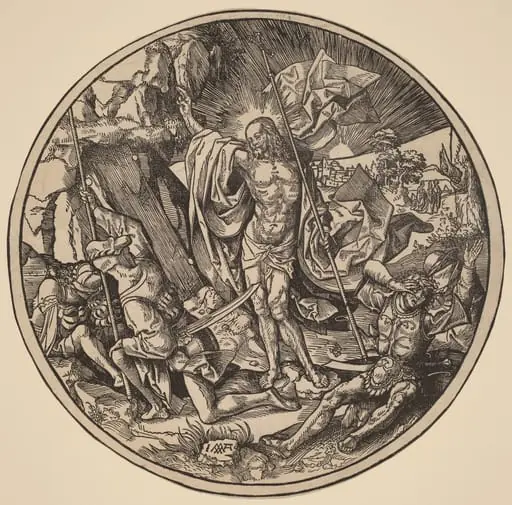 The Resurrection and the Holy Women on Their Way to Christ's Sepulchre
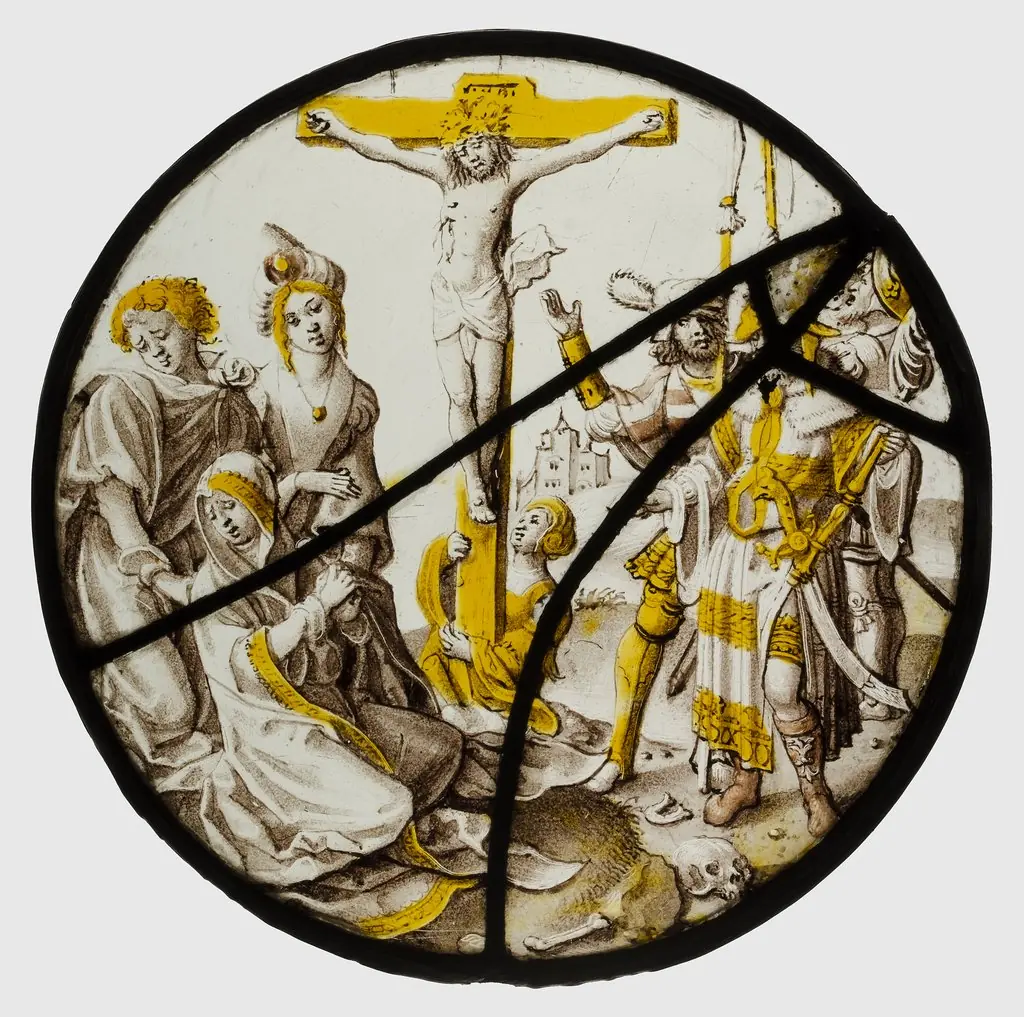 Roundel with the Crucifixion
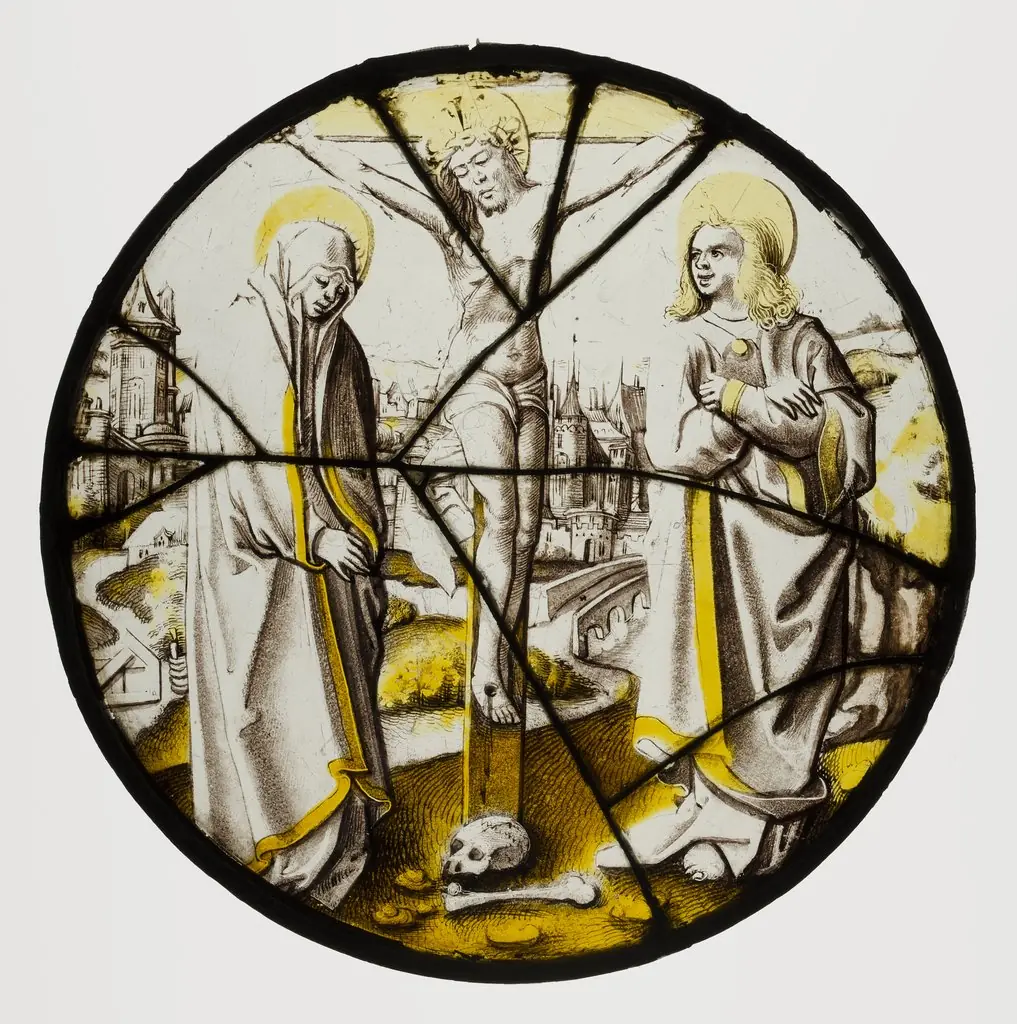 Roundel with the Crucifixion, the Virgin, and Saint John
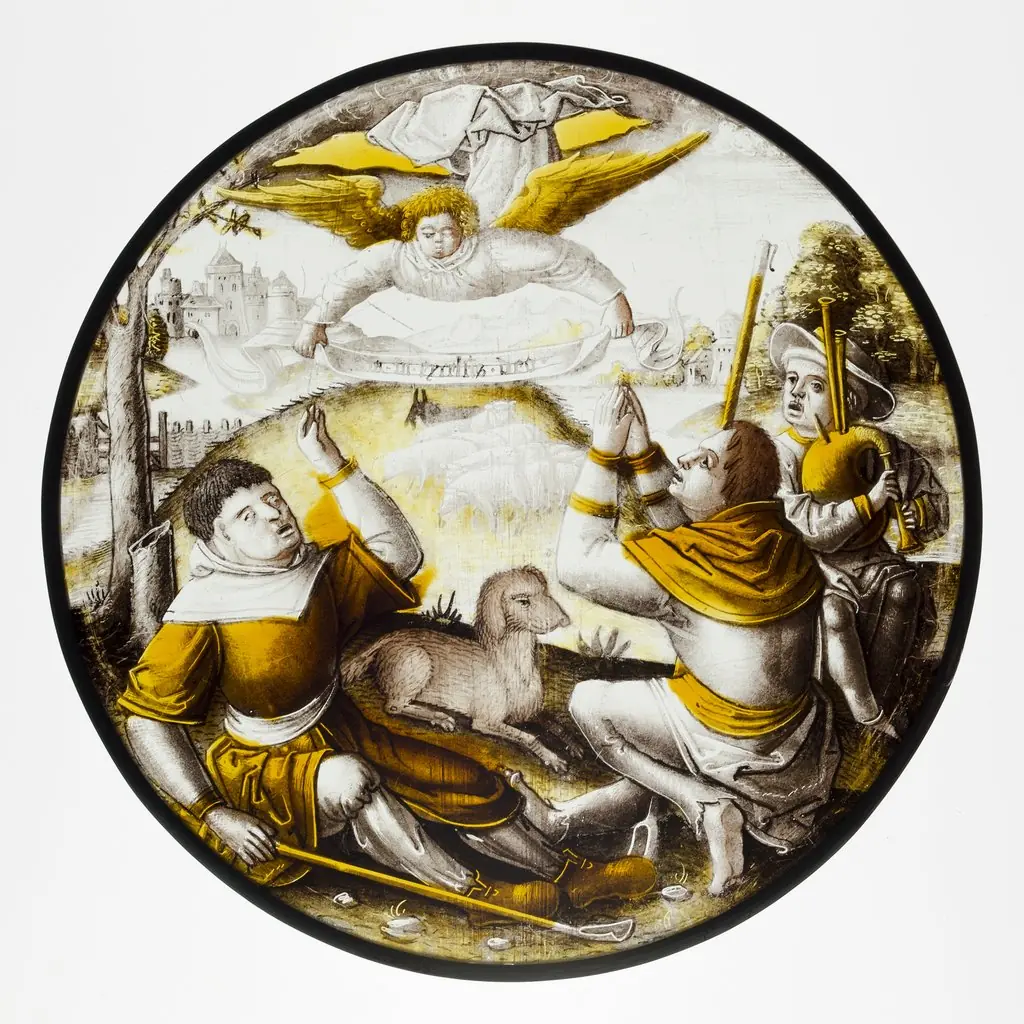 Roundel with Annunciation to the Shepherds