Artwork
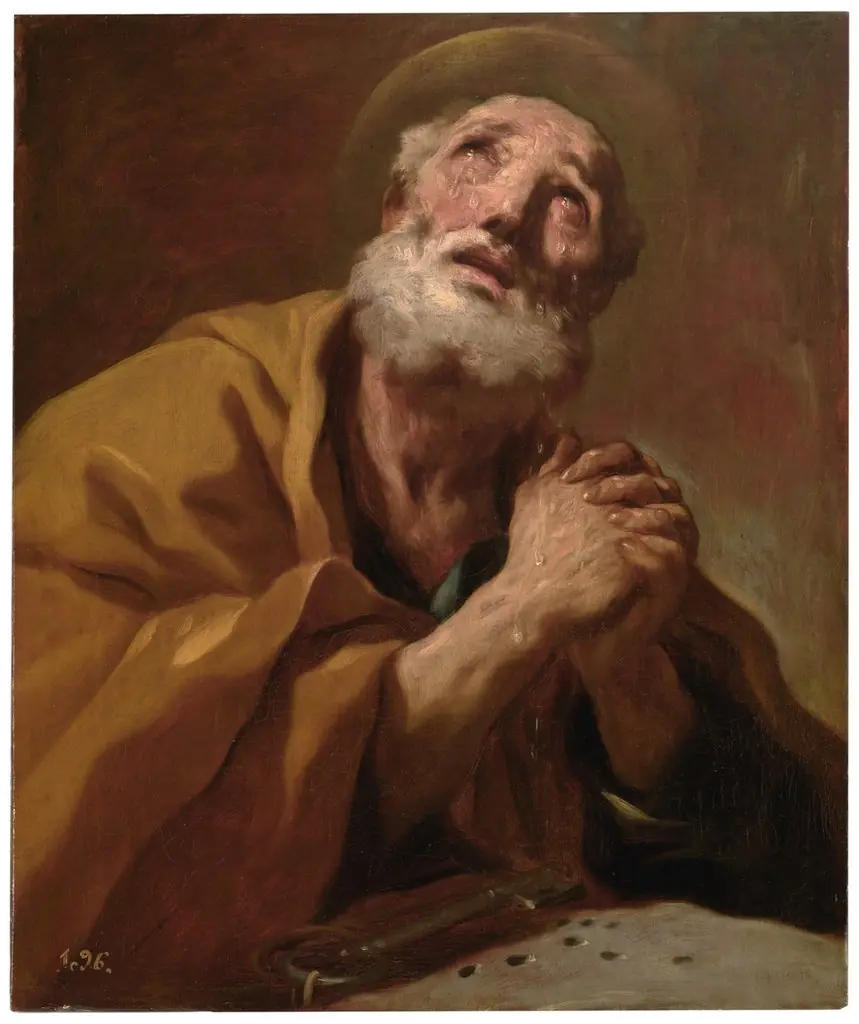
Saint Peter weeping
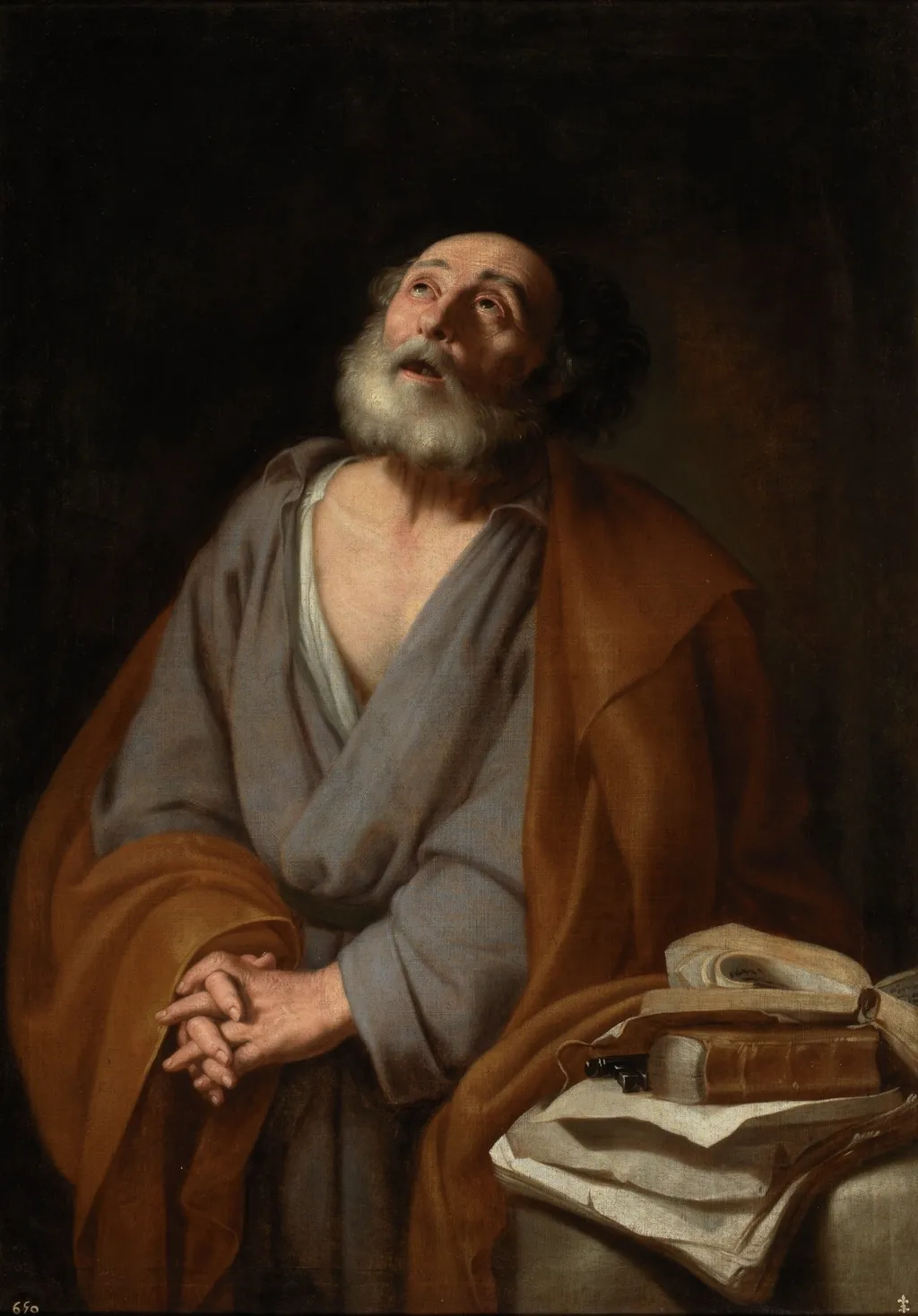
Saint Peter weeping is an oil painting. It dates from 1601 and is held in the collection of the Museo del Prado.
About this work
Subject & Meaning
The key signifies Peter's role as the keeper of the keys to heaven, while the book likely references his authority and contributions to sacred scripture.
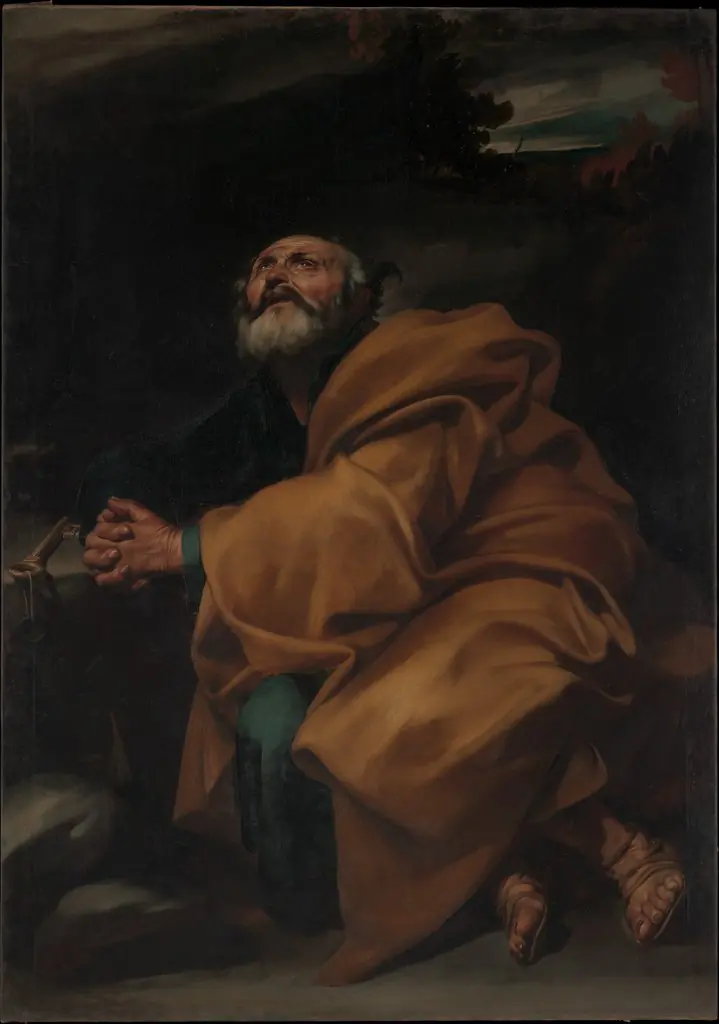
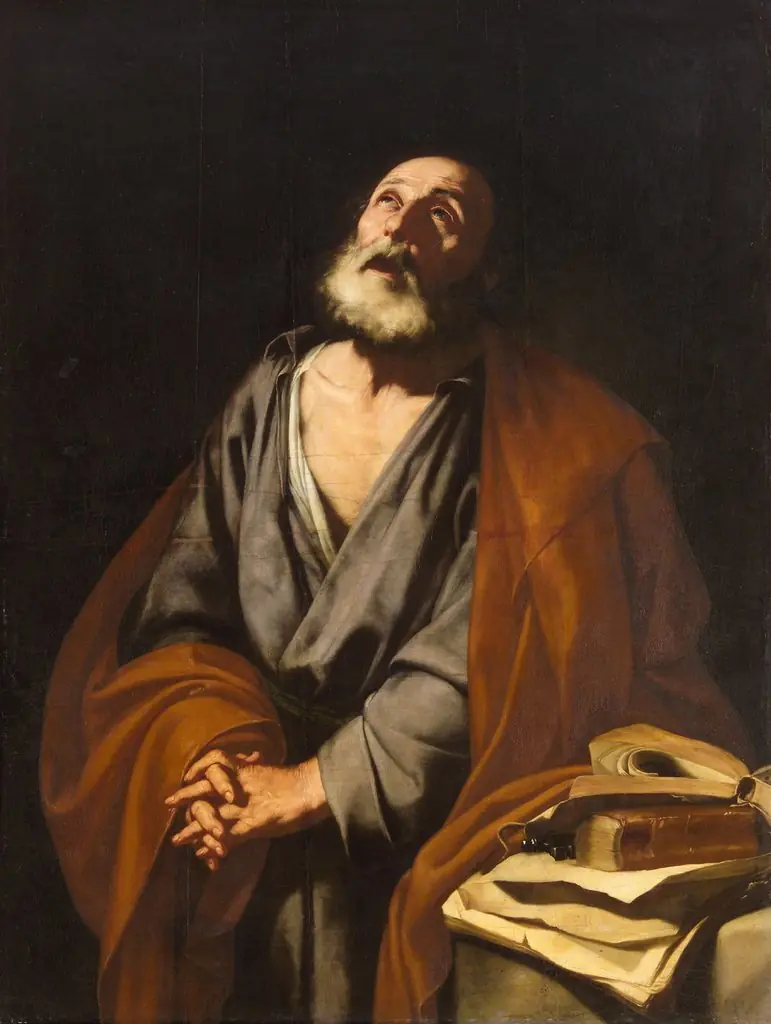
The artwork represents the Denial of Peter, a prominent religious subject capturing the apostle's moment of repentance after denying Jesus. The composition centers on Saint Peter, who is depicted weeping in emotional distress. The iconography incorporates two traditional Christian symbols associated with the saint: a book and a key.
The key signifies Peter's role as the keeper of the keys to heaven, while the book likely references his authority and contributions to sacred scripture.
Technique & Style
Saint Peter weeping is an oil painting executed on a canvas support, measuring 120 cm in height and 86 cm in width. Created in 1601, the work belongs to the religious genre and depicts the biblical scene of the Denial of Peter, featuring the apostle alongside a book and a key. The piece is currently held in the collection of the Museo del Prado in Madrid.
The artist remains anonymous, though the work has been historically associated with the royal collections of Spain, including former ownership by Ferdinand VII, Charles III, and Elisabeth Farnese.
History & Provenance
The painting titled Saint Peter Weeping was created in 1601 as an oil on canvas work measuring 120 by 86 centimeters. It portrays Saint Peter in the moment of denial, holding a book and keys, and belongs to the religious art genre. Originally owned by Ferdinand VII of Spain, the piece later passed to Charles III and then to Empress Elisabeth Farnese, forming part of the Spanish royal collection before entering the Museo del Prado.
Its creation is attributed to an anonymous Spanish painter active in the early 17th century, and it remains part of the museum's permanent collection in Madrid.
The painting Saint Peter weeping is held in the collection of the Museo del Prado in Madrid. It is accessioned under the inventory number P00968. The work has been part of the museum’s permanent display as part of its religious art holdings.
It was formerly owned by Ferdinand VII of Spain, Charles III of Spain, and Elisabeth Farnese before entering the royal collection and later the museum’s custody.
Context
The painting was created circa 1601 and exemplifies Counter-Reformation religious art through its emotional portrayal of Saint Peter's remorse. It was later owned by Spanish monarchs Ferdinand VII, Charles III, and Elisabeth Farnese, reflecting its royal provenance. The work depicts Saint Peter holding a book and key, symbolizing his role as apostle, and measures 120 cm in height by 86 cm in width.
It is part of the Museo del Prado collection, which has held it since its designation as a national treasure.
Overview
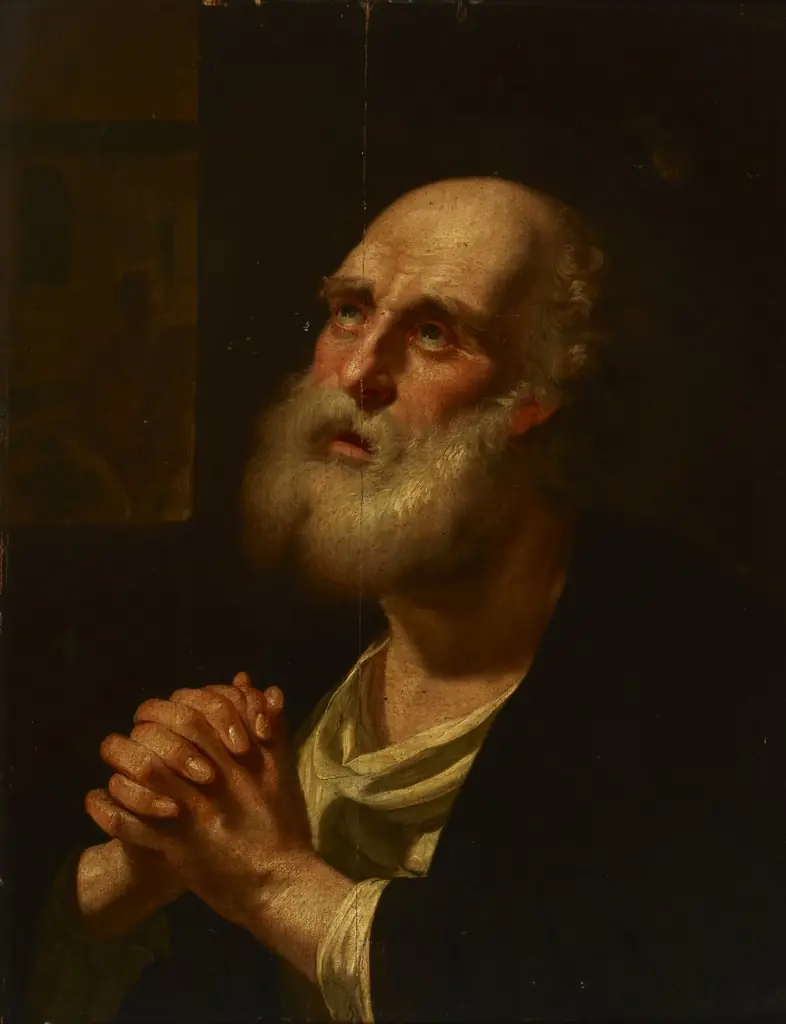
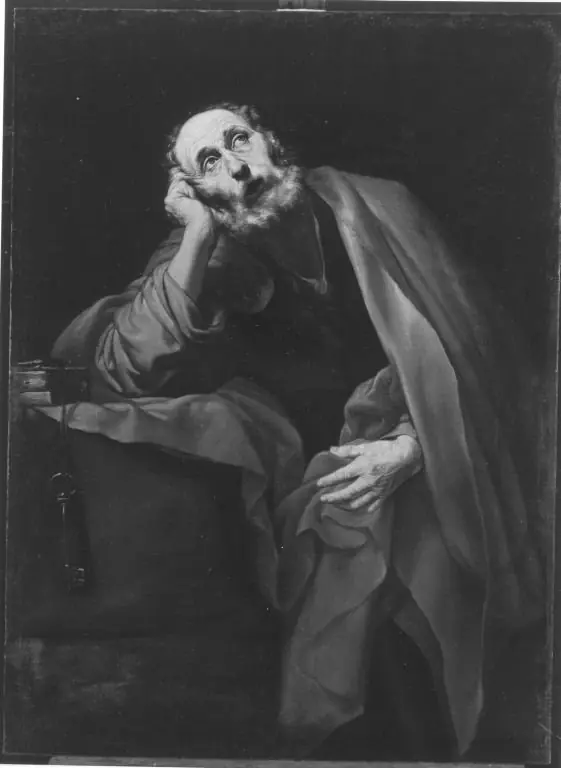
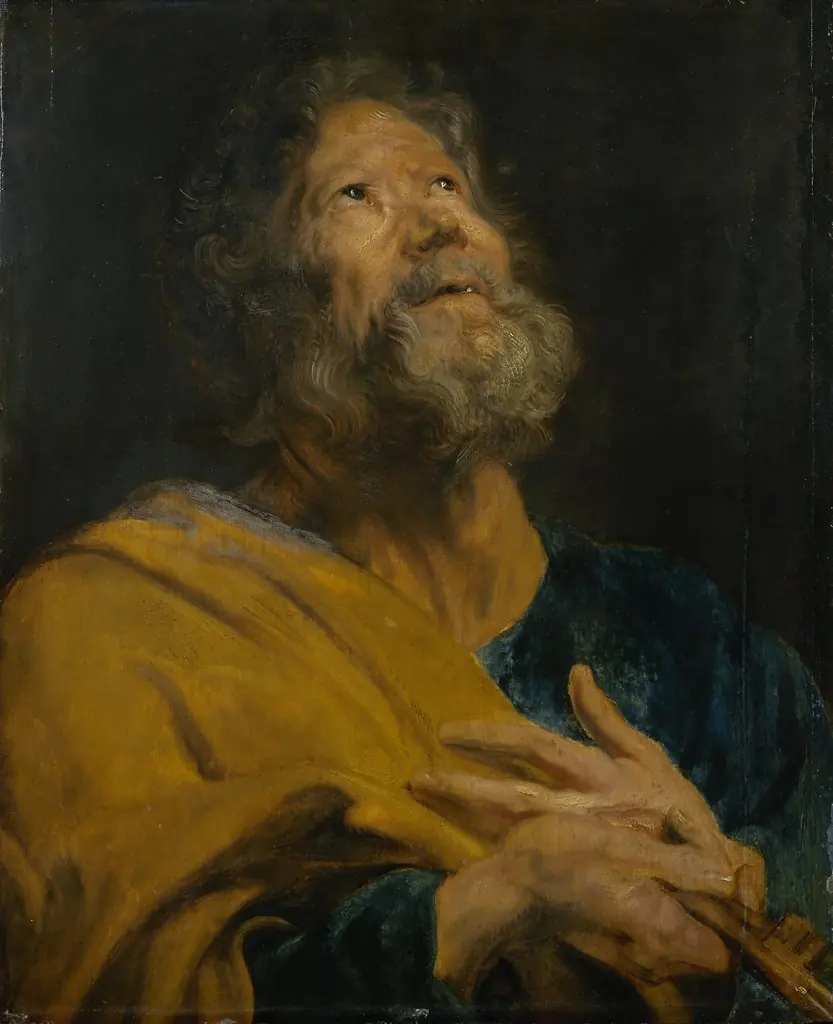
The work, titled Saint Peter weeping, is an oil painting that portrays an elderly figure with a long white beard and weary eyes. He wears a plain brown robe, his hands joined, and his head is tipped back as if in prayer or astonishment. An open book and a key rest on a ledge beside him, while a dark backdrop surrounds the scene.
Artist & collection