Artwork
Penitent St. Peter
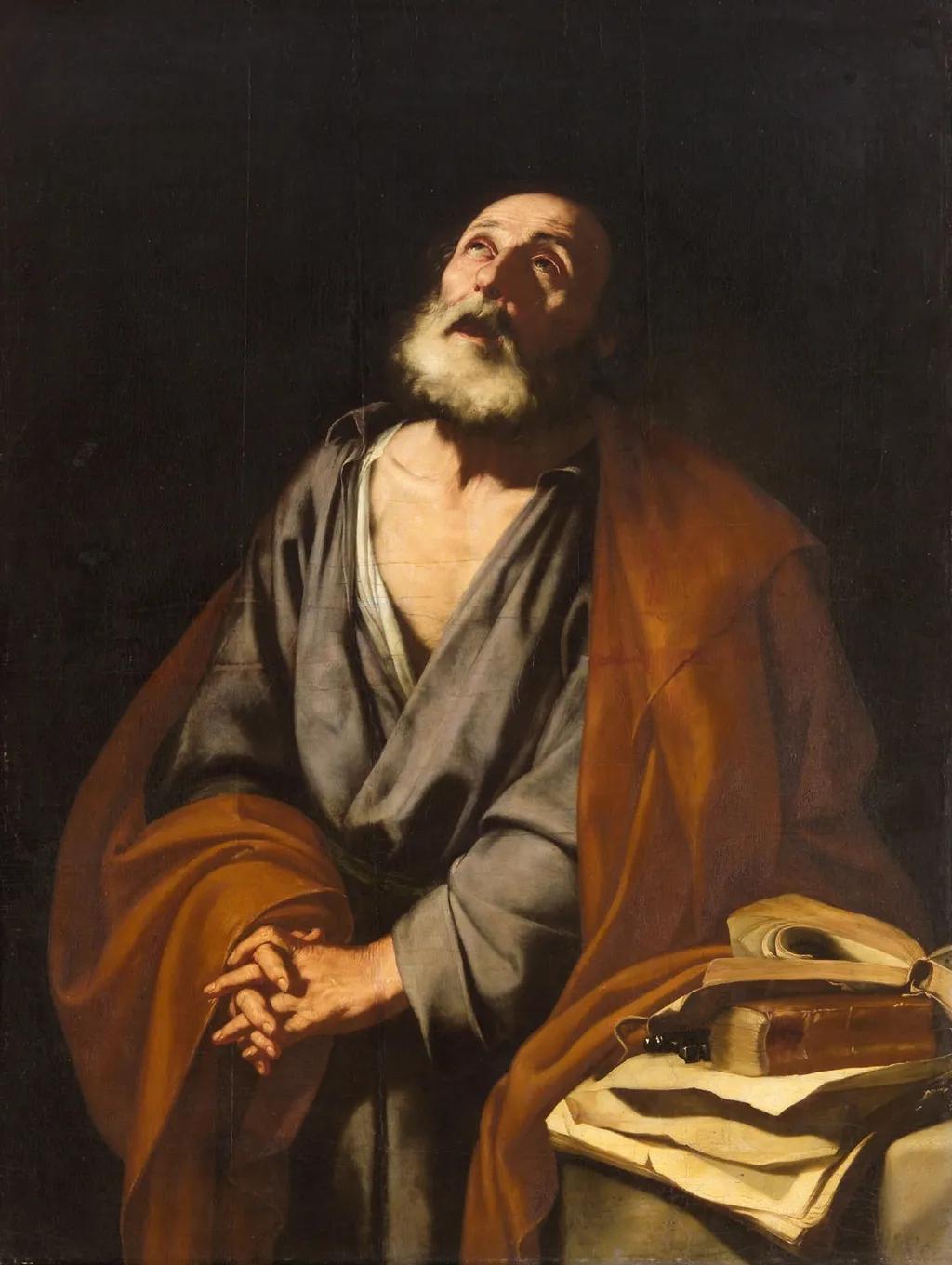
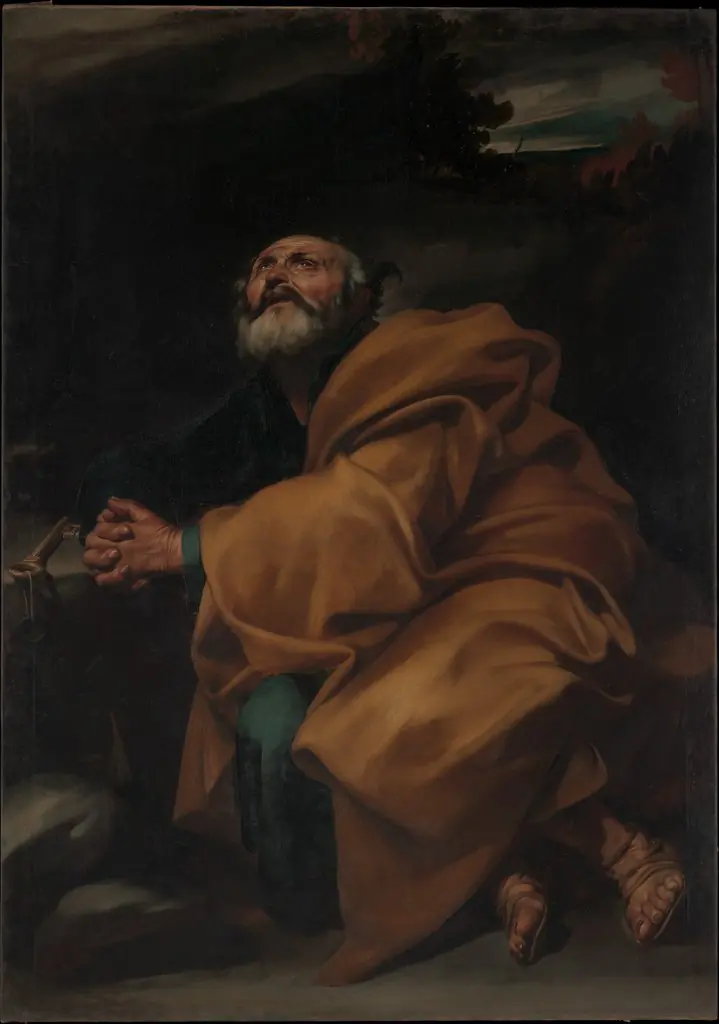
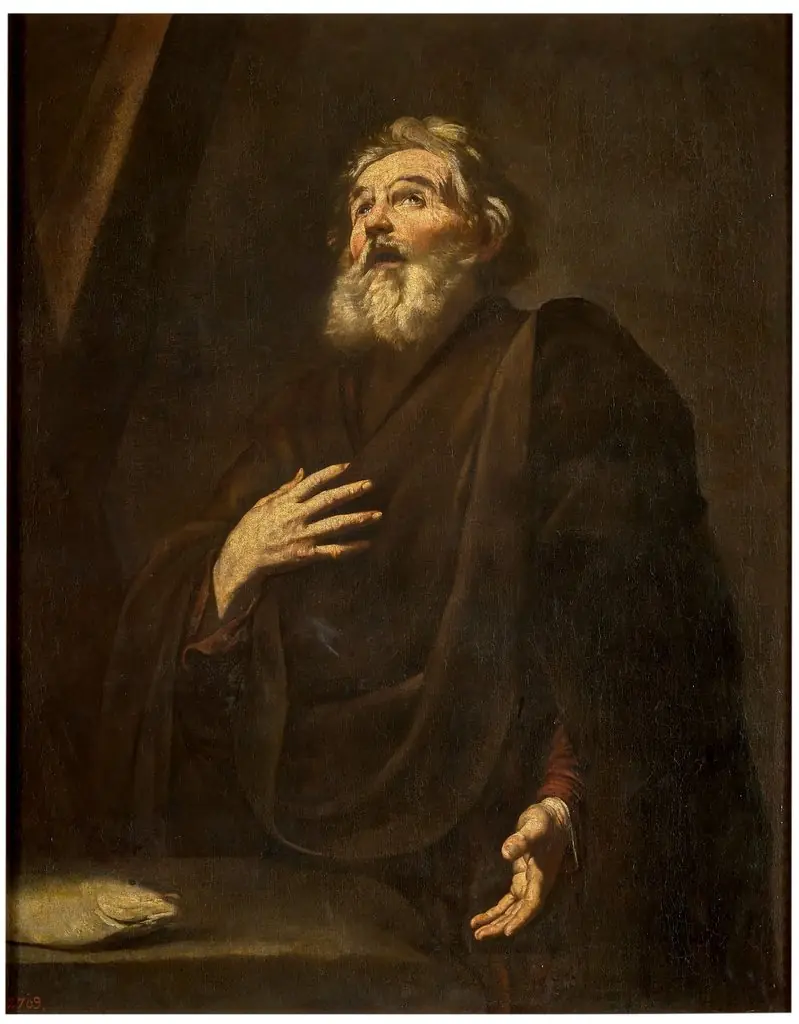
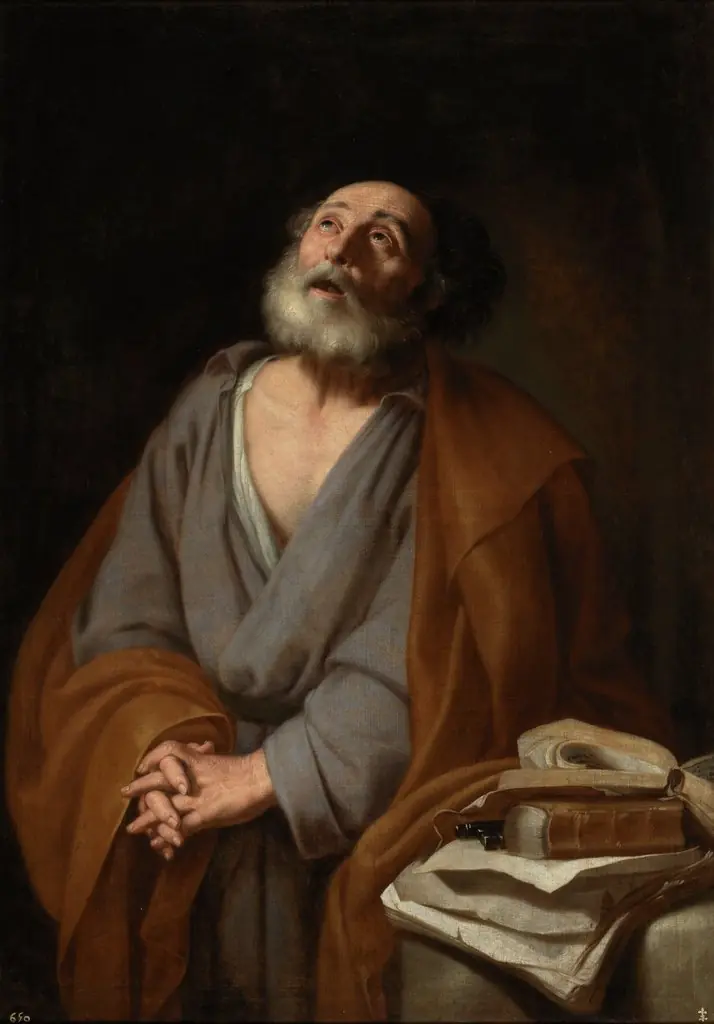
Penitent St. Peter is an oil painting by the Early Baroque Italian artist Jusepe de Ribera. It dates from 1630 and is held in the collection of the Kunsthistorisches Museum. Penitent St.
About this work
Subject & Meaning
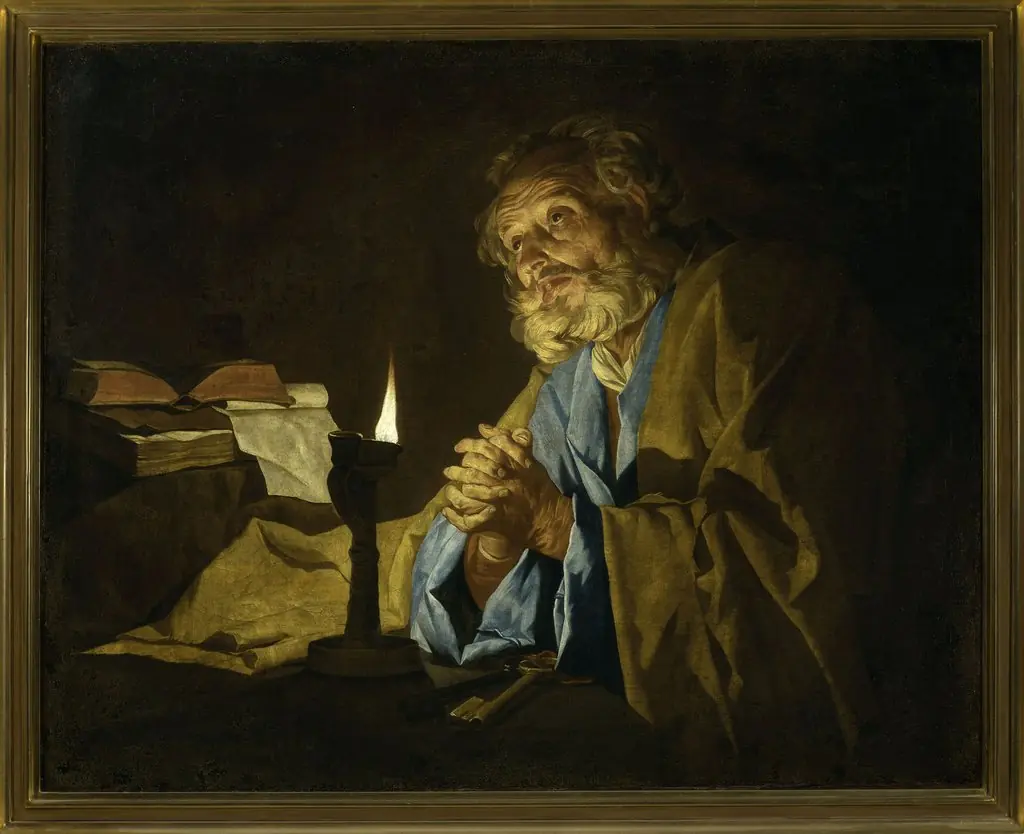
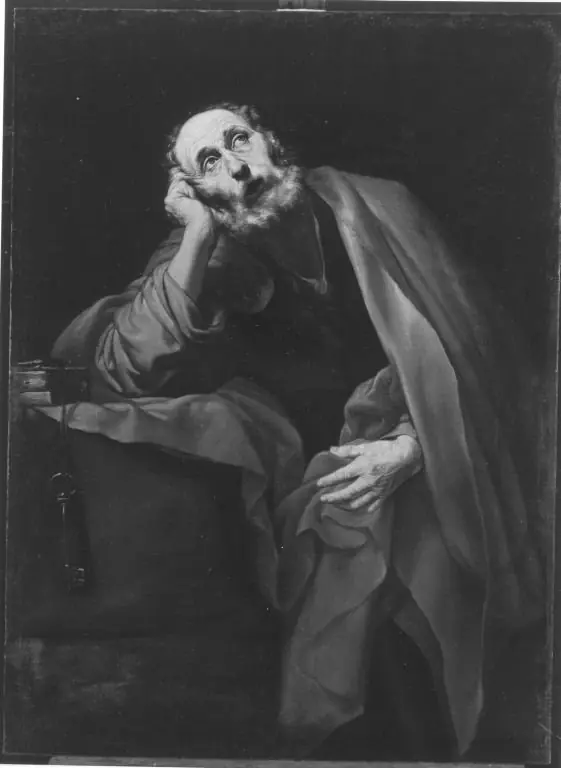
He is depicted with the traditional attribute of the keys, but here rendered subtly to emphasize his role as penitent rather than gatekeeper.
The painting shows Saint Peter in a moment of contrition, his downcast eyes and clasped hands expressing penitence. He is depicted with the traditional attribute of the keys, but here rendered subtly to emphasize his role as penitent rather than gatekeeper. The stark chiaroscuro and the humble gesture underscore themes of repentance and spiritual humility, aligning with Counter‑Reformation ideals of personal contrition. The work belongs to the religious genre, reflecting Counter‑Reformation emphasis on saintly intercession and moral introspection.
Technique & Style
Jusepe de Ribera executed Penitent St. Peter in 1630 using oil paint on a canvas support. The painting measures 116 cm in height and 88 cm in width. As a religious artwork, the composition depicts Saint Peter in a moment of penitence.
While the creation is attributed to Ribera, the piece is also associated with his workshop, suggesting collaborative execution or studio involvement in its production.
History & Provenance
The work now in the Kunsthistorisches Museum Wien is dated to circa 1630, aligning with Ribera’s early Neapolitan period and the documented vogue for half-length penitent saints during that decade.
By the mid‑seventeenth century the painting entered the imperial collection of Archduke Leopold Wilhelm of Austria, where it was inventoried among works assembled in Vienna and Prague. Upon the archduke’s death in 1662, the collection passed to the newly founded imperial picture gallery, which later formed the nucleus of the Kunsthistorisches Museum. The painting has remained in the museum’s holdings ever since, with no record of private ownership or sale before its entry into the Habsburg collection.
The painting Penitent St. Peter, attributed to the workshop of Jusepe de Ribera and dated to 1630, is held in the collection of the Kunsthistorisches Museum in Vienna. The work is an oil on canvas measuring 116 cm in height and 88 cm in width. Historically, the piece was part of the collection of Archduke Leopold Wilhelm of Austria before entering the museum's holdings.
The provided sources do not contain specific information regarding an inventory number, accession date, or a record of past exhibitions for this artwork.
Overview
Penitent St. Peter is a 1630 oil painting by Jusepe de Ribera, a prominent Spanish Baroque artist. The work depicts Saint Peter in a contemplative, religious context, characteristic of the early Baroque Italian movement.
Context
As a Spanish Baroque artist working in Italy, Ribera's style blended Spanish intensity with Italian Baroque techniques. This painting reflects his ability to convey profound emotion through composition and light, appealing to both Italian and Spanish artistic sensibilities.
Legacy
Penitent St. Peter contributes to Ribera's reputation as a major Spanish Baroque painter. The piece exemplifies the movement's emphasis on emotional depth and technical innovation, continuing to be studied for its mastery of chiaroscuro and poignant depiction of a key religious figure.
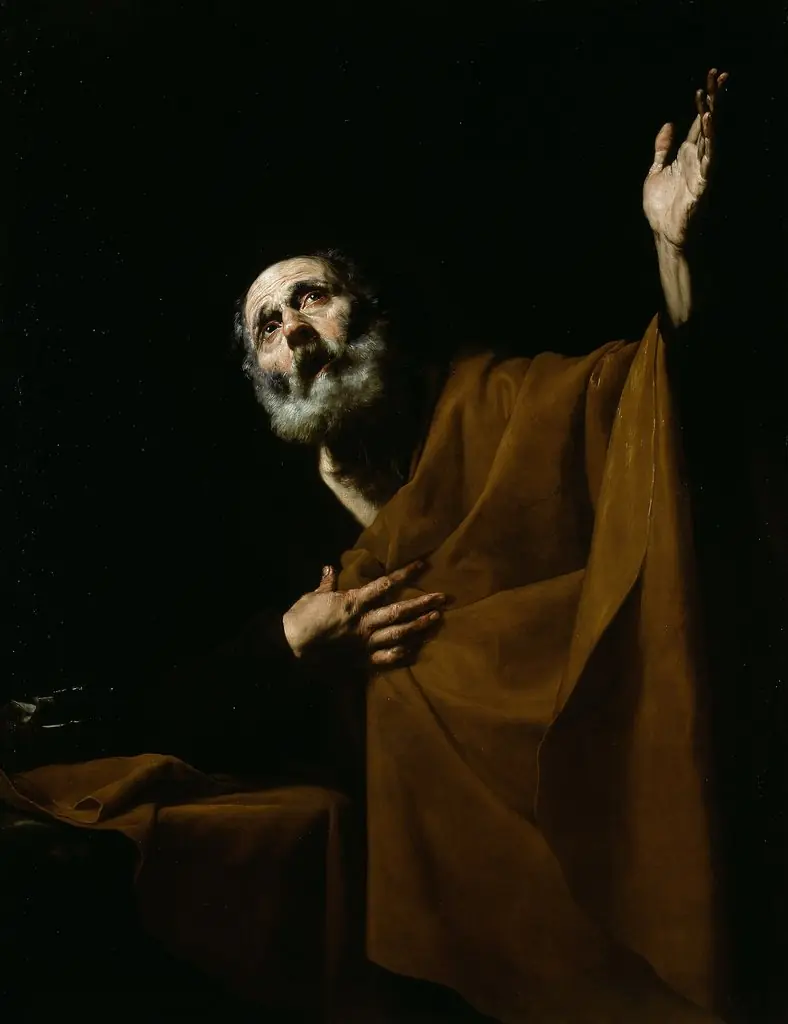
Artist & collection
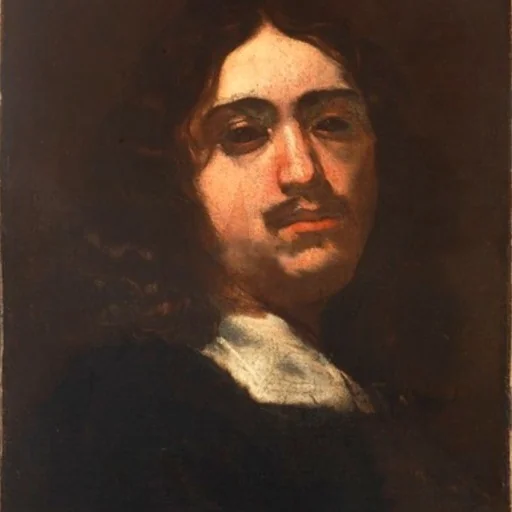
Artist
Jusepe de Ribera (Valencian:; baptised 17 February 1591 – 3 November 1652) was a Spanish painter and printmaker.