Artwork
Sankhachur and Tulsi
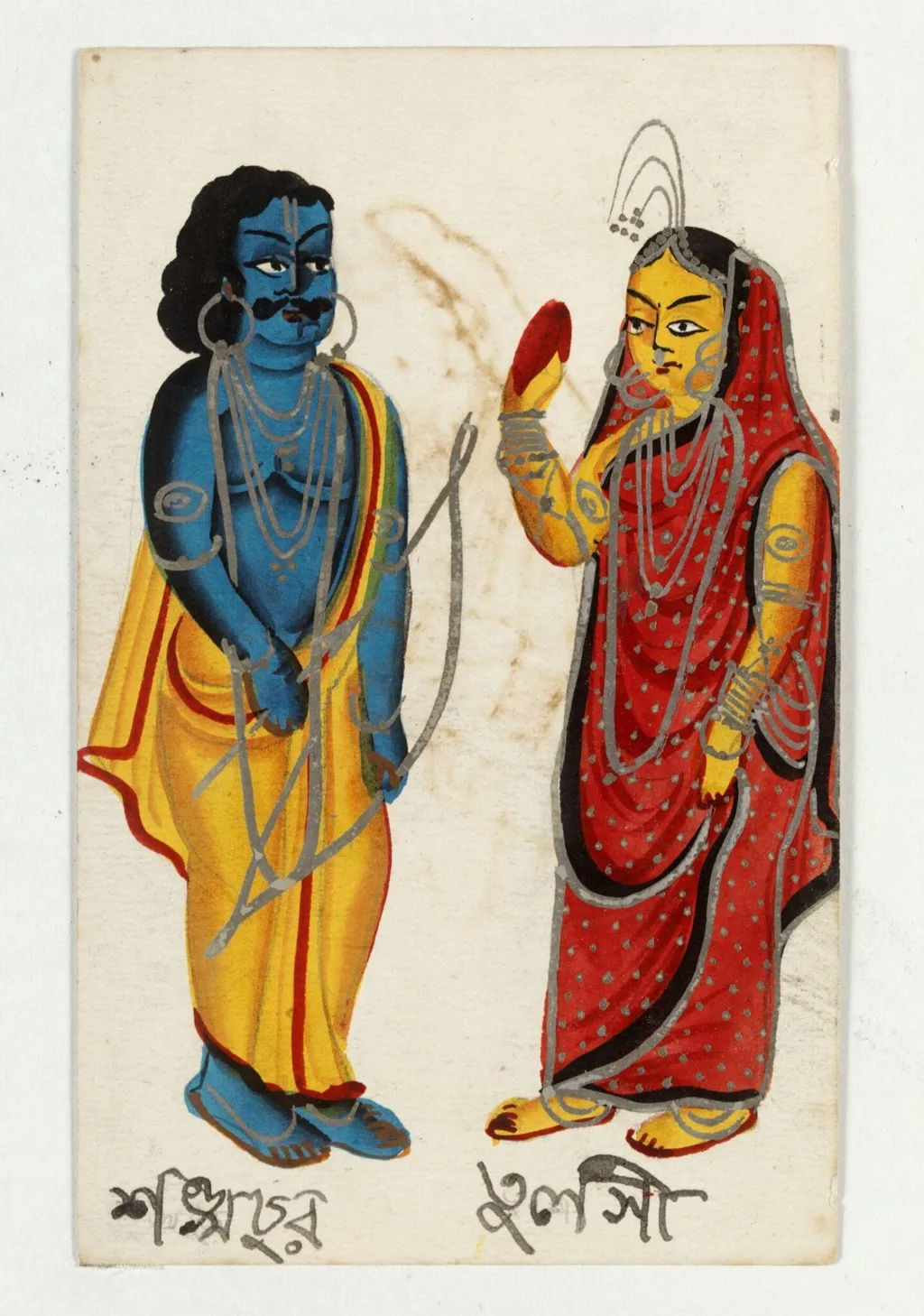
Sankhachur and Tulsi is a paint painting by the Impressionist artist Unknown. It dates from 1890 and is held in the collection of the Victoria and Albert Museum.
About this work
Overview
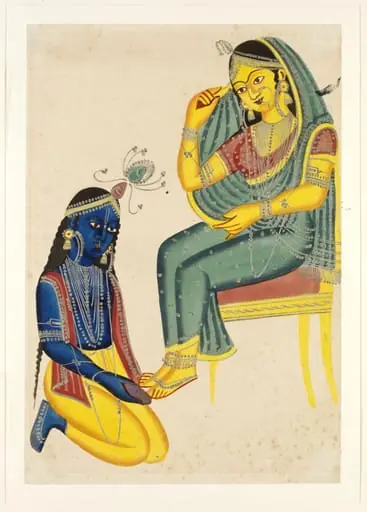
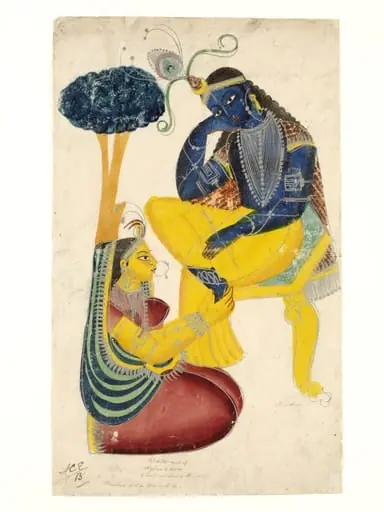
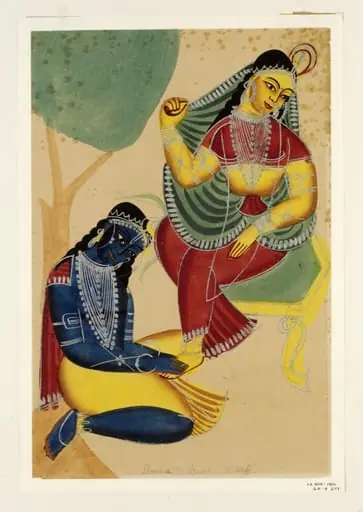
Sankhachur and Tulsi is a painting created around 1890 using watercolour and tin alloy on paper. It depicts a scene from Hindu mythology.
Subject & Meaning
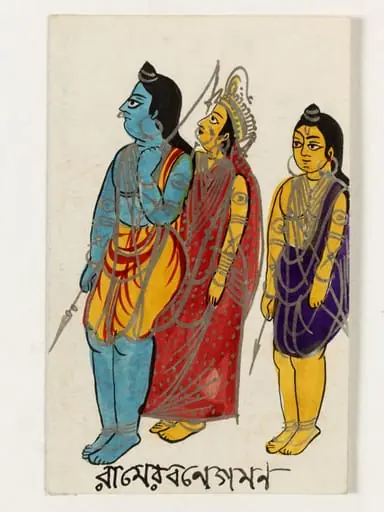
The painting shows two figures, Sankhachur with a blue face and body, and Tulsi with a yellow face, standing together. They are likely characters from the Ramayana, a Hindu epic. Their interaction may symbolize a narrative or moral theme from the mythology.
Technique & Style
The work is characterized by vivid colours, simplified forms, and rapid brushwork, reflecting the Kalighat style. This style is marked by bold colours and simple shapes, typical of a tradition of Bengali art.
History & Provenance
The painting is part of a tradition that emerged among Bengali artists by the 1830s, addressing local mythology and societal issues during British colonial rule. It was created during the period when Calcutta was the capital of British India.
Context
The artwork is situated within the historical context of Calcutta's prominence from 1833 to 1912, reflecting the cultural and societal dynamics of that time.
Artist & collection